
A fresh layer of mulch looks tidy, but a bed full of bare mulch gives hummingbirds nothing to eat. In California, the right drought-tolerant perennials can fill those empty spaces in about a year while sipping very little water.
Many of them are natives that local hummingbirds already know and depend on. Plant a few of the picks below this fall or winter, and next summer your yard could be buzzing with tiny green and ruby visitors.
1. Hummingbird Sage (Salvia spathacea)
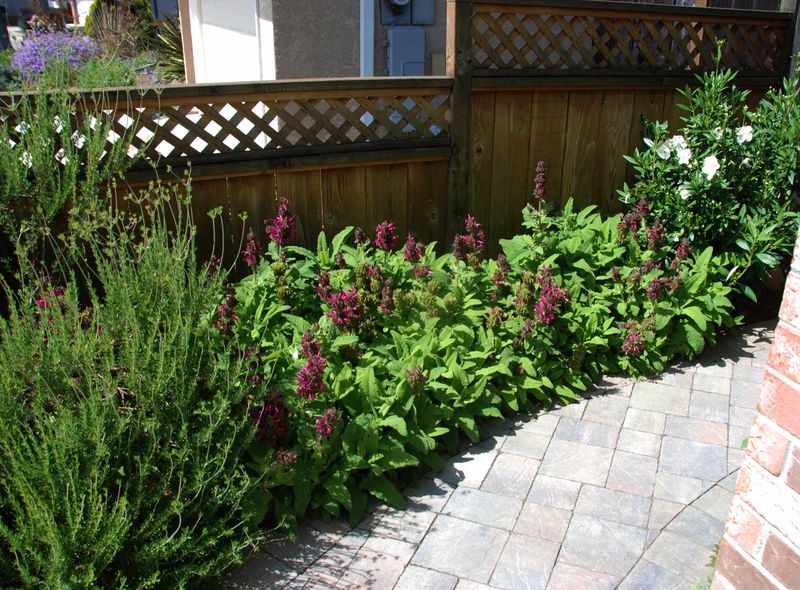
Most drought plants want blazing sun, so the shady strip under your oak tree often stays bare. Hummingbird sage is the rare native that happily fills that dry shade.
Its wrinkled, fruity-scented leaves spread by runners into a thick mat.
Magenta flower whorls rise in late winter and spring, right when Anna’s hummingbirds are nesting and hungry for nectar. One plant set out in fall can cover about three feet by the next summer.
Once rooted, it usually needs only an occasional summer soak.
Plant it in a group of three to knit together faster. Skip heavy pruning, and just snip off spent stalks when they turn brown.
2. California Fuchsia (Epilobium canum)
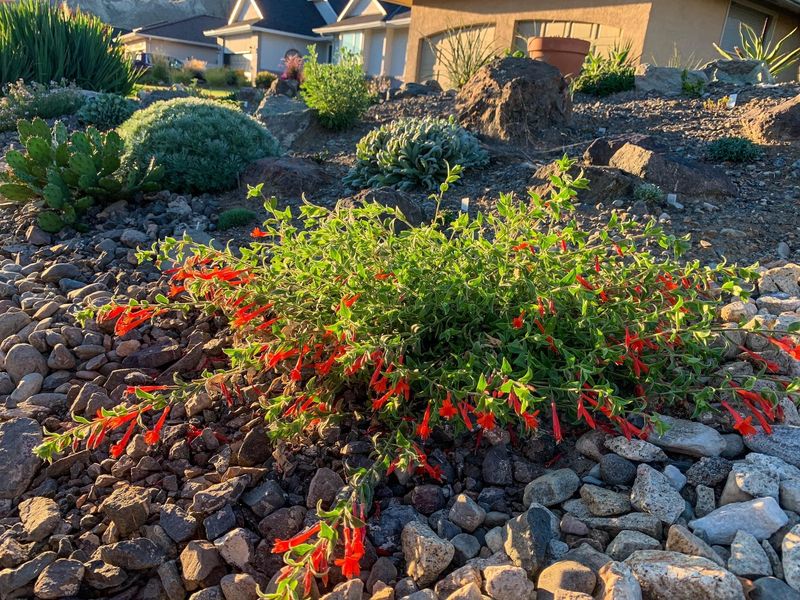
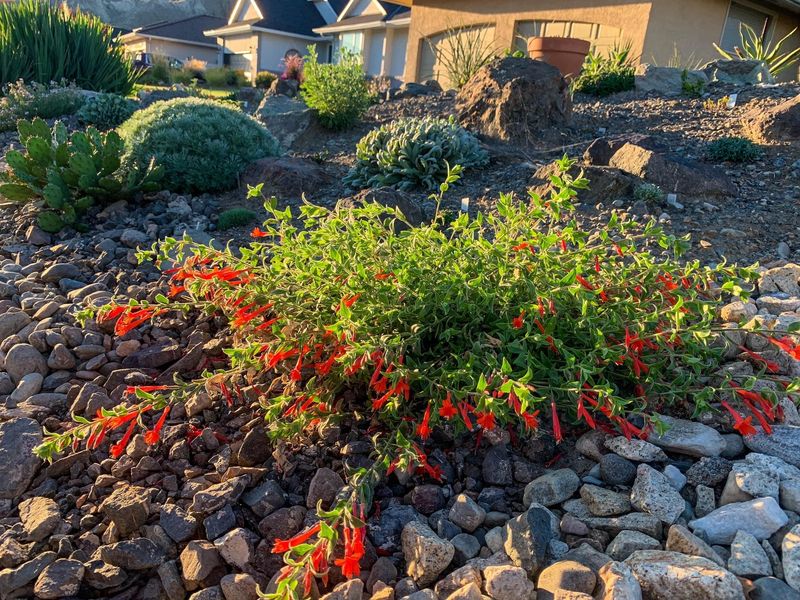
Late August is when many California gardens look tired and crispy. California fuchsia waits for exactly that moment to burst into scarlet trumpets.
For hummingbirds heading into fall, it can be a lifeline.
The gray-green foliage spreads quickly by underground stems, so a small nursery pot can claim several square feet of bare mulch in one season. It thrives in heat, poor soil, and little water.
Varieties like ‘Everett’s Choice’ stay low, while others reach two feet tall.
Cut it nearly to the ground in winter. Fresh growth returns in spring, ready for another long bloom show.
3. Cleveland Sage (Salvia clevelandii)
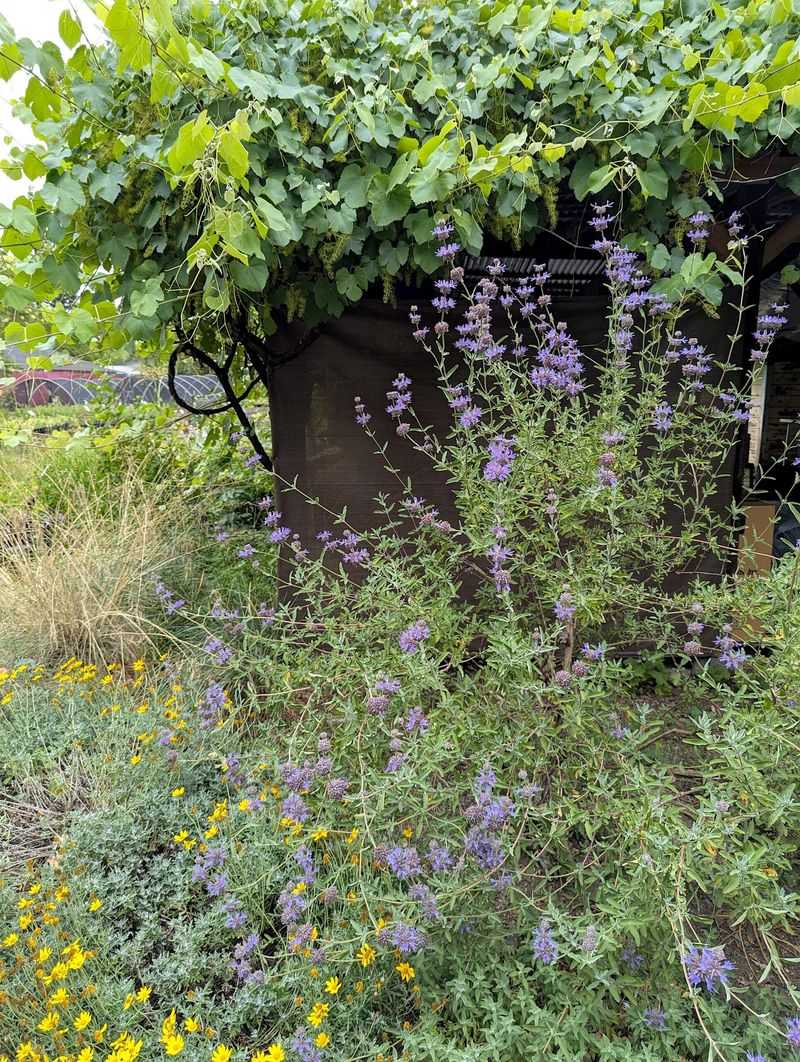
Brush past Cleveland sage on a warm afternoon and the whole yard smells like a coastal hiking trail. That fragrance alone wins people over.
Hummingbirds come for the stacked lavender-blue flower balls in late spring.
Here is the payoff for empty beds: it grows into a rounded four-foot mound within a year or two. It prefers full sun and fast-draining soil, and it may decline if you water it like a lawn.
Deep, rare summer drinks work best.
‘Winnifred Gilman’ is a popular, compact choice for smaller yards. Lightly shape it after bloom to keep it full.
4. Autumn Sage (Salvia greggii)
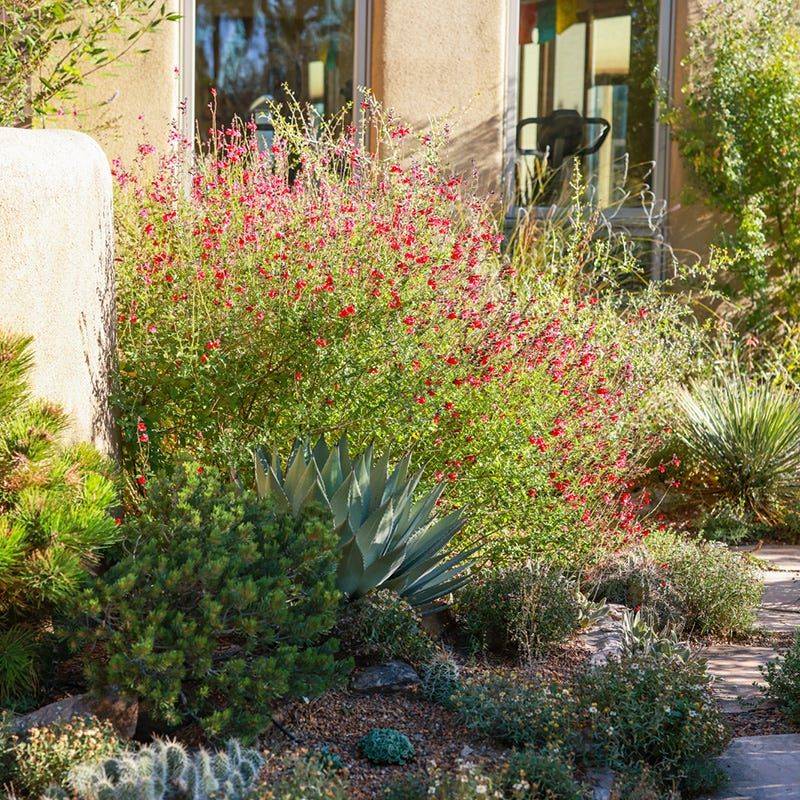
If you want color nearly nonstop, autumn sage is a workhorse. It is not a California native, it hails from Texas and Mexico, but it handles our dry summers with ease.
Flowers come in red, pink, coral, white, and bicolor.
Hummingbirds visit from spring well into fall. Plants grow fast, reaching two to three feet in their first year, which makes them great for filling a front walkway border quickly.
Give it full sun and a light trim in late winter. Mix two or three colors along a path for a cheerful, low-water edge.
5. Penstemon ‘Margarita BOP’
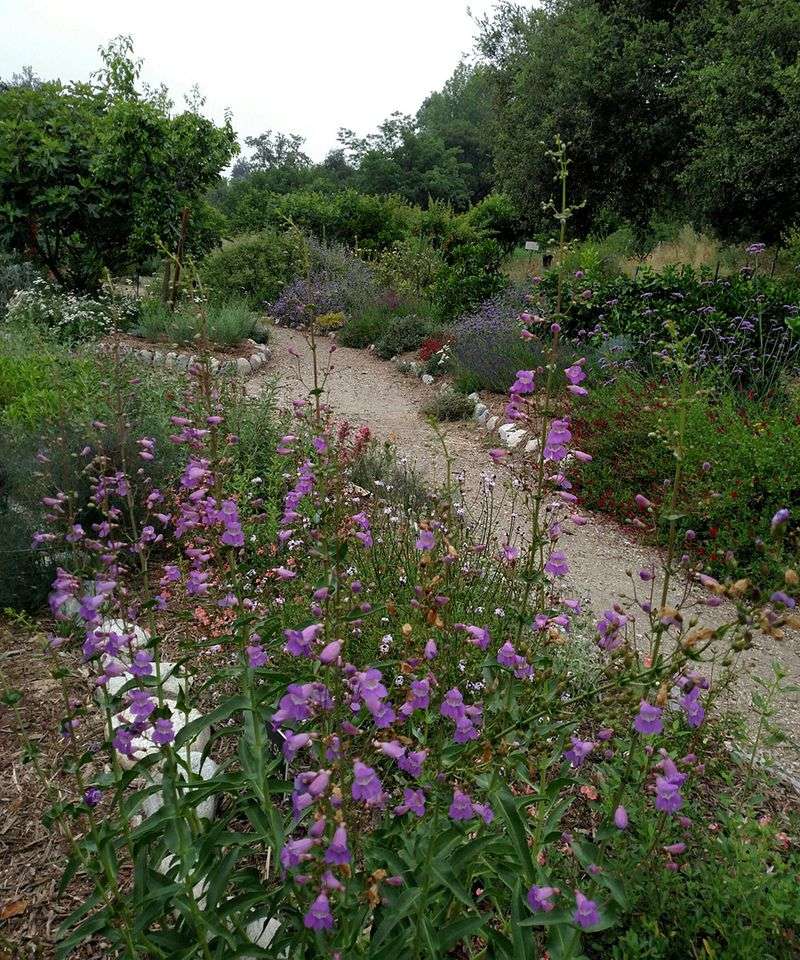
Some native penstemons can be fussy in a garden. ‘Margarita BOP’ is the friendly exception, bred from California species to tolerate regular garden conditions. Its tubes shift from blue to purple as they age.
Hummingbirds fit their bills right into those narrow flowers. Plants form tidy two-foot clumps that bloom spring into summer, filling gaps between larger shrubs.
Plant in full sun to light shade with good drainage. Deadheading spent stalks may encourage more blooms.
6. Desert Mallow (Sphaeralcea ambigua)

Got a hot, reflected-heat spot by the driveway that cooks everything? Desert mallow treats that as home.
It is native to California deserts and shrugs off brutal sun.
Soft gray leaves carry dozens of apricot-orange cups from spring into early summer. Bees swarm the blooms, and hummingbirds will sometimes stop by too.
It can reach three feet wide in a single season.
Water sparingly, since too much can make it floppy. Cut it back by half after flowering to refresh the shape.
7. Red Yucca (Hesperaloe parviflora)
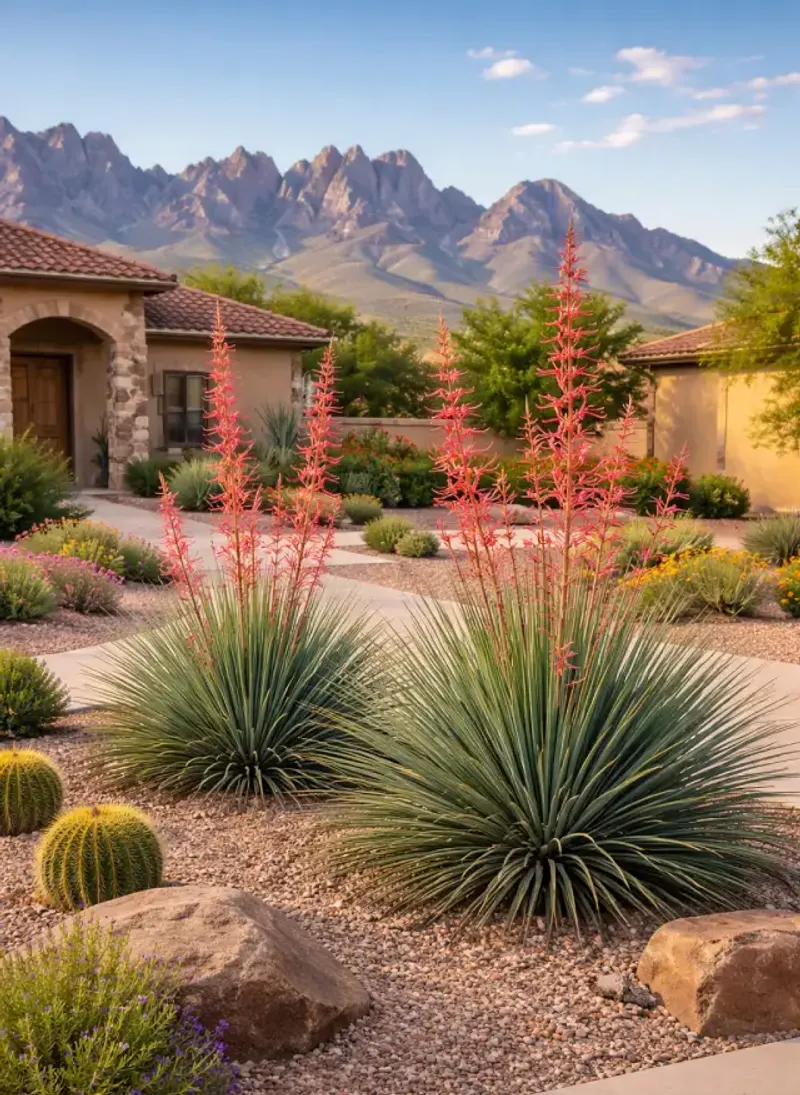
Picture tall, arching wands of coral flowers rising from a tidy grassy clump. Red yucca brings that architectural look without spines or thirst.
Despite the name, it is not a true yucca.
Bloom stalks can last from late spring into fall, giving hummingbirds a steady snack bar. It fits modern, gravel-heavy yards beautifully.
Growth is a bit slower, so pair it with faster fillers around its base. Once set, it may need little more than an occasional deep drink.
8. Island Bush Snapdragon (Gambelia speciosa)
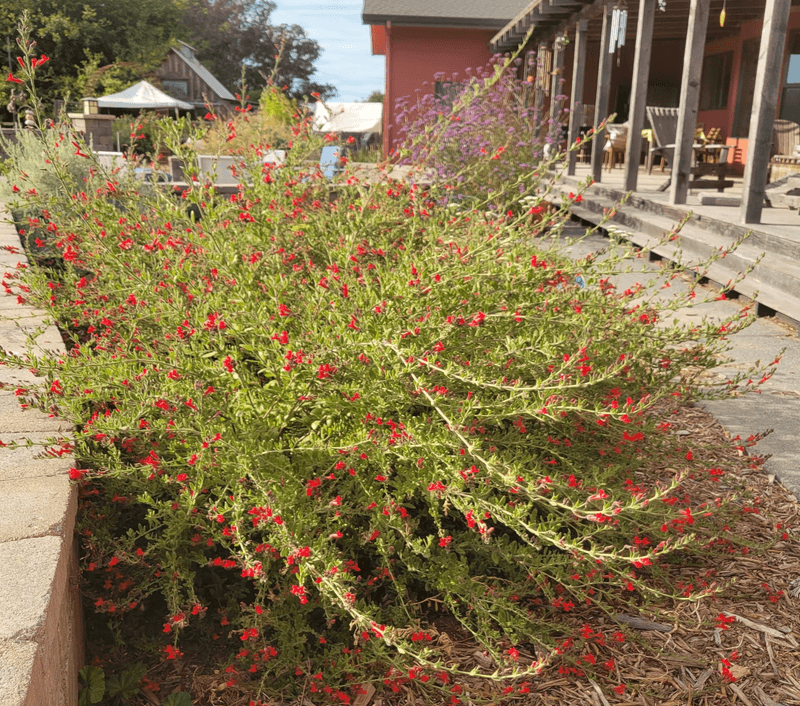
Native to the Channel Islands and Guadalupe Island, this sprawling beauty is a bit of a rare treasure. Glossy green leaves cascade over walls and slopes.
Bright red tubes appear for much of the year in mild coastal areas.
Hummingbirds treat it like a favorite diner. It spreads three to five feet, making it a fast cover for slopes where mulch tends to wash away.
It prefers coastal or mild inland zones and may suffer in hard frost. Plant it near a wall or path edge where it can tumble freely.
9. Red Buckwheat (Eriogonum grande var. rubescens)
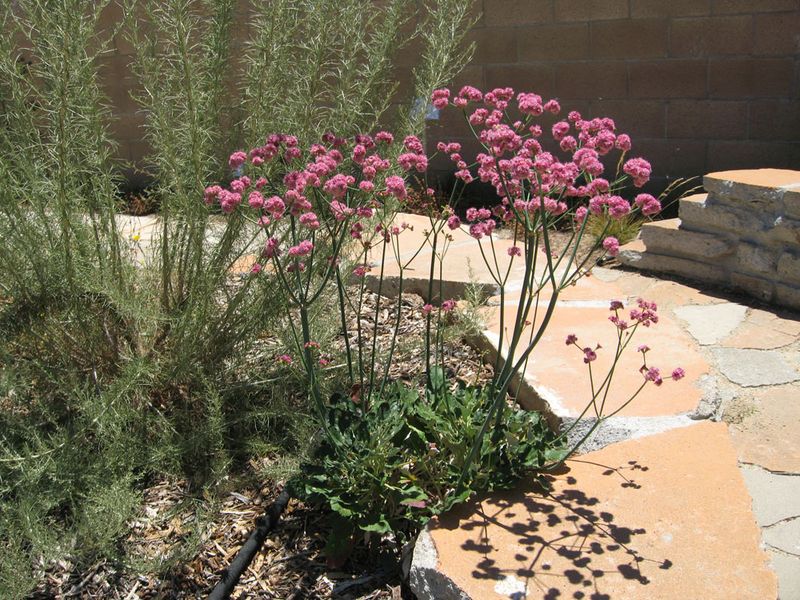
Not every plant here feeds hummingbirds directly, and that is the point. Red buckwheat pulls in native bees and butterflies, and a busy insect crowd can help feed hummingbird chicks, which need protein from tiny bugs.
Its rosy pink pompoms bloom summer into fall on a low, one-foot mound. Gray leaves stay neat with almost no summer water once established.
Tuck it in front of taller sages to soften edges. Leave dried flower heads in place for seed-eating birds.
10. Hot Lips Sage (Salvia microphylla ‘Hot Lips’)
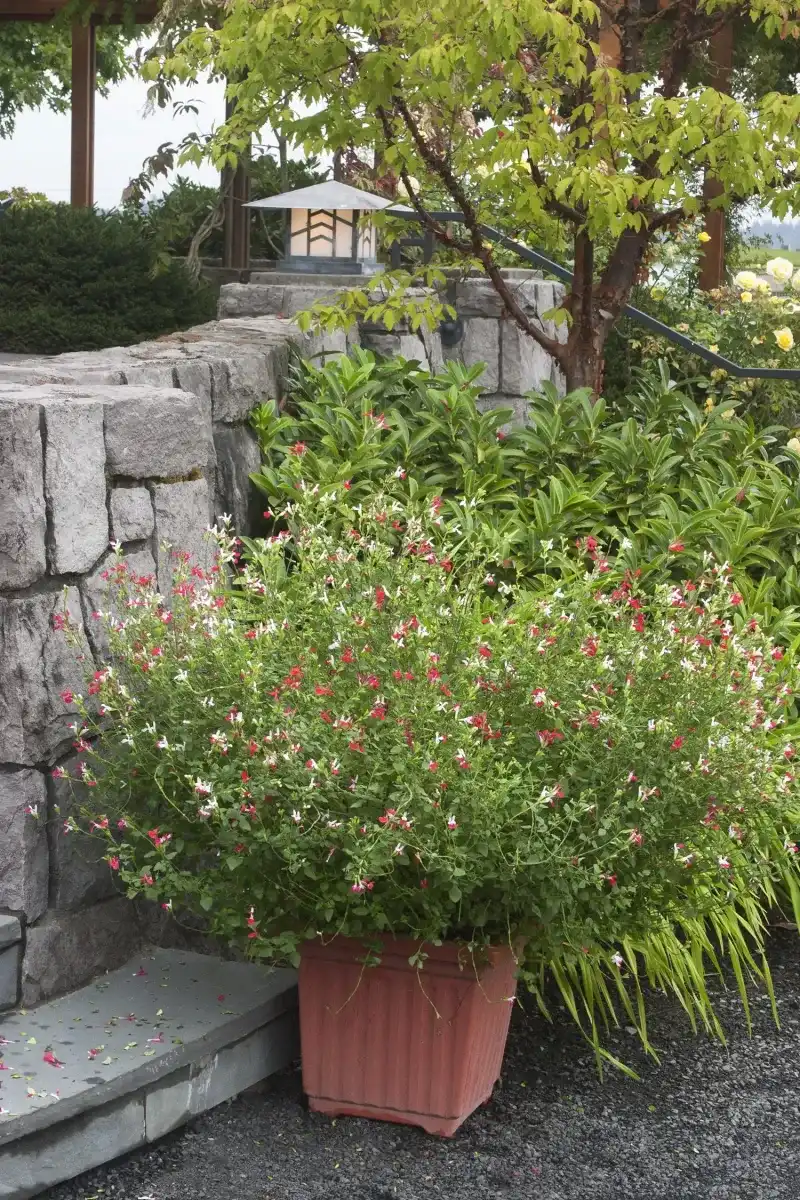
Friends will ask why your sage has two-tone flowers. ‘Hot Lips’ shows red and white blooms, sometimes changing with the season’s temperatures. It is a fun conversation piece that hummingbirds adore.
Plants race to three feet tall and wide, often within the first growing season. Bloom stretches from spring to frost in many areas.
It handles sun or part shade.
Cut back hard in late winter so it stays compact and floriferous. A deep weekly soak in the first summer helps it settle.
11. Blue Elf Aloe (Aloe ‘Blue Elf’)
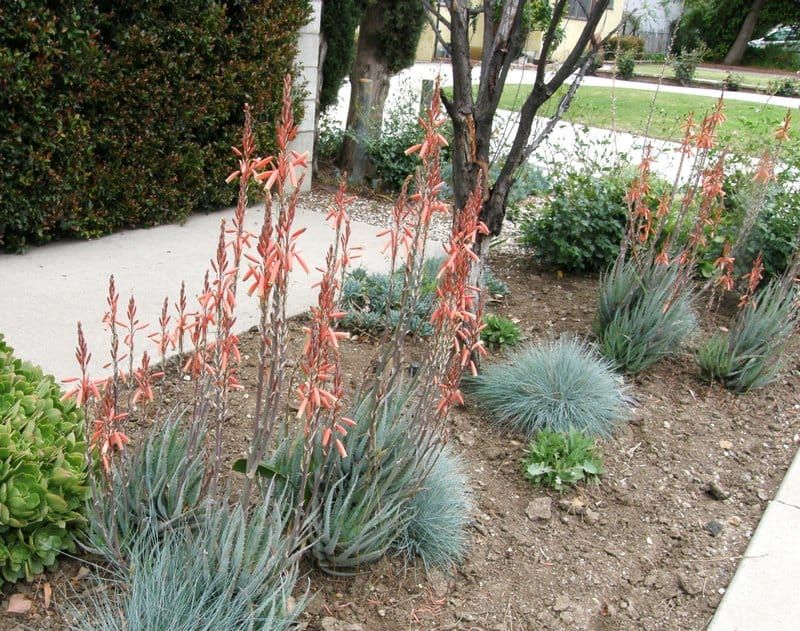
Winter is when hummingbird food gets thin in many yards. ‘Blue Elf’ aloe steps up by sending orange-red spikes from about January through spring. Anna’s hummingbirds stay in California year-round, so that winter nectar matters.
Blue-gray rosettes multiply into dense clumps, covering bare ground and blocking weeds. They need very little water and work well in fire-conscious plantings near the house because the leaves hold moisture.
Protect from hard frost in colder inland valleys. Divide crowded clumps to spread them across more of the bed.
12. Scarlet Monkeyflower (Erythranthe cardinalis)
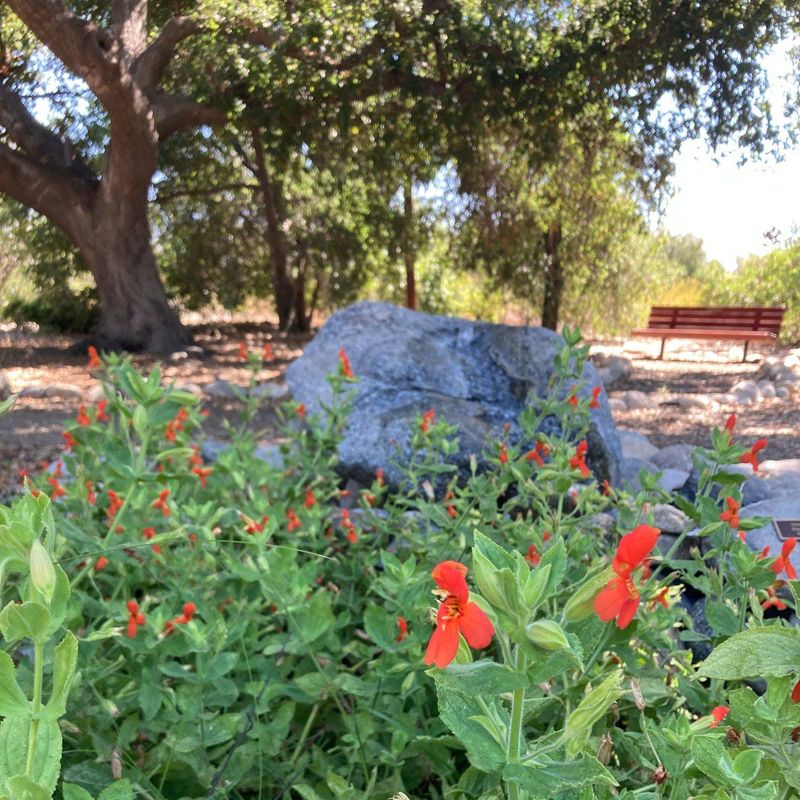
Every dry yard has one spot where water collects, like a downspout outlet or rain garden dip. Scarlet monkeyflower loves that slightly damp corner.
In the wild it grows along streams.
Its brilliant red flowers seem made for hummingbirds, and they pollinate it in nature. Plants grow two to three feet and bloom summer into fall.
It will need more water than the others on this list, so place it where runoff naturally lands. Cut it back in winter for a fresh, bushy start.