
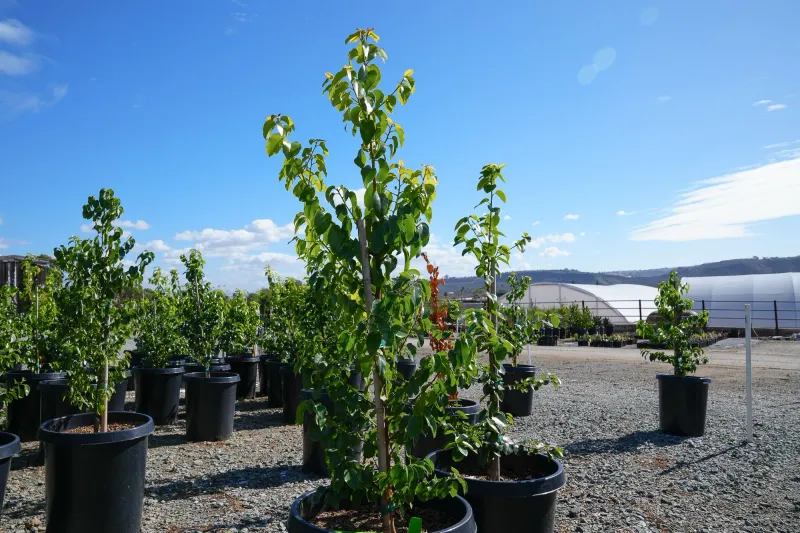
Nobody wants the neighbors watching them eat breakfast on the patio. In California, the best time to fix that is fall, right before the winter rains start soaking the ground for free.
Plants that go in now spend the cool months growing deep roots, then shoot up fast once spring warms things up. Pick the right ones and you can have a leafy, living screen by the time summer barbecues roll around.
1. Toyon
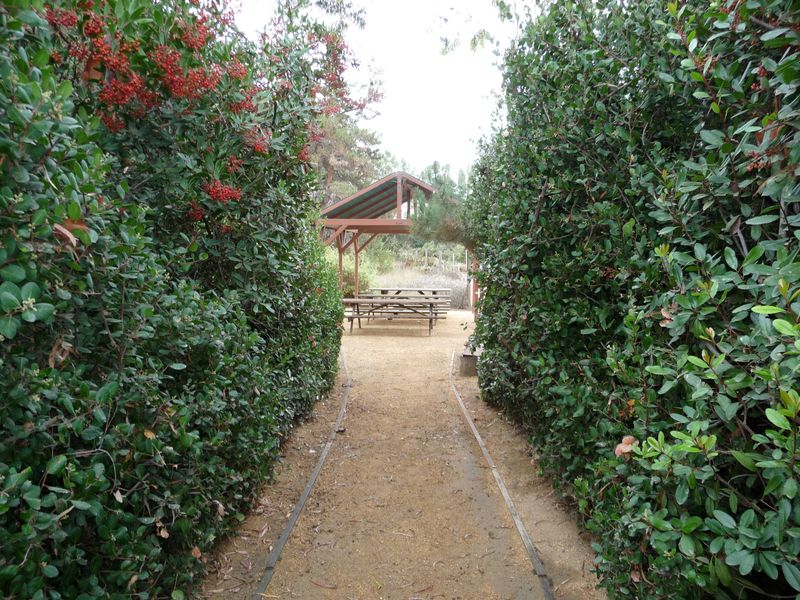
Hollywood was literally named after this shrub, since early settlers mistook its red berries for holly. Toyon is a true California native, and it handles our dry summers like a seasoned local.
Planted in fall, it settles in with winter rain and can put on one to two feet of growth by summer. Its leathery, toothed leaves stay green all year, so your screen never thins out in January.
Birds love the winter berries, which means your privacy hedge doubles as a backyard bird feeder. Give it full sun to part shade and very little water once it is established.
Roots are well behaved, so it is a safe pick near patios and walkways.
2. Pacific Wax Myrtle
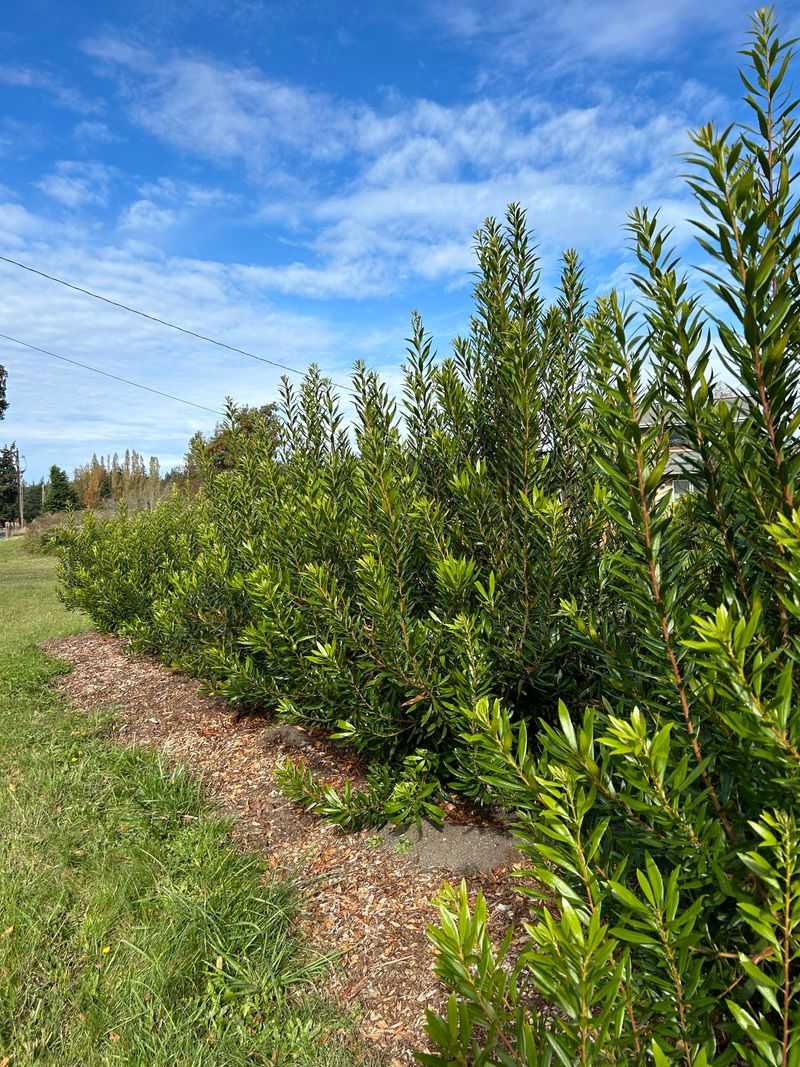
Coastal gardeners, this one is for you. Pacific wax myrtle grows thick, upright, and tidy, almost like it wants to be a hedge.
It can climb 10 to 20 feet but takes shearing well, so you control the height. The narrow leaves have a faint spicy scent when you brush past them.
Fall planting gives it time to root before summer, and it puts on solid growth in its first year. It tolerates salt spray, wind, and clay soil, which makes it a hero on foggy coastal lots.
Water every week or two in the first summer, then back off.
3. Hollyleaf Cherry
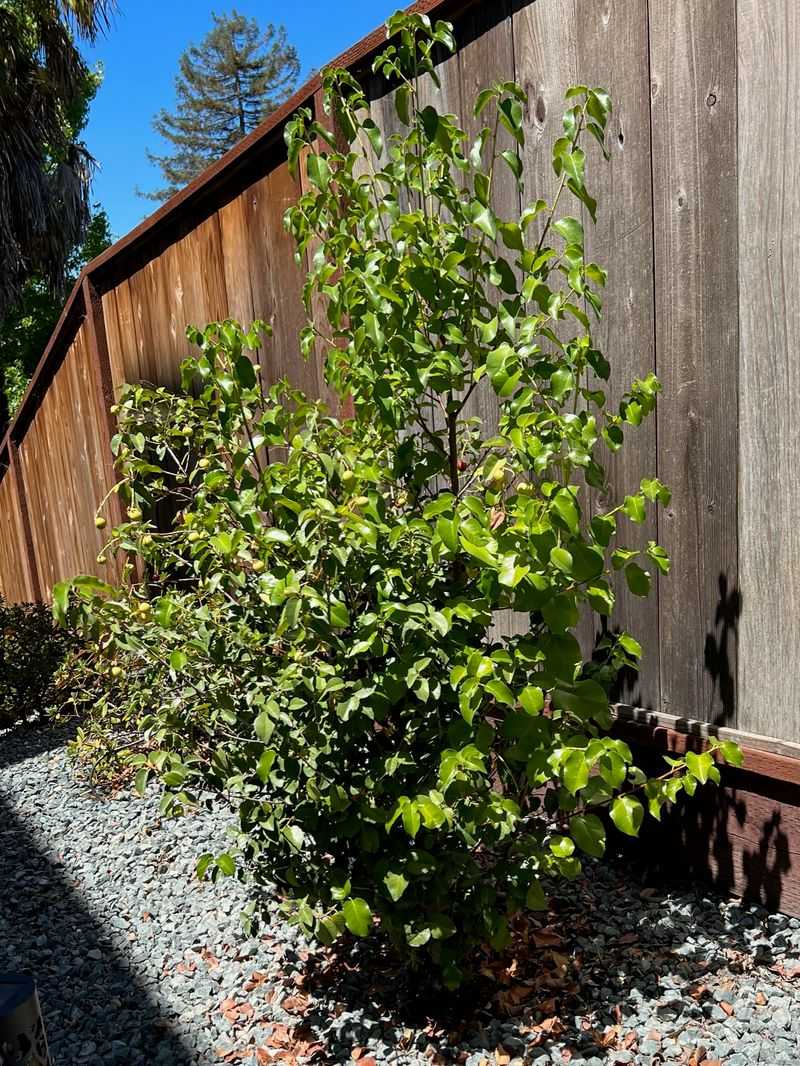
Picture holly leaves, cherry blossoms, and a drought-proof attitude all in one plant. That is hollyleaf cherry in a nutshell.
Its shiny, spiny-edged leaves make a screen that people and pets will not push through. In spring, creamy white flower spikes cover the branches, followed by red-purple fruit birds adore.
Growth is moderate the first year, so plant a little closer together, around five feet apart, for a faster wall. Once established, it needs almost no summer water.
Inland gardens with hot sun and heavy soil suit it well.
4. Coffeeberry
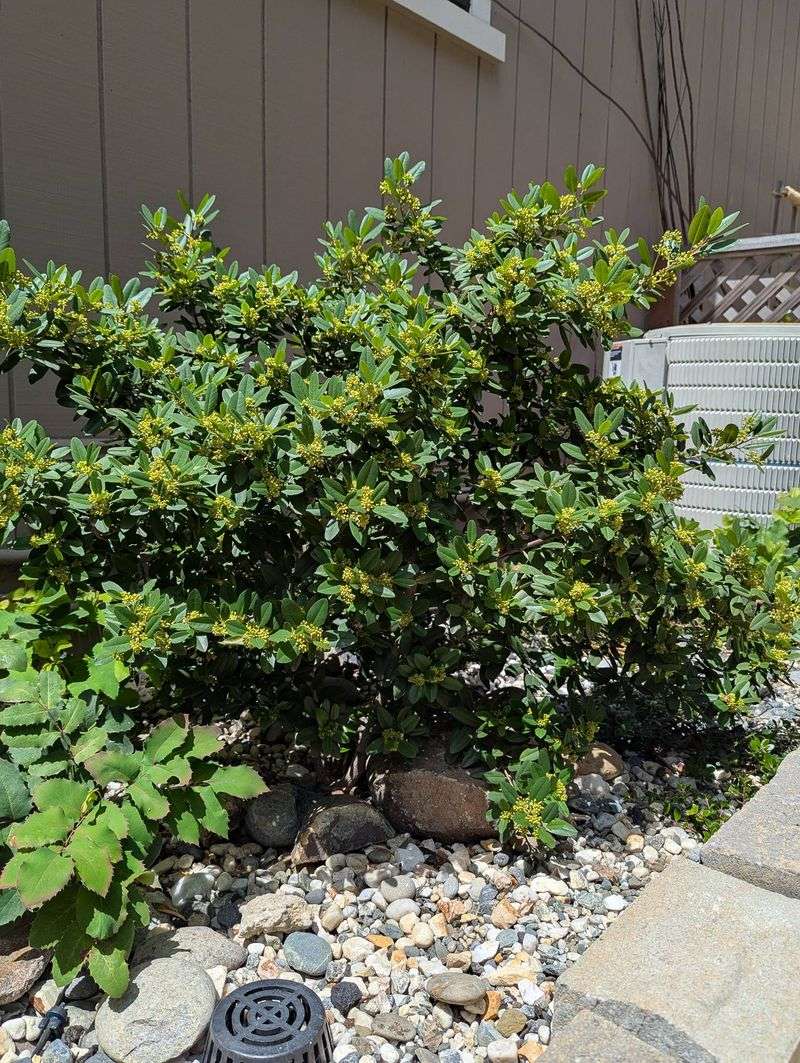
Ask any native plant nursery worker for a dependable screen and coffeeberry will come up fast. It is the workhorse of the California native world.
Varieties like Eve Case stay about eight feet tall and wide, while Mound San Bruno runs a bit smaller. The berries ripen from green to red to nearly black, looking a lot like coffee beans.
Fall is the sweet spot for planting, and many local Native Plant Society sales happen right then. Grab a few one-gallon pots, tuck them in before the first big storm, and let the rain handle the rest.
Roots stay polite around pipes and hardscape.
5. Catalina Cherry
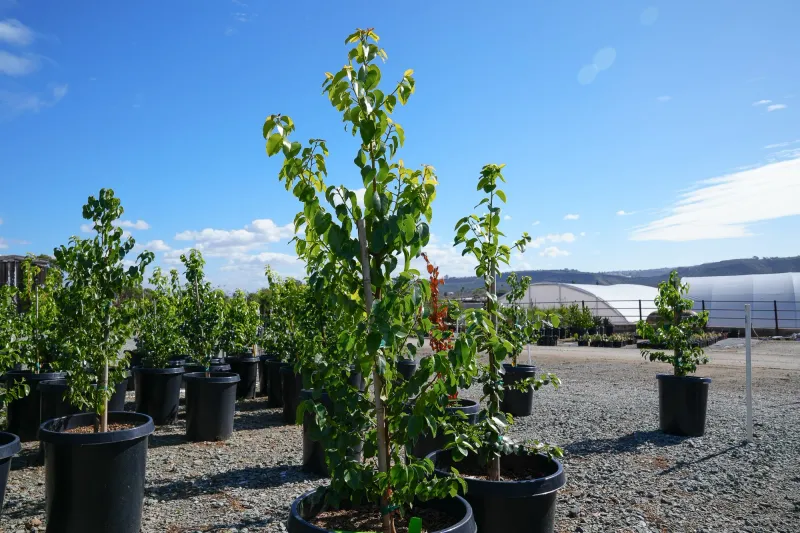
Need height, and fast? Catalina cherry, born on the Channel Islands, can grow two to three feet in a good year.
It can reach 30 feet if left alone, but most homeowners keep it as a large shrub around 12 to 15 feet. That is tall enough to block a two-story neighbor peeking over the fence.
The smooth, glossy leaves look more polished than its mainland cousin. Give it room, at least eight feet from foundations, and deep water monthly during the first summer.
After that, winter rain does most of the work.
6. California Lilac
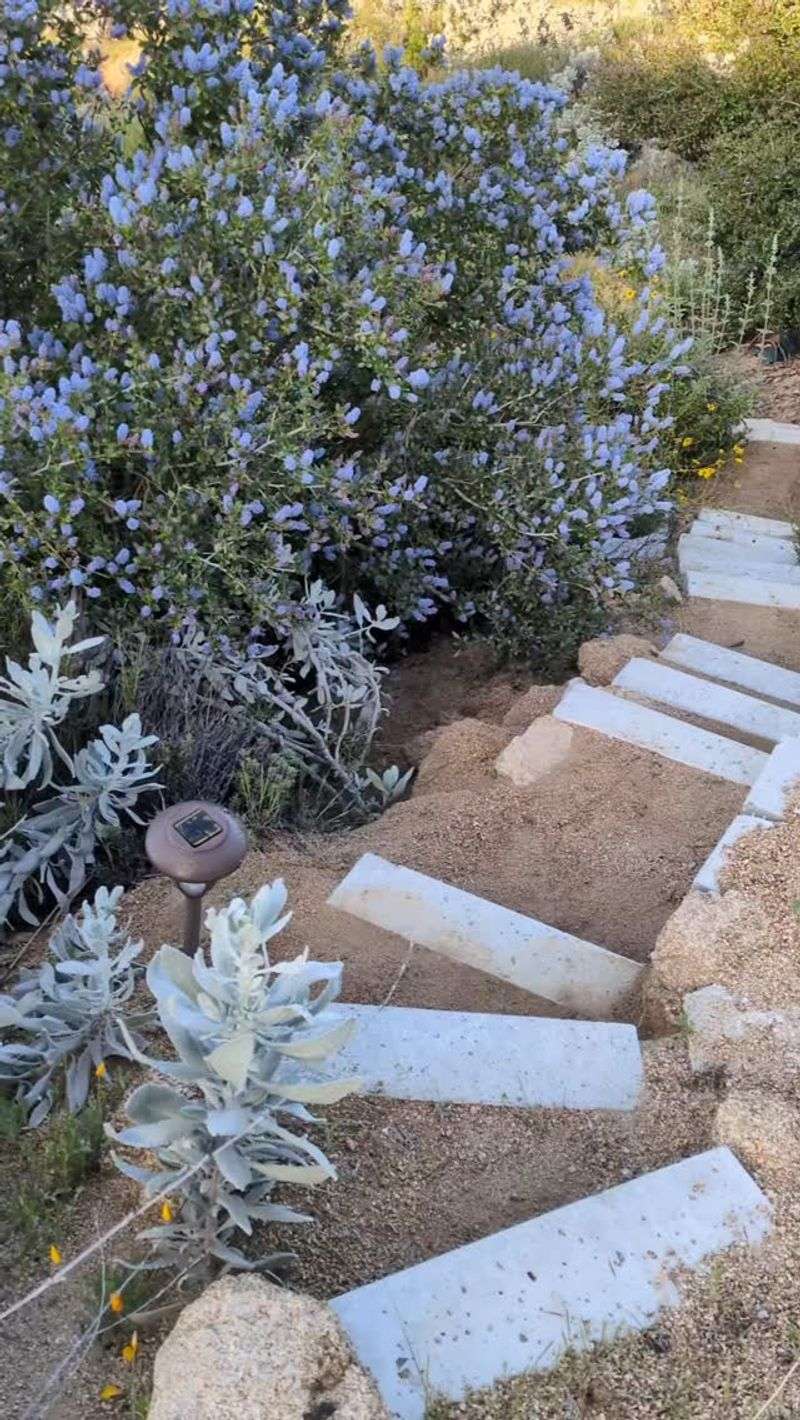
Few things beat a wall of electric blue blooms in March. Tall ceanothus varieties like Ray Hartman deliver exactly that.
Speed is the big selling point here. Ceanothus is one of the fastest native shrubs, often growing several feet in its first year when planted in fall.
One honest warning: many types live only 10 to 15 years, so think of them as a fast first act. Never water them much in summer, since wet roots in heat will finish them off.
Bees will thank you every spring.
7. Lemonade Berry
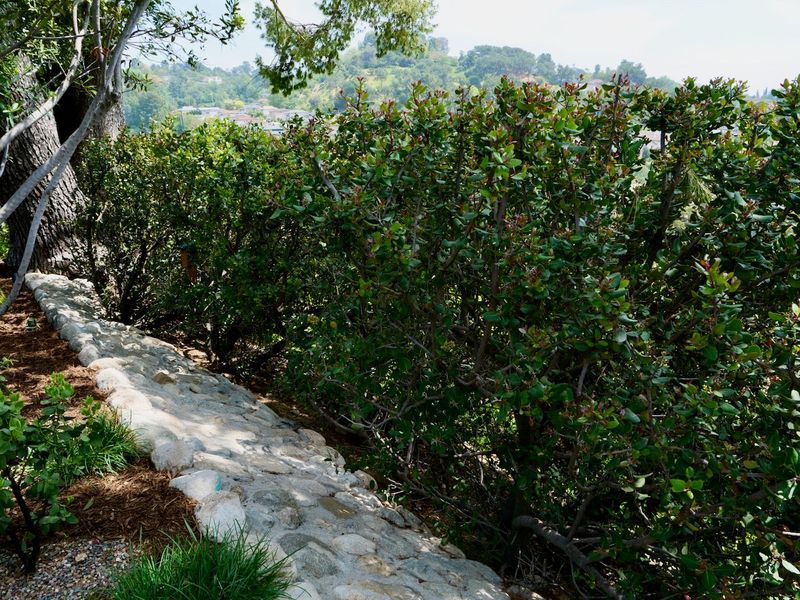
Native Californians once soaked its sticky red berries in water for a tart, lemony drink. Lemonade berry still earns its name today, and it makes a sturdy hedge too.
The thick, leathery leaves shrug off heat, wind, and drought. It works especially well on slopes, where its roots help hold soil during heavy winter storms.
Plan for a shrub around six to ten feet tall and wide. Pink flowers show up in late winter, a cheerful surprise when most gardens look sleepy.
Skip the fertilizer entirely, since it prefers lean soil.
8. Pittosporum Silver Sheen
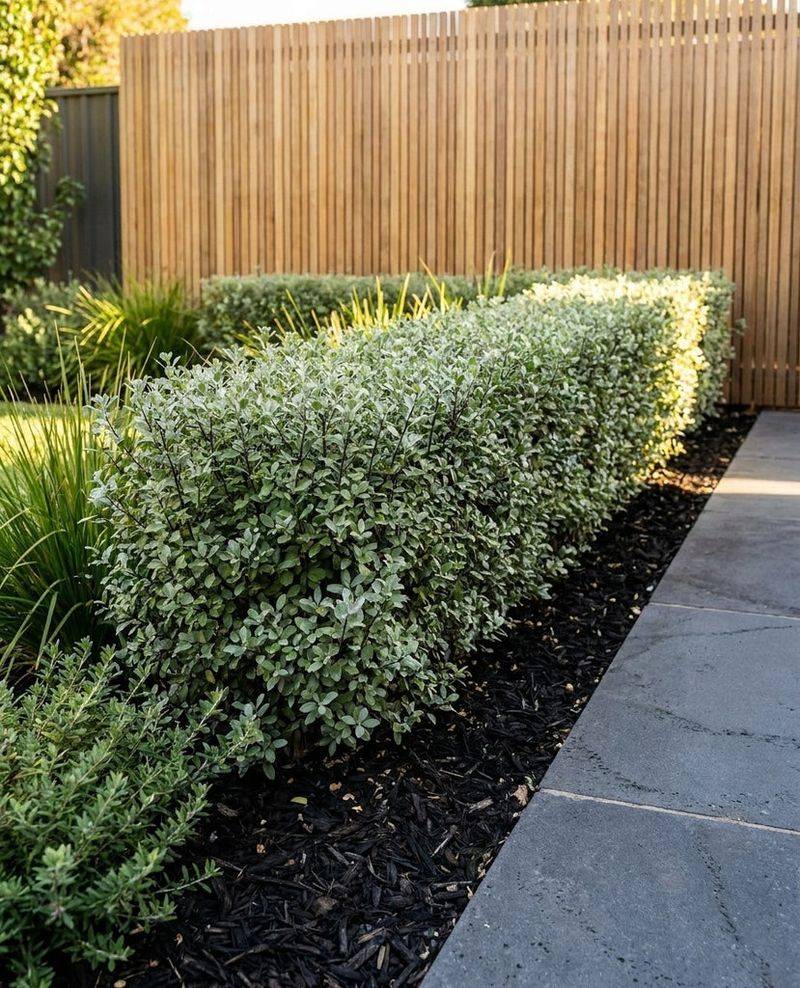
Not every yard has room for a big, bushy shrub. Silver Sheen pittosporum grows tall and slim, perfect for those skinny side yards between houses.
Small, shimmery leaves on dark stems give it a light, airy look that still blocks views. It can grow two to three feet a year in good conditions, reaching 15 feet or more.
It is not native, so it needs a bit more summer water than the others here. Still, it is a far better choice than thirsty, root-heavy ficus.
Space plants about three feet apart for a seamless wall.
9. Western Redbud
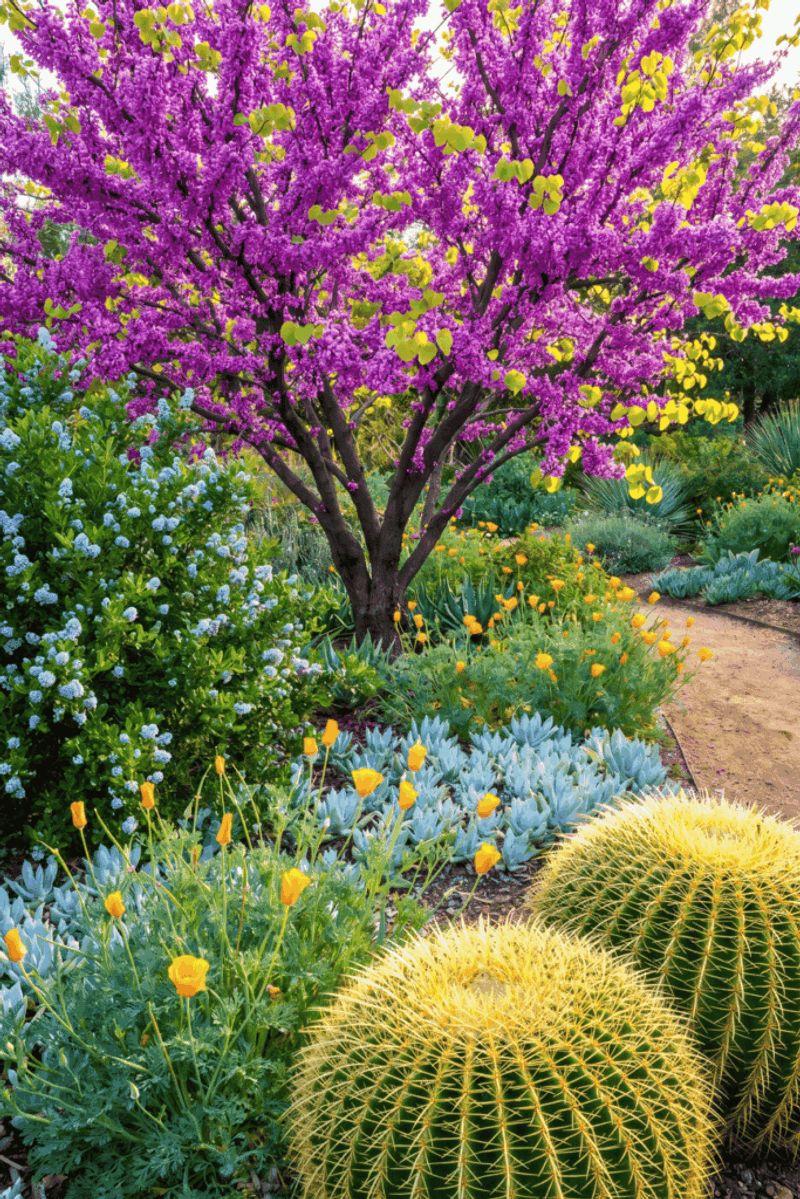
Okay, a small confession. Western redbud drops its leaves in winter, so it is a summer screen rather than a year-round wall.
Why include it? Because the show is worth it.
Magenta flowers cover bare branches in early spring, then heart-shaped leaves fill in thick right as you start using the patio.
It handles cold better than most natives, so foothill and Central Valley gardeners love it. Mix it with evergreen toyon or coffeeberry for a layered hedge that changes with the seasons.
Fall planting lets the roots settle before that first spring burst.