
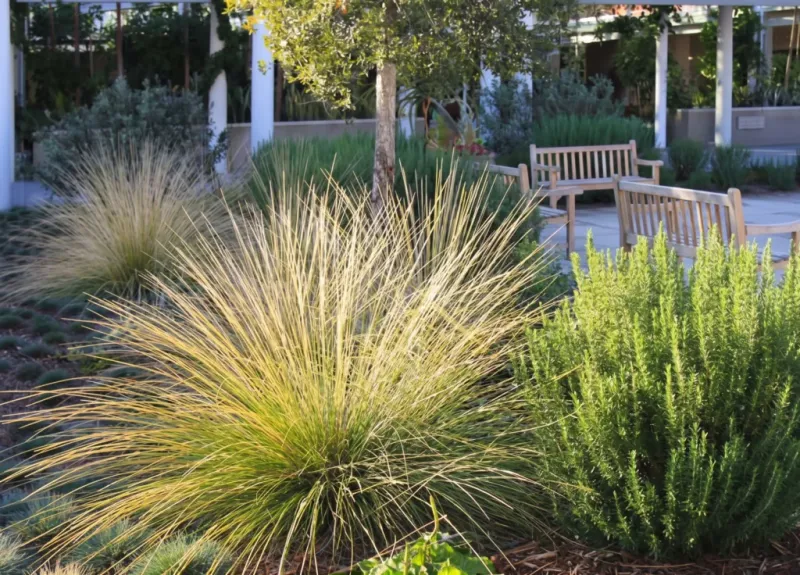
When the first big winter storm rolls in, a bare California slope can start moving faster than most homeowners expect. Many of us plant shallow-rooted ground covers or leave hillsides bare after clearing brush for fire safety, and that can quietly make erosion worse.
Native bunchgrasses offer a better fix because their roots can reach several feet into the soil, knitting it together while using very little summer water. Here are eight that can help hold your hill, feed local wildlife, and fit California fire and drought realities.
1. Purple Needlegrass (Stipa pulchra)
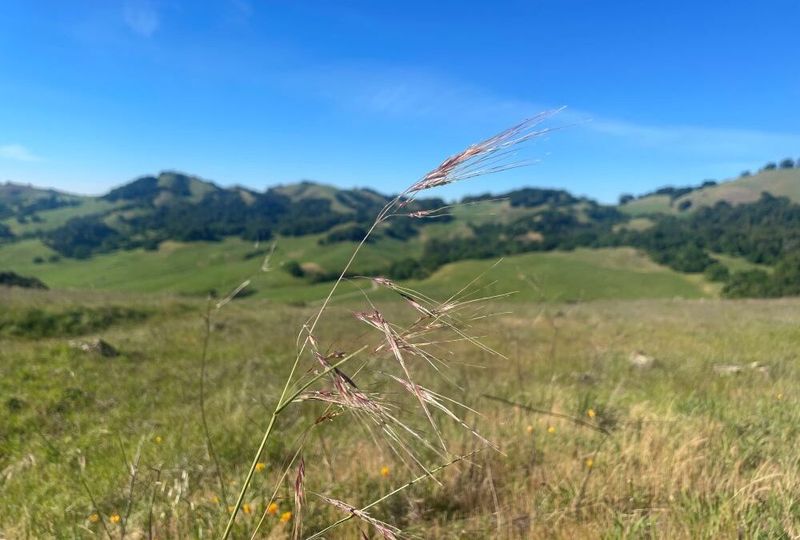
California chose purple needlegrass as its official state grass in 2004, and its roots earn the honor. Mature plants can send roots down six feet or more, anchoring loose topsoil far below where most garden plants ever reach.
It greens up with winter rain, flowers in spring with shimmering purple awns, then goes dormant and tan in summer. That summer rest means you can skip irrigation once it is established, which matters under local water limits.
Plant plugs in fall, roughly 12 to 18 inches apart, so the clumps can grab hold before heavy storms. Seed-eating birds like sparrows and finches tend to visit once heads ripen.
2. Deergrass (Muhlenbergia rigens)
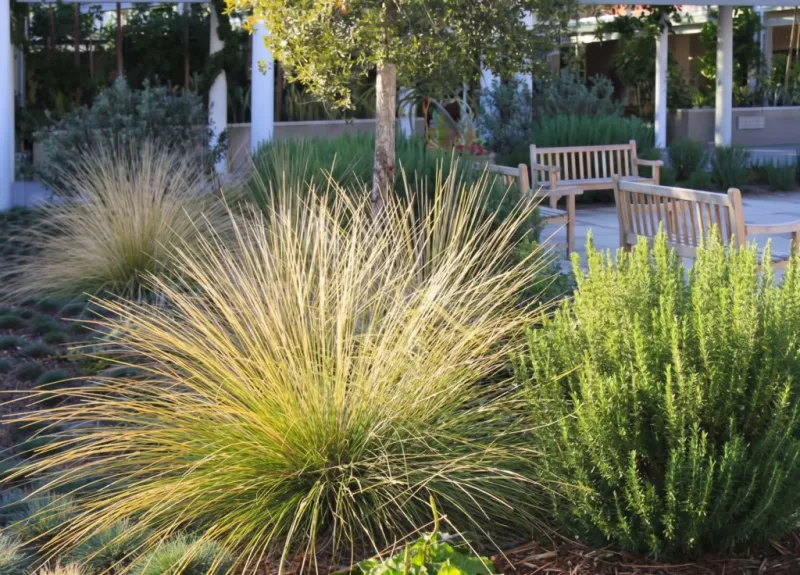
Picture a three-to-four-foot fountain of fine leaves holding the edge of a slope like a sandbag that grows. Deergrass is the heavyweight of this list, with a dense, fibrous root mass that can grip soil on steep banks and drainage edges.
Native basket weavers once harvested its flower stalks for coiled baskets, a neat bit of history for a backyard plant. It handles heat in inland valleys and tolerates both clay and sandy soil.
Space plants about four feet apart and use them along the lower edge of a hill where runoff gathers. Water deeply every few weeks the first summer, then taper off.
3. California Fescue (Festuca californica)
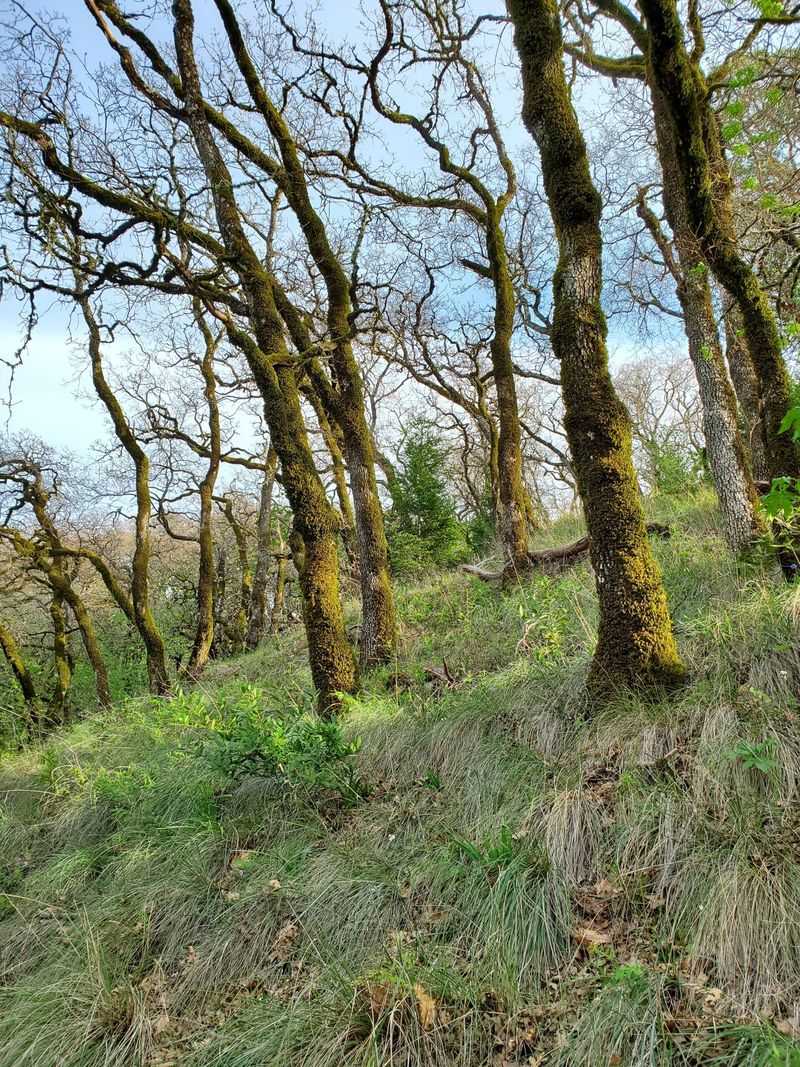
Got a shady slope under oaks where nothing seems to stick? California fescue is happy there, forming soft blue-green mounds about two feet tall.
Its roots work through woodland soil and help hold leaf litter and duff in place during storms. Unlike sun-loving grasses, it handles partial shade and can stay greener longer with a little summer moisture.
Avoid heavy summer watering right under native oaks, since that can harm the trees. Fescue fits that low-water rhythm well, making it a smart partner for oak-shaded properties in the Bay Area and coastal foothills.
4. Blue Wildrye (Elymus glaucus)
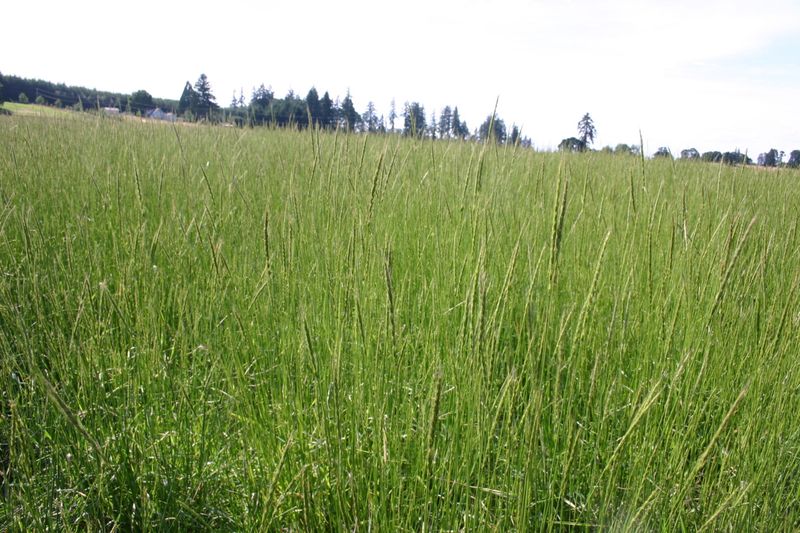
Speed is the selling point here. Blue wildrye sprouts fast from seed, often establishing in a single rainy season, which makes it a go-to for slopes that were just cleared or burned.
Erosion-control crews often use it in native seed mixes because it covers ground quickly while slower bunchgrasses settle in. Think of it as the first responder on your hill.
It may be shorter lived than some others, but it can reseed itself. Scatter seed in October or November, rake it in lightly, and let winter rain do the rest.
5. Creeping Wildrye (Elymus triticoides)
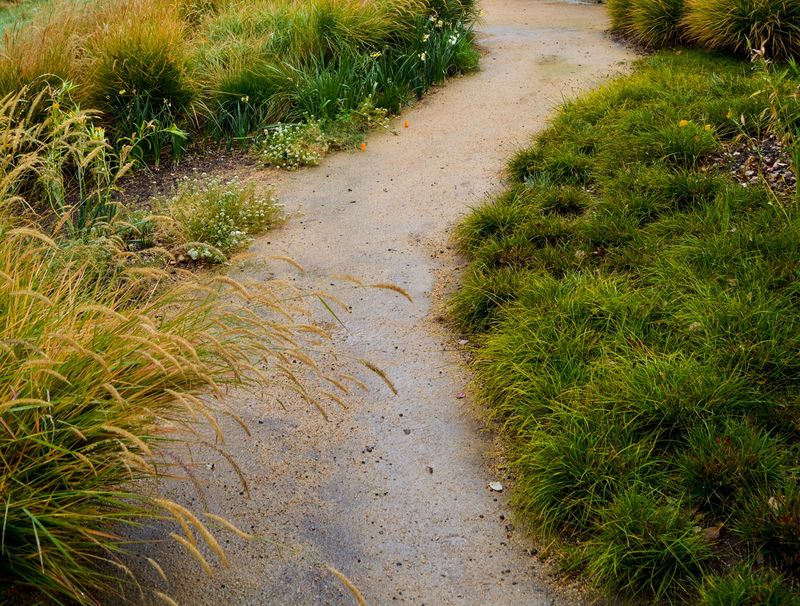
Most grasses on this list grow in tidy bunches, but creeping wildrye spreads underground by rhizomes. That running root network can weave a living mat across an entire bank.
It handles both wet winter soil and dry summers, and it can work as a mowable lawn alternative on gentler grades. Cultivars like Elymus triticoides ‘Grey Dawn’ offer a silvery look.
Give it room, because it does wander. Use it where you want full coverage rather than a neat border, and edge it near paths or flower beds.
6. California Meadow Sedge (Carex pansa)
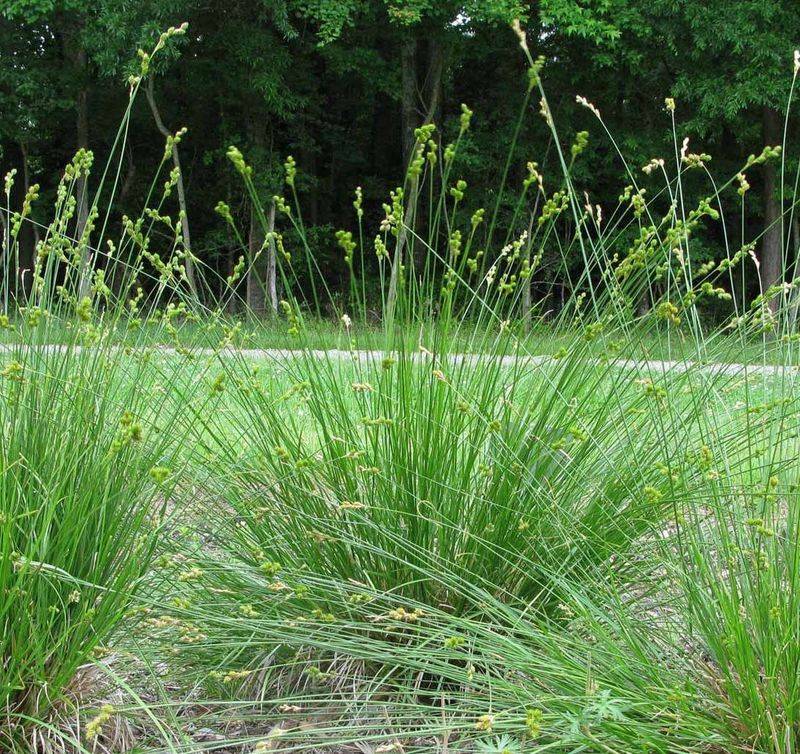
Technically a sedge, not a true grass, but homeowners swapping thirsty turf on mild slopes keep reaching for it. Carex pansa stays low and green, usually under eight inches, and spreads into a soft groundcover.
Its spreading rhizomes help bind topsoil, and it can be mowed occasionally or left shaggy. Coastal gardens tend to grow it with very little extra water, while hot inland yards may need some summer irrigation.
For a lawn-like look that still holds soil after a turf removal rebate project, it is hard to beat.
7. Nodding Needlegrass (Stipa cernua)
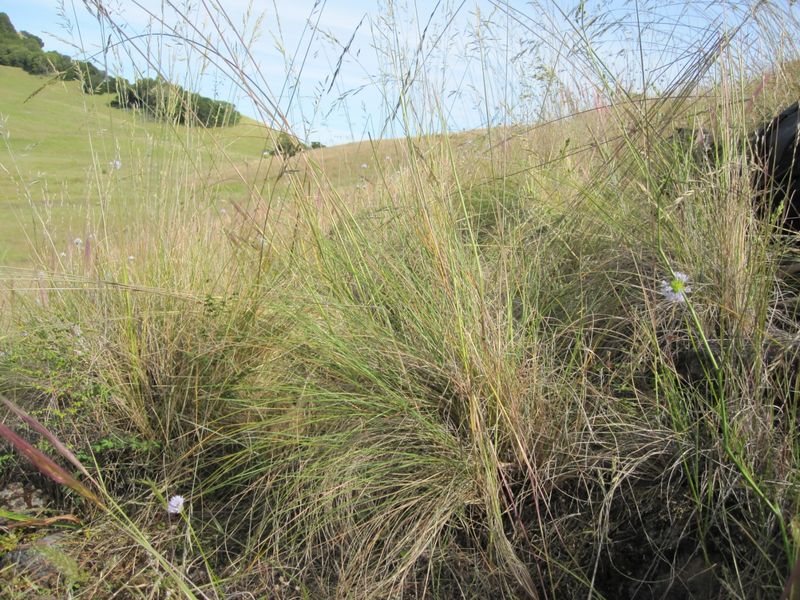
Hot, dry, south-facing slope? Nodding needlegrass is built for exactly that kind of punishing spot across Southern and Central California.
Its long, drooping awns give it a graceful look, and its deep roots help it survive summers that would cook other plants. It pairs nicely with coastal sage scrub companions like California sagebrush and buckwheat.
Plant in fall, water through the first dry season, then mostly let it be. Like other needlegrasses, it goes summer dormant, so trim dry tops if they sit close to your home.
8. California Brome (Bromus carinatus)
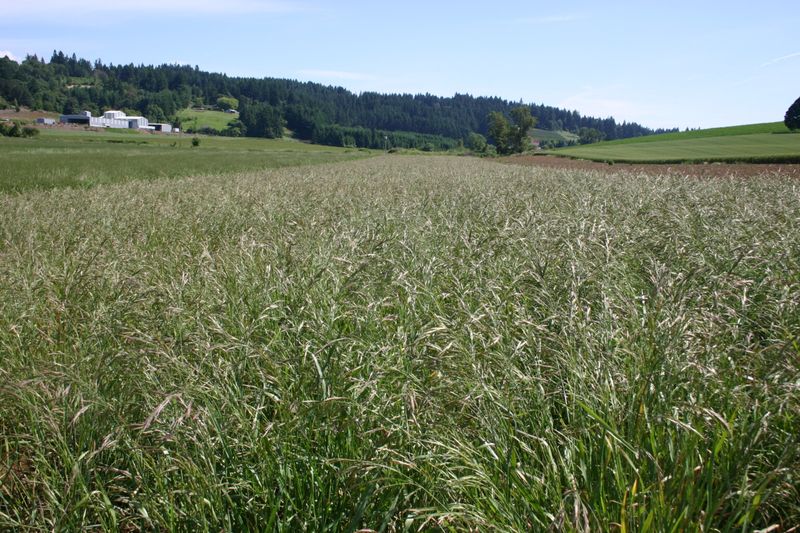
Restoration pros often call California brome a nurse grass. It establishes quickly from seed, shields bare soil during its first winter, and helps slower perennials get going.
It works well tossed into a mix with needlegrass and wildflowers like California poppy and lupine. That combo can support native bees while roots hold your slope.
A fire-smart tip for hillside homes: keep grasses within the first 30 feet of buildings low and cut back once they dry, following your local defensible space rules. Planted with that in mind, a native grass slope can be both safer and steadier this winter.