
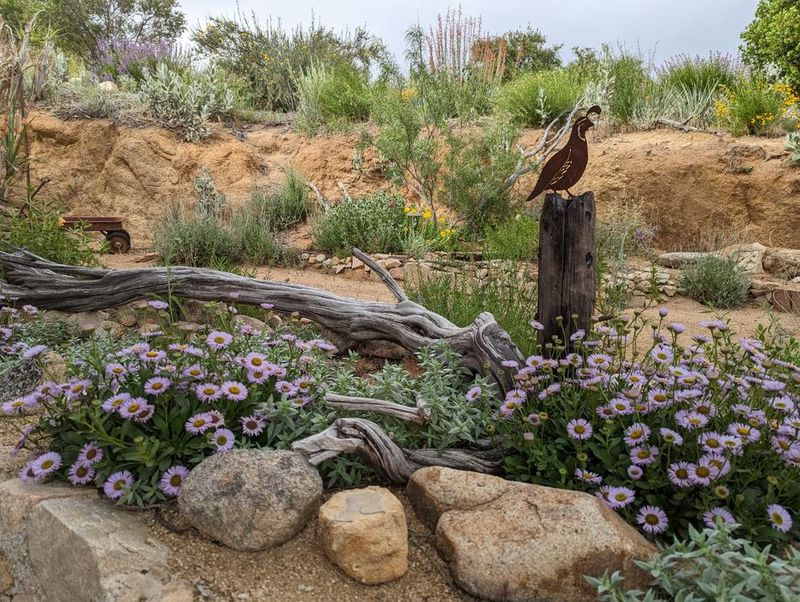
That skinny strip of dirt beside your driveway gets baked by the sun, splashed by car tires, and ignored until the weeds take over. The good news is that a handful of tough California natives can cover that ground, crowd out weeds, and sip only a little water once they settle in.
They also bring color, bees, and butterflies to a spot most people forget. Here are ten plants that turn a bare edge into the best-looking part of your yard.
1. Dwarf Coyote Brush (Baccharis pilularis ‘Pigeon Point’)
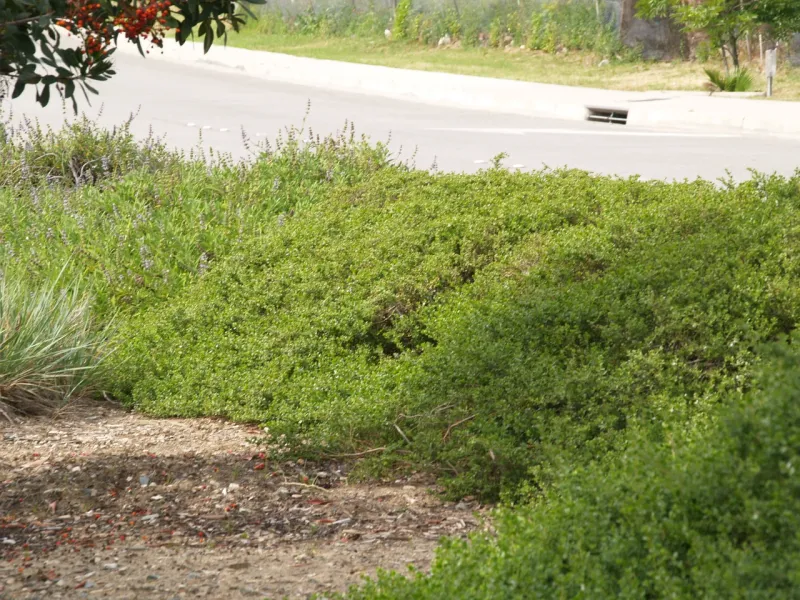
Ask any native plant nursery worker for a weed-smothering champion and the first answer is usually coyote brush. The low forms, like ‘Pigeon Point’ and ‘Twin Peaks,’ stay under two feet tall but stretch six to eight feet wide.
That dense green carpet leaves almost no light for weed seeds to sprout.
It handles reflected heat from concrete without sulking, and after the first summer it needs water only once or twice a month. Plant it from one-gallon pots in fall, spacing them about four feet apart.
By the second year, the plants knit together into one solid mat.
Give it a hard trim every few winters to keep it fresh and low. Male selections are best, since they skip the fluffy seed heads that can look messy near a driveway.
2. Creeping Manzanita (Arctostaphylos ‘Emerald Carpet’)
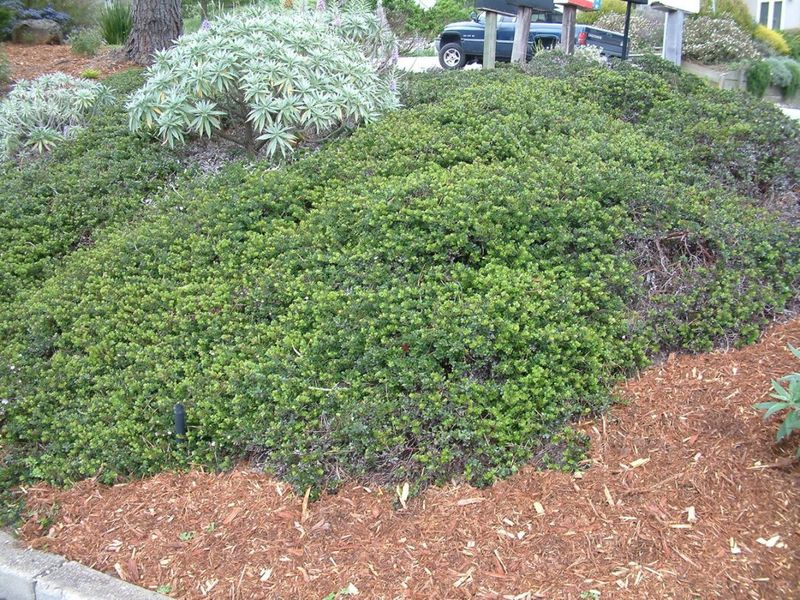
Picture a shiny green rug that stays tidy all year with almost zero help. ‘Emerald Carpet’ manzanita grows about a foot tall and forms a tight, glossy surface that weeds struggle to break through.
In late winter, tiny pink bell-shaped flowers pop up, and hummingbirds show up to sip them. The reddish stems peek through the leaves for a little extra charm.
It prefers good drainage, so a slightly mounded strip works well.
Fun fact: manzanita means little apple in Spanish, named for its tiny round berries. Keep summer watering light once established, because soggy soil is the one thing it truly hates.
3. California Lilac (Ceanothus ‘Yankee Point’)
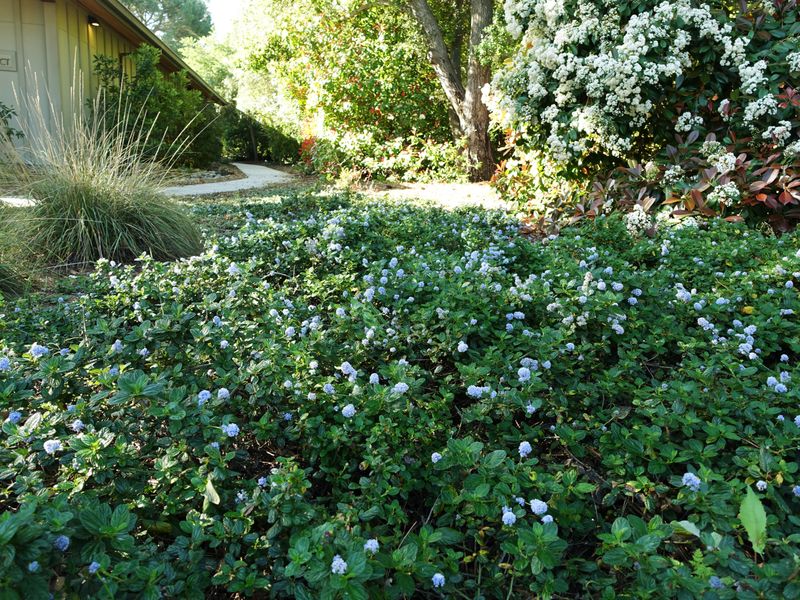
Spring hits differently when your driveway edge erupts in electric blue. Ceanothus ‘Yankee Point’ grows two to three feet tall and spreads up to ten feet, so a few plants can fill a long strip fast.
Bees go wild for the flower clusters, and the dark green leaves stay thick all year. Weeds get shaded out quickly once the branches touch.
It thrives near the coast but handles inland heat with a bit of afternoon shade.
Skip summer water after year two, since too much irrigation can shorten its life. Light tip pruning after bloom keeps it from crowding onto the pavement.
4. Prostrate Sage (Salvia ‘Bee’s Bliss’)
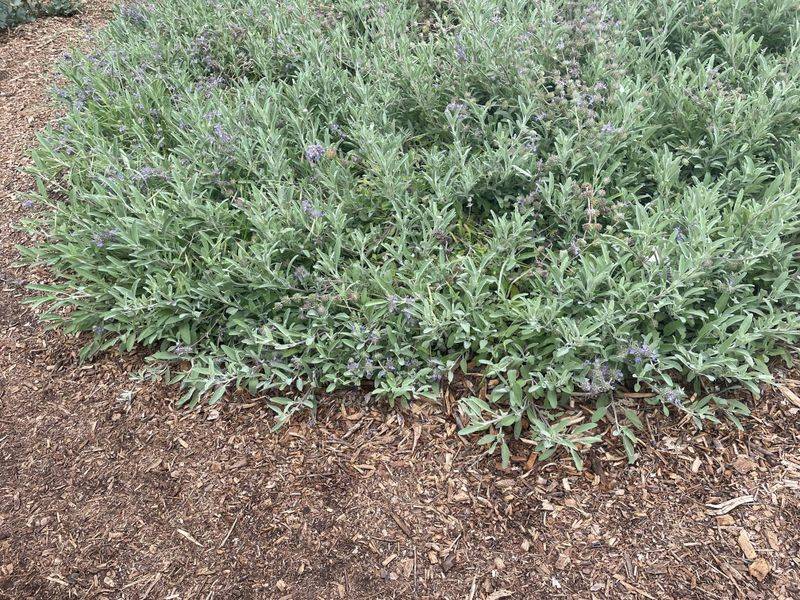
Brush against it while grabbing groceries and you get a burst of fresh herbal scent. ‘Bee’s Bliss’ is a hybrid of native sages that stays low and sprawls wide with soft gray-green leaves.
Lavender flower spikes rise in spring and keep pollinators busy for weeks. The silvery color also bounces light, which makes a narrow strip look brighter and wider.
It grows fast, often covering six feet in a single season. Cut back the spent flower stems in summer, and the plant stays neat and dense enough to keep weeds guessing.
5. California Fuchsia (Epilobium canum)
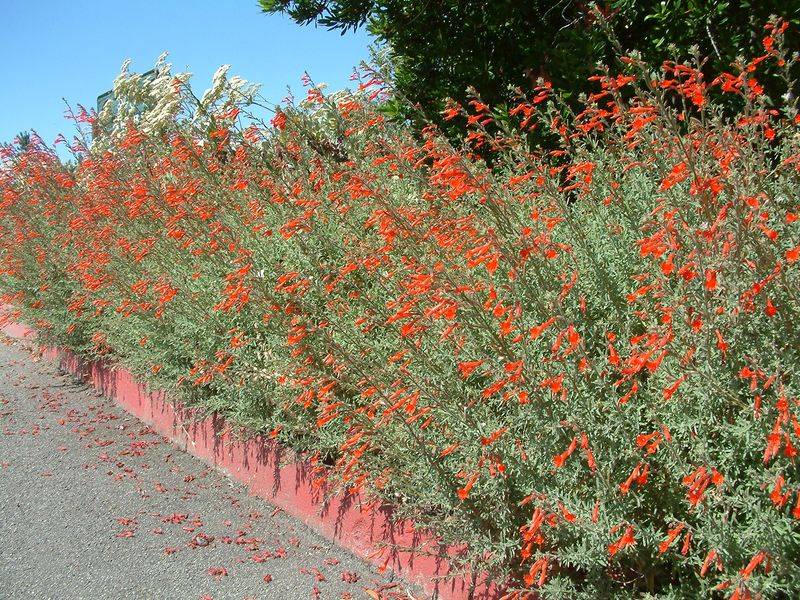
When everything else looks tired in August, California fuchsia is just getting started. Fiery orange-red tubes cover the plant from late summer into fall, right when hummingbirds need food most.
It spreads by underground runners, filling gaps between other plants and leaving little room for weeds. Low types like ‘Everett’s Choice’ stay under a foot tall, which is ideal for a driveway edge.
Cut it nearly to the ground in winter. It might look like you killed it, but fresh growth returns every spring, stronger than before.
6. Seaside Daisy (Erigeron glaucus)
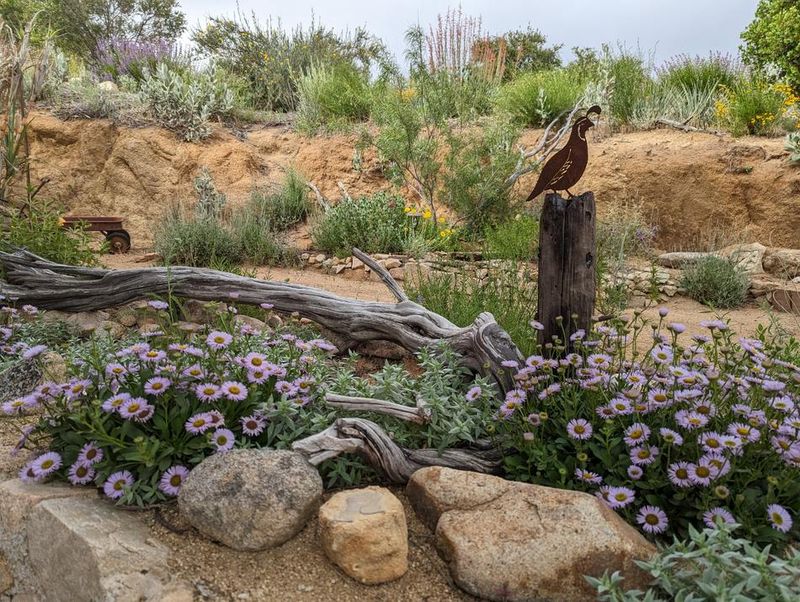
Cheerful is the only word for it. Seaside daisy forms soft, low clumps topped with pale lavender petals and sunny yellow centers for much of the year.
Native to coastal bluffs, it shrugs off salty wind and sandy soil. Inland, it does best with some afternoon shade and an occasional deep soak.
Plant clumps a foot or two apart and they quickly merge into a friendly border.
Deadhead now and then to encourage more blooms. Kids love picking these, and the plant hardly notices.
7. Yarrow (Achillea millefolium)
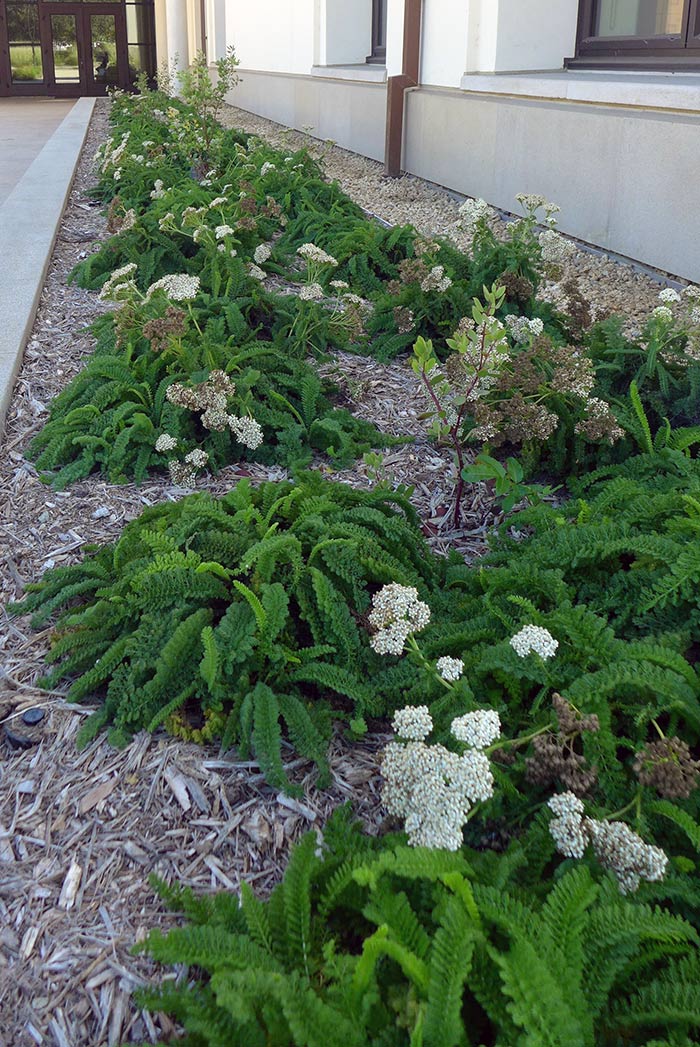
Here is a plant you can actually step on. Native yarrow makes a ferny green mat that tolerates foot traffic, so it works where people hop out of cars.
Its spreading roots fill every bare inch, which leaves weeds with nowhere to settle. Mow it a few times a year for a lawn-like look, or let it bloom with flat white flower clusters.
History bit: the name Achillea comes from the Greek hero Achilles, who supposedly used it on wounds. Today it mostly heals ugly patches of dirt.
8. Blue-Eyed Grass (Sisyrinchium bellum)
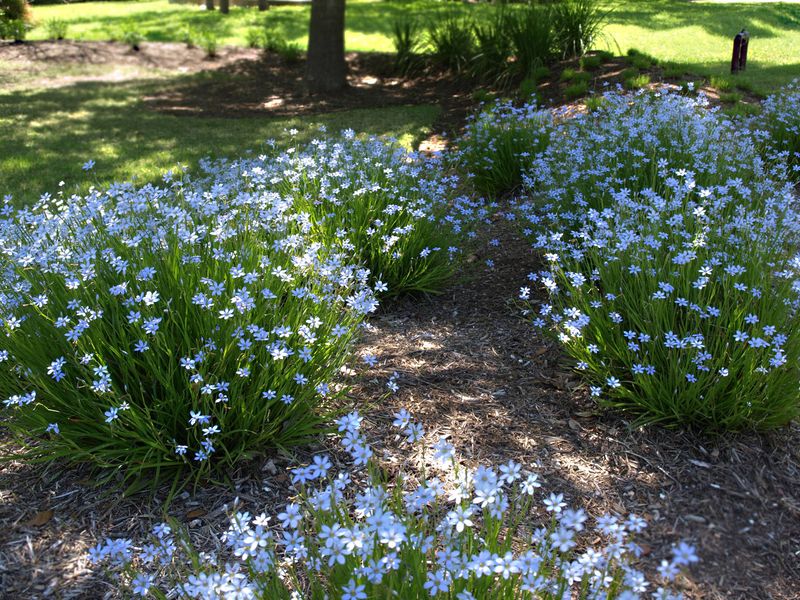
Despite the name, blue-eyed grass is actually in the iris family. Its grassy tufts sprout small purple-blue flowers with golden eyes each spring.
It reseeds gently, tucking itself into open spaces before weeds can claim them. In summer it may go dormant, so pair it with evergreen groundcovers for year-round coverage.
It costs little, plants easily, and adds a delicate touch next to tougher shrubs.
9. Deer Grass (Muhlenbergia rigens)

Got a long driveway that needs structure? Deer grass forms graceful fountains about three to four feet tall, with slender plumes that glow in evening light.
Planted in a row, it creates a soft living border that frames the drive. Native peoples used the flower stalks to weave baskets, a tradition still practiced today.
Put a groundcover like yarrow between clumps to block weeds underneath.
Once a year, cut it back in late winter. Otherwise it takes heat, drought, and clay soil without complaint.
10. Pacific Coast Iris (Iris douglasiana)
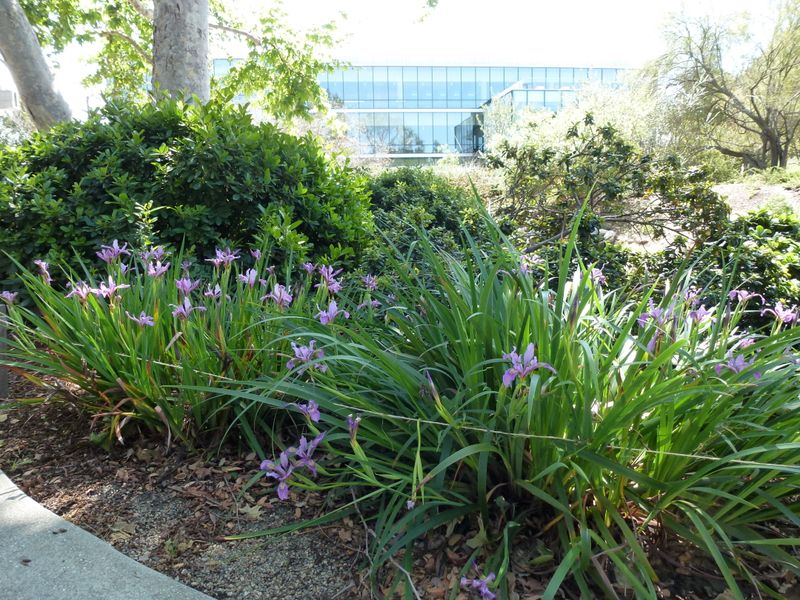
Not every driveway strip roasts in full sun. If yours sits under a tree or beside the house, Pacific Coast iris is a beauty that thrives in dappled shade.
Its dense clumps of strappy leaves spread slowly, forming a weed-blocking mass. Spring brings flowers in purple, cream, yellow, and even rusty bronze.
Plant in fall when rains arrive, and avoid heavy summer water. A shady edge suddenly becomes a showpiece.
Pair these ten plants in a strip, mulch well, and the bare dirt and weeds become a memory.