
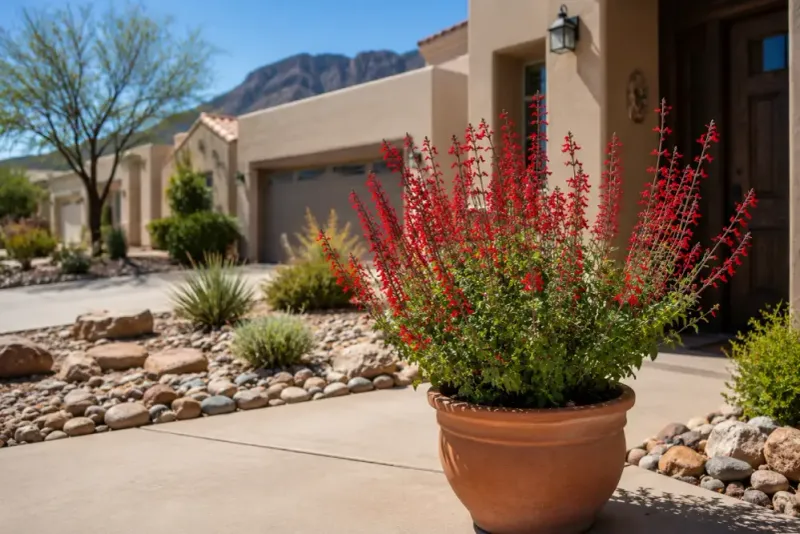
That strip of soil next to your driveway can get hotter than any other spot in your yard. Concrete soaks up the Texas sun all day and throws it right back at whatever is planted nearby, often well into the evening.
Most nursery plants cook there by July, but a handful of Texas natives were built for exactly this kind of punishment. Here are ten that can turn your hottest, toughest edge into a bed that looks good all summer long.
1. Blackfoot Daisy
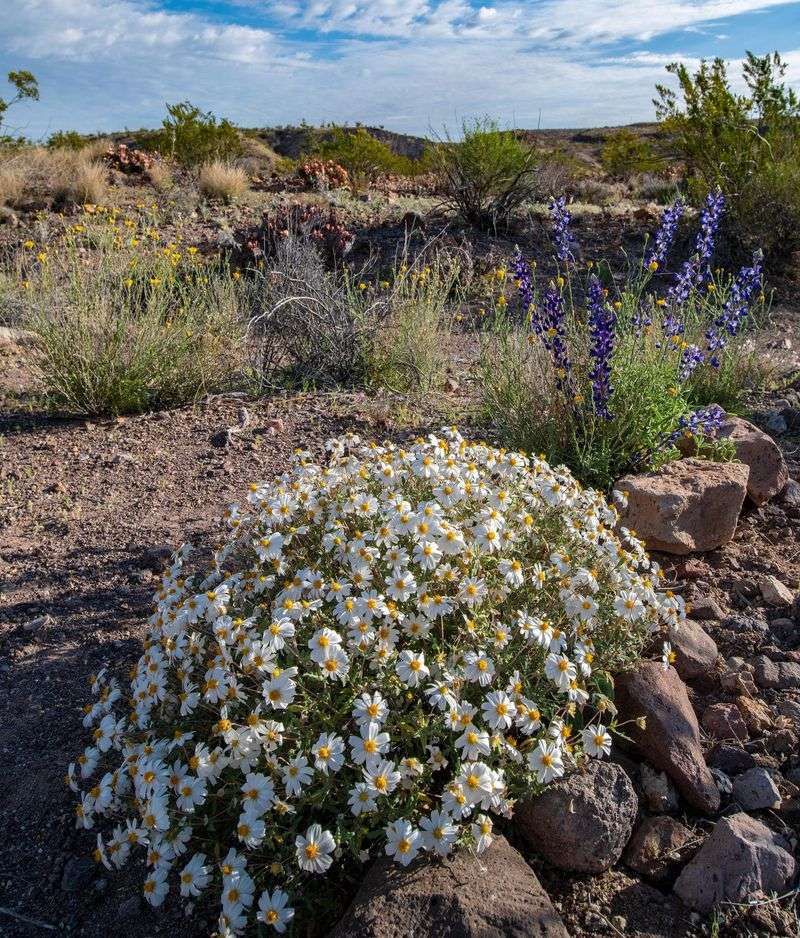
Picture a tidy cushion of white daisies, each with a sunny yellow eye, blooming happily right against hot concrete in August. Blackfoot daisy (Melampodium leucanthum) grows wild on rocky Texas hillsides, so a sizzling driveway edge feels like home to it.
The plant stays small, usually about a foot tall and wide, which makes it ideal for narrow strips. It smells faintly of honey, and small bees love it.
The one rule is drainage. Rich, soggy soil and heavy watering are what kill it, not heat, so plant it in gritty or rocky soil and then mostly leave it alone.
2. Texas Sage
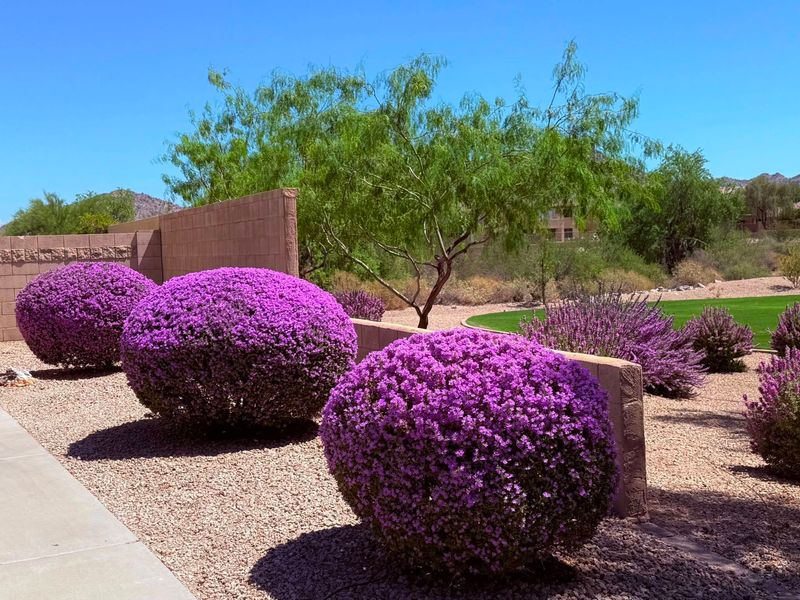
Old-timers call it the barometer bush, and for good reason. Texas sage (Leucophyllum frutescens) often bursts into purple flowers within days of a summer rain or a jump in humidity, almost like it can sense the weather.
Its silvery leaves are the secret to its heat tolerance. That pale coating reflects sunlight and cuts water loss, so the shrub shrugs off the glare bouncing up from a sidewalk.
Give it full sun and space to reach 4 to 6 feet. Skip the hedge trimmers, since tight shearing reduces blooms and leaves it looking boxy instead of soft and natural.
3. Damianita
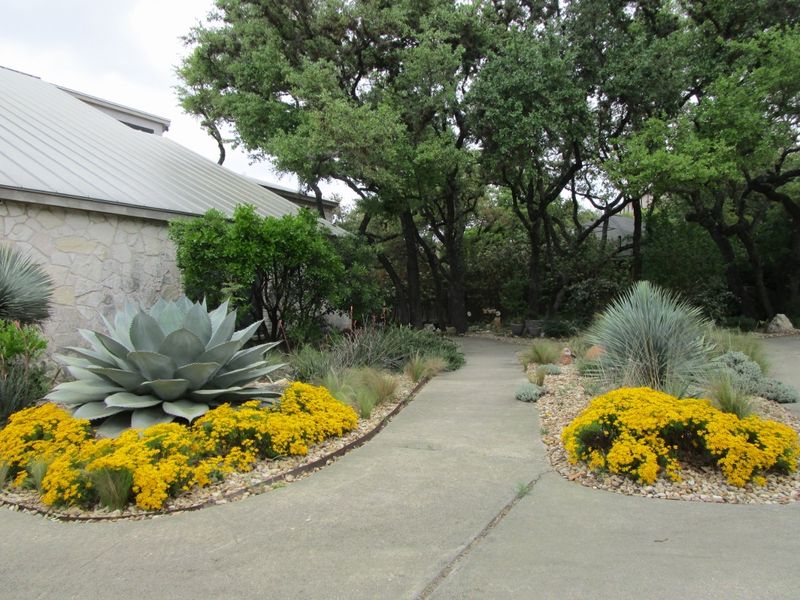
If you want a splash of gold where nothing else will grow, damianita is your plant. Each spring it covers itself in bright yellow daisies, and it often repeats the show in fall.
The foliage is needle-fine and smells a bit like resin when you brush past it. Deer usually leave it alone, which is a bonus for Hill Country homeowners.
Damianita stays under a foot tall, so it works beautifully as an edging along walks. A light shearing after the spring bloom keeps it dense and fresh-looking through the heat.
4. Red Yucca
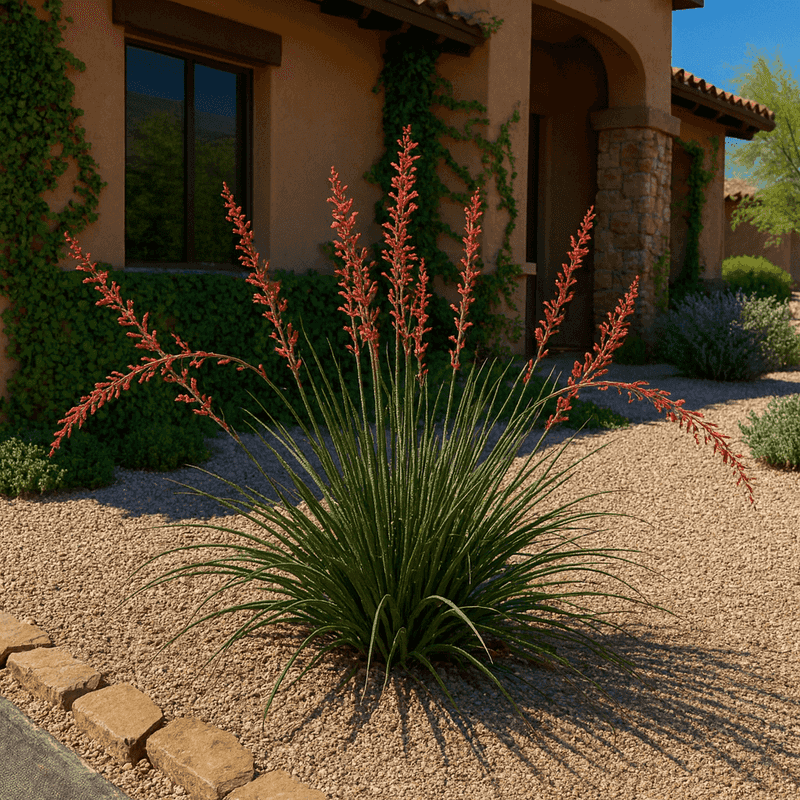
Here’s a fun twist: red yucca is not actually a yucca. Hesperaloe parviflora is a close cousin, and it skips the dangerous sharp tips that real yuccas carry, so it’s safe near walkways where kids and dogs run by.
From late spring into fall, tall arching stalks rise above the grassy clump and hold coral-pink tube flowers. Hummingbirds treat those stalks like a drive-through window.
Once established, red yucca can get by on very little extra water. It handles reflected heat, poor soil, and neglect, making it one of the lowest-effort choices on this list.
5. Zexmenia
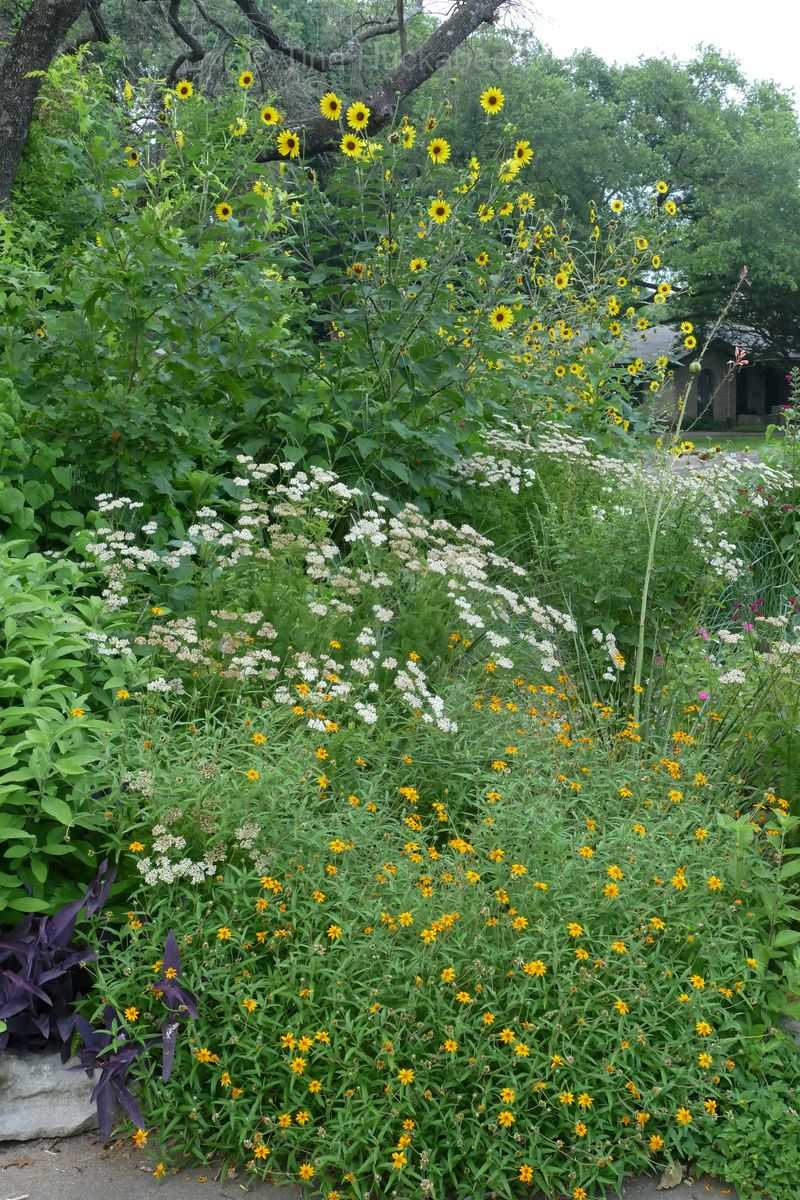
Some plants just keep showing up for work. Zexmenia (Wedelia acapulcensis var. hispida) blooms with orange-gold daisies from spring until frost, even through the hottest stretches of a Texas summer.
Its sandpapery leaves help it resist drying out. The plant grows into a loose mound about 2 feet tall, filling gaps along a walk without much fuss.
Butterflies visit often, and small birds may pick at the seeds later in the season. Cut it back by about half in late winter to keep it from getting leggy.
6. Flame Acanthus
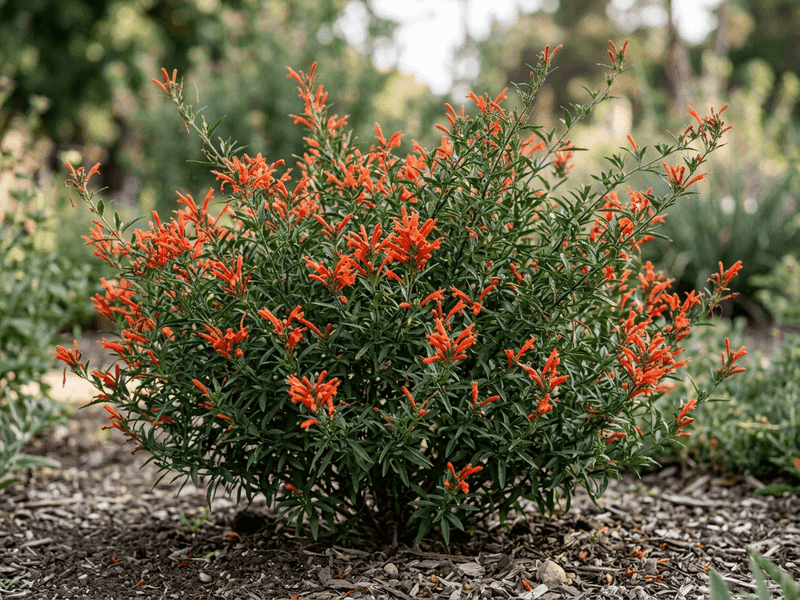
When late summer leaves most gardens tired and crispy, flame acanthus is just hitting its stride. Narrow orange-red tubes cover the shrub from midsummer into fall.
Hummingbirds rely on it heavily, especially during fall migration through Texas. Planting one near your driveway gives you a front-row seat to the action every time you pull in.
It may die back in a hard freeze but usually returns from the roots. Many gardeners cut it to about a foot tall in late winter on purpose, since fresh growth flowers best.
7. Gregg’s Mistflower
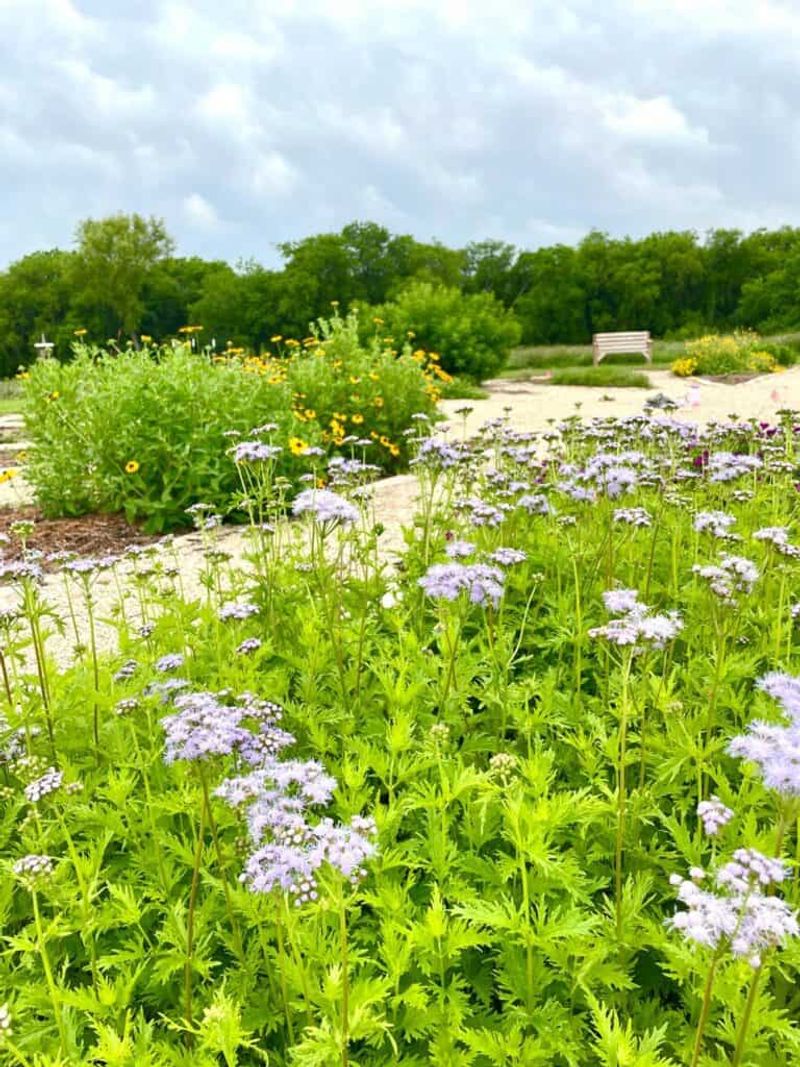
Want butterflies by the dozen? Plant Gregg’s mistflower and wait for fall.
Queen butterflies in particular can crowd its fuzzy lavender puffs until the whole plant seems to flutter.
The lacy foliage spreads by underground runners, forming a soft patch about 18 inches tall. That spreading habit is helpful along a sidewalk, where it fills in bare ground that would otherwise bake.
It appreciates an occasional deep drink during long dry spells. Still, compared to thirsty annuals, it asks for very little and pays you back in wings.
8. Autumn Sage
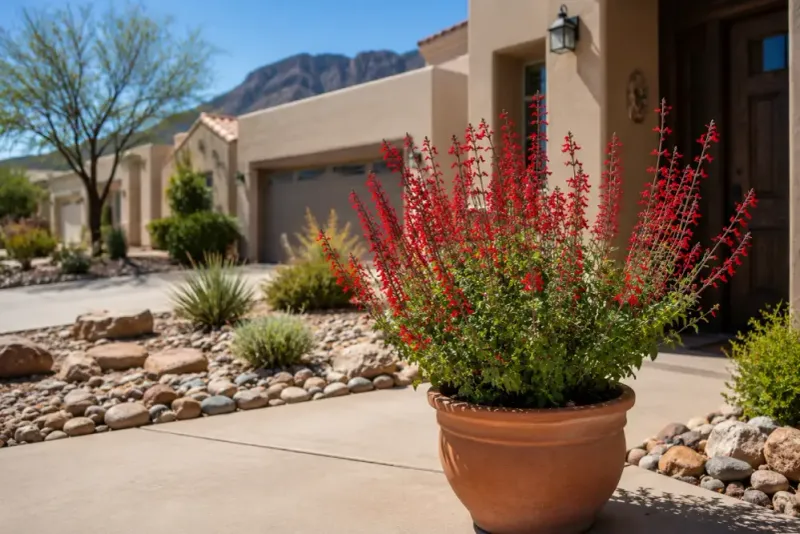
Ask ten Texas gardeners for a dependable red flower and plenty will say Salvia greggii. Despite its name, autumn sage blooms off and on from spring through fall, with a strong burst once nights cool down.
Varieties come in red, pink, coral, white, and purple, so you can match your house trim or front door. Shrubs stay around 2 to 3 feet, small enough for most walkway beds.
A quick trim in midsummer can encourage a fresh flush of flowers. Good drainage matters, so add some decomposed granite if your soil is heavy clay.
9. Lindheimer’s Muhly
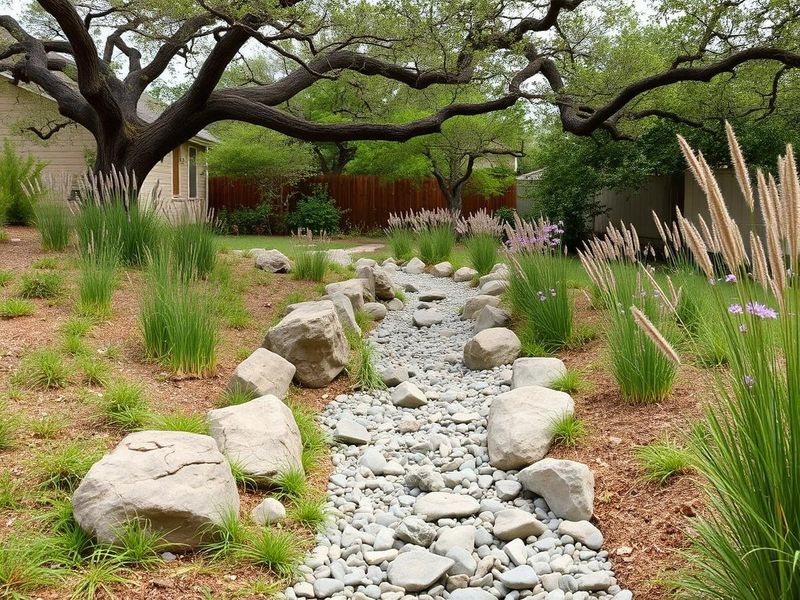
Grasses bring movement, and Lindheimer’s muhly brings it with style. Its blue-gray fountain of leaves sways in the breeze, and in fall it sends up airy silvery plumes that glow at sunset.
Named for Ferdinand Lindheimer, a German botanist sometimes called the father of Texas botany, this grass is native to the Edwards Plateau. It handles heat, drought, and alkaline soil without complaint.
Clumps reach about 4 to 5 feet, so save it for wider strips along longer driveways. It makes a softer, more natural alternative to pampas grass, which many gardeners now avoid.
10. Prickly Pear
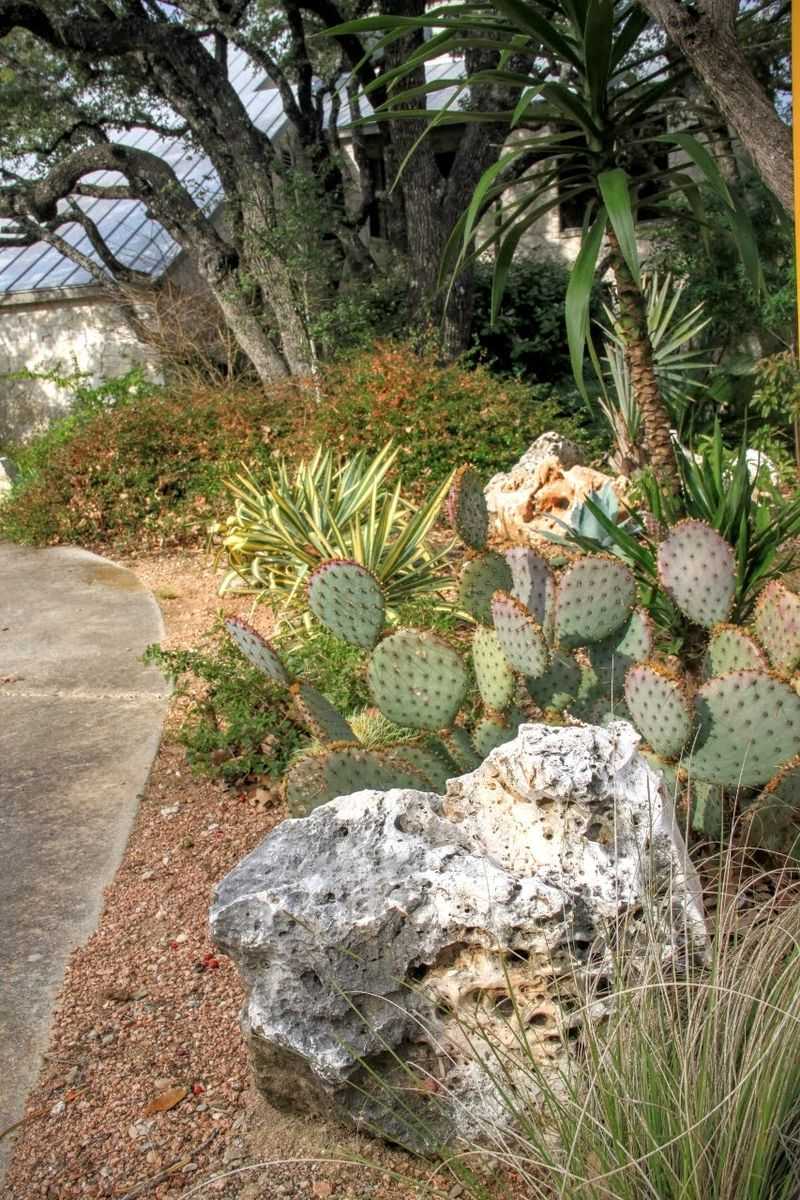
Nothing says Texas quite like a prickly pear, and it happens to be the state plant. If the reflected heat near your driveway feels like a desert, why not plant something that comes from one?
Flat green pads store water, so this cactus can ride out long droughts and city watering limits. Spring brings yellow or orange blooms, followed by purple fruit called tunas that birds and other wildlife enjoy.
Plant it a few feet back from the pavement so nobody brushes its spines. Spineless types exist too, though they may still carry tiny hair-like glochids, so wear gloves when handling.