
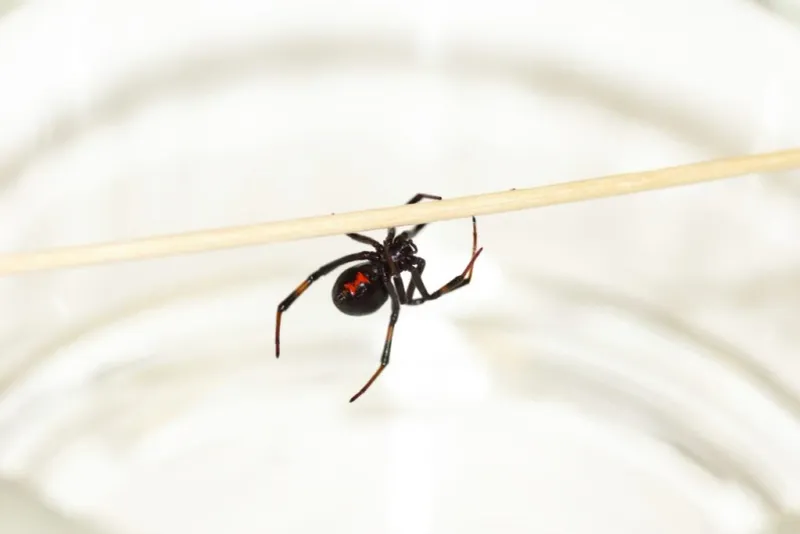
Finding a large, dark spider in your California garden or garage can stop you cold, especially when black widows are a real concern in the state. The good news is that one quick look at the web, not the spider itself, can often point you in the right direction before you get any closer.
Many spiders that alarm homeowners turn out to be orb weavers, harmless garden helpers with a very different web style, while a truly widow-like spider in a sheltered spot may be something else entirely. Knowing the difference helps you protect beneficial wildlife and respond appropriately when caution actually matters.
The feared look-alike may be a first impression
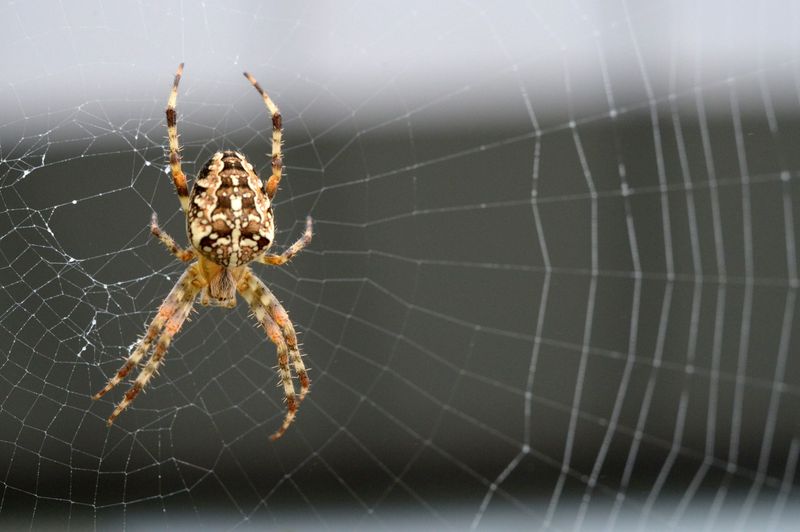
Seeing a large, dark spider in your yard and immediately thinking “black widow” is an understandable reaction, but the spider that triggered that alarm is often something quite different. UC IPM’s guide to common garden spiders describes orb weavers, including the western spotted orb weaver (Neoscona oaxacensis), as large, frequently patterned outdoor spiders that build elaborate circular webs in open garden spaces.
Their body shape, coloring, and preferred habitat set them apart from black widows in ways that become obvious once you know what to look for.
An orb weaver typically sits at the center of a wheel-like web strung between plants, fence posts, or porch rails, fully visible in the open air. A mature female western black widow, by contrast, tends to stay close to a dark, sheltered retreat, whether that is a corner of a garage wall, the underside of patio furniture, or a gap in stacked firewood.
The settings alone suggest different species before you even focus on the spider’s body.
Where the look-alike comparison carries more weight is with false widows and other widow relatives. UC IPM’s widow spider resource notes that false widows share the rounded abdomen and tangled cobweb habits of true widows and are frequently confused with them.
So if you spot a dark, bulbous spider tucked into a messy web near a shed or outdoor cupboard, the identity question is more complicated than a simple orb-weaver-versus-black-widow comparison. Starting with the web and the setting, rather than a vague sense of visual resemblance, gives you a faster and more reliable first read on what you are actually looking at.
Start with the web, not the spider
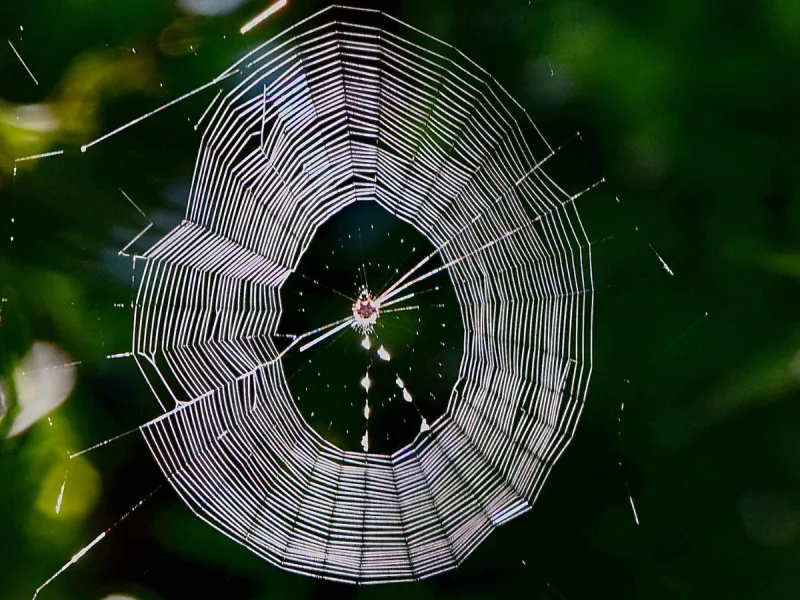
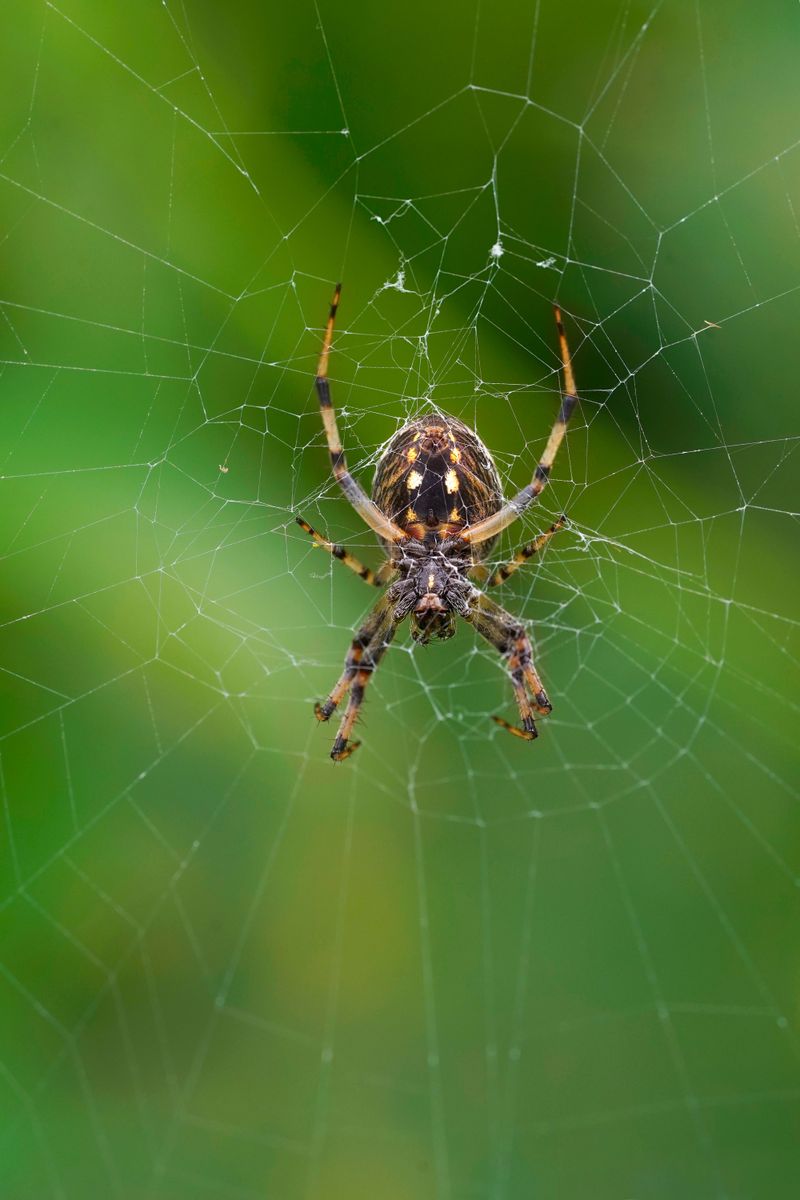
Before you try to get a closer look at the spider itself, spend two seconds studying the web. An orb weaver’s web is one of the most recognizable structures in the natural world: a neat, roughly circular design with spokes radiating from a central hub and concentric rings connecting them, like a bicycle wheel stretched between garden plants or fence posts.
Seeing that pattern from several feet away is a meaningful first clue that you are probably not looking at a widow spider.
According to UC IPM’s guide to widow spiders and their relatives, black widows build irregular, tangled cobwebs rather than organized orb structures. These webs are typically anchored to a concealed retreat in a dark, undisturbed spot, such as the corner of a garage, the underside of a shelf, or a gap in a wood pile.
The web’s messy, three-dimensional tangle looks nothing like the clean geometry of an orb weaver’s work.
That said, the web check narrows the possibilities rather than closing the case. Spiders sometimes wander away from their webs, particularly at night or after prey has been scarce.
Webs can also be partially destroyed by wind, rain, or an animal brushing against them, leaving an incomplete or ambiguous structure. Some spider families produce webs that fall between the two obvious types, and a few species build webs that look somewhat organized without being true orbs.
The Natural History Museum of Los Angeles County’s SoCal Webs identification resource reinforces that web architecture is a useful starting clue but that species-level certainty often requires a clear photograph from multiple angles. Treat the web as your fastest first filter, then gather more information before drawing a firm conclusion.
A classic orb web usually points to a garden helper
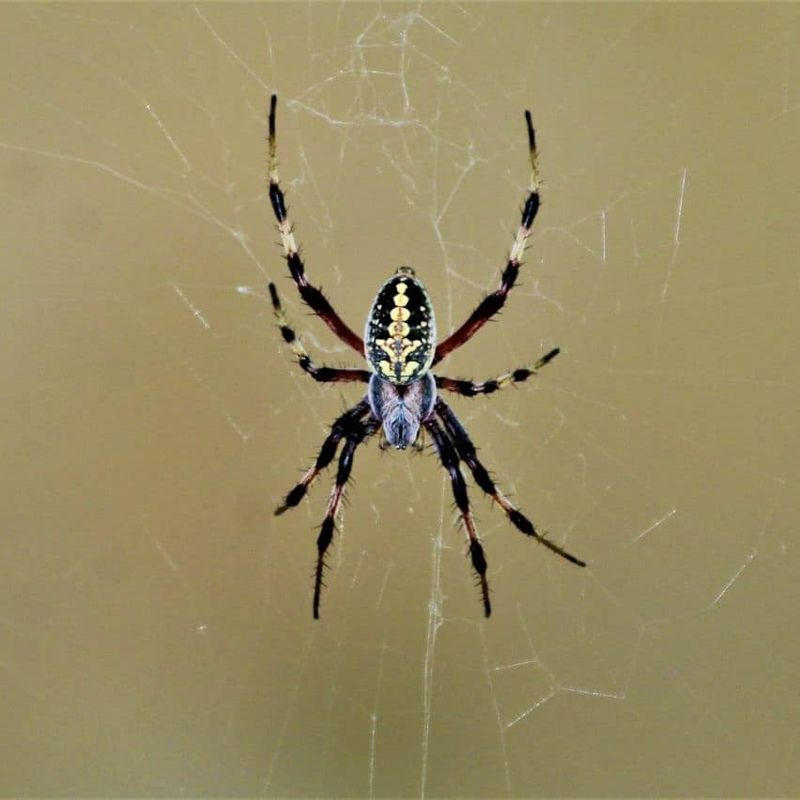
When the web fits the spoke-and-ring description, the spider at its center is most likely an orb weaver, and that is generally good news for your garden. UC IPM identifies the western spotted orb weaver as one of the common garden spiders found across California, often appearing in late summer and fall when the spiders are fully grown and their webs are easiest to spot.
These spiders tend to be noticeably large, and their abdomens are often patterned with browns, yellows, or whites rather than a uniform shiny black, which is another visual cue that separates them from the typical appearance of a mature female black widow.
Keep in mind that “garden spider” is a broad common name that gets applied to many unrelated species. Seeing a large spider in an orb web does not automatically identify the species, but it does place the spider in a group with a generally low-risk profile for homeowners.
Utah State University Extension describes orb-weaving spiders as not a known health hazard and extremely unlikely to bite people, though calling them completely incapable of biting would go too far.
Orb weavers catch insects and other small arthropods in their webs, which makes them part of the garden’s natural predator community. UC IPM’s biological control guidance supports the value of natural predators in general, though the evidence points to general insect predation rather than any guaranteed reduction of a specific pest.
An orb weaver in a corner of your vegetable patch is catching whatever flies or crawls into its web, and that ecological role is worth acknowledging before you decide what to do next.
A tangled web raises different possibilities
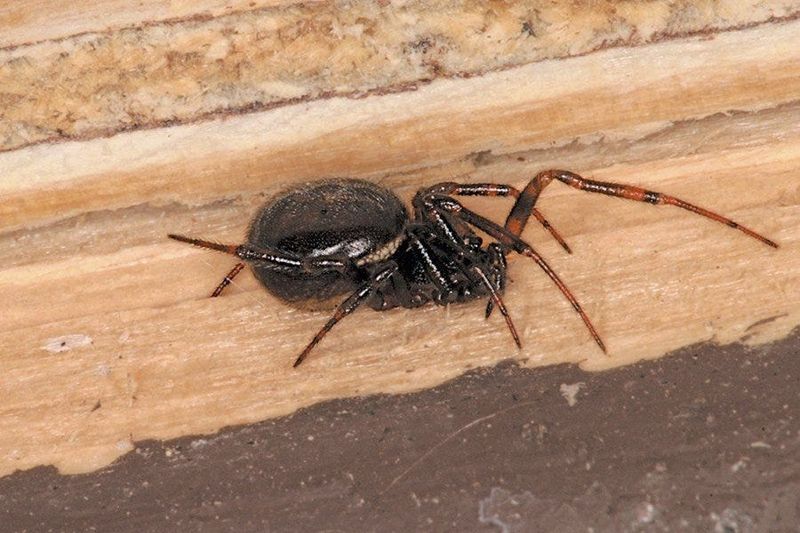
A spider that is dark, round-bodied, and sitting in a chaotic tangle of web near a garage door, shed wall, patio chair leg, or outdoor cupboard belongs to a different identification category than an orb weaver. That combination of body shape, web type, and sheltered location is where the widow spider question becomes genuinely relevant and where a little more caution is warranted.
False widows, particularly Steatoda grossa, are one of the more common sources of confusion in California. UC IPM notes that false widows share the rounded abdomen and tangled cobweb habits of true widows and are frequently mistaken for them.
The false black widow is typically chocolate brown and lacks the red coloration associated with mature female black widows. Its bite is not considered highly toxic, but “harmless” is too strong a word because it is capable of biting, and reactions vary among individuals.
Brown widows add another layer of complexity for homeowners in Southern California. Established populations of brown widows are concentrated particularly in the Los Angeles Basin area, and UC IPM’s distribution information indicated that confirmed populations had not spread north of that region, into the Central Valley, or into desert areas as of its 2016 update.
Brown widows build tangled webs in sheltered spots similar to those favored by western black widows, and their egg sacs, which have a distinctive spiky surface, can help distinguish them from other widow species. This article is not a complete guide to every widow-like spider in California, but the takeaway is clear: a dark, bulbous spider in a messy web near a structure deserves more caution than an orb weaver in an open garden web, and the species possibilities are broader than a simple black-widow-or-not question.
The hourglass helps but cannot settle every case
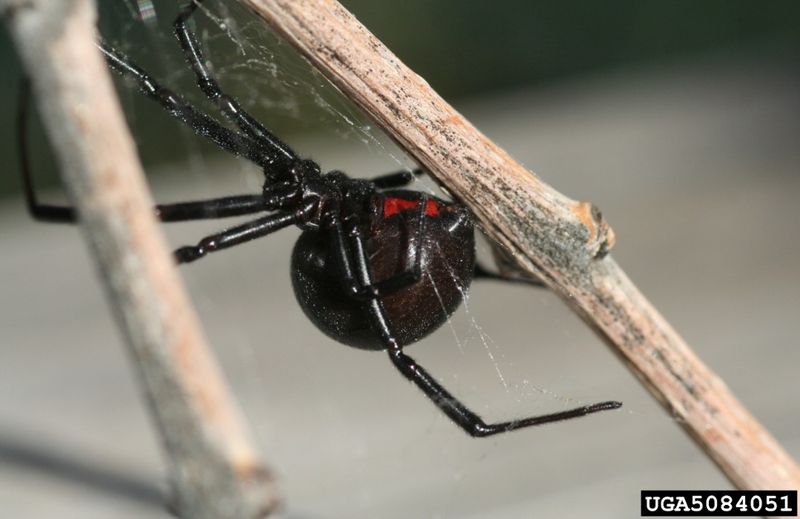
Many people assume that checking for the red hourglass marking on a spider’s underside is the definitive test for a black widow. The marking is genuinely useful, but it comes with important limits that make it unreliable as a sole identification tool, especially if getting close enough to see it means approaching an unknown spider.
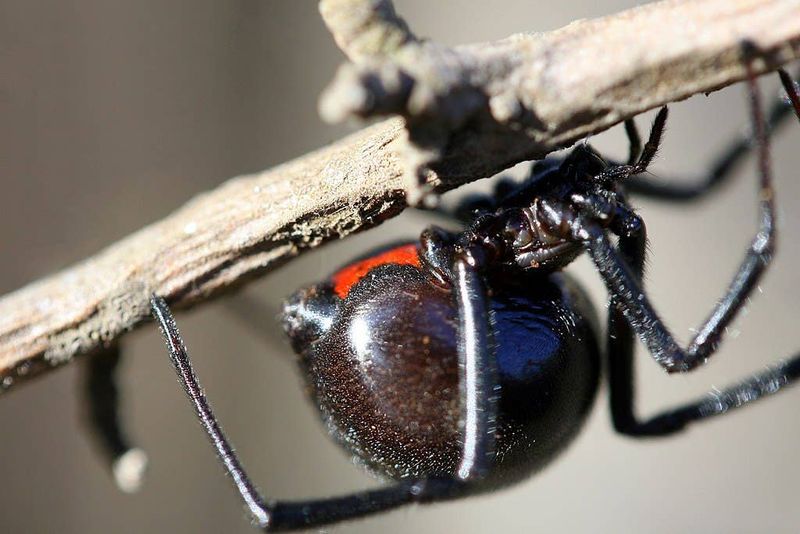
A mature female western black widow (Latrodectus hesperus) is typically shiny black with a notably rounded abdomen and a red or orange marking on her underside. UC IPM explains that the underside marking may appear as two separated triangles, a triangle and a bar, a faint smudge, or, rarely, may not be visible at all.
Relying on “no hourglass, so it must be safe” is a conclusion the marking cannot support on its own.
Young black widows and males look substantially different from the familiar adult female. Immature black widows often carry orange, yellow, or white markings on a lighter body, which can make them look like a completely different species to an untrained eye.
Adult males are smaller than females, lighter in color, and carry different body markings. Both immature and male black widows are far less likely to bite than adult females, but their different appearance means they are often not recognized as widow spiders at all.
Never flip an unknown spider over to inspect its underside. Handling any unidentified spider carries a real risk of a defensive bite, and the underside marking alone cannot confirm or rule out species identity given the variation described above.
Use the web, the habitat, the body shape, and any visible markings from a safe distance as your combined evidence, and photograph rather than touch if you need a closer look.
Use photographs instead of hands-on identification
Once you have assessed the web and the general setting from a comfortable distance, a photograph is the safest way to gather more detail without putting yourself at risk. Staying back and using your phone’s zoom function lets you capture body shape, coloring, and web structure without disturbing the spider or placing your hand anywhere near it.
The Natural History Museum of Los Angeles County’s SoCal Webs resource recommends capturing images that show the top of the spider and, when possible, its eyes, since both are useful for narrowing down species. A photograph of just the side or back of the spider may not carry enough detail for a confident identification.
If you can safely photograph the web alongside the spider, that context adds another layer of useful information.
Photographs are particularly helpful when the web is absent or damaged and you cannot rely on web architecture as a first clue. A clear image submitted to a community science platform such as the Natural History Museum’s Spider Survey may connect you with researchers or community members who can offer a more informed opinion.
Keep in mind that even a good photograph does not always guarantee species-level certainty, since markings vary, lighting affects color, and some species are genuinely difficult to tell apart without professional examination.
The practical rule is straightforward: look, assess, photograph, and then decide. Skipping the hands-on step protects you without sacrificing the information you need to make a reasonable call about the spider in front of you.
Reduce encounters without broad pesticide spraying
What you do after identifying a spider depends on where it is and how confident you are in your read of the situation. An orb weaver sitting in a web well away from a doorway or high-traffic path is generally worth leaving alone.
These spiders are active predators in your garden’s food web, and relocating or killing them unnecessarily removes a beneficial presence. UC IPM states that pesticides are generally not needed for outdoor spider control and that routine broad spraying does not provide lasting results because new spiders move in as conditions remain favorable.
If an orb weaver has built its web across a walkway or entry door and relocation makes sense, place a container over the spider, slide a stiff card underneath, and carry it to a more suitable garden spot. Do not use bare hands for this process, even with a spider you feel fairly confident about.
Any unidentified spider deserves the same hands-free approach.
Reducing the conditions that attract widow spiders and their look-alikes near your home is more effective than reactive spraying. Poison Control’s guidance on black widow spiders recommends wearing gloves when moving firewood, mulch, stored pots, boxes, or other materials that have been sitting undisturbed, since these are exactly the sheltered spots where widow spiders prefer to build their retreats.
Shaking out gloves, shoes, and other gear that has been stored in a garage or shed is a quick habit that significantly reduces accidental contact.
Reducing clutter near your home’s foundation, entry points, and storage areas removes the sheltered micro-habitats that widow spiders and false widows favor. Keeping outdoor furniture away from walls and clearing debris from corners and crawl spaces makes those areas less attractive to spiders that prefer dark, undisturbed retreats, without any chemical intervention.
Know when a suspected bite needs medical advice
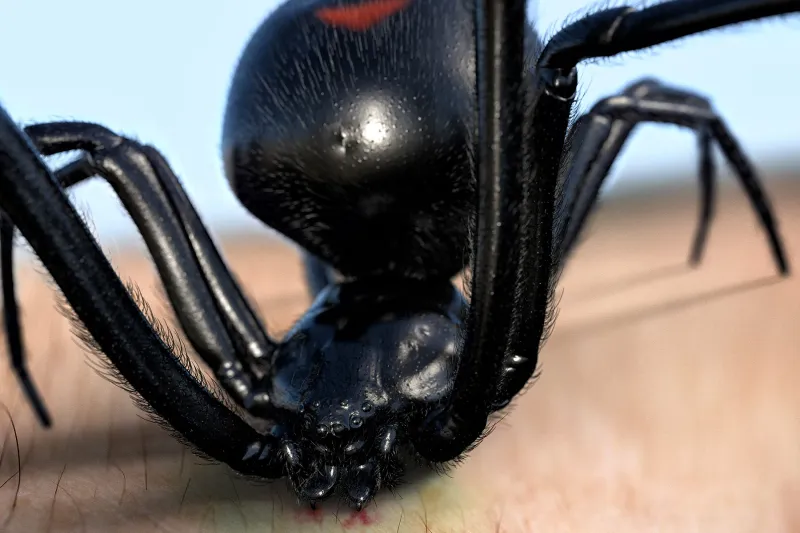
Spider identification and bite response are two separate questions, and the second one does not wait for the first to be answered. If someone has been bitten by an unknown spider, the right response is to treat the bite and seek guidance, not to spend time trying to confirm the species.
Wash the affected area thoroughly with soap and water and apply a cold pack to help manage swelling and discomfort. According to MedlinePlus guidance on black widow spider bites, these initial steps should be followed by contacting a medical professional or Poison Control.
Severe pain, muscle cramping, abdominal or chest pain, difficulty breathing, or any concerning symptoms in a child are reasons to seek prompt medical attention rather than waiting to see how symptoms develop.
In the United States, Poison Help is available at 1-800-222-1222 around the clock. Poison Control notes that black widow bites can cause significant systemic symptoms, particularly in young children, older adults, and people with underlying health conditions.
The California Poison Control System also handles spider bite calls and can advise on whether symptoms warrant an emergency room visit.
Taking a photograph of the spider before leaving the area, if it can be done safely and without delay, gives medical staff useful context. Do not attempt to capture or handle the spider for identification purposes.
The priority is the person, not the specimen, and medical providers can treat envenomation symptoms based on clinical presentation even without a confirmed spider species.
Treat the check as a clue, not a verdict
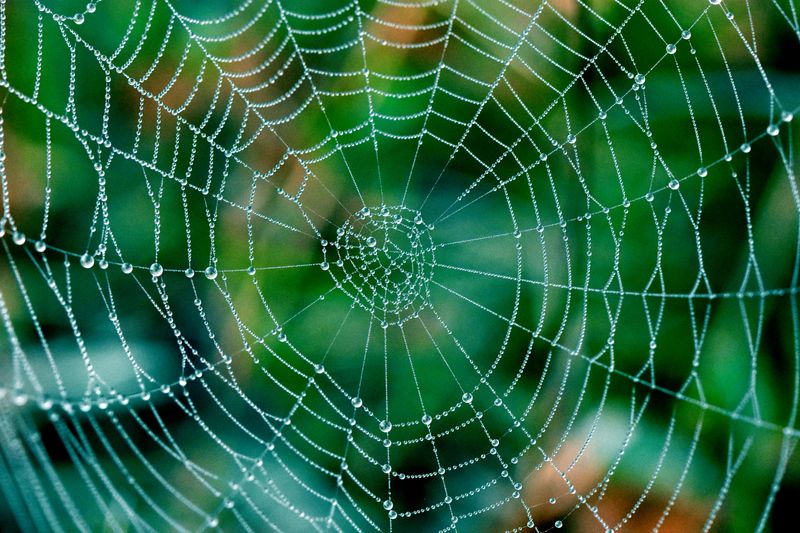
Running through the web check takes only a moment and gives you a much more grounded starting point than a panicked first glance at a large spider. A spoke-and-ring orb web in an open garden space points toward an orb weaver, which is a low-concern scenario for most California homeowners.
A tangled, messy web tucked into a sheltered corner near a structure calls for more caution, because false widows, brown widows, and western black widows all remain possible in that setting.
No single clue closes the case. A missing hourglass does not confirm safety, a damaged web does not rule out a widow, and a quick photograph does not always produce a species-level answer.
What the check does is replace a vague fear response with a specific observation, and that is a meaningful improvement. UC IPM’s widow spider guidance and UC IPM’s general spider resource both support calm, targeted responses over reactive spraying or unnecessary removal of beneficial predators.
When the situation genuinely calls for a firm identification, a clear photograph reviewed by a natural history museum, university extension program, or community science platform is the most reliable next step. Spiders that work as quiet predators in your garden deserve a second look before you decide they are a threat.
Most of the time, the web tells you everything you need to know to make a reasonable call.