
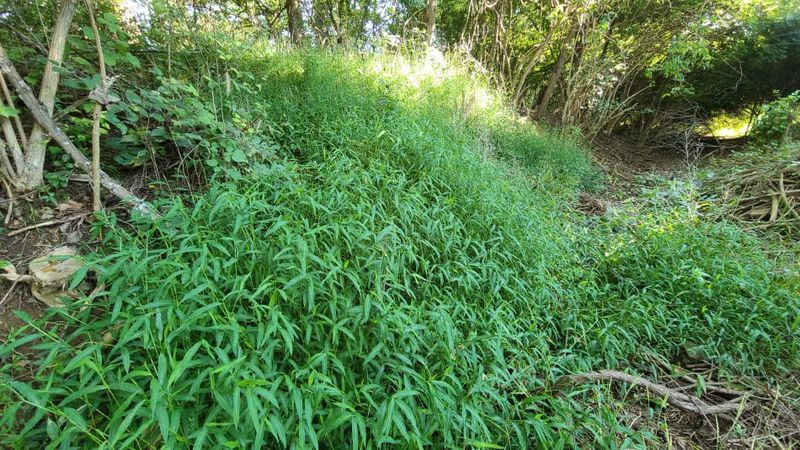
Walk along a woodland edge or a shaded corner of a North Carolina yard after the first frost, and you might spot a thin, tan carpet of grass lying flat on the ground. It could be Japanese stiltgrass, an invasive plant that homeowners in the state may run into.
Fall is a handy time to find it, but it is not the time to stop this year’s seeds. Here is how to identify it, map it, and plan ahead for next year.
Fall color can help you find a patch
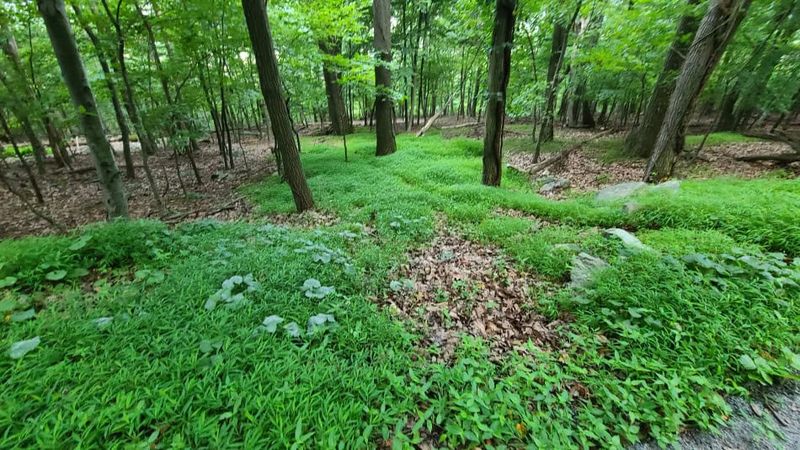
Japanese stiltgrass is an invasive annual grass that homeowners in North Carolina may encounter in yards, trails, and woodland edges. As an annual, it completes its life cycle in one season and dies back afterward.
After frost, its stems and foliage turn light tan, and the dried remains may lie in a mat through winter, according to NC State Extension.
That color change is why late fall can be a good time to look. Green plants blend into other vegetation all summer, but a pale, flattened patch on the ground can stand out against dark leaf litter and evergreen shrubs.
If you have a shaded slope, a path edge, or a spot where soil was recently disturbed, a quick walk-through now may reveal an established patch you missed in summer.
Here is the catch. A tan color and a matted look are clues, not proof.
Plenty of dead grasses and weeds turn brown and flatten under fall leaves and winter weather, and some of them are harmless or even native.
Treat any suspicious patch as a place to look closer, not a plant to rip out on a hunch. Take a photo, note the location, and check the leaf and stem features in the next section before deciding what to do.
Not every shady yard has stiltgrass, and finding a tan patch does not mean you have it.
Check identifying features before removing a plant
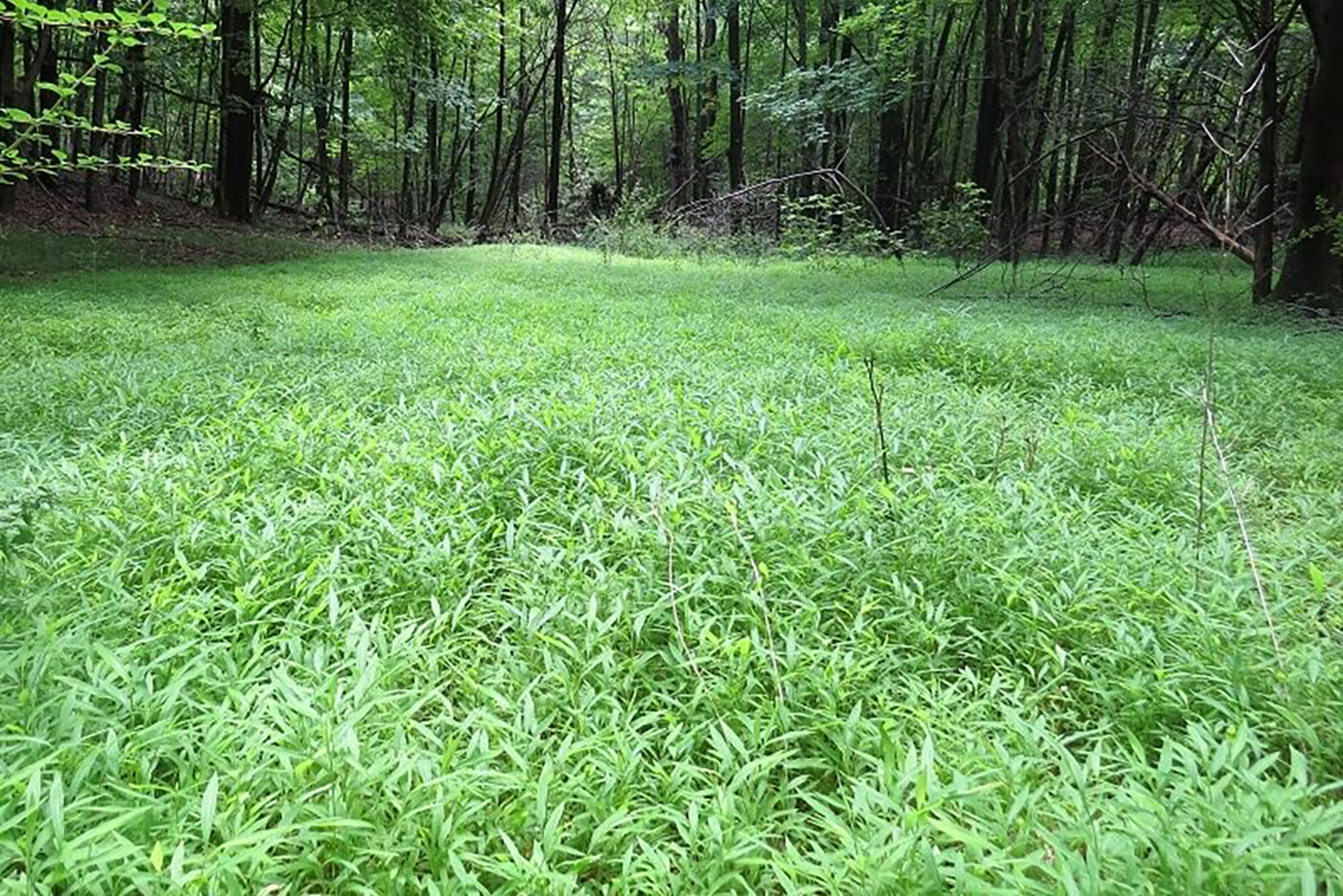
Stiltgrass has pale-green, lance-shaped leaves with a silvery, shiny stripe running along the upper midrib. The stems are thin, and the plant sprawls or forms a low mat rather than standing up like a clump.
Those details matter most in a living plant, so they are easiest to check in the growing season, but dried remains in fall can still guide your mapping, as NC State Extension describes.
The lookalike to know is whitegrass, a native grass. It lacks the shiny midrib stripe and has hairy stem nodes, the little joints along the stem.
Run a finger along a stem and look at those joints with a hand lens or a phone camera zoomed in.
The two can grow side by side, which makes careful sorting important. Maryland Extension advises confirming identification before management, because pulling native plants by mistake defeats the purpose.
A good habit is to check several plants across the patch, not just one. If you are unsure, send clear photos to your county Cooperative Extension office and ask for a second opinion before you pull anything.
Shade is common habitat, not a requirement
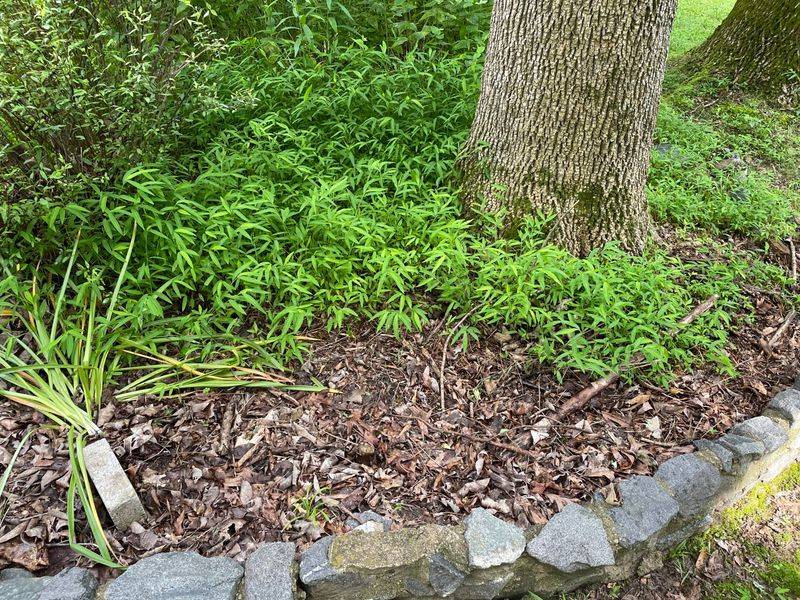
Many people first notice stiltgrass in shade, and that makes sense. It is common in shady, moist, and disturbed places, such as stream banks, trail edges, and spots where soil has been scraped or where leaf litter has been cleared.
NC State Extension lists these kinds of settings among its favored habitats.
Still, shade is a strong pattern and not a rule. Rutgers Extension notes that stiltgrass can also grow in full sun and in drier soils.
A sunny ditch bank or a bare spot beside a driveway deserves the same careful look as a woodland corner.
The reverse matters too. A shady yard is not automatically infested, and most shady spots hold ferns, mosses, native sedges, and other plants that are perfectly fine.
Skipping the assumption helps you avoid pulling the wrong thing.
Instead of sorting by light level, sort by disturbance and moisture. Look near downspouts, along mowed edges that meet woods, where mulch or soil was brought in, and along paths where people and pets walk.
Mark any suspect spot on a simple sketch of your yard so you can compare it with what you find next growing season.
Late fall is for detection, not seed prevention
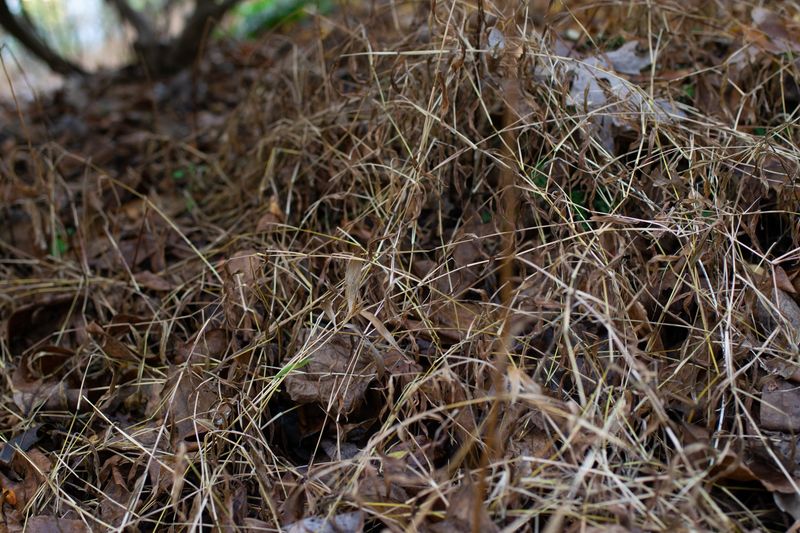
A tan patch is easy to see, but by then the plant has finished its season. In central North Carolina, NC State Extension reports that stiltgrass flowers from late September through October.
Those dates describe central North Carolina, and timing can shift with elevation, weather, and the year.
The same source warns that some seeds may mature even when flowers first appear. That means waiting until you see blooms can already be late for stopping seed.
By the time frost kills the plants and turns them tan, seed has likely formed and dropped.
So think of late fall as an inspection window. It is a good moment to find patches, photograph them, and sketch their edges while they are easy to see.
What it is not is a reliable moment to stop this season’s seed crop. Cutting or raking a dry patch now will not undo what already happened, and it may scatter seed if any remains.
Use the time to plan instead, and save the hands-on work for the next growing season, before flowers show.
Mechanical control works best before flowers appear
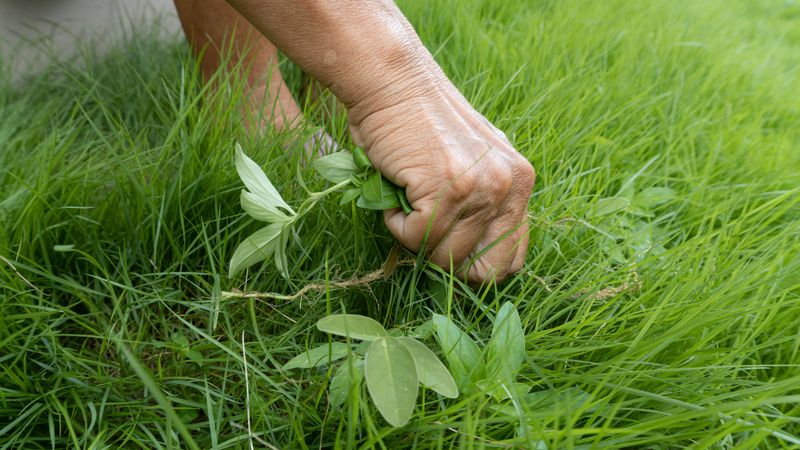
Timing is the heart of mechanical control. NC State Extension recommends doing it before flowers are visible.
For small infestations, hand-pulling works well, especially after rain when the shallow roots slip out of soft soil.
For larger areas, the same source suggests mowing regularly or once in late summer. Keep in mind that this advice depends on acting early.
Mowing or weed-whacking plants that already carry seed is not a safe way to contain them, since it can scatter seed and some seeds may already be mature.
Bag the pulled plants rather than leaving them in a heap, and avoid tossing them where seed could spread. If you find plants that are already seeding, handle them gently and work around them carefully instead of shaking or stirring them.
Then go back. As the Madison County Extension center notes in its guidance on this invasive, ongoing attention matters.
Check treated areas for regrowth and new seedlings through the season and in following years. One round of pulling or mowing will not wipe out a patch, because seeds already in the soil can still sprout.
Plan spring prevention around local germination
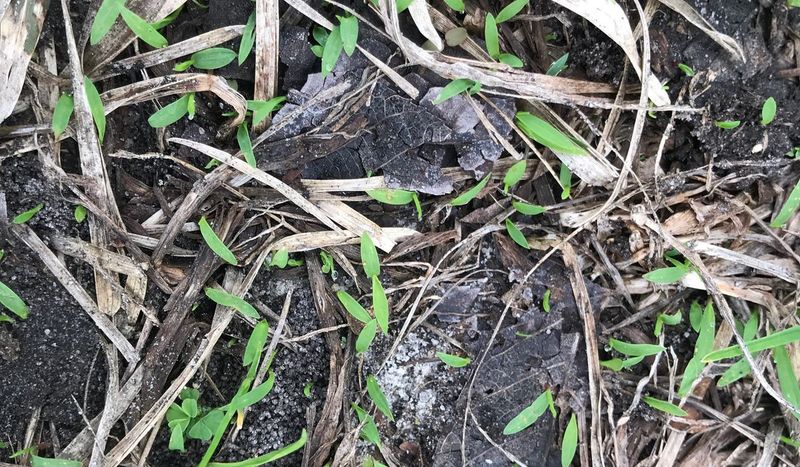
Spring is where fall planning pays off. In central North Carolina, NC State Extension says stiltgrass germinates in early to mid-spring, ahead of crabgrass.
That means a pre-emergent product, if you choose one, has to go down before seeds sprout to have any chance of helping.
Because the calendar varies, use your own patch as the guide. Mountain, Piedmont, and coastal plain yards warm up at different times, and a cold or mild late winter can shift things.
Your map from fall tells you where to focus when the season starts.
Whether a pre-emergent makes sense depends on the site. Think about which desirable plants grow nearby, since some products can affect them, and whether the area is a lawn, a landscape bed, or woodland.
Product labels differ for landscape, forest, and other settings, so read the label closely and follow it.
If you are not sure, call your county Cooperative Extension office for advice on products and timing for your location. No single product or schedule fits every yard, and chemical steps work best as one part of a plan that also includes pulling or mowing at the right time.
Clean gear and revisit treated patches
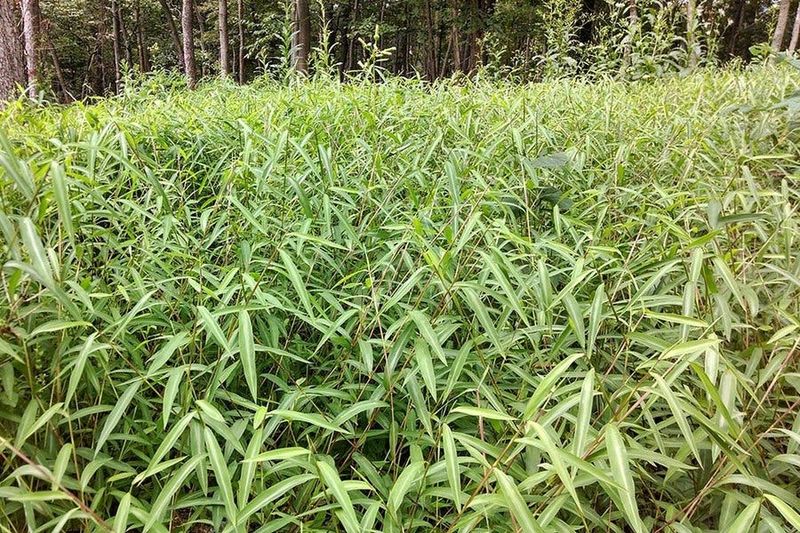
Stiltgrass seed hitches rides easily. Guidance from the Missouri Department of Conservation notes that seeds can travel on shoes, clothing, animal fur, and equipment.
Clemson’s Home and Garden Information Center offers similar removal tips.
After working in an infested area, brush off your boots, shake out your pant cuffs, and wipe down tools like rakes, trimmers, and mower decks. Do the cleanup on the spot, before you walk into clean parts of the yard.
Check the dog’s coat after a walk through a suspect patch, too.
Then plan on a long game. NC State Extension reports that seeds can stay viable in the soil for less than seven years, and other extension sources give shorter figures.
The safe takeaway is that seeds may persist for several years.
That is why a patch that looks clear after one season may fill in again. Revisit each treated spot through spring and summer, pull new seedlings, and keep preventing new seedheads year after year.
Steady, small visits tend to beat one big effort.
Turn this fall’s discovery into next season’s plan
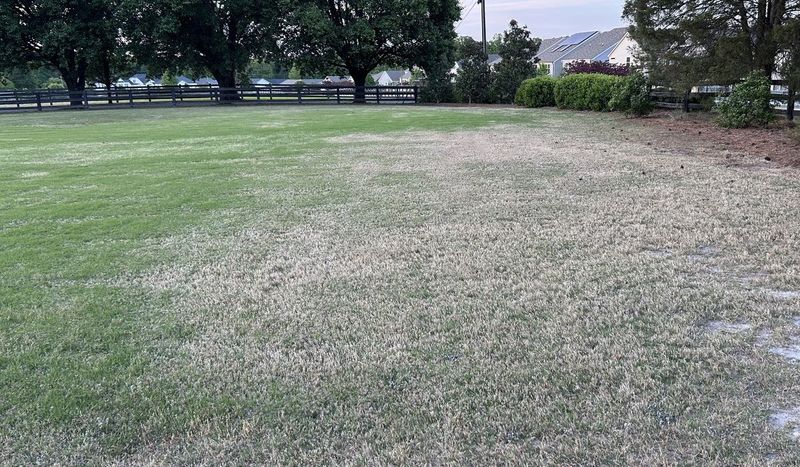
Start with the basics: confirm the plant, map where it grows, and plan control before flowers appear next year. Then return in spring and summer to check for seedlings and regrowth, as NC State Extension advises.
Fall’s tan patches give you a head start, not a finish line. Patience and repeat visits are what shrink a patch over time.