
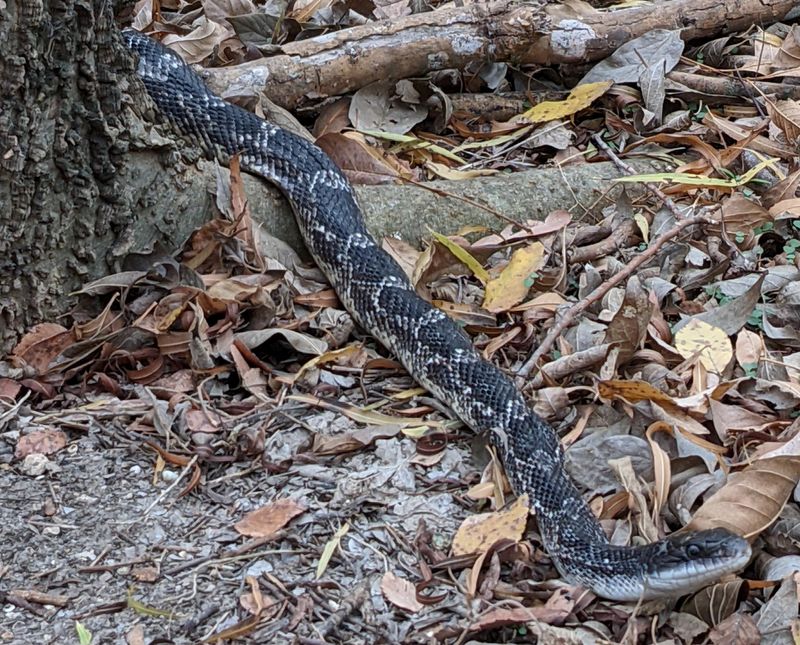
A long, dark snake slides along your fence line, and your first instinct might be to grab a shovel. Hold on, because this reptile is a rodent hunter, and the Texas rat snake earns its name by going after mice and rats.
Texas wildlife sources back up its role as a predator, even if the famous yearly mouse count is harder to prove. Here is what is known about this snake, and how to share your yard with it safely.
Rodents are part of its documented diet
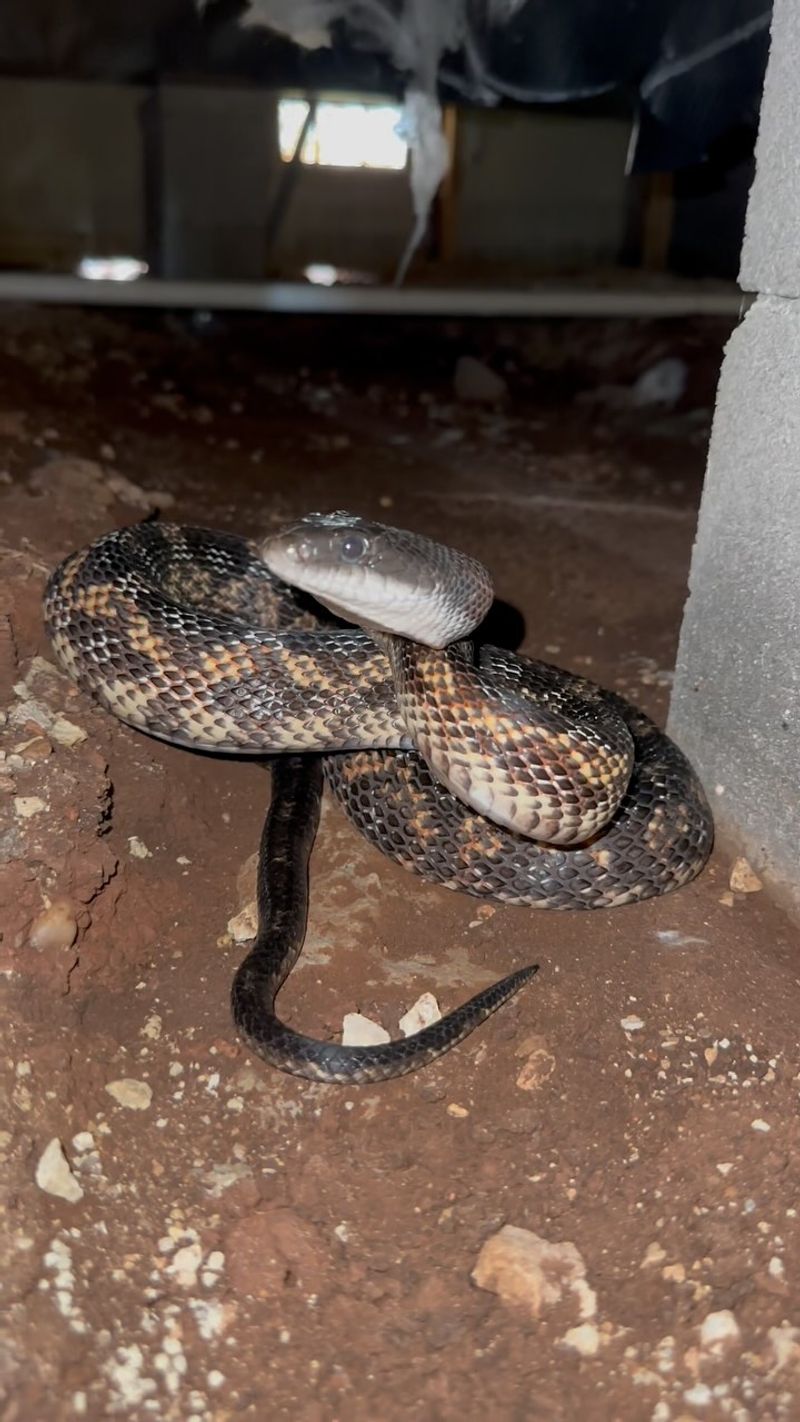
The Texas rat snake eats rodents. That is the solid, well-documented part of the story.
A Texas Commission on Environmental Quality guide lists mice, rats, and other small mammals in its diet, along with birds and nestlings.
Texas Parks and Wildlife adds detail. According to its snake FAQ, rat snakes eat mice, voles, and cotton rats.
The same page describes snakes in general as important predators that help keep prey populations in check.
That ecological job matters. Rodents reproduce quickly, and animals that hunt them add pressure that keeps numbers from climbing unchecked.
A snake slipping into a burrow or woodpile is doing natural pest work that nobody pays for.
Now for the number in the headline. The reviewed authoritative sources do not establish an annual rate of nearly 200 mice per snake.
Nothing we found shows that figure as measured, typical, or verified for this species.
So the honest takeaway is simpler than a big statistic. This snake eats rodents, and snakes as a group play a real part in the food web.
How many mice a particular snake eats on your property in a year is something no source can tell you.
Meet the Texas rat snake
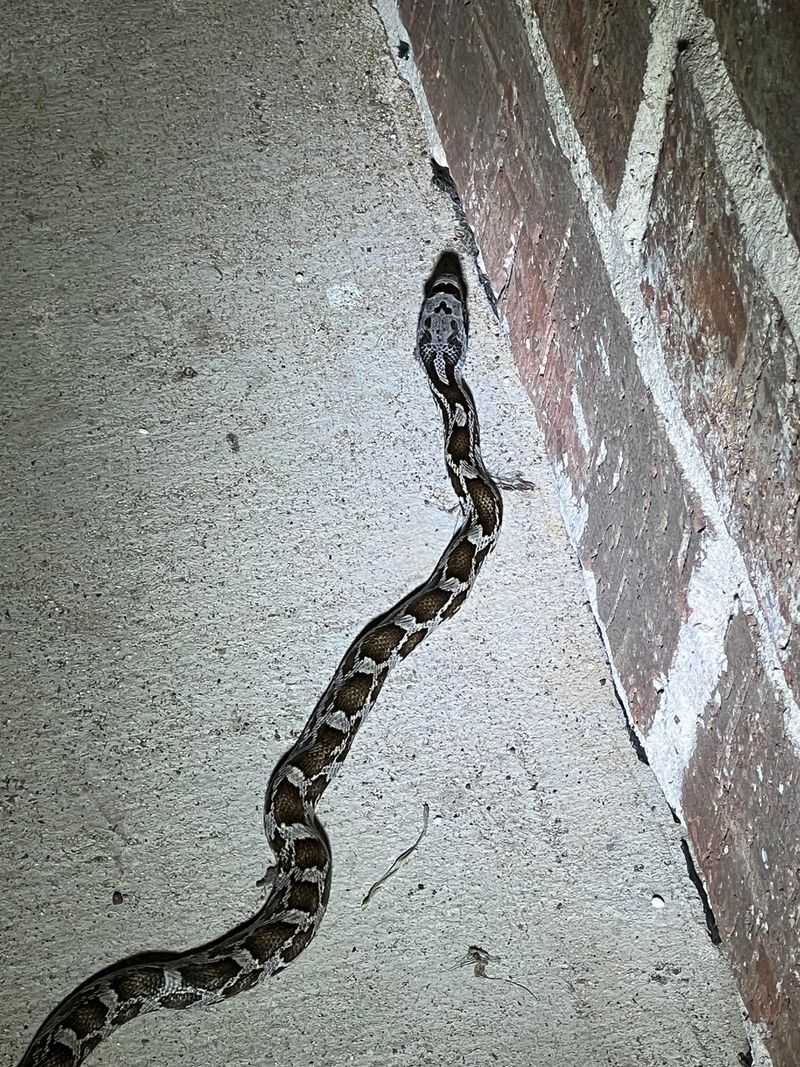
Texas rat snakes are long, strong climbers often found in woods, farms, and suburban yards. They can slip up a tree trunk or along a roofline with ease.
Texas references describe them as nonvenomous, which is why they have a friendly reputation among wildlife fans.
You can read more about the species in Texas A&M AgriLife guidance, which notes that most Texas snakes are nonvenomous and that the Texas rat snake is a predator of mice, rats, birds, and nestlings.
Nonvenomous does not mean safe to approach. Texas also has venomous snakes, and telling them apart by looks alone can go wrong fast.
Even a harmless species can bite when it feels cornered, so handling is a bad idea for anyone without training.
Names can get confusing too. Texas agencies and the Integrated Taxonomic Information System use Texas rat snake.
The 2024 standard-name list from the Society for the Study of Amphibians and Reptiles uses Western Ratsnake for Pantherophis obsoletus. Different references simply use different names, so both may appear in your searches.
Whatever label you see, the practical lesson stays the same. Enjoy the snake from a distance and let it do its own thing.
A useful predator is not a guaranteed pest-control plan
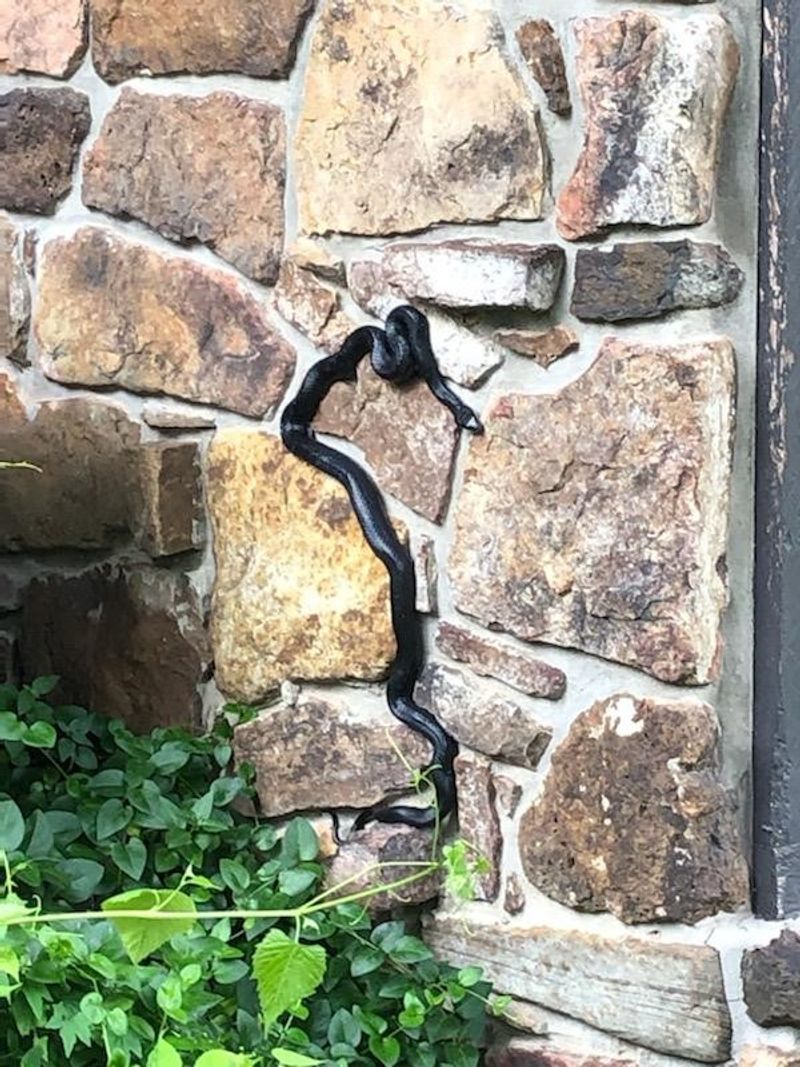
Picture a homeowner who finds a rat snake by the shed and assumes the mouse problem is solved. It is a nice thought, but a snake does not work like a hired exterminator.
It wanders, hunts where it likes, and moves on when it likes.
Its menu is wide. The TCEQ assessment guide lists small mammals, birds, and nestlings.
That means a rat snake might raid a nest box as readily as a mouse burrow.
Being a good predator in nature is a different claim from being dependable pest control at one address. The reviewed sources do not show that a snake will stay on a particular property.
They also do not show it will reliably shrink the rodent population there.
Texas Parks and Wildlife makes the bigger point in its snake FAQ. Snakes help keep prey populations in check across landscapes, which is a broad benefit, not a promise about your yard.
A practical clue: if you keep seeing droppings, gnawed wiring, or scratching in the attic, treat that as a rodent problem that needs its own fix. A snake sighting outside may be a bonus, but it is not a plan.
What to do when you see a snake
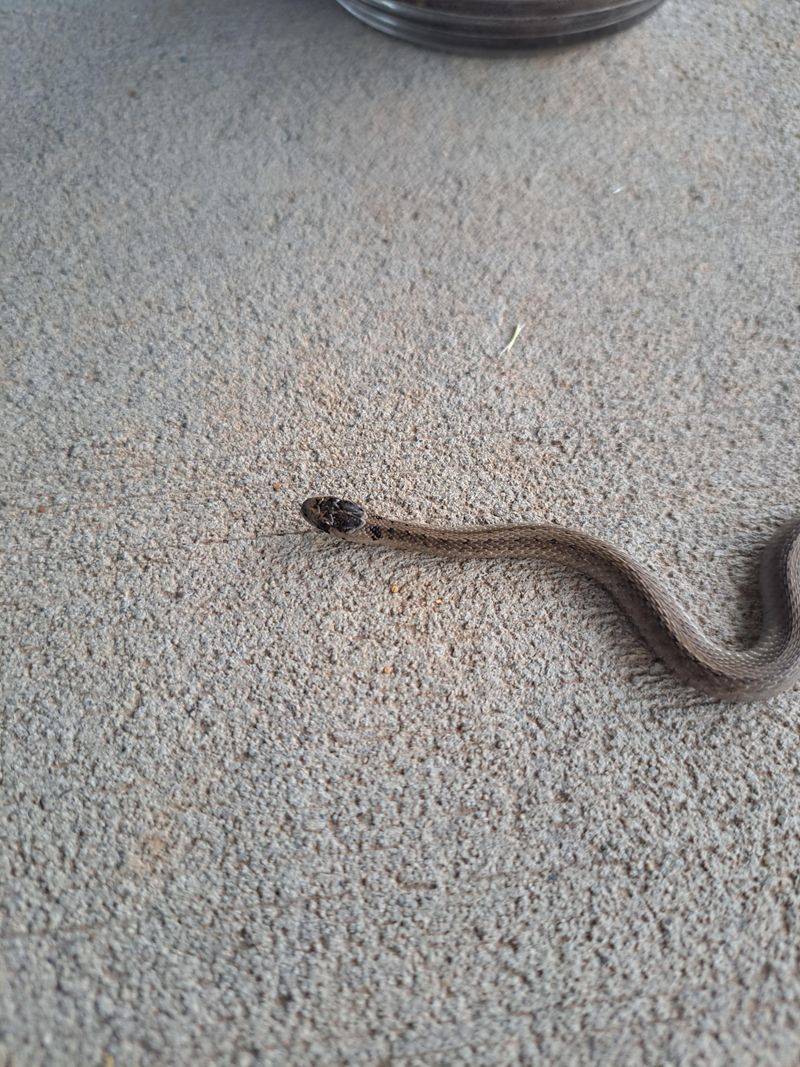
Outdoors, the best move is also the easiest: stay back. Keep people and pets away, give the snake plenty of room, and let it move on.
Texas A&M AgriLife’s wildlife specialist advises against handling or killing snakes.
The CDC guidance on wildlife says much the same. Walk around the snake and do not try to trap or remove it.
If someone is bitten, the CDC says to seek immediate medical attention.
Inside the house is a different situation. The CDC advises calling animal control rather than trying to remove the snake yourself.
Close the door to the room if you can, keep pets out, and wait for help.
Do not try to catch, handle, kill, or relocate a snake on your own. Rules vary by place.
The City of Houston tells residents to keep their distance and not touch, feed, or capture wild snakes, but those are municipal rules and do not automatically apply across all of Texas.
For relocation questions, AgriLife advice is to contact Texas Parks and Wildlife before using snake-control measures or moving a captured snake. A quick call beats a legal headache or a bite.
Reduce food sources and hiding places

If you want fewer surprise snake visits, start with what draws them in. Rodents are food, and cover is shelter.
Cutting back both makes your yard less inviting, though it will not guarantee that snakes leave or never return.
On the food side, Texas A&M AgriLife points to managing rodent food sources. Store pet food and birdseed in sealed containers, pick up fallen fruit and nuts, and keep trash lids tight.
On the shelter side, the same publication recommends removing brush piles, tall grass, and debris if you want to discourage snakes. Mow regularly, trim shrubs back from the ground, and clear out old boards or scrap metal.
Stack firewood neatly and off the ground, away from the house.
Check the edges of your home as well. Gaps around doors, vents, and pipes let mice slip inside, and that is where a snake may follow.
Sealing them keeps problems out of the living space.
The CDC likewise recommends keeping wildlife out of your home and removing attractants. A tidy yard works over time, but treat it as a way to lower the odds, not a snake-proof fence.
Give the snake space
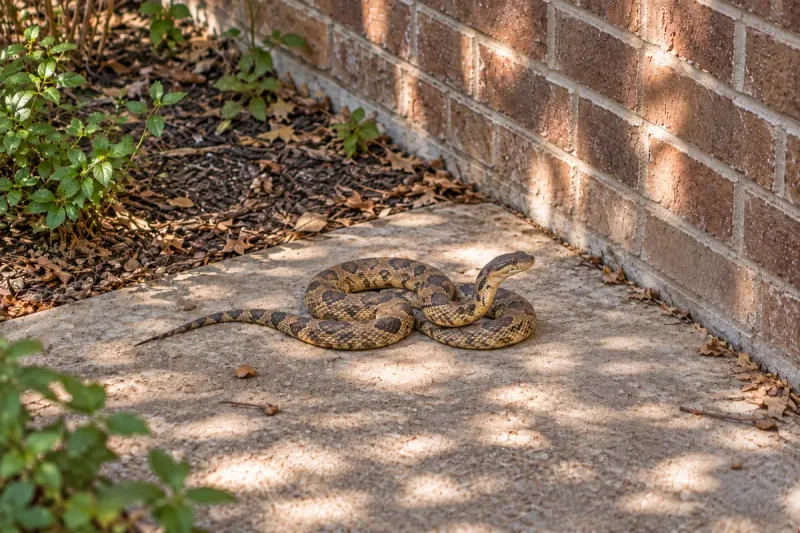
A rat snake in the yard is a natural rodent hunter, and that role is worth respecting even without a proven yearly mouse count. Do not count on it for guaranteed pest control, either.
Stay back, keep pets away, and let it leave on its own, as AgriLife suggests. For a snake inside the house, call animal control, per the CDC.
The best snake story in your yard may be the one you simply watched from a distance.