
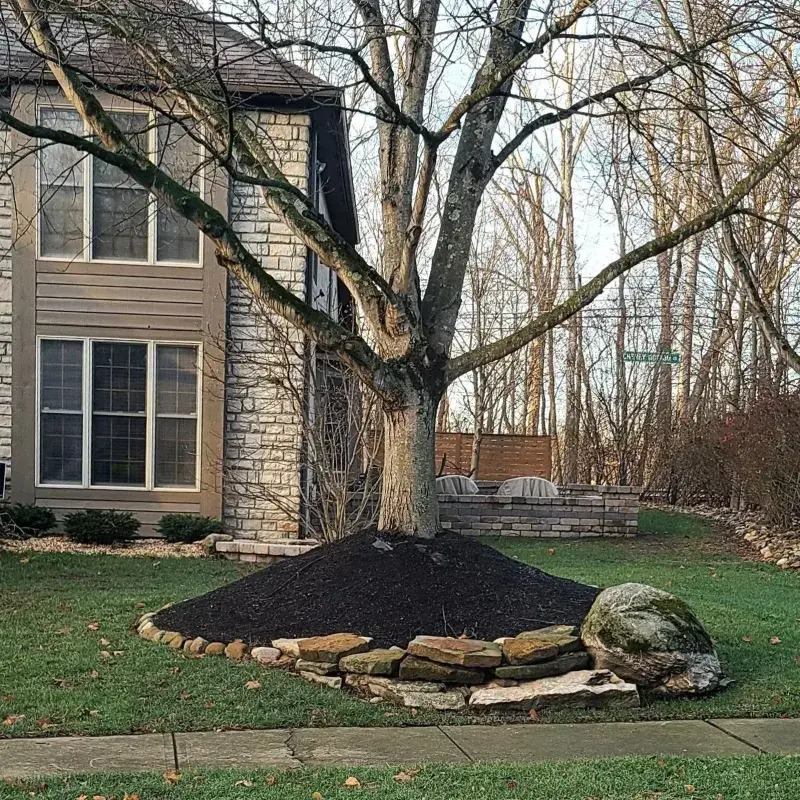
Wet mulch piled against your tree trunks this winter is how voles and rot can get to the bark before spring. Mulch that touches a trunk keeps the bark damp and gives small chewing animals a cozy place to hide and feed.
The good news is that you do not need to throw out your mulch to fix the problem. A few minutes of gentle work can keep your young trees and shrubs safe while their roots stay warm.
Mulch at the trunk can raise risks
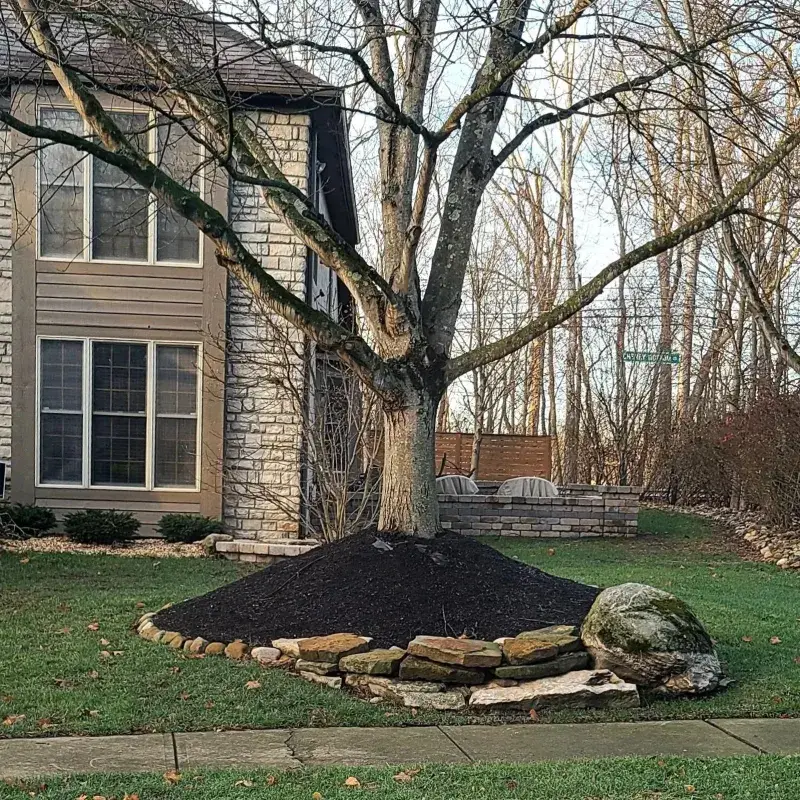
Mulch piled against bark can hold moisture there for weeks, and it gives voles a sheltered spot right beside a tasty meal. Very deep mulch can also leave the soil soggy and short on oxygen, which roots do not like.
Together, trunk contact, excess depth, and poor drainage can raise the odds of bark injury, disease, or root trouble.
Raising the odds is not the same as a sure outcome. A mulch layer does not automatically rot a tree or girdle it by spring, and plenty of mulched trees come through winter fine.
Think of trunk-hugging mulch as a risk you can easily remove.
Mulch itself is not the villain. When it is spread properly, it insulates roots and helps soil hold moisture, as explained in Oregon State University Extension guidance on mulching woody plants.
The USDA Forest Service Tree Owner’s Manual likewise says to keep mulch off the trunk. The goal is a wide, modest layer over the roots with a clear space at the stem.
Vole chewing and moisture injury are different
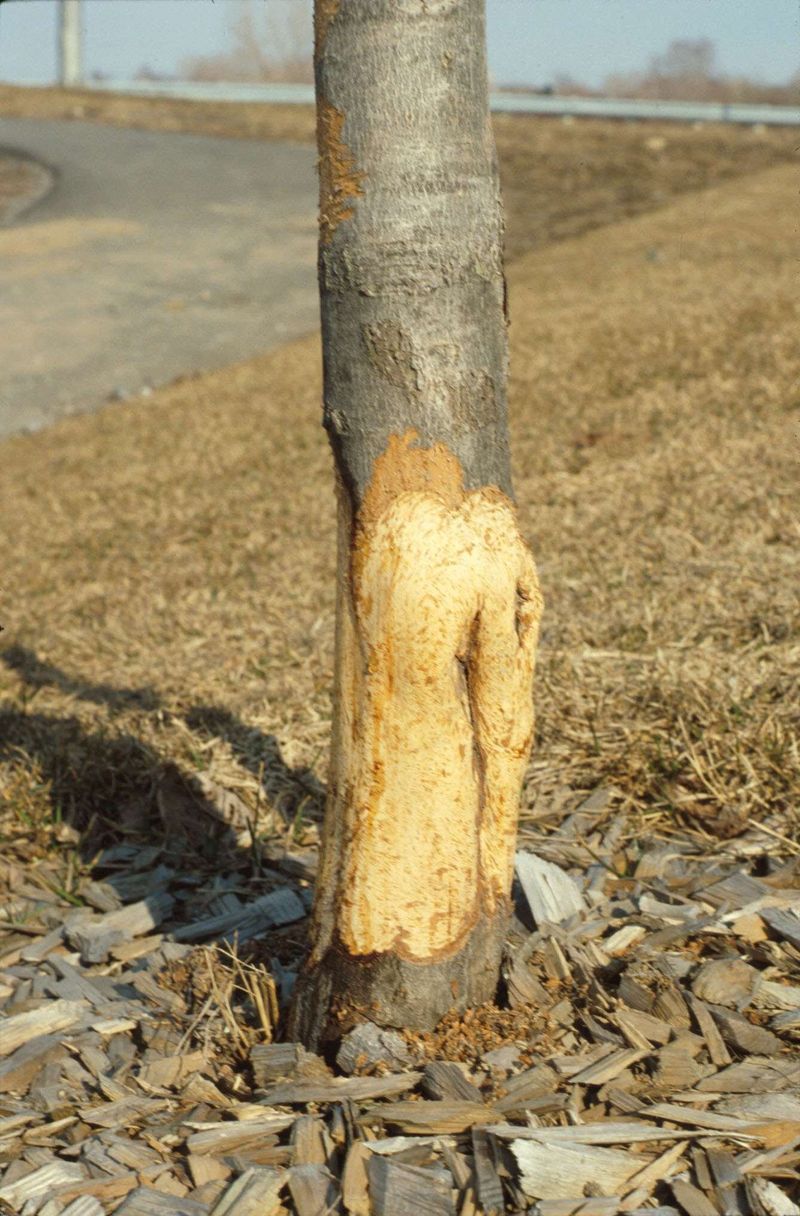
Two separate problems get lumped together here. Voles girdle a tree by chewing off bark, which cuts the tissue that carries water and sugars around the trunk.
According to Utah State University Extension, this kind of damage can happen quietly under cover.
Many voles feed in fall and winter, and the harm often shows up only after the snow melts, as noted by University of Minnesota Extension. Not every yard has voles, and not every tree with mulch nearby gets chewed.
Moisture injury works another way. Trunk tissue that stays wet or sits buried can weaken and decay without any animal involved, a point covered in Penn State Extension’s piece on trunk flares.
Soggy, oxygen-poor soil, which Oregon State warns about on poorly drained sites, can add root stress too.
So the same mulch pile can set up either problem, but neither one is a given.
Look for signs of vole activity
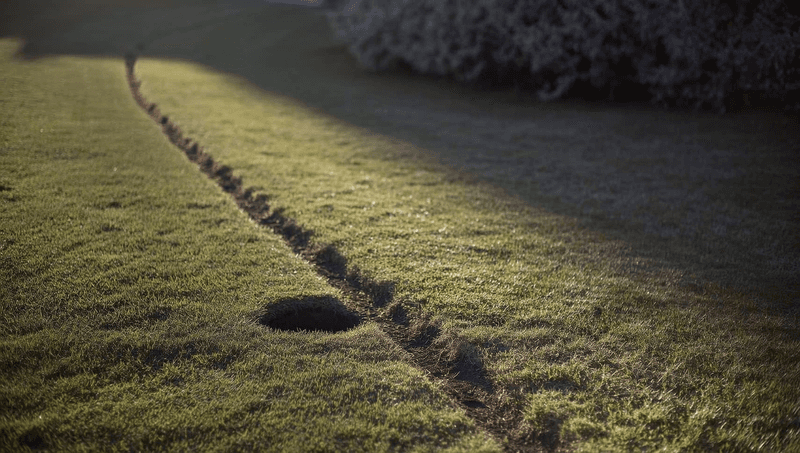
A ten-minute check can tell you a lot. Kneel at the base of each young tree or shrub and look at the ground within a foot or two.
Note any narrow runways in the grass or under the mulch, small droppings, and shallow holes.
Look at the bark too. Irregular gnaw marks close to the ground, often with small scratch lines, are a possible clue.
Utah State University Extension describes these kinds of signs in its vole tips.
Treat each sign as a hint, not proof. Runways can come from other small animals, and a damaged trunk alone cannot tell you who did it.
Rabbits, mice, and even lawn equipment can leave similar injuries.
That is fine, because the next steps help no matter who the visitor is. Your job right now is simply to notice what is there, mark any trees that look suspicious, and check again after heavy snow or a thaw.
Move mulch away from the trunk

Here is the quick fix. Using your gloved hands or a small rake, gently pull loose mulch away from the trunk and spread it back over the root area.
You are not removing the whole ring, just making a clear gap at the stem.
Aim to see the root flare, the spot where the trunk widens as major roots begin. Advice on the gap varies.
Penn State Extension suggests roughly 3 to 5 inches for young trees, while University of Illinois Extension gives its own guidance. The shared message is to keep mulch off the bark and let the flare show.
What if you cannot find a flare after clearing the mulch? The tree may have been planted too deep, with soil over the flare.
Do not dig hard around the trunk, since you could hurt bark or roots. Penn State Extension notes that a buried flare may need a professional assessment, so call a certified arborist.
Keep winter mulch over the roots
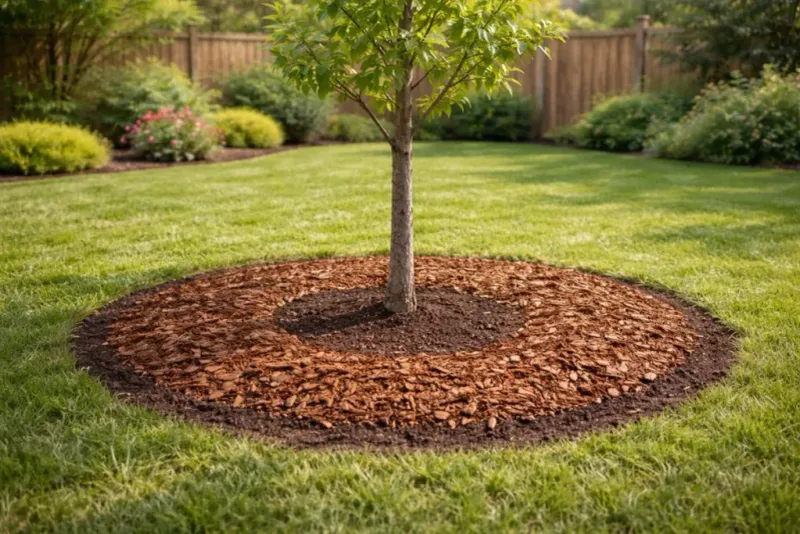
Once the trunk is clear, leave the rest of the mulch in place. For most landscape trees, spreading organic mulch about 2 to 4 inches deep over a wide area works well, and the USDA Forest Service says not to go past 4 inches.
Go lighter in some cases. Penn State Extension suggests less depth for fine-textured mulch and for poorly drained soil.
Oregon State even suggests leaving very wet sites unmulched or lightly mulched.
For newly planted trees and shrubs, University of Minnesota Extension recommends 3 to 4 inches of shredded wood mulch, pulled about 6 inches back from the trunk. That doughnut shape protects roots without touching bark.
If fall has been dry, give new plantings a good watering before the ground freezes. Moist soil going into winter helps roots, and the mulch helps hold that moisture in.
Reduce vole cover and protect young trunks
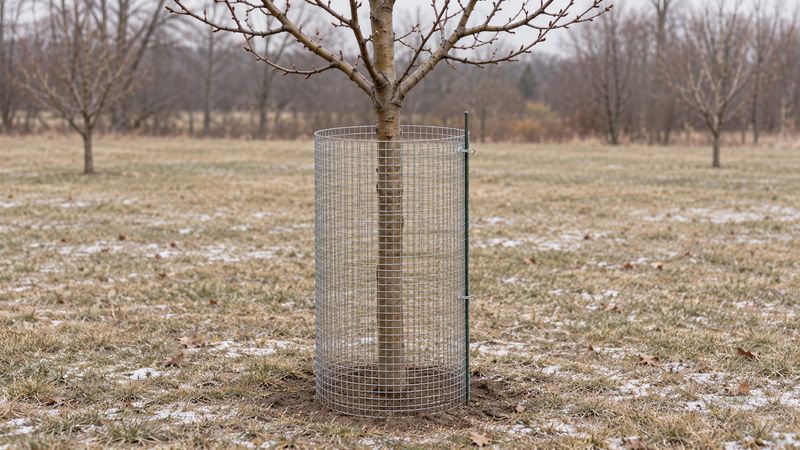
Sometimes moving mulch is not enough. Thick grass and weeds around a young tree give voles hidden travel routes, so mow or trim the area near the trunk before winter.
Virginia Tech Extension describes thick organic mulch and dense cover as favorable vole habitat, so trimming cover helps lower the appeal.
A trunk guard adds another layer. University of Minnesota Extension recommends 1/4-inch mesh hardware cloth set about 6 inches from the trunk.
For mice, bury it 2 to 3 inches deep and leave no gap at ground level.
Check guards each season. They should never rub the bark or squeeze the trunk as it grows, a concern also raised in the USDA Forest Service manual.
Loosen or replace any guard that feels tight.
None of this guarantees voles will vanish, but each step lowers the odds. A clear trunk and a tidy base make a poor hideout.