
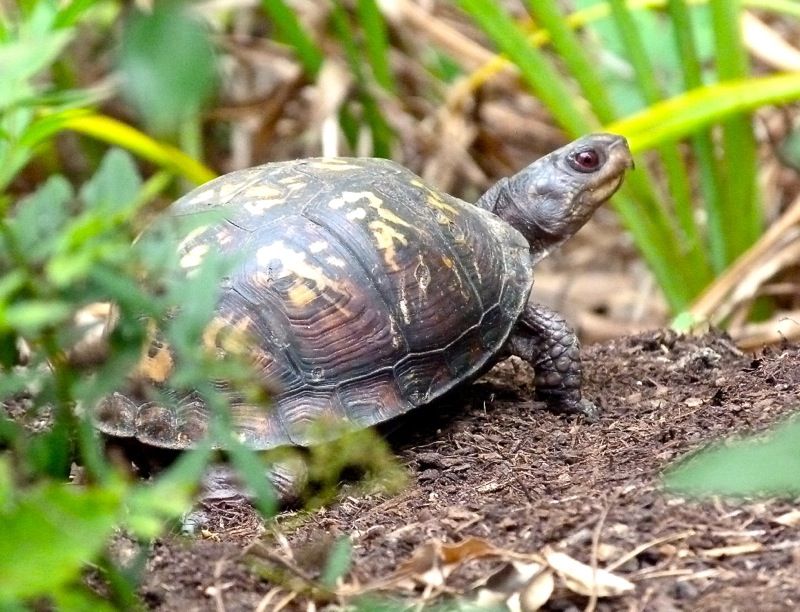
Spotting a domed turtle making its way through your vegetable beds or flower borders is one of those small surprises that can stop you mid-weed-pull. Eastern box turtles are North Carolina’s only fully terrestrial native turtle, and a garden visit from one is worth understanding before you decide what to do next. The turtle may eat a slug or two along the way, but its presence tells a more complicated story than a simple pest-control headline suggests. Knowing what it actually needs from your yard, and what it does not need from you, is the best way to help it keep moving safely.
Meet the Eastern Box Turtle in Your Garden
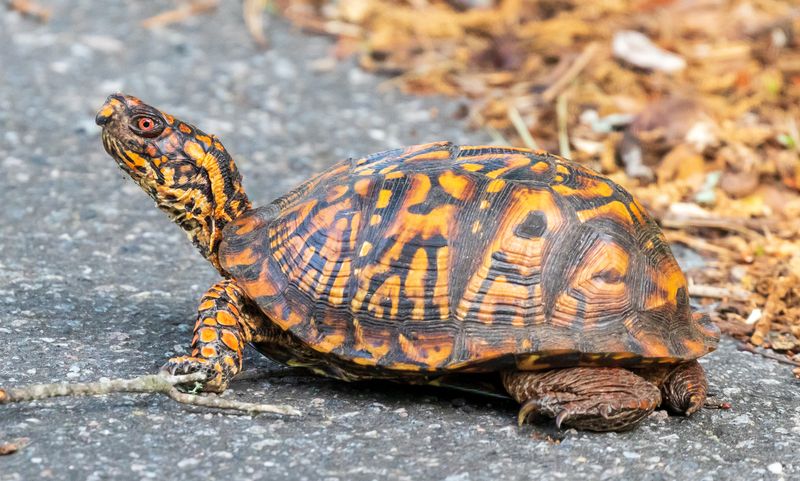
Before drawing any conclusions about why a turtle showed up between your tomatoes, take a moment to confirm what you are actually looking at. The eastern box turtle (Terrapene carolina carolina) carries a few unmistakable features: a noticeably high, domed upper shell and a hinged lower shell, called the plastron, that allows the animal to pull its head, legs, and tail completely inside and close itself up like a hinged box. That closing ability is unique among North Carolina’s turtles and is the quickest way to distinguish this species from the many aquatic or semi-aquatic turtles that also live across the state.
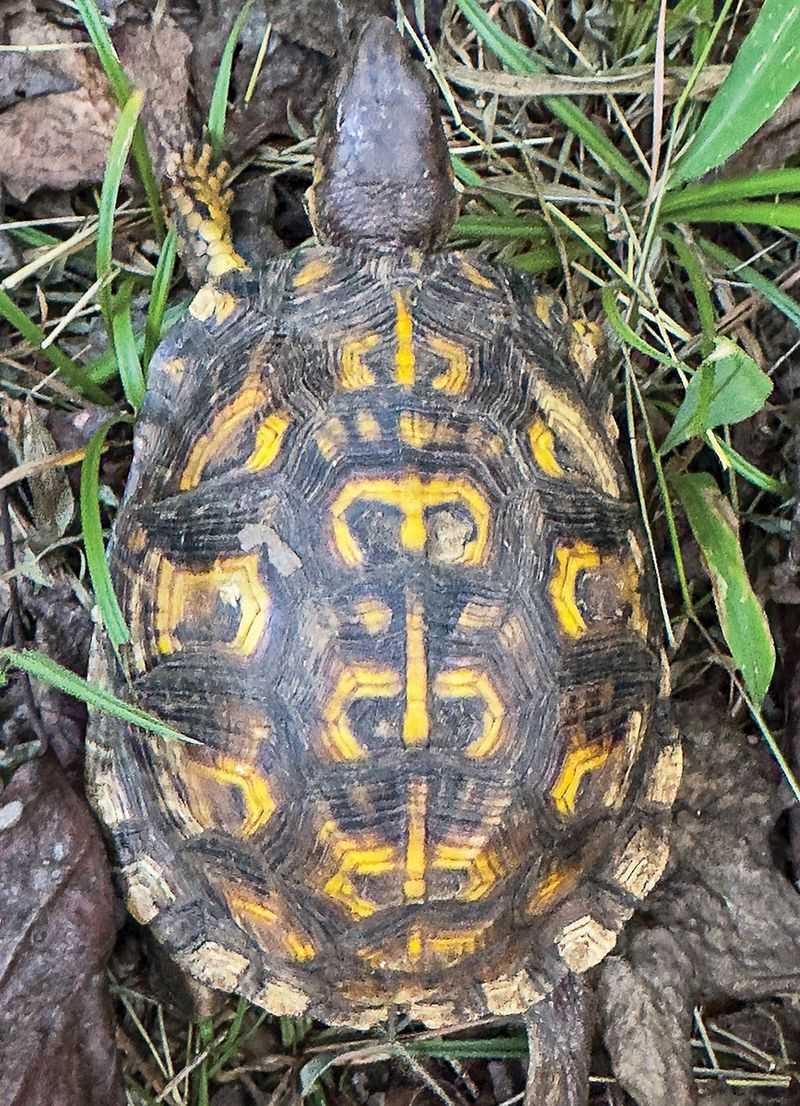
Shell colors vary widely. Some individuals show bright orange and yellow markings on a dark brown or black background; others are more muted, almost entirely brown, especially older animals. Male eastern box turtles often have red eyes, while females typically have brown eyes, though this is a general rule rather than a guarantee. Adult shells commonly measure between four and a half and six inches in length.
As the NC Wildlife eastern box turtle species profile describes, this is North Carolina’s only fully terrestrial native turtle, and it uses a surprisingly broad range of settings: open fields, mixed forests, suburban neighborhoods, floodplain edges, and moist woodland borders all fall within its typical territory. Finding one near a garden is not unusual, particularly in the Piedmont and coastal plain where developed land sits alongside remnant natural areas.
Not every turtle in a North Carolina yard belongs to this species, however. If the animal you see has a flattened shell, webbed feet, or was found near a pond or stream, it may be a different species entirely, and species-specific advice about eastern box turtles would not apply. When in doubt, observe from a respectful distance and contact NC Wildlife for help with identification before taking any action.
What the Turtle May Find to Eat
Eastern box turtles are opportunistic omnivores, which means they eat a wide range of foods depending on what is available and what season it is. Documented foods include berries, wild fruit, seeds, flowers, mushrooms, grasses, carrion, snails, slugs, earthworms, frogs, toads, and various insects. According to NC Wildlife’s species profile, slugs, snails, and small animals are among the foods this turtle consumes, and NC State Cooperative Extension similarly identifies earthworms, slugs, snails, and insects as part of its diet.
A garden offers several of those food sources in one place, especially if it has moist soil, fruit-bearing plants, or areas of undisturbed leaf litter where invertebrates shelter. So yes, a visiting turtle may well eat some slugs or snails it encounters while moving through your beds. That is a reasonable expectation based on what the species eats.
What is less reasonable is treating that possibility as a promise. There is no field study showing that a single box turtle reduces slug or grub populations to a level a gardener would notice. The turtle feeds when it finds something worth eating, not on a schedule calibrated to your pest pressure. Its meals across a day or a week might lean heavily toward wild berries, mushrooms, or earthworms, with slugs making up only a small fraction of what it actually consumed.
Beetles deserve a specific note here. Box turtles are generalist feeders, and a garden typically contains both plant-damaging beetles and beetles that are harmless or even beneficial, such as ground beetles that prey on other insects. There is no evidence that a visiting turtle selectively targets only the harmful ones. Insect larvae, sometimes called grubs, are consistent with the species’ general diet, but the available sources do not show what share of an individual turtle’s daily intake they represent.
The honest summary is that the turtle may eat some garden invertebrates, and that is genuinely useful, but it is not a substitute for monitoring plant damage and responding when needed.
A Garden Visit Is Not a Soil Test
One appealing idea about box turtles is that their presence in a garden signals healthy, biologically active soil. The logic is intuitive: a thriving ecosystem attracts wildlife. But a turtle walking through your pepper plants is not conducting a soil assessment, and treating its appearance as confirmation that your beds are fertile or well-drained goes further than the evidence allows.
What a garden visit more plausibly reflects is a combination of habitat factors that are broader than soil chemistry. Moisture matters a great deal to eastern box turtles; they seek out damp vegetation, shaded ground, leaf litter, and areas near water or low-lying terrain. A garden with mulched beds, dense plantings, or proximity to a wooded edge or drainage swale may simply offer the cool, moist conditions the turtle was looking for on a warm afternoon. Food availability, shelter from predators, and connected travel corridors through the surrounding landscape all play roles as well.
Box turtles also move within established home ranges rather than relocating permanently. NC Wildlife describes these ranges as including favorite food spots, hiding areas, and seasonal gathering places. A turtle in your garden today may be the same individual that crossed your neighbor’s yard last week and will pass through a third property next month, following routes it has used for years. Calling that a “move-in” overstates what is actually happening.
Population research supports a landscape-scale view of what draws turtles to particular areas. A 2021 statewide study by Roe and colleagues found that eastern box turtle densities in North Carolina were associated with surrounding landscape conditions, including wetland habitat and the degree of urban development, not with any homeowner-level measure of soil fertility or garden management. The practical takeaway is that your yard may be offering food, moisture, shade, or a safe passage between larger habitat patches. Those are things worth protecting, but they are not the same as a report card on your compost.
Leave a Healthy Turtle Where You Found It
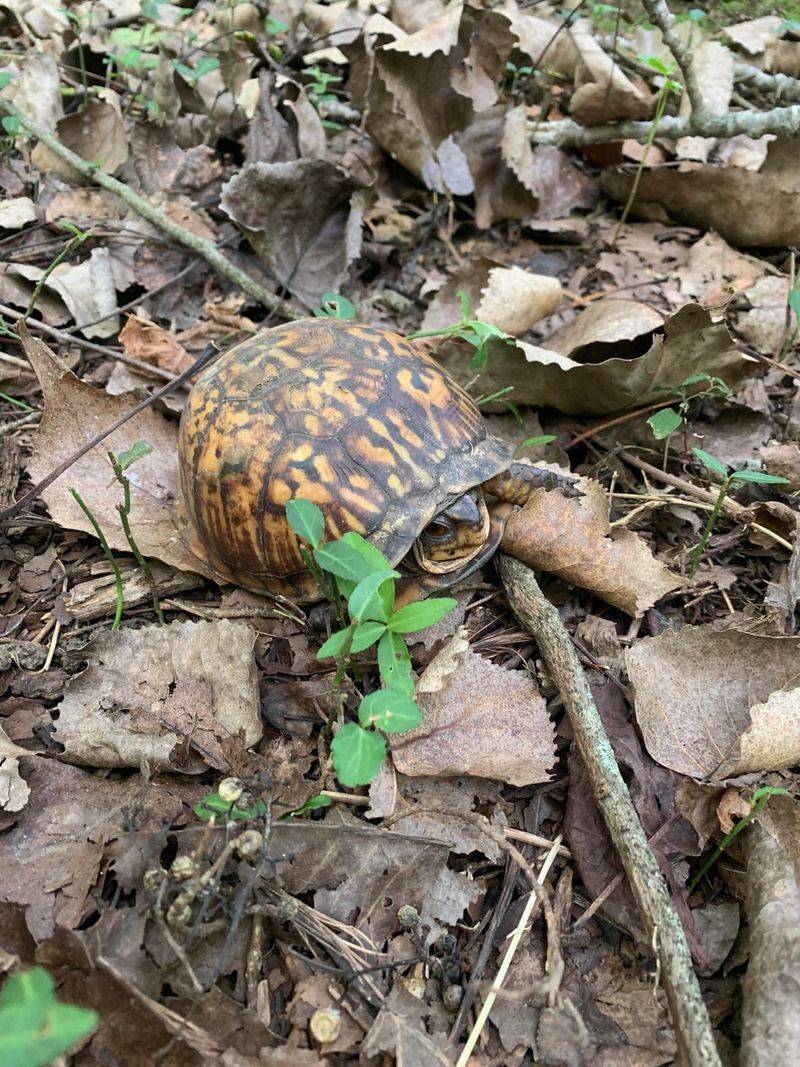
Watching a box turtle work its way through your garden is genuinely enjoyable, and the instinct to get closer, offer it something to eat, or move it somewhere “better” is understandable. All three of those responses, though well-intentioned, can cause real harm.
Feeding a wild turtle habituates it to human presence and can expose it to foods that are inappropriate or even toxic. Handling a healthy turtle that is simply passing through adds unnecessary stress and carries a small but real hygiene consideration, since turtles can carry Salmonella. The most important concern, however, is relocation. Eastern box turtles have strong site fidelity and well-documented homing instincts.
Moving one to a nearby park, a wooded creek, or what looks like more suitable habitat can disorient it, push it into unfamiliar territory where it struggles to find food and shelter, and may cause it to attempt a dangerous overland journey back to its original range.
According to NC Wildlife’s eastern box turtle page, box turtles should not be taken from the wild or kept as pets, and the agency recommends leaving them where they are. North Carolina classifies eastern box turtles as nongame wildlife with no open season, meaning hunting, trapping, or collecting them is prohibited under state law. Importing additional turtles to create a “turtle-friendly garden” is equally problematic: moving wild turtles can disrupt homing behavior, spread disease between populations, and remove breeding adults from the areas where they already contribute to local reproduction.
The right response to a healthy turtle in your garden is simple observation from a comfortable distance. Let it go about its business. If it is eating, resting in the shade, or slowly moving toward the garden edge, everything is proceeding exactly as it should. Noninterference is not passive indifference; for a wild animal with a home range it has likely used for years, it is the most genuinely protective thing you can do.
Reduce Pesticide Risks to Visiting Wildlife
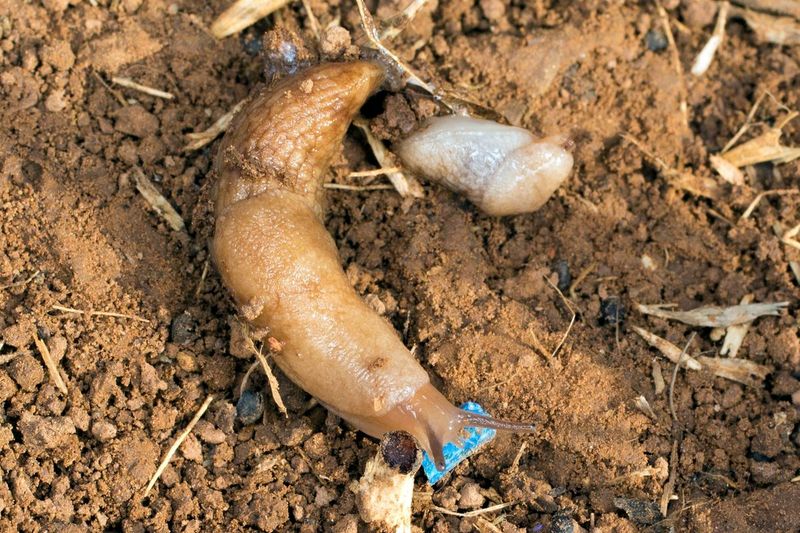
A box turtle moving through a treated garden can encounter pesticide residues on the soil surface, on plants, on the prey animals it eats, and in puddles or runoff. That exposure risk is real whether or not the turtle is present when you apply a product, and it applies to a wide range of common garden chemicals, not just the ones marketed specifically for slugs or snails.
The U.S. EPA is direct on this point: EPA guidance on reducing pesticide impacts on wildlife states that pesticides can harm nontarget animals when misused and recommends that homeowners treat only the areas that actually need treatment, keep all products out of water, and follow every instruction on the current product label. Spot-treating a specific problem area rather than broadcasting a pesticide across an entire lawn or garden bed is one of the simplest ways to reduce the footprint of chemical exposure for any wildlife moving through the yard.
Slug and snail baits deserve particular attention. Some gardeners assume that because a box turtle eats slugs, any slugs the turtle might consume after bait has been applied pose no additional risk. That assumption is not supported. The EPA’s reregistration eligibility decision for metaldehyde documents risks to domestic animals and terrestrial wildlife from this common active ingredient, and notes that animals may mistake bait pellets directly for food.
No slug bait product should be considered automatically safe for a visiting turtle, and no label currently on the market guarantees that secondary exposure through a poisoned prey animal is harmless.
Practical steps that reduce risk without eliminating all pest management include: removing bait stations or granular products before rain washes them into low areas where turtles rest; choosing iron phosphate-based slug baits, which carry a different risk profile than metaldehyde, and still following the label; avoiding broadcast applications of insecticides on soil surfaces where turtles forage; and storing all chemicals in sealed containers away from the garden perimeter. The goal is not to abandon pest management but to apply it precisely enough that a turtle passing through is not an unintended casualty.
Protect Moist Cover and Safe Travel Routes
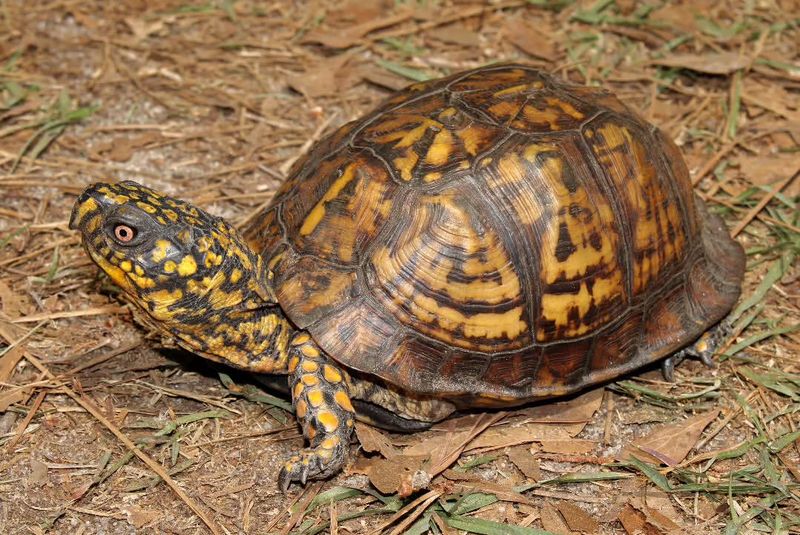
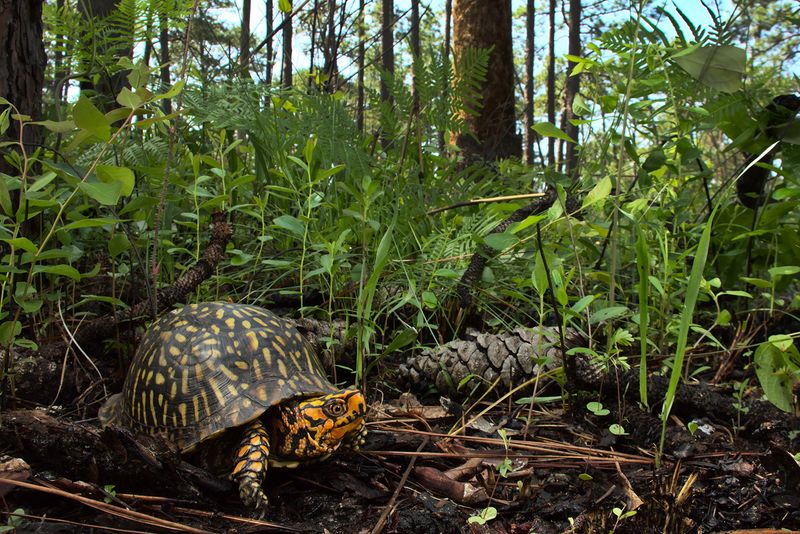
Eastern box turtles do not need a manicured habitat. What they do need are the kinds of features that tidy yard maintenance often removes first: leaf litter deep enough to shelter in, woody debris and fallen branches along garden edges, shaded corners with damp soil, and unobstructed routes between one part of the landscape and another.
Retaining a layer of leaves along a fence line, leaving a brush pile at the back of the yard, or allowing a shaded border to stay mulched and moist through summer provides the kind of refuge that a passing turtle can use for thermoregulation, overnight shelter, and moisture replenishment. NC Wildlife’s species profile describes box turtles using damp vegetation, leaf litter, logs, floodplains, and other moist refuges across their range. These are not exotic habitat features; they are simply the natural ground layer that most suburban yards still have in at least some corners.
Travel routes matter as much as shelter. A turtle that cannot move safely between a wooded edge, a garden, and a moist low-lying area is effectively cut off from parts of its home range. Low fencing with no ground-level gap, densely paved surfaces, and free-roaming dogs all restrict movement. Where possible, leaving a small gap under a fence panel or keeping one garden border unfenced gives the turtle a way through without requiring it to cross a road or exposed driveway.
Roads represent the most serious hazard. The 2021 Roe statewide study identified road mortality and habitat fragmentation as ongoing concerns for North Carolina populations, and noted that the species’ slow maturation and low reproductive rates mean that adult losses accumulate over time in ways that population counts may not immediately reflect. Supporting habitat connectivity in your own yard, even in a small way, contributes to a larger network of passable landscape that the turtle depends on throughout its range. That is a more durable form of stewardship than any single pest-control outcome.
When Immediate Help Becomes Necessary
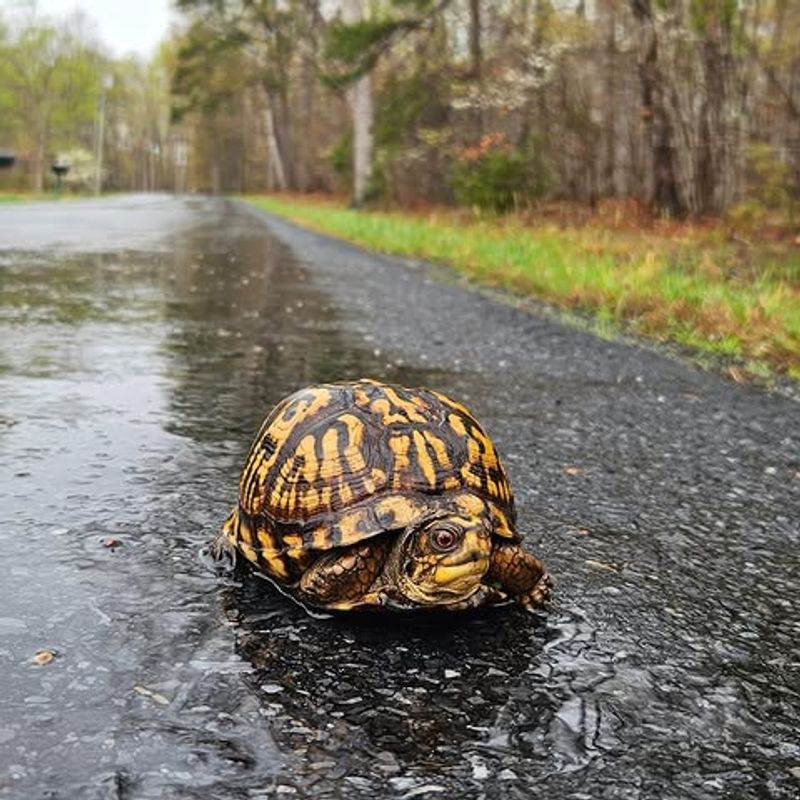
Leaving a healthy turtle alone is the right call in most situations. There are a few specific circumstances, though, where doing nothing creates a risk serious enough to justify brief, careful action.
A turtle on a road is the clearest example. Box turtles move across roads regularly, and vehicle strikes are a leading cause of adult mortality in the species. If you can safely stop, move the turtle off the road in the direction it was already traveling. NC Wildlife’s guidance on eastern box turtles specifies moving it the shortest distance possible, ideally less than 50 feet, and always toward the side it was heading.
Moving it backward across the road or carrying it to a location you find more appealing defeats the purpose: the turtle will likely attempt to continue in its original direction, crossing the road again.
Other situations that may require brief intervention include a turtle trapped in garden netting or fencing it cannot back out of, one positioned under machinery that is about to be used, or one that has been attacked by a dog. Dog bites cause serious shell fractures and soft-tissue injuries that are not always visible from the outside. A turtle that appears uninjured after a dog encounter may still have internal damage.
For any injured, trapped, or pet-attacked turtle, the appropriate next step is contacting a licensed wildlife rehabilitator or NC Wildlife rather than attempting extended home treatment. NC Wildlife’s general guidance on handling wildlife identifies licensed rehabilitators as the right resource for sick or injured animals. If handling is unavoidable while you wait for help or transport the turtle, wear gloves and wash your hands thoroughly afterward. Turtles can carry Salmonella, and while the risk from a brief, careful handling is low, basic hygiene removes it almost entirely.
Keep the turtle in a ventilated box in a cool, shaded spot; do not offer food or water while it is being transported.
Welcome the Visitor Without Giving It a Job
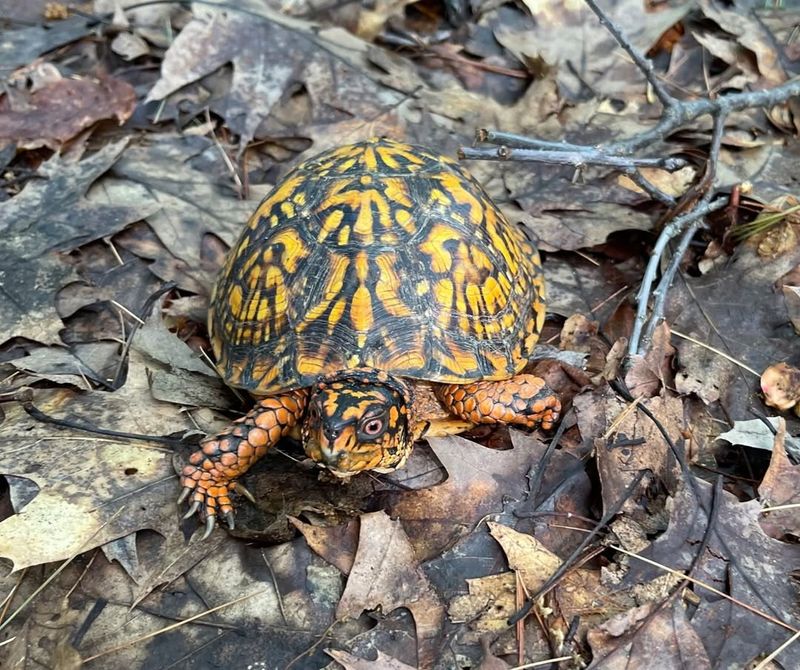
An eastern box turtle passing through your North Carolina garden is a small piece of the regional wildlife picture, and it is worth appreciating on those terms. According to NC Wildlife’s species profile, this turtle may eat slugs, snails, earthworms, and other invertebrates it encounters, so some incidental benefit to your garden is plausible. What it cannot do is reliably clear a slug infestation, eliminate grubs on a schedule, or serve as a stand-in for monitoring plant damage and responding when pest pressure actually warrants it.
The most useful thing you can do is keep the yard reasonably hospitable without trying to manage the turtle itself. That means limiting unnecessary pesticide applications, keeping dogs away from the garden perimeter, retaining some leaf litter and moist cover along edges, and not relocating a healthy turtle simply because it turned up somewhere inconvenient. If it needs to be moved from a road or an immediate hazard, move it the shortest distance possible in the direction it was already going, then step back.
Feeding turtles, importing them from elsewhere, or building a dedicated enclosure to hold one in place all work against the animal’s actual needs. NC Wildlife is clear that eastern box turtles should not be taken from the wild or kept as pets, and the same logic applies to bringing them in. Supporting native wildlife means letting it remain wild, which for a box turtle means following its own routes, on its own schedule, through a landscape it already knows. A turtle that passes through your garden and continues on its way has received exactly the kind of welcome it needs.