
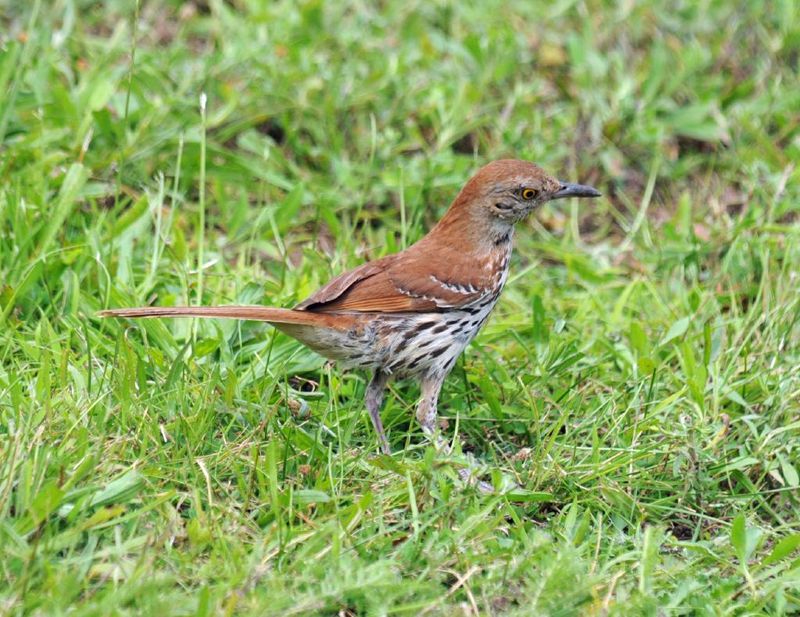
Walk out on a fall morning and find mulch scattered across the sidewalk, and a bird may be the reason. In North Carolina yards, a possible brown thrasher sweeping its bill through a bed is a pretty ordinary sight.
The mess looks dramatic, but it usually tells a small story about a hungry bird. Here is how to read the clues, tidy up without fuss, and keep wildlife in mind.
Why might a thrasher move mulch?
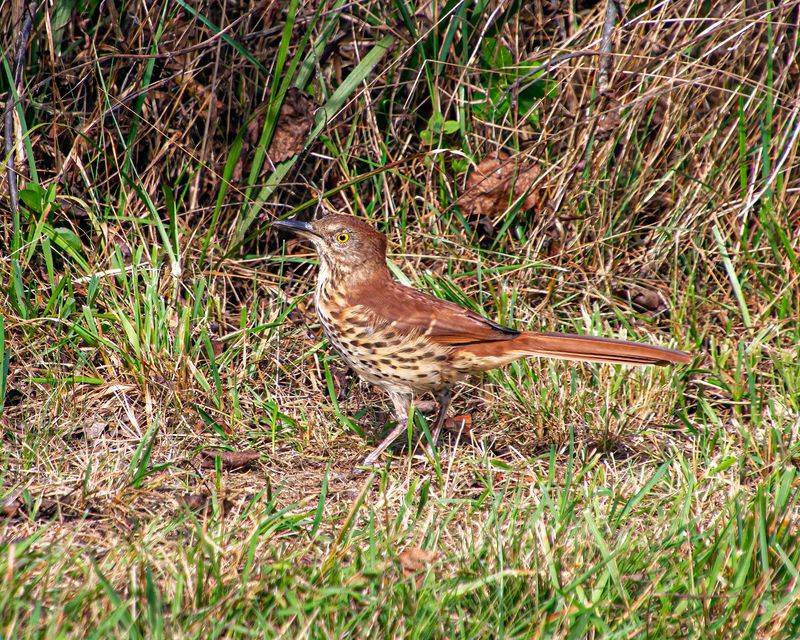
Mulch tossed onto a walkway is consistent with a brown thrasher foraging. Cornell Lab of Ornithology describes these birds searching the ground and leaf litter, sweeping their long bills side to side to uncover insects and other small prey.
The National Park Service also notes that they feed on many kinds of insects and other arthropods.
Picture a bird working like a tiny rake. It flicks aside the top layer to see what is hiding underneath, and loose mulch goes flying in the process.
That is why a bed can look rumpled after only a short visit.
Still, flung mulch alone cannot tell you which bird did it. Other animals, from squirrels to towhees to robins, also scratch and probe through leaves and bark.
If you want a firmer answer, watch quietly from a window. A thrasher is a fairly large, rusty-brown bird with a streaked chest, a long tail, and a long, slightly curved bill.
The mess also does not prove anything about what is happening below the surface. Scattered mulch does not show that roots are being harmed, and it does not show that insects have taken over the bed.
Most of the time, it simply shows that a bird found the top layer worth searching. Think of it as a clue about behavior, not a diagnosis of your garden.
Why a fall visit is plausible in North Carolina
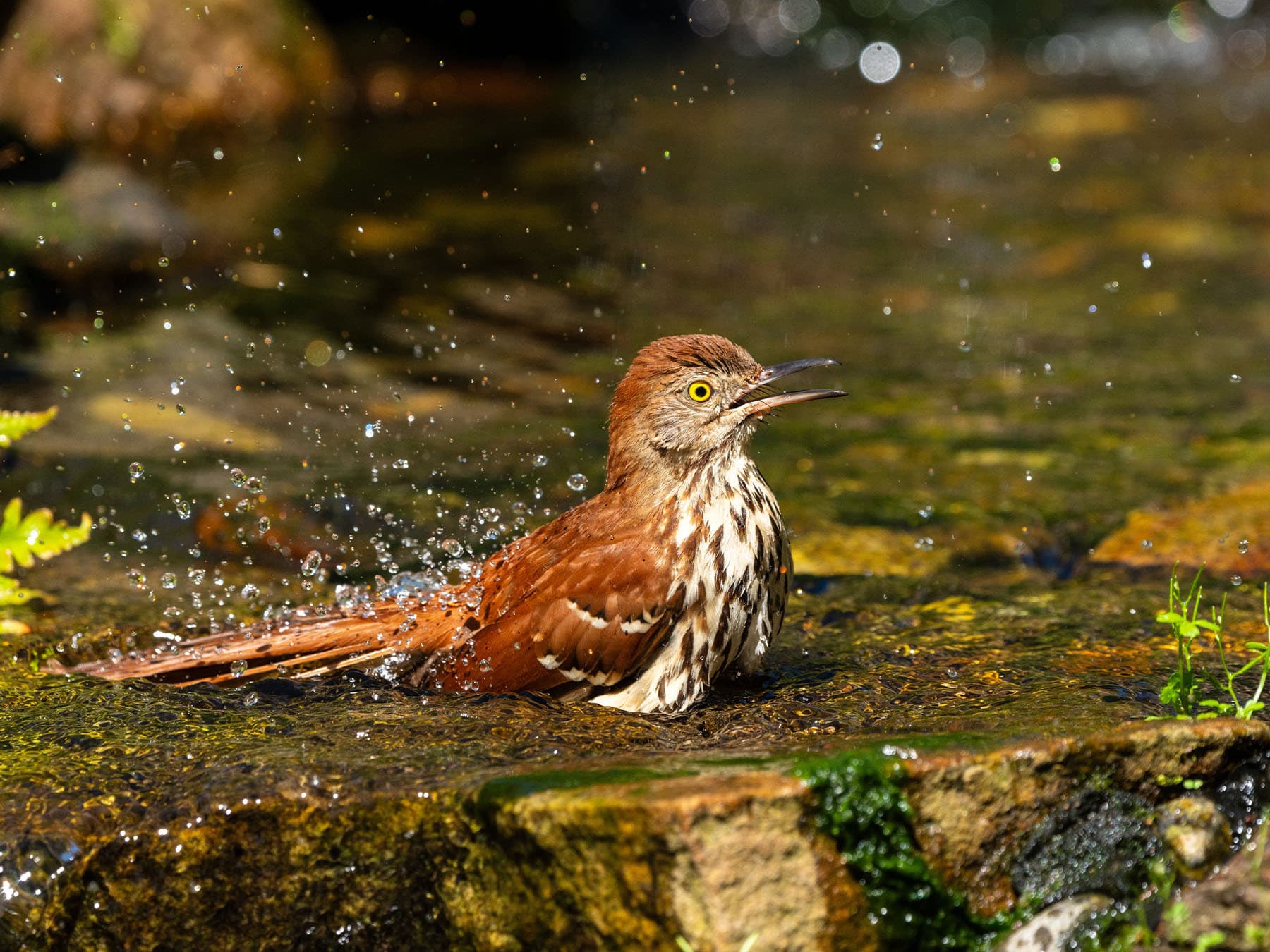
Fall is a busy time for birds on the move. According to Cornell Lab range information, brown thrashers are short-distance, partial migrants.
Birds from farther north shift south for winter, while some stay year-round in the Southeast. A sighting in a North Carolina yard this season is therefore plausible.
That said, local numbers vary. A neighbor a few miles away may see thrashers daily while your street sees none.
Habitat matters, from the mountains to the Piedmont to the coastal plain, and so do dense shrubs and thickets that give the birds cover.
Food helps explain the interest in your yard. Audubon notes that brown thrashers eat insects but also fruit, seeds, and nuts.
Cornell adds that plant foods become more important in fall and winter. So a bird in your beds may be after a mix of small prey and fallen seeds or nuts hidden in the leaves.
Mulch foraging is not limited to autumn, either. Birds that scratch through ground cover may do so in any season when food is there to find.
Fall simply happens to be when many of us are outside and notice the results.
Foraging does not guarantee pest control
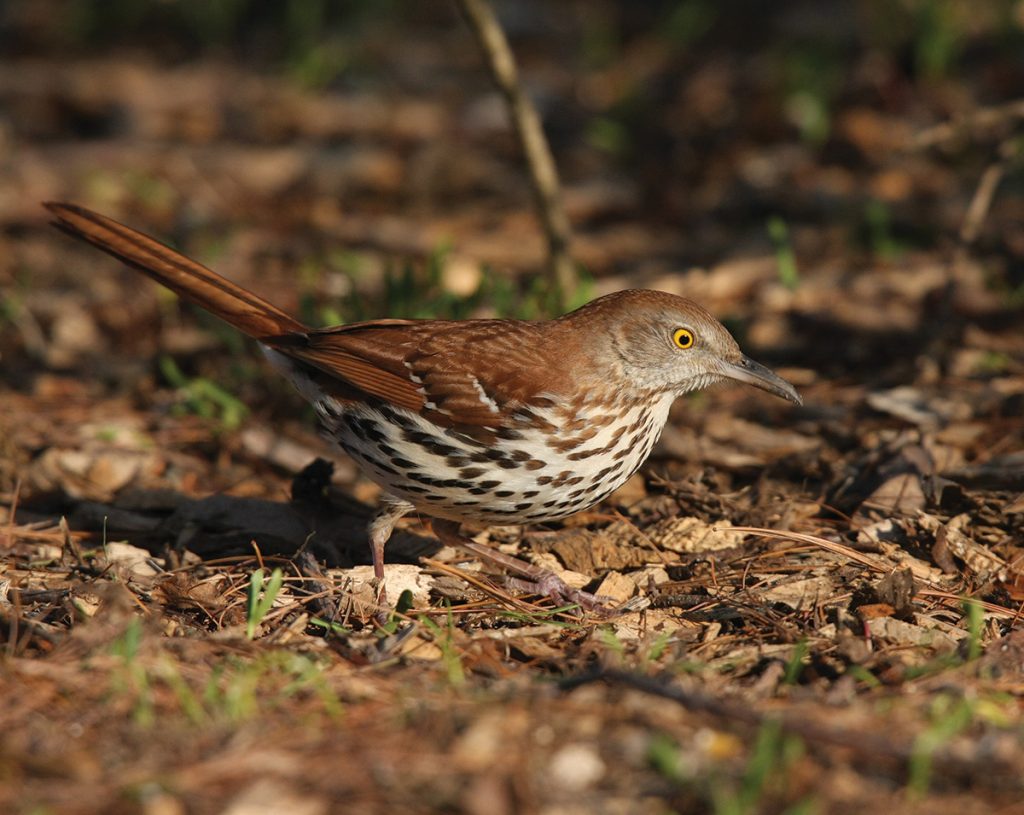
A thrasher in the garden is a welcome visitor, but it is not a pest control service. Its diet is varied.
Cornell Lab lists insects and other arthropods along with fruit, seeds, and nuts, and many of those insects are not garden pests at all.
What the visit does show is that the bird is using your yard as feeding habitat. That is a nice thing to know.
It is not a measure of overall yard health, and one bird cannot tell you which insects are in the bed or how many.
Research on birds and pests gives a mixed picture. A peer-reviewed meta-analysis of bird effects on crop and forest pests found that birds can help suppress pests overall, but the results vary from system to system.
It was not about brown thrashers in North Carolina home gardens, so it cannot tell you how much a single bird reduces pests in your beds.
A fair way to think about it is this: enjoy the bird, and judge your plants by their own signs. Chewed leaves, wilting, or sticky residue point to a specific problem worth looking into.
Moved mulch does not.
When should you leave the bed alone?
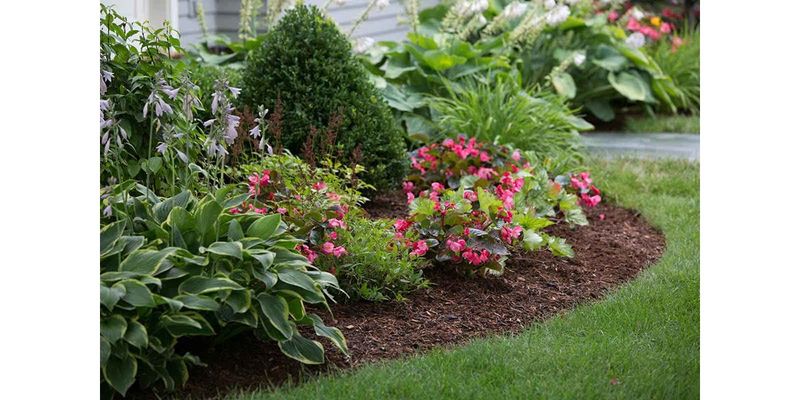
Sometimes the best move is to do nothing for an hour. If a bird is busy in the bed, let it finish and move on.
Watching from a distance costs you nothing, and the bird gets its meal undisturbed.
Once it leaves, take a look at the damage. If the mulch is only shifted on the surface, you can leave it or lightly rake it back into place.
A quick pass with a rake or gloved hands is usually enough. According to the NC State Extension landscape calendar, mulch should not be piled against plant stems or crowns, so check those spots first.
Not every disturbed bed needs repair. A few chips on the path or a thin patch is not an emergency.
But leaving every bit of displaced mulch where it landed is not ideal either, especially if it has been pushed up against a plant or left a bare gap.
Skip the spray bottle. A bird scratching around is not a reason to apply insecticide, since foraging behavior does not identify a pest or show that treatment is needed.
If you do see real plant trouble, get a specific diagnosis first, such as through your county Extension office.
Restore mulch without piling it against plants
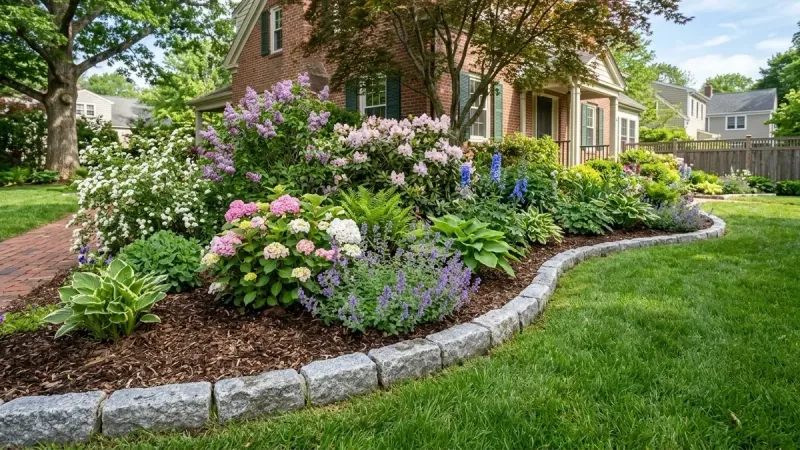
When a bed does need tidying, aim for an even, modest layer. For perennial landscape beds, NC State Extension recommends 3 to 4 inches of organic mulch, and no more than 4 inches.
A ruler pushed into the mulch gives you a quick reading.
That number is guidance for perennial beds, not a rule for every landscape. Vegetable plots, new seedlings, and other plantings can call for different approaches, so match the depth to what you are growing.
Placement matters as much as depth. The Extension landscape management calendar advises against piling mulch against plant stems or crowns.
Pull it back a few inches so the base of each plant stays visible and open to air.
Here is a simple routine for a Saturday: rake scattered mulch back from walkways, fill any thin spots, then pull it away from stems and crowns. Thicker is not better, so resist the urge to top off past the limit.
The goal is a well-kept bed, not a bird-proof one. A little rearranging now and then is a small price for sharing your yard with wildlife.
Leave an active nest undisturbed

Everyday feeding and nesting are two different situations. If you ever find a nest holding eggs or dependent young, leave it exactly as it is.
Keep pets and people away, and avoid moving branches or trimming around it.
The law backs this up. The brown thrasher appears on the federal list of birds protected under the Migratory Bird Treaty Act.
The U.S. Fish and Wildlife Service explains in its guidance on bird nests that active nests with eggs or dependent young may not be destroyed.
Do not read a nest into a mulch mess. Scattered mulch in fall does not mean a nest is nearby, and most of the time it is just a feeding stop.
Nests are typically in dense shrubs or low in thick cover, so a mulch bed is not where you would expect one.
If you do come across an active nest while gardening, step back quietly and plan your pruning or cleanup for another time. Waiting costs very little, and it gives the young birds a chance to fledge safely.
A practical rule for mulch and wildlife
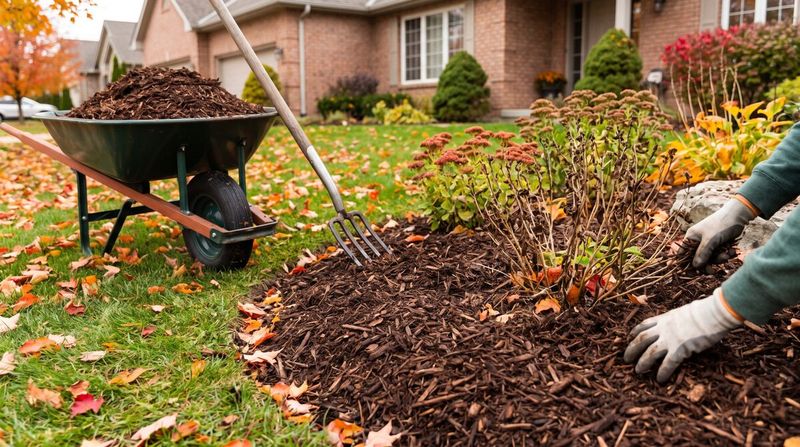
Treat flung mulch as possible normal foraging, since thrashers sweep through leaf litter for food. Let the bird move on, then rake back what you need, keeping it off stems and crowns as the Extension calendar advises.
If you ever find an active nest, follow federal nest guidance and leave it alone.
A little mess is often just a bird at work.