
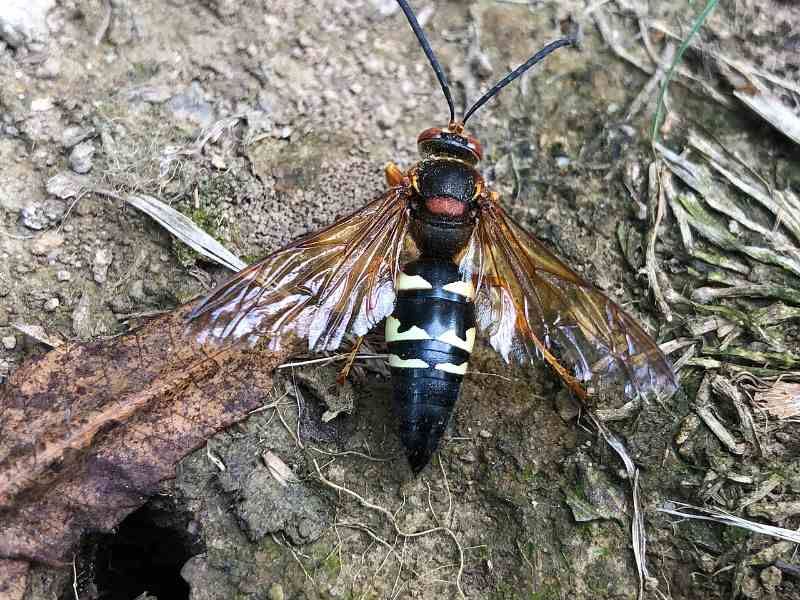
Every July and August, North Carolina homeowners spot something alarming: huge, yellow-striped wasps hovering low over the grass and kicking up little mounds of dirt near the roots. Most people reach for a spray can, but the wasps are actually pointing at something worth fixing in the soil beneath them.
Learning what those tunnels mean, and how to respond without unnecessary chemicals, can save your lawn and your weekend.
Those alarming holes usually belong to solitary cicada hunters
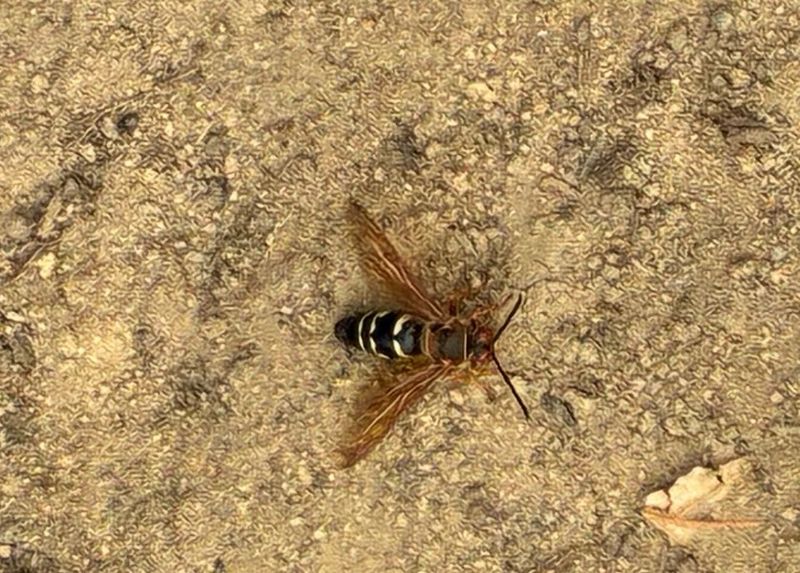
Yard work comes to a sudden stop when a wasp the size of a hummingbird buzzes past your ankle, and that reaction makes complete sense. The eastern cicada killer, Sphecius speciosus, is the largest cicada-killer species documented in North Carolina by NC State Extension, with adults reaching roughly one and a half inches or more.
Their dark bodies carry bold yellow markings that can read as threatening at a glance, especially when several are hovering in the same corner of the yard.
Activity usually kicks off around midsummer, though temperature swings and rainfall can nudge the timing earlier or later in any given year. Dog-day cicadas peak in July and August across much of the state, and the wasps follow that food source closely.
If you are seeing heavy wasp traffic in late summer, the calendar lines up almost exactly with what NC State Extension describes as their typical window.
A cluster of holes can look like a full-blown colony, but the comparison to yellowjackets or hornets does not hold up. NC State Extension explains that cicada killers are solitary wasps, meaning each female digs and provisions her own individual burrow rather than sharing a nest with workers defending a queen.
When you see multiple holes close together, you are looking at several independent females who independently chose the same patch of favorable soil, not a unified colony coordinating an attack. That distinction matters a great deal for how you decide to respond.
The burrows themselves are easy to spot: a roughly half-inch entrance hole surrounded by a small fan of excavated soil. Females may return repeatedly, carrying paralyzed cicadas underground to feed their larvae.
The hovering and low-altitude patrolling that unnerves so many homeowners is mostly males checking out their territory, a behavior explained further in a later section.
What the digging reveals—and what it does not
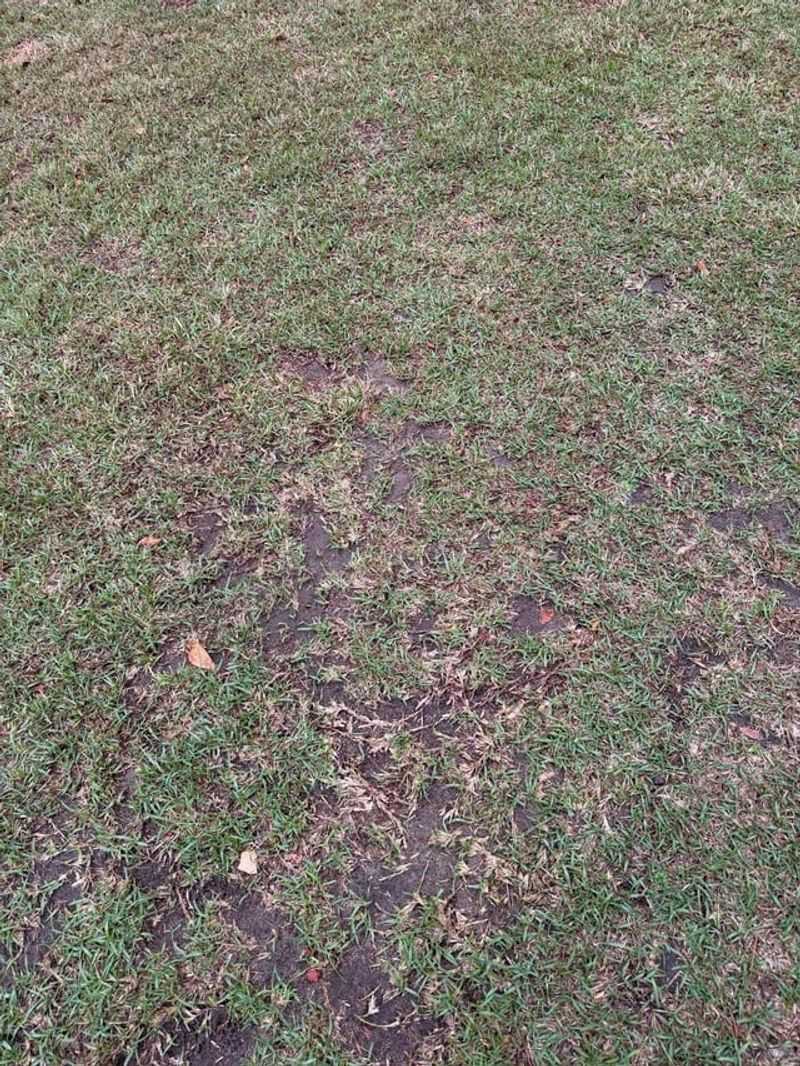
Bare holes in a lawn are easy to read as a problem the wasps created, but the relationship actually runs the other way. Cicada killers select sites that are already easy to excavate, which means the exposed soil was there before the first wasp arrived.
NC State Extension reports that cicada killers favor sparsely vegetated areas, loose sand, fill soil, sand pits, and retaining-wall gaps, along with any similarly open and workable ground. Sunny, well-drained spots near deciduous trees that host cicadas are especially attractive.
Think of the tunnels as a signal rather than a diagnosis. They confirm that a section of your yard offers the kind of exposed, loose, or thinly covered ground that females can break into without much effort.
What they cannot tell you on their own is why the ground ended up that way. University of Maryland Extension notes that cicada killers are attracted to bare or sparsely vegetated soil in sunny areas, but a bare patch can result from heavy foot traffic, excessive shade that thinned the turf over time, poor drainage, compaction, incorrect mowing height, or simply a grass variety that never suited the site.
Treating the wasp as the root cause leads to spraying a symptom while the actual problem stays in the ground. University of Maryland Extension’s lawn problem diagnostic guidance reinforces the point that exposed soil in a lawn almost always has an identifiable underlying cause worth tracking down.
A homeowner who focuses only on the wasp and ignores the bare patch is likely to see the patch persist, and possibly attract new females the following summer.
Resist the urge to assign one neat explanation to the holes. The wasps do not prove the soil is dry, compacted, sandy, poorly drained, or low in nutrients.
They establish that the area is workable nesting habitat. Figuring out why it got that way is a separate task, and the next few sections walk through how to approach it.
The wasp that dives at you may not be able to sting
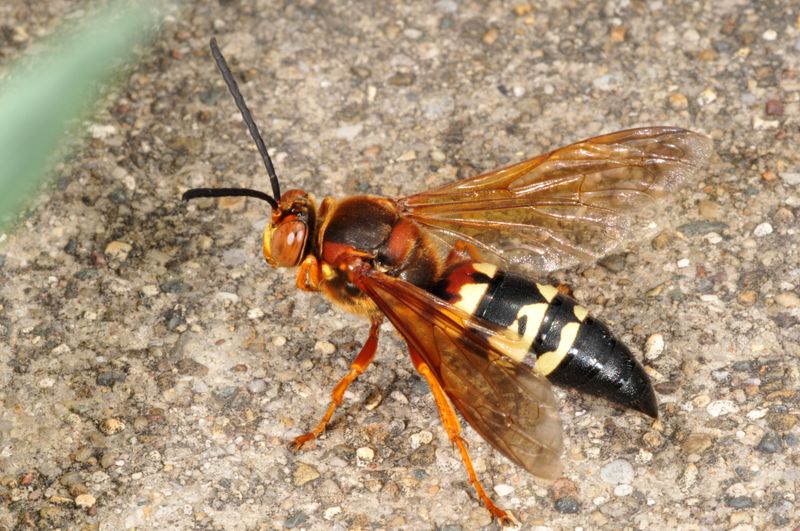
Watching a large wasp make a low, direct pass at your head is genuinely startling, but knowing which sex is doing the flying changes the risk picture considerably. Male cicada killers patrol nesting areas and will investigate people, pets, lawn equipment, and even garden hoses that enter what they treat as their territory.
NC State Extension confirms that male cicada killers lack stingers entirely, so those aggressive-looking passes are bluff and bluster with no venom behind them.
Females are a different story in terms of capability, though not necessarily in terms of temperament. A female’s day is spent excavating her burrow, hunting cicadas in nearby trees, paralyzing her prey with a sting, and carrying the immobilized cicada back underground to provision a larval cell.
University of Maryland Extension describes females as nonaggressive and unlikely to sting unless grabbed, stepped on, trapped in clothing, or otherwise directly threatened. The same guidance is echoed by Iowa State University Extension, which notes that females are focused on provisioning and rarely engage with people who simply walk nearby.
That said, “nonaggressive” does not mean “incapable of stinging.” Bare feet near an active burrow entrance, a child who picks one up out of curiosity, or a pet that snaps at a passing female all create the kind of direct contact that can produce a sting. Keep shoes on around active holes, and teach children to watch from a distance rather than approach the wasps.
For anyone with a known severe sting allergy, the calculus shifts. Poison Control notes that serious allergic reactions to stings require emergency medical attention, and people with a history of anaphylaxis should carry prescribed epinephrine and treat any nest near high-traffic areas with extra caution.
Most encounters with cicada killers are low-risk, but proportionate care around active nests is always warranted.
The practical takeaway: the wasp diving at your face is almost certainly male and almost certainly harmless. The female carrying a cicada twice her size back to a burrow is the one with a stinger, and she is far more interested in her cargo than in you.
Before repairing the patch, find out why the turf failed
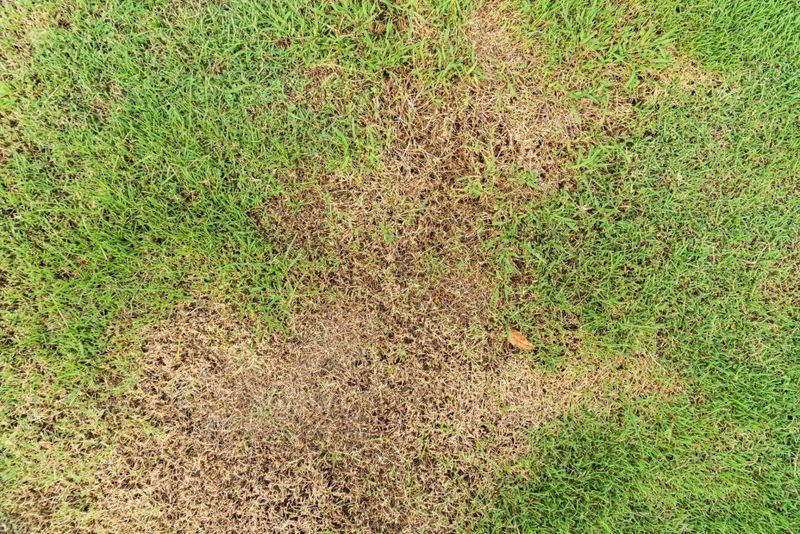
Spreading seed or sod over a bare patch without understanding why it went bare is a reliable way to spend money twice. NC State Extension’s lawn renovation guidance specifically recommends correcting the underlying problem before attempting any renovation, because turf planted into an unchanged problem site tends to fail again in the same spot.
Start with a simple visual inspection. Heavy shade from a maturing tree is one of the most common reasons turf thins out in a previously sunny spot.
Foot traffic from a path people have worn into the lawn compacts the soil and shreds grass crowns over time. Poor drainage or low spots that hold water after rain can kill turf roots even when the surface looks dry between events.
Check whether the mower is set too low for the grass type, since scalping removes the leaf area the plant needs to recover between cuts.
Less obvious causes include overwatering, which can promote disease and shallow roots, and overfertilizing, which can burn turf or encourage thatch. A grass variety that simply does not match the site, whether the wrong species for the light level or a cool-season turf planted in a location that bakes in summer, will thin out predictably.
University of Maryland Extension’s lawn problem diagnostic resource offers a structured checklist approach for working through these possibilities systematically.
For patches that resist easy explanation, a soil test is the most direct next step. It will show pH, macro- and micronutrient levels, and organic matter, which removes the guesswork from fertilizer and lime decisions.
NC State Extension guidance on modifying soil for home landscapes explains how compaction, texture, and drainage interact and how to address them before planting. Guessing with lime or fertilizer on a patch that actually has a drainage or compaction problem rarely helps and can make the chemistry worse.
Cicada killer activity pointed you toward this patch. The wasps did not create the problem, but they gave you a reason to look at a spot that was already struggling.
That is a useful signal worth following up on before the next growing season.
Covering the ground changes the invitation

Once you know why the soil is exposed, covering it correctly is the most durable way to reduce its appeal as nesting habitat. The right approach depends on where in the yard the bare area sits and what region of North Carolina you are working in.
In turf areas, the goal is to restore a dense, healthy stand of grass suited to the site. NC State Extension’s renovation guidance stresses addressing the underlying cause first, then selecting a grass variety that actually fits the conditions.
Timing matters considerably across the state. NC State’s Carolina Lawns publication notes that tall fescue, common in the Piedmont, is generally best seeded from around September 1 through October 1, while coastal plain homeowners typically have a slightly later window running from about September 15 through October 15.
Warm-season grasses such as bermudagrass, zoysiagrass, centipedegrass, and bahiagrass follow different establishment schedules tied to soil temperature rather than calendar date, and plugging or sodding those species into late-summer bare patches may not establish well before cooler weather arrives.
In planting beds, exposed soil between shrubs or perennials is an easy fix with roughly 2 to 3 inches of mulch. University of Maryland Extension recommends mulching exposed bed soil as a straightforward way to make the ground less workable for nesting females.
Keep in mind that mulch covers the surface but does not resolve compaction or drainage problems underneath, so pair it with any needed soil corrections.
For low-traffic areas in the mountains and Piedmont where turf consistently struggles, a site-appropriate groundcover may be a lower-maintenance long-term solution. The NC State Extension Gardener Handbook’s lawns chapter acknowledges native and site-appropriate groundcovers as alternatives to turf in areas that do not receive heavy foot traffic.
This is not a blanket prescription for all of North Carolina; coastal plain conditions, traffic patterns, and plant availability all affect whether a groundcover is practical. Match any plant selection to the specific region and site rather than applying a one-size answer statewide.
When leaving the nests alone may be the safest choice
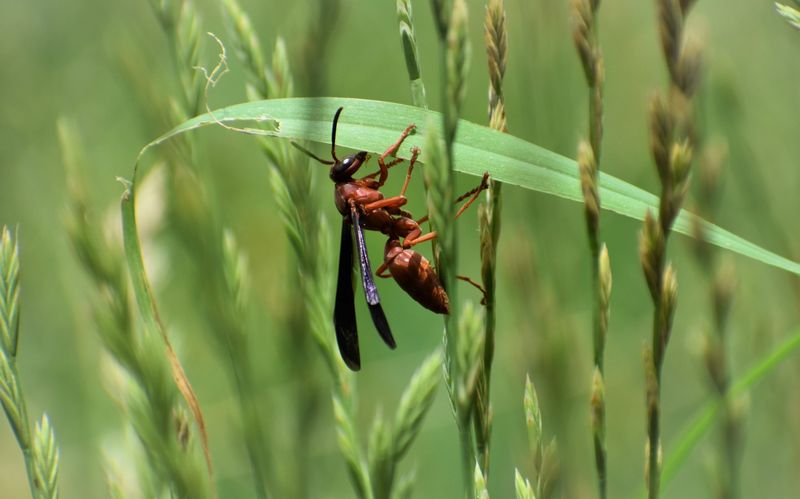
Tolerance is a legitimate strategy, and for many households it is the lowest-risk option available. University of Maryland Extension advises that cicada killer nests away from doors, paths, play areas, and frequently used lawn space can often simply be left alone, because adult activity is seasonal and the wasps will be gone before cool weather arrives.
The same guidance is echoed by Iowa State University Extension, which points out that these wasps do not overwinter as adults and that a given nesting site may not attract females every year once conditions change.
The key qualifier is location. A nest tucked into a sunny slope at the back of the property, well away from where children play or pets run, presents a very different conflict level than a burrow right beside a frequently used side door or along a path that gets barefoot traffic.
Observe from a comfortable distance for a day or two before deciding. If the wasps are staying near their burrows and not intercepting people going about normal yard activities, leaving them alone is reasonable.
Nests near unavoidable traffic, pets that dig or snap at anything that moves, young children who cannot reliably avoid a marked area, or household members with serious sting allergies require a different risk calculation. In those situations, tolerance is not the right default, and the later section on treatment options covers what to consider.
A temporary sprinkler run over an active nesting area may discourage females from continuing to dig, since they prefer drier, workable soil. NC State Extension mentions this as a possible deterrent, but the approach comes with an important limit.
NC State’s turfgrass water requirements guidance is clear that irrigation decisions should be based on grass type, soil, slope, infiltration rate, and weather conditions, not on keeping a lawn saturated. Chronic overwatering can promote disease, encourage shallow roots, increase runoff, and compact soil over time.
Use a sprinkler to make the spot temporarily less attractive, not as an ongoing management tool. Keep people and pets away from active burrow entrances during and after any watering, and give the area time to settle before resuming normal use.
Why spraying the whole lawn misses the real problem
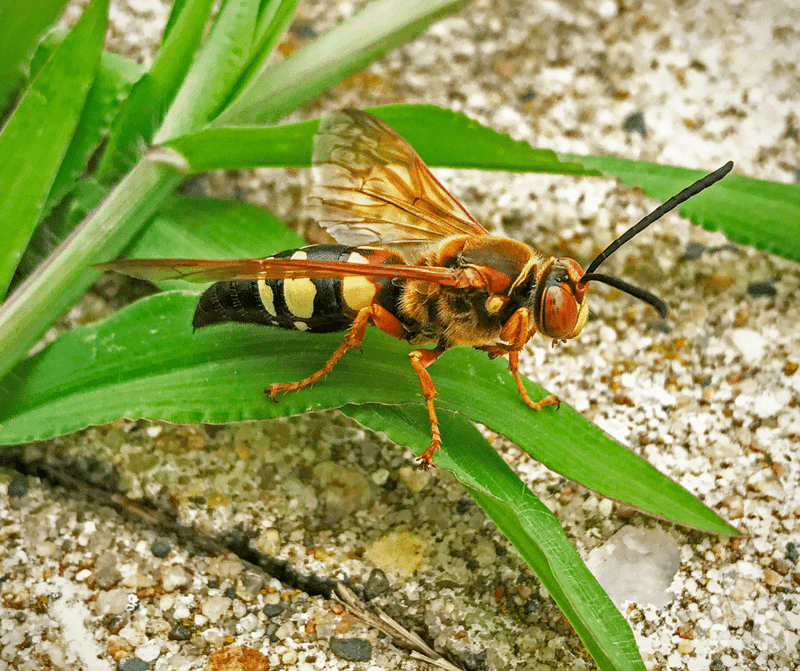
Reaching for a broadcast sprayer is an understandable first impulse when large wasps are excavating your yard, but it is one of the least effective responses available. NC State Extension reports that surface sprays typically kill few wasps, may not stop new digging, and do not provide durable control because untreated females from surrounding areas can move into the same patch of attractive soil as soon as conditions allow.
Spraying the lawn addresses neither the wasp population nor the exposed-soil condition that drew them in.
University of Maryland Extension frames insecticide as a last resort, appropriate only when nests sit in locations where people or pets will repeatedly and unavoidably disturb them. Even then, the recommendation is targeted treatment at or near specific burrow entrances rather than a blanket application across the lawn.
A general wasp spray and a labeled nest treatment are not the same product, and treating them as interchangeable creates both safety and legal problems.
The EPA is explicit that pesticide labels are legally enforceable documents, and using any product in a manner inconsistent with its label violates federal law. Before applying anything, confirm that the product’s current label specifically permits use on the intended site and lists the target pest.
A product registered for general lawn insect control may not be labeled for wasp nest treatment, and vice versa.
Child, pet, and environmental precautions apply regardless of product type. EPA guidance on protecting children from pesticides recommends keeping children and their toys away from treated areas for the full period specified on the label.
The EPA’s citizen’s guide to pest control adds that pets should also be kept off treated surfaces until the label-specified re-entry interval has passed. Runoff from lawn-applied products can reach storm drains and nearby waterways, so application near slopes, drainage channels, or rain events requires particular care.
If the nest location truly demands treatment and you are uncertain which product applies, a licensed pest management professional can select a label-compliant approach and apply it correctly.
Better ground cover usually answers the lawn’s invitation
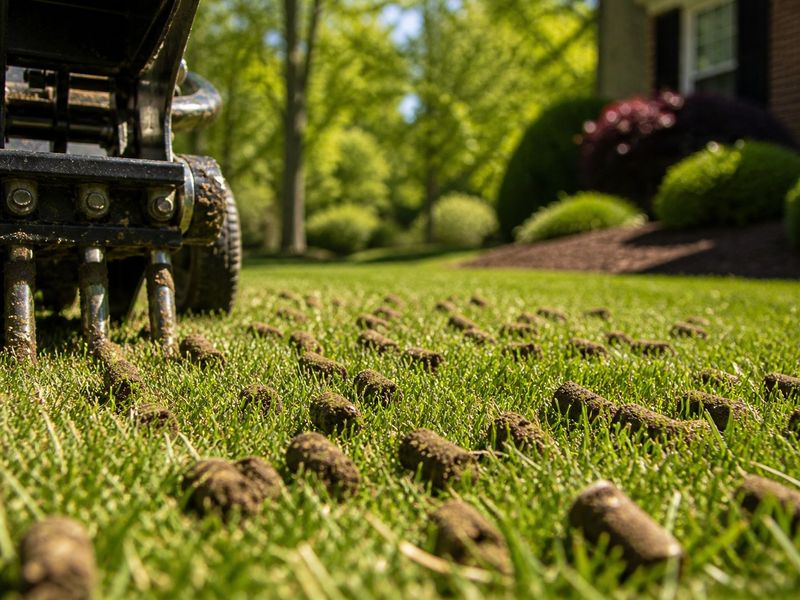
Pulling the whole picture together, the response path is simpler than it might look from the moment of first alarm. Confirm you are looking at an eastern cicada killer rather than a yellowjacket or hornet, keep a reasonable distance from active burrow entrances, and assess honestly whether the nest location creates a real conflict for your household.
A nest in a low-traffic corner of the yard, away from children, pets, and people with serious sting allergies, can often be left alone for the season. NC State Extension confirms that adult activity is temporary and seasonal, so the patch will quiet down on its own.
If the location does create genuine conflict, use the targeted options described in earlier sections rather than blanket spraying. Meanwhile, investigate why that patch of ground is exposed.
Run a soil test, check for shade, compaction, drainage, traffic, or grass-selection issues, and then restore appropriate ground cover at the right time for your region and grass type. NC State Extension’s renovation guidance makes the sequence clear: fix the cause, then repair the surface.
Tolerating a low-conflict seasonal nest and improving the lawn are not competing choices – they work well together.
The wasps did not ruin your yard; they found a spot that was already available. Dense, healthy turf suited to its site is the most reliable long-term answer, and it happens to be good for the lawn regardless of whether cicada killers ever return.