
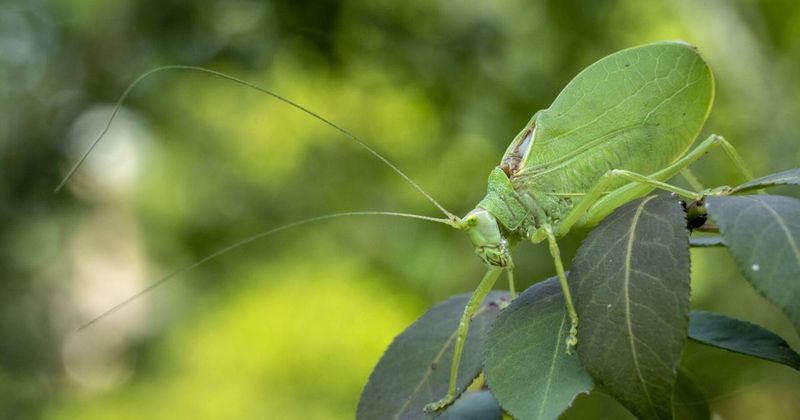
Every August and September, North Carolina yards fill with a rising chorus of rasping, buzzing calls coming from the trees and shrubs after dark. Many homeowners step outside, notice more of those large, leaf-green insects than they remember from previous years, and wonder whether something has gone wrong.
The short answer is probably not, but the longer answer is worth reading before you reach for a spray can.
A Late-Summer Increase Does Not Prove an Invasion
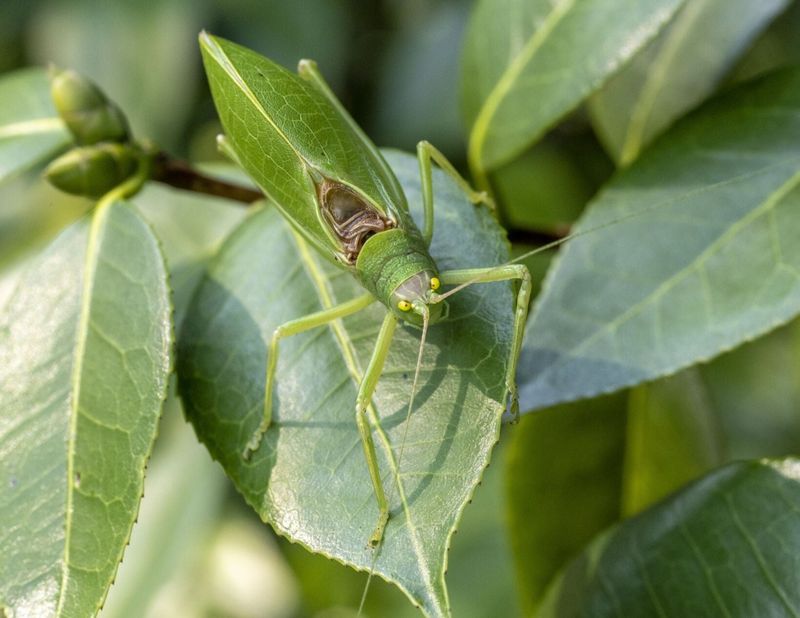
Plenty of North Carolina homeowners notice more katydids in August and September than at any other point in the year, and the timing makes biological sense. Katydids spend the early warm season as nymphs hidden in vegetation, maturing gradually through the summer.
By late August, adults have fully developed wings, and the males begin producing their signature calls by rubbing their forewings together, which is why the sound seems to arrive all at once.
North Carolina supports a wide variety of native katydid species, including common true katydids, several bush katydid species, meadow katydids, and coneheads, as documented in the state’s Orthoptera checklist. These insects are distributed across the mountains, Piedmont, and Coastal Plain, so their presence in a yard reflects the state’s natural diversity rather than an unusual arrival.
What feels like a sudden appearance is largely a function of adult maturation, increased movement, and the acoustic attention their calls demand.
Late-summer visibility is not the same thing as a population outbreak. No current statewide monitoring data establishes that North Carolina is experiencing an unusual surge in katydid numbers this season.
A yard that feels full of katydids may simply have reached the point in the calendar when adults are active, conspicuous, and loud.
One distinction matters before any management conversation begins: katydids are not grasshoppers. Texas A&M Forest Service notes that katydids belong to the family Tettigoniidae, are mostly nocturnal, and have much longer antennae than the short-horned grasshoppers associated with western rangeland outbreaks.
Advice developed for controlling grasshopper swarms in agricultural settings does not translate reliably to a North Carolina suburban yard with katydids in the oak tree. Confirming which insect you are actually seeing is the first useful step.
Drought May Influence Katydids, but Numbers Cannot Diagnose It
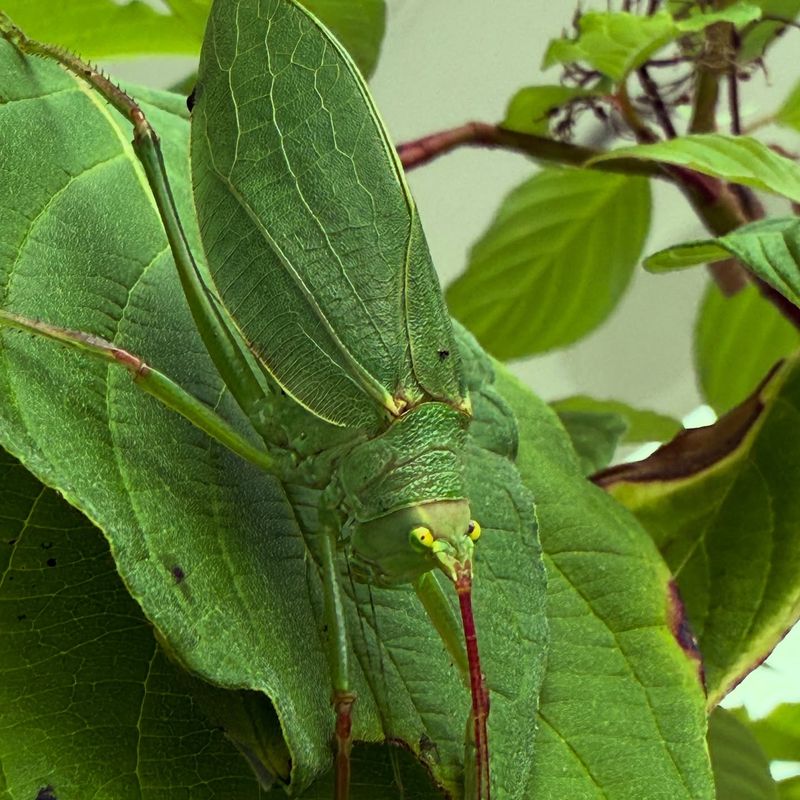
Drought and insect populations interact, but the relationship is messier than a simple cause-and-effect chain. Texas A&M Forest Service notes that katydid outbreaks may follow successive drought years, and U.S.
Forest Service research has documented drought as a contributing factor in some plant-eating insect outbreaks. Drought can alter plant chemistry, reduce the density of competing vegetation, and shift the timing of insect development in ways that sometimes favor certain species.
Even so, a yard full of katydids is not reliable evidence that the yard is drought-stressed. Katydid abundance also reflects seasonal timing, plant biomass, temperature, species-specific biology, and habitat structure.
Research on grassland arthropods has shown that plant biomass, not drought alone, is often the stronger driver of herbivore populations, and that drought effects vary considerably with species and severity. Counting katydids cannot separate those variables.
Drought stress in plants shows up in observable ways that are independent of insect presence. Wilting that does not recover after evening temperatures drop, yellowing or scorching leaf margins, soil that stays dry several inches below the surface, and premature leaf drop are physical signs worth noting on their own.
A yard with those symptoms and a lot of katydids may have both conditions present, but one does not prove the other caused it.
Because drought conditions across North Carolina can differ substantially from county to county, checking a local source matters more than relying on statewide summaries. The North Carolina State Climate Office drought products page provides weekly county-level data.
The mountains, Piedmont, and Coastal Plain regularly experience different drought levels at the same time, so a neighbor’s observation about dry conditions two counties away may not describe your yard at all.
Predator Effects Remain a Possibility, Not a Yard-Level Test
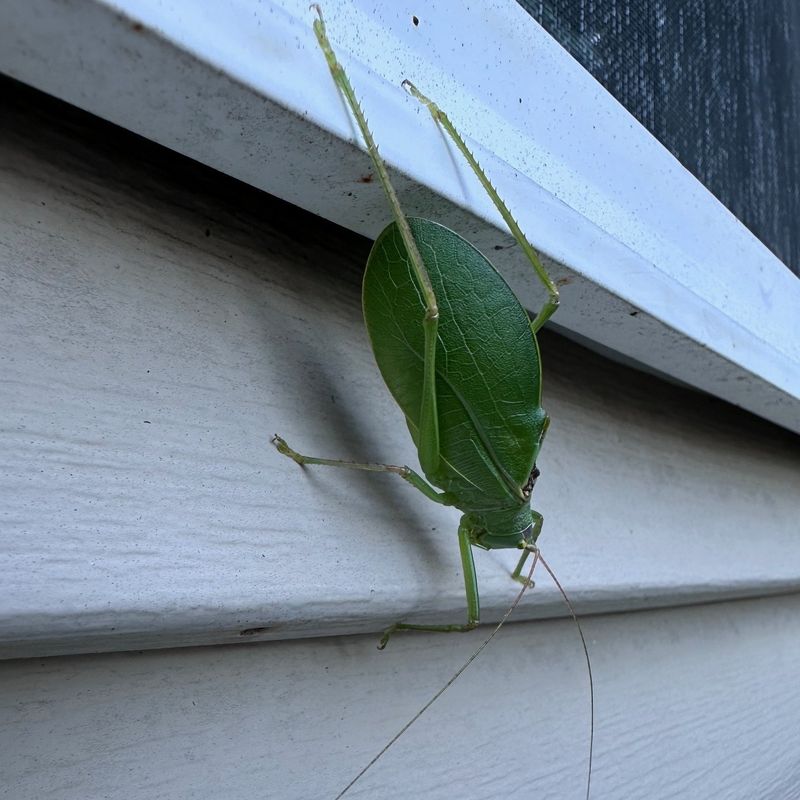
Some research does connect predator abundance to herbivore populations. A 2020 study in the Journal of Animal Ecology found that in grassland settings, katydid biomass tended to be higher where spider biomass was lower and plant productivity was greater, suggesting that both bottom-up plant resources and top-down predator pressure can shape katydid populations.
That kind of relationship is worth knowing about.
What it cannot do is function as a diagnostic tool for a residential yard. A homeowner who notices more katydids and fewer visible spiders, wasps, birds, lizards, or frogs cannot reliably conclude that predator loss is driving the increase.
Visibility of predators shifts for many reasons that have nothing to do with their actual numbers. Mowing patterns change where spiders build webs.
Outdoor lighting draws some insects and discourages others. Pets alter where birds and lizards feel safe foraging.
Weather affects when wasps fly. Pesticide use can reduce predator populations, but so can a cold wet spring that had nothing to do with anything the homeowner did.
Katydids also complicate the predator-prey picture because they are not uniformly plant-eating prey animals. University of Maryland Extension reporting on landscape IPM notes that katydids are often omnivores, consuming plant material but also eating insects, including pest species.
Some katydid species are primarily predatory. This means a yard with many katydids may have a more active food web than a yard without them, not a broken one.
Treating fewer visible predators as proof of predator loss, and then treating katydid abundance as confirmation, runs the risk of building a story on two observations that may each have independent, simpler explanations. The more useful question is whether any plant in the yard is showing real damage, which is something a homeowner can actually inspect and measure.
Inspect Plant Damage Before You Consider Treatment
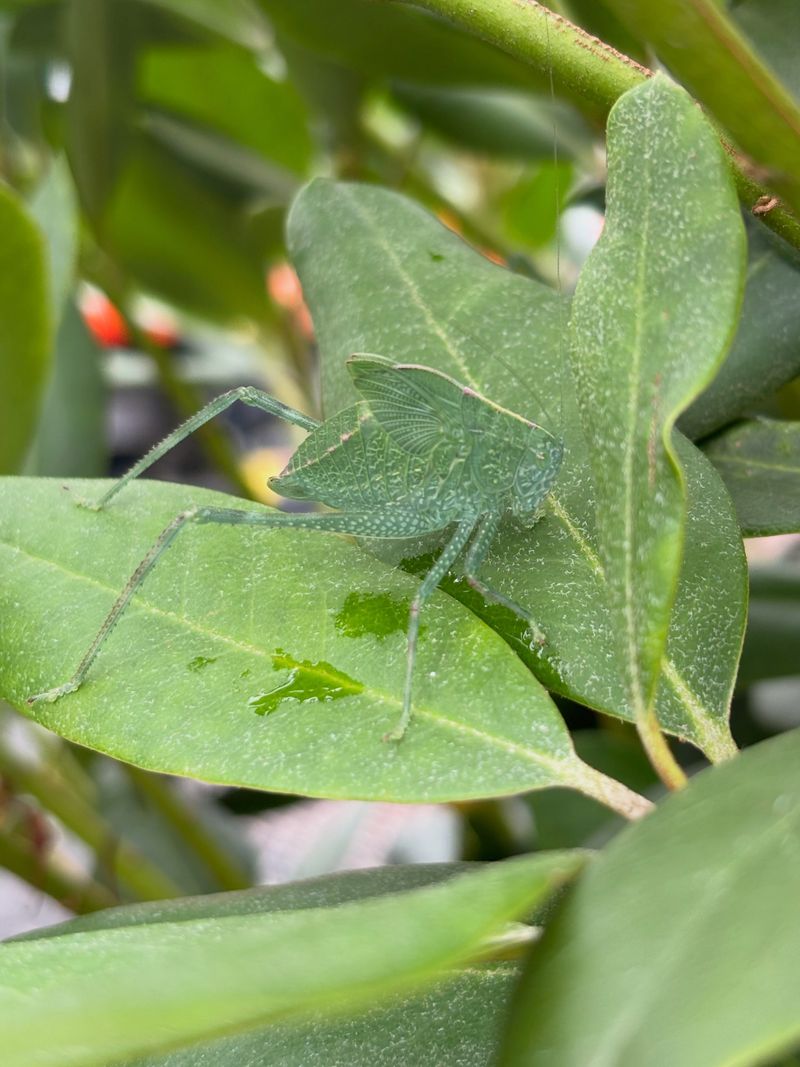
Before any response to katydids makes sense, a physical inspection of the affected plants should come first. Start by confirming the insect’s identity.
Katydids are large, usually bright green, with very long antennae and wings that closely resemble leaves. If the insect you are seeing has short antennae, a stocky body, and jumps powerfully in daylight, it may be a grasshopper, and the identification changes the conversation.
Once you have confirmed katydids, examine the plant itself rather than reacting to the insects’ numbers. Look for ragged or scalloped leaf edges that indicate chewing, missing sections of leaf tissue, damaged flower buds or developing fruit, and any signs of continuing plant decline such as wilting, branch dieback, or failure to put out new growth.
University of Minnesota Extension notes that katydids found in trees and shrubs generally do not harm them, and University of Georgia Extension similarly describes significant damage in typical landscape situations as unlikely.
Late-season presence alone is not a treatment threshold. A shrub covered in katydids that shows no leaf damage, no bud loss, and no decline does not need intervention.
The insects may move on as temperatures drop, and the plant will likely be fine. University of Georgia Cooperative Extension’s integrated pest management guidance emphasizes identification, monitoring, and treatment only when damage reaches an unacceptable level, not simply when an insect is present in noticeable numbers.
Species variation matters here. Some katydid species are primarily herbivores and will chew leaf tissue, while others are omnivores that eat both plant material and other insects.
An omnivorous katydid resting on a tomato plant may be hunting pest insects rather than preparing to eat the fruit. The inspection should focus on what the plant looks like, not on how many katydids are visible nearby.
Documented, continuing damage to a plant you care about is the trigger for the next step; abundance without damage is just an observation worth monitoring.
Use the Least Disruptive Response That Fits the Damage
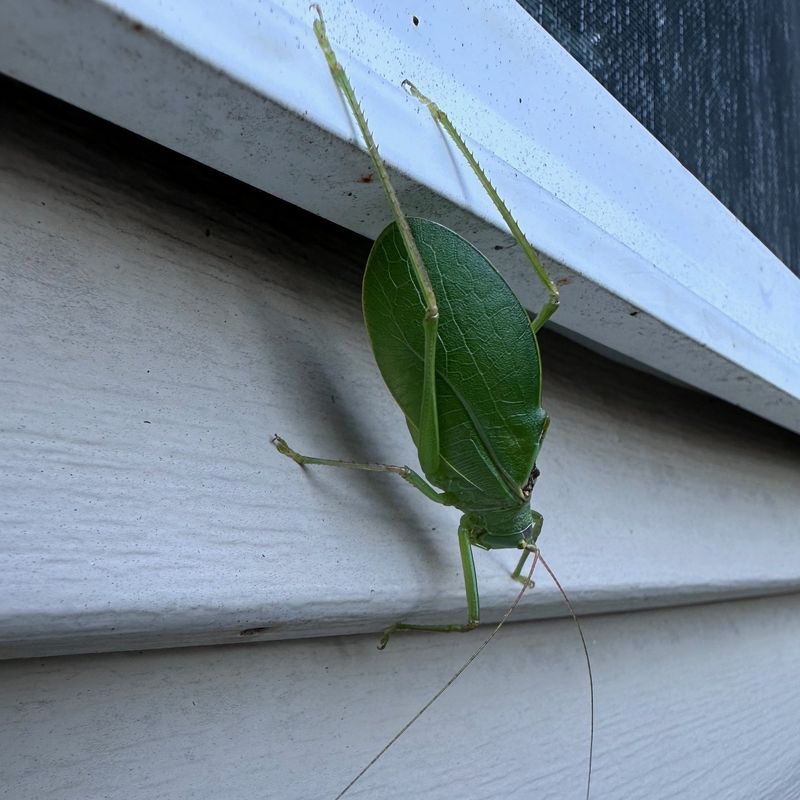
When inspection turns up actual, ongoing damage to a plant you want to protect, the response should match the scale of the problem. Minor chewing on a few leaves of a mature shrub or tree does not require the same response as repeated defoliation of a young ornamental that is already struggling.
Starting with the least disruptive option and moving up only if needed protects both the plant and the rest of the yard’s food web.
For small numbers of katydids on accessible plants, removing them by hand is a practical first step. Wearing gloves and picking them off in the early morning, when they are slower and easier to spot, works reasonably well on individual plants.
Texas A&M Forest Service points out that katydid outbreaks are often short-lived and that trees commonly recover without intervention, so tolerating minor damage through the end of the warm season is frequently the most sensible choice.
If damage is heavy and continuing on a specific ornamental, the right move is contacting your county’s North Carolina Cooperative Extension office. Extension agents can confirm the species, assess the severity, and recommend a targeted response appropriate for your region and plant type.
Do not assume that products labeled for caterpillars, grasshoppers, or general leaf-chewing insects are automatically appropriate for katydids. Label directions, species specificity, and timing all affect whether a product is likely to help without creating new problems.
Whole-yard insecticide applications are not a proportionate response to katydids in most situations. North Carolina’s Department of Agriculture specifically warns homeowners that insecticides can unintentionally harm pollinators and beneficial insects, including the predatory insects that help keep other pest populations in check.
Spraying broadly to reduce katydid numbers can eliminate the spiders, parasitic wasps, and other predators that were already providing some regulation, leaving the yard more vulnerable to the next pest that arrives. Proportionate, targeted action is safer for your plants, your yard, and the insects that belong there.
Improve Habitat Without Promising to Eliminate Katydids
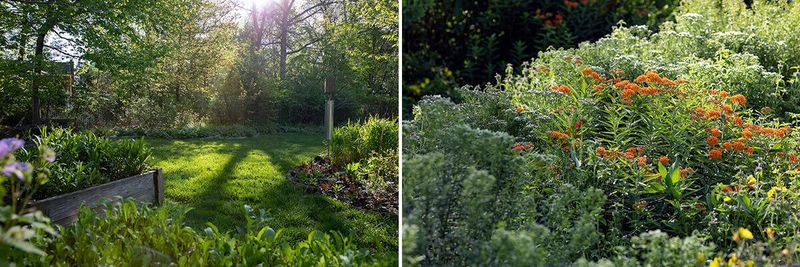
Supporting a more complete yard food web is a reasonable long-term goal for any North Carolina homeowner, and the steps involved are straightforward. NC Wildlife’s guidance on suburban backyards recommends native plantings, layered vegetation with trees, shrubs, and ground cover at different heights, brush piles, water sources, reduced lawn area, and limited pesticide use as measures that support birds, insects, reptiles, and amphibians.
These changes create conditions where a wider variety of predators and scavengers can live and forage.
Native plants are a useful starting point, but they come with real qualifications. NC State Extension’s native plant guidance makes clear that plant selection depends on your specific region, light conditions, soil type, and moisture availability.
A plant native to the NC Coastal Plain may struggle in a Piedmont clay soil, and a mountain native may not tolerate summer heat near Charlotte. Native does not mean maintenance-free, and even well-chosen natives can suffer drought, herbivory, or disease if the site conditions do not match their requirements.
Brush piles, shallow water features, and reduced mowing near fence lines provide cover and foraging habitat for lizards, frogs, ground beetles, and spiders, all of which eat insects. These additions may support more predator activity over time, but they will not eliminate katydids or guarantee any specific outcome.
The goal is a yard that functions as a more complete habitat, not a yard engineered to suppress one insect group.
One specific caution applies to predatory wasps. Solitary wasps such as the grass-carrying wasp hunt katydids and provision their nests with paralyzed insects.
Penn State Extension notes that these wasps are generally not aggressive, but they can sting if handled. Leave any wasp nests you find alone unless they create a direct safety problem.
Disturbing a nest to encourage more katydid hunting is not a useful strategy and carries real risk of stings.
Use Observable Evidence to Decide What the Increase Means
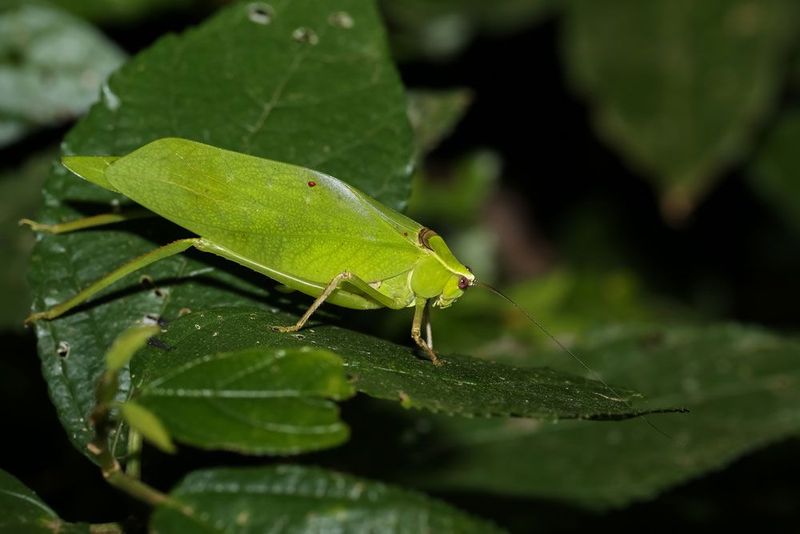
A late-summer increase in katydids is, in most cases, a reason to watch rather than act. The insects are native, their warm-season peak is predictable, and noticing more of them does not establish that anything unusual has happened in a yard.
The cause of any local increase cannot be determined from abundance alone, because season, plant resources, habitat, temperature, and species-specific biology all play roles that cannot be separated by observation from the back porch.
The practical decision rule is straightforward. Check plants for real symptoms: ragged chewing damage, missing buds or fruit, and continuing decline.
Verify your county’s current drought status using the NC State Climate Office’s county-level drought data rather than assuming statewide conditions apply to your location. Treat any hypothesis about predator loss as unresolved until you have specific evidence beyond katydid counts and casual predator sightings.
If damage to a specific plant becomes unacceptable, confirm the insect’s identity with reliable extension resources and contact your county Cooperative Extension office for targeted advice.
The food web in a North Carolina yard is more resilient than a single late-summer observation suggests. Texas A&M Forest Service reminds us that katydid outbreaks tend to be short-lived and that plants commonly recover.
The most durable response to an unusual insect season is a yard that already supports diverse habitat – because a yard with more of the right predators, plants, and cover is better equipped to find its own balance than one treated into silence.