
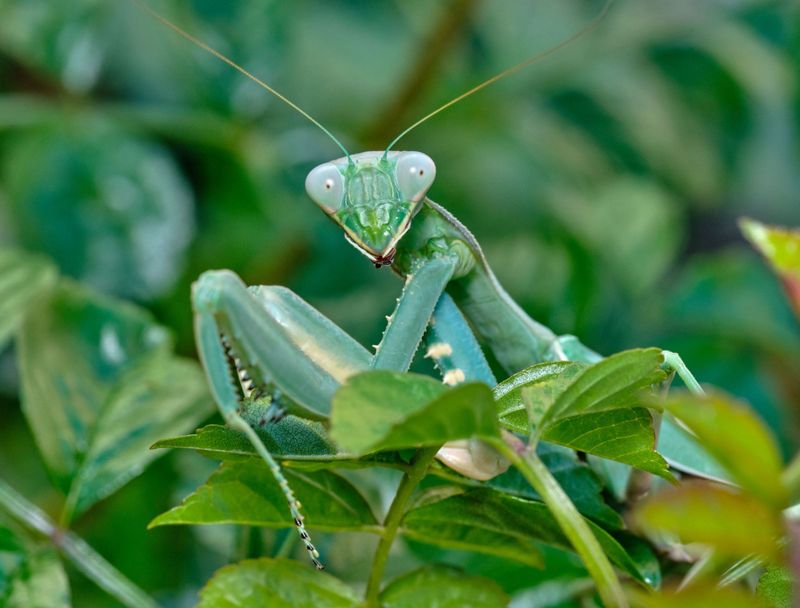
Spotting a praying mantis perched on a tomato stem can stop you in your tracks. These angular, slow-moving hunters are one of the most recognizable insects in any North Carolina yard, and gardeners often wonder whether their presence signals something important about the garden’s health. The truth is more nuanced than the folklore suggests, and understanding what a mantis can and cannot tell you will make you a sharper, more responsible steward of your yard.
A mantis on the tomato plant is a clue, not a diagnosis
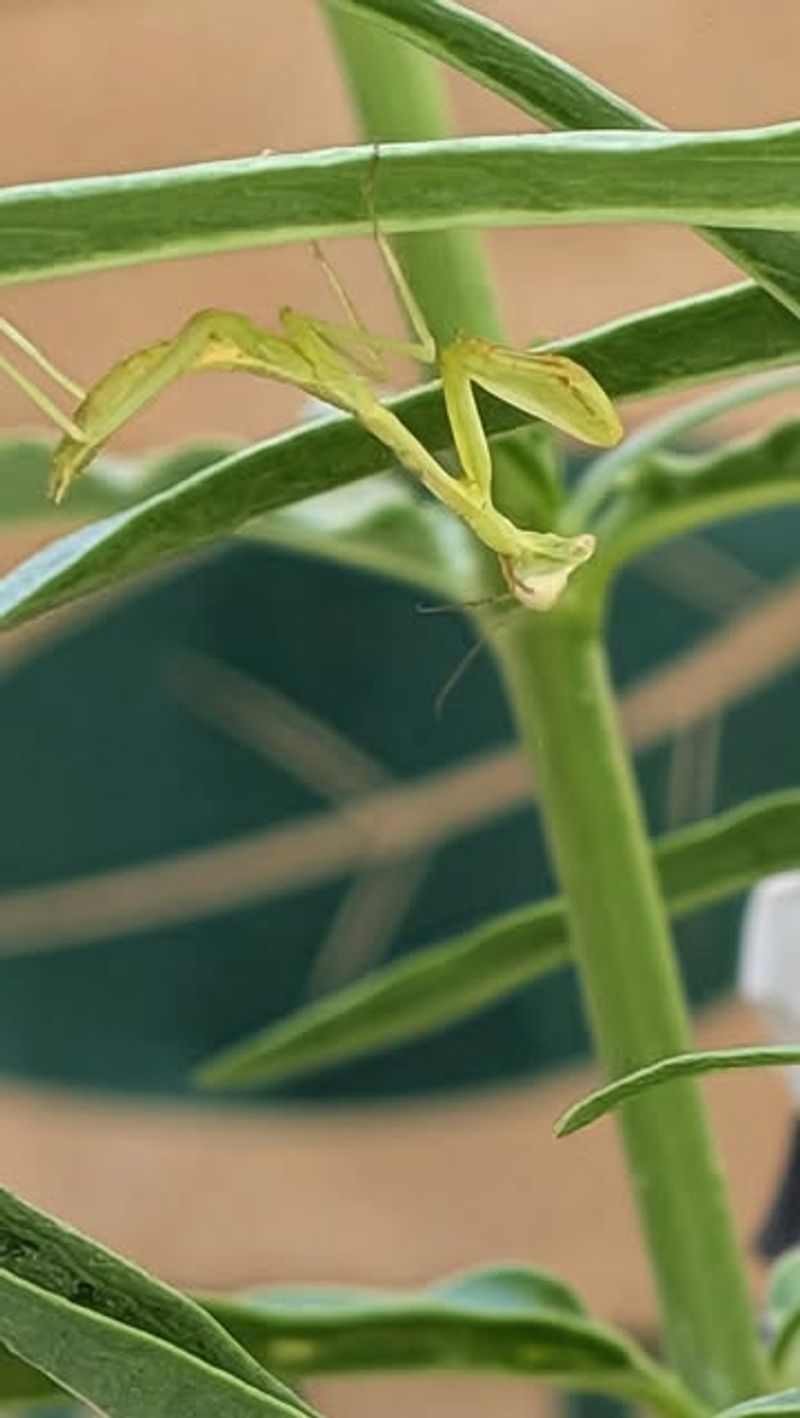
Finding a praying mantis on your tomato plant is genuinely interesting, but resist the urge to read too much into it. According to NC State Extension’s profile of the Carolina mantid, mantises are generalist, sit-and-wait predators that settle wherever vegetation, cover, warmth, and moving arthropods make a spot usable. The tomato cage, dense foliage, and nearby mulch may simply offer a good ambush platform rather than a signal that your garden is overrun with pests.
Several factors could explain why a mantis chose that particular stem. Suitable plant structure for gripping and concealment, a patch of afternoon warmth, proximity to a hatched egg case, seasonal movement through the yard, or ordinary chance all play a role. Prey access likely matters too, but University of Maryland Extension notes that mantid presence is compatible with any landscape where harsh pesticides are not heavily used, not a reliable indicator of a particular pest population size.
So the sighting does not diagnose an unusually large number of soft-bodied pests, confirm that your garden is especially healthy, or promise that the mantis will stay and protect your tomatoes. What it does suggest is that your yard is livable enough for a mid-sized insect predator to pass through or settle briefly. Leaving a naturally occurring mantis undisturbed is a reasonable response, and that is really the most actionable takeaway from the moment. You do not need to relocate it, feed it, or rearrange your garden around it.
Its hunting strategy explains the visit and the uncertainty
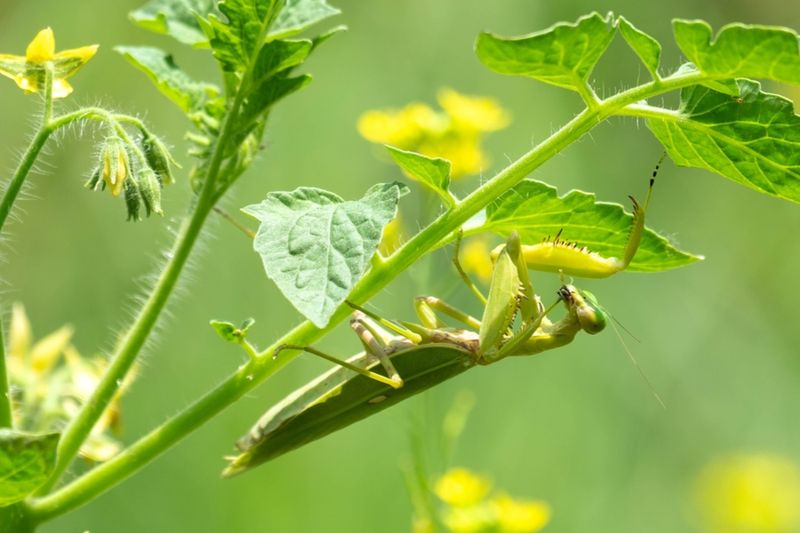
Mantises do not patrol a garden the way a ground beetle or a parasitic wasp might. Instead, they rely on patience, choosing a spot on a stem, flower head, or shrub branch and holding almost perfectly still until prey moves within striking distance. University of Maryland Extension describes this sit-and-wait strategy as the defining feature of mantid hunting, and it explains a lot about why the insect ended up on your tomato plant rather than somewhere else in the yard.
A tomato plant offers dense vertical structure, broad leaves for cover, and a steady stream of small insects attracted to the flowers and foliage. From a mantis’s perspective, that combination makes it a practical perch. The mantis did not necessarily track down tomato hornworm eggs or seek out a known pest hotspot. It found a place where something edible might eventually wander close enough to grab.
UC IPM notes that mantises are comparatively inactive for their size, which reinforces why their presence reflects habitat suitability more than it reflects a measured response to a specific pest problem.
That distinction matters when you are deciding what the sighting means for your garden management. Prey availability probably contributes to where a mantis lingers, but the sources reviewed here do not establish a reliable rule connecting one mantis sighting to any particular abundance of pests in a North Carolina yard. The mantis is using your tomato plant because the plant works as a hunting platform, and that is a useful thing to understand before drawing larger conclusions about what is happening below the soil or across the rest of the garden.
What the mantis may eat—and what it will not reliably control
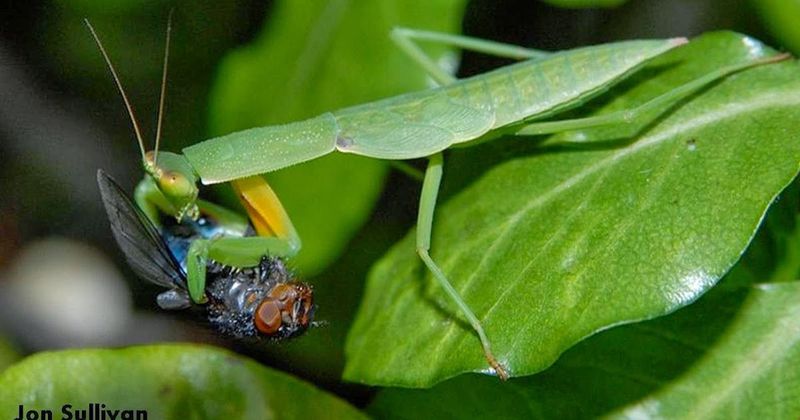
Mantises eat what comes within reach, and that list is surprisingly long. Documented prey includes caterpillars, moths, beetles, flies, grasshoppers, crickets, bees, butterflies, syrphid flies, spiders, and other mantises. UC IPM’s mantid profile states plainly that mantises are indiscriminate feeders: they take whatever is appropriately sized and moves within range, which means pollinators and other insects that gardeners actively want to protect are on the menu alongside the pests.
That broad appetite has a real consequence for how you think about mantises in your tomato bed. A mantis may eat an individual hornworm caterpillar, a cucumber beetle, or a squash vine moth, and that is genuinely useful in the moment. But eating one or two insects does not add up to meaningful suppression of a pest population. NC State Extension is direct on this point, describing the Carolina mantid as a non-selective ambush predator with no demonstrated value in pest management.
That is a stronger caution than simply calling it a mixed blessing.
A 2002 meta-analysis of mantid community effects found that outcomes varied considerably by mantis species and experimental design, which reinforces the point that you cannot count on a uniform result from having one mantis in a garden bed. Individual predation events are real, but they do not reliably translate into fewer pests on your tomatoes by the end of the season.
The practical upshot is that a mantis in your garden is not a substitute for monitoring your plants, identifying what is actually causing damage, and responding with a targeted approach. Think of any pest-eating the mantis does as a modest bonus, not a service you can count on or plan around.
North Carolina has more than one mantis worth identifying
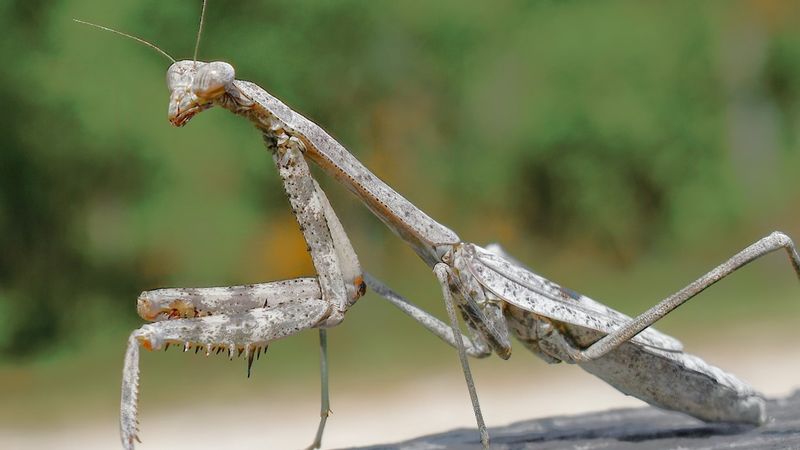
Not every mantis in a North Carolina yard belongs there in a native-wildlife sense. The state is home to the Carolina mantid, Stagmomantis carolina, which is the only species native to the region. Two introduced species, the Chinese mantid and the European mantid, are also well established across the state and are commonly encountered in gardens.
NC State Extension describes the Carolina mantid as roughly two inches long, with wings that cover about two-thirds of the abdomen and a distinctly rectangular face plate. The Chinese mantid is noticeably larger, often reaching three to four inches, with wings that extend over the full length of the abdomen and a more tapered head profile. The European mantid can look similar to the Chinese species in size and color, but carries a distinctive black-ringed spot on the inside surface of each foreleg, which is the clearest field mark for that species.
Color alone is not a reliable guide. Carolina mantids can appear tan, gray, or greenish depending on the individual and the season, and Chinese mantids also vary. A casual glance at a photograph may not settle the question, especially if the insect is partially hidden or the image is taken from an awkward angle. Treat any identification based on a quick look as approximate rather than confirmed.
Species identity matters before you decide how to respond to a mantis or an egg case in your yard. If you genuinely want to know which species you have found, submitting a clear photograph to NC State Extension or a local cooperative extension office is a more reliable approach than guessing from color or size alone.
Protect the mantis without abandoning pest management
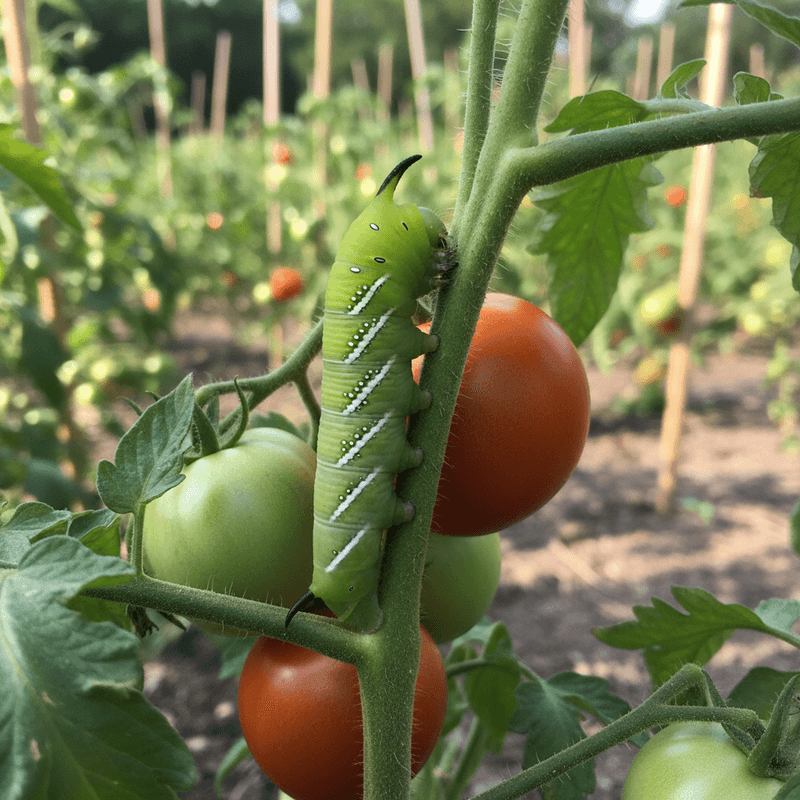
Leaving a mantis undisturbed is genuinely good practice, and the most direct way to support one that has settled in your yard is to avoid spraying residual or broad-spectrum insecticides on the plants and shrubs where it may be hunting. University of Maryland Extension recommends steering clear of damaging residual sprays on trees, shrubs, and flowering plants precisely because those are the surfaces where mantises wait for prey. A contact spray applied to the tomato foliage could kill a mantis just as easily as any other arthropod on the plant.
Reducing broad-spectrum pesticide use protects more than the mantis. Pollinators, parasitic wasps, ground beetles, and syrphid flies all move through the same vegetation, and NC State Extension’s guidance on beneficial garden insects frames targeted, problem-specific applications as the foundation of responsible pest management. A blanket spray applied to eliminate one pest can disrupt the entire insect community that keeps your garden functioning.
That does not mean ignoring real damage to your tomatoes. If leaves are being stripped, fruit is being bored, or plants are wilting, the right response is to identify the actual culprit rather than assume the mantis will handle it. NC State’s integrated pest management guidance treats biological control as one component of a broader plan, not a stand-alone answer. Monitor your plants, confirm what is causing the problem, and choose the least disruptive effective control.
Protecting the mantis and managing genuine pest pressure are not in conflict. Targeted decisions preserve the insect community you want while still giving you a real path forward when something is actually damaging your tomatoes.
Diverse native planting supports the food web, not a mantis-only service

Planting a wider variety of vegetation, especially native species, does more for your yard’s insect community than trying to engineer conditions specifically for mantises. NC State Extension’s native plant landscaping guide explains that diverse, native plantings provide food, cover, and habitat for a broad range of insects and wildlife, building the kind of layered food web that supports predators, pollinators, and decomposers all at once.
A yard with structural variety, shrub layers, groundcovers, and flowering plants blooming across different seasons, gives insects more places to shelter, overwinter, and find resources. NC State’s habitat-for-beneficials principles note that supporting a diverse insect community, rather than favoring a single predator species, produces more consistent ecological benefits in a home landscape. Mantises may benefit from that diversity along with everything else, but the goal is the broader community, not one generalist hunter.
For North Carolina homeowners, low-effort starting points include leaving some leaf litter in garden beds over winter, planting a few native flowering species alongside vegetables, and reducing turf area in favor of mixed plantings. NC Wildlife’s suburban backyard habitat guidance reinforces that small structural changes can meaningfully improve the yard’s value for native wildlife without requiring a full landscape overhaul. A food web with multiple layers of predators, prey, and plant resources is far more resilient than one built around any single species.
Why buying or moving an egg case is the wrong shortcut
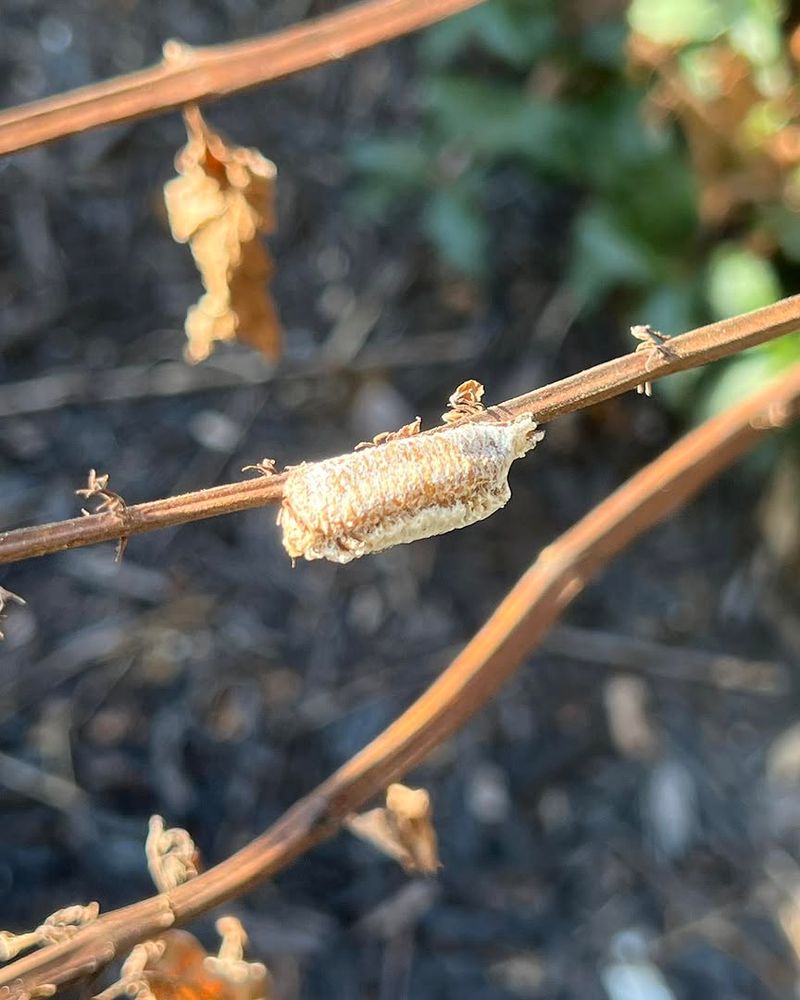
Garden centers and online retailers sell mantis egg cases, oothecae, as a packaged pest-control solution, and the impulse to buy a few and tuck them into the tomato bed is understandable. The reality is more complicated. NC State Extension advises against purchasing mantis egg cases for pest control, noting that commercial cases typically involve introduced species rather than the native Carolina mantid, and that the released mantises may disperse away from the garden, consume pollinators and other non-target insects, or cannibalize one another before making any dent in a pest problem.
University of New Hampshire Extension points out that homeowners cannot count on released mantises remaining where they are placed. Once hatched, the nymphs scatter, and the adults that survive to maturity may move well beyond the original release site. Buying egg cases to solve a specific tomato pest problem is not a reliable strategy.
Moving a naturally found egg case also carries risks. NC State’s profile of the Chinese mantid explains that bringing an ootheca indoors can trigger premature hatching because indoor warmth mimics spring conditions. Young mantises that hatch inside a house in January or February have no suitable prey available and will not survive. The better choice is to leave a naturally occurring egg case attached to whatever stem or surface it was laid on and let it hatch when outdoor conditions are actually right.
If you find an egg case and suspect it may belong to an introduced species, the appropriate response is to seek identification help from NC State Extension or a local cooperative extension office before deciding anything. Removal is not a universal recommendation, and acting without a confirmed identification may do more harm than leaving the case alone.
Let the mantis be one clue, not the garden plan
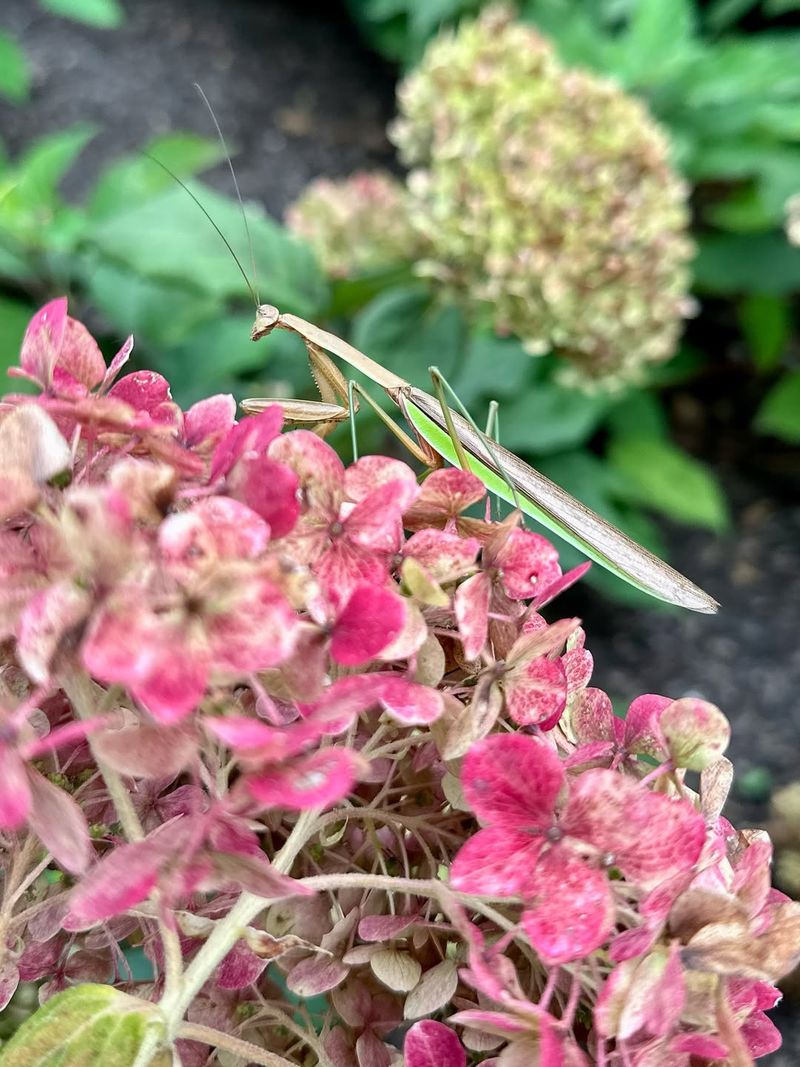
A mantis on your tomato plant deserves a moment of genuine appreciation. University of Florida Entomology notes that mantises generally pose no health threat to people, though observation is a smarter approach than rough handling, since a mantis that feels threatened may deliver a defensive nip. Watch it from a comfortable distance, take a photograph if you want to attempt identification later, and then leave it where it is.
Beyond that moment, the mantis is most useful as a reminder to tend the broader garden ecosystem rather than a single predator. NC State Extension’s Carolina mantid page and its IPM guidance for home gardeners both point toward the same practical habits: avoid broad-spectrum sprays, maintain plant diversity, monitor your vegetables for actual damage, and identify a pest before reaching for any control. A mantis does not change that framework, and it does not replace it.
Your tomatoes will be better protected by a yard that supports a wide community of insects than by one impressive predator perched on a single stem. The mantis is one visible thread in a much larger web, and the most honest thing it tells you is that your yard still has room for wild things.