
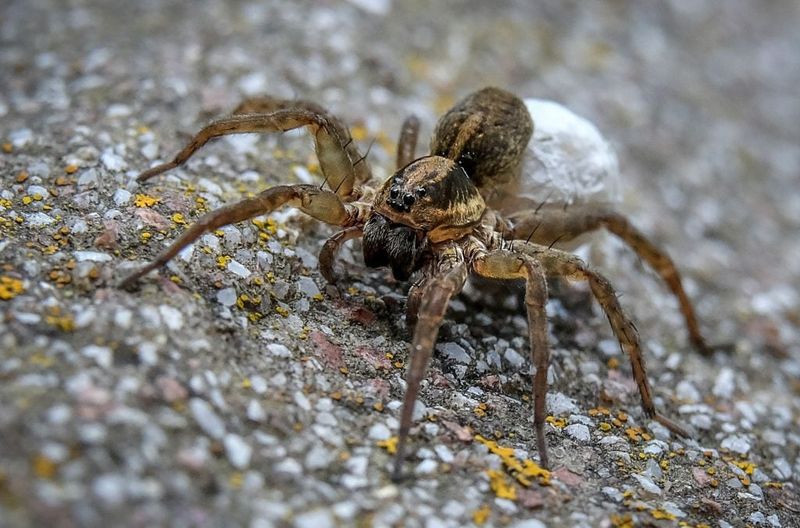
Finding a large, hairy spider crouched near your porch light can stop you cold, especially when you have no idea whether to swat it, catch it, or back slowly into the house. Wolf spiders are among the most common large spiders North Carolina homeowners encounter outdoors, and their sudden appearance tends to spark more alarm than the situation usually warrants. Understanding what that spider is actually doing near your door can change how you respond, and in most cases the answer is simpler than you might expect.
What a wolf-spider sighting says about the porch
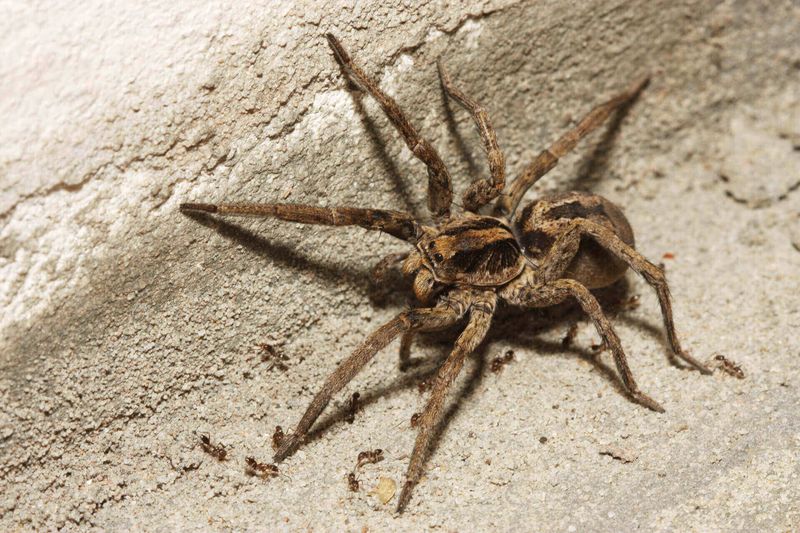
A wolf spider near your porch is not setting up a permanent web in the corner or preparing to move inside. NC State Extension describes wolf spiders as large, terrestrial, non-web-building hunters that roam actively across the ground in search of prey. They do not spin capture webs at all. Instead, they patrol surfaces, which is why you are more likely to spot one crossing the porch floor or sitting at the edge of the steps than hanging in a corner.
Porches create exactly the kind of edge habitat these spiders use. The gap between a lit porch and a mulched bed, a woodpile stacked against the house, or a row of potted plants sitting on the ground all offer shelter, cover and the kind of insect activity that brings a hunting spider close to the structure. Utah State University Extension notes that wolf spiders are commonly found in leaf litter, mulch, ground cover and similar outdoor environments where they can move freely and find prey.
Seeing one spider in that space tells you a ground-hunting predator is active in or near suitable outdoor habitat around your home. It does not tell you the spider is there temporarily, that it will leave on its own schedule, or that something is wrong with your yard or house. A wolf spider on the porch is not proof of a pest infestation inside, and it is not a signal that treatment is needed. It simply means the habitat near your door is providing what a hunting spider needs: cover, moisture and the presence of other small invertebrates.
The sighting is worth noting, and it is worth knowing how to respond, but alarm is rarely the right first reaction. The spider belongs to the outdoor ecosystem and is doing what its biology drives it to do.
Identify the spider before deciding how to respond
Before you decide what to do with a large brown spider on your porch, it helps to know what you are actually looking at. Wolf spiders share enough surface similarities with other large brown spiders that a quick glance is not a reliable identification method, and that matters because not every large brown spider is equally low-risk.
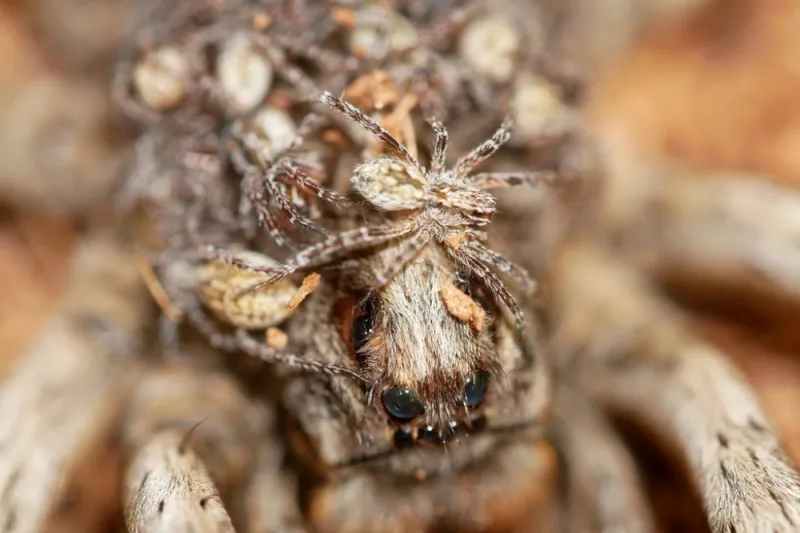
Several traits support a wolf spider identification. They are brown to grayish-brown, often with darker stripes or mottled patterning running along the body. They are stocky and hairy, with eight eyes arranged in a distinctive pattern: four small eyes in a bottom row, two large forward-facing eyes above that, and two more eyes set high on the head. That large-eyed, alert look is one of their most recognizable features, and it reflects genuinely good vision for a spider.
NC State Extension notes that females carry their egg sacs attached to the spinnerets at the back of the abdomen, and after the eggs hatch, the spiderlings ride on the mother’s back for a period. Spotting a spider with what looks like a white or tan ball attached to its rear, or a spider covered in tiny moving dots, is a strong visual clue that you are looking at a female wolf spider.
The identification concern that matters most for North Carolina homeowners is the possibility of confusing a wolf spider with a brown recluse. NC State’s Extension Gardener Handbook identifies brown recluses and black widows as the two spider groups of medical importance in the state. Brown recluses are native mainly to the far western corner of North Carolina and are considered rare across most of the state, but the visual overlap between large brown hunting spiders creates real identification uncertainty for homeowners.
If you cannot confirm the identification and you have any concern about the spider’s identity, do not handle it. USU Extension recommends consulting your local Cooperative Extension office or a qualified professional when identification creates a safety question. Amateur diagnosis from a photo or a quick look is not a substitute for that kind of help.
What it may be hunting near your door
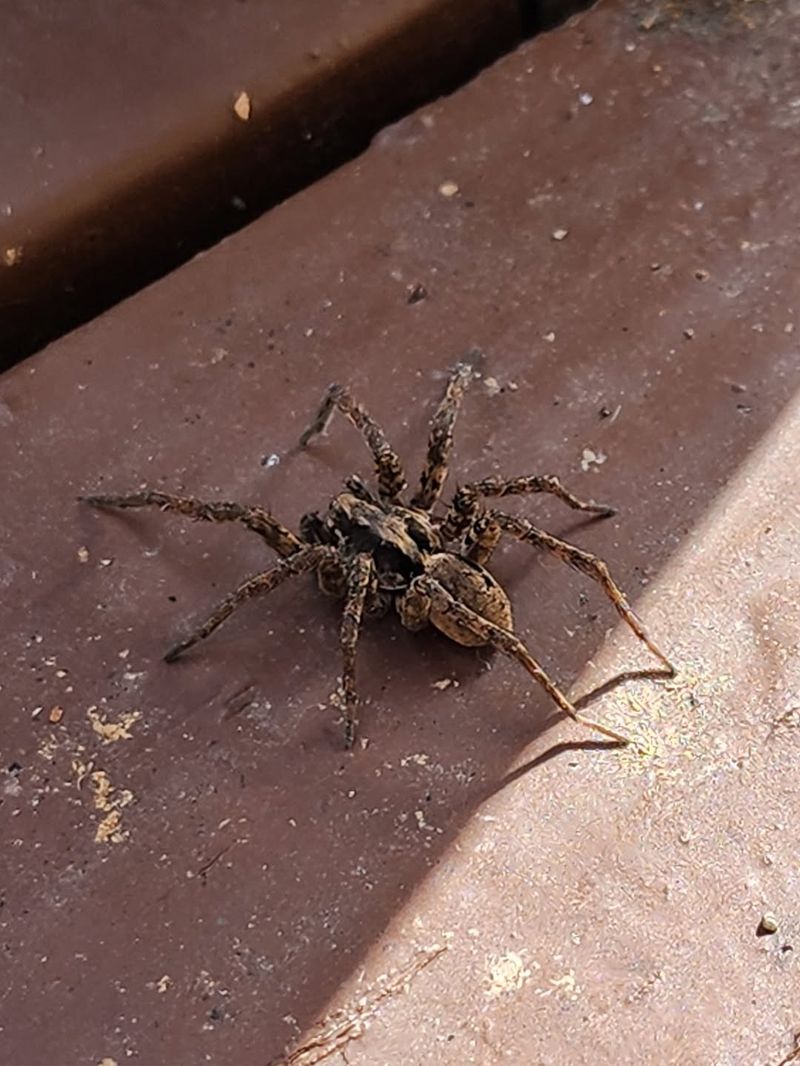
Wolf spiders eat insects and other arthropods. That is the factual core of the wildlife-ally picture, and it is worth stating plainly before adding the qualifications that make it accurate. An individual spider hunting near your porch may take whatever small prey it encounters: beetles, crickets, moths that land on the ground, ants, and other spiders are all documented parts of their diet. USU Extension confirms that wolf spiders are generalist predators whose documented prey includes insects and other spiders found in the habitats they patrol.
Research has looked at whether spiders, as a group, contribute to pest suppression in agricultural settings. A meta-analysis published in Global Ecology and Biogeography found evidence of pest suppression by spiders across many agricultural studies, but results varied considerably by crop type, climate, predator community and the specific pest group being studied. Those findings come from farm fields and experimental plots, not residential porches, and they reflect predator communities rather than a single spider at a doorway.
Cockroaches have appeared as prey in wolf-spider diet studies. Field and laboratory work on Lycosa species documents roaches among prey items taken in natural conditions, and survivorship studies confirm wolf spiders can develop on cockroach diets. Separately, research on Anopheles gambiae mosquito larvae found that the presence of a predacious wolf spider caused the mosquitoes to alter their diving behavior, suggesting real predation pressure in that experimental context.
None of that translates into a promise that the spider on your porch is eating your roaches or cutting your mosquito numbers. A single generalist predator hunting a porch edge may take some of the insects present, but it is not targeting specific household pests or operating as a replacement for sanitation, standing-water control or professional pest management. The more accurate picture is that wolf spiders are part of the outdoor predator community and may consume nearby insects, without any guarantee about which ones or how many.
When leaving an outdoor wolf spider alone makes sense
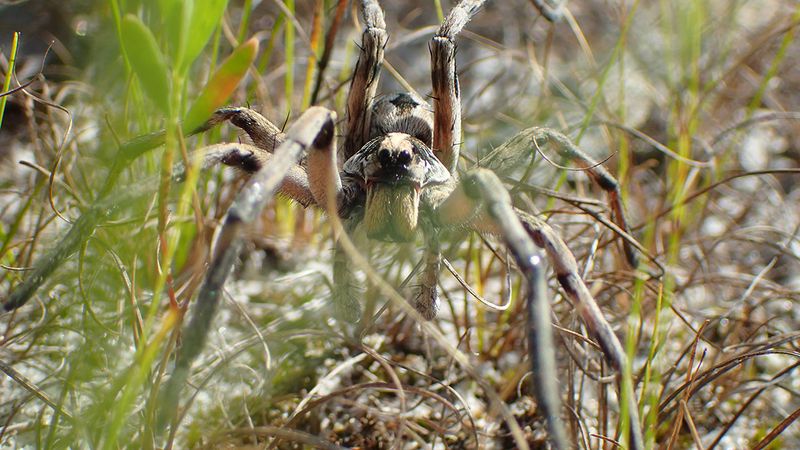
Tolerating an outdoor spider is not a passive or uninformed choice. University of Minnesota Extension notes that spiders are generally beneficial predators in outdoor landscapes and that trying to eliminate all spiders from a property is both difficult and unnecessary. That guidance reflects the practical reality that spiders are a functioning part of the yard’s ecosystem, and removing them does not make a yard safer or cleaner in any meaningful way.
Leaving a wolf spider alone makes the most sense when a few conditions line up. The spider is outdoors and staying there. You have identified it with reasonable confidence as a wolf spider rather than a medically important species. It is not positioned at an entry point where it is likely to come inside, and it is not creating a situation where a child, pet or other household member might accidentally come into close contact with it.
When those conditions hold, the spider is doing its job in its habitat, and there is no practical reason to disturb it. USU Extension frames wolf spiders as part of the natural pest-suppression community in landscapes, while being clear that they are generalist predators rather than targeted pest control agents. Leaving one in place is not the same as relying on it to solve a pest problem.
The spider is also not a guarantee of anything. Tolerating it outdoors does not mean your porch will be insect-free or that you have addressed any underlying pest pressure. It simply means you have made a reasonable, low-effort decision to let a non-aggressive outdoor predator occupy its habitat without unnecessary interference.
How to remove one from indoors safely
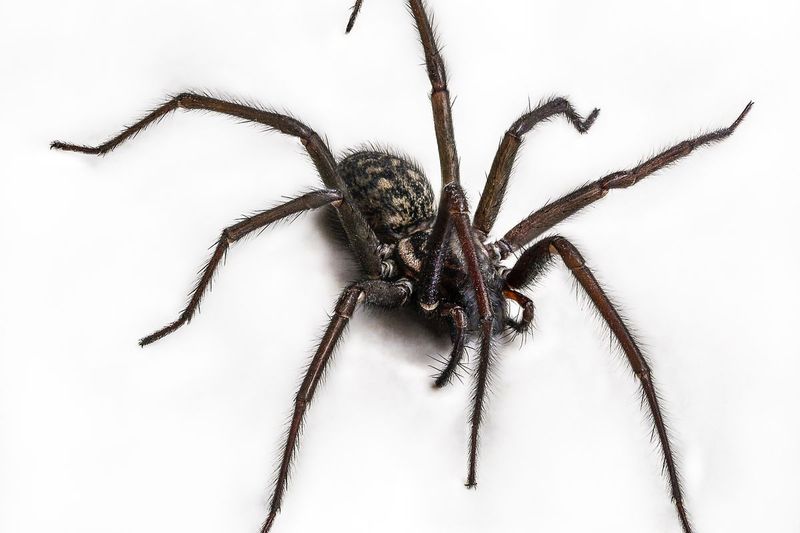
Finding a wolf spider inside the house calls for a calm, no-contact response. The container-and-card method works well: place a clear glass or plastic container over the spider, then slide a stiff piece of cardboard or a folder underneath to trap it. Carry the container outside and release the spider away from the door. That is the whole process, and it requires no chemicals and no direct contact with the spider.
Vacuuming is a practical alternative, especially if the spider is in a corner or a tight space where a container will not fit easily. University of Minnesota Extension recommends removing individual spiders rather than applying routine pesticide treatments for a single indoor spider. The goal is getting the spider out without creating a bigger response than the situation requires.
Direct handling is the approach to avoid. USU Extension notes that wolf spiders are not aggressive but may bite defensively if they feel trapped or threatened. A spider cornered in a shoe, a glove, or a bedsheet is in exactly the situation most likely to produce a defensive bite. Bare-handed capture is not worth the risk when a container takes ten seconds and keeps both you and the spider out of a bad situation.
Wolf spiders are generally not considered a health hazard, but calling them completely harmless overstates the case. Any spider can bite defensively, and that possibility is reason enough to keep hands away. CDC guidance on spider encounters reinforces the value of avoiding direct contact rather than assuming a spider is safe to handle.
If you are not confident in your identification and have any concern that the spider might be a brown recluse or another medically important species, do not attempt removal yourself. Contact your local NC Cooperative Extension office or a licensed pest management professional for identification help before deciding how to proceed.
What to do if someone thinks they were bitten
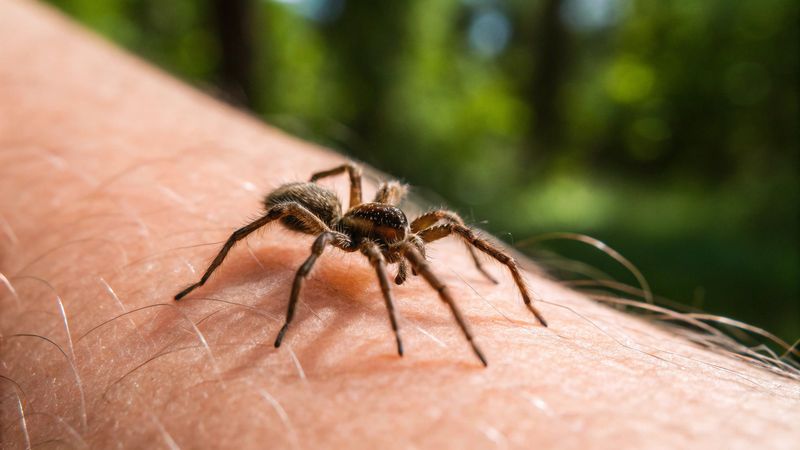
A wolf spider bite is possible, but it usually happens when the spider is handled, trapped against skin, or caught in clothing or bedding. The spider is not going out of its way to bite people. When a bite does occur, the typical result is localized pain, redness and mild swelling, similar to a bee sting in character. Most reactions resolve without any special treatment.
The more complicated issue is that skin injuries attributed to spider bites are frequently something else entirely. CDC guidance makes clear that many alleged spider bites turn out to be other skin conditions, infections or injuries from unrelated causes. Blaming a welt or lesion on a spider without actually seeing the spider bite is an unreliable diagnosis, and treating a skin infection as a spider bite can delay the care the injury actually needs.
The signs that warrant medical attention are straightforward. A wound that gets worse over time rather than better, spreading redness, significant swelling, severe or increasing pain, or any systemic symptoms such as nausea, dizziness or fever should be evaluated by a medical professional. Do not wait and monitor a worsening wound at home on the assumption that it was a wolf spider bite and will clear up on its own.
USU Extension notes that wolf spiders are not considered medically significant in the way that black widows or brown recluses are, but that framing does not mean every bite is trivial. When in doubt about a skin injury, seek professional medical evaluation rather than trying to identify the spider after the fact or guessing at the cause.
Reduce indoor encounters without trying to sterilize the porch

Repeat indoor encounters with wolf spiders usually come down to access points and the conditions near the structure that draw hunting spiders close to the door in the first place. Addressing those two things is more effective and more targeted than any broad spray treatment.
Start with the physical gaps. USU Extension’s guidance on wolf spiders recommends repairing damaged window screens, installing or maintaining door sweeps at the base of exterior doors, and sealing cracks and gaps around door frames, foundation walls and ground-level windows. A wolf spider that finds no gap to slip through is a wolf spider that stays outside. These are the same sealing steps that reduce entry by roaches, crickets and other ground-level insects, so the work pays off across multiple pest categories.
Clutter and debris near the house are worth addressing too. Woodpiles stacked against the foundation, leaf piles left against the siding, and stacks of unused containers or equipment all create the kind of sheltered ground cover where wolf spiders hunt and rest. Moving those items away from the structure removes some of the habitat that puts a hunting spider right next to your door.
Lighting is a less obvious factor but a practical one. Exterior lights attract moths, beetles and other flying insects at night, and that insect activity can in turn attract hunting spiders to the area. University of Minnesota Extension suggests reducing unnecessary exterior lighting or repositioning security lights away from the door or wall when that is practical. Switching to yellow or amber bulbs, which attract fewer insects than white or blue-white lights, is another option worth trying.
None of these steps guarantee that a wolf spider will never appear on the porch again. They reduce the conditions that bring spiders close to the entry and the gaps that let them inside, which is the realistic goal. Eliminating every spider from the exterior of a house is not a practical or necessary target.
Use integrated pest management when the actual pest needs attention

A wolf spider on the porch is not, by itself, a reason to spray. The spider is one part of the outdoor ecosystem, and treating it as a pest problem requiring a chemical response misreads what is actually happening. The more useful question is whether there is an actual pest present in numbers that warrant action, and that question requires a different kind of attention.
EPA’s integrated pest management principles lay out a clear process: identify the pest accurately, monitor its presence and numbers, set an action threshold based on whether the pest level is actually causing a problem, and then choose control measures starting with prevention and lower-risk options. Broad, nonselective outdoor spraying sits at the end of that process, not the beginning, and it is reserved for situations where other measures have not worked and the pest pressure genuinely warrants it.
Applying that framework to a porch situation means separating the spider from any actual pest concern. If you suspect cockroaches are active near the foundation, look for evidence of roaches specifically: droppings, shed skins, live insects at night, or odor. If mosquitoes are a problem, check for standing water in gutters, plant saucers, buckets or low spots in the yard. EPA’s pest control resources for residents include guidance on identifying common household pests and choosing responses that match the actual problem.
Broad outdoor spraying aimed at wolf spiders has a real downside beyond the spider itself. University of Minnesota Extension notes that nonselective insecticides can harm beneficial predators, pollinators and other non-target organisms in the yard. Killing off the predator community to address a spider that posed no real threat leaves the yard less equipped to handle actual pest pressure over time.
Tolerating one wolf spider outdoors is not the same as ignoring a confirmed pest problem. If roaches, mosquitoes or another pest are genuinely present at levels that need attention, address that pest directly using the IPM process, starting with the least invasive options and escalating only if necessary.
The practical North Carolina takeaway
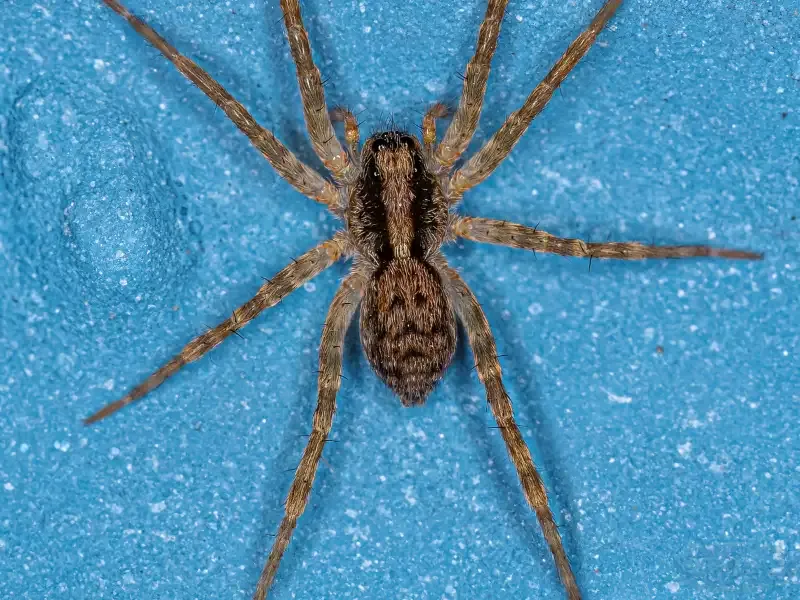
The decision tree for a wolf spider on a North Carolina porch is shorter than most homeowners expect. Identify it first, using the eye pattern, body shape and behavior as your guide, and get help from your local NC Cooperative Extension office if you are not confident in what you see. A confidently identified outdoor wolf spider that is not near an entry point and is not creating a safety concern can simply be left alone. NC State Extension frames these spiders as outdoor, non-web-building hunters that belong to the landscape, not as invaders requiring a response.
If one comes inside, use a container and a piece of cardboard to capture and release it without direct contact. Seal the gap it used to get in. USU Extension’s removal guidance is consistent on this point: non-contact removal for an individual spider, not a chemical treatment for the whole porch.
If you have genuine pest pressure from roaches, mosquitoes or something else, address that pest directly using integrated pest management principles rather than spraying reflexively because a spider appeared nearby. The wolf spider belongs to the outdoor ecosystem and may take some of the insects near your door, but it is a generalist predator sharing your yard, not a service you hired. Knowing the difference is what lets you respond well.