
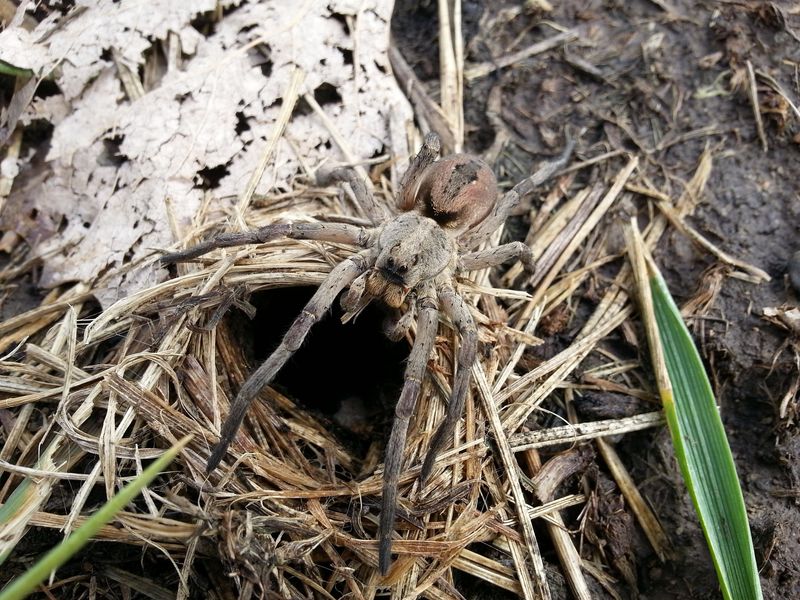
Spotting a large, fast-moving spider along your foundation can stop you in your tracks, especially when it seems to appear out of nowhere in late summer. Before you reach for a spray can, there are a few things worth understanding about what that spider is actually doing there and why the answer is probably less alarming than it looks.
Wolf spiders are common around North Carolina homes, and a sighting near the foundation usually points to ordinary outdoor behavior rather than a sign that something has gone wrong inside your house. Knowing what the spider is telling you, and what it is not, helps you decide what to do next.
A foundation sighting usually points to outdoor activity
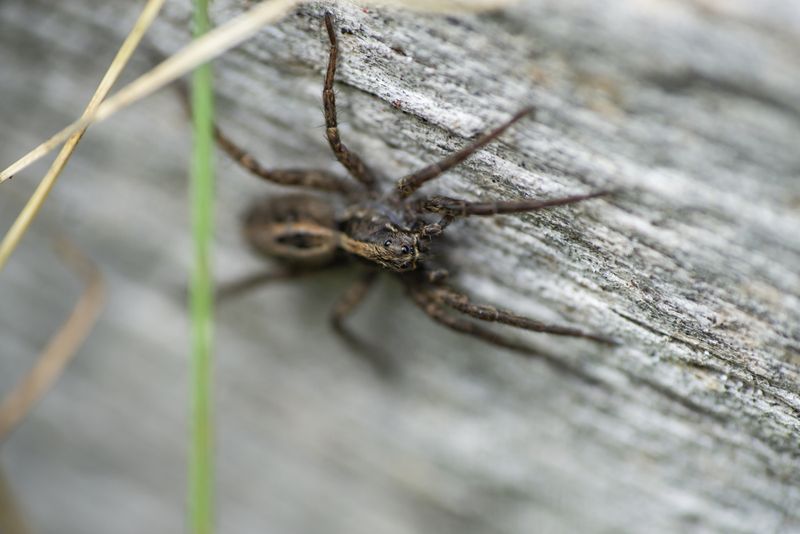
A large spider moving along your foundation is almost certainly doing exactly what wolf spiders do every day: hunting on the ground. Unlike orb weavers or cobweb spiders, wolf spiders do not build prey-catching webs.
They roam actively across soil, mulch, lawn edges, and other ground-level surfaces, pursuing insects and other small arthropods wherever they find them. NC State Extension lists wolf spiders among the spiders most commonly encountered around homes, precisely because their roaming lifestyle brings them into contact with structures.
The foundation edge is actually a logical place to find one. A concrete or brick wall offers a shaded, protected corridor that a ground-hunting spider can follow while scanning for prey.
The spider may also be using a gap, a crack, or a pile of debris nearby as a temporary daytime shelter before resuming activity at dusk. Neither of those behaviors requires anything unusual to be happening inside your house.
A single wolf spider patrolling outside does not establish that your home has been invaded or that an infestation is underway. Outdoor sightings and indoor infestations are very different situations.
The spider you are looking at is most likely a visitor to the yard’s edge, not a resident of your walls. Holding that distinction clearly in mind is the most useful first step before deciding whether to act at all.
Late-summer visibility can vary from yard to yard
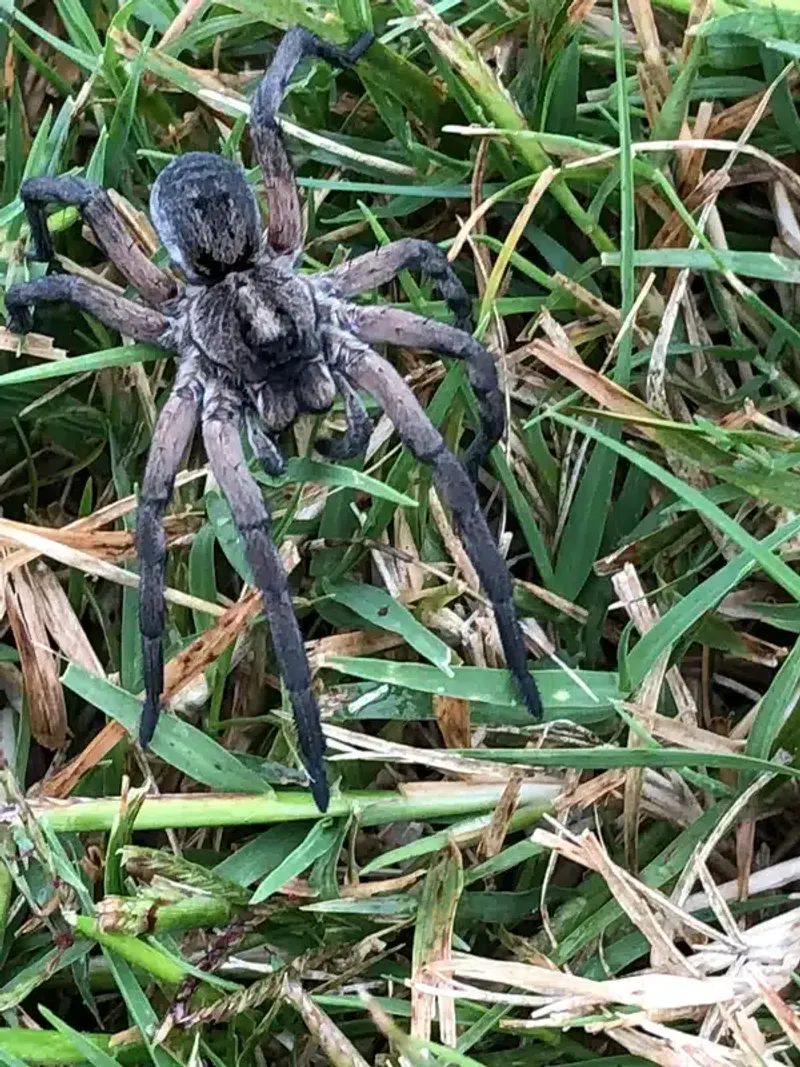
Wolf spiders are active from late spring through fall across much of North Carolina, so they do not vanish and reappear with the calendar the way some insects do. What changes in late summer is more subtle: longer-established prey populations, shifting temperatures, and changes in ground moisture can all affect where and when a spider is visible to a homeowner standing near the house.
A University of Maryland IPM report notes that late-season spider appearances near homes may follow a summer buildup of outdoor prey, but that explanation is offered as a reasonable hypothesis rather than a proven rule for every property. The same spider that was hunting in your garden beds all July may simply become more noticeable in August because it has grown larger or because it has moved closer to the foundation as soil in open areas dries out.
Elevation and habitat matter too. A homeowner in the NC mountains may notice spider activity at different times than someone in the Piedmont or coastal plain, where heat, humidity, and prey cycles follow different patterns.
Weather swings, a particularly wet or dry stretch, nearby water sources, and the specific mix of insects in a given yard can all shift the timing. Late summer is a plausible window for noticing a wolf spider near your foundation, but there is no single statewide biological trigger that puts every wolf spider at every NC foundation at the same moment.
What you are seeing is shaped by your specific yard’s conditions, not a region-wide surge.
The yard may offer shelter and prey—not a diagnosable outbreak
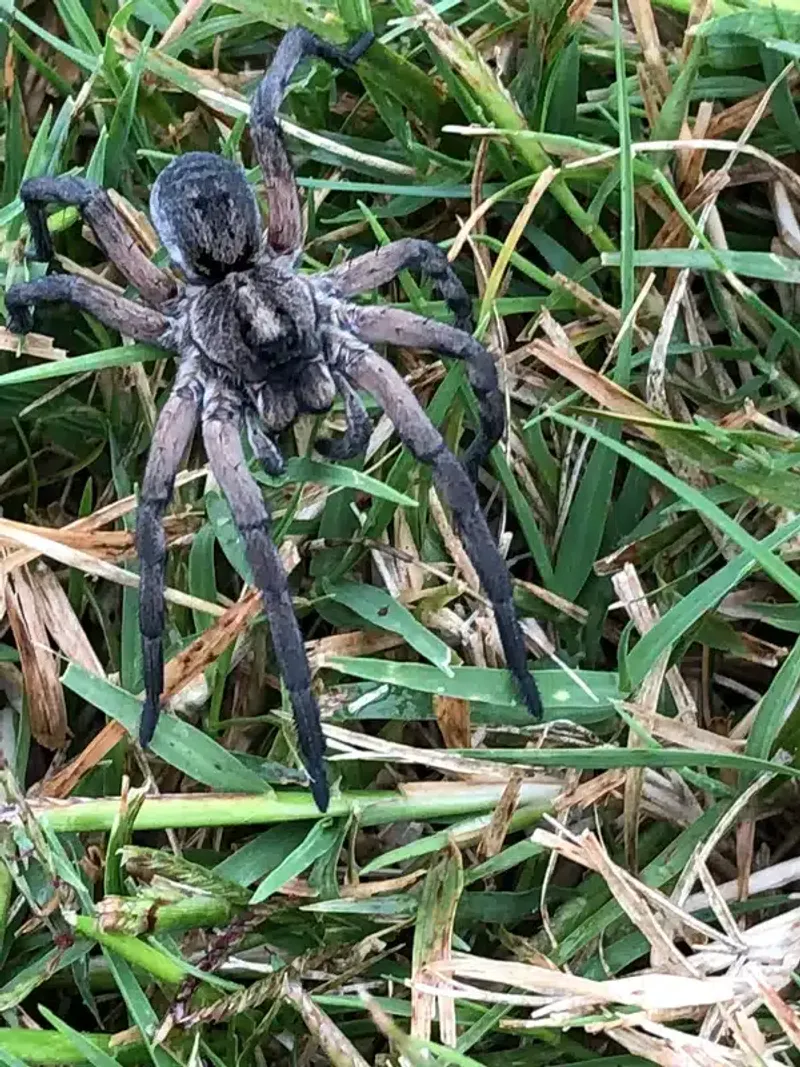
Foundations create a distinctive edge habitat. One side is a warm, solid wall that absorbs heat and provides cover; the other is whatever the yard offers, whether that is a flower bed, a mulched shrub border, a woodpile, or a patch of tall grass.
That combination of shelter and adjacent ground-level activity is genuinely attractive to a roaming predator. Leaf litter, stones, wood scraps, and foundation vents all provide hiding spots, and NC State Extension guidance links spider presence around buildings directly to the availability of prey, suitable habitat, and exterior lighting that draws insects at night.
So a wolf spider near your foundation is a reasonable sign that your yard’s edge offers what a hunting spider needs: cover, warmth, moisture, and food. That is a sensible interpretation, and it does not require anything alarming to be true.
A yard with healthy leaf litter and insect life will attract predators. That is ecology working as it should.
Where homeowners sometimes go wrong is in reading too much into the sighting. One spider, or even a handful of spiders seen over a few evenings, cannot tell you that insects are swarming at the foundation, that a specific pest species has built up to problem levels, or that the structure itself has been compromised.
NC State notes that finding large numbers of spiders indoors is what tends to indicate an ample indoor insect supply; an outdoor sighting carries far less diagnostic weight. The spider may be passing through, responding to a temporary patch of moisture, or following a travel route that happens to run along your house.
Treating a sighting as a sign of a specific outbreak rather than as normal predator behavior leads to responses that are larger than the situation warrants.
Confirm the spider before drawing conclusions
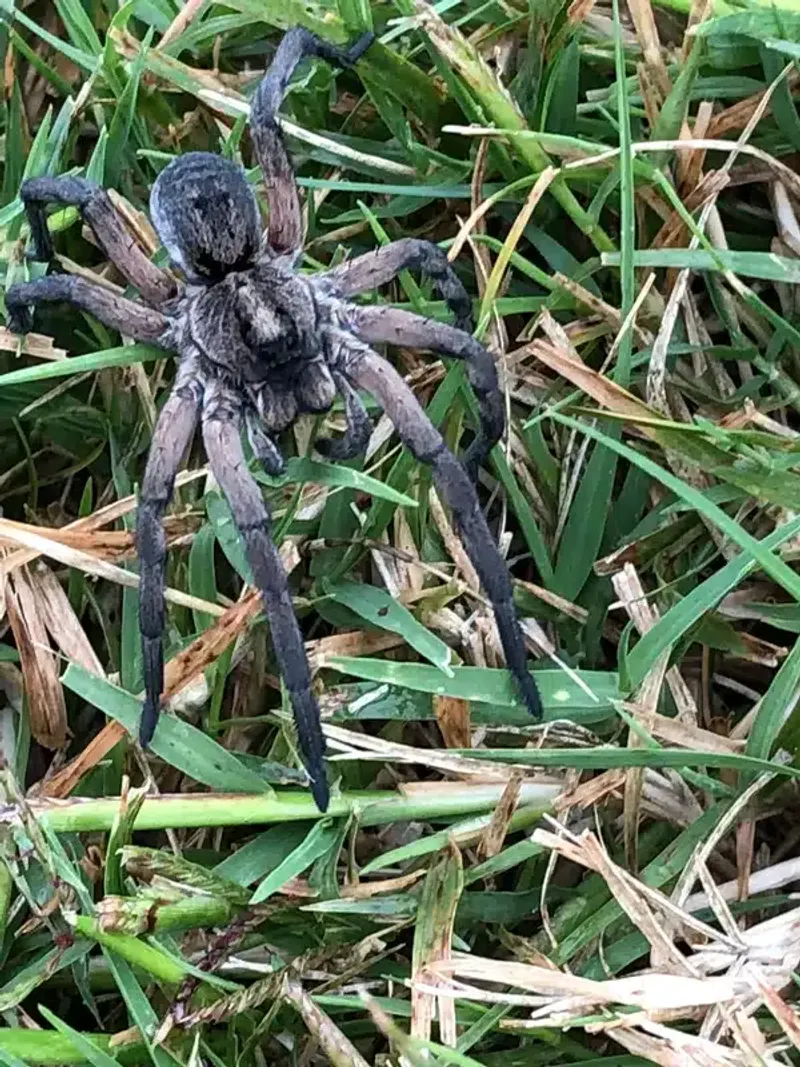
Before deciding what to do about the spider, it helps to know what you are actually looking at. North Carolina is home to several large wolf spider species, including the Carolina wolf spider, Hogna carolinensis, which North Carolina’s arachnid records list as one of many Lycosidae species found across the state.
Assigning a species to a spider you spotted briefly at the foundation edge is genuinely difficult, and getting it wrong does not help you make a better decision.
The most common source of confusion is the fishing spider. NC State Extension’s guide to fishing spiders and wolf spiders specifically notes that these two groups look remarkably similar: both are large, brown, hairy, and terrestrial.
Fishing spiders are also common in North Carolina, especially near water, and they are just as harmless to people as wolf spiders. Identifying a spider by size, speed, or hairiness alone is not reliable enough to draw conclusions about what it is or what it means for your yard.
A clear photograph taken from a safe distance is the practical way to get closer to a correct identification. Many county cooperative extension offices and online identification resources can help you confirm what you have.
The more consequential identification question is whether the spider might be a black widow or a brown recluse, both of which are genuinely medically significant. Black widows are present in North Carolina and identifiable by their shiny black body and red hourglass marking.
Brown recluses, by contrast, are uncommon across most of the state and are native mainly to the far western corner of NC, according to NC State Extension. If you are unsure, do not handle the spider.
Use a photograph or call an expert, and set aside any conclusion until you have a reliable identification in hand.
Choose safe removal when the location creates a hazard
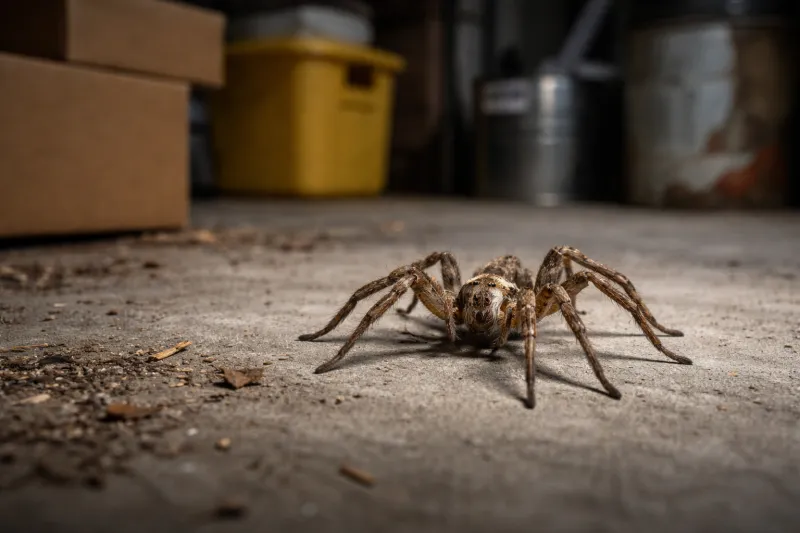
For a wolf spider spotted outside along the foundation, doing nothing is often the right call. An outdoor spider on its own territory, moving through leaf litter or along a wall, is not creating a practical problem for most households.
Tolerance is the simplest response when the spider is outside, away from play areas, and unlikely to wander indoors through an open door.
When a wolf spider turns up inside a garage, basement, or living space, the calculus changes slightly, and NC State Extension recommends corralling it into a container and releasing it outdoors, provided that can be done without any direct contact. A sturdy cup or jar slid over the spider, with a stiff card slipped underneath, works well.
If the spider is in a corner or another spot where a container approach is awkward, a broom or vacuum with a hose attachment is a practical alternative. The goal is relocation or removal without putting skin in contact with the spider.
Wolf spiders are not considered dangerously venomous, but they can bite if they feel trapped against the skin. That is worth knowing for situations where a spider might end up inside a shoe, a glove, or folded laundry.
If a bite does occur, washing the area with soap and water is the immediate step. Most bites from wolf spiders cause only minor, localized discomfort.
However, CDC guidance on skin conditions cautions that many suspected spider bites are actually other skin conditions or infections, so avoid diagnosing the cause from appearance alone. Seek medical advice promptly if you notice symptoms that are severe, spreading, or systemic, such as fever, nausea, or significant swelling beyond the immediate site.
Reduce indoor encounters with exclusion and habitat changes

Keeping wolf spiders outside is mostly a matter of removing the conditions that invite them close to the house and closing the gaps they could use to enter. None of the steps below require pesticides, and most can be handled on a weekend afternoon.
NC State Extension’s guidance on spiders around homes supports each of these approaches as practical ways to reduce encounters without broadly affecting the yard’s predator community.
Start with the foundation perimeter itself. Wood scraps, rock piles, brush, and accumulated debris sitting directly against the house give hunting spiders ideal daytime cover.
Moving those materials at least a few feet away from the wall removes a reliable shelter point. Keeping shrubs and tall ornamental grasses trimmed back from the foundation serves the same purpose: dense vegetation touching the house creates a covered corridor that connects the yard to any gap in the structure.
Gaps and cracks are the next priority. Door sweeps that are worn or missing, torn window screens, and unsealed openings around utility pipes, vents, and conduit are all potential entry points.
A tube of exterior caulk and a replacement door sweep handle most of these situations quickly and inexpensively. Pay particular attention to the threshold gap under garage doors, which is often the widest unintentional opening along a foundation.
Moisture deserves attention too. Wolf spiders are drawn to damp microhabitats, and a crawl space or foundation area that stays persistently wet after rain creates an attractive edge.
Improving drainage, fixing leaky downspout extensions, and ensuring crawl-space vents are functional can reduce the appeal of the immediate foundation zone.
Finally, consider your exterior lighting. Bright white lights near doors attract insects, which in turn attract the predators that eat them.
Switching to yellow or amber bulbs, or moving fixtures away from doorways, reduces the insect concentration that makes the foundation a productive hunting ground in the first place.
Do not mistake a predator for tick or mosquito control
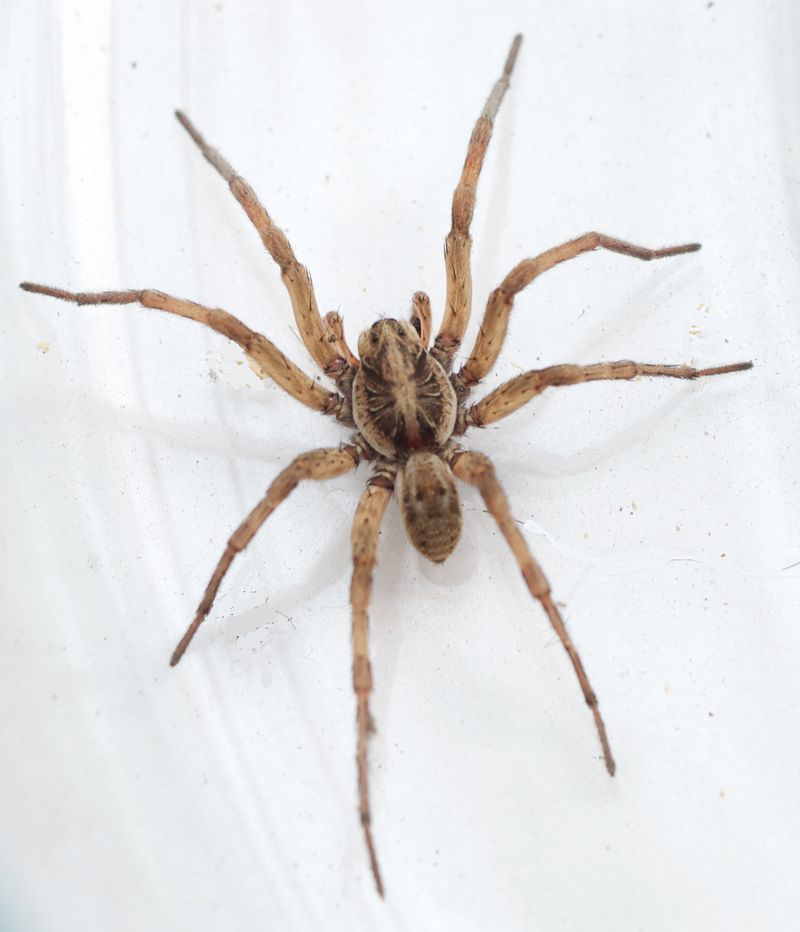
Wolf spiders eat insects and other arthropods, and that dietary breadth puts them in the same general category as other ground-level predators that help keep arthropod populations from growing unchecked. Research by Nyffeler and Benz on wolf spider feeding ecology documents their role as generalist predators capable of reducing insect populations in agricultural settings.
That is a real and meaningful contribution to the yard’s ecology.
What that research does not support is the idea that a wolf spider patrolling your foundation is protecting your family from ticks or mosquitoes in any reliable, measurable way. Wolf spiders eat what they encounter, and their diet in a given yard depends on what is most available at ground level.
Ticks and mosquitoes may occasionally be part of that diet, but neither the NC-specific data nor the broader research establishes wolf spiders as dependable indicators of tick abundance or as meaningful household-scale controls for either pest.
If ticks or mosquitoes are your actual concern, address them directly. For ticks, that means regular tick checks after outdoor activity, keeping lawn edges and leaf litter managed, and consulting your local cooperative extension office about landscape practices that reduce tick habitat.
For mosquitoes, eliminating standing water and considering targeted larval control in ornamental water features are far more effective interventions than relying on any predator population.
Broad outdoor spraying to reduce wolf spiders is generally unnecessary and counterproductive. NC State Extension advises that outdoor spider spraying is largely avoidable and that pesticides applied to the perimeter can harm the non-target predators, including wolf spiders, that naturally limit other arthropod populations.
If a pesticide is ever considered, the product must be labeled for the specific site and applied exactly according to the current North Carolina label and regulations. A wolf spider at your foundation is a working part of the yard’s food web, not a problem to be eliminated, and the most durable form of pest management is the one that keeps that web intact.