
Lantana can put on one of the longest color shows in a North Carolina yard, but getting the most out of it takes more than picking any plant off the nursery bench. The bloom season you actually see depends on which cultivar you choose, where you put it, and how you manage a handful of basic growing conditions.
There is no secret trick behind a long-season lantana display, only a clear set of decisions that stack the odds in your favor.
Choose the cultivar before you change the care routine
Matching the cultivar to the site is the single most consequential decision a North Carolina gardener can make for a long lantana season. Before adjusting watering schedules or shopping for fertilizer, the right starting point is picking a plant suited to local winter temperatures, available space, and the bloom window you actually want.
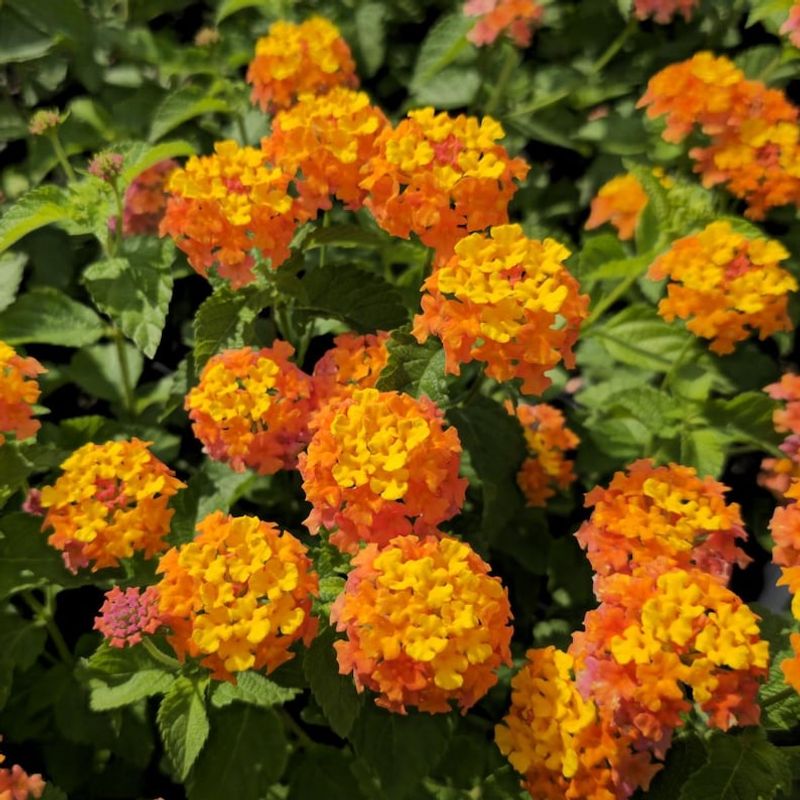
NC State’s profile of ‘Miss Huff’ describes it as one of the more cold-hardy lantanas, listed as hardy to USDA Zone 7b, capable of flowering from spring through fall, and able to survive as a perennial in suitable parts of the Piedmont and Coastal Plain. That spring-through-fall window is what separates ‘Miss Huff’ from common lantana, which NC State more generally describes as blooming from summer until the first frost.
‘Miss Huff’ grows approximately 4 to 6 feet tall and wide at maturity, so it is not automatically the right fit for a small foundation planting or a container on the porch. It earns its place in a larger bed, a mixed shrub border, or along a fence where its size reads as an asset rather than a problem.
Two other frost-hardy options worth considering for the Piedmont are ‘Ham and Eggs’ and ‘Chapel Hill Yellow’, both identified by NC State’s common lantana entry as performing reasonably well in cooler parts of the state. For containers, front-border edges, or smaller beds, compact and trailing cultivars generally suit the scale better than a plant that will eventually need several feet of clearance in every direction.
NC State’s JC Raulston Arboretum summer color trials have evaluated multiple lantana cultivars under real North Carolina conditions, making those results a useful reference when comparing options at the nursery. Starting with a cultivar that fits the site and the desired season is a better foundation than trying to compensate with extra care later.
Give lantana the sunniest, well-drained workable spot
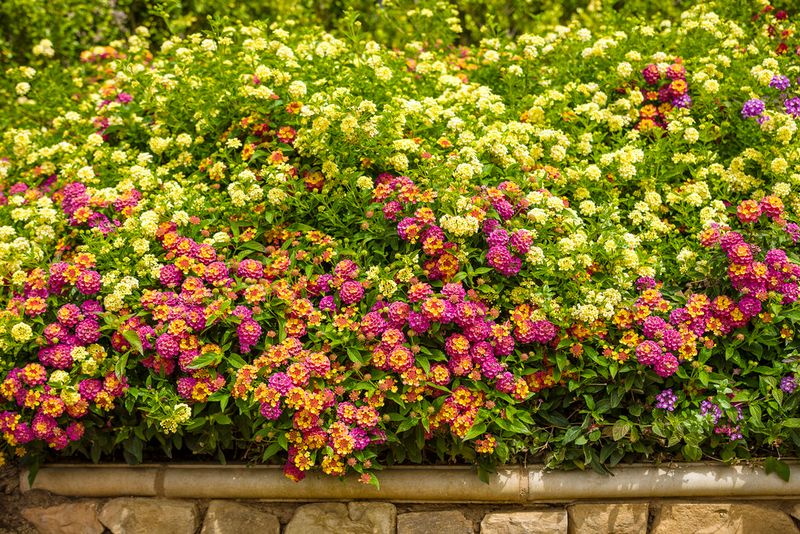
Placement shapes everything that follows. A lantana planted in a shady corner or a low-lying bed that holds water after rain will underperform no matter how carefully it is watered or fertilized, because the two things it needs most are direct sun and soil that drains.
NC State defines full sun as six or more hours of direct sunlight daily, and that threshold is the floor, not a suggestion. When lantana gets less than that, stems tend to stretch toward the light, branching becomes sparse, and flower production drops noticeably.
Eight or more hours will generally push performance higher, which is why a south- or west-facing bed often outproduces a partly shaded east-facing one.
Soil drainage matters just as much as sun exposure. Lantana performs best in moist but well-drained soil, and it tolerates poor or lean ground better than it tolerates chronic wetness.
In much of North Carolina, the challenge is clay soil that compacts and holds water after heavy rain. Raising the bed a few inches, incorporating organic matter to improve structure, or simply choosing a slope rather than a low spot can make a real difference for root health and flowering.
University of Minnesota’s lantana guidance recommends at least eight hours of sun for maximum performance and reinforces the drainage priority. The goal is a site that holds enough moisture to support the plant during dry spells but sheds excess water quickly enough that roots are never sitting in saturated soil for extended periods.
Resist the impulse to enrich the bed heavily before planting. Lantana does not need fertile, amended soil the way a vegetable garden does.
Give it the sunniest, well-drained workable spot in the yard, and the cultivar can do the rest of the work.
Water for establishment without keeping the roots soggy
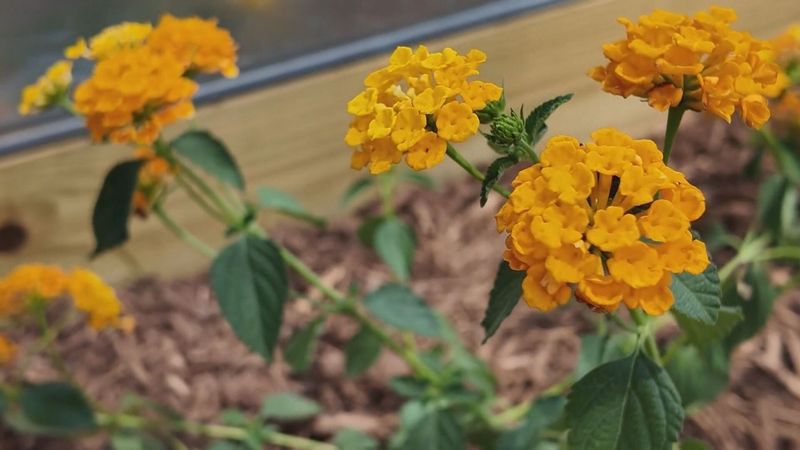
Drought tolerance is one of lantana’s most advertised qualities, but that reputation applies to established plants, not newly transplanted ones. A lantana put in the ground in May or June needs consistent moisture at the root zone for several weeks while it anchors itself, and skipping that establishment phase can set the plant back by weeks or cause it to stall entirely.
During the first few weeks after planting, water deeply enough to wet the root zone, then let the soil begin to dry slightly before watering again. Once roots have spread into the surrounding soil, the plant can tolerate longer dry intervals.
During stretches of prolonged heat or late-summer drought, even well-established lantana will benefit from supplemental water. A plant showing wilted or dull foliage in afternoon heat is telling you it has been pushed past its comfort zone.
University of Minnesota’s lantana care guidance recommends using the top 1 to 2 inches of soil as a watering cue for container-grown plants: when that layer feels dry, it is time to water. Containers with drainage holes are essential because sitting water at the bottom of a pot creates the same root problems as a poorly drained bed.
Overwatering is a real risk, not just a theoretical one. Chronically wet soil reduces flowering, weakens the root system, and can contribute to root rot.
University of Georgia’s landscape disease guide notes that overly wet conditions favor the fungal pathogens most likely to affect ornamental roots in the Southeast, which is a useful reminder that good drainage protects the plant from more than just poor performance.
Keeping lantana roots consistently moist but never waterlogged is the balance to aim for. NC State’s lantana profile describes the plant as tolerating drought once established, which confirms that backing off water over time is appropriate as long as the initial establishment period gets the attention it deserves.
Treat fertilizer as a measured correction, not a bloom shortcut
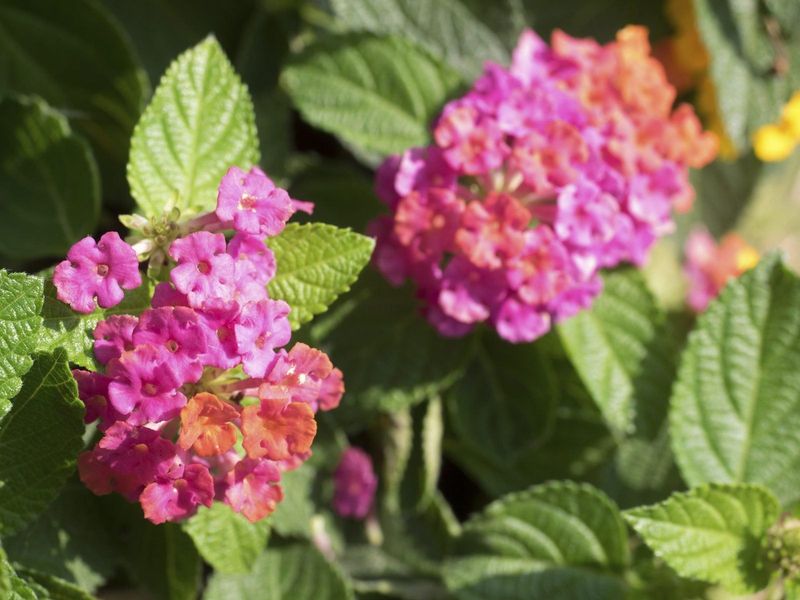
Reaching for fertilizer when a lantana is not flowering is a common instinct, but it often makes the problem worse rather than better. Heavy feeding, especially with high-nitrogen products, tends to push the plant toward lush leafy growth at the expense of flowers.
More foliage means more water demand, more maintenance, and fewer blooms.
University of Minnesota specifically warns that too much fertilizer can inhibit lantana blooms. That warning applies across the growing season, not just at planting time.
A gardener who feeds every few weeks in hopes of pushing more color may actually be working against the plant’s flowering cycle.
The more useful starting point is a soil test. NC State’s soil testing guide explains how to collect a sample and submit it for analysis, which reveals actual nutrient levels and pH rather than requiring guesswork.
If the test shows a deficiency or the plant displays a documented nutrient need, a balanced or complete fertilizer applied at the label rate is a reasonable response. If the soil is already adequate, adding fertilizer is unlikely to help and may cause harm.
NC State’s fertilizing guide for trees and shrubs cautions that indiscriminate fertilization can worsen plant problems and produce excessive growth that demands more water. For lantana, that guidance translates to a simple rule: fertilize only when you have a reason supported by observation or testing, use the label rate, and water granular products into the soil as directed.
One firm exception applies regardless of soil test results: do not fertilize a drought-stressed plant. Fertilizer salts in dry soil can burn roots and compound the stress the plant is already under.
Address water needs first, wait until the plant has recovered, and then reassess whether feeding is actually warranted.
Use light cleanup when it helps the plant and the display
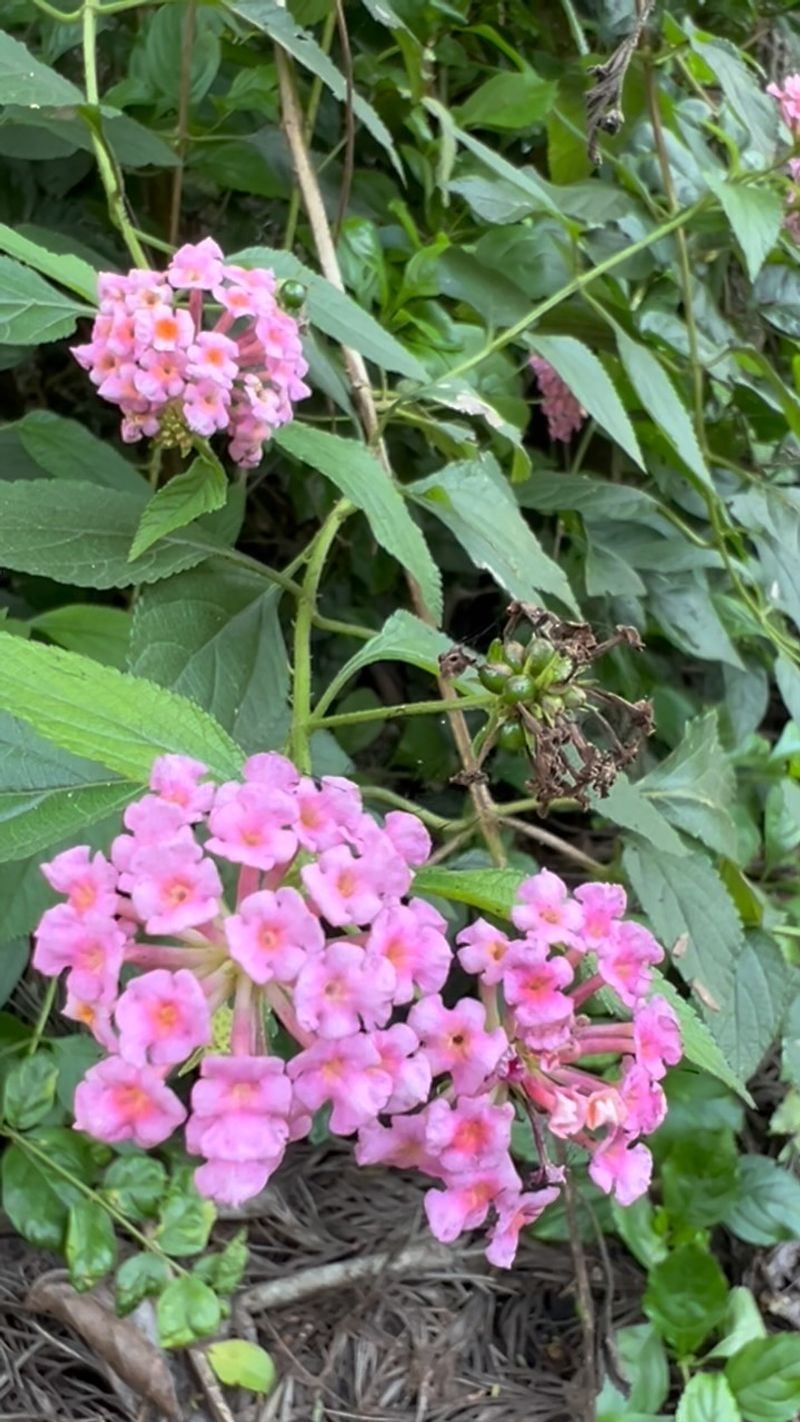
Spent flower clusters on lantana can develop into small berry-like fruits that signal to the plant that its reproductive work is done for that cycle. Removing them before they mature can redirect energy toward producing new flower buds, which is why deadheading has a reputation as a bloom extender.
The benefit is real, but it is not absolute, and it is not the only path to a long-season display.
An RHS lantana trial grew plants with minimal intervention and no regular deadheading and found that some cultivars maintained an impressive display throughout the evaluation period. Spent flowers in that trial were easily dislodged during routine tidying.
The takeaway is that modern lantana selections vary in how much they self-clean, and some will flower prolifically without any deliberate deadheading at all.
Light pinching or trimming serves a different purpose than deadheading. Missouri Botanical Garden recommends light pruning for lantana and notes that pinching in midsummer can improve fall bloom production by encouraging fresh branching.
This kind of light shaping, removing a few inches of leggy stem tips, keeps the plant compact and helps it branch more densely rather than growing long and floppy.
University of Minnesota’s care guidance similarly supports removing spent blooms to encourage additional flowering, framing it as a helpful option rather than a strict requirement. The practical approach is to deadhead or lightly trim when the plant looks ragged or when a flush of blooms has finished, rather than following a rigid schedule.
Severe cutbacks are a separate operation entirely. Arizona Cooperative Extension’s pruning guide describes cutting lantana back after frost danger has passed as a way to remove winter-damaged wood and stimulate new growth in spring.
That is a seasonal renewal task, not a midsummer bloom trick. Hard pruning in the middle of the growing season removes flower buds already in development and is not a reliable method for forcing continuous flowering in North Carolina gardens.
Plant and protect lantana according to your region
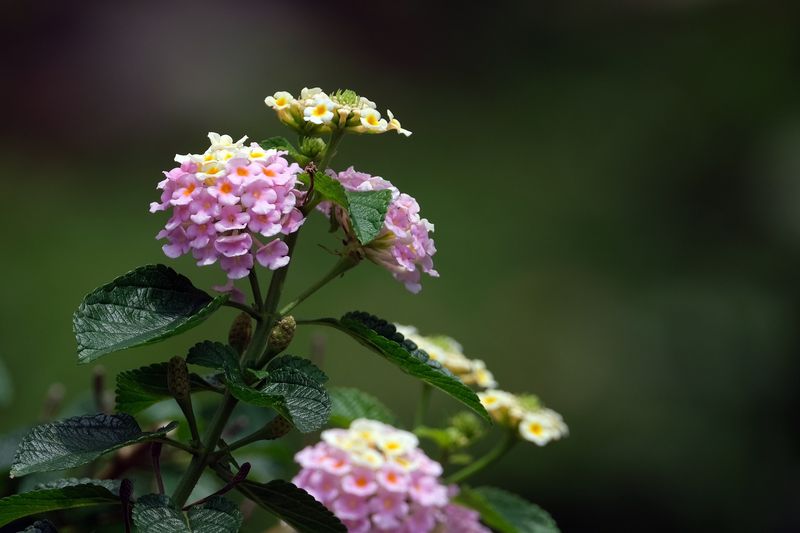
North Carolina stretches from barrier islands at sea level to mountain peaks above 6,000 feet, and the growing conditions across that range differ enough that a single planting date or a single set of expectations cannot apply statewide. Getting lantana’s timing right means working with local frost dates rather than a generic calendar.
Nursery-grown transplants give you a head start. NC State’s Extension Gardener Handbook notes that lantana started from seed may take several months to bloom, while transplants from a nursery are already on track to flower much sooner after planting.
That difference matters when you are trying to maximize a season that frost will eventually end.
Planting should follow local frost danger, not a statewide rule. NWS Raleigh’s freeze maps show how dramatically last-frost timing varies across the state.
The Coastal Plain often clears its last freeze several weeks before the mountains do, and a mountain gardener who plants on the same date as a Raleigh neighbor risks losing transplants to a late cold snap.
For Piedmont and Coastal Plain gardeners on suitable sites, a cold-hardy cultivar like ‘Miss Huff’ may return from the roots after a mild winter, giving it a genuine head start toward a spring-through-fall display. NC State’s ‘Miss Huff’ profile confirms its perennial potential in those regions under favorable conditions.
In colder mountain locations, lantana functions primarily as a warm-season annual unless it is overwintered indoors or in a protected structure.
Even under good conditions, flowering is not a straight uninterrupted line from spring to frost. Transplant stress, a stretch of extreme heat, a prolonged dry spell, or an unexpected late frost can each cause a temporary pause.
NC State’s common lantana entry frames the expected bloom period as summer to frost for most cultivars, which is an honest baseline. A long-season display is achievable under favorable conditions, but treating any interruption as a failure misreads how the plant actually grows.
Protect pollinators, people, and pets around blooming plants
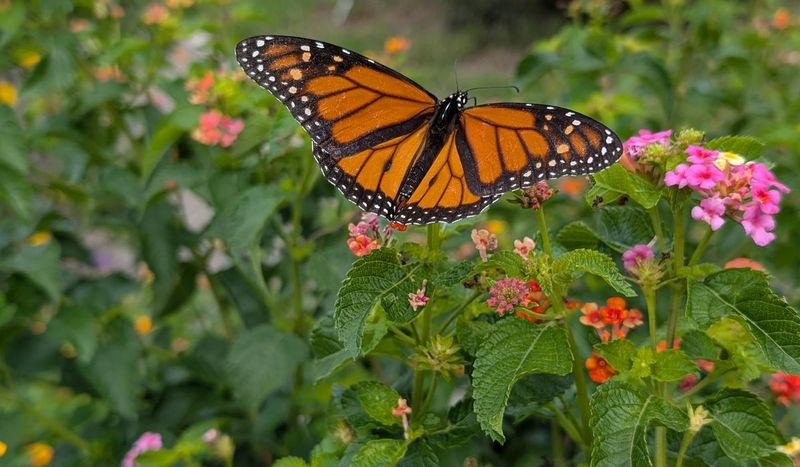
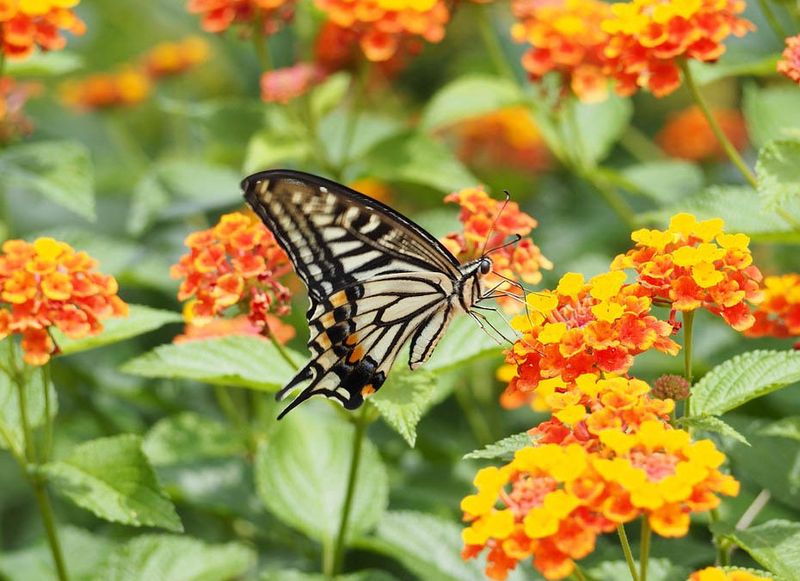
Lantana in full bloom is a pollinator magnet. Butterflies, bees, hummingbirds, and other beneficial insects visit the flowers regularly, which is one of the plant’s strongest selling points for wildlife-aware North Carolina gardeners.
That same activity creates a responsibility: treating a blooming lantana carelessly with pesticides can harm the very visitors you want to attract.
When a pest problem appears, start by identifying what you are actually dealing with before reaching for any product. Lantana lace bugs are among the most common insect problems on lantana in the Southeast, and NC State’s lantana lace bug guide recommends confirming the pest first and considering nonchemical options, including improving plant health and removing heavily infested material, before moving to chemical controls.
Many minor infestations resolve on their own once the plant is growing vigorously in good conditions.
If a pesticide becomes necessary, the product must be legally labeled for the specific plant and pest, applied strictly according to label directions, and timed to minimize contact with foraging pollinators. NC State’s lantana profile warns that systemic insecticides such as imidacloprid can move into flowers and contaminate nectar, putting pollinators at risk even when applied to the soil.
Broad-spectrum pyrethroids are toxic to insects broadly and can harm beneficial organisms and aquatic life if they reach waterways. Neither class of product should be a casual first response on a blooming plant.
Missouri Botanical Garden’s plant record notes that lantana plant parts can be poisonous if eaten and may cause skin irritation on contact. Leaves, sap, stems, seeds, and unripe fruits are the primary concerns.
Keeping children, pets, and livestock from chewing any part of the plant is straightforward advice that applies throughout the growing season, not just when berries are visible.
Build the long bloom season from several sound decisions
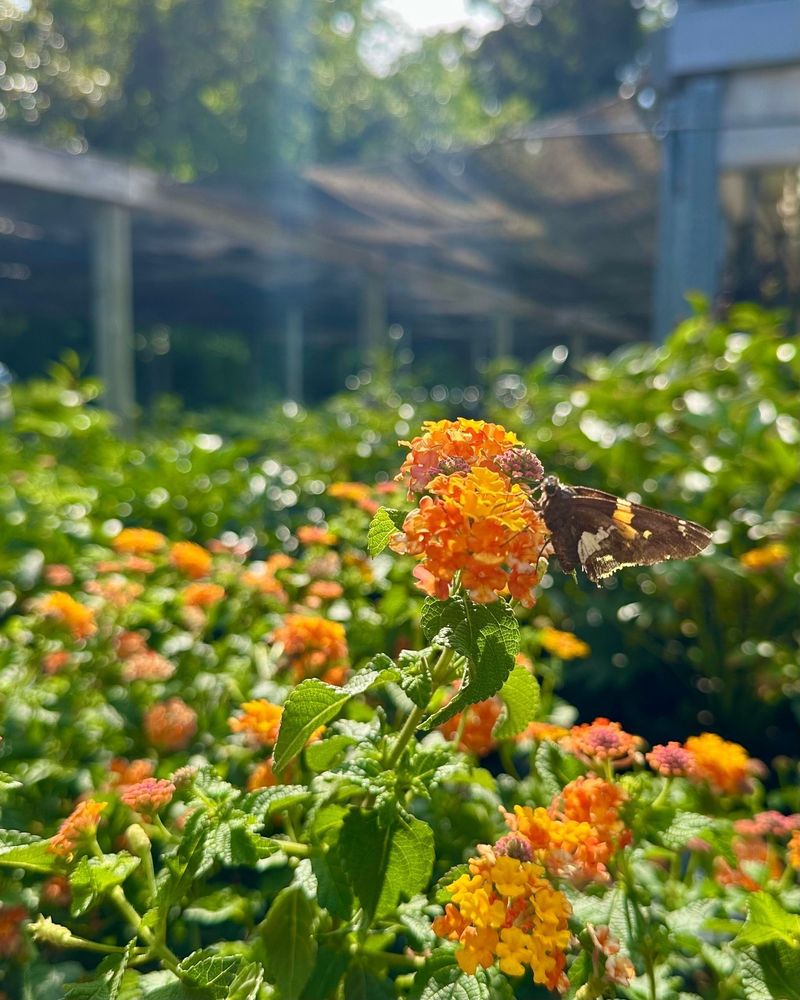
A long lantana bloom season in North Carolina is not the result of one clever trick. It comes from a sequence of decisions that compound on each other: start with a cultivar suited to the site, give it full sun and well-drained soil, water during establishment and drought stress, hold back on fertilizer unless a soil test shows a real need, and do light cleanup when the plant looks tired or leggy.
‘Miss Huff’ offers the strongest case for a spring-through-fall display under favorable Piedmont and Coastal Plain conditions, while common lantana and mountain plantings will generally deliver a shorter season running from summer to frost. Neither outcome is a disappointment when you go in with accurate expectations and a plan that fits your specific yard.
University of Minnesota’s lantana guidance and NC State’s cultivar research both point to the same fundamentals: sun, drainage, restrained feeding, and a well-matched plant. Follow those basics consistently, and the bloom season takes care of itself more than most gardeners expect.