
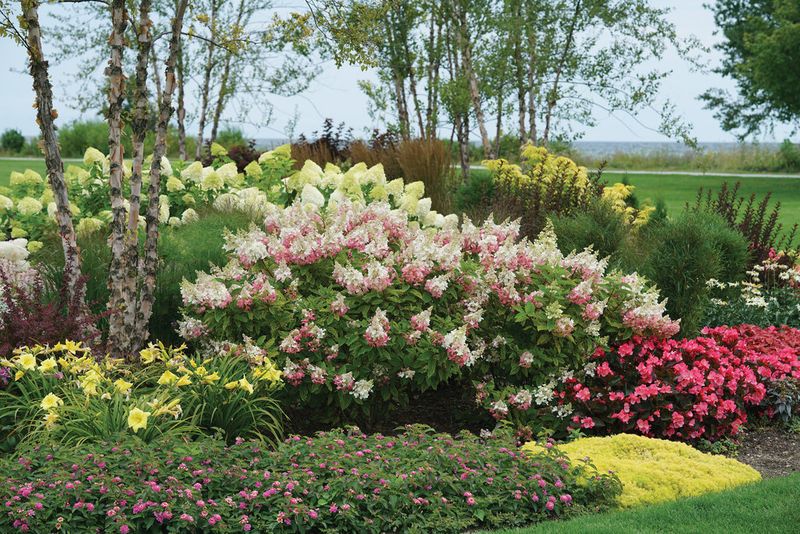
Panicle hydrangeas are one of the most reliable flowering shrubs in North Carolina yards, putting on a show that stretches from midsummer well into autumn. But a lot of gardeners end up with tired, drooping plants by September while their neighbors’ shrubs still look full and colorful.
The difference usually comes down to decisions made months before the first flower opens, not last-minute pruning or extra fertilizer. Getting the timing, cultivar, and site conditions right is what separates a showstopper from a shrub that just gets by.
The fall show starts with the right panicle hydrangea
Panicle hydrangeas are not a single plant with one predictable personality. Cultivar differences are substantial enough that two plants sold under the broad label “panicle hydrangea” can end up looking completely different by October.
NC State Extension’s plant profile for Hydrangea paniculata lists mature sizes ranging from compact shrubs to small trees, with bloom timing, stem strength, and color transitions that vary from one selection to the next.
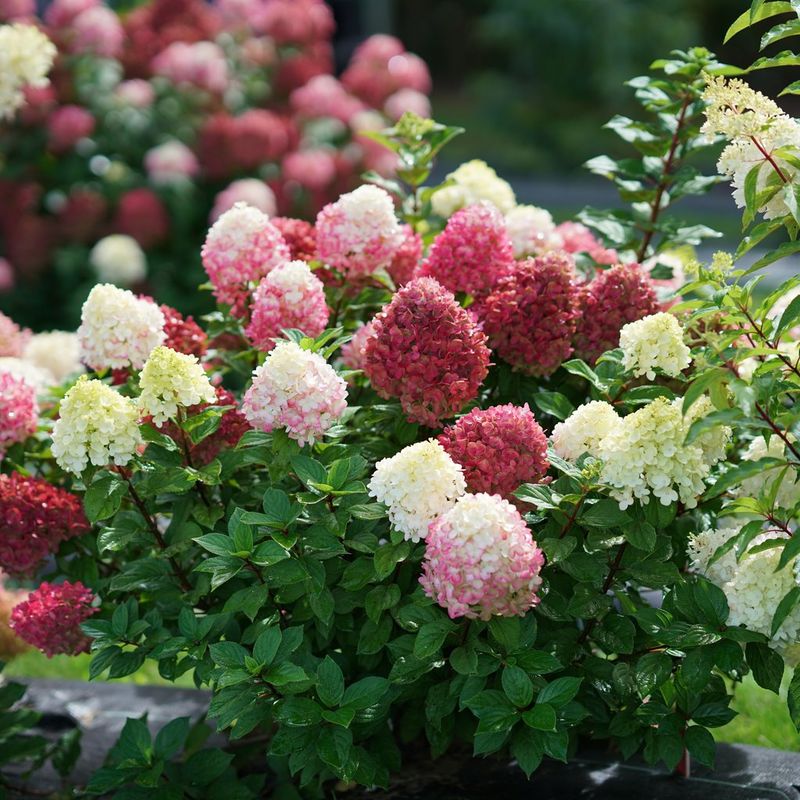
‘Quick Fire’ opens earlier than most, often showing color before midsummer, while ‘Limelight’ is known for large, chartreuse-tinged panicles that shift to cream and then pink. ‘Pinky Winky’ develops two-toned flower heads with white upper florets and deep pink lower ones as the season progresses. ‘Bobo’ stays small enough for containers and front borders, while ‘Fire Light’ pushes toward red more assertively than many others. ‘Little Lime’ is essentially a compact version of ‘Limelight,’ better suited to tighter spaces.
Knowing the cultivar matters because each one has a built-in ceiling on what it can deliver. If a plant is too large for its spot, no amount of pruning will keep it tidy without sacrificing flower heads.
If stem strength is low for a given cultivar, heavy flower clusters will flop regardless of care. Illinois Extension’s shrub selector notes that panicle hydrangeas hold their flower heads through late season as they mature and change color, and that persistence is a cultivar trait, not a reward for late-season intervention.
The colorful display most gardeners admire in September and October is largely the result of aging flower heads changing from white or green to pink, red, or brown. That color shift is ornamental and long-lasting, but it reflects flower-head longevity, not a second crop of fresh blooms.
Choosing a cultivar whose color transition appeals to you, and whose mature size fits your space, is the first real decision that shapes the fall show.
Is it really a panicle hydrangea?
Before reaching for pruning shears, take a moment to confirm what species is actually growing in your yard. Getting this wrong is one of the most common reasons hydrangea care advice backfires.
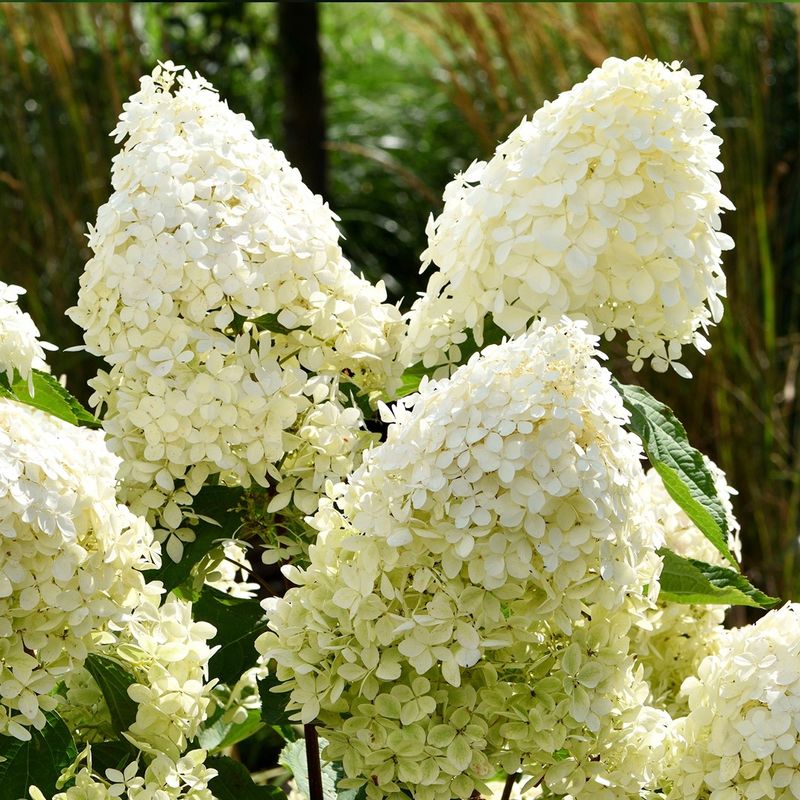
Panicle hydrangeas, known botanically as Hydrangea paniculata, produce distinctive cone-shaped or pyramid-shaped flower clusters, and they bloom on new wood, meaning the stems that grow during the current season carry the flowers.
Penn State Extension’s guide to pruning hydrangea species explains that this new-wood blooming habit is what makes late-winter and early-spring pruning safe for panicle hydrangeas. Bigleaf hydrangeas (Hydrangea macrophylla) and oakleaf hydrangeas (Hydrangea quercifolia) bloom on old wood, meaning they carry next year’s flower buds on stems that grew this season.
Pruning those plants at the wrong time removes the buds and eliminates the bloom. Transferring panicle-hydrangea pruning advice to a bigleaf or oakleaf plant is a reliable way to end up with a shrub full of leaves and no flowers.
UGA Extension’s Forsyth County identification guide recommends checking flower shape as the easiest field marker: cone or elongated cluster points to panicle hydrangea, while a round or mophead cluster points to bigleaf. Leaf texture and stem color can also help narrow things down.
One more thing worth clarifying: soil pH does not change panicle hydrangea flower color. That advice belongs to bigleaf and mountain hydrangeas, where aluminum availability in acidic soil shifts pigment.
UF/IFAS notes specifically that pH does not affect panicle hydrangea flower color, so adjusting soil acidity to chase blue or pink tones will not work on this species. Confirm the plant first, then the right pruning and care sequence follows naturally.
Prune before spring growth sets the next display
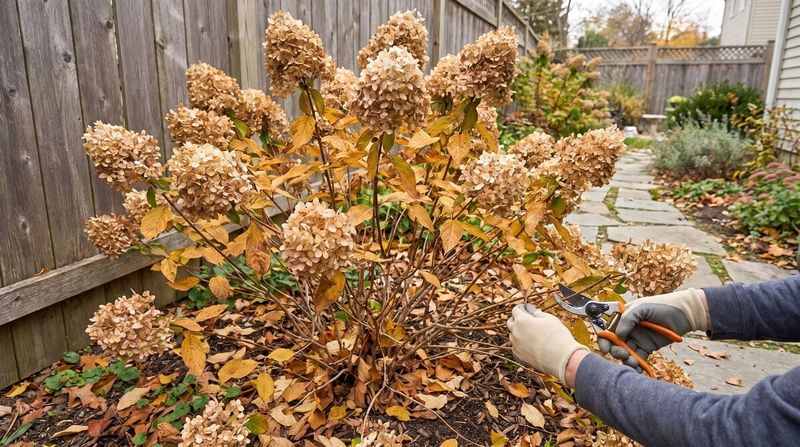
Panicle hydrangeas set their flowers on stems that grow during the current season, so pruning in late winter or early spring, before new growth begins, gives the plant a clean start and does not sacrifice any developing flower buds. In most North Carolina locations, that window falls somewhere between late January and early March, depending on elevation and local conditions.
Mountain gardens may push closer to March, while Piedmont and coastal yards often see new growth emerge earlier.
NC State Extension confirms that panicle hydrangeas can tolerate severe pruning at this time because flowering depends entirely on new wood. The NC State pruning guide recommends removing dead, damaged, and crossing branches first, then thinning congested growth and shortening selected healthy stems just above a strong bud.
That sequence, rather than cutting everything back uniformly, tends to produce a better-shaped plant with a more balanced framework.
Illinois Extension’s pruning guide notes that panicle hydrangeas can generally have about one-third to one-half of total plant mass removed when pruning new-wood bloomers, framing it as a broad guideline rather than a fixed rule for every plant. Cultivar, plant age, existing structure, and the gardener’s goals all affect how much reduction makes sense.
A younger plant building its framework benefits from lighter shaping, while a mature, dense shrub may respond well to more aggressive thinning.
Tree-form panicle hydrangeas need different judgment entirely. University of Maryland Extension warns that the permanent trunk structure of a tree-form plant should not be cut down just because shrub-form panicle hydrangeas tolerate hard dormant pruning.
Cutting the trunk destroys the tree form that was developed over years. Prune the canopy selectively on tree forms, and treat the trunk as permanent.
Getting the timing and approach right in late winter is the single most consequential thing a gardener can do to improve the following season’s display.
Choose between larger heads and a fuller look
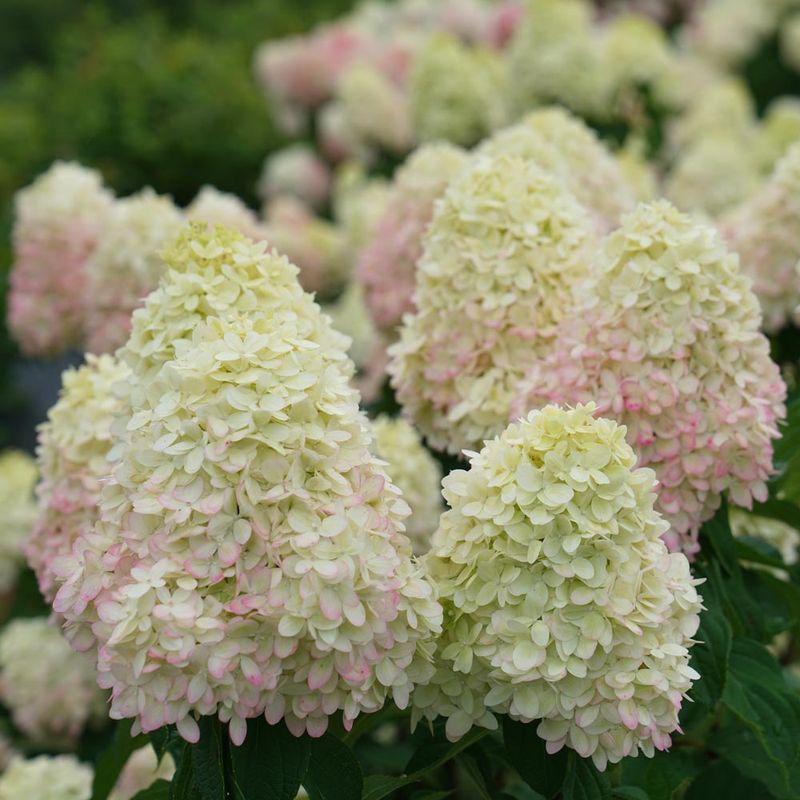
Hard pruning and selective thinning are not the same thing, and the tradeoff between them is worth understanding before you cut. Removing most of the stems to leave only a handful of primary shoots can concentrate the plant’s energy into fewer, larger flower clusters.
UGA Extension guidance for ‘Limelight’ specifically mentions thinning to five to ten primary shoots as a way to produce larger panicles, which can be striking when that is the design goal.
Leaving more stems tends to create a fuller, bushier display with more flower heads overall, even if individual clusters are smaller. Neither outcome is automatically better.
A gardener who wants bold, oversized panicles as a focal point may prefer the thinned approach, while someone who wants the plant to look lush and covered in blooms may find the fuller result more satisfying. The key is matching the cut to what you actually want to see in August and September.
University of Minnesota Extension notes that heavy reduction on panicle hydrangeas can sometimes result in fewer, heavier blooms on weaker stems that flop or bend under their own weight. This is more likely with cultivars that already have thinner stems or with plants growing in shadier conditions where stems are less rigid.
Cultivar selection matters here too: ‘Bobo’ and ‘Little Lime’ tend to hold their heads upright more reliably than some larger-growing selections.
Plant age and existing structure also factor in. A young plant still building its framework is not a good candidate for aggressive thinning.
An older, established shrub with a crowded center is a better fit for selective reduction. Treat the larger-panicle outcome as a real possibility on the right plant with the right cultivar, not a guaranteed result from any hard cut on any panicle hydrangea in any yard.
Morning sun and steady moisture carry the plant through heat
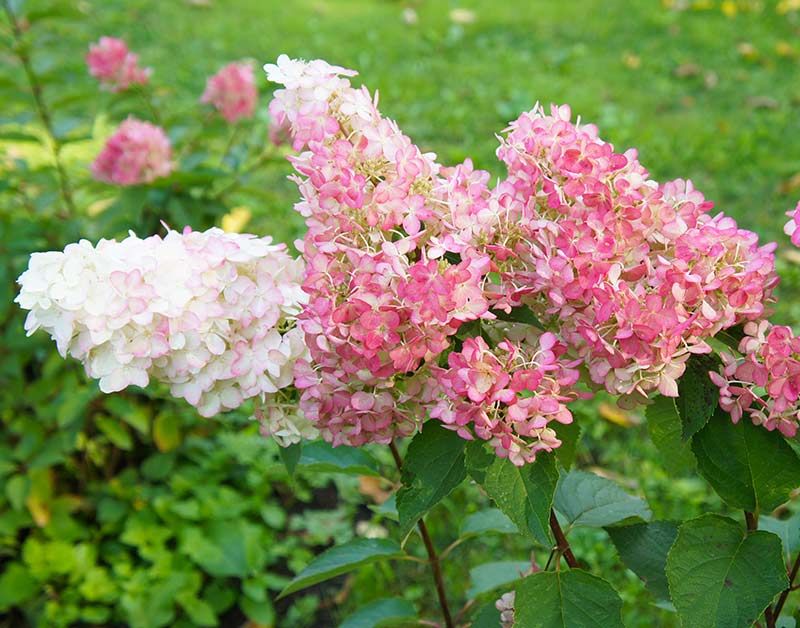
Panicle hydrangeas handle more direct sun than most other hydrangea types, but that does not mean full afternoon exposure is always the right call in North Carolina. NC State Extension recommends morning sun and afternoon shade as a safer default, particularly in hot Piedmont and coastal yards where afternoon heat and drought stress can push a plant into wilting and premature flower drop.
A site with bright morning light and protection from the harshest afternoon sun tends to produce better-looking plants through the longest stretch of the season.
UF/IFAS describes panicle hydrangea as more sun-tolerant than other hydrangea types but still emphasizes that irrigation and site conditions matter, especially during heat stress. The same logic applies across North Carolina’s climate zones: a plant in a hot, exposed spot with poor drainage or no supplemental water will underperform regardless of how well it was pruned in February.
Keeping the root zone evenly moist but well drained is especially critical during establishment and during summer dry spells. University of Minnesota Extension’s watering guidance recommends deep, infrequent watering at the base of the plant rather than frequent shallow sprinkling, which keeps moisture near the surface and encourages shallow roots that are more vulnerable to heat and drought.
Penn State Extension similarly advises watering newly planted shrubs deeply and consistently until they are established.
A 2- to 4-inch layer of organic mulch over the root zone helps the soil hold moisture and stay cooler during summer heat. University of Minnesota Extension’s mulching guidance recommends keeping mulch a few inches away from stems to avoid creating conditions that encourage rot and pest problems at the base of the plant.
Shredded leaves, pine straw, or wood chips all work well. This one low-effort step can reduce watering frequency and moderate the root-zone temperature swings that stress plants through a long Southern summer.
Feed when the plant needs it, not to chase fall flowers
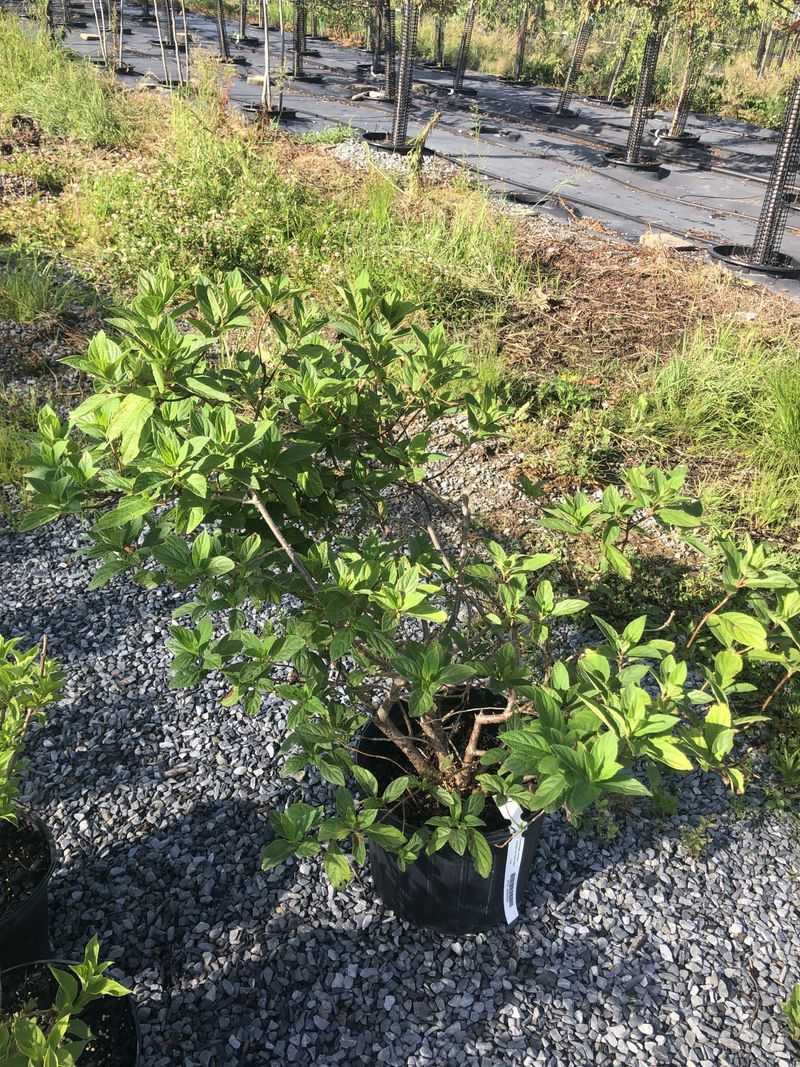
Fertilizer is not a bloom-extension tool for panicle hydrangeas. No reviewed evidence from university or extension sources shows that applying fertilizer in late summer reliably keeps the current season’s flowers going longer or triggers a new flush of blooms.
Treating a fertilizer application as a fall-display trick is likely to produce more foliage rather than more flowers, and it may push soft new growth into the season when the plant should be hardening off.
UGA Extension’s ornamental-plant care guide recommends basing fertilization on soil conditions and plant performance rather than applying it on a fixed schedule. For woody plants, spring is the generally recommended window when feeding is warranted, timed as growth begins.
The same guidance advises avoiding fertilizer after the first fall frost, when plants begin entering dormancy and cannot use nutrients effectively.
A soil test takes the guesswork out of the decision. NC State Extension’s soil testing guide explains how to collect and submit a sample, and the results will tell you whether your soil is actually deficient in anything.
Many established shrubs in North Carolina yards do not need supplemental fertilizer every year, and adding nutrients to already-adequate soil can do more harm than good.
High-nitrogen fertilizers are a particular concern. UGA Extension notes that excess nitrogen can push hydrangeas toward lush vegetative growth at the expense of flowering.
A plant pumping out extra leaves instead of supporting flower development is the opposite of the goal. When feeding is warranted, follow the product label for rate and timing, and resist the urge to apply more than recommended in hopes of a bigger result.
Steady, appropriate nutrition supports the plant; excess feeding can set it back.
A fall display can be aging color, not rebloom
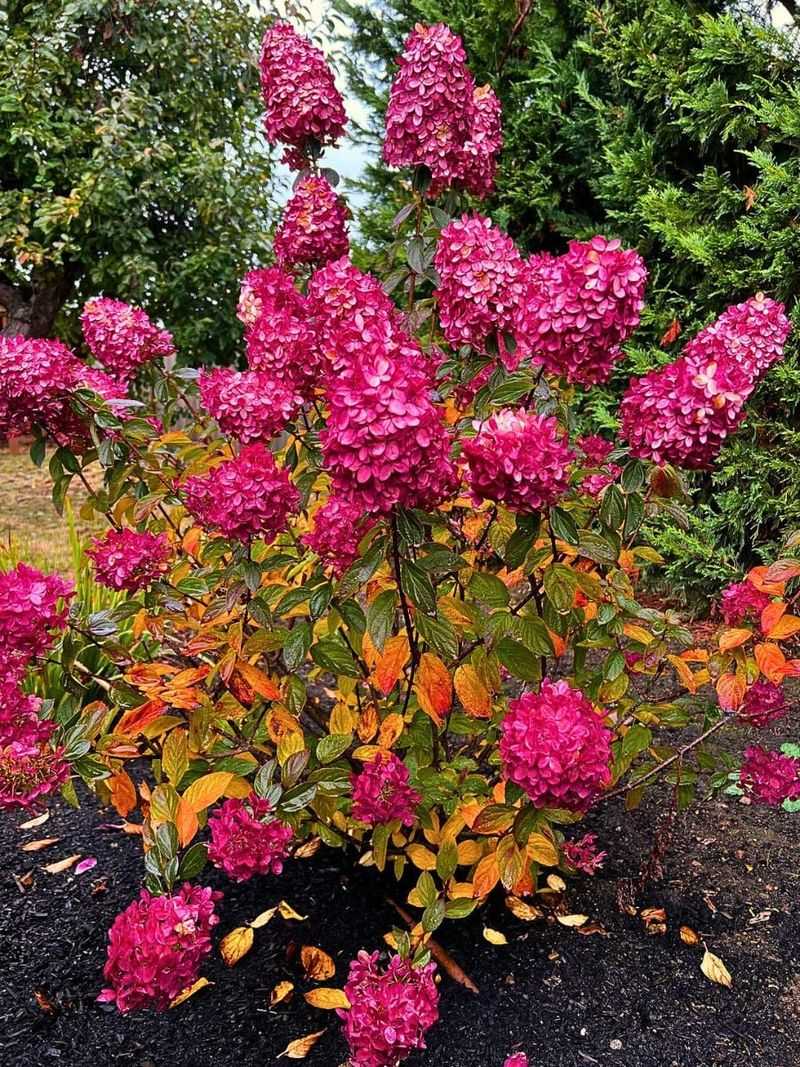
September and October color on a panicle hydrangea is not proof that the plant has produced a second wave of flowers. What most gardeners are seeing is the natural maturation of the same flower heads that opened in summer, shifting from white or green toward pink, red, or russet brown as temperatures drop and the season winds down.
That color change can be genuinely beautiful and long-lasting, but it is ornamental aging, not rebloom.
NC State Extension describes this color transition as part of the plant’s natural seasonal progression, and Illinois Extension notes that panicle hydrangeas hold their flower heads through late season as they mature and change color. Understanding this distinction matters because it changes what you should expect from any care practice.
No pruning or feeding routine reliably forces a second crop of fresh panicles once the first flush has peaked.
Deadheading is a personal choice rather than a requirement. Removing faded panicles tidies the plant and can improve its overall appearance, but University of Minnesota Extension and Ask Extension both indicate that routine deadheading does not reliably create a second bloom flush in panicle hydrangeas.
Leaving dried flower heads through winter provides structure and visual interest in the garden during the months when little else is happening, and many gardeners find the papery, tan-and-cream dried panicles attractive against bare stems in January and February.
Setting realistic expectations about what fall color actually represents helps gardeners appreciate what their plant is already doing well, rather than chasing an outcome that requires interventions the evidence does not support.
Build the display before the season begins
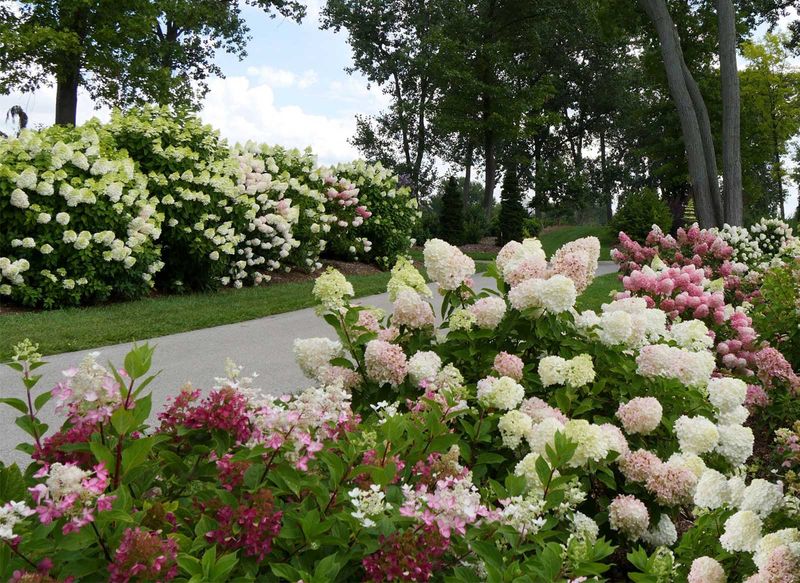
A strong panicle hydrangea display in fall is almost entirely the product of choices made before the growing season gets underway. Start by confirming the plant is actually a panicle hydrangea, as Penn State Extension emphasizes that species identification determines which pruning schedule applies.
Then choose a cultivar suited to the available space, light conditions, and desired appearance, since genetics set the ceiling on what any care routine can accomplish.
Prune selectively while the plant is dormant, removing dead and weak wood and shaping the remaining stems to support good airflow and structure. Provide morning sun with afternoon protection where heat and drought are concerns, keep the root zone consistently moist with deep watering and organic mulch, and fertilize only when a soil test or visible plant performance points to a genuine need.
UGA Extension’s ornamental care guidance frames this as a season-long commitment, not a single intervention.
There is no proven late-season pruning-and-feeding trick that reliably extends the bloom period. NC State’s profile for Hydrangea paniculata points to cultivar selection, appropriate siting, and consistent care as the foundations of a reliable display.
The fall color that makes panicle hydrangeas worth growing is already built into the plant. Sound preparation just gives it the best chance to show.