
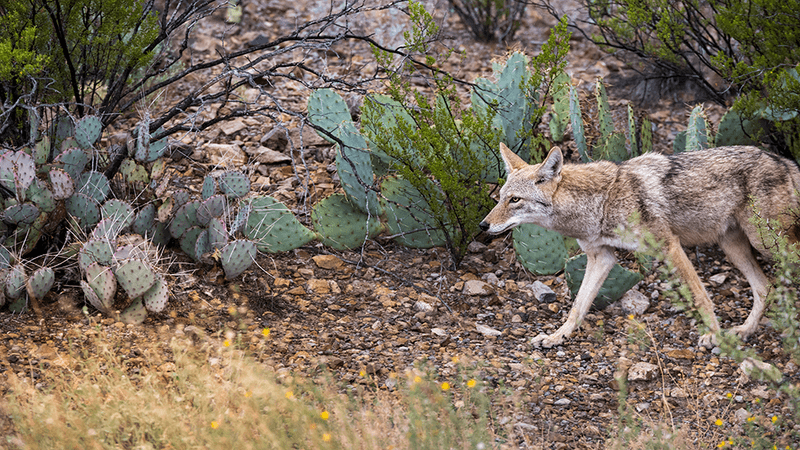
You glance out the back window at dusk and see a lean, gray-brown animal trotting along the fence. Your stomach tightens, and your mind jumps to your kids, your dog, and the cat by the patio door.
Knowing a few calm steps ahead of time can keep a surprise visit from turning into a problem. Here is what to do, what to skip, and how to tidy up your yard afterward.
A dusk sighting is not a diagnosis
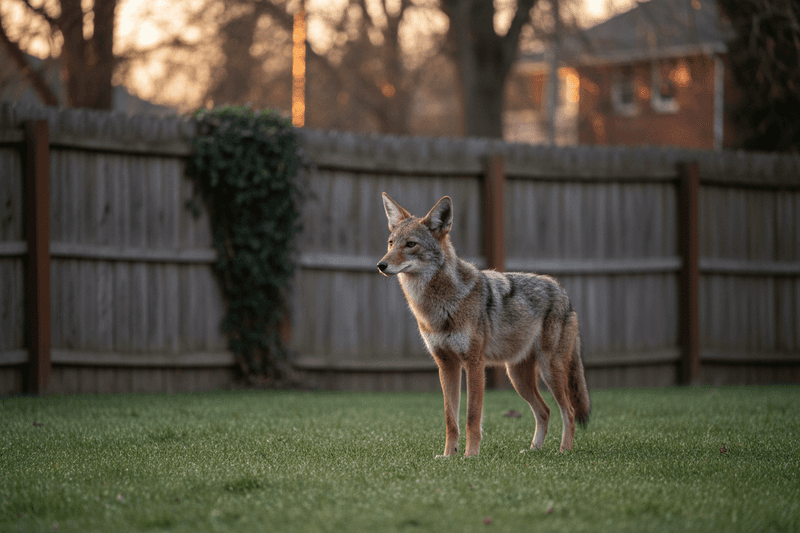
Coyotes are most active around dawn and dusk, so an evening visit fits their normal routine. Austin Animal Services notes that coyotes may also be seen during the day.
Seeing one at a certain hour tells you when it was out, not how it feels or what it plans to do.
That matters because time of day is a poor way to judge an animal’s health. Lakeway’s local guidance says daytime activity alone does not point to rabies.
A coyote that is simply walking through, looking around, and moving on is behaving like a coyote.
Fall adds some local context. The City of Lakeway reports that coyote complaints there peak in fall, and it describes young coyotes dispersing, or leaving the area where they were born, around October through December.
A Texas Master Naturalist coexistence guide also looks at how coyote behavior shifts across the calendar.
Treat that as background, not a verdict. It does not mean the animal in your yard is a young traveler, and it does not mean fall coyotes are aggressive.
What counts is what the coyote does: does it keep its distance and leave, or does it hold its ground and come closer?
With that in mind, the next steps are simple. Start with the people and pets you care about, then give the animal room to go.
Bring children and pets inside calmly
Your first job is to get everyone you love indoors without drama. Walk children inside at a normal pace and have them find an adult if you are not right there.
Massachusetts wildlife guidance says kids should leave calmly rather than run. Kids should not go closer, toss food, or try to scare the coyote themselves.
Pets come next. Cats do best kept indoors, especially around dusk and after dark.
If a small dog is outside, scoop it up or walk it in, staying close the whole time.
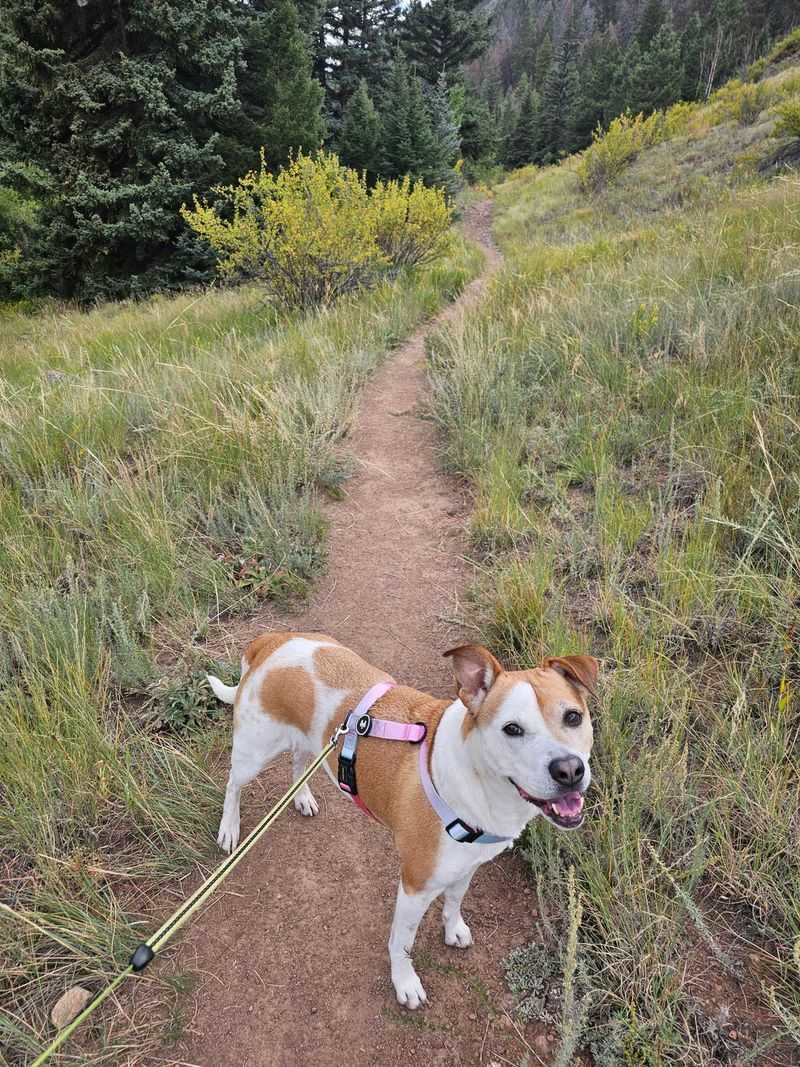
On walks, keep your dog on a short leash. Austin recommends six feet or less and discourages retractable leashes, since a long line gives you less control when you need it most.
A shorter leash lets you steer your dog away quickly and calmly.
Fences deserve a second look. Austin Parks and Recreation says protecting small pets may take more than fencing alone.
A fenced yard is not a safe place to leave a small pet unattended, so stay outside with them.
The Texas Parks and Wildlife Department also recommends keeping pets accompanied outdoors. A quick flip of the porch light and a stroll out with the dog is a good habit for evening trips.
Once everyone is inside, you can watch through a window. That keeps people safe and leaves the coyote free to move along.
Give the coyote space and a way to leave
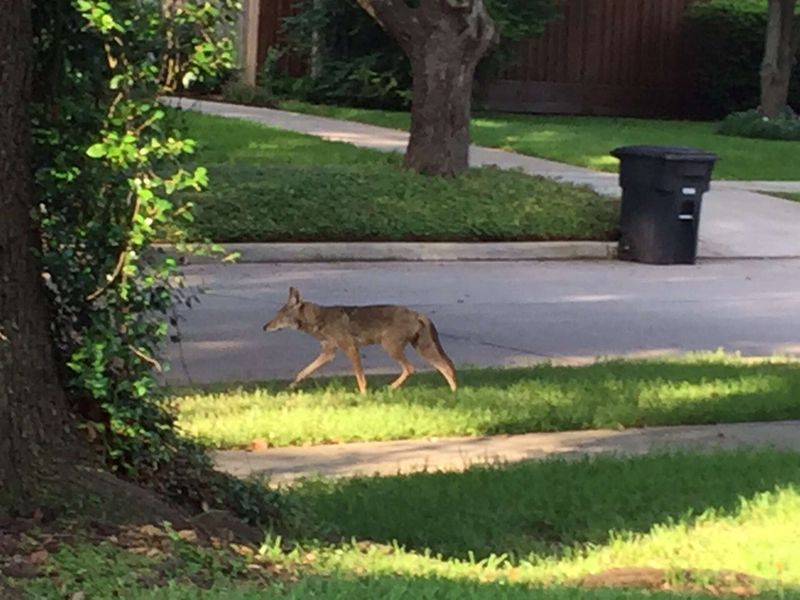
Most coyotes want nothing to do with people. Your best move is to stay out of the way and let it make its exit.
Do not walk toward it, toss it food, or try to touch it. Never corner it against a fence or wall, and do not stand where you block its path out.
An animal with no escape route is more likely to act defensively, even if it started out only passing through.
If you are outside, keep yourself and any pets well back. Austin Animal Services advises against approaching or feeding coyotes.
Open a gate or leave a clear path along the fence line if you can do so without moving closer.
Feeding is a mistake even when it feels kind. Handouts teach a wild animal to associate people with food, which can lead to bolder behavior.
The Texas Parks and Wildlife Department advises against ground-feeding wildlife.
Stay put indoors, or stand at a distance, and give it a few minutes. Many coyotes sniff around, then trot off on their own.
Resist the urge to chase, shout from close range, or throw things.
If it stays put, keep your distance and move on to the next section.
If it lingers, an adult can haze from a safe position
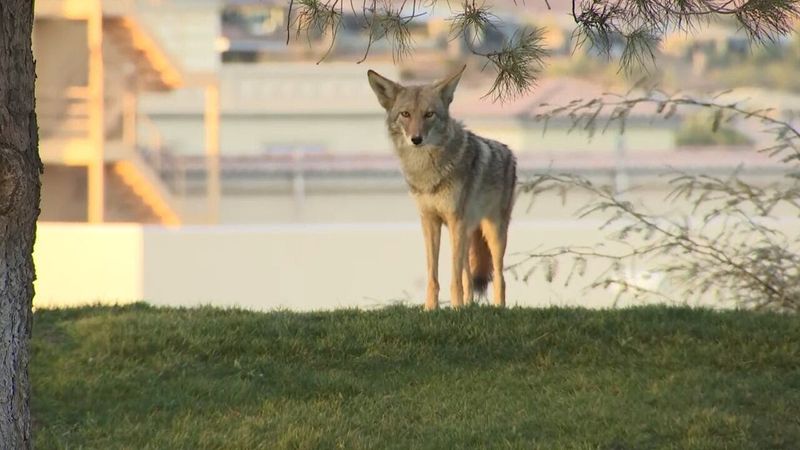
Sometimes a coyote hangs around instead of leaving. In that case, an adult may try hazing, which means making the animal uncomfortable enough to go.
Children should stay inside.
Austin Animal Services suggests standing at a safe distance, making eye contact, yelling, and waving your arms. A whistle or air horn can add noise.
The goal is to prompt a retreat, not to hurt the animal.
Skip hazing in some situations. Do not haze a sick or injured coyote, one that is cornered, or one with pups nearby.
Give it space and call your local animal-control or wildlife agency instead. If it does not leave, back away slowly and report it.
Hazing has limits. A USDA research summary reports that captive coyotes approached less over time, though those with past human-feeding experience were more likely to approach.
That is one setting, not a promise for your neighborhood.
In the field, a peer-reviewed study of volunteers found coyotes generally retreated when approached assertively. It did not find consistent evidence that community hazing changed later coyote behavior or reporting rates.
So think of hazing as a way to move one coyote along right now. It may not stop the next visit, and it should never replace distance and good judgment.
Check local rules on noise devices before you buy one, and leave firearms and fireworks out of it.
After the yard is clear, remove food attractants
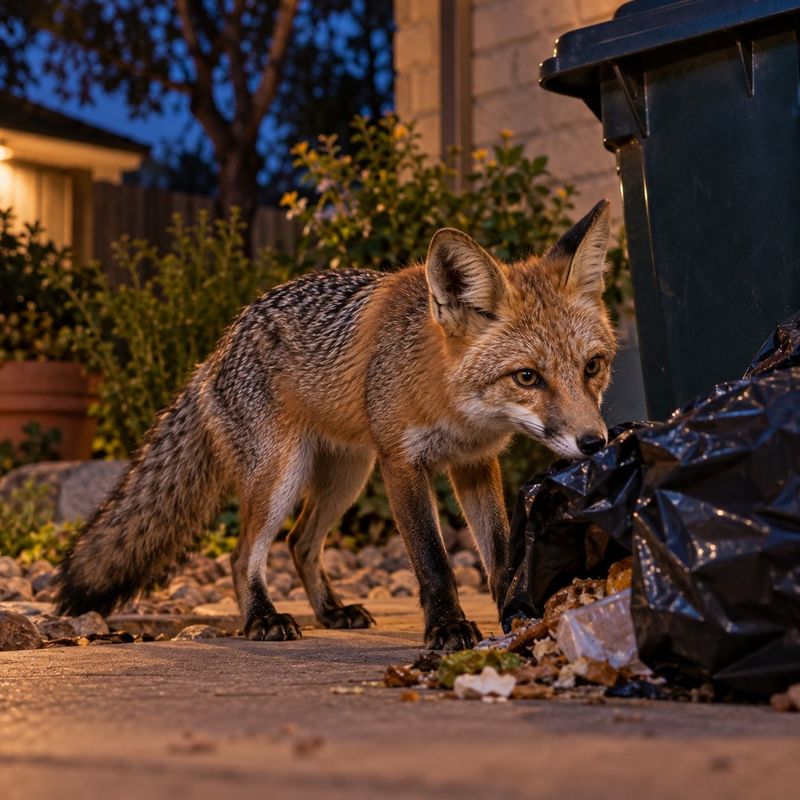
Once the coyote is gone and the yard is calm, take a walk around with fresh eyes. You are looking for easy food.
Removing it is practical prevention, though it cannot promise that coyotes will stop passing through.
Start with pet food and water bowls, and bring them in before dusk. Close trash cans tightly, and keep compost covered or in a secure bin.
Texas Parks and Wildlife advises securing compost and avoiding ground-feeding wildlife.
Fall brings its own yard litter. Pecans, persimmons, and other fruit drop to the ground, and birdseed spills below feeders.
Rake them up regularly, and consider a tray under the feeder to catch the mess.
Austin Animal Services lists these same attractants as things to remove. Keep walking pets with you outside, too.
Keep the bigger picture in mind. Austin Parks and Recreation, citing urban-coyote research, says most urban coyotes in that research mainly ate rodents, other small mammals, and fruit.
Coyotes are not generally living off pets or garbage.
A tidy yard simply gives them fewer reasons to linger. Even so, a coyote may still cross your lawn on its normal route, and that is okay.
Know when to report—and what to do after a bite
Most coyote sightings need no phone call. Reporting makes sense when the animal does not retreat, acts oddly, or appears sick or injured.
In Austin, Austin Animal Services advises reporting a coyote that does not retreat and lists 311 as the local contact. That number is for Austin only.
Elsewhere in Central Texas, call your own city or county animal-control or wildlife agency.
Write down where and when you saw the animal and what it was doing. Those details help officials decide what to do next.
Keep your distance while you wait.
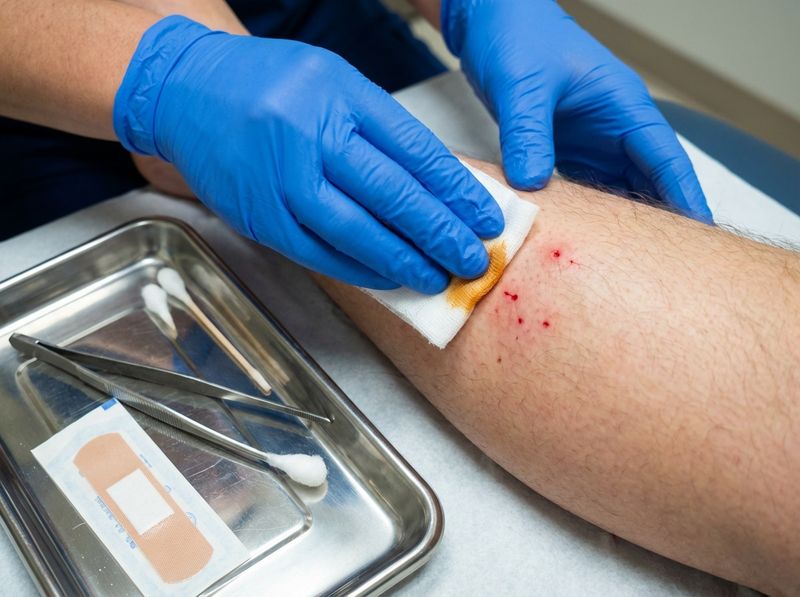
If anyone is bitten or scratched, act right away. Wash the wound with soap and water for 15 minutes.
Then promptly contact a healthcare professional or your local health department for a rabies-risk assessment.
CDC guidance covers when to seek care after an animal exposure. Do this even if the wound looks small.
A professional can judge the risk and decide on next steps.
Pets can be hurt too. If your dog or cat has an encounter, call your veterinarian and ask what to do.
Keep the response simple: protect, make space, prevent
Here is the quick version to keep on the fridge:
Protect: bring kids and pets inside calmly, and keep small pets accompanied.
Make space: let the coyote leave, and report it locally if it will not retreat or looks sick or injured.
Prevent: clear food from the yard once the coast is clear.
A coyote crossing your lawn at dusk is usually just a neighbor passing through. A calm response keeps it that way.