
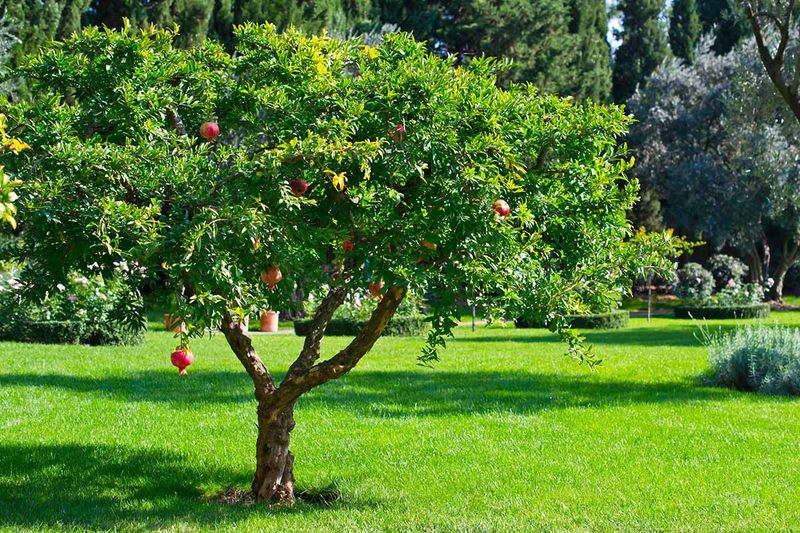
Few things sting like watching a beautiful pomegranate crack open after a storm. Rain is one of several things linked to splitting, and a few smart moves can lower the risk on your tree.
This checklist covers when to pick, how to handle water, and when to pick up the pruners. Keep an eye on your own forecast, because the right timing depends on where you garden.
Use the local forecast, not the calendar, to decide when to act
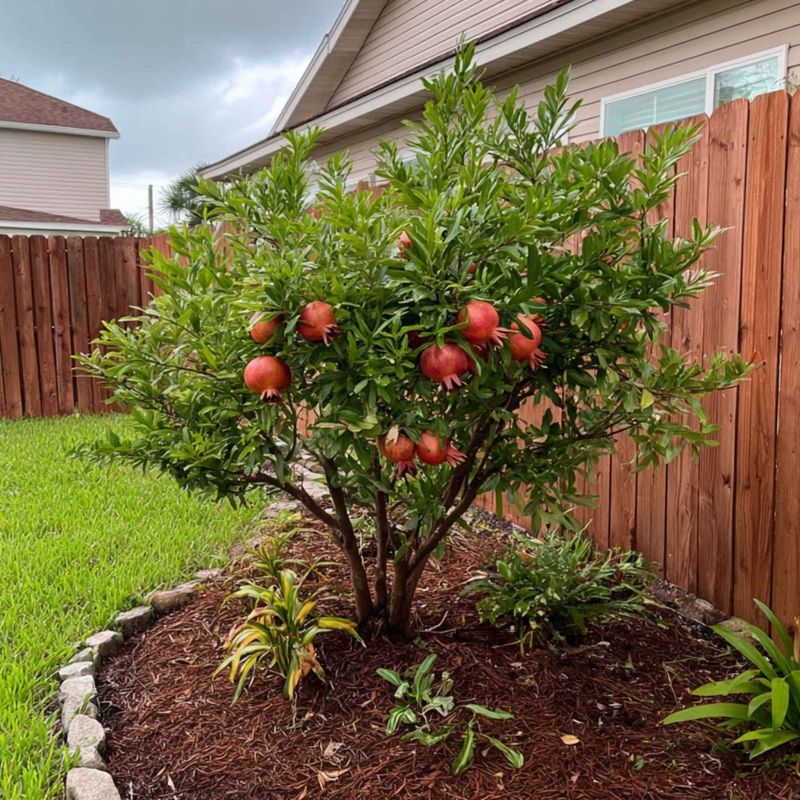
Late November sounds like a deadline, but your tree does not read the calendar. Rain steps in this article matter when rain is actually forecast where you live, so start with your local weather report and a walk around the tree.
Harvest timing shifts across California. A UC ANR home orchard reference lists different harvest periods by variety and region, so a coastal tree and an inland valley tree may not be ready at the same time.
Cultivar and growing conditions matter too. UC Davis postharvest specialists give a broad range of roughly 5 to 8 months from fruit set to maturity.
Some fruit may already be picked, and some may still need weeks. Neither is a problem.
Rain is one risk factor for cracking, not a guarantee, and other weather swings can contribute as well.
For the season, UC guidance such as UC ANR monthly orchard tips points to a simple pattern: harvest ripe fruit before rain, turn off irrigation when rains begin, and prune in winter. The next sections show how to do each one calmly and on your own schedule.
Judge maturity by more than rind color
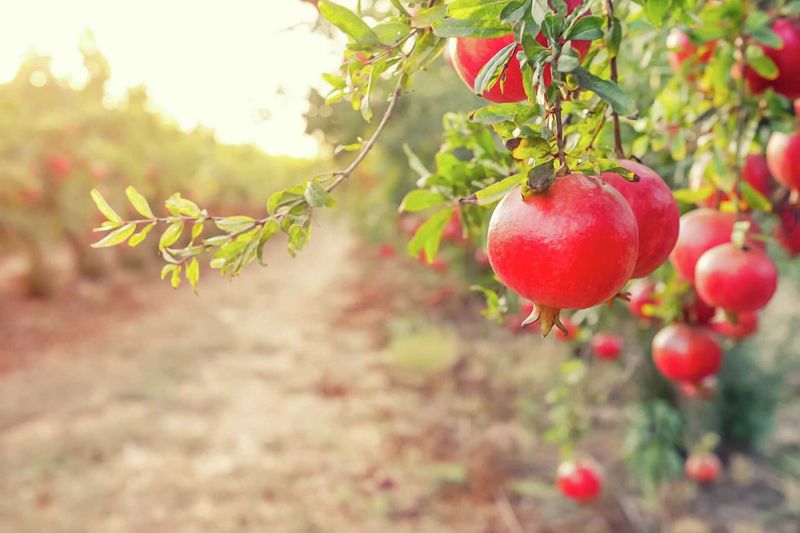
Color is a handy clue, but it is not a universal ripeness test. UC Davis notes that rind color varies by cultivar, so a pale pink variety may be ready while a deep red one still needs time.
Home gardeners can combine several signs. UC Master Gardeners of Santa Clara County describe deepening color, a metallic sound when you tap the fruit, and skin that softens enough to scratch with gentle pressure.
Treat each sign as a clue, not a promise. Tap a few fruits, compare them, and note how the color on your particular tree changes week to week.
One firm rule applies here. Pomegranates do not keep ripening once picked, so fruit harvested too early will not improve on the kitchen counter.
A rain forecast is not a reason to pull fruit that is clearly immature.
Harvest ready fruit when rain threatens
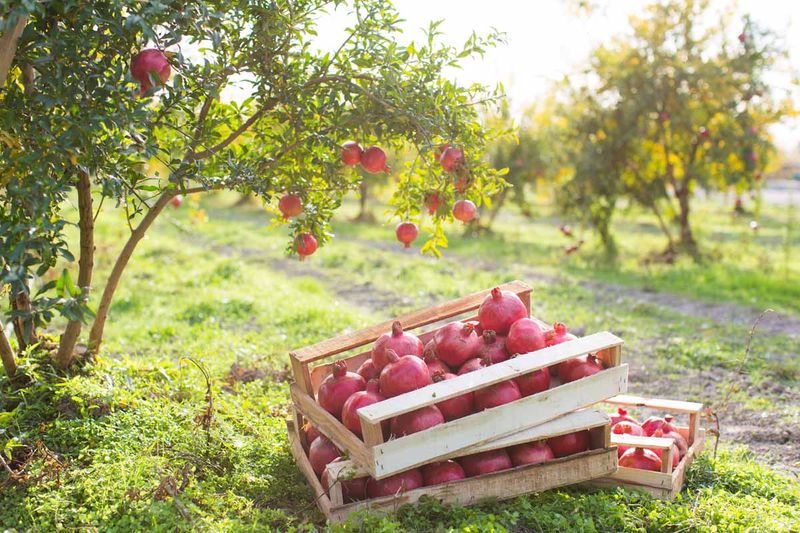
When your local forecast shows rain on the way, go out and pick what is ripe or close to harvest maturity. Leave the fruit that still needs time.
The goal is to save the best fruit, not to strip the tree.
Use clean snips and cut the stem close to the fruit, as UC Master Gardeners in Santa Clara County suggest, rather than pulling it off. Pulling can tear the skin or damage the branch.
Here is a quick example. If ten fruits show a metallic tap and slightly scratchable skin, and six others are still firm and dull, harvest the ten and check the rest after the storm.
The idea of beating the rain comes from UC ANR orchard guidance. Rain does not split every fruit, so a calm, selective pick is enough.
Manage irrigation without imposing drought stress
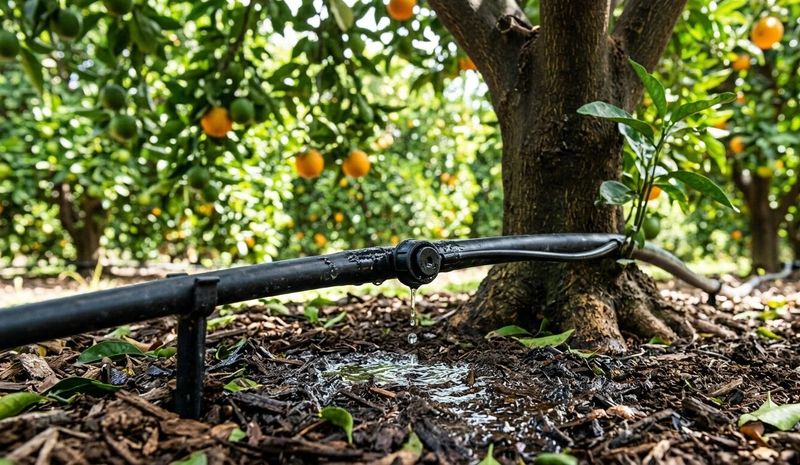
Advice to cut back water can be misunderstood. You do not want to leave the tree dry on purpose, because swings in moisture are part of the cracking problem.
Steady moisture while fruit develops, and into fall, can help reduce splitting. UC ANR guidance pairs that with a clear step: turn off irrigation once effective rains begin.
Sudden changes in water availability are associated with cracking, and that includes a heavy irrigation after a dry stretch. UC Davis also reports other environmental contributors, so rain alone does not explain every split fruit.
In practice, check the soil a few inches down before you water. Give the tree a modest, even drink on its normal schedule rather than a big soak.
Skip extra water if the soil is still damp.
Once a real soaking rain arrives, let the storm do the work and shut the system off. Water-wise gardeners in California can relax here, because a mature tree rarely needs extra irrigation during steady winter rain.
Turn it back on only if the soil dries out between storms.
Prune routinely after most leaves have fallen
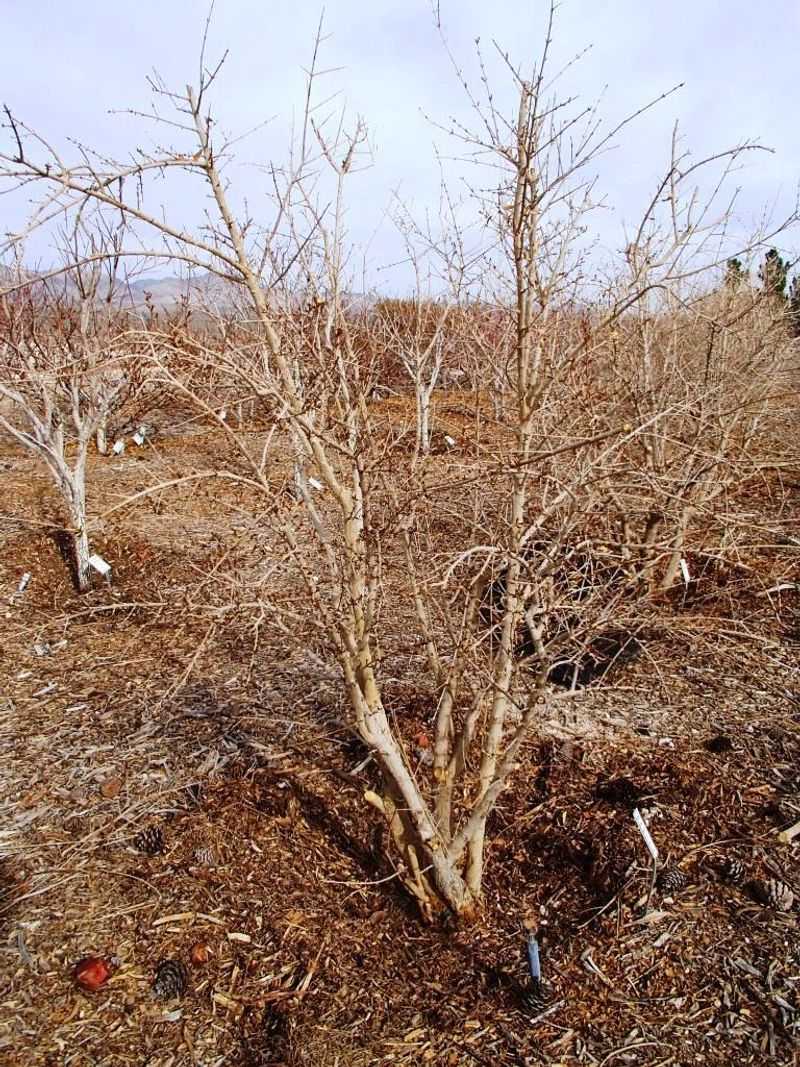
Winter is the routine pruning window. Waiting until most leaves have dropped lets you see the tree’s structure, as UC Master Gardeners of Sacramento County advise.
No single statewide late-winter date fits every microclimate.
When you do prune, start with the obvious problems. UC Marin Master Gardeners suggest removing dead, diseased, or damaged canes, crossing growth, root suckers, and weak or low branches.
Keep replacement canes coming up. Fruiting wood matters, and heavy pruning can reduce yields, so a light hand is usually best.
Necessary cleanup does not have to wait. If a branch snapped in a storm or you spot diseased growth, take care of it when you see it.
A good test before each cut is to ask whether the branch is dead, damaged, crossing, or crowding. If not, leave it for now.
Make a weather-dependent plan for your tree
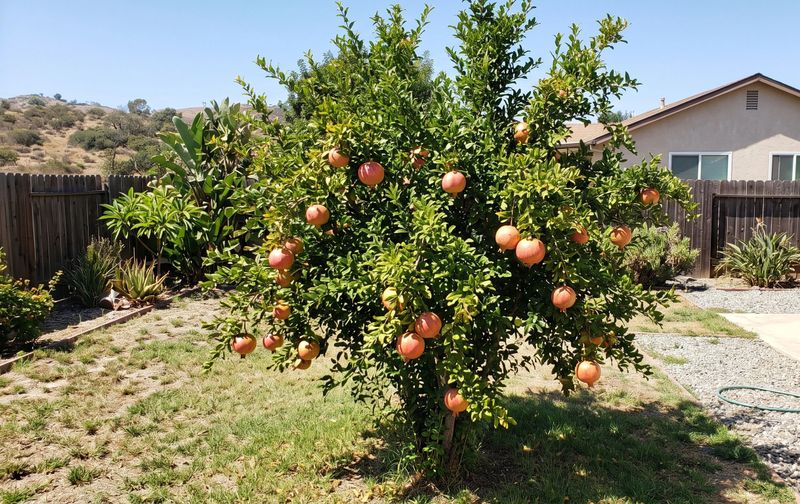
Keep it simple and let the weather set the pace. First, check your local forecast and test a few fruits for maturity.
If rain threatens, clip the ripe fruit and leave the rest.
Next, shut off irrigation when effective rains begin, as UC ANR guidance recommends. Then save routine pruning for winter, after most leaves have fallen, and handle damaged growth whenever it appears.
Skip the rush on immature fruit and skip any deliberate drought stress. Your tree’s condition and your local sky call the shots, and a patient gardener usually ends up with the best pomegranates.