
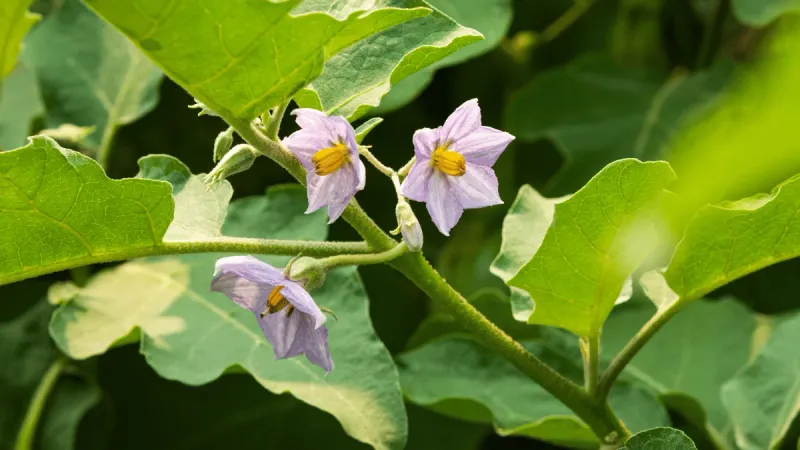
Watching eggplant flowers fall off one after another in the August heat is one of the more frustrating things a Southern gardener can deal with. You water, you wait, and still the blooms drop before a single fruit has a chance to form.
Soil moisture is usually the first thing worth checking, but it is rarely the whole story. Heat, night temperatures, pollination, and drainage can all play a role, and sorting out which factor is driving the problem makes all the difference.
First, confirm that the plant is actually losing flowers
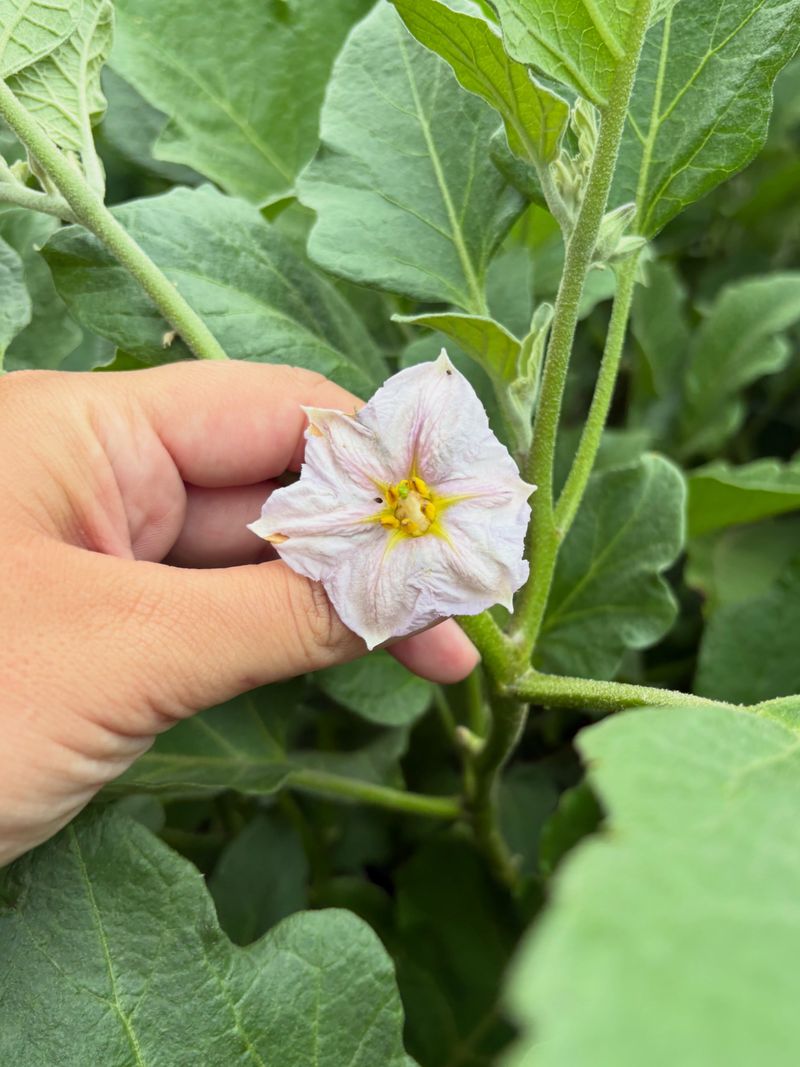
Before troubleshooting causes, take a closer look at what is actually happening at the base of each flower. When a flower is pollinated successfully, the petals will eventually fall away, but a small green fruit remains attached and begins to swell where the bloom was.
That is a healthy sign, not a problem. The issue worth investigating is when the entire flower, including the base, drops off cleanly and no fruit forms behind it.
UC IPM’s blossom drop guidance identifies failed fruit set as a distinct event from normal petal shed, and that distinction matters before you start adjusting your watering or anything else. Check a few flowers over several days rather than drawing conclusions from one or two blooms on a single morning.
Some flower loss is completely normal. Eggplant, like tomatoes and peppers, will occasionally shed flowers in response to minor stress, temperature swings, or simple variation in plant energy.
The signal that deserves real attention is repeated, widespread drop across multiple stems, especially when it is paired with dry soil, wilting leaves, extreme heat, or other visible plant symptoms. A few fallen flowers on an otherwise healthy plant is not necessarily a crisis.
Check the root zone before changing the watering schedule
Uneven soil moisture is one of the most practical first things to check when eggplant flowers are dropping. Eggplant performs best when the root zone stays evenly moist during flowering and fruit production.
Cycling from dry, cracked soil to a heavy soaking and back again adds stress that can interfere with fruit set, even when the plant looks reasonably healthy from above.
University of Minnesota Extension’s eggplant guidance recommends a thorough weekly soaking when rainfall falls below an inch, with more frequent watering possible in sandy soil. The University of Georgia suggests watering to a depth of about 6 inches, with roughly 1 to 2 inches per week as a general target.
These are useful starting points, not fixed rules. Sandy Florida soils, raised beds, containers, windy sites, and large plants in high heat will all have different demands.
The right way to check is not to look at the calendar or watch for midday wilt. Midday wilting can happen even in moist soil when temperatures spike, so it is not a reliable guide on its own.
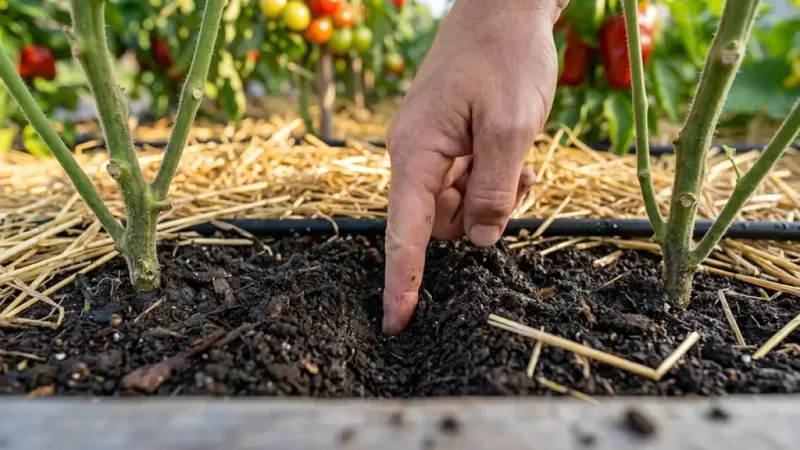
Instead, push a finger or a trowel several inches below the surface and feel what is actually happening at root depth. University of Maryland Extension advice for containers recommends checking the soil about 3 to 4 inches down before deciding whether to water.
The same logic applies in the ground: water deeply when the root zone is drying, and adjust your frequency to match your actual site conditions rather than a fixed schedule.
Heat can block fruit set even when the soil is moist
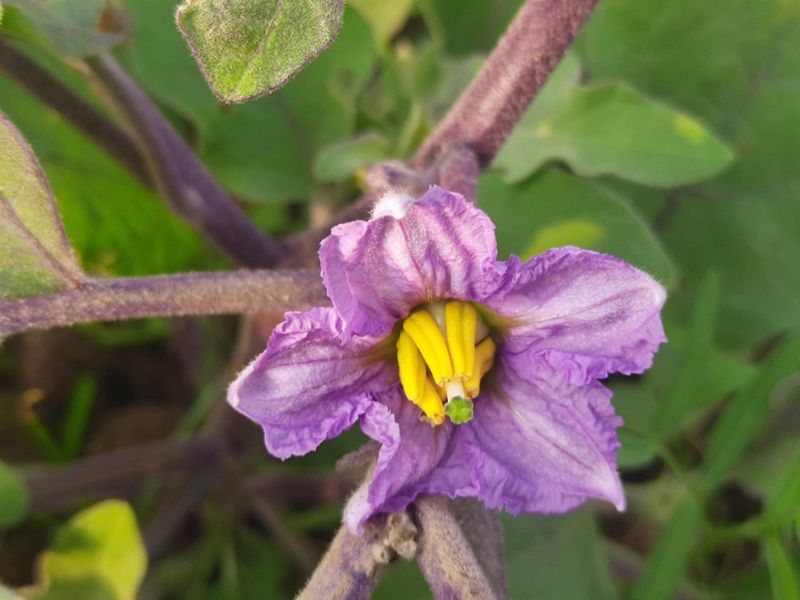
Keeping the soil moist is important, but late-summer flower drop in the South often has more than one driver. Heat is a serious factor on its own, and UMN Extension notes that drought combined with temperatures above 90 degrees Fahrenheit can cause poor flowering, even when gardeners are doing their best to keep up with watering.
Fruit set can also be disrupted by night temperatures that fall below 60 degrees or climb above 70 degrees, which matters in parts of the South where summer nights stay warm well into September.
Production guidance from UC Agriculture and Natural Resources adds that extreme temperature swings, both high and low, can affect pollen quality and reduce the percentage of flowers that successfully develop into fruit. These thresholds are not identical across every source or every garden, so treat them as indicators rather than precise cutoffs.
The broader point is that heat acts on the flower itself, not just on the plant’s water status.
University of Delaware Cooperative Extension’s heat stress guidance makes clear that dry soil and high temperatures interact, because a plant struggling with moisture stress has less capacity to cope with heat. That interaction is real, but it also means that a sudden heavy watering after a prolonged dry spell will not instantly repair flowers or pollen that have already been damaged by the heat.
Consistent moisture going forward supports the next round of flowers; it does not undo what the last heat wave already did to the ones currently on the plant.
Pollination is worth checking, but bees are not the whole answer
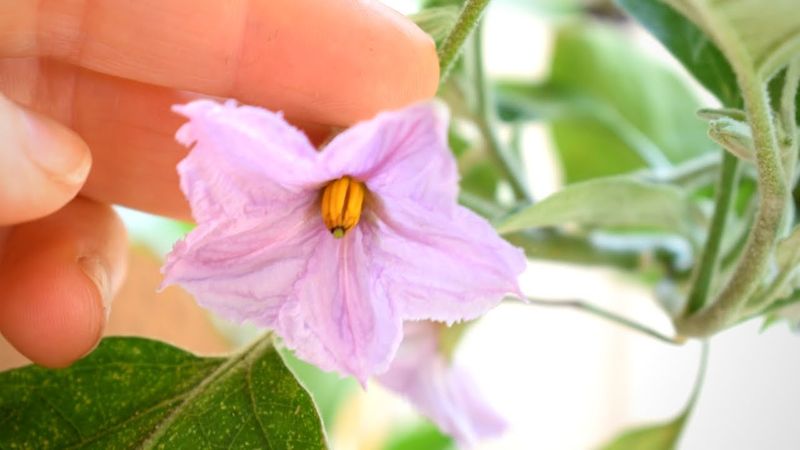
Eggplant flowers are self-fertile, meaning a single plant can set fruit without a second plant nearby and without bees to carry pollen between separate male and female flowers. That is different from crops like squash, where cross-pollination is required.
So if you are wondering whether a lack of pollinators is the reason your flowers are dropping, the answer is: probably not the whole reason, and maybe not a factor at all.
That said, UF/IFAS Gardening Solutions notes that bee activity can improve pollination and fruit set in eggplant, and gardeners can try gently tapping or brushing open flowers in the morning as a low-risk intervention when other causes have been ruled out. This is a reasonable thing to try, especially if flowers are opening fully and then dropping without any sign of a tiny developing fruit at the base.
UC IPM lists incomplete pollination as one of several distinct causes of blossom drop, separate from temperature and moisture stress.
Hand-pollination is worth the two minutes it takes, but keep its limits in perspective. If the plant is under severe heat or water stress, the pollen itself may already be compromised, and brushing flowers will not change that.
Use the presence or absence of a developing fruit, along with what you know about your site conditions, to decide how much weight to give pollination as a likely explanation before spending energy there.
More water can create a second problem
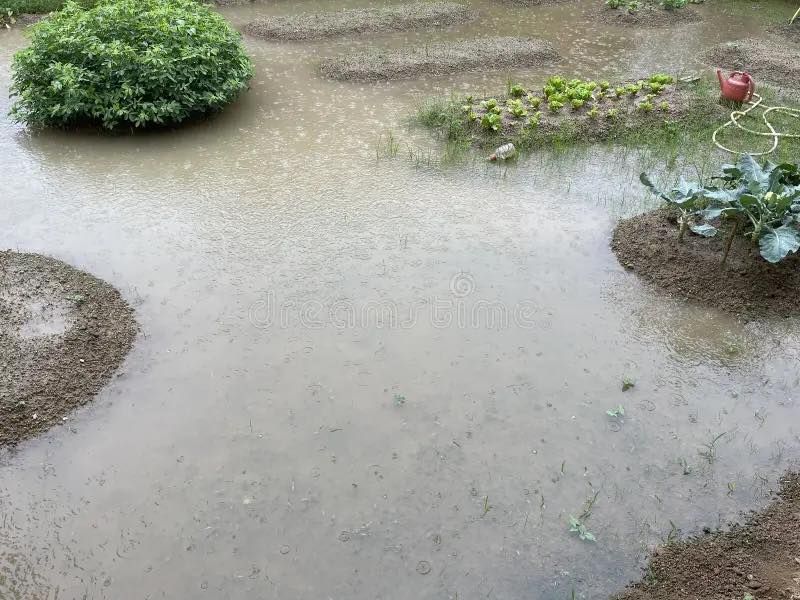
When flowers start dropping and the soil looks dry, the instinct is to water more heavily and more often. That instinct is sometimes right, but it can backfire quickly if drainage is poor or if the soil is already holding more moisture than it appears to from the surface.
Saturated soil cuts off oxygen to the roots, and that oxygen deprivation weakens the plant even when water is plentiful. UC IPM’s eggplant root rot guidance notes that soil saturation for as little as 5 to 6 hours can create conditions favorable to Phytophthora or Pythium root rots in susceptible situations.
These are soil-borne pathogens that attack roots under wet, warm conditions and can cause a plant to wilt, decline, and lose flowers even when the soil around it looks moist.
Root rot and waterlogging are not the likely explanation for flower drop on their own. Look for additional symptoms before drawing that conclusion: persistent wilting despite wet soil, yellowing or collapsing lower leaves, or dark, mushy roots if you gently investigate at the base of the plant.
The goal is stable soil moisture with good drainage, not simply more water. If the root zone is genuinely drying between waterings, water more.
If it is staying consistently damp, adding more irrigation is not the fix and may actively make things worse.
Stabilize moisture and reduce heat stress
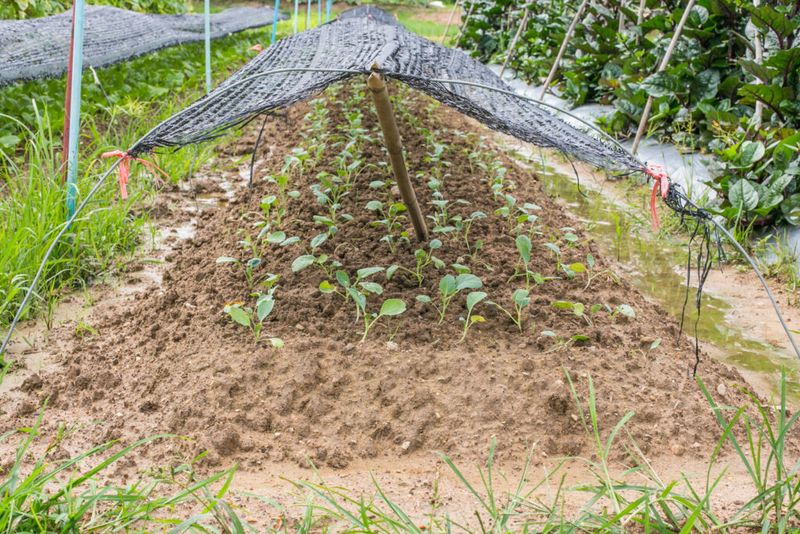
Once you have checked the root zone and identified whether moisture is part of the problem, a practical sequence of steps can help stabilize conditions and support the next round of flowers. Start with how you are delivering water.
UMN Extension recommends directing water at the soil rather than wetting foliage repeatedly, and favors deep, less-frequent watering over light surface sprinkling. Shallow watering encourages shallow roots, which are more vulnerable to both heat and drought.
A drip irrigation line or soaker hose delivers water directly to the root zone with less evaporation than overhead sprinklers, and it keeps the soil surface and foliage drier, which reduces some disease pressure as well. A 2 to 3 inch layer of mulch over the root zone slows evaporation noticeably and helps buffer the soil from temperature swings.
University of Maryland Extension’s container guidance reinforces checking several inches down before watering rather than working from a fixed schedule, and that approach applies just as well to in-ground beds.
During periods of extreme heat, temporary shade can reduce the heat load on the plant and slow evaporation from the soil. University of Delaware Cooperative Extension suggests roughly 20 to 30 percent shade as a general starting point for heat management, mounted above the plant with airflow preserved underneath rather than laid directly on the foliage.
This may reduce stress on new flowers, but shade alone cannot guarantee fruit set if heat, moisture, or pollination problems are still present. These steps create better conditions for recovery; they do not repair flowers that have already been damaged.
Persistent, widespread drop requires a broader diagnosis
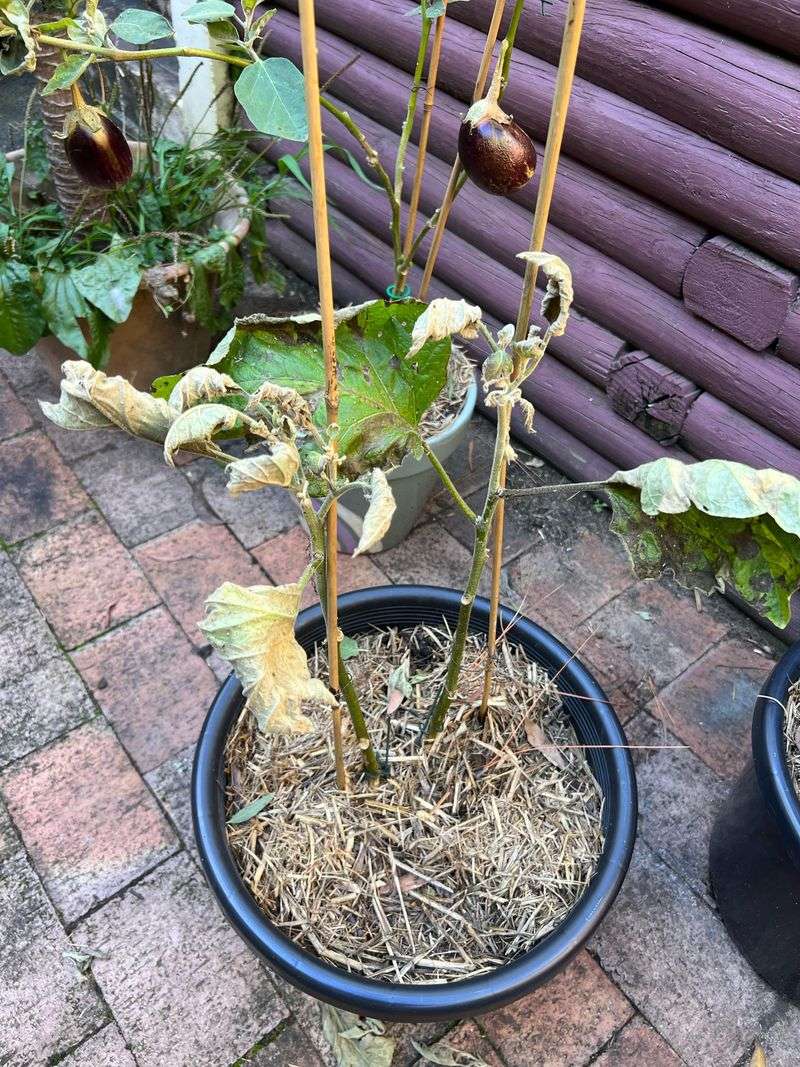
Stabilizing moisture is a reasonable first correction, but if flowers continue dropping after the root zone is consistently moist and well-drained, the cause is somewhere else. UC IPM identifies several distinct contributors to blossom drop, including extreme temperatures, incomplete pollination, and insufficient moisture, as separate problems that can each cause the same symptom.
Flower drop alone cannot tell you which one is in charge.
Work through the list methodically. Check temperature exposure, especially overnight lows and highs during the past week.
Look at light levels if the plant is shaded by nearby growth. Inspect leaves and stems for pest damage or unusual spotting.
Consider whether excess nitrogen from a recent fertilizer application may be pushing leafy growth at the expense of fruit set. UMN Extension cautions that excess nitrogen can produce vigorous foliage with slower fruiting, and recommends soil testing rather than adding fertilizer based on symptoms alone.
Some flowers will always fail, and that is normal. The pattern worth acting on is repeated, widespread loss paired with wilt, root symptoms, pest evidence, or conditions that point clearly to one of these causes.
Consistent moisture is the first watering correction to make, not a universal explanation for every dropped flower.