
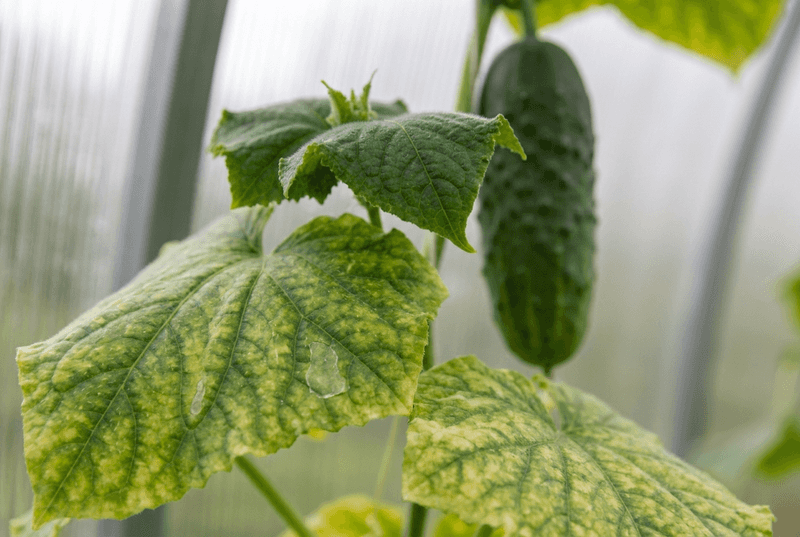
Cucumber vines can turn pale and slow down fast once summer heat peaks, and worried gardeners often reach for whatever remedy sounds promising. Epsom salt gets recommended constantly online, but whether it actually helps depends on what is really wrong with the plant.
This article walks through how to read your vine’s symptoms, stabilize its growing conditions, and decide whether magnesium sulfate belongs in your garden plan at all.
Pale cucumber vines need a diagnosis before they need a remedy
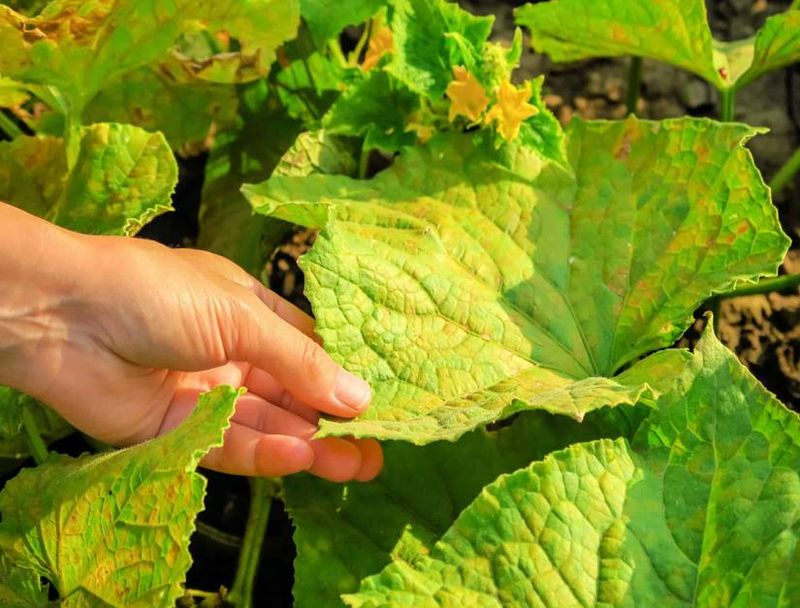
Grabbing a bag of Epsom salt and dissolving a spoonful into water feels like a quick fix, but a pale or sluggish cucumber vine is not a diagnosis. It is a symptom with many possible causes, and the treatment that helps one cause can make another worse.
According to UGA Extension guidance on vegetable nutritional deficiencies, yellowing cucumber foliage can stem from nitrogen shortage, iron shortage, magnesium deficiency, fungal disease, viral infection, root damage, or water stress – and several of these conditions look similar at first glance. Applying magnesium sulfate when the plant actually needs water, a fungicide, or a nitrogen source will not help and may create new problems.
Heat alone can stall growth and cause wilting or pale color in cucumbers without any nutrient deficiency being present. Root trouble from saturated soil, compacted beds, or disease can cut off nutrient uptake entirely, making a well-fertilized plant look starved.
Pests are another overlooked cause. University of Minnesota’s cucumber leaf discoloration diagnostic tool lists spider mites, aphids, and other insects as causes of discoloration that can mimic nutrient problems.
Florida disease guidance for cucurbits notes that viruses can produce yellowing and green-veined patterns that closely resemble nutritional disorders. The goal of this article is to help you evaluate Epsom salt as a targeted option – not to promise it will rescue every struggling vine.
Heat care comes before any fertilizer experiment
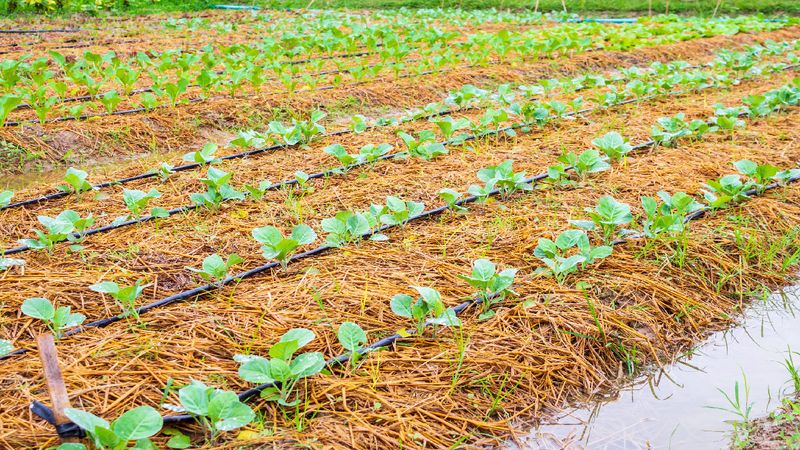
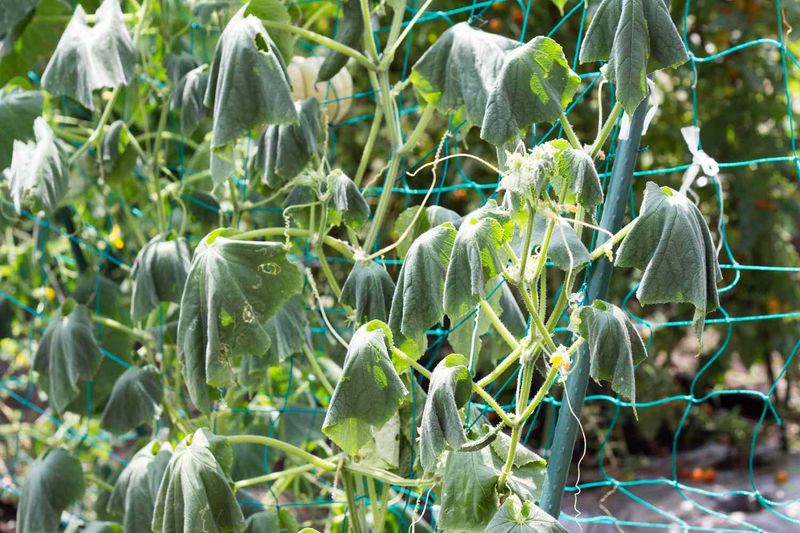
Before reaching for any fertilizer or supplement, a cucumber vine struggling in peak Southern heat needs its root zone stabilized. Heat stress can cause wilting, blossom drop, fruit abortion, and stalled growth even when soil nutrients are completely adequate, so moisture management is the first priority.
Extension guidance on vegetable irrigation strategies recommends watering deeply and consistently rather than giving shallow, frequent sips that wet only the top inch of soil. Deep watering encourages roots to grow downward where soil stays cooler and holds moisture longer.
Shallow watering keeps roots near the surface where heat and evaporation hit hardest.
Mulch applied a few inches deep around the base of the vine reduces evaporation, moderates soil temperature, and cuts down on the watering frequency needed to keep the root zone stable. University of Minnesota heat gardening guidance reinforces that mulch is one of the most effective tools for protecting summer vegetables during high-heat periods.
Temporary afternoon shade using row cover, shade cloth, or even a propped board can protect vines during the hottest part of the day. Florida summer vegetable production guidance and Florida edible landscape irrigation recommendations both favor drip or micro-irrigation at soil level over overhead watering, which can distribute water unevenly and increase foliage disease pressure.
None of these steps involve a fertilizer, and none of them can be replaced by one.
The leaf pattern that points to magnesium deficiency
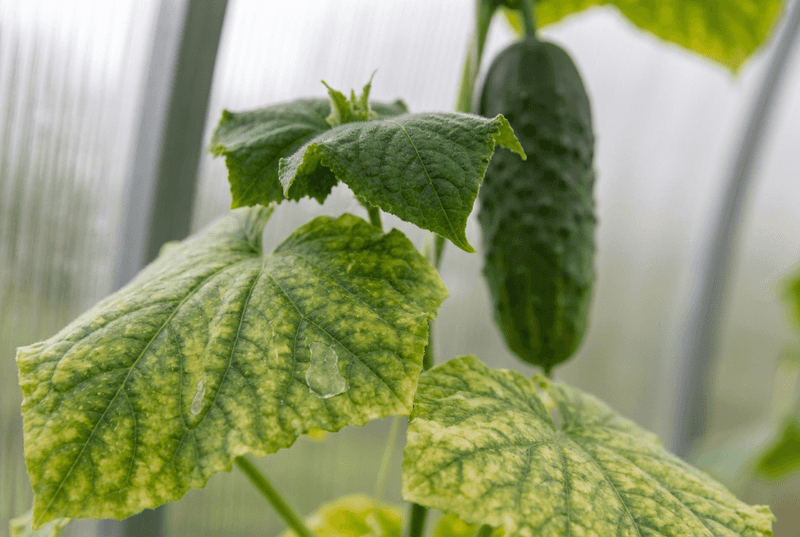
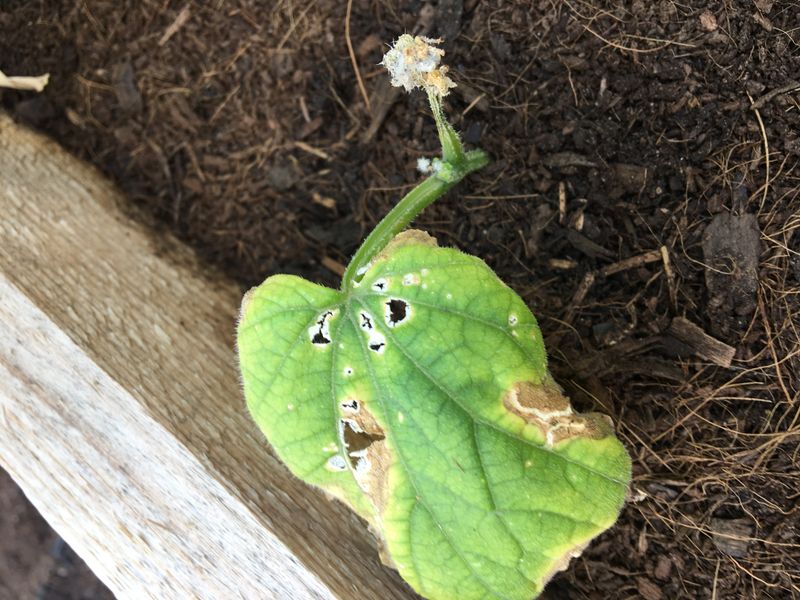
Magnesium deficiency has a recognizable pattern, and knowing it matters because several other problems can produce similar-looking foliage. The characteristic sign is yellowing between the veins – called interveinal chlorosis – that usually appears first on the older, lower leaves of the plant while the veins themselves stay green.
UGA Extension’s vegetable nutritional deficiency guide describes how severe magnesium deficiency can progress from interveinal yellowing to browning, curling, tissue death, and eventually leaf drop. The progression tends to move upward from older foliage as the plant shifts its limited magnesium supply toward newer growth.
Nitrogen deficiency looks different. It commonly causes general yellowing that starts on the oldest leaves but affects the whole leaf surface rather than leaving the veins green.
Iron deficiency, by contrast, tends to show up on the newest growth first – the opposite of magnesium – and also leaves veins green against a pale background. IFAS guidance on plant nutrient deficiencies and University of Missouri magnesium guidance both emphasize that accurate pattern recognition is essential before treating.
Sandy, acidic, or heavily leached soils are more prone to magnesium loss, as is soil that has received heavy potassium fertilization. University of Kentucky diagnostic guidance notes that excess potassium can competitively block magnesium uptake at the root surface.
Recognizing the pattern is an important first step, but symptoms alone do not confirm the diagnosis – other causes can produce nearly identical foliage.
Testing and plant inspection help determine whether magnesium sulfate fits
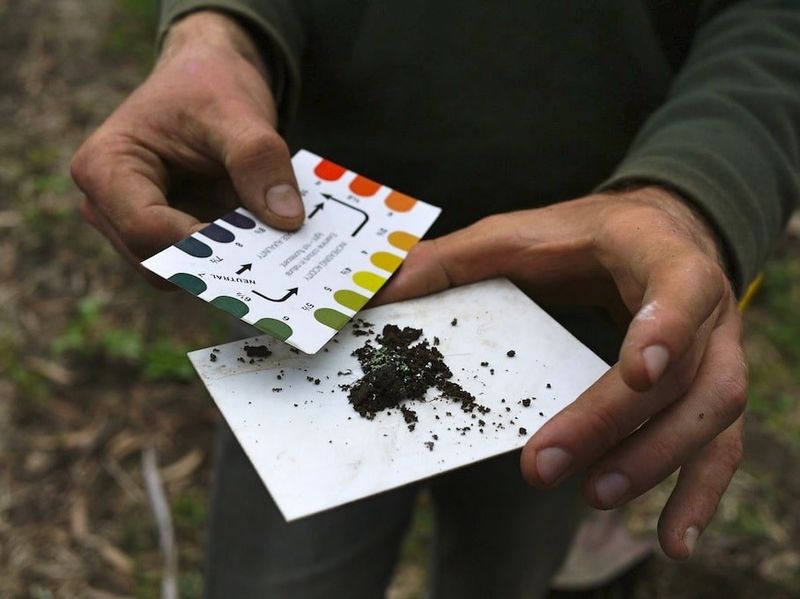
Visual clues point you in a direction, but a soil test turns a guess into a decision. Testing soil pH and magnesium levels before applying any amendment is the responsible path, and it protects you from adding a nutrient the plant does not need.
UGA’s cucumber production guide recommends a soil pH of approximately 6.0 to 6.5 for cucumbers and advises using soil test results to guide fertilizer and lime applications rather than treating based on appearance alone. Outside that pH range, nutrients can become unavailable even when they are physically present in the soil – a plant can starve for magnesium in a bed that has plenty of it.
That is the key complication: adequate soil magnesium does not rule out an uptake problem. Florida cucumber production guidance and University of Missouri magnesium research both explain that pH imbalance, excess potassium, waterlogged soil, drought stress, or poor root health can all prevent a plant from absorbing magnesium that a test shows as present.
Tissue testing, where available and appropriate, can help confirm whether deficiency is actually occurring in the plant rather than just suspected from soil data.
Before treating anything, flip the leaves over and look for mites, aphids, or disease signs. Check the roots for rot or compaction.
Inspect irrigation lines for clogs or uneven coverage. Once you have ruled out pests, disease, and water problems, you can compare the amendment options.
Mississippi State Extension guidance on calcium and magnesium explains that dolomitic lime supplies magnesium while raising soil pH, making it the right choice when the soil is also too acidic. Magnesium sulfate, on the other hand, supplies soluble magnesium without affecting pH, so it fits when magnesium is low but liming is not needed.
Neither amendment should be chosen based on leaf color alone.
Epsom salt is a targeted magnesium supplement, not a summer tonic
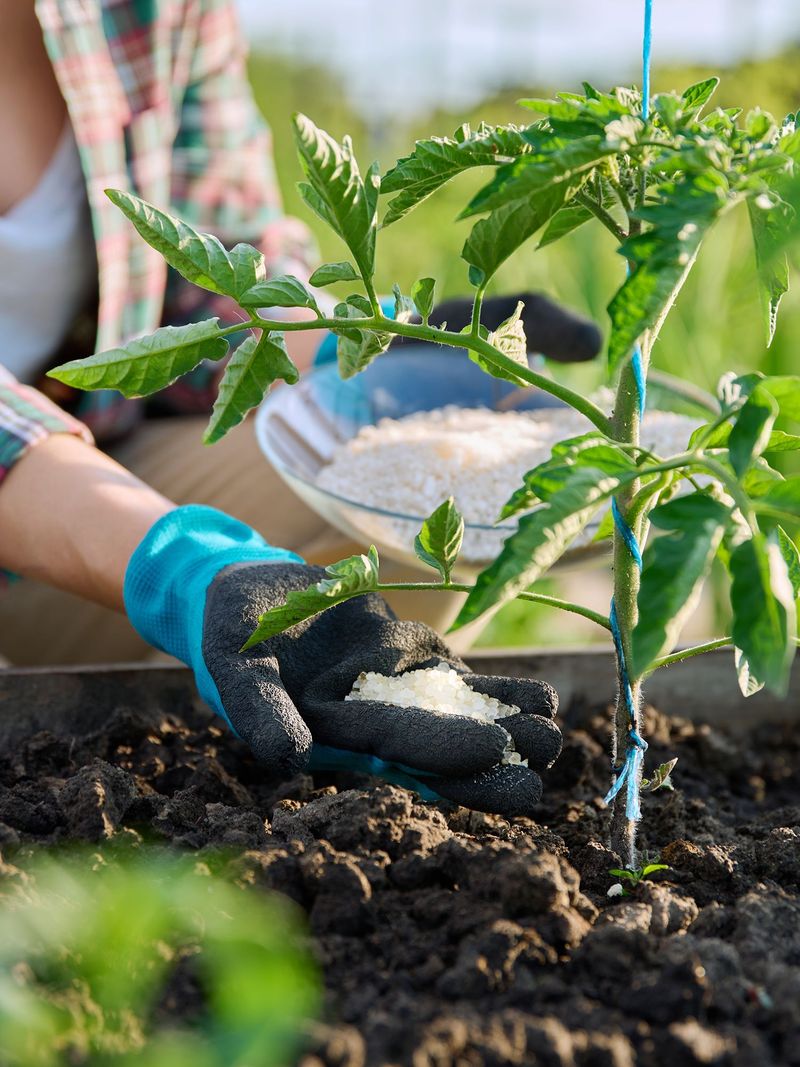
Epsom salt is magnesium sulfate. Mississippi State Extension’s guide to calcium and magnesium in crop production puts its magnesium content at approximately 10 percent, with sulfur supplied as well.
Both nutrients can matter to vegetable crops, but supplying them when they are not limiting growth does not help the plant and can cause harm.
University of Minnesota Extension’s review of common soil amendments is direct: there is no evidence that Epsom salt increases productivity when soil magnesium is already adequate. The same source states that it will not prevent blossom-end rot and that excess magnesium can actually worsen calcium uptake – an important caution for gardeners who are already concerned about fruit quality.
When testing and the full diagnostic picture indicate that magnesium deficiency is genuinely limiting growth, magnesium sulfate can be a reasonable soluble correction when liming is not needed. It dissolves readily and can be applied to soil according to product label directions and test-based guidance.
That conditional path is where the product has a legitimate role.
What it cannot do is substitute for water management, root care, or disease treatment. Applying it to a vine suffering from heat stress, root rot, a viral infection, or simple nitrogen shortage will not reverse those problems.
Penn State Extension and University of Minnesota both flag Epsom salt as a soluble salt that can contribute to nutrient imbalance, salt buildup in the root zone, and water contamination when misapplied. Treat it as a targeted correction, not a general summer tonic.
Avoid shortcuts that can worsen a cucumber bed
Routine Epsom salt applications – every two weeks, every watering, or any other fixed schedule – are not a safe practice without diagnostic information to back them up. Repeated use of a soluble salt can build up in the root zone, interfere with calcium and potassium uptake, and stress the plant further rather than help it.
Utah State Extension’s guidance on arid and saline soils explains how soluble salts accumulate with repeated applications and can damage roots by drawing water out of plant tissue rather than allowing uptake. Florida and Texas gardeners with sandy soils, high irrigation demands, or naturally higher soil salinity face added risk from any product that increases salt load in the bed.
Foliar spraying is not an automatic shortcut. University of Kentucky diagnostic guidance notes that foliar applications are generally ineffective for correcting significant deficiencies, and University of Minnesota warns that Epsom salt sprays can scorch leaves, especially in hot, sunny conditions.
Any foliar use should be tested on a small portion of the plant first, applied during cooler parts of the day, and guided strictly by product label directions.
Overfertilizing to force faster vine growth creates a different problem. UGA’s cucumber production guide warns that excessive fertilizer can push lush vine growth while actually reducing fruit set.
Problems like mites, viruses, fungal disease, waterlogged roots, drought, and pH imbalance each require their own response. Plant health guidance on nutrient deficiency diagnosis reinforces that misidentifying a cause and treating for the wrong one delays recovery and can compound the original stress.
Matching the treatment to the actual problem is always faster than cycling through remedies.
Correct the limiting problem instead of chasing a greener vine
Working through a clear sequence protects both the plant and your time. Start by stabilizing moisture and heat conditions – consistent deep watering, mulch, and soil-level irrigation address the most common summer stressors before anything else.
Extension irrigation guidance for vegetables makes the case that root-zone stability is the foundation every other intervention depends on.
Next, identify the leaf pattern carefully and inspect the plant for pests, disease, and root problems. A confirmed interveinal chlorosis pattern on older leaves, combined with a soil test or tissue test showing low magnesium, gives you a reasonable basis to consider magnesium sulfate.
UGA Extension’s nutritional deficiency guide and UGA’s cucumber production guide both tie amendment decisions to test results rather than visual assessment alone.
University of Minnesota Extension is clear that Epsom salt cannot substitute for irrigation, root care, disease management, or pest control – it addresses one specific nutrient gap and nothing else. Correcting the actual limiting factor may improve foliage color and growth rate, but no single amendment guarantees renewed cucumber production.
A vine that recovers well is one whose real problem was found and fixed – not one that received the most popular remedy.