
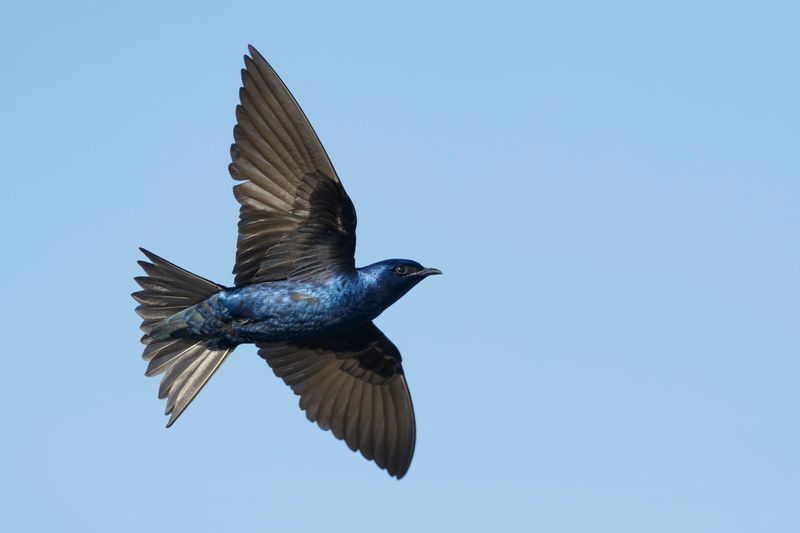
Fire ant mounds have a way of appearing in the worst spots, right in the middle of a raised bed or along a path where kids and dogs walk barefoot every morning. This summer, a lot of North Carolina homeowners have been wondering whether native birds, especially Purple Martins, can take care of the problem without a can of pesticide. The short answer is that Purple Martins genuinely do catch flying fire-ant queens during mating flights, but that is a long way from clearing out the established mounds in your garden beds. Understanding what the birds actually do, and what they cannot do, helps you protect your family and your yard wildlife at the same time.
Identify the mound before choosing a response
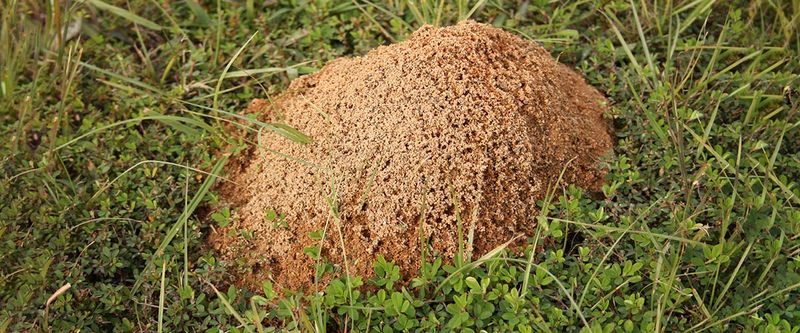
Plenty of ants build mounds in North Carolina soil, and not every low dome in a garden bed belongs to a red imported fire ant colony. Getting the identification right matters because the response that works for fire ants is specific, and treating the wrong mound wastes time while leaving a real hazard untreated nearby. A misidentified mound can also mean applying a pesticide product where it was never needed.
Red imported fire ants have a recognizable look once you know what to check. NC State Extension’s arthropod pest guide describes the workers as reddish-brown with noticeably darker abdomens. Look for two distinct bumps, called nodes, on the narrow segment that connects the thorax to the abdomen. That two-node structure is a quick field marker that separates fire ants from many of the harmless ant species common in North Carolina yards.
The mound itself is another clue. Fire ant colonies build loose, irregular soil mounds that have no visible opening at the top. Workers enter and exit through underground tunnels instead. Freshly built mounds can appear after rain or in warm weather when the colony is actively expanding, which is exactly why summer garden beds in the Piedmont and coastal plain tend to see new activity.
A confirmed fire-ant mound near a walkway, play area or pet run deserves a prompt response. Stings from a disturbed colony are painful and can cause serious reactions in some people and animals. Framing identification as the first step is not about stoking alarm. It is about making sure that a homeowner who wants to support backyard wildlife does not accidentally leave a genuinely hazardous colony alone because they assumed it was something harmless.
Purple Martins catch reproductive ants in flight
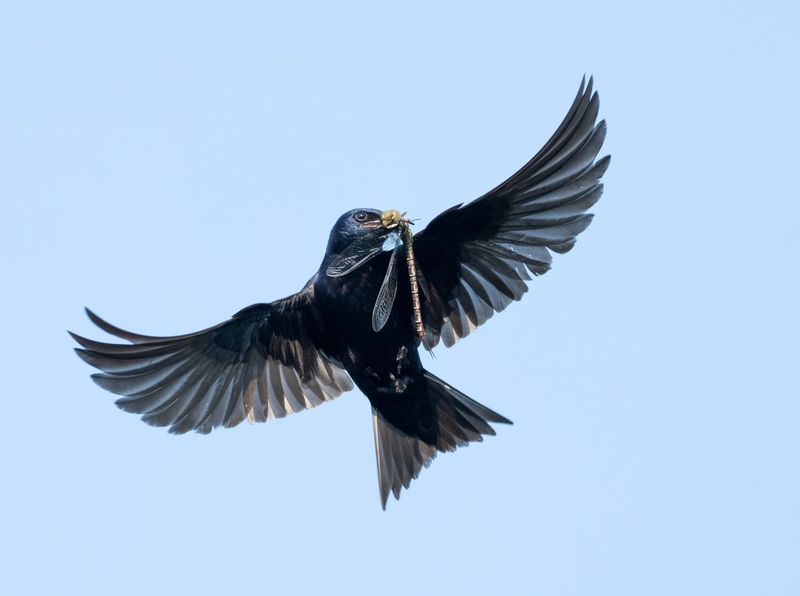
Among all the birds that eat ants in some form, Purple Martins have attracted the most scientific attention in connection with fire ants, and for a specific reason. They are aerial insectivores, meaning they catch virtually everything they eat while flying. Winged ants, including the reproductive queens and males that fire-ant colonies release during mating flights, are exactly the kind of prey a fast, agile bird catches in open air.
A peer-reviewed study on aerial insectivores and invasive fire ants found that Purple Martins consumed substantial numbers of red imported fire-ant reproductives, particularly queens, during those mating flights. The researchers noted that removing queens before they land and start new colonies could theoretically affect how fire ants spread. That is a genuinely interesting finding, and it is the strongest bird-specific evidence available on this subject.
The study also made something else clear. The possible benefit relates to dispersing queens, not to the workers and protected queen already living inside an established underground colony in your garden bed. The researchers acknowledged that what effect, if any, this predation has on fire-ant population density or range expansion remained uncertain. The study documented consumption, not colony suppression.
Purple Martins are native to North America, and their life history profile at Cornell Lab of Ornithology confirms that they spend most of their foraging time in the air, sweeping large open areas for flying insects. Their diet is genuinely broad, covering beetles, dragonflies, moths and winged ants. The fire-ant connection is real, but it sits inside a much larger foraging picture. Thinking of Purple Martins as a targeted fire-ant remedy misreads what the birds are doing and sets up unrealistic expectations for anyone hoping to skip mound treatment this summer.
Why bird predation does not replace mound treatment
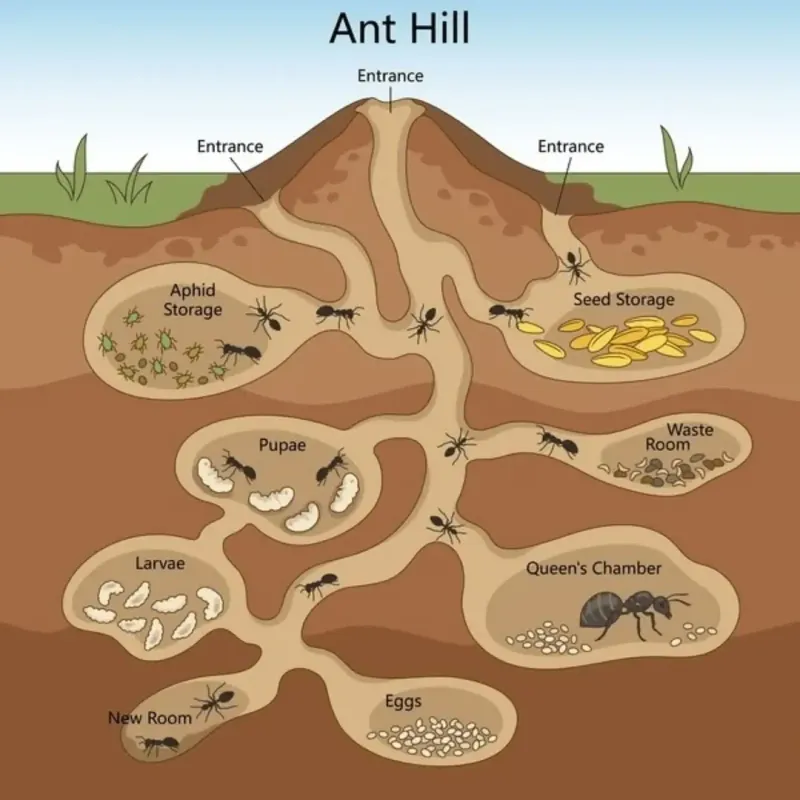
A fire-ant colony is not a surface problem. The queen, the brood and the bulk of the worker population live in a network of tunnels and chambers that can extend more than a foot below the soil surface. What a bird sees from the air, or what a backyard observer sees from a garden path, is a tiny fraction of the actual colony. Catching a few hundred flying reproductives during a mating flight does not touch the workers guarding that underground structure.
University of Georgia Cooperative Extension’s fire-ant management guide addresses this directly. Birds, lizards, spiders, toads and other predators do eat fire ants or reproductive queens in various situations, but Extension guidance is candid that these animals are generally not useful as a primary control method. The recommended biological approach for homeowners is to preserve competing native ant species, which can slow fire-ant establishment, rather than counting on vertebrate predators to manage existing colonies.
The peer-reviewed martin study is worth revisiting here with precise language. Researchers found meaningful consumption of flying reproductive ants, and they raised the possibility that this predation might influence fire-ant dispersal. They did not find reduced mound density in areas with martin activity. They did not demonstrate colony elimination or dependable suppression of residential infestations.
Those are not minor gaps. A homeowner with a mound in a vegetable bed or near a play set needs a method that reaches the queen and workers underground, and bird predation from the air does not do that.
Extending the martin finding to other North Carolina birds adds another layer of uncertainty. Bluebirds, chickadees, cardinals and most other familiar yard birds forage on or near the ground and may occasionally eat worker ants, but no comparable research documents reliable fire-ant-mound control from those species. The martin evidence is specific to aerial capture of flying reproductives. Treating it as proof that native birds broadly manage fire-ant colonies would stretch the data further than it goes.
Support Purple Martins as wildlife, not as pest control
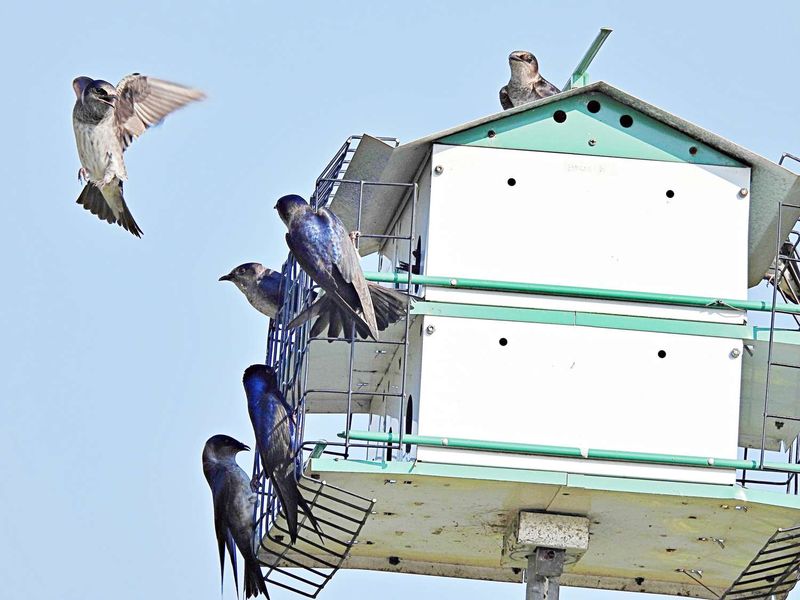
Supporting Purple Martins in a North Carolina yard is a worthwhile project on its own terms, entirely separate from fire-ant management. These birds are striking, social and genuinely entertaining to watch, and providing the right habitat can bring a colony back to the same house year after year. Just keep the goal honest: you are doing this for the birds, not as a substitute for treating a hazardous mound.
Eastern Purple Martins have become almost entirely dependent on human-supplied housing. Cornell Lab’s Purple Martin life history page explains that the species in the eastern United States now nests almost exclusively in multi-compartment houses or clusters of gourds. A successful martin house requires open foraging space nearby, ideally fields, water or low-mowed areas where the birds can hunt at low altitude. Dense tree cover directly around the pole makes the site less attractive and harder for the birds to navigate.
Ongoing management is non-negotiable. European Starlings and House Sparrows are both cavity-nesters that will claim martin compartments quickly if left unchecked, and their presence can prevent martins from establishing or returning the following season. Checking the house regularly and removing invasive-bird nests is part of the commitment. Purple Martin range maps also show that the species is migratory and may not be present at every North Carolina property throughout the entire summer.
Their arrival and departure timing varies, so a yard without suitable open habitat or an established colony may simply not attract them.
Broader wildlife-support practices can complement a martin house without overpromising anything about pest control. NC State Extension’s native-plant landscaping guidance recommends incorporating native plants, reducing the intensity of lawn management and leaving small areas of lightly managed vegetation to provide food and cover for native wildlife. Those choices benefit a wide range of birds and insects. They will not eradicate fire ants, but they create a yard that supports the ecological relationships North Carolina homeowners who care about both family safety and native wildlife are trying to encourage.
Use bait to reach the colony
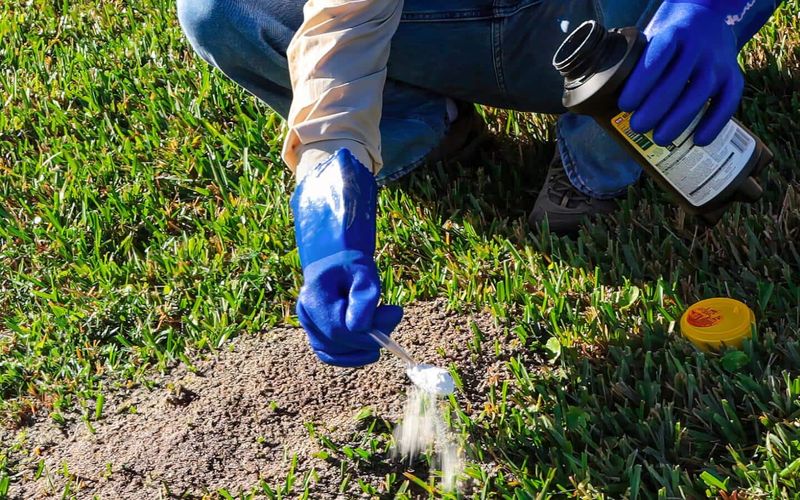
Hot summer afternoons in North Carolina can actually work against a bait application. When soil temperatures climb above roughly 90 degrees Fahrenheit, fire-ant workers slow their foraging activity and spend more time deep in the colony. Bait sitting on hot soil while workers stay underground is bait that does not get picked up. University of Georgia Cooperative Extension recommends applying bait during mid-summer in the late afternoon or early evening, when the soil has cooled enough for workers to resume surface foraging.
Before committing to a full application, run a quick field test. Place a small pinch of fresh bait on the soil near the mound, but not directly on top of it, and watch for 10 to 30 minutes without disturbing the mound. If workers find and start carrying the bait within that window, conditions are right and a proper application is likely to work. If no workers appear, wait for cooler weather or a different time of day and test again.
Bait works because it is formulated to look and smell like food. Workers pick it up and carry it back into the colony, where it gets shared with other ants and eventually reaches the queen. That process is what makes bait effective against the parts of the colony you cannot see. Simply knocking down a mound or treating visible workers on the surface does not solve the problem underground.
NC State Extension’s fire-ant management guidance distinguishes between two approaches depending on how widespread the infestation is. For a small number of troublesome mounds, individual mound treatment or targeted bait placement is appropriate. Where fire ants have spread across a larger area of the yard, broadcast bait can be used where the product label permits it. Always read the label for the specific product you have, because label terms vary.
Vegetable gardens require extra attention to label language. A product cleared for lawn use may carry restrictions that prohibit its use near edible crops, food plants or harvested produce. For garden beds, Extension guidance points toward managing the colonies in the surrounding landscape and treating the perimeter at sites the label specifically allows, rather than assuming a turf product can go directly into a vegetable bed.
Protect the garden, wildlife and label compliance
Every pesticide sold in the United States carries a label that is also a legal document. EPA registration requirements mean that using a product in a way that contradicts its label is not just ineffective, it is illegal. That distinction matters most when a homeowner moves a lawn insecticide into a vegetable garden without checking whether the label allows it. NC State Extension is direct on this point: a product approved for turf cannot automatically be used in a vegetable bed, and crop restrictions on the label exist for good reasons related to residue, pollinator safety and food safety.
Reducing unnecessary pesticide use is genuinely good for backyard wildlife, and EPA guidance on reducing pesticide impacts on wildlife recommends applying products only when and where needed, following label directions precisely and choosing application times that minimize exposure to non-target species. None of that requires leaving a dangerous fire-ant colony untreated near a play area or a pet run. The goal is thoughtful use, not avoidance of all treatment.
Boiling or very hot water is sometimes mentioned as a chemical-free option. University of Georgia Extension notes roughly 60 percent control when about three gallons are applied correctly, which is a meaningful limitation on its own. More important for garden use, hot water presents a serious burn hazard to anyone carrying or pouring it, and it can damage plant roots, soil organisms and desirable vegetation near the mound. It is not a universally safe alternative.
Fire ants also harm wildlife directly, and that matters for anyone trying to run a yard that supports native birds. Research on invasive ants and native bird behavior found that fire ants altered parental foraging and provisioning in eastern bluebirds, leaving nestlings in poorer body condition. A separate study linked red imported fire ants to reduced nest survival in susceptible songbirds. Those findings apply to specific studied species and situations, not every bird in every yard, but they make clear that leaving fire-ant colonies unmanaged is not automatically the wildlife-friendly choice.
NC State Extension’s management page provides a practical starting point for choosing a label-compliant method suited to the site.
Combine habitat support with responsible follow-up
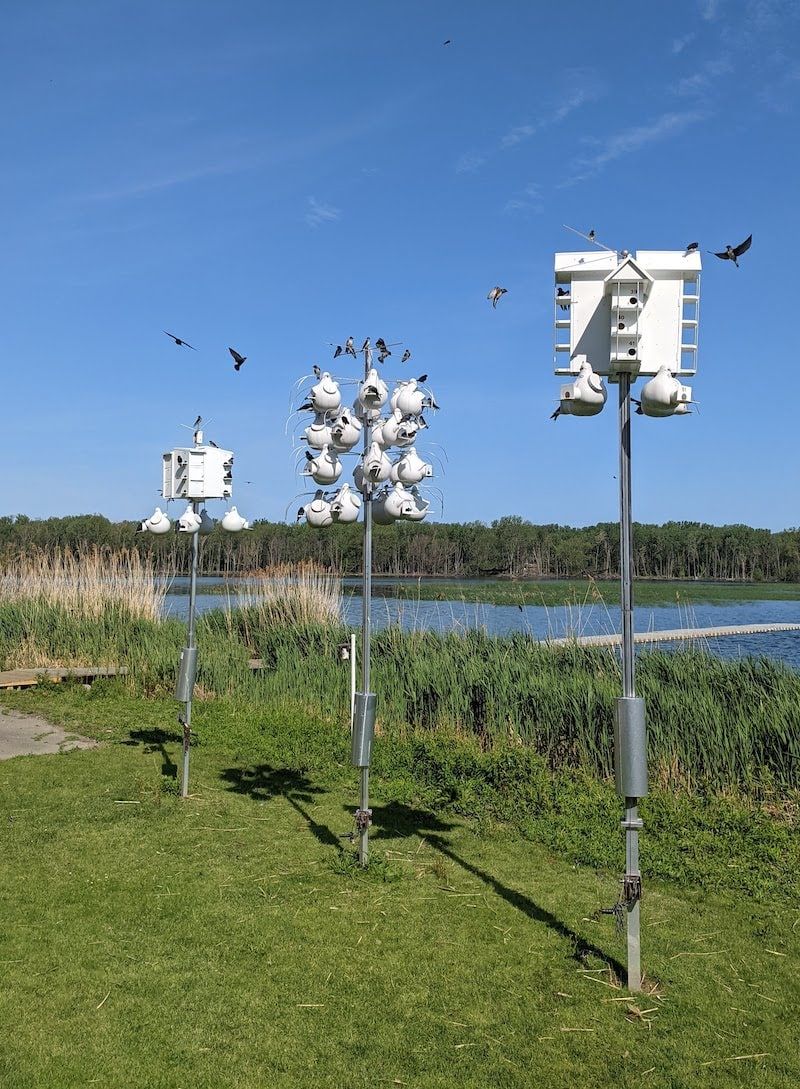
A yard that welcomes Purple Martins and one that manages fire-ant hazards responsibly are not in conflict. They require different tools and different timelines, but both fit inside the same protective-steward approach that most North Carolina homeowners are already trying to practice.
Start with habitat if the property suits it. An open yard with a properly managed martin house gives the birds a place to nest and forage. The aerial insectivore study showed that martins do catch flying fire-ant reproductives, and that predation may have some effect on how queens disperse. Treat that as a modest ecological benefit worth encouraging, not a replacement for colony treatment.
For established mounds in garden beds or near high-traffic areas, choose a label-compliant method, apply it at the right time of day for summer conditions, and check the treated area afterward. Extension guidance is clear that follow-up may be necessary, because some baits take weeks to work and insect-growth-regulator products can take months. New queens from mating flights can also establish fresh colonies after treatment, so NC State Extension recommends checking treated areas and retreating if new mounds appear.
The most useful thing a North Carolina homeowner can carry into summer is a clear sense of what each tool actually does. Purple Martins are real wildlife allies worth supporting, and a well-managed mound is a real safety measure worth completing. Neither one makes the other unnecessary, and together they describe a yard that is genuinely looking after both the people and the creatures that live in it.