
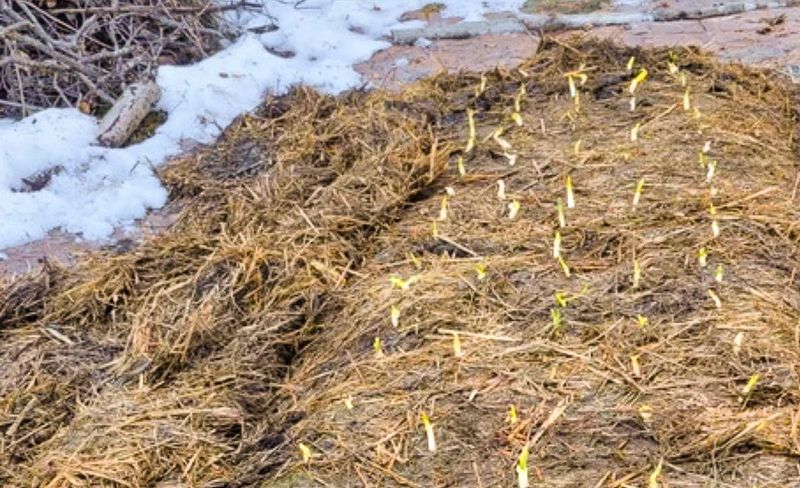
Picture a garlic bed after a hard freeze and a warm spell: a few cloves sit right on top of the soil, pushed up like tiny white pebbles. That is frost heaving, and it can happen when soil freezes and thaws again and again.
Whether it threatens your garlic depends on where you garden and how deep you planted. Here is how to tell if your bed needs protection and what to do about it.
November is not a universal garlic deadline
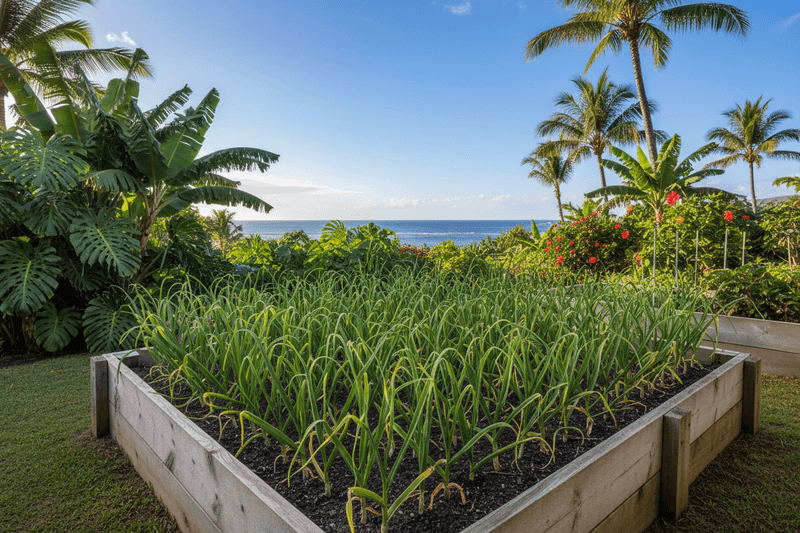
Garlic timing depends on where you live. UF/IFAS guidance says Florida gardeners can plant garlic from late fall through early winter, and it points to softneck types such as Artichoke or Creole as suitable choices.
It does not describe a straw blanket as a requirement there.
Texas is just as varied. The Texas A&M fall vegetable guide lists garlic planting months that run from July in one region to December in another.
A single “this week” task simply cannot fit the whole state.
Heaving advice matters most where soil freezes, thaws, and freezes again through the winter. If your winters stay mild, you may never see it.
If your area swings between icy nights and warm afternoons, it is worth planning for. Start with your own county extension office and its planting dates, then decide how much protection your bed needs.
Freeze–thaw cycles can lift shallow cloves
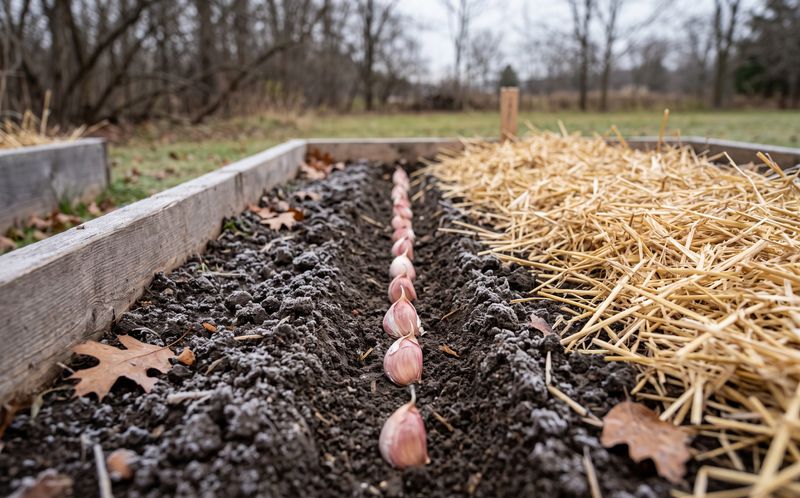
Soil that freezes and thaws over and over can shift and push up objects that sit near the surface. Garlic cloves planted too shallowly are easy targets.
The 2026 Southeastern U.S. Vegetable Crop Handbook warns that cloves covered too thinly can be dislodged by rain or by heaving from alternate freezing and thawing.
Notice the wording: it is a risk, not a promise. Many fall-planted cloves settle in and root without any trouble, especially when they are set at a good depth and the winter stays steady.
Rain can cause a similar problem. A heavy downpour can wash soil off shallow cloves and leave them exposed.
If you spot cloves sitting on the surface, press them back in at the right depth and top up the soil. Extra protection makes the most sense in beds that really do see repeated freezing and thawing.
Start with adequate soil cover
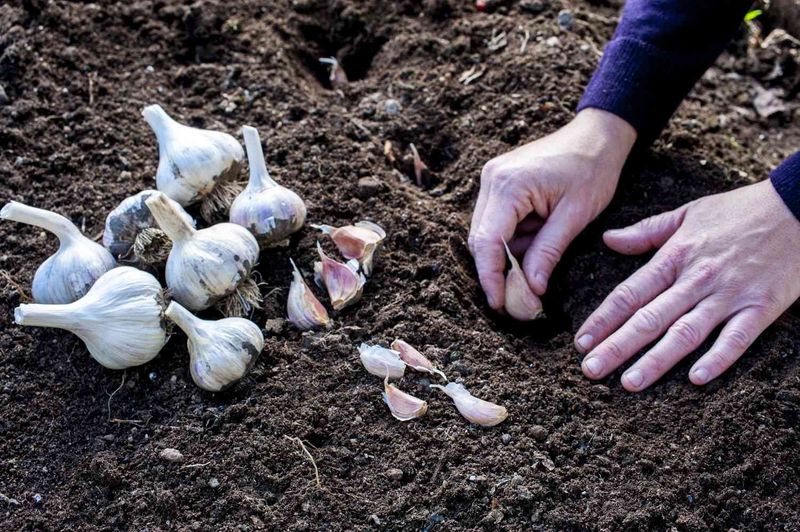
Before you think about straw, get the depth right. The Southeastern handbook says to cover the tops of cloves with 1 to 1.5 inches of soil, and it cautions against planting so shallowly that rain or freeze-thaw heaving can move them.
A Texas A&M Bexar County guide gives a planting depth of 1 to 2 inches and also warns that shallow cloves can wash out in rain.
Treat those numbers as source-specific guidance, not one rule for every Southern garden. Soil type, local climate, and your county extension office all play a part in the best depth for your bed.
Think of straw as a helper, not a stand-in. Mulch can add a layer of insulation, but it works best on top of cloves that are already tucked in at a sensible depth.
How much straw should you use?
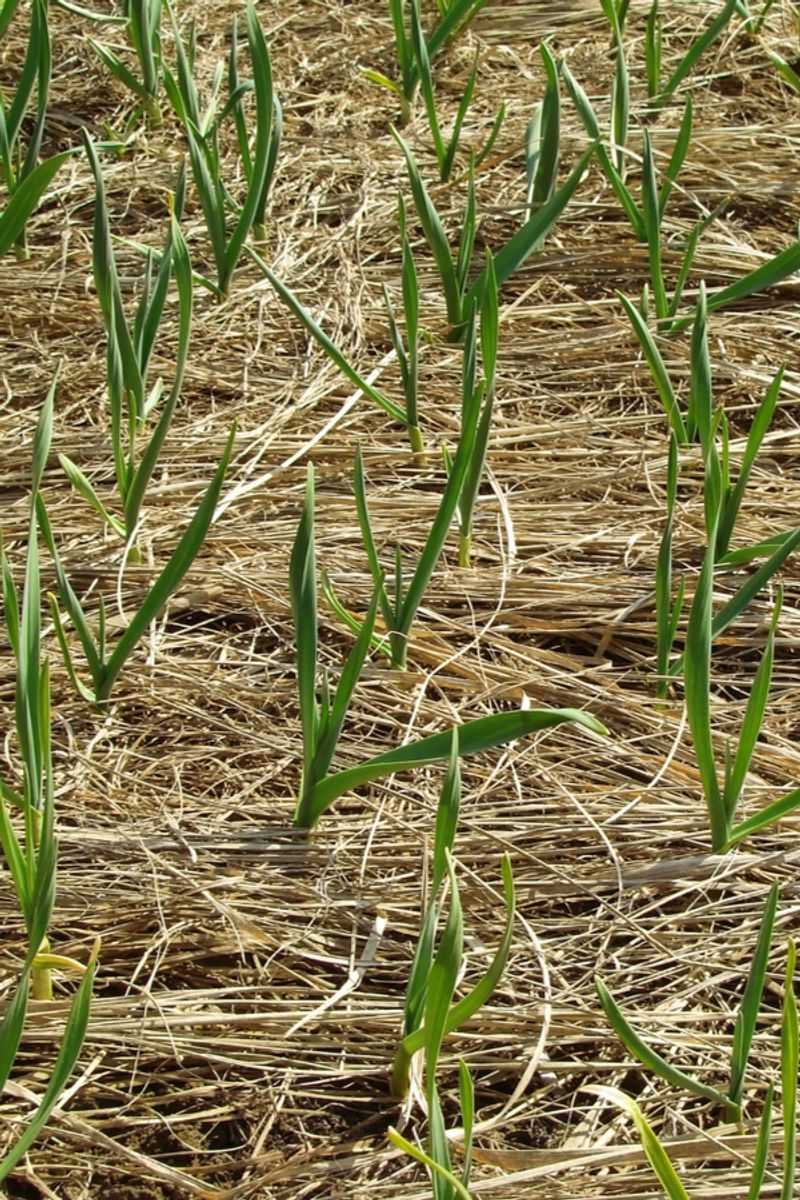
Gardeners often ask for a number, and the answer changes by region. Penn State Extension advises 2 to 4 inches of straw mulch to help discourage heaving.
Wisconsin Extension suggests 3 to 4 inches of clean straw to limit swings in soil temperature.
Both come from colder states, so treat them as regional recommendations rather than a South-wide prescription. A gardener with frequent hard freezes may lean toward the thicker end, while one with only occasional frosts may need far less.
Whatever amount you choose, use clean, weed-seed-free straw. Otherwise you may be planting a crop of weeds on top of your garlic.
Check with your local extension office for the depth that suits your climate.
Mulch timing and bed conditions matter
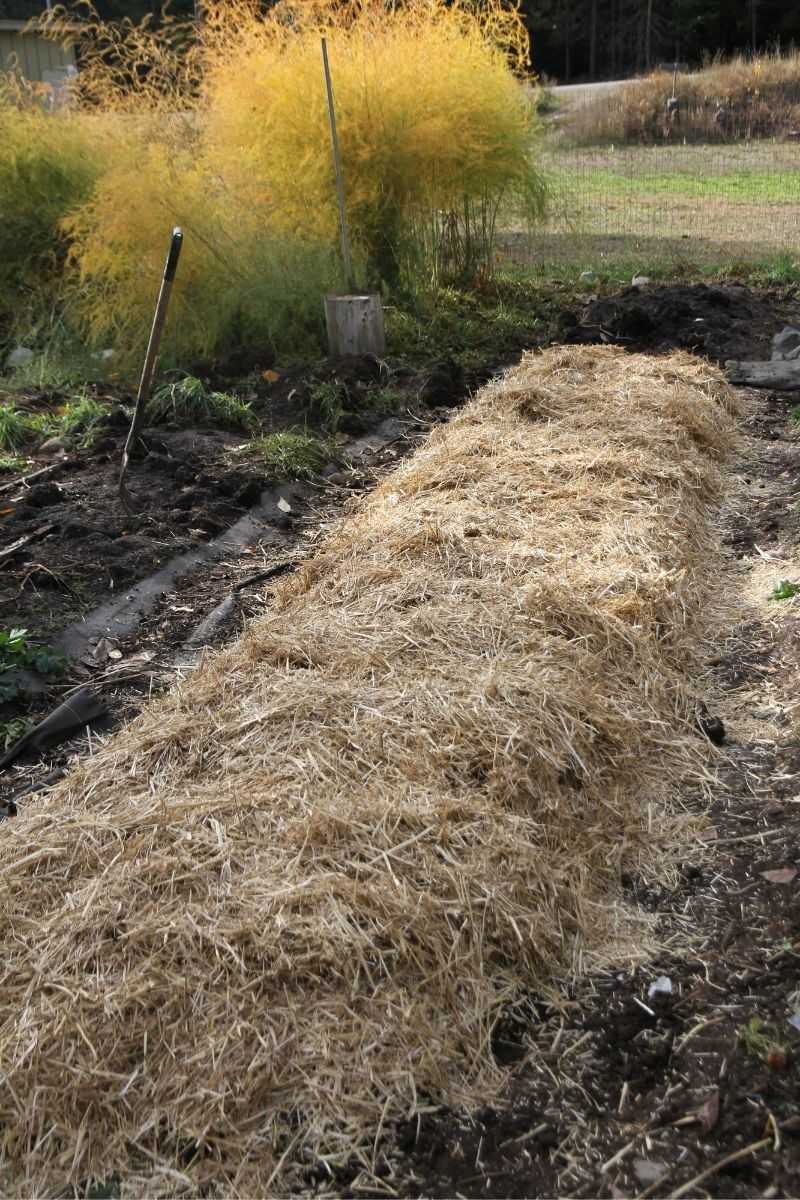
Even extension guides disagree on when to lay the straw down. Penn State describes applying it at planting.
UMass Extension recommends waiting until after the ground freezes. That gap is a good reason to follow local guidance instead of one fixed date.
Bed conditions count too. Wisconsin Extension cautions that heavy mulch can keep wet soil from drying out and may delay spring warming.
So more is not always better. If your bed drains slowly or stays soggy through winter, a thick blanket could hold in moisture you would rather lose.
A lighter layer, or pulling mulch back in early spring, may suit those spots better.
Call or visit your county extension office and ask when local gardeners mulch garlic and how thick they go. That quick check can save you from guessing.
Match protection to your winter
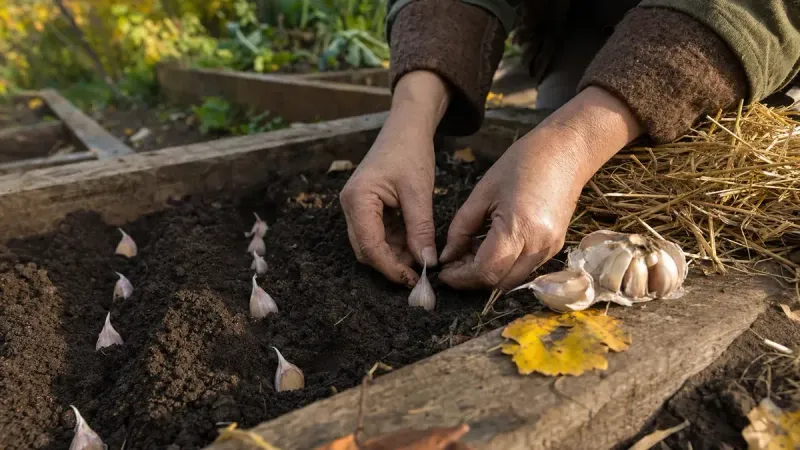
Work through it in order. First, check your local planting window.
Second, plant cloves at a depth your extension service recommends, such as the 1 to 1.5 inches in the Southeastern handbook. Third, add straw if your winters bring repeated freezing and thawing.
Florida’s guidance, with its late-fall-to-early-winter window, and Texas’s regional planting dates, which stretch from July to December, do not support a blanket November instruction. Mulch amounts and timing, like the 2 to 4 inches described by Penn State, remain regional too.
Straw can help lower heaving risk, but it is no guarantee. Good depth, sensible timing, and a quick look at the bed after a freeze all play a part.
Garlic is forgiving when you match your care to your own winter.