
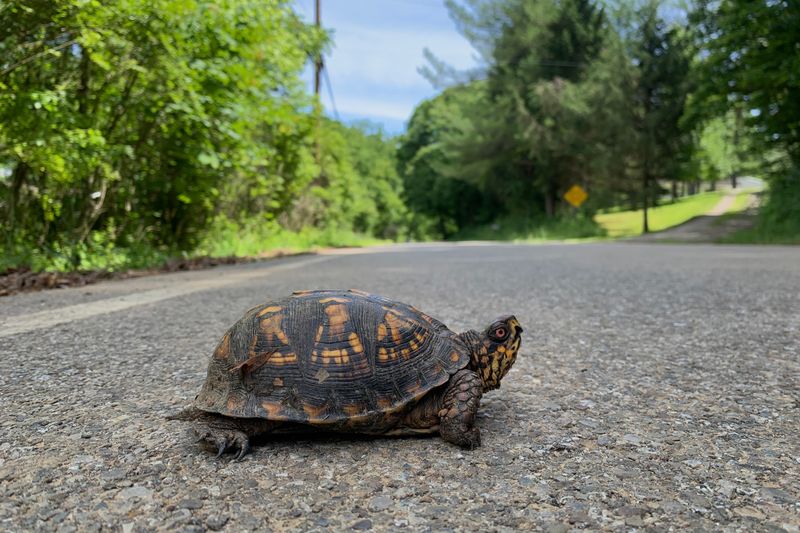
A turtle plodding through your hostas can make you want to step in and help. But for an eastern box turtle, the kindest move is often no move at all.
Carrying one off to the woods can scramble a map it has learned over many years. Here is how to tell when to leave it alone and when a short, careful move makes sense.
A box turtle in your garden is not automatically in danger
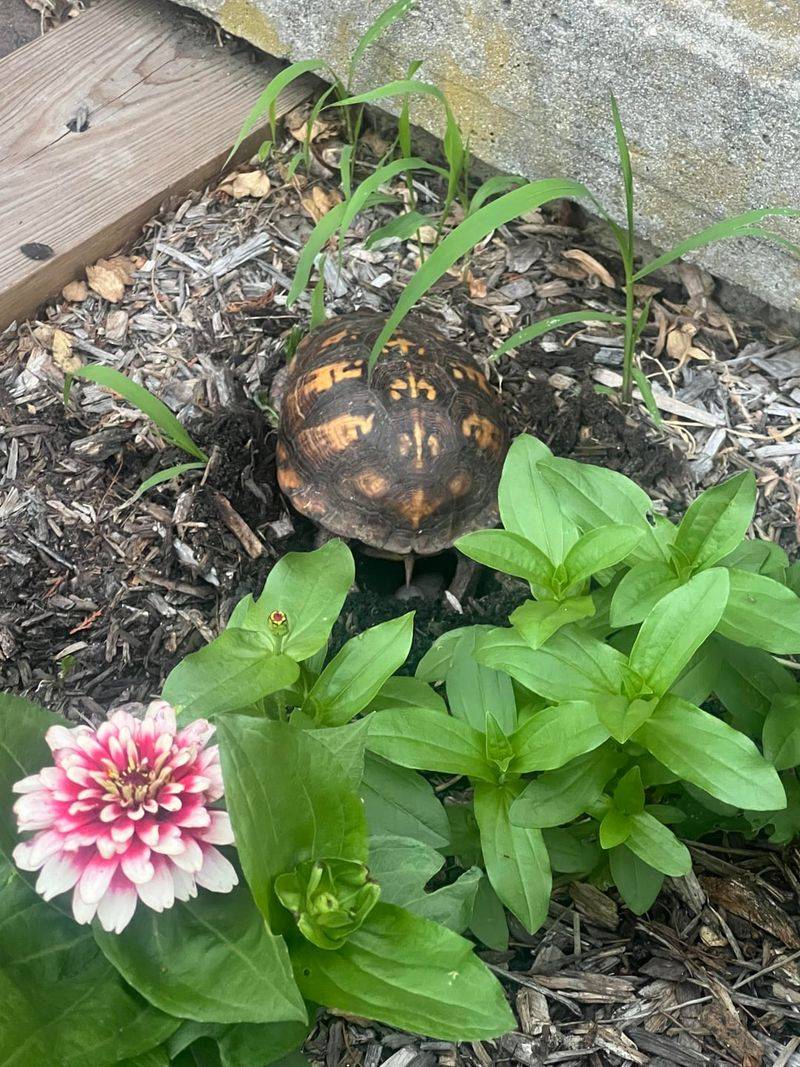
Spotting an eastern box turtle among your garden beds feels special, and it can also feel worrying. The first question to ask is simple: is the turtle hurt, or is it facing an immediate hazard?
If the answer is no, it is most likely just going about its day.
Eastern box turtles live in neighborhoods as well as forests. North Carolina Wildlife Resources Commission guidance notes that they make their homes in residential areas, and it advises against relocating them.
A turtle in your yard is not proof that it is lost, stranded, or in need of rescue.
Look at its condition and its surroundings. A turtle with a clean, intact shell that is walking, poking under leaves, or resting in the shade usually needs nothing from you.
A turtle on a busy road, or one that is visibly injured, sick, or stuck, is a different situation.
The rest of this article sorts those situations out. You will see why unnecessary moves carry risk, what researchers found, and what to do for an ordinary garden sighting, a road hazard, and a turtle that needs expert help.
Why an unnecessary move can create risk
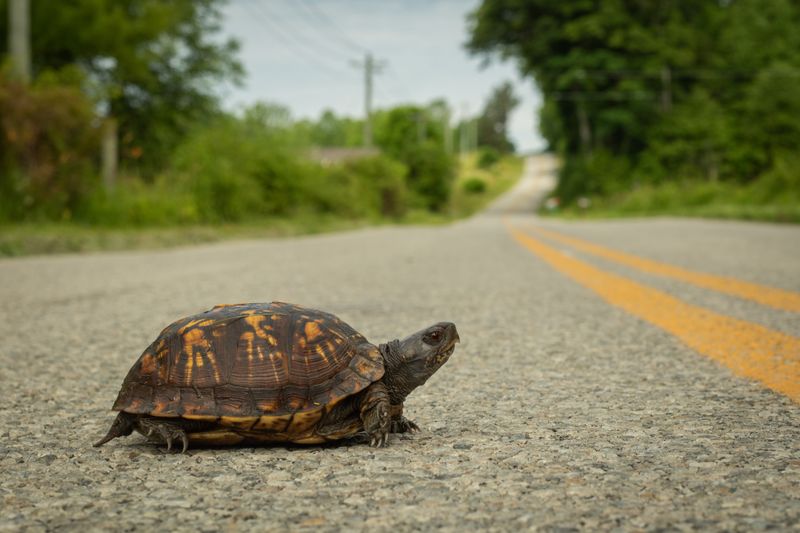
Picture learning one neighborhood so well that you know every shortcut, shady spot, and good place to find food. That is roughly how an eastern box turtle lives.
NC Wildlife describes a small territory, usually under two acres, and strong homing instincts.
A turtle set down in unfamiliar woods has to start over. It may need to find new shelter, new feeding areas, and safe places to wait out heat or cold.
It may also wander in search of home, which can mean crossing roads or other hazards along the way.
That is why wildlife guidance discourages relocation. A turtle that is simply passing through your garden has already got what it needs nearby, and moving it takes that away.
Small home range is a general pattern, not a rule for every animal. A scientific species review reports a lot of variation in measured home ranges across locations and study methods.
It also describes occasional long-distance movements and some transient turtles.
So your turtle might wander farther than a neighbor’s, and it may cross your yard on its way somewhere else. Even so, the safest default is to let it choose its own route rather than choosing one for it.
Research shows risk, not certain death
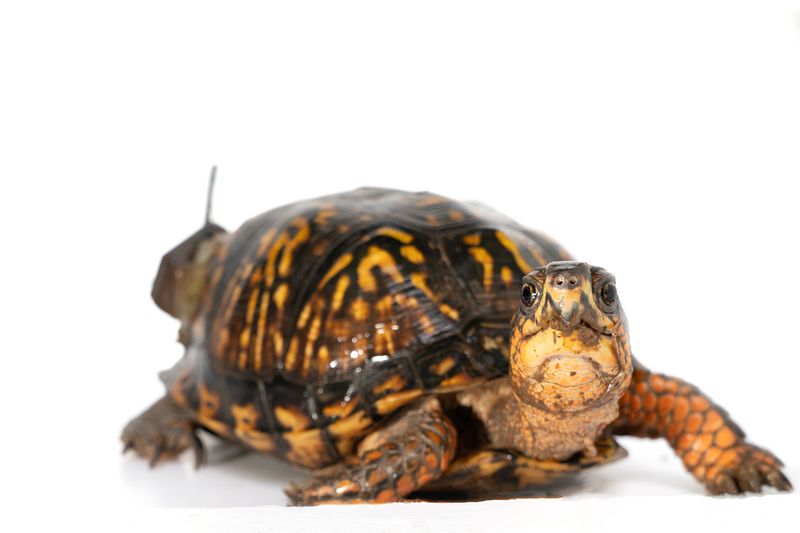
A North Carolina study by Hester, Price, and Dorcas, published in 2008, compared 10 relocated eastern box turtles with 10 resident turtles. The relocated turtles had larger estimated home ranges and moved farther each day.
Five of the 10 relocated turtles died or disappeared during the study, while none of the residents did.
That is a meaningful warning, but it is a small study. It shows that relocation can raise risk, not that every moved turtle will die.
The turtles in that study were also moved under research conditions, which do not match every brief move a homeowner might make.
A long-term Virginia study adds some balance. Orr, Ernst, and Boucher documented some relocated turtles persisting for years, including one recaptured almost 28 years later.
Those turtles had been moved to a protected reserve, often as part of mitigation work.
Put together, the studies point in one direction. Avoiding unnecessary moves is the careful choice, because some turtles do poorly and nobody can tell in advance which ones.
They cannot tell you how a particular turtle will fare after a short hop out of danger.
Give a healthy garden visitor space
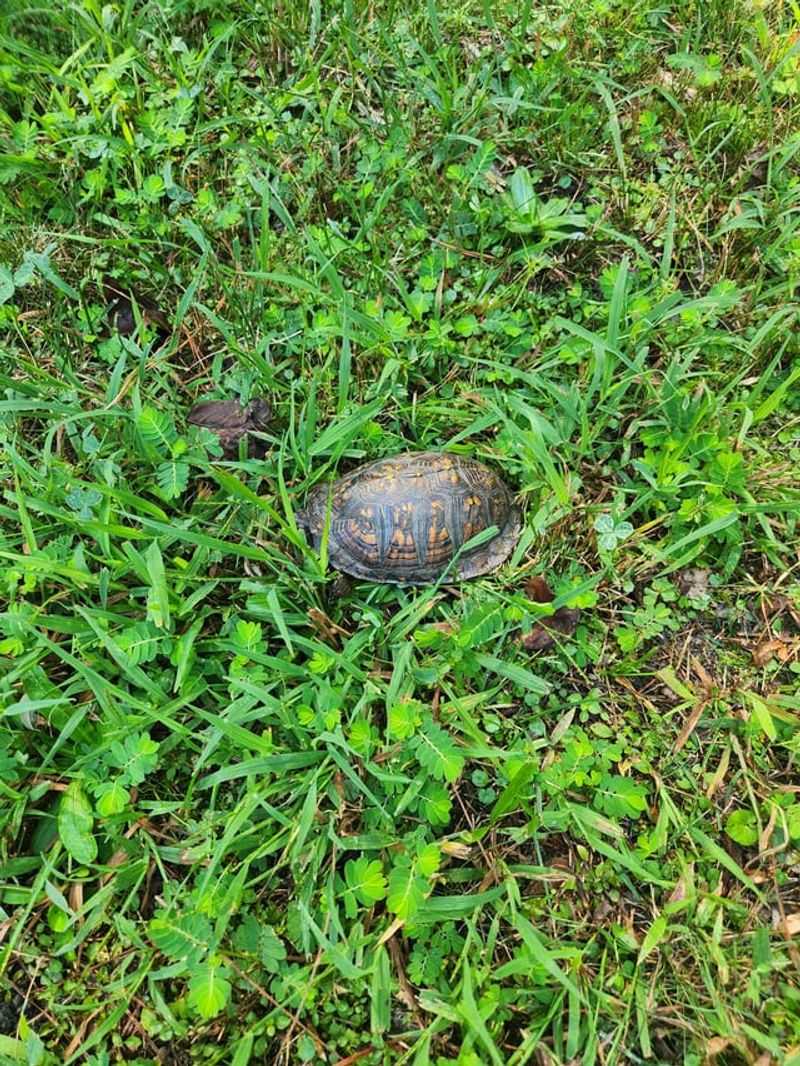
If the turtle is uninjured and not in immediate danger, your best move is to enjoy the view and step back. Keep pets and kids at a distance, skip the handling, and let it wander on at its own pace.
It may be gone by evening, or it may stay a day in the shade of your ferns.
Resist the urge to carry it to a woodlot or other spot you think is nicer. As NC Wildlife advises, do not relocate box turtles or take them home.
A turtle showing up in your beds is not an emergency.
What you can do is take a quick precaution before yard work. Walk the lawn and look under shrubs and in thick beds before you mow or trim.
Indiana’s wildlife agency gives this advice specifically for eastern box turtles.
A quick look will not catch every turtle, since their shells blend in well with leaves and mulch. Still, it is an easy habit that can reduce the chance of an accident.
Some gardeners also keep a patch of leaf litter and native groundcover in a corner, which gives a turtle a place to rest.
Move a road-crossing turtle only to safety
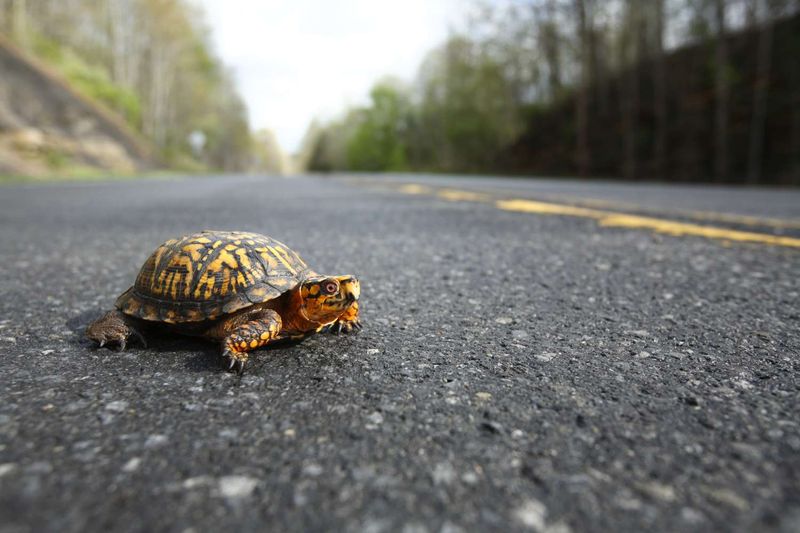
A turtle on pavement is a different case from one in a flower bed. Cars are an immediate hazard, and helping is reasonable if you can do it safely.
Your own safety comes first, so check traffic, pull off the road well away from the turtle, and skip the rescue if conditions look risky.
When it is safe to help, move the turtle across the road in the direction it was already heading. The U.S.
Fish and Wildlife Service gives the same advice for turtles generally. Turning it around only sends it back into traffic to try again.
Keep the move as short as possible. NC Wildlife recommends moving a box turtle the shortest distance necessary, ideally less than 50 feet.
Hold the turtle gently by the sides of its shell and keep it low to the ground. Never pick it up by the tail, which can hurt it.
Do not carry it to a pond, a creek, or a distant patch of woods, because this is a quick safety move, not a relocation.
Get expert guidance for an injured or trapped turtle
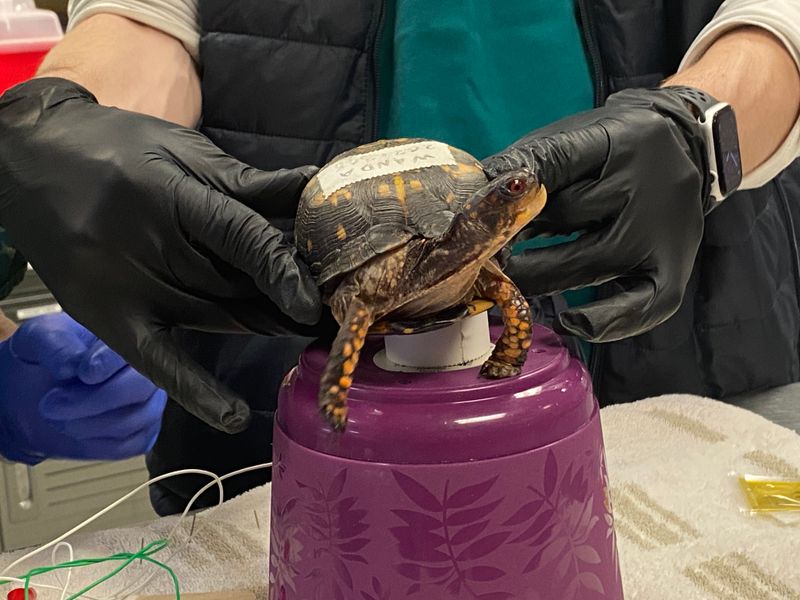
Advice changes when a turtle is hurt, sick, trapped, hit by a car, or attacked by a dog. In those cases, contact a licensed reptile rehabilitator rather than trying to treat it yourself.
Cracked shells and wounds can be tricky, and home care can do more harm than good.
Not every mark means an emergency, either. NC State’s Turtle Rescue Team notes that some old or minor injuries may not need intervention.
It asks people to record where the turtle was found and to consult before bringing it in. A turtle that recovers may be released near its original location.
Write down the address or nearest cross streets, and snap a photo if you can. That information helps the rehabilitator decide what to do next, and it matters for where the turtle goes home.
For local help, NC Wildlife Rehab’s help page lists 704-877-3037 for injured, trapped, sick, or otherwise concerning wildlife. If you are told to contain the animal, its guidance calls for a ventilated carrier, minimal handling, and no feeding.
Only do this if instructed, and check the NC Wildlife species page for the commission’s advice on contacting a licensed reptile rehabilitator.
Most of the time, the best turtle help is a little patience and a respectful distance.