
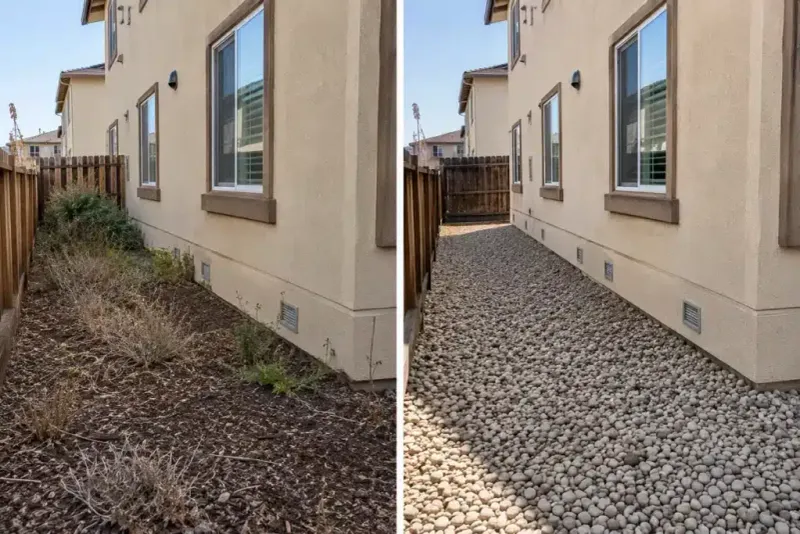
You may have spread bark mulch along your foundation because it looks tidy and keeps weeds down. In fire country, that same soft layer next to your walls is getting a hard second look.
California is working on proposed Zone 0 rules for the first five feet around homes, and the details matter before you rake anything out. Here is what is actually proposed, what is not yet settled, and what you can do now.
The statewide rule is not confirmed in effect
Some headlines suggest that mulch against your wall already breaks a new statewide rule. That goes further than the facts allow.
The Board of Forestry and Fire Protection adopted revised emergency Zone 0 regulations on November 5, 2026, according to its November summary of the proposal.
Adoption by the Board is only one step. The rules still go through review by the Office of Administrative Law (OAL), and then they need to be filed and given an effective date.
The Board’s emergency notice said it planned to submit the package on or after November 13. A planned date is not proof that anything was filed.
When I checked, the OAL page for emergency regulations under review did not list the proposal as of November 16. The recent actions page is another place to watch for updates.
Your local fire agency may have its own defensible space requirements, and those are a separate matter from the statewide proposal. So the calm reading is this: the statewide rule is proposed, not confirmed in effect, but combustible mulch by the walls is still worth rethinking.
The proposed five-foot zone has a limited scope
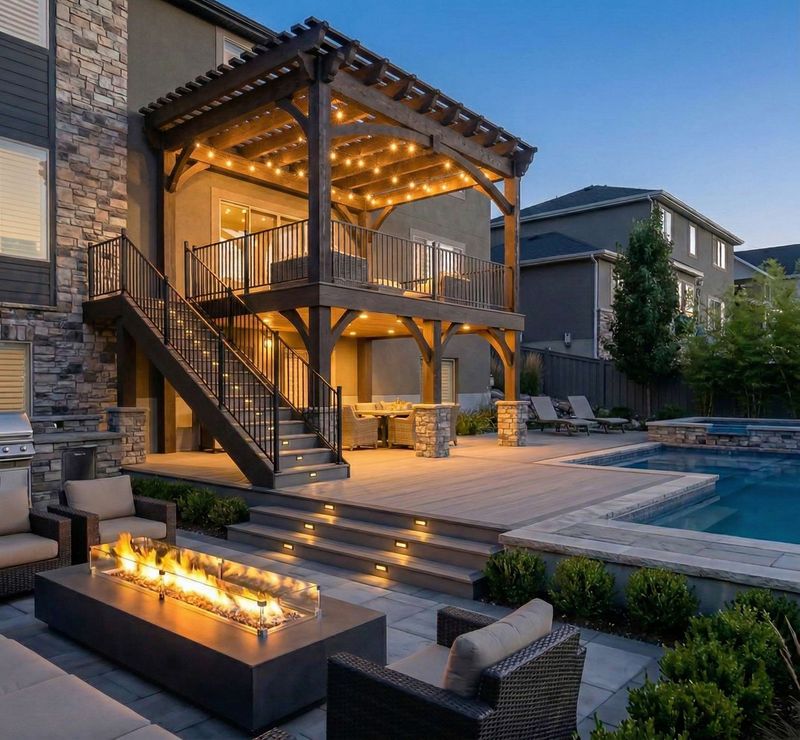
Zone 0 is the first five feet around a structure. The Board’s defensible space zones page explains the zone system, and the Board’s November summary says the area can include attached decks, stairs, and pergolas.
The proposed text sets the exact measurements and exceptions.
The proposal is not meant for every yard in California. As described in the Board’s November summary, the proposed statewide rules would cover State Responsibility Areas and Very High Fire Hazard Severity Zones within Local Responsibility Areas.
If your home sits outside those areas, local rules may still matter, but the statewide proposal would not apply in the same way.
Timing differs for new and existing homes. New construction would have to comply once the rule takes effect.
Existing homes would get a phase-in.
Combustible mulch and wood chips are Phase 1 items. Under the proposal, they would be removed within three years of the eventual effective date.
Because no effective date is confirmed, there is no calendar deadline to plan around yet. Treat any specific date you see online with caution.
Firebrands can ignite landscaping mulch
Wildfires throw showers of burning embers, called firebrands, far ahead of the flames. Those embers can land in a bed of bark or wood chips and start it smoldering right beside your siding or window frames.
A 2025 lab study in Fire Safety Journal, Lin and colleagues, tested ten landscaping mulches. All but one could be ignited into smoldering by piles of firebrands under the study’s conditions.
Think of that as a useful warning, not a prediction. It does not mean every mulch will ignite in every wildfire.
It also does not show that any one material is safe everywhere.
What it does show is that a layer of organic material against a house gives embers something to work with. That is the reason fire agencies focus on what sits right next to the structure, where a smoldering bed can heat walls, vents, and trim.
Hardscape is a practical option beside the house
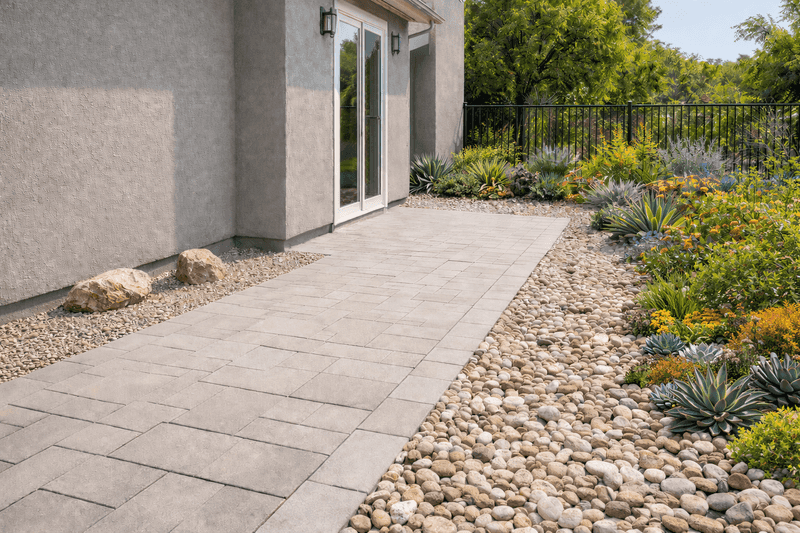
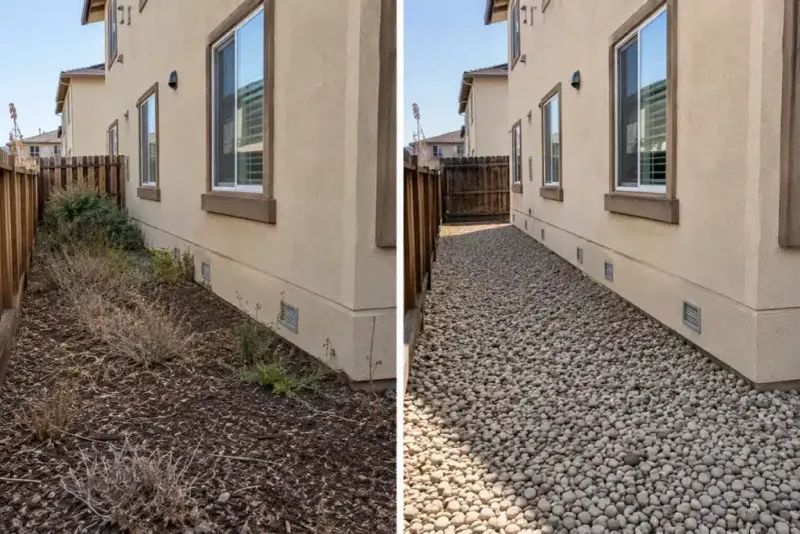
For the strip right beside your walls, CAL FIRE’s defensible space guidance recommends gravel, pavers, or concrete. It also says not to use combustible bark or mulch in Zone 0.
These are fire-conscious choices for the area closest to the structure. They do not make a home wildfire-proof, and they are not the best answer for every garden bed.
The UC ANR Fire Network points to concrete, gravel, noncombustible rock mulch, or pavers within five feet. It also cautions that inorganic mulch can hold heat and damage roots, especially around California native oaks.
If an oak grows near your house, take extra care. A practical example is a paver or gravel path along the wall, with the oak’s root area handled separately and according to local guidance.
An arborist or your local fire authority can help sort out those trade-offs.
For most foundation beds, swapping bark for gravel is a simple weekend job. Pull back the old mulch first, then lay it down.
Zone 0 does not have to be plant-free
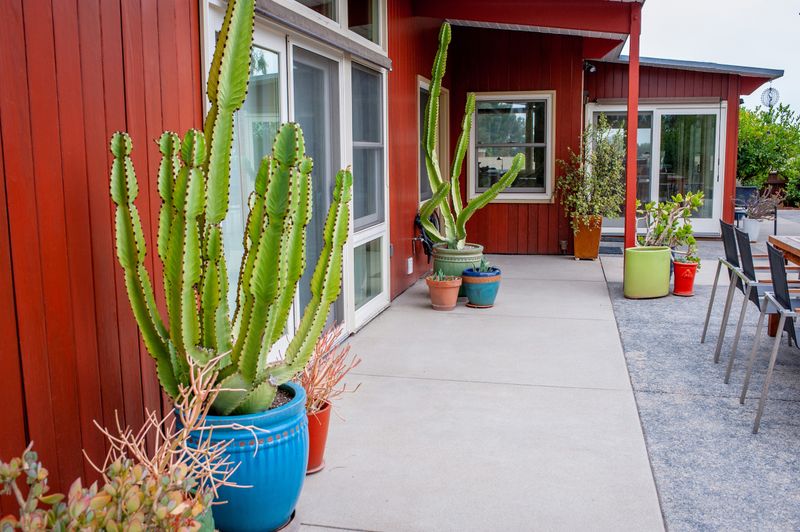
Some headlines claim California is banning every plant within five feet. The Board’s November summary describes something more flexible.
It allows some maintained existing trees. It also allows certain nonwoody plants, ground covers, grass, and appropriately spaced plants in noncombustible pots in parts of Zone 0.
Those allowances come with limits. The proposal sets plant-free safety buffers near structures and other vulnerable features, so a plant that works a few feet out may not be allowed right at the wall.
The exact placement rules live in the proposed text. Read the section that applies to your property, and ask your local fire authority before you plant, pot, or remove anything.
Do not assume that every plant or every arrangement qualifies.
Manage mulch carefully beyond the first five feet
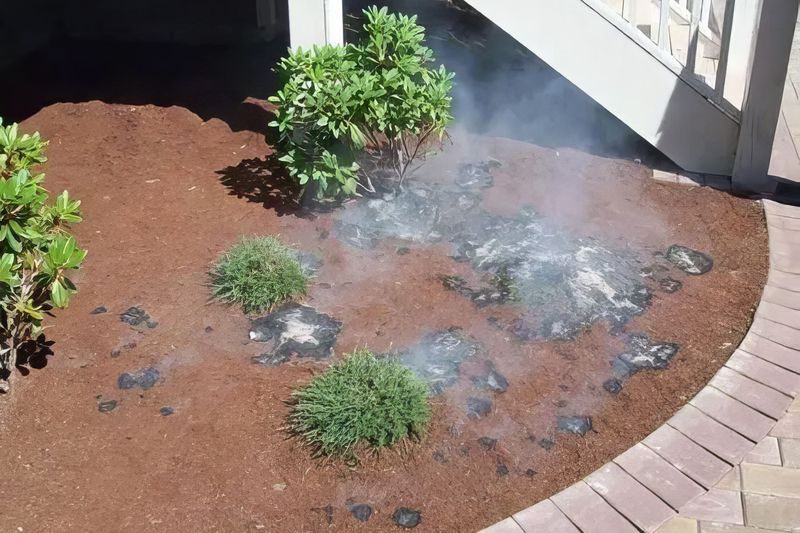
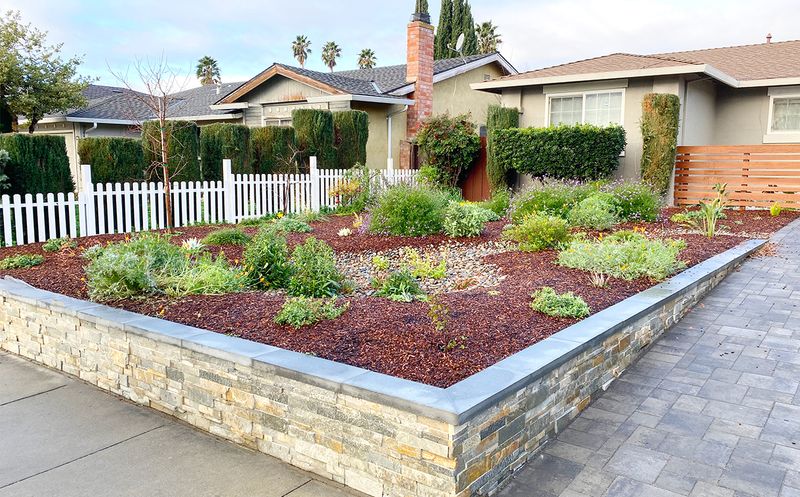
Past the first five feet, you are in Zone 1, which runs from five to 30 feet. Mulch is not off the table here, but the UC ANR Fire Network advises against widespread, continuous beds of combustible mulch.
Keep the layer no deeper than four inches. Break up large beds with noncombustible paths or barriers, such as stone walkways, gravel strips, or pavers, so a smoldering patch has a harder time spreading.
A simple way to picture it: instead of one long ribbon of bark around the yard, make several smaller islands separated by hard surfaces.
Do not count on water or treatment to make mulch safe. UC ANR warns that mulch can dry out before a wildfire arrives, and drip irrigation may leave dry patches.
Fire-retardant mulch may not perform differently from untreated mulch.
These steps lower risk, but they cannot promise a home will come through a fire.
Check local fire rules before changing the bed
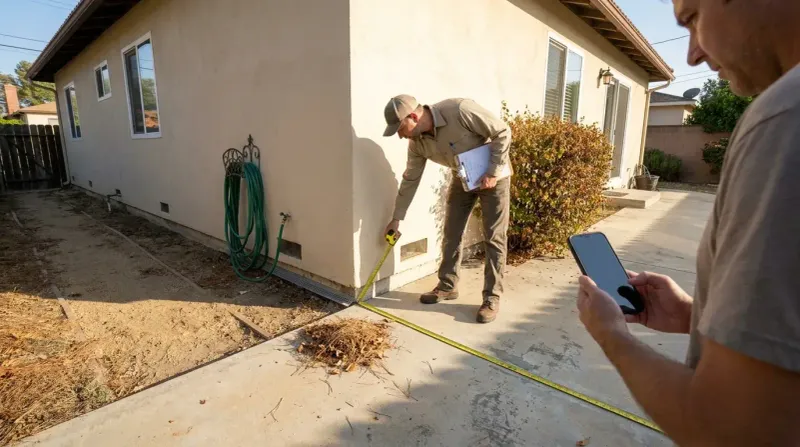
Start with a call or visit to your local fire agency and ask which requirements apply to your parcel. CAL FIRE notes that local agencies can set standards stricter than the state minimum.
Next, check whether the statewide proposal has moved. The OAL review page and the Board’s summary are good places to look.
Then plan your near-home surface, whether that is gravel, pavers, or concrete, with any plant allowances in mind. These steps reduce risk without guaranteeing protection.
A bed that is ready early costs you nothing if the rules shift, and it may keep a stray ember from finding fuel.