
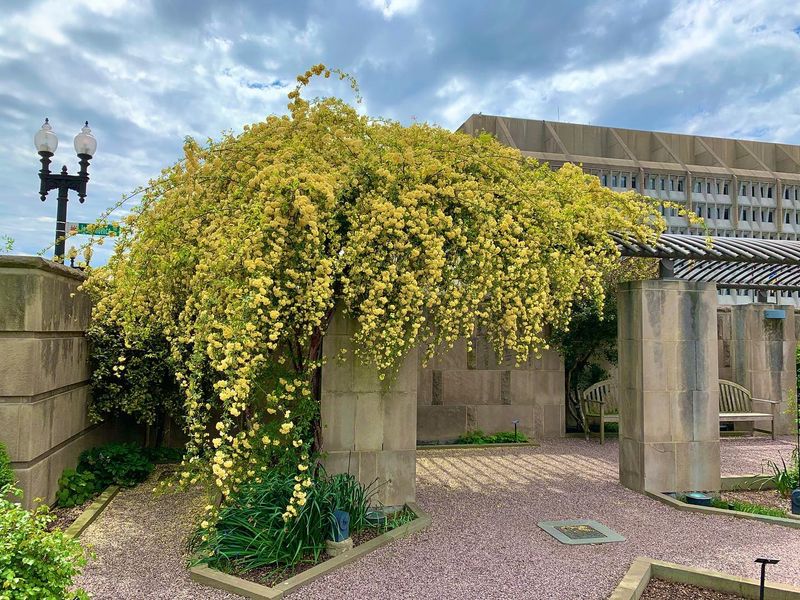
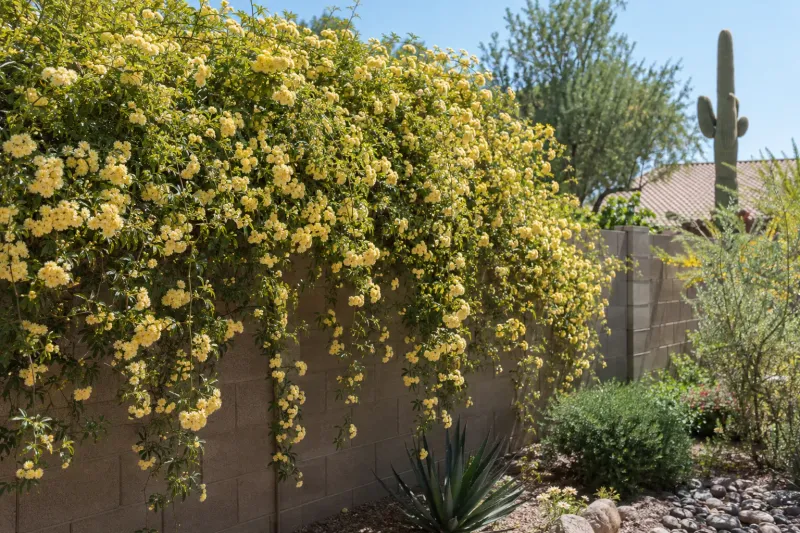
Picture a fence draped in soft spring flowers, with almost no thorns to snag your sleeves. That rose is real, and Central Texas gardeners have long used it to cover fences with a big seasonal show.
It is a vigorous climber, so it rewards gardeners who plan ahead for space and support. Late fall happens to be a good time to get it in the ground around Austin.
The nearly thornless fence rose is Lady Banks
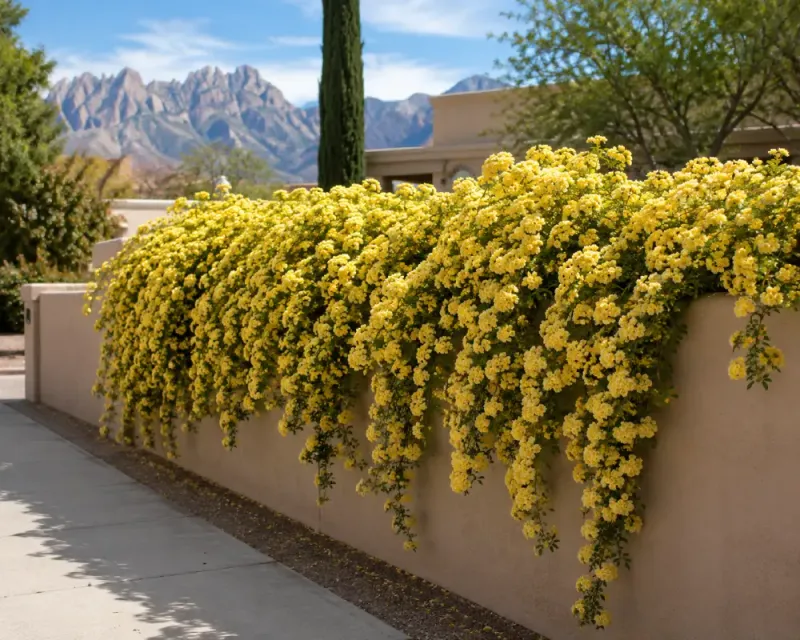
The rose is Lady Banks, known to botanists as Rosa banksiae. It is a vigorous, nearly thornless rambler, which means it sends out long, flexible canes that can scramble over a sturdy fence.
Gardeners like it because reaching in to tie or trim a cane does not leave you bleeding.
Austin’s municipal plant guide, the City of Austin plant guide for Lady Banks, lists it for sun, spring flowers and evergreen foliage. It also recommends sturdy support, ample space and pruning after bloom.
Those three pieces of advice tell you a lot about what kind of plant this is.
Extension writers do not all describe the stems the same way. Mississippi State Extension calls it nearly thornless, so that is the careful way to put it.
Some sources say it has no prickles at all, but a few stray ones on a stem are possible.
So yes, it can grow over a fence and put on a spring display. It is not a quick fix or a plant you can tuck in and forget.
Its size and its need for strong support mean the fence and the spot deserve some thought before you buy.
A rambler this vigorous needs sturdy support
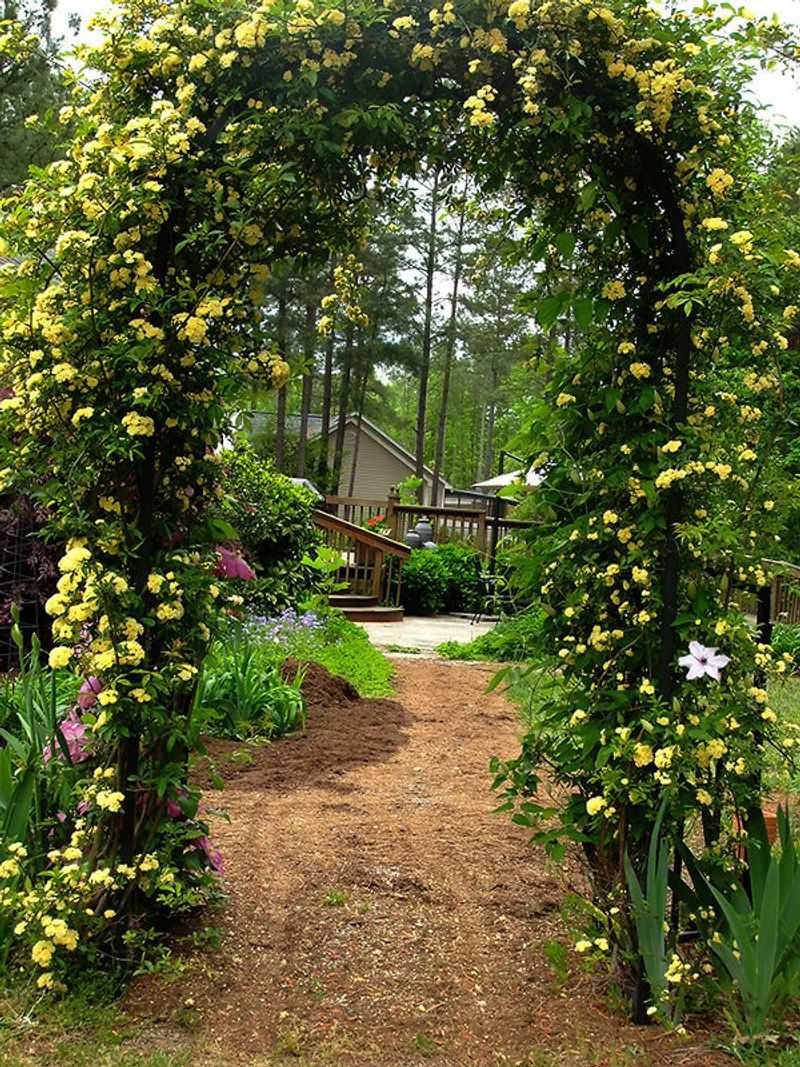
Think of Lady Banks as a plant that wants to sprawl. It is not a tidy strip of color along the bottom of a fence.
It is a big climber that can spread wide and reach high, and it will push on whatever holds it up.
NC State Extension gives a potential height of 15 to 40 feet. Austin’s plant guide lists a minimum spread of 10 feet and says 20 feet or more is possible.
Those numbers are ranges, and your plant may land anywhere in them depending on site and care.
Before planting, walk your fence line and look at the posts and rails. A leaning or rotting fence is a poor partner for a heavy plant.
Sturdy posts, solid rails and some wires or trellis panels for tying canes give the rose something dependable to grab.
Also look at what sits nearby. Keep the plant clear of windows, gutters, power lines and a neighbor’s yard unless you are ready to trim often.
A spot with a long stretch of open fence is a better match than a short section hemmed in by other plantings.
No source gives a reliable time for coverage, so skip the promises. Some fences will fill in sooner and some later.
Plan for the plant at full size, and enjoy the growth as it comes.
Spring is the flower show, not a season-long promise
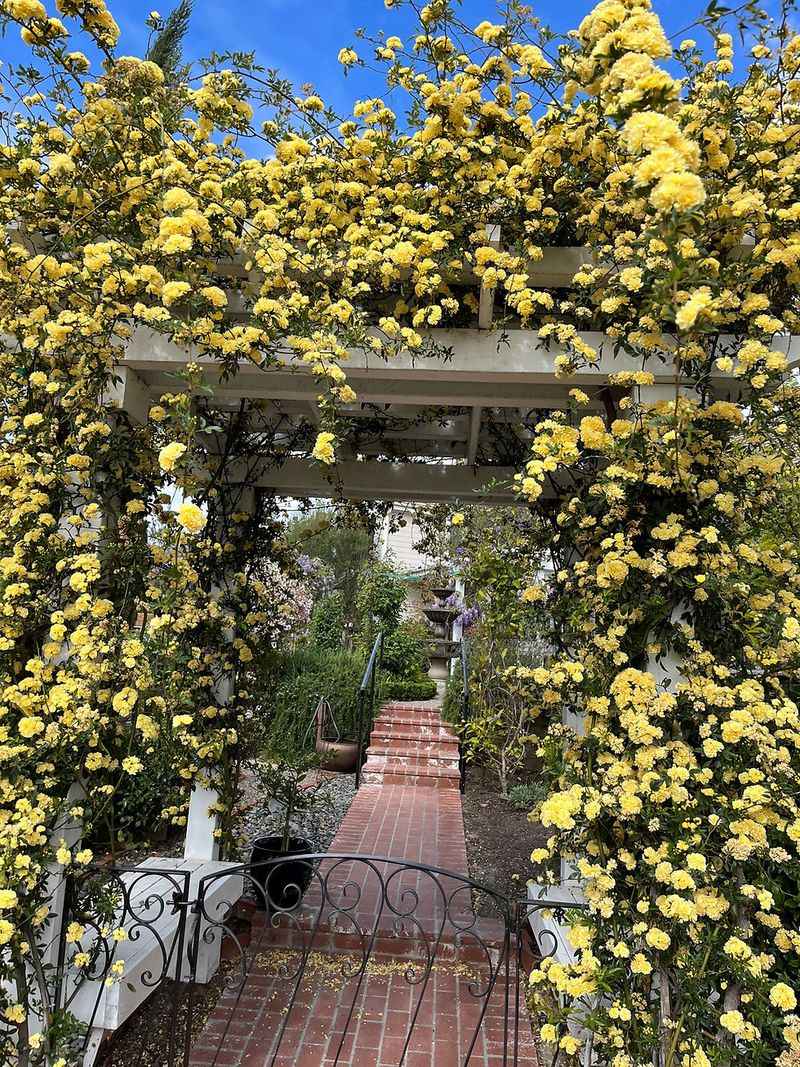
Mark your calendar for spring. That is when Lady Banks puts on its show, and the plant can look spectacular for a short stretch.
After that, you are enjoying green growth rather than flowers.
Arkansas Extension says it blooms once a year. Austin’s guide lists spring flowers and evergreen foliage, so the leaves can keep covering the fence outside bloom time.
Just do not expect constant color from it.
Flowers differ by type. NC State describes slightly fragrant white flowers and also mentions a yellow cultivar.
Austin’s guide notes fragrant white flowers. Color, scent and exact timing can vary, so check the plant tag or ask the nursery which type you are buying.
If you want a rose that repeats flowers through summer and fall, this is probably not the one. If you like one big spring moment, plus leafy cover the rest of the year, it fits.
Set that expectation up front and you will enjoy it more.
How much Texas heat can it handle?
Heat tolerance deserves a careful answer. Mississippi State Extension reports that Lady Banks tolerates light shade in hot Southern gardens.
That is useful if your fence gets some shade, but it is not a promise about Texas summers.
On drought, University of Arizona Extension describes the rose as drought tolerant once established. The key words are once established.
A plant that went in last month has small roots and needs much more help than one that has had a few seasons.
For Central Texas, Texas A&M AgriLife in Travis County advises watering roses during drought and giving container plants supplemental irrigation. Plan to water a new rose regularly through its first summer, and keep watching it during dry spells afterward.
You may see a hardiness zone range listed for this rose, such as zones 6 to 10 on the NC State page. Those zones describe winter cold tolerance.
They say nothing on their own about how a plant handles a triple-digit August.
A good clue is the leaves. Wilting, crisping or dropping foliage on a young plant usually means it needs a deeper soak.
Late fall fits Austin’s rose-planting window
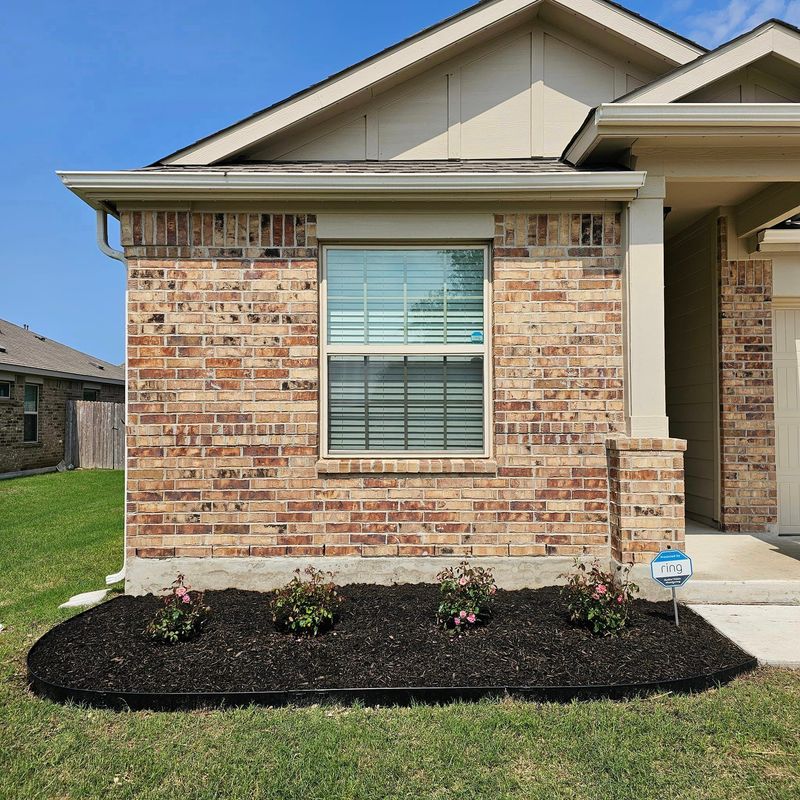
Around Austin, late fall is a sensible time to plant. Texas A&M AgriLife Extension in Travis County says roses do best planted from early fall through early spring.
Late fall sits right inside that window.
This is local guidance for the Austin area, not a rule for all of Texas. Timing can shift in other regions with different winters, so gardeners elsewhere should check with their own county office.
The form of the plant matters. Container roses can be planted most times of year if you give them supplemental water.
Dormant bare-root roses should go in before bud break, so they need to be planted during the cooler months while still asleep.
Pick a mild day without a hard freeze in the forecast. Cool weather lets the roots settle in without the stress of heat.
The Tarrant County Master Gardeners planting guide is a handy companion for the step-by-step of digging and setting the plant.
Whatever you plant, keep watering as roots establish. Roots that grow through winter and spring have a head start before summer arrives, so check the soil every week or so and water when the top few inches dry out.
Choose a sunny, well-drained spot before planting
Spend a little time on the spot before you dig. Lady Banks wants sun or light shade and soil that drains well.
NC State Extension lists those conditions, and they are easy to check. Watch the fence for a day and note how many hours of sun it gets.
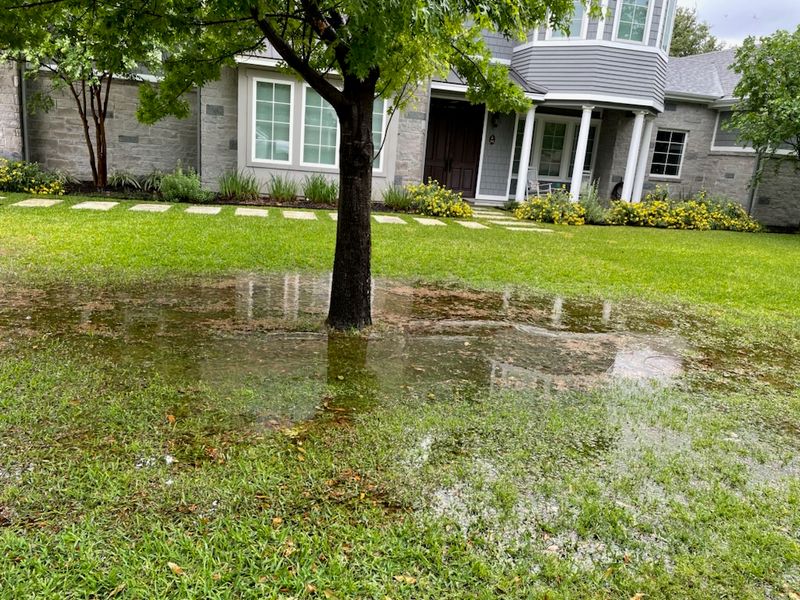
Drainage is the trickier part in Central Texas. Heavy clay can hold water around roots, and thin soils over rock can dry out fast.
Dig a hole, fill it with water and see how long it takes to drain. If water sits for a long time, the site may need help.
For those problem spots, the Travis County guidance suggests considering a raised bed or berm. A mound of better soil along the fence lifts the roots out of soggy ground.
It also gives thin soils more depth to work with.
The same guidance recommends testing your soil. A test shows what your ground actually has, and it keeps you from guessing.
Do not add phosphorus unless the test says it is needed, because extra can do more harm than good.
Leave room between the plant and the fence so canes have space to climb, and so you can reach the base for watering.
Prune after the spring display
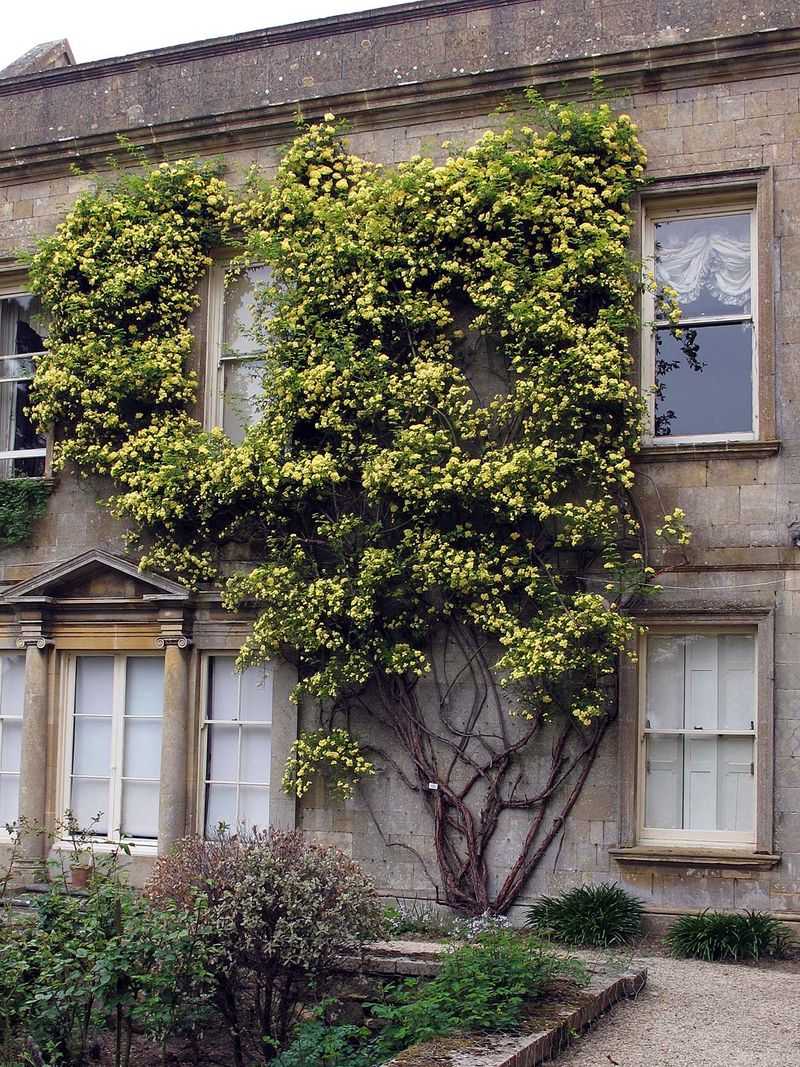
Timing is the main rule for pruning this rose. Wait until the spring flowers fade, then shape the plant.
Austin’s plant guide recommends pruning after bloom, which fits how the plant flowers.
The reason is simple. Arkansas Extension notes that Lady Banks blooms once, so cutting it back before it flowers can remove the season’s display.
If you trim in winter, you may be cutting off next spring’s flowers.
Right after bloom, you can shape the plant and reduce its size. Cut back canes that wander toward windows, gutters or walkways, and tie the rest to the support so they stay where you want them.
Do not wait too long, though. A plant this vigorous can get away from you if you skip a year.
A short trim each spring is easier than a big cleanup after the plant has swallowed the fence and reached into the yard.
Keep it simple, and let the calendar guide you. Flowers first, then scissors.
Match the rose to the fence and the care you can provide
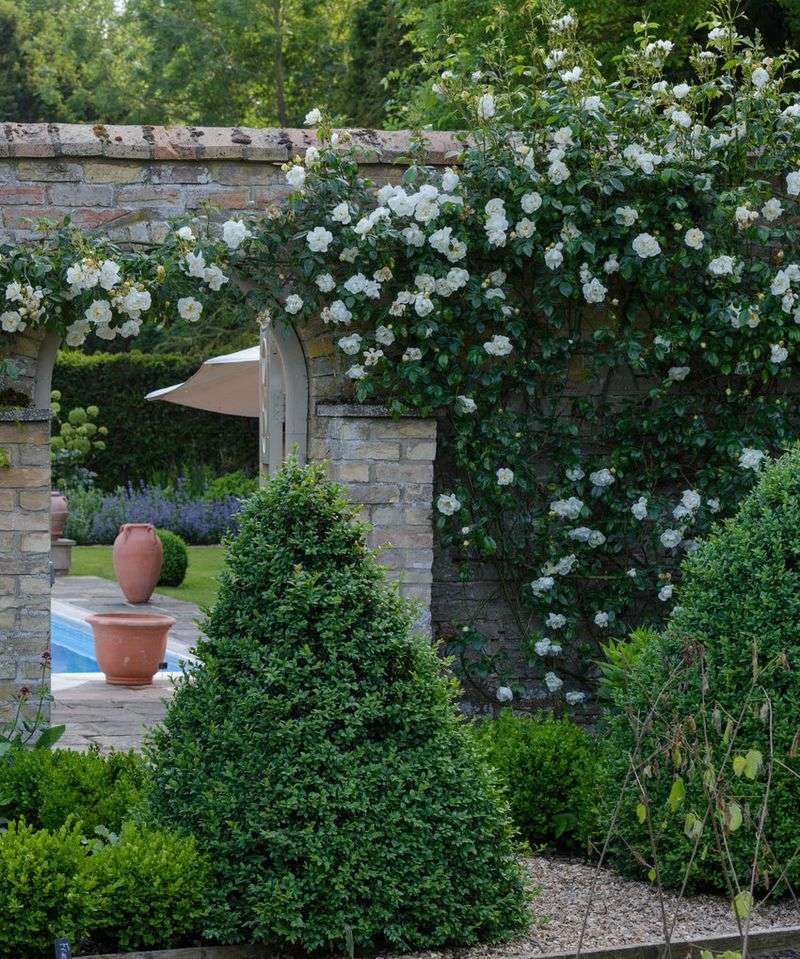
Lady Banks can suit a Central Texas fence if you can offer strong support, plenty of room, a sunny or lightly shaded well-drained site and regular water while it settles in. Around Austin, local Travis County guidance puts late fall inside the planting window.
Check the City of Austin plant guide against your space before buying.
Skip it if your fence is flimsy or your yard is tight. Plant it where it can sprawl, and the spring show will be worth the wait.