
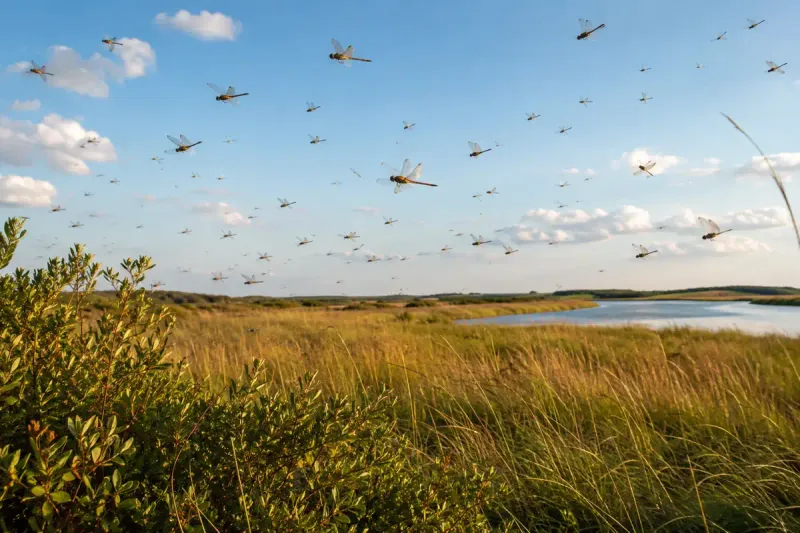
Dragonflies gather over a Florida yard mostly because flying insects are plentiful there, or because they are passing through on a seasonal trip. Adult dragonflies catch small flying insects in midair, and mosquitoes are only one item on the menu.
Rain, the season, and even courtship can all play a part in a crowd overhead. Here is how to sort out the likely reasons and what to do about mosquitoes either way.
A swarm can have more than one explanation

Seeing a crowd of dragonflies is seeing an event, not getting a diagnosis. The sight tells you that many insects are in one place, but it does not tell you why they came.
One plausible reason is a temporary burst of small flying prey. Texas Parks and Wildlife guidance on dragonfly watching notes that dragonflies can gather where food is abundant, and that migration is another reason they show up in numbers.
Courtship or territorial activity can also bring them together, especially near water.
Florida adds another layer. UF/IFAS notes that migratory dragonflies move into the state, so a crowd might be passing visitors rather than residents.
Without a location, a species name, or details about timing and flight direction, nobody can say which explanation fits a particular sighting. A homeowner looking out the window cannot say either.
The rest of this article walks through each possibility so you can compare them with what you actually see, such as whether the dragonflies circle in one spot, stream steadily in one direction, or pair up and chase one another.
Treat the swarm as a puzzle with several reasonable answers. Noting small details now will make the later sections far more useful.
What are they hunting?
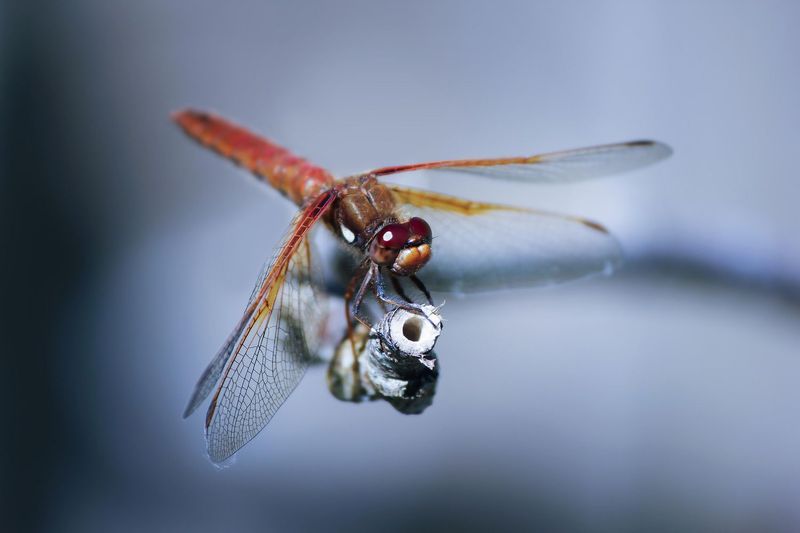
Adult dragonflies are aerial hunters. They snatch insects out of the air, and they take a wide range of small flying prey, not one favorite.
NC State Extension describes them as generalist predators, with mosquitoes among the insects they eat.
That means mosquitoes are a possible meal, alongside flies, gnats, and other tiny fliers. A crowd of dragonflies shows that food of some kind is likely available.
It does not show what that food is, and it does not show that mosquitoes are the main target.
Picture a busy buffet where you cannot see the plates from across the room. You know people are eating, but not what is on the menu.
Watching up close can help a little, though dragonflies move so fast that identifying their catch is hard.
Young dragonflies live a different life. UF/IFAS explains that larvae develop in water, and the UF/IFAS Odonata publication describes them eating aquatic prey, including mosquito larvae.
So the hunters in the sky and the hunters in the water are the same species at different life stages, with different menus.
Rain can set the stage without causing an instant swarm

After a downpour, people naturally connect the storm with the sudden crowd of dragonflies. That link is plausible, but it is indirect, and nothing proves it as a trigger.
Rain can create or refill pools, ditches, and containers where mosquitoes develop. UF/IFAS explains that heavy rain can boost some Florida mosquito populations, though timing varies.
In warm conditions, development from egg to adult is often about two weeks after major rain.
That two-week figure describes mosquitoes. It is not evidence that dragonflies appear right after a storm, and it does not show that rain caused any particular gathering.
Dragonflies also take a long road to adulthood. UF/IFAS notes that their aquatic stage can last months or longer, so an adult overhead after a storm did not grow up in that storm’s puddles.
A useful clue is your own calendar. If a swarm appears the day after a storm, rain-made mosquito water is an unlikely explanation.
If it appears a week or two after a soaking, a boost in small flying insects becomes more plausible, though still unproven.
Florida’s seasonal movement is another possibility
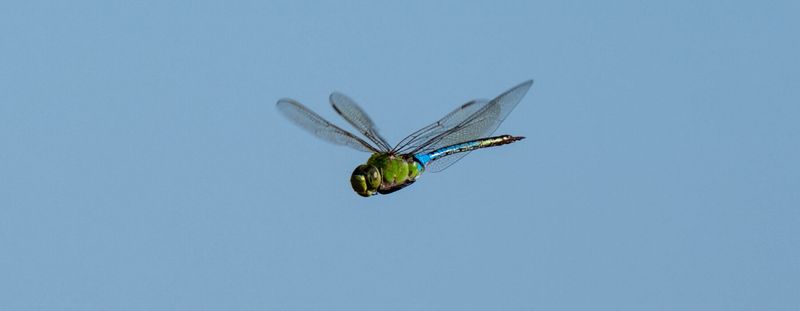
Some dragonflies travel. UF/IFAS says migratory dragonflies move into Florida, and common green darners breed in southern and tropical areas in fall and early winter.
A study in the Florida Entomologist gives a concrete example. Researchers documented a large fall migration of common green darners at St. Joseph Peninsula in the Florida Panhandle, with peak counts in the first week of October 1999.
That study shows migration is real in Florida. It does not tell you that the dragonflies in your yard are migrants.
A local feeding crowd and a migrating stream can look similar at a glance. Clues that point toward movement include many dragonflies of one kind, a steady flow in one direction, and timing that matches a seasonal pattern.
A group circling and swooping in one spot looks more like feeding.
Without that kind of detail, call it a possibility. Jot down the date, the direction, and how long the dragonflies stay, and your notes will say more than a quick glance.
A yard sighting reveals less than it may seem
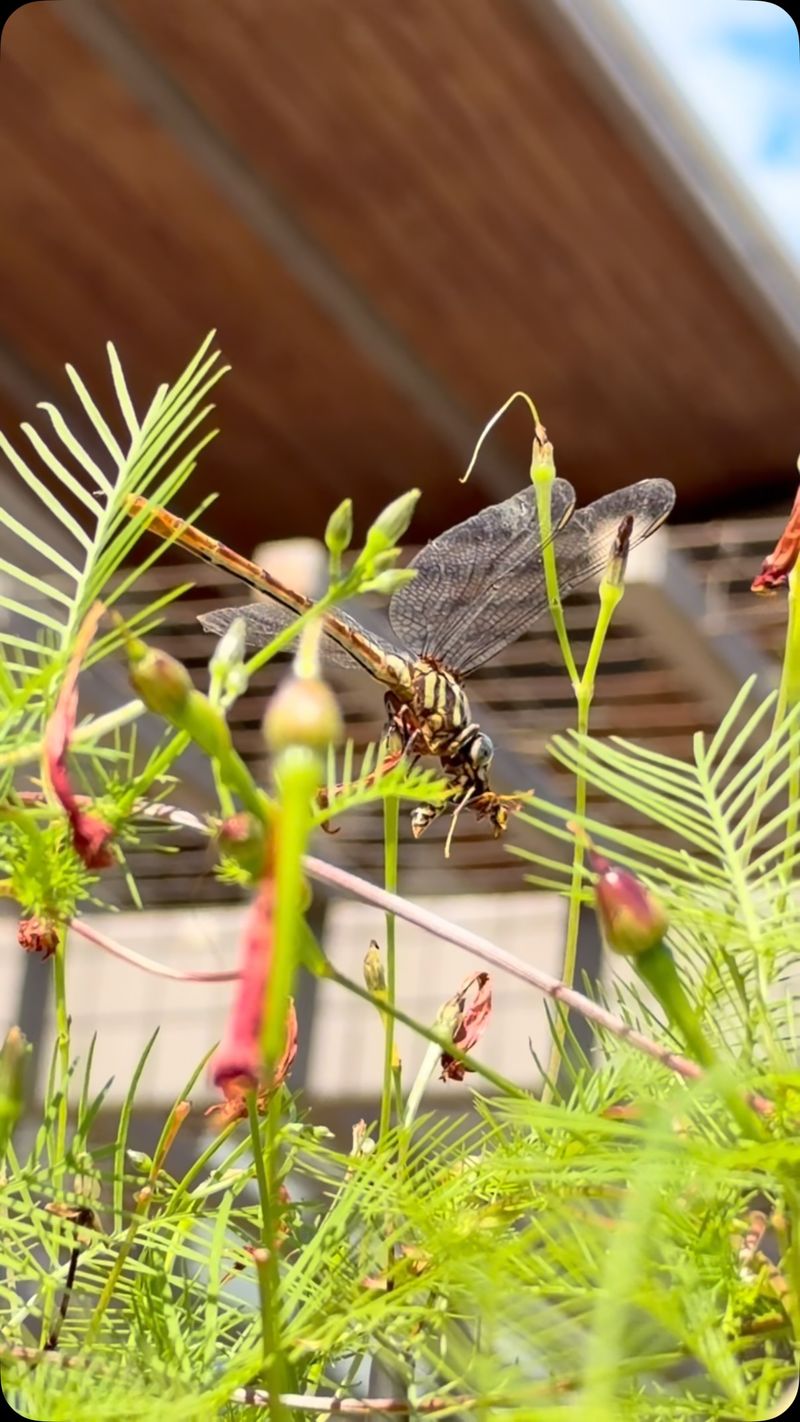
Adults are strong fliers, and they roam. UF/IFAS notes that adults can be found away from the water where they developed.
Dragonflies overhead do not prove your yard has a pond or a breeding site.
Better proof sits at the water’s edge. Larvae in the water or shed skins left on plant stems near a pond are more direct signs that dragonflies developed nearby.
Many people also hear that dragonflies reveal clean water. It is not that simple.
Penn State Extension discusses how dragonflies relate to pond habitat, and species differ in what conditions they tolerate. A UF/IFAS Escambia County note likewise treats them as indicators in a general sense, not a test.
An adult sighting cannot pass or fail the water nearby. A hardy species can show up around water that is far from pristine.
If you want to learn more about your own property, look at the water itself and the plants around it. The flyers above are not a report card.
Keep managing mosquitoes on your own terms

Dragonflies are welcome helpers, but they are not a dependable stand-alone fix. The U.S.
Fish and Wildlife Service mosquito handbook says the aquatic stage is generally more effective against mosquitoes, and that adults are often not active during the hours mosquitoes fly. Natural predators cannot completely solve a mosquito problem, and dragonfly habitat can support mosquitoes too.
So the work stays with you. UF/IFAS integrated pest management advice centers on removing standing water.
Drain or discard buckets, tires, tarps, and plant saucers that hold water. Cover or screen rain barrels, and empty and scrub birdbaths and pet bowls regularly.
The Florida Department of Health toolkit backs the same source-reduction approach.
If you consider a treatment, follow the product label and local public-health guidance. Effects on dragonflies depend on the chemical, the exposure, the life stage, and the setting.
A recent review reports evidence of pesticide impacts on dragonflies and damselflies, while noting that field research remains limited.
Do not buy and release dragonflies. The handbook warns that releases may involve nonlocal species.
Leave them alone too: they are not aggressive toward people, but a large one may pinch if handled.
Read the swarm as a clue, not a verdict
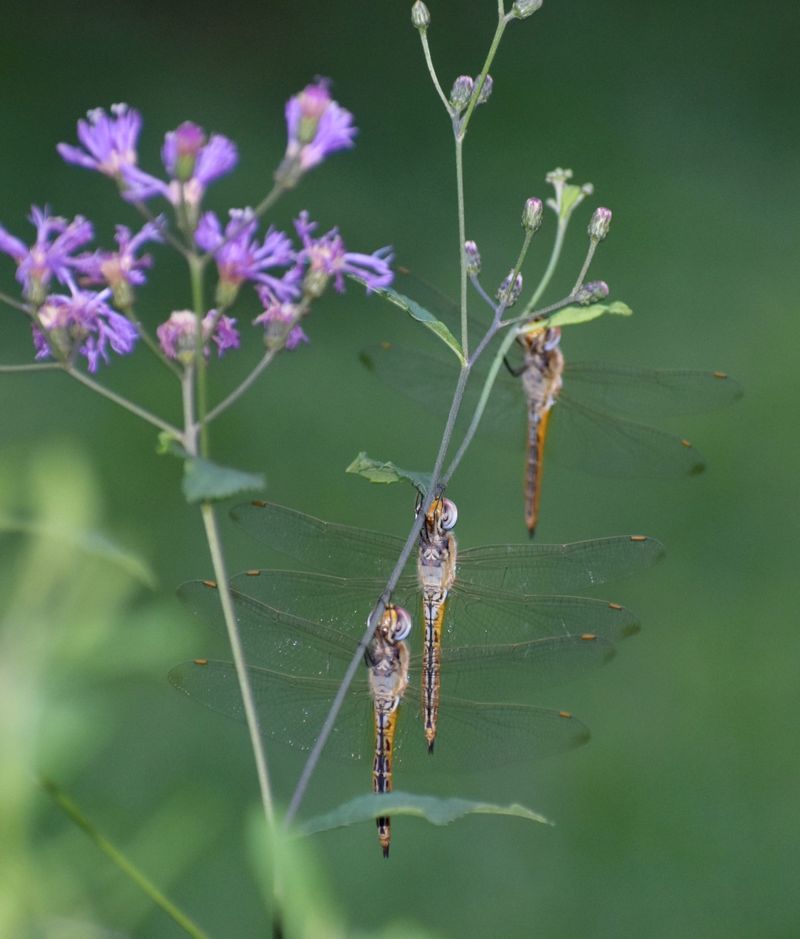
A crowd of dragonflies might mean flying prey is plentiful, that travelers are passing through, or that something else is going on, as Texas Parks and Wildlife lays out. The sight alone cannot tell you which.
Enjoy the show, and keep up the routine habits that matter, since predators alone cannot handle mosquitoes.
Think of the swarm as a note left on your doorstep: interesting, worth reading, and not the whole story.