
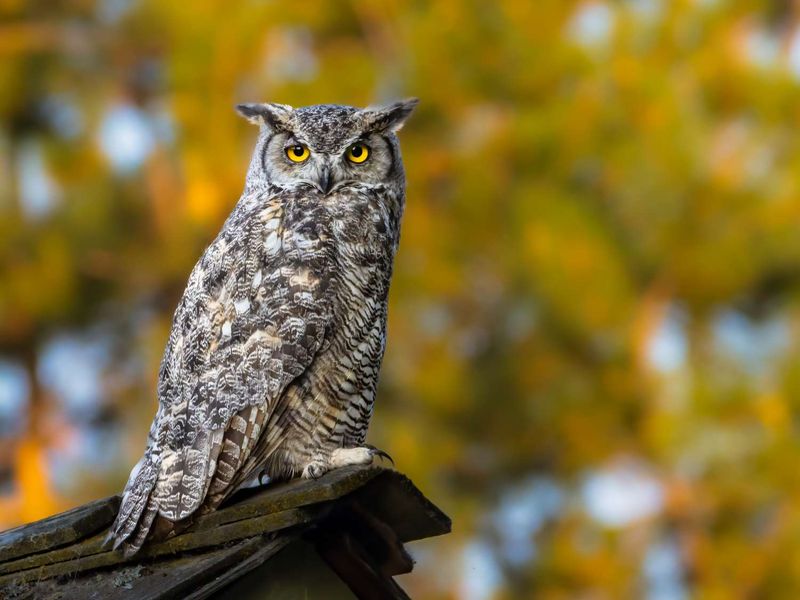
Owls have lived in North Carolina’s woodlands, fields, and suburban neighborhoods long before anyone thought to build them a house. A well-placed nest box can give a native owl a place to raise its young, and that same owl may hunt mice and other small rodents nearby. The idea sounds simple, but the reality involves species-specific design, careful placement, real maintenance, and results that no one can guarantee.
An owl box may support native wildlife, but it is not free pest control
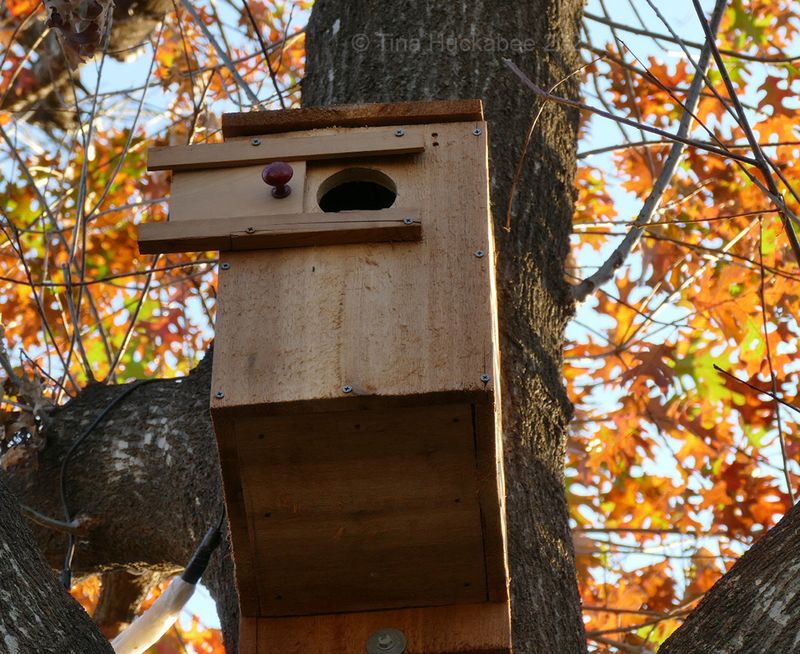
Putting up an owl box is genuinely worthwhile for North Carolina homeowners who want to support native wildlife, but the headline idea that it delivers free pest control deserves a closer look before anyone picks up a drill. NC State Extension’s owl guidance recommends nest boxes as a habitat improvement for cavity-nesting owls such as the Eastern Screech-Owl and, in suitable open-country settings, the Barn Owl. That benefit is real and worth pursuing on its own merits.
What a box cannot promise is a predictable reduction in household pests. An owl may never move in. Even when one does, its hunting range extends well beyond any single yard, so the rodents it catches could come from a neighbor’s property, a nearby field, or a woodlot down the road. Utah State Extension’s farmland pest-control research describes raptors as one component of a multifaceted pest-management strategy and specifically notes that not every installed box will be occupied.
The box itself may be inexpensive, but the full project is not necessarily low-cost. A sturdy mounting structure, predator guard hardware, safe ladder access for cleaning, and eventual repairs all add up. An occupied box also produces owl pellets, droppings, prey remains, and occasionally dead or weakened nestlings, none of which qualify as hassle-free.
Owls also do not reliably reduce tick or mosquito exposure. Cornell Lab’s Eastern Screech-Owl life-history account confirms that screech-owls eat insects along with small mammals, but that broad diet does not translate into meaningful tick or mosquito control around a home. Similarly, Audubon’s Barn Owl profile focuses on small mammals rather than insects. A box supports native wildlife and may help reduce some rodent activity under the right conditions.
It does not replace exclusion, sanitation, or targeted pest management.
North Carolina’s owls need different landscapes
Before choosing a box style or a mounting location, a homeowner needs to answer one question honestly: what does the land around the property actually look like? The answer determines which owl, if any, is a realistic neighbor, and that match matters far more than the box design itself.
Eastern Screech-Owls are the most adaptable of the three species covered in NC State Extension’s owl nest-box guidance. They occupy wooded suburban and urban landscapes, city parks, streamside corridors, and rural woodlots throughout North Carolina’s Piedmont, Coastal Plain, and lower mountain elevations. A yard with mature oaks, pecans, or other hardwoods and at least some shrub layer is reasonable screech-owl habitat. Cornell Lab’s life-history account lists their prey as insects, crayfish, frogs, lizards, small mammals, and birds, which reflects how broadly these small owls adapt to available food.
Barn Owls are a different story. Audubon’s Barn Owl field guide describes them as birds of open country, including farmland, pastures, marshes, and abandoned fields, where voles, mice, rats, and shrews are abundant. The North Carolina Wildlife Action Plan lists Barn Owls as an open-habitat species whose nesting opportunities can be improved with boxes, which signals that appropriate open habitat must already be present. A heavily wooded suburban lot, regardless of its size, is poor Barn Owl territory.
Placing a Barn Owl box in dense tree cover is unlikely to attract the bird it was designed for.
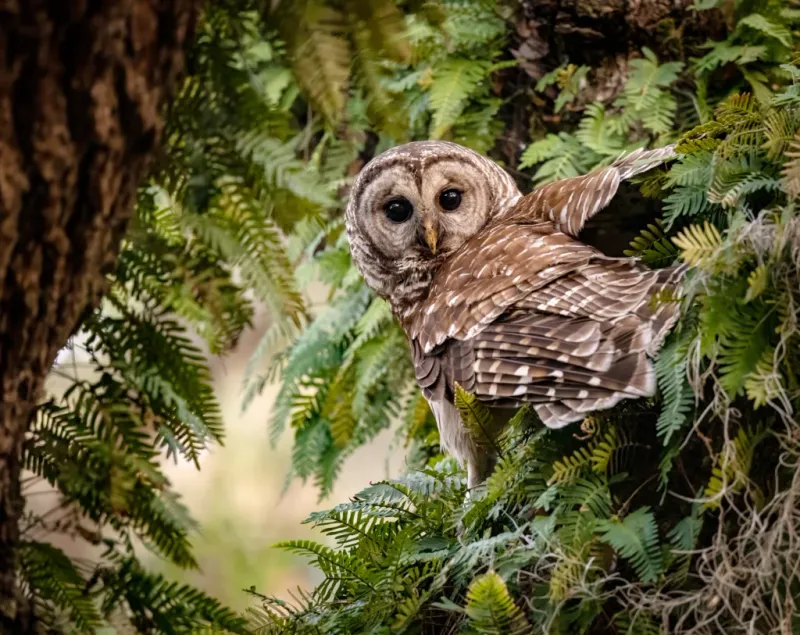
Barred Owls are the largest of the three and the most habitat-specific. They associate with mature bottomland hardwood forests, often near water, and their cavity requirements reflect that preference. A homeowner whose property borders a river swamp or a large tract of old-growth bottomland hardwoods in the Coastal Plain or Piedmont may have Barred Owl neighbors, but a typical suburban yard almost certainly does not. Choosing the right species starts with an honest walk around the property and a look at the surrounding landscape, not just the backyard fence line.
Choose a species-specific box instead of a generic owl house
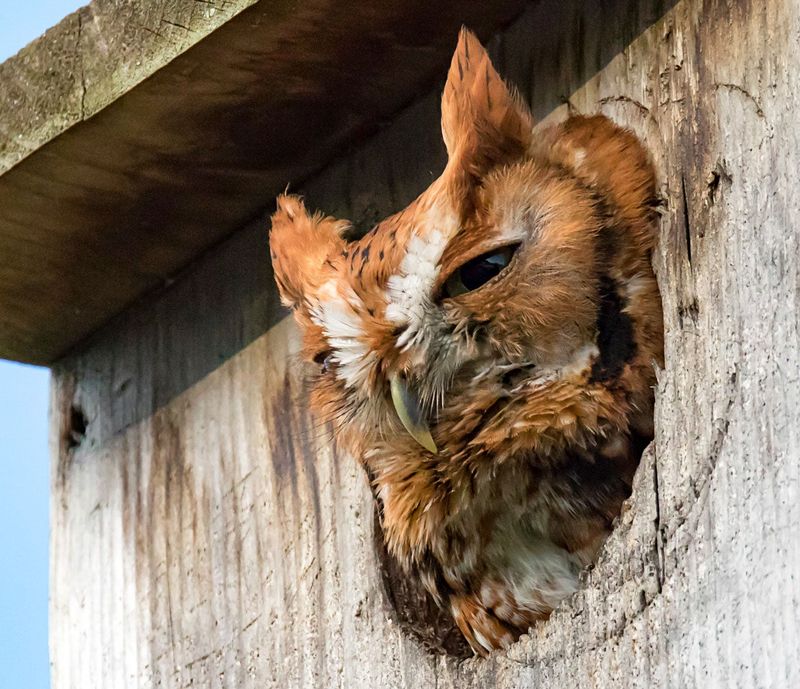
A generic owl house from a garden center may be sized for decoration rather than for any particular bird. The entrance hole diameter, internal floor area, and cavity depth all need to match the target species, and the differences between species are significant enough that the wrong box simply will not be used.
NC State Extension’s owl nest-box specifications list three distinct designs. A Screech-Owl box has an approximately 10 by 11.75-inch floor, a 10 by 16-inch cavity side, and a 3-inch entrance hole. A Barn Owl box requires an approximately 11 by 22.75-inch floor, a 12.375 by 16-inch cavity side, and an entrance roughly 3.75 by 4.5 inches. A Barred Owl box calls for an 11.5 by 13-inch floor, a 13 by 23-inch cavity side, and a 7-inch entrance.
A Screech-Owl will not comfortably use a Barred Owl box, and a Barn Owl entering a Screech-Owl hole is not physically possible.
Material and construction details matter beyond dimensions. Durable, untreated lumber such as cedar or pine resists weathering without chemical risk to nesting birds. Ventilation holes near the top of the box allow heat to escape during warm North Carolina summers, and drainage holes in the floor prevent water from pooling after rain. Most owl boxes should not have a perch on the exterior, since a perch gives predators a convenient foothold and owls do not need one to enter a cavity.
NC State Extension’s backyard bird habitat guidance also recommends adding a predator guard or baffle to the mounting structure wherever possible. A larger box does not compensate for a missing predator guard, and a well-built small box with proper predator protection will outperform an oversized, unprotected one every time.
Placement determines whether a box has a reasonable chance
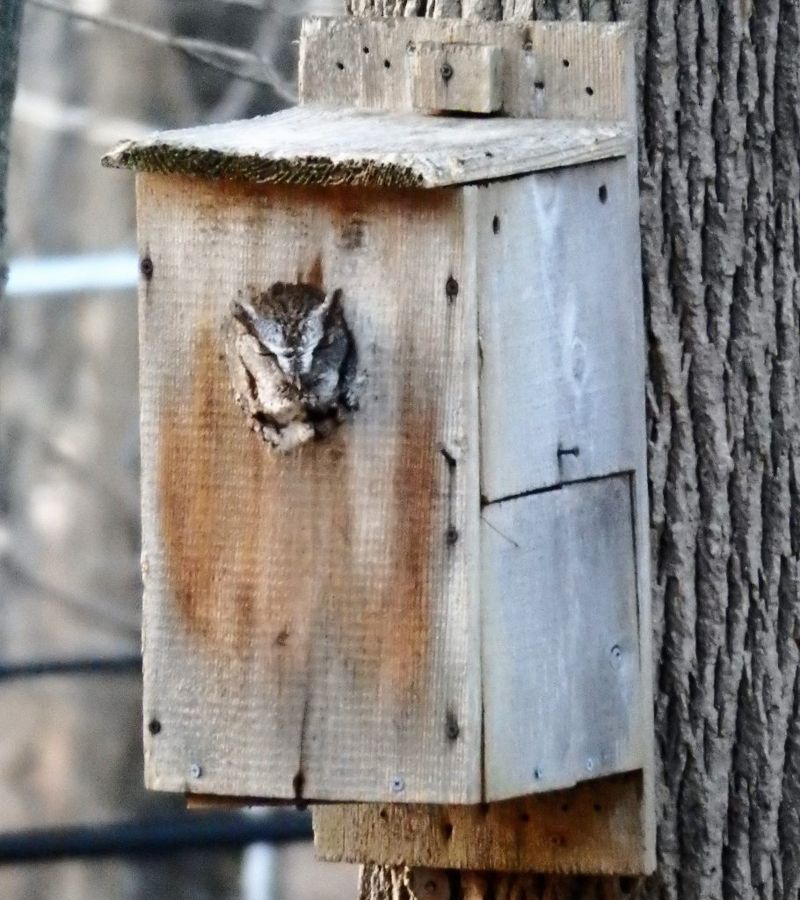
Getting the box dimensions right is only half the job. Where and how the box is mounted determines whether a passing owl ever gives it a second look. Each species has different siting needs, and those needs connect directly to the habitat discussion from the previous section.
For Eastern Screech-Owls, Audubon’s screech-owl nest-box guide recommends a shaded or partly wooded setting such as a sparse woodland edge, a streamside yard, or a suburban lot with good tree cover. The box should be mounted roughly 10 feet off the ground, and adding a couple of inches of wood chips or dry leaves inside gives the owl a base for its eggs, since owls do not build nests themselves. Avoid spots where heavy foot traffic or frequent yard activity would disturb a nesting bird.
NC State Extension’s urban bird habitat guidance recommends mounting boxes on a sturdy post or tree, generally away from overhanging limbs that could give predators easy access to the entrance. A metal predator baffle or cone on the mounting post adds meaningful protection. For Barn Owls, the box should face open ground with minimal tree obstruction, since these birds hunt by flying low over fields and need clear approach paths. Barred Owl boxes belong near the edge of mature bottomland hardwood forest, placed high on a large-diameter tree away from frequent human disturbance.
Timing is as important as location. NC State Extension identifies early March as the general start of the new nesting season for nest boxes in North Carolina. A box installed in late spring after nesting has already begun elsewhere will likely sit empty that first year. Installing before mid-February gives owls scouting for cavities a chance to find and claim the box on their own schedule.
An unused box can be moved or repositioned before the following season without any harm done.
What an owl box might add to a backyard
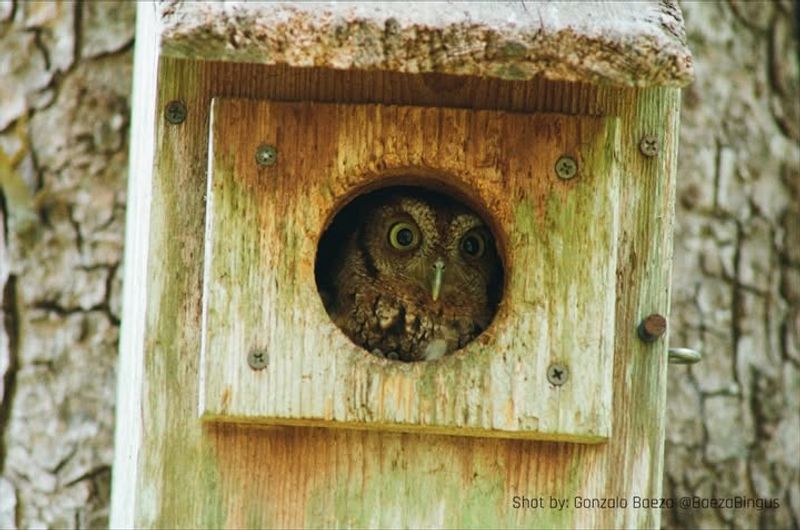
When an owl does move into a box, what changes in the yard? The honest answer depends on which species arrives, what prey is locally available, and how much habitat surrounds the property. The benefits are real in some situations and modest or undetectable in others.
Cornell Lab’s Eastern Screech-Owl profile confirms that screech-owls eat a genuinely broad range of prey, including insects, crayfish, frogs, lizards, small mammals, and birds. That dietary flexibility makes them useful neighbors in wooded suburban yards, where they may take house mice, voles, and large insects during the same night’s hunting. Their impact on any single prey type, however, varies with season, prey abundance, and the owl’s own territory size, which typically spans several acres.
Audubon’s Barn Owl account describes a much more focused predator. Barn Owls rely heavily on voles, mice, rats, shrews, and other small mammals, making them the species most often associated with agricultural rodent management. On a property with open fields and a high small-mammal population, a resident Barn Owl pair can take a meaningful number of rodents over a breeding season.
What owls do not reliably do is reduce tick or mosquito exposure around a home. Neither species is a specialist insectivore in the way bats or Purple Martins are, and the evidence reviewed here does not support the idea that an owl box will lower tick counts or cut mosquito numbers in a residential yard. Utah State Extension’s farmland wildlife research frames raptors as one element of a broader pest-management approach, not a standalone solution. That framing is the right one for a North Carolina backyard as well.
Rodent-control evidence is promising in some farms, not conclusive at home
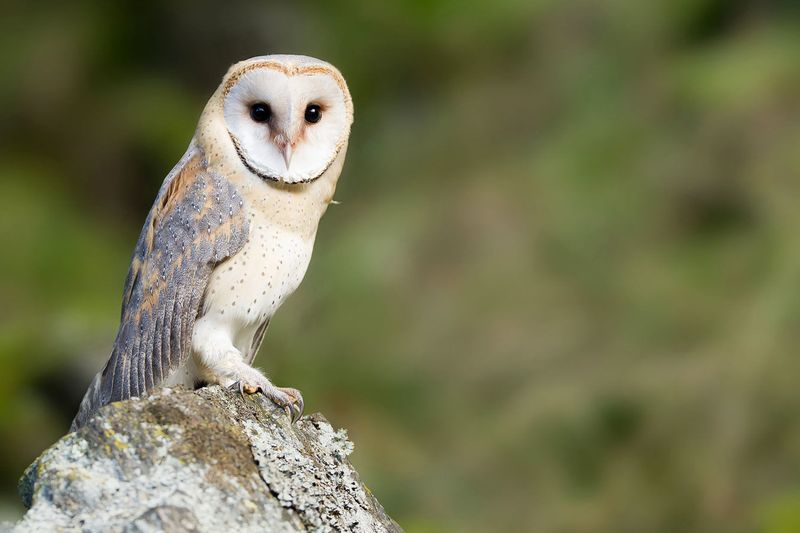
The most frequently cited evidence for owl-based rodent control comes from agricultural settings, and the results there are genuinely interesting. Applying those findings to a North Carolina residential yard, however, requires some care about what the studies actually measured and where they were conducted.
A 2025 study of barn-owl predation in Napa Valley vineyards reported 38 to 52 percent lower rodent abundance across the observed range of barn-owl hunting pressure. That is a meaningful reduction, and it supports the idea that Barn Owls can meaningfully affect rodent populations in open agricultural landscapes where prey is abundant and owl activity is sustained. The vineyards in that study had open-country conditions, high rodent density, and multiple hunting owls over large acreage, conditions that differ substantially from a quarter-acre suburban lot in the Piedmont or a mountain property with mixed forest cover.
A second Napa Valley study, archived by the University of California, presents a more complicated picture. That research found that gopher activity declined on a vineyard where barn-owl boxes were present, but the decline in mouse abundance was not significantly attributable to the boxes, and results for voles were inconclusive. Two studies from the same region, both involving Barn Owls in vineyards, produced different conclusions about which rodent species the owls most affected. That inconsistency is worth holding onto when evaluating what a single nest box might do in a home landscape.
The practical takeaway is that a properly sited box in suitable habitat may help reduce some rodent activity, particularly where Barn Owls have open country and a reliable prey base. A box in a wooded suburban yard with a resident screech-owl may provide some incidental rodent reduction as a side effect of the owl’s general hunting. Neither situation guarantees a measurable outcome, and neither study was conducted in North Carolina or in a residential setting.
Responsible upkeep protects owls and homeowners
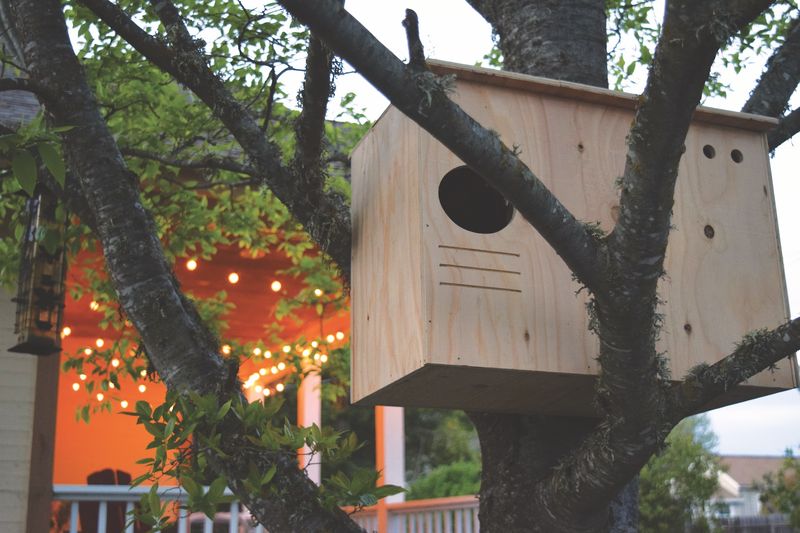
Installing the box is the beginning of a multi-year commitment, not the end of the project. Realistic expectations about what happens after mounting will help homeowners decide whether this project fits their situation before the first breeding season, not after a difficult surprise.
Vacancy is common, especially in the first year. Other cavity-nesting species, including squirrels, small snakes, European Starlings, or House Sparrows, may claim the box before any owl arrives. Correct entrance size and placement reduce competition but do not eliminate it. NC State Extension’s backyard bird habitat guide notes that boxes can be cleaned in February before the new nesting season begins, which is the right time to remove old debris, pellets, droppings, and the remains of prey items.
Outside of that window, an occupied box must not be opened or disturbed. Checking on eggs or nestlings, however well-intentioned, can cause the adults to abandon the nest.
Utah State Extension’s wildlife pest-control research also points out that occupied boxes can produce pellets, droppings, prey remains, and occasionally dead or weakened nestlings, all of which require sanitary handling. Gloves and basic hygiene are reasonable precautions when cleaning a box after the season ends.
Rodenticide use near an owl box is a serious concern. EPA’s rodenticide safety review identifies risks to birds and other non-target animals that consume poisoned prey. An owl hunting near a yard where rodenticides have been applied can ingest a lethal or sublethal dose through secondary poisoning. If rodent pressure is high enough that poison seems necessary, the owl box project and the rodenticide program cannot safely coexist.
Fallen owlets or injured adults require professional help. Under the Migratory Bird Treaty Act, native owls, their eggs, and active nests are federally protected. U.S. Fish and Wildlife Service guidance on bird nests advises against moving active nests or handling nestlings without authorization.
Homeowners who find an injured or displaced owl should contact a licensed wildlife rehabilitator or the North Carolina Wildlife Resources Commission rather than attempting to intervene themselves.
The best owl project may begin with habitat, not hardware
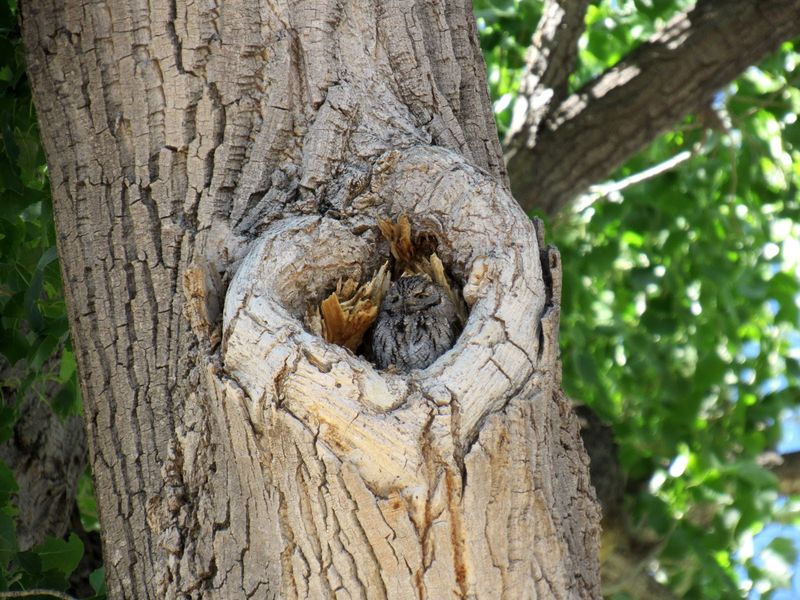
A nest box is a substitute for a natural cavity, not an improvement on one. Before ordering lumber or browsing box designs, the most useful step is a walk around the property to see what is already there and what the surrounding landscape can realistically support.
NC State Extension’s urban bird habitat guidance encourages homeowners to retain safe snags and mature trees where they do not threaten people or structures. A standing dead tree with a woodpecker cavity already carved into it provides nesting habitat without any construction, and Cornell Lab’s research on woodpecker cavities shows how critical those natural openings are to secondary cavity nesters like screech-owls. When a safe snag is available, preserving it may do more good than adding a box.
Once a homeowner has assessed the landscape, the decision about a box becomes clearer. A wooded suburban yard in the Piedmont with mature hardwoods and some open lawn is reasonable screech-owl territory, and a properly built and mounted box there has a genuine chance of being used. A Barn Owl box on a working farm with open pasture and high rodent pressure is a well-matched project. A box installed on a heavily shaded lot with no open hunting ground nearby, regardless of species label, is unlikely to attract the bird it was designed for.
NC State Extension’s owl resource provides the species-specific designs and placement guidance to make a box project as well-matched as possible. An owl house can support native wildlife and may contribute to rodent management under the right conditions. The homeowners most likely to see both benefits are the ones who match the box to the bird and the bird to the land they actually have. A nest box added to the right habitat is a quiet investment that pays out on the owl’s schedule, not the homeowner’s.