
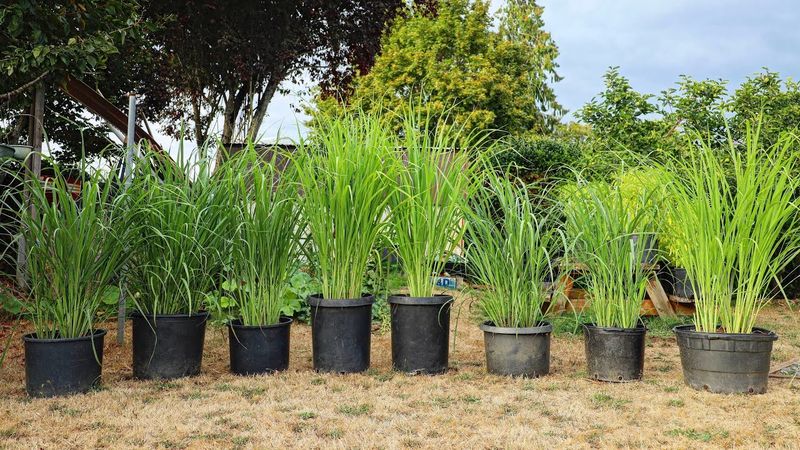
Lemongrass has a way of earning permanent real estate near a North Carolina patio once a gardener tries it there. The tall, grassy clump smells like fresh citrus, looks striking in a container, and puts edible stalks within arm’s reach when dinner is on the grill. What it has not been shown to do is reliably drive mosquitoes away from your seating area. This guide sorts out what the plant genuinely delivers, how to grow it well in the Piedmont, coastal plain, or mountains, and which steps actually keep biting insects at bay.
Keep the Patio Placement—Change the Reason
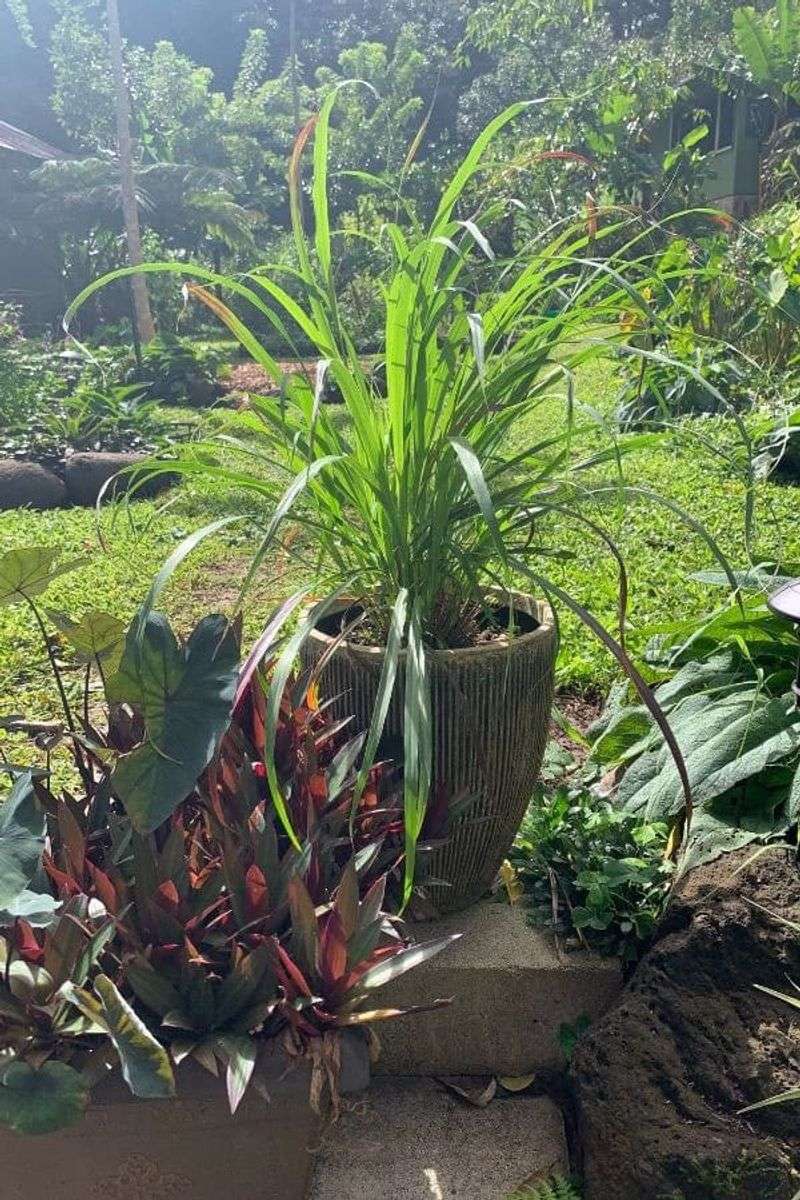
Lemongrass earns its spot near the patio through honest virtues: a pronounced citrus fragrance that rises whenever someone brushes past the clump, stalks ready to harvest steps from the grill or outdoor table, and bold, grassy architecture that fills a container with genuine presence. Those are real reasons to keep it close. What is not a reliable reason is mosquito control.
The idea that planting lemongrass beside a seating area keeps mosquitoes at bay has spread widely in gardening circles, but extension researchers have not found evidence that a living plant releases enough aromatic oil to provide dependable repellency in an open landscape. Iowa State Extension’s overview of mosquito-repelling plants and the NC State plant profile for Cymbopogon citratus both treat lemongrass as a culinary and ornamental herb, not a pest-control tool. That distinction matters, because gardeners who expect a mosquito-free patio may be skipping steps that would actually help.
The practical answer is straightforward: place lemongrass near the patio for access, scent, and appearance, and handle mosquito protection separately with measures that have been tested and shown to work. Keeping both goals clear prevents disappointment and makes the plant easier to appreciate on its own terms.
Lemongrass is also not a set-it-and-forget herb. It needs full sun, consistent moisture, good drainage, and, depending on where in North Carolina you garden, some form of winter protection. Those requirements are manageable, but they deserve a heads-up before the plant goes into a container at the back corner of the porch. The sections that follow address growing conditions, overwintering, and mosquito prevention in the order a new lemongrass grower is likely to need them.
Does a Living Plant Actually Repel Mosquitoes?

A lemongrass clump does smell unmistakably of citrus, and that scent is real. Brush a leaf, snap a stalk, or simply walk past the plant on a warm afternoon and the fragrance is noticeable. The question is whether that fragrance, released passively by a plant sitting in a pot or garden bed, reaches a concentration high enough to turn mosquitoes away from a nearby chair. Extension researchers say no, at least not reliably.
Clemson’s Home and Garden Information Center notes that repellency claims for aromatic plants typically involve crushed leaves or extracted oils rather than an intact plant growing in the landscape. Penn State Extension’s pollinator-friendly mosquito control guidance makes a similar point: aromatic garden plants generally do not emit enough volatile oil under normal outdoor conditions to keep mosquitoes at a distance. The University of California’s integrated pest management resource on mosquitoes echoes that assessment and does not list landscape plants as a reliable control method.
Gardeners who plant lemongrass and then notice fewer mosquitoes on the patio have not necessarily found a cause-and-effect relationship. The improvement could come from better airflow in a newly arranged seating area, from emptying a saucer or pot that was holding standing water during planting, from applying a repellent more consistently, or simply from spending more time outdoors and paying closer attention. None of those changes involve the plant itself.
That is not a reason to pull lemongrass out of the container. The citrus scent is genuinely pleasant at a patio scale, and the plant’s culinary usefulness is well established. Keeping it close makes practical sense. The shift worth making is in expectation: treat the fragrance as atmosphere, not armor, and build actual bite protection around a separate set of tools.
Extracted Oil Evidence Cannot Prove a Garden Effect
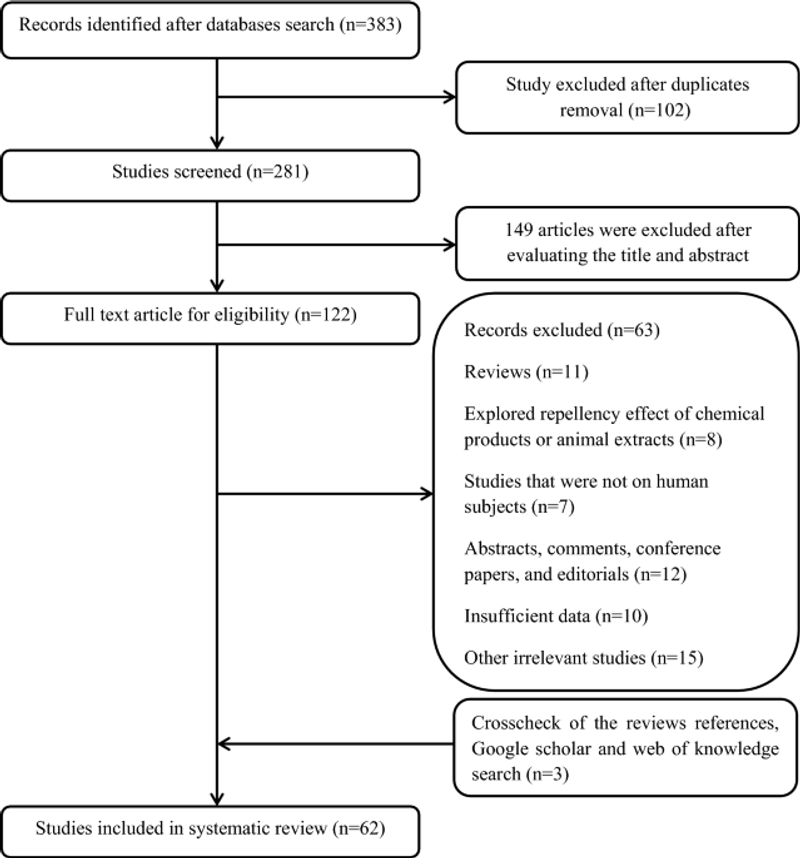
Search for lemongrass and mosquitoes online and you will find studies with encouraging numbers. Some of those studies are real, peer-reviewed, and worth reading. The catch is what they actually tested, which is almost never a lemongrass plant growing beside a patio.
A recent systematic review of plant-based mosquito repellents found promising results for Cymbopogon essential oils but was careful to note that the evidence came primarily from controlled laboratory conditions rather than field trials. Earlier work published in reviews such as a comprehensive analysis in PMC and a widely cited essential-oil repellency study used extracted oil applied at measured concentrations under controlled conditions. Those are not the same as a clump of grass sitting in afternoon sun on a North Carolina deck.
The gap between the two situations is significant. Extracted oil is concentrated, applied directly, and tested at known doses. A living plant releases aromatic compounds continuously but at low, variable levels that shift with temperature, humidity, wind, and how recently the leaves were disturbed. An outdoor patio adds further variables: air movement disperses whatever the plant releases almost immediately, and the mosquitoes arriving from a nearby yard are not navigating toward a controlled test chamber.
A useful rule of thumb: oil performance is not plant performance. Laboratory repellency at a specified concentration does not translate into a mosquito-free radius around a garden bed or container. Readers who encounter study headlines claiming lemongrass repels mosquitoes should check whether the study used extracted oil, at what concentration, and under what conditions before applying that finding to their own backyard.
North Carolina Conditions Make a Container the Smartest Home
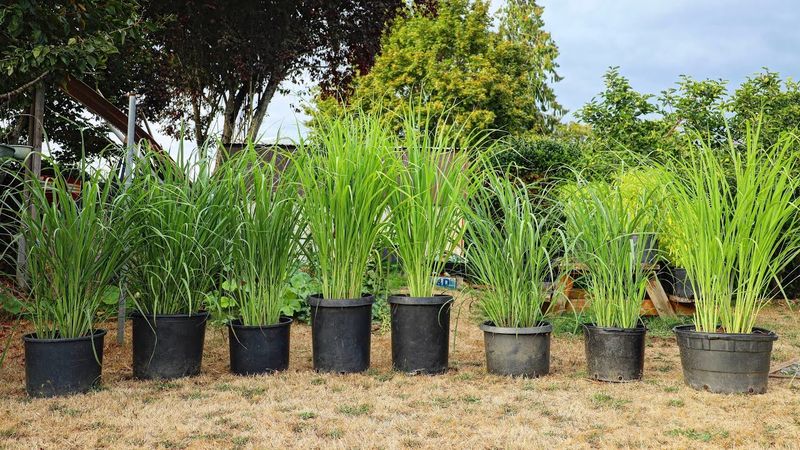
Lemongrass grows as a clumping herbaceous perennial, typically reaching 2 to 4 feet tall and 2 to 3 feet wide under favorable conditions, according to the NC State Extension plant profile for Cymbopogon citratus. NC State identifies the Coastal Plain and Piedmont as the regions of North Carolina best suited to growing it, though mountain gardeners can manage with extra winter attention.
A large container placed near but not blocking the patio solves several problems at once. The plant gets the prominent spot where its fragrance and appearance are most useful. The homeowner keeps the flexibility to shift it when needed, whether that means rotating it for better sun, moving it to clear a walkway as the clump widens, or rolling it indoors when a cold snap threatens. In-ground planting in the Piedmont or coastal plain is feasible if the site drains well and gets full sun, but it removes the overwintering flexibility that mountain and transitional-zone gardeners particularly need.
Container culture also makes the seasonal transition easier to manage. Lemongrass is frost-sensitive, and North Carolina winters vary enough across the state that a single rule does not apply everywhere. Mountain gardeners face harder freezes and should plan on moving the container to a protected space well before the first frost. Piedmont gardeners may get away with a sheltered porch or garage in mild winters but should not count on the plant surviving an open winter without some protection.
Placing the container near the patio is practical growing advice drawn from the plant’s regional hardiness and its care requirements, not from any mosquito-control research. The convenience of having lemongrass steps from the kitchen door is its own justification, and the container approach makes that convenience sustainable across North Carolina’s varied climate zones.
Give Lemongrass Sun, Water, and Room to Clump
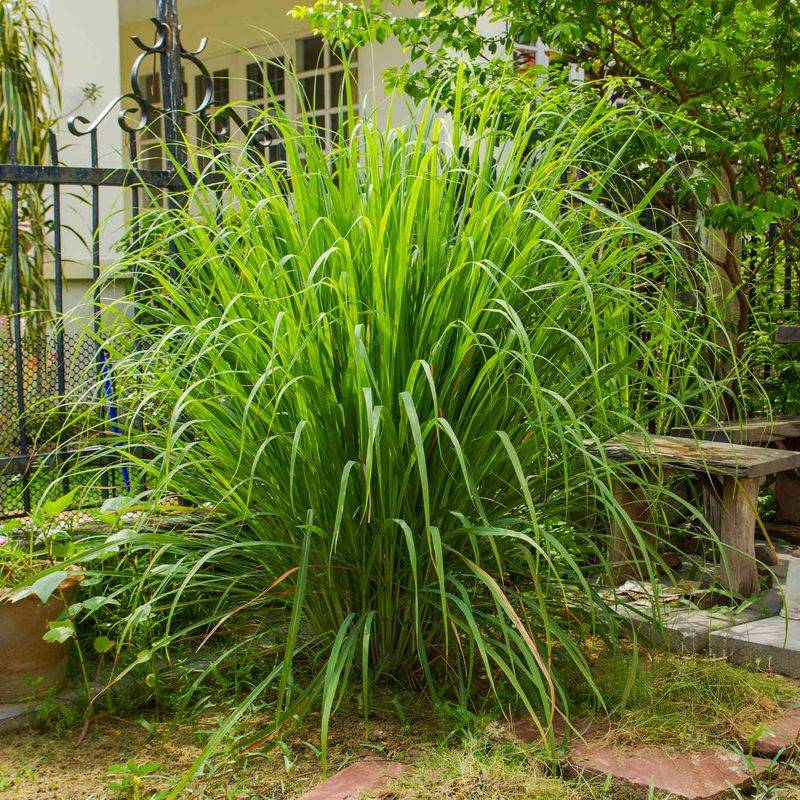
Lemongrass is not a plant that tolerates neglect and stays attractive. It performs best with at least six hours of direct sun daily, consistent moisture, and soil or potting mix that drains freely. Container plants dry out faster than in-ground plantings, especially during a hot North Carolina summer, so checking the soil moisture every couple of days is practical rather than excessive.
Utah State University Extension’s lemongrass growing guide recommends planting after the last frost date, watering regularly throughout the season, and moving potted plants indoors as temperatures cool in autumn. Those steps apply equally well in North Carolina, adjusted for the state’s earlier frost-free dates in spring and its variable autumn timing across the Piedmont, coastal plain, and mountains.
Spacing matters more than many gardeners expect. A mature lemongrass clump can reach 3 to 6 feet under favorable conditions and spreads outward as new shoots emerge from the base. Crowding it against a walkway, a seating area, or a railing edge creates a maintenance problem as the season progresses. Placing the container where the clump has room to widen, ideally with a foot or more of clearance on the sides where foot traffic passes, keeps the plant from becoming an obstacle.
When autumn arrives, the approach to overwintering should match the local winter. Coastal Plain gardeners may find the plant survives a mild winter with nothing more than a sheltered spot and a layer of mulch if it is in the ground. Piedmont gardeners with container plants have the easier path: move the pot into a garage, basement, or other frost-free space when overnight temperatures threaten to drop near freezing. Mountain gardeners should plan on bringing it inside earlier and keeping it in a spot with some light until spring.
The NC State profile notes container overwintering as the recommended approach, and that guidance is the most reliable starting point for any part of North Carolina where winter temperatures are uncertain.
Build Mosquito Protection Around the Plant

Standing water is the single most important mosquito issue to address around any North Carolina patio, and it has nothing to do with which plants are nearby. Mosquitoes breed in small amounts of still water, and common patio objects supply it readily. NC State Extension’s mosquito control guidance for homeowners specifically identifies plant pots, saucers, birdbaths, old tires, and other water-holding containers as breeding sites. Emptying or scrubbing those containers weekly during warm months removes the conditions mosquitoes need to reproduce near the seating area.
Screen repair and airflow come next. Torn or loose window and door screens let mosquitoes into the spaces where people spend time in the evenings. A ceiling fan or portable fan on a covered patio moves air across the seating area, and mosquitoes are weak fliers that struggle to land and bite in a consistent breeze. Neither of those steps involves any product or plant.
For personal protection when spending time outdoors, an EPA-registered repellent used according to its label is the tool that has been tested and shown to reduce bites. CDC guidance on mosquito prevention identifies DEET, picaridin, IR3535, and 2-undecanone as recognized active ingredients in registered repellent products. Oil of lemon eucalyptus and PMD are also on the CDC list, but only in formulated, EPA-registered products. CDC’s Yellow Book guidance on arthropod repellents is explicit that pure lemon-eucalyptus essential oil is not the same as a formulated OLE or PMD product and is not recommended as a validated repellent.
That distinction matters when a gardener is tempted to treat the lemongrass plant or its extracted oil as a substitute.
Taken together, standing-water removal, screen maintenance, airflow, and a properly labeled repellent form a layered approach that addresses how mosquitoes actually find and bite people. Lemongrass can sit pleasantly in its container nearby while all of that happens, adding fragrance and providing stalks for the kitchen, without being asked to do a job it has not been shown to do.
Understand the Plant’s Nonnative Status and Safety Limits
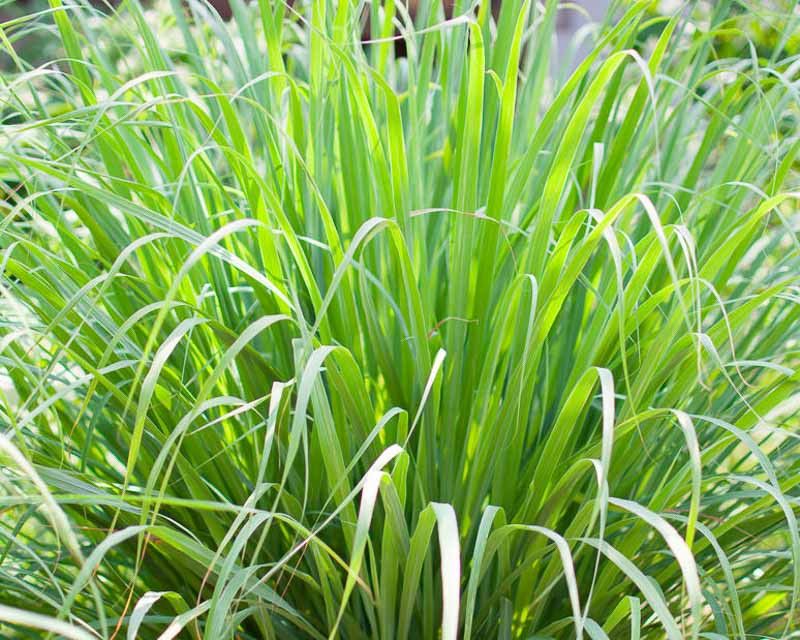
Garden centers and online listings sometimes use lemongrass, citronella grass, citronella plant, and mosquito plant as if they describe the same thing. They do not. Culinary lemongrass is generally Cymbopogon citratus, the species covered in the NC State plant profile and the focus of this article. Citronella grass, associated with citronella oil production, is a related but separate species.
The plant sold as a mosquito plant or citrosa geranium is something else entirely, and UC IPM’s mosquito resource notes that it has not been shown to work as a landscape mosquito repellent. Iowa State Extension’s plant repellency overview makes the same distinction, separating culinary lemongrass from citronella grass and noting that neither should be treated as interchangeable with formulated citronella products.
Lemongrass originated in India and Sri Lanka, as the NC State plant profile confirms. That origin means it should not be marketed or described as a native North Carolina plant, and gardeners should not assume it provides the same habitat or food-web value that a native plant might offer to local pollinators, birds, or other wildlife. Being nonnative does not automatically make a plant invasive in North Carolina, and the sources reviewed here do not establish a specific invasiveness concern for lemongrass in this state. Gardeners who prioritize native plant support should simply understand that lemongrass fills a culinary and ornamental role rather than an ecological one in the local landscape.
Pet owners need one additional piece of information. The NC State plant profile flags lemongrass as a potential concern for cats, dogs, and horses. That listing is not a certainty of harm, but it is a reason to verify the plant’s safety with a veterinarian or through a reliable animal-poison resource before placing it where household animals can reach it. An edible herb for humans is not automatically safe for every species sharing the yard.
Keep Lemongrass for the Patio, Not as a Promise
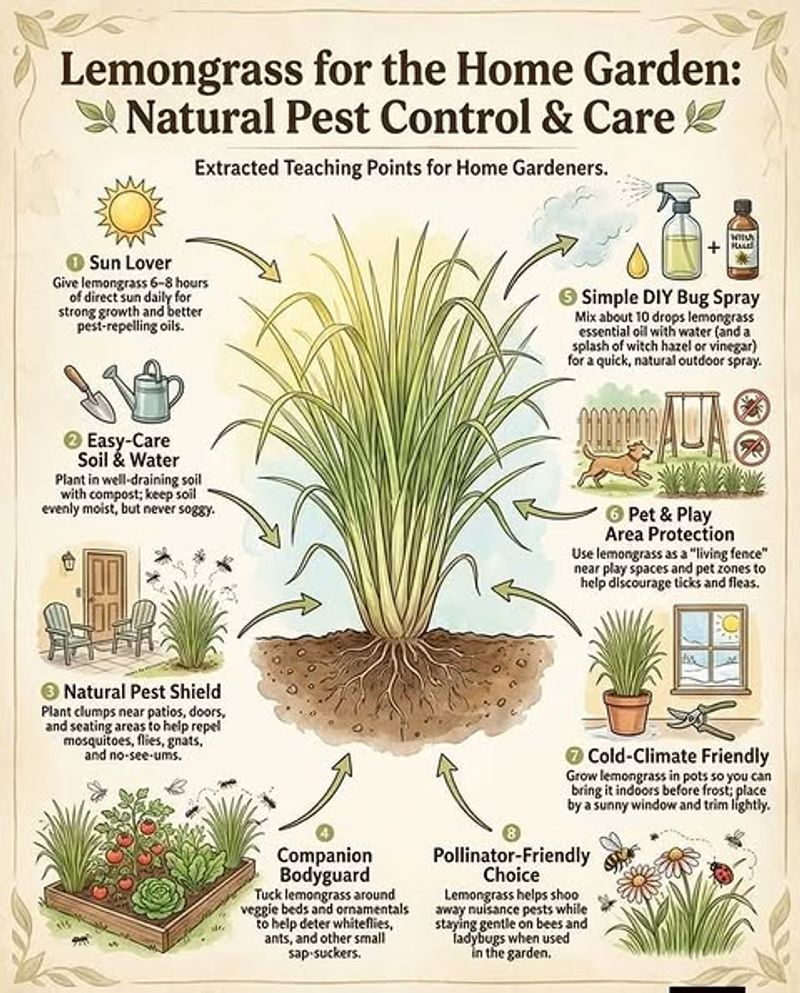
Lemongrass earns a spot near the patio on its actual merits: stalks ready to pull for cooking, a citrus fragrance that makes the seating area more pleasant, and a bold clump that fills a container with real visual weight. Those are enough. Place it where it gets full sun, water it consistently, and plan for winter protection suited to your part of North Carolina, following the care guidance in the NC State Extension plant profile.
For mosquito protection, run a separate sequence: remove standing water from pots, saucers, and any other containers weekly, as outlined in NC State’s mosquito control guidance, repair screens, use airflow where possible, and apply an EPA-registered repellent according to its label when bite protection matters. Lemongrass can coexist with all of that, adding fragrance and flavor without being asked to stand in for tools that have actually been tested. A useful patio herb and a responsible mosquito plan are not competing ideas – they just belong in separate categories.