
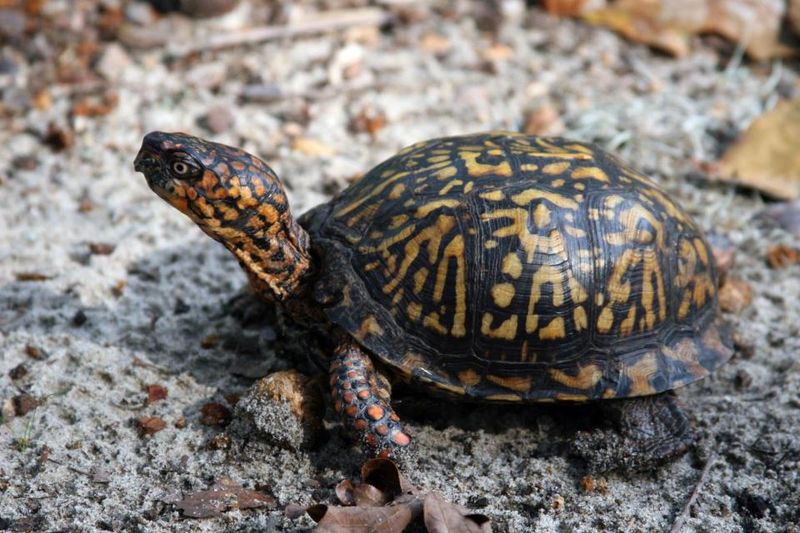
Pull back a clump of daylilies or shift a bag of mulch in a North Carolina yard and you might come face to face with a domed, orange-flecked shell and a pair of suspicious amber eyes. That visitor is almost certainly an eastern box turtle, one of the state’s most recognizable native reptiles, and the instinct to pick it up and carry it somewhere safer can actually put it at serious risk.
Knowing what the turtle is, why it showed up, and what to do next makes all the difference between helping a native neighbor and accidentally harming it.
Which turtle is settling into the garden bed?
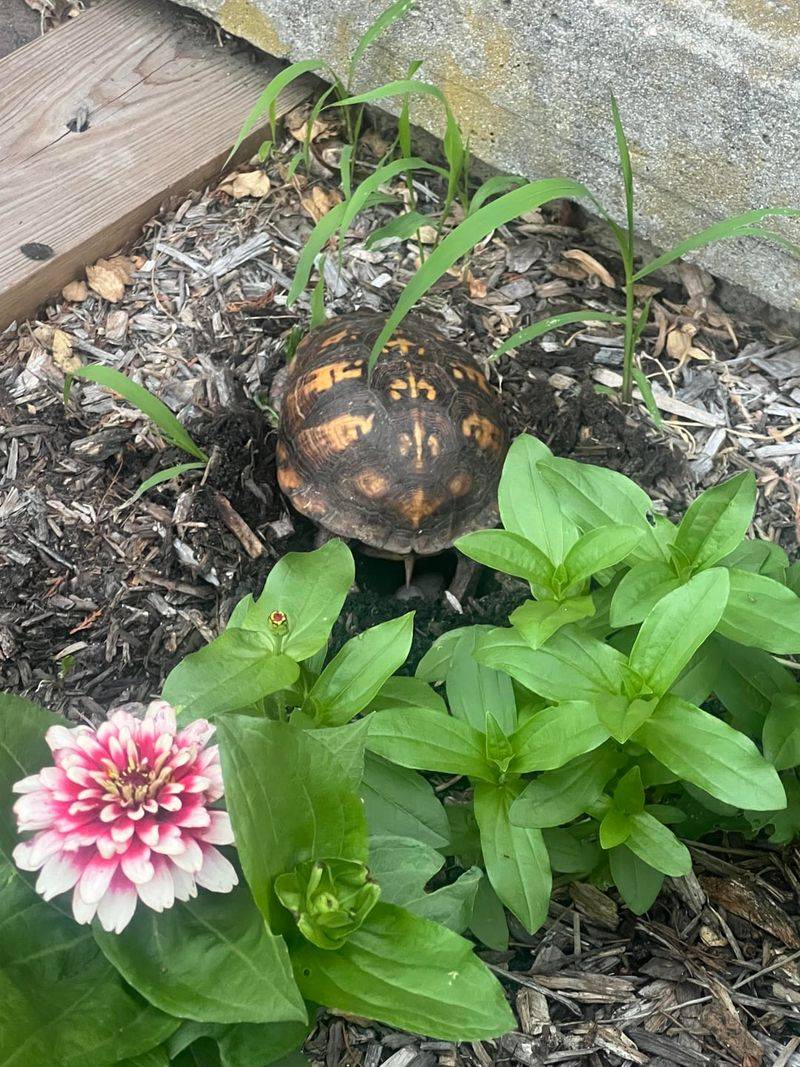
Most North Carolina gardeners who spot a domed, patterned shell among the hostas or at the edge of a raised bed are looking at the eastern box turtle, Terrapene carolina carolina. NCWRC describes it as a terrestrial turtle found statewide, turning up in forests, field edges, neighborhoods, and residential gardens alike.
Its high, rounded carapace and the hinged plastron that lets it seal itself shut are the quickest identification clues.
One thing worth understanding right away: this is not a pond turtle that wandered off course. The Smithsonian’s National Zoo notes that eastern box turtles use terrestrial habitats such as moist woodlands, shrublands, and vegetated edges rather than aquatic ones.
A flower bed with damp soil, leaf litter, and nearby ground cover can be perfectly usable habitat for this species, so the animal in the garden is not necessarily lost or displaced.
The eastern box turtle is broadly omnivorous. The NCWRC species profile lists berries, fruit, mushrooms, insects, earthworms, snails, slugs, and carrion among its foods.
That varied diet means a turtle in the garden may consume some invertebrates along the way, but gardeners should not count on one animal to solve a pest problem. The advice here applies specifically to an apparently wild, healthy eastern box turtle, not to aquatic turtles, snapping turtles, or nonnative pets, all of which may need different handling.
Its familiar range matters more than a “better” spot
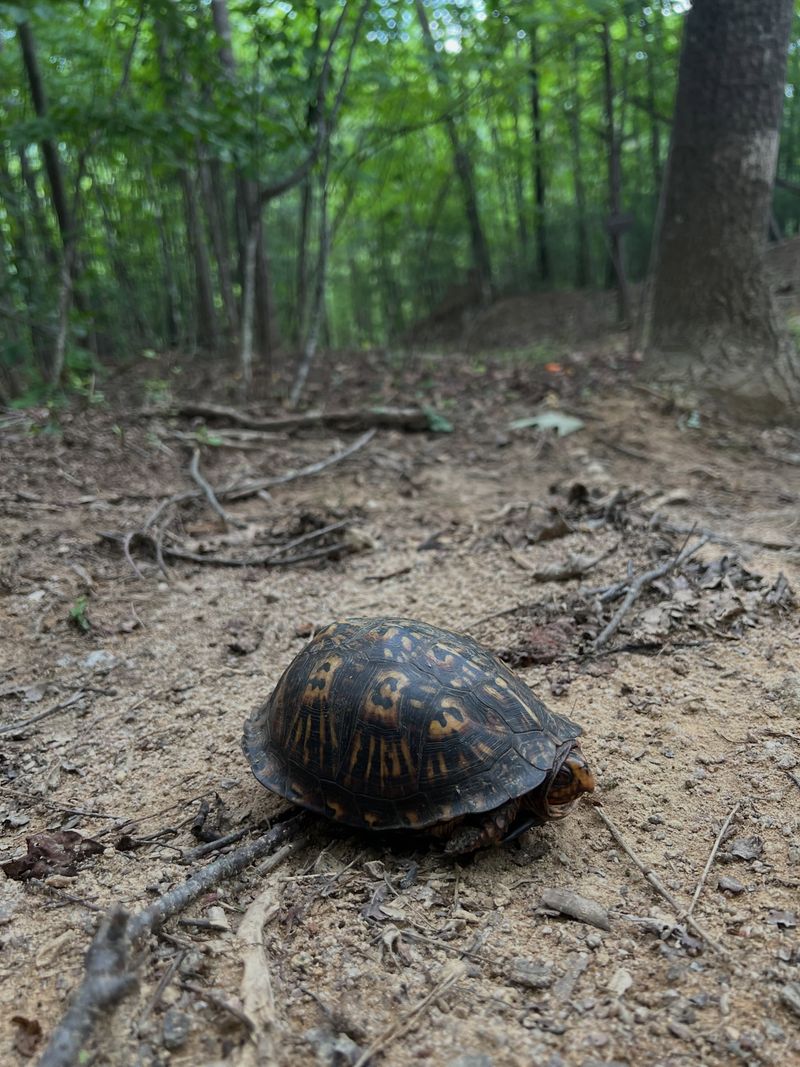
Box turtles are not wanderers in the way many people assume. NCWRC notes that eastern box turtles usually live within a territory of under 2 acres and show strong homing instincts, often returning to the same patches of ground season after season.
When a gardener spots one, the turtle may already be exactly where it belongs, moving through a familiar stretch of yard rather than passing through from somewhere else.
That said, a compact usual range does not mean the turtle stays glued to one spot. U.S.
Forest Service research documents real variation in box-turtle home-range size across individuals, and females may travel beyond their usual area when seeking nesting sites. A turtle crossing the yard in late spring or early summer may be doing exactly that, and a “small” home range still allows for purposeful movement.
Eastern box turtles are long-lived animals, and many do use the same areas year after year. However, a single garden sighting cannot tell you how long this particular turtle has used your property or whether it was born nearby.
What you can say is that the turtle is operating in terrestrial habitat, which is appropriate for its species, and that it is not signaling distress simply by being in a flower bed. A garden sighting does not mean the animal needs a more natural-looking destination somewhere else.
What relocation can cost the turtle
A study conducted near Davidson, North Carolina, gives the clearest available picture of what happens when well-meaning people move box turtles. Researchers tracked 10 relocated eastern box turtles alongside 10 resident turtles for one year and found that relocated turtles had substantially larger home ranges, traveled farther each day, and experienced greater mortality or disappearance: five relocated turtles died or disappeared compared with none of the resident turtles.
Those numbers carry real weight, even if the sample was small.
Translating that into practical terms: a turtle dropped into an unfamiliar landscape has to move more to find food, shelter, and mates. More movement means more road crossings, more encounters with dogs and predators, and less time sheltering under cover that it actually knows.
The animal is not exploring – it is searching, and that search carries costs.
The Davidson study followed a limited group of turtles for one year, so its results support caution rather than an absolute rule that every moved turtle will die. Individual outcomes vary, and the research does not claim otherwise.
What it does establish is that casual relocation by homeowners carries meaningful risk, and that risk is avoidable simply by leaving the animal where it is.
Conservation translocations are a separate matter entirely. A 2024 study reported successful reproduction and genetic integration among eastern box turtles released through a professionally managed conservation program, but those releases involved site selection, permits, population monitoring, and defined conservation goals.
That process is not what happens when a homeowner carries a turtle across the street to a park or into the woods behind the neighborhood.
A garden bed is usually not an emergency
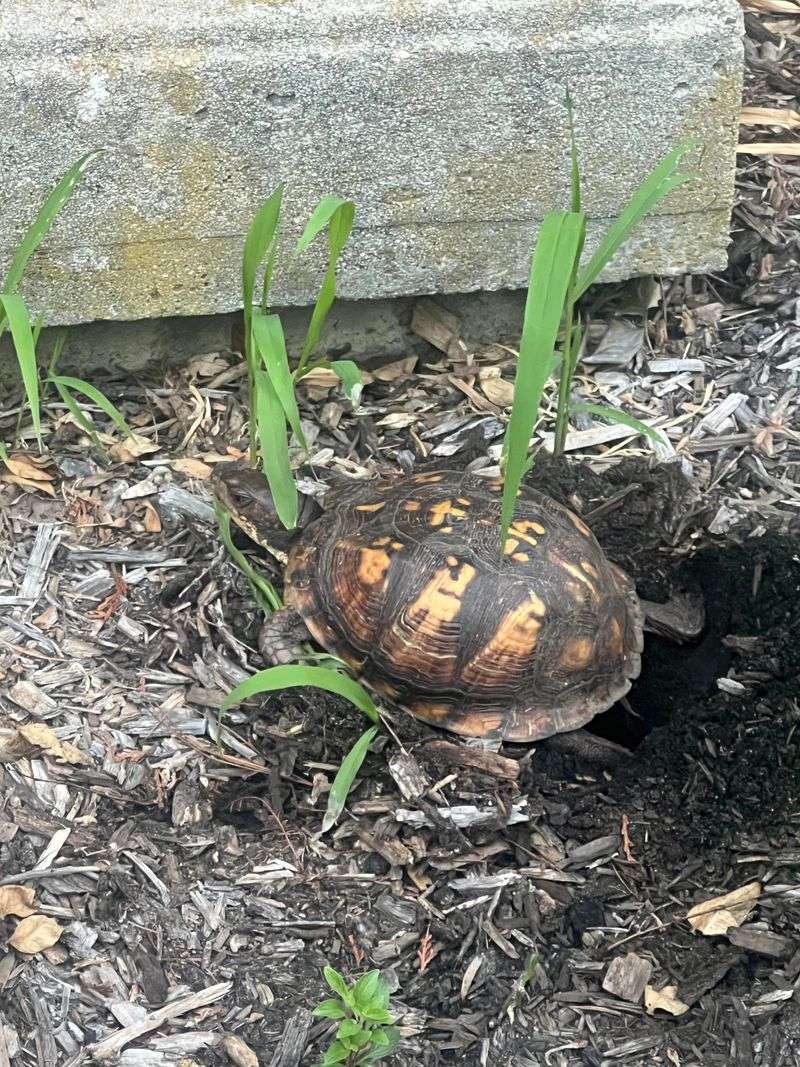
Seeing a box turtle in the garden is not a crisis requiring immediate action. If the animal appears healthy, is not trapped under netting or debris, and is not facing an obvious hazard, the correct response is to leave it alone.
NCWRC is direct on this point: do not relocate an eastern box turtle or take it home as a pet. Carrying it into the woods, setting it near a pond, driving it to a park, or releasing it on another property all count as relocation, even when done with the best intentions.
Leaving it in place does not mean ignoring the animal. Practical steps protect it from preventable disturbance without moving it anywhere.
Keep dogs and cats away from the area while the turtle is present. Avoid running a mower, tiller, or edger over ground where it may be sheltering under leaves or mulch.
Before any digging or major bed cleanup, take a moment to check under loose debris, especially in warm months when turtles may be resting under leaf piles or low plants.
The distinction that matters is between a turtle that is simply present and a turtle that is in actual danger. A box turtle sitting in a flower bed is almost certainly doing what box turtles do.
One caught under garden netting, pinned by a fallen branch, or in the path of equipment is a different situation and deserves a quick, careful response. Removing the immediate hazard or moving the animal the shortest possible distance clears the danger without turning a routine garden visit into an unnecessary relocation.
The safe move is short, deliberate, and directional
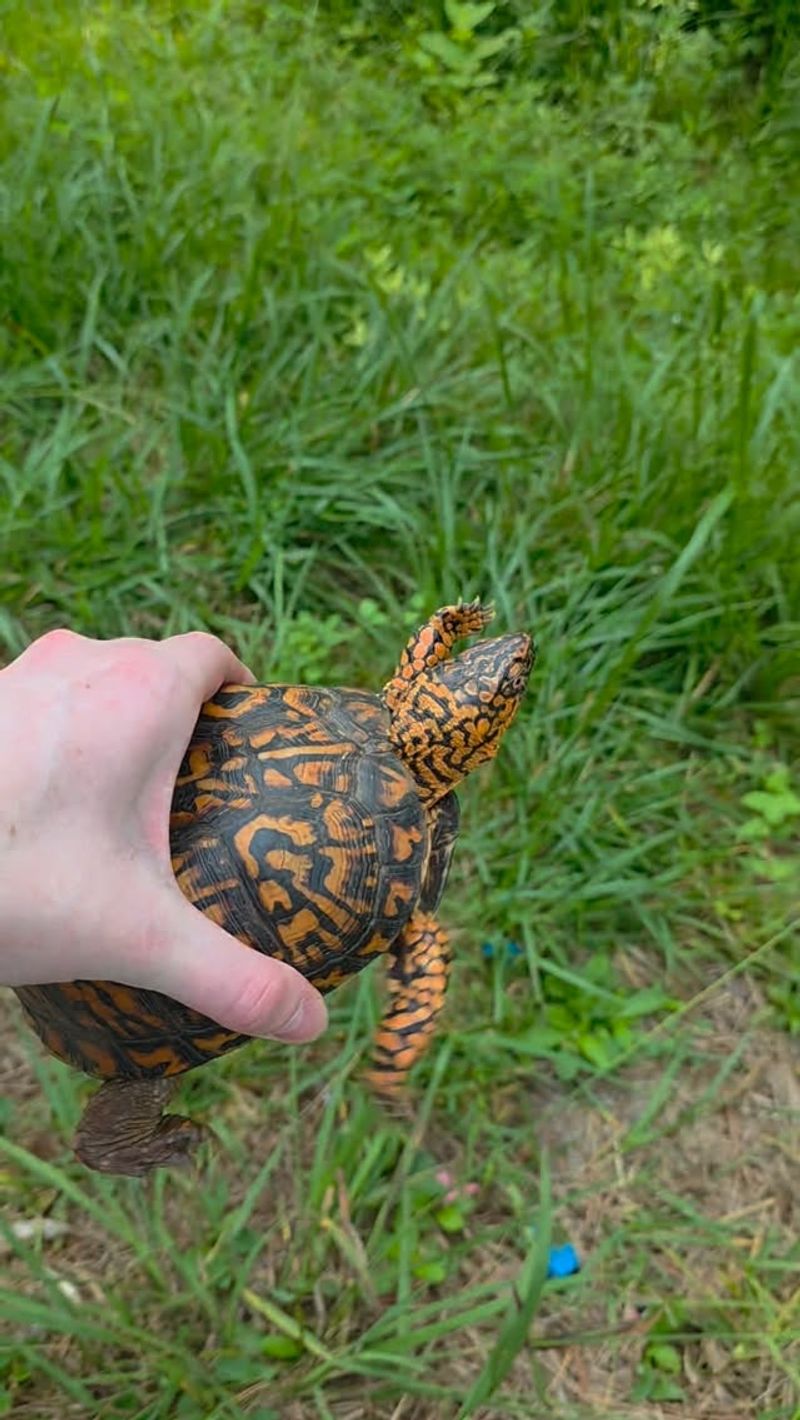
Roads are where good intentions and real danger meet for box turtles. Before doing anything, assess traffic and your own safety first.
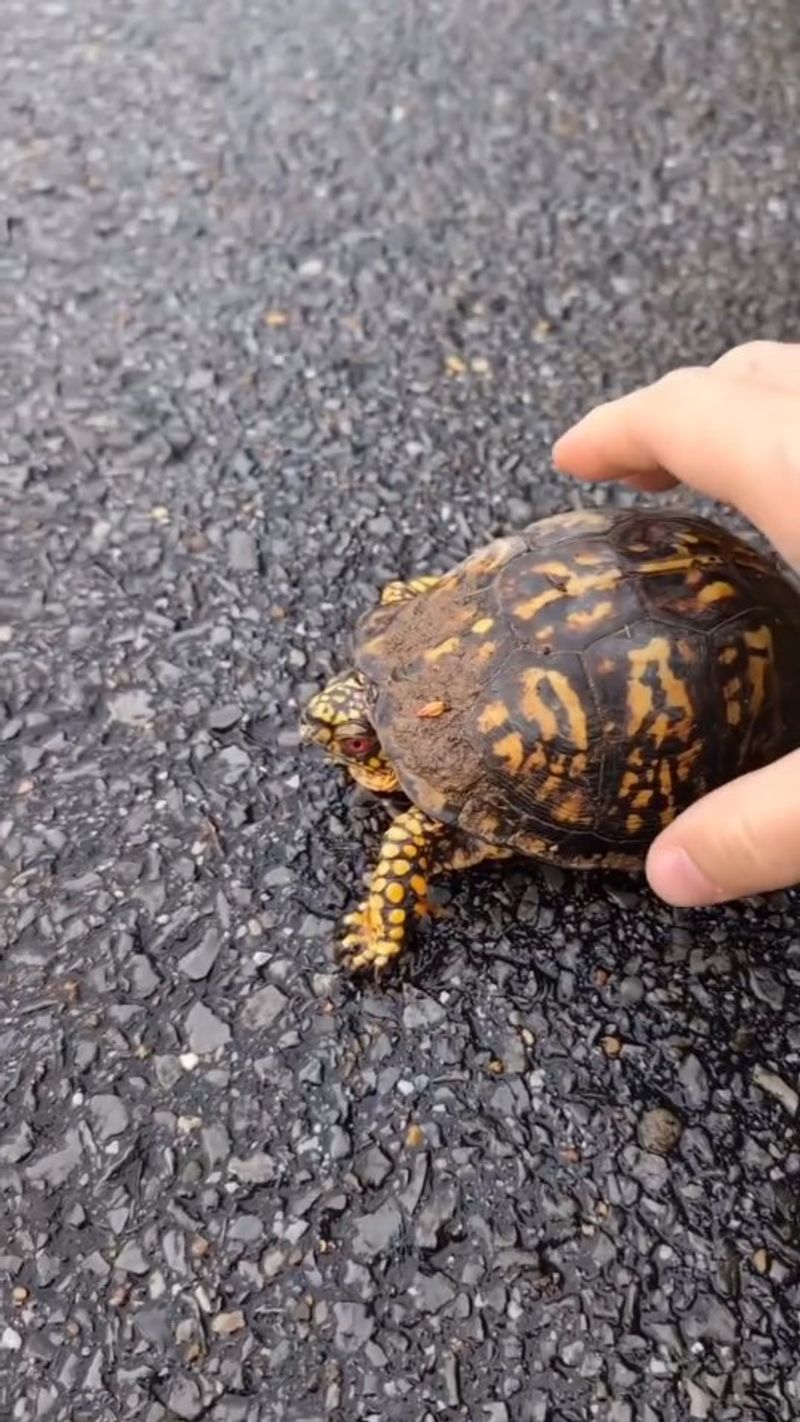
Stopping in a travel lane to help a turtle is only worth attempting when it is genuinely safe to do so. Once it is, the guidance is straightforward: pick the turtle up, carry it straight across in the direction it was already heading, and set it down on the other side.
NCWRC advises moving a box turtle the shortest distance possible, ideally less than 50 feet, and continuing in its direction of travel. Reversing the turtle’s direction or carrying it to a nearby park, pond, or patch of woods turns a brief road-crossing assist into a relocation, which carries the same risks described in the Davidson research.
The turtle was heading somewhere specific, and reversing it or transporting it elsewhere puts it on a longer, more hazardous search.
U.S. Fish and Wildlife Service guidance on helping turtles cross roads reinforces this approach: move the animal across in the direction it was traveling, keep the move short, and resist the urge to take it somewhere that looks better to you.
A brief assist that removes the immediate danger while keeping the turtle close to its familiar area is all that is needed.
This road-crossing advice applies specifically to the eastern box turtle. Other species found near roads, including snapping turtles, painted turtles, or aquatic species, may need different handling.
If you are not sure what species you are looking at, a quick photo from a safe distance can help you identify it before deciding how to help.
An injured or unusual turtle needs a different response
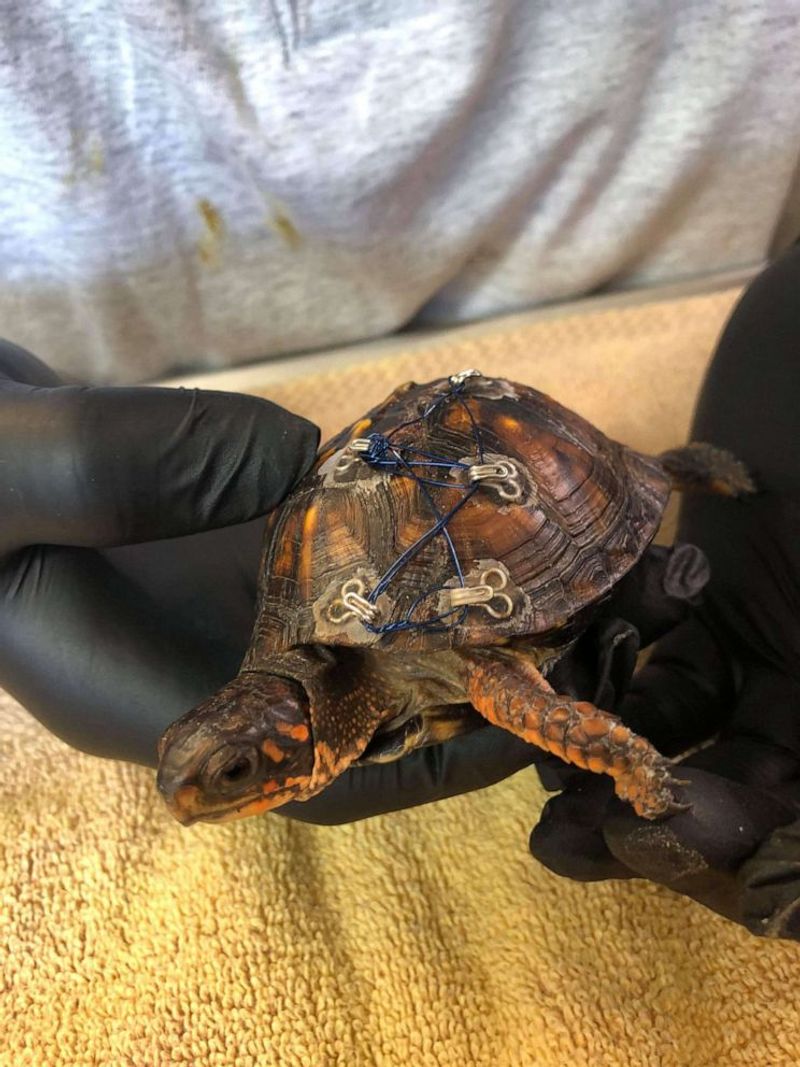
A cracked shell, active bleeding, a visibly deformed limb, or an animal that cannot retract into its shell changes the situation entirely. NCWRC advises contacting a licensed wildlife or reptile rehabilitator for injured wildlife rather than attempting home treatment, keeping the animal in a garage or box, or improvising a release into what seems like better habitat.
Turtles can be resilient, and some minor surface marks may heal without intervention, but a homeowner cannot reliably assess shell damage or internal injury from the outside. Professional guidance is the right call when something looks seriously wrong.
NCWRC also notes that not every apparent injury requires taking the animal home, so the first step is to call or contact a licensed rehabilitator and describe what you see before assuming the turtle needs to be collected. If professional advice confirms that the turtle should be transported, follow those specific instructions rather than improvising.
Identification also matters for the advice to hold. The leave-it-alone default targets an apparently wild, native eastern box turtle.
A nonnative pet turtle, an escaped captive animal, or a species found outside its expected range may require a completely different response and should be reported to wildlife authorities rather than released into local habitat.
North Carolina classifies the eastern box turtle as a nongame species. NCWRC’s nongame possession and collection guidance addresses restrictions on collecting or keeping these animals, and the possession and collection regulations provide further context.
If you have questions about a specific situation, contacting NCWRC directly will give you the most current and accurate answer.
A turtle-friendly bed supports the visitor without making it a pest service
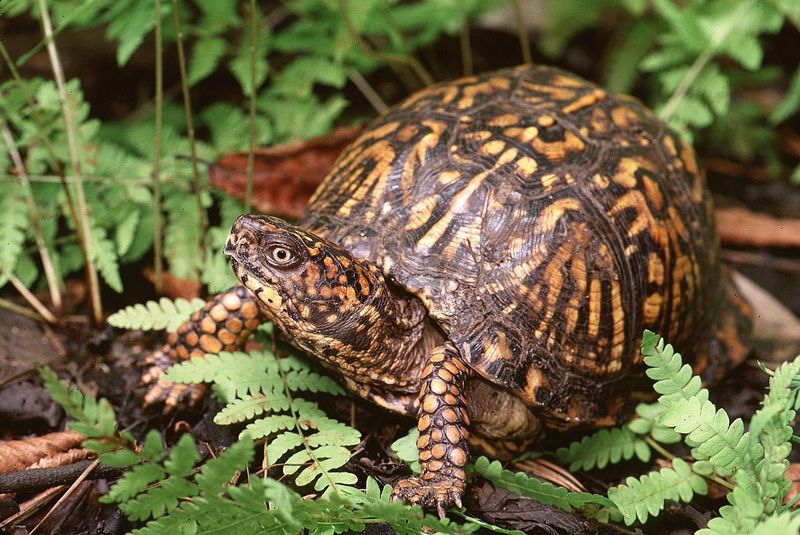
Gardeners who want to support box-turtle visits can do so through simple habitat choices rather than dramatic changes. U.S.
Forest Service research documents that eastern box turtles use leaf litter, brush piles, logs, and damp soil for shelter, foraging, and overwintering, so leaving some of those features in beds and borders gives the turtle usable cover without requiring a full landscape overhaul. A bed that retains some organic material at ground level is more useful to the turtle than one that is raked completely bare every season.
The NCWRC species profile confirms the turtle’s broad diet, which does include slugs and snails. That part of its diet is real, but it should not be the reason a gardener values the animal or the reason garden management decisions get made.
A single turtle foraging across a residential bed is not a slug-control program. Treat any pest reduction as an occasional side effect of a native wildlife visitor, not a service the turtle is obligated to provide.
Chemical slug baits deserve a specific caution here. EPA’s reregistration eligibility decision for metaldehyde identifies it as a molluscicide and describes risks to terrestrial wildlife, including nontarget animals that may encounter bait in a garden setting.
Using metaldehyde products in a bed where a box turtle forages works against the habitat goal, not with it. If slug pressure is a genuine concern, look for alternatives that do not pose documented risks to terrestrial wildlife.
Native plants, ground-level logs, and retained leaf litter are practical contributions that can make a bed more usable for box turtles over time. No planting strategy guarantees a turtle will return, but reducing unnecessary disturbance and avoiding harmful chemicals keeps the door open for the species to use your yard on its own terms.
Leave the turtle—and its home range—where you found it
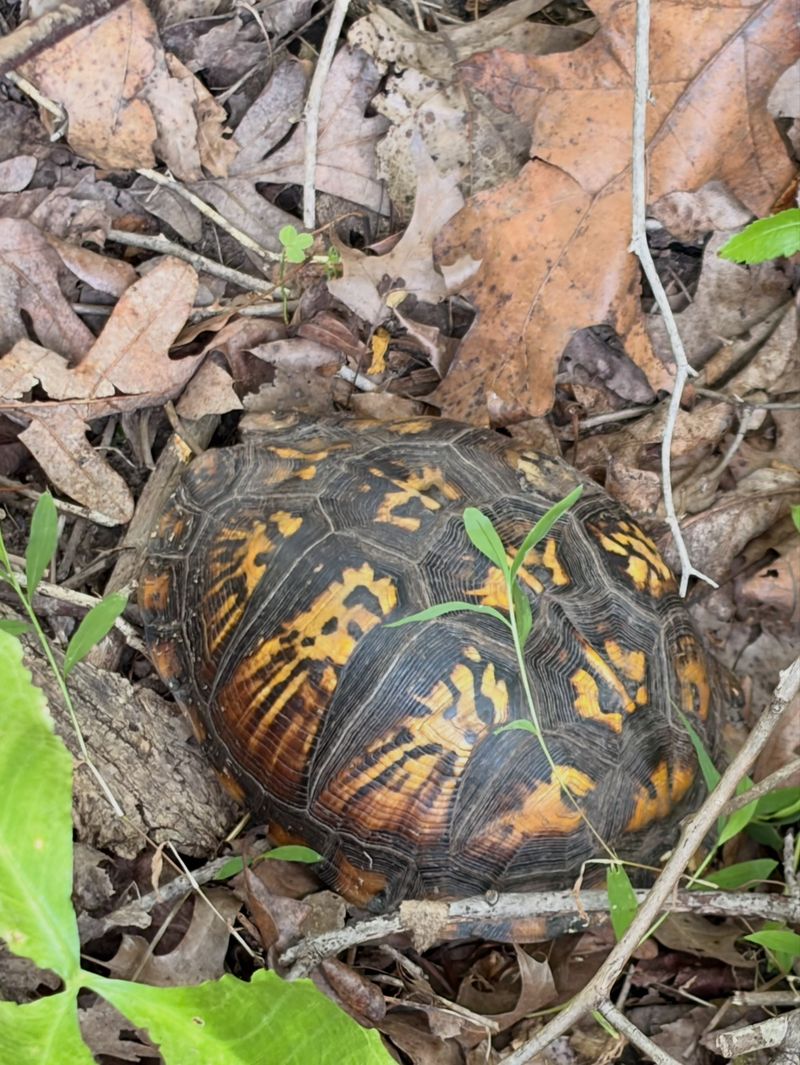
An apparently healthy eastern box turtle resting in a North Carolina garden bed is almost certainly not asking to be rescued. It may be moving through a terrestrial area it already knows well, foraging, sheltering, or simply crossing from one part of its established range to another.
The default answer is the same in most cases: leave it where it is.
The exceptions are real but narrow. NCWRC’s guidance and the Davidson relocation research together point to the same practical rule: intervene only for immediate danger or obvious injury, keep any necessary safety move as short as possible, and contact a licensed rehabilitator when the situation calls for professional care.
Anything beyond that risks turning a routine wildlife sighting into a hazard the turtle never needed to face.
Restraint is the simplest form of protection available to a North Carolina gardener, and it costs nothing.