
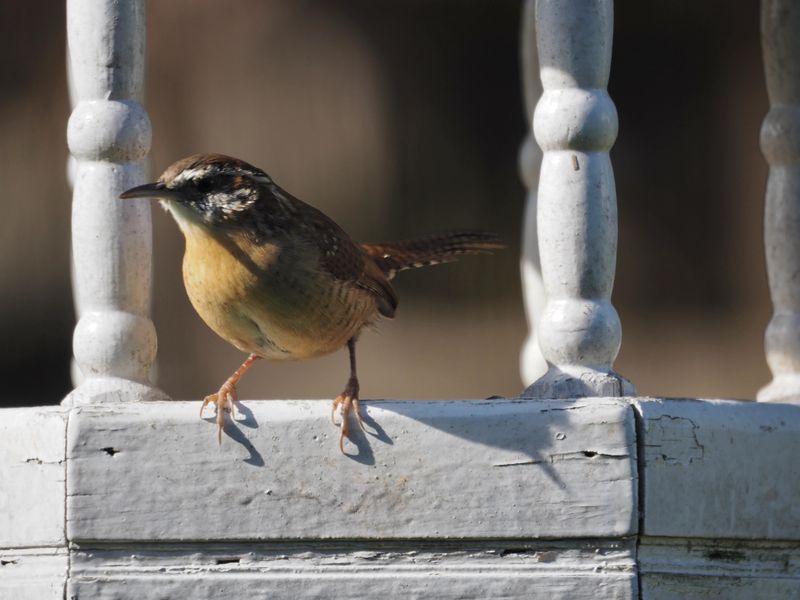
A small, bold bird hopping around your porch in winter may well be a Carolina wren, a year-round North Carolina resident that likes yards, garages, and sheltered corners. It might be hunting for insects, checking out a nook, or tucking in for the night.
A single visit cannot tell you which, but a few simple clues can. Once you know what to watch for, you can decide whether to lend a hand or close up a spot.
How to recognize a Carolina wren
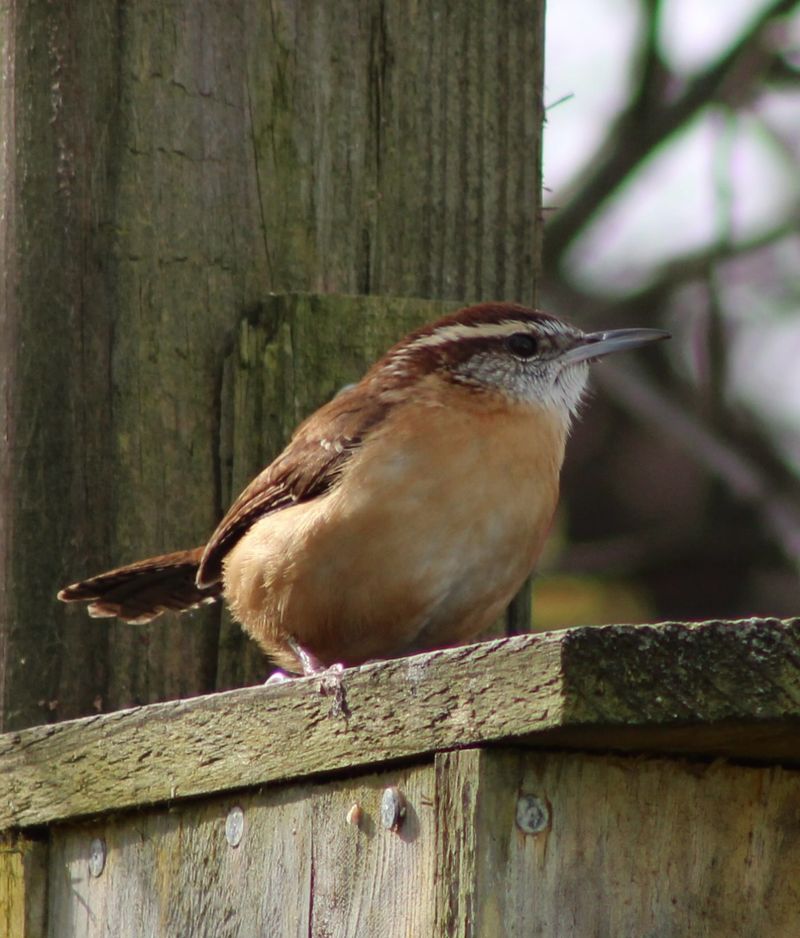
Picture a bird about the size of a sparrow, but with more attitude. A Carolina wren is reddish-brown on its back and buffy on its belly.
The easiest clue is a bold white stripe above each eye.
Look at the bill and tail too. The bill is slender and a little curved, and the tail is often held cocked upward.
Cornell’s identification guide lists these features and notes that the bird often slips through low, tangled plants and pokes around yards and garages.
Sound can help as well. Wrens tend to be chatty, and a loud, ringing song from a shrub near your porch adds to the case.
Still, a general description like small and brown cannot settle the species. Many little birds fit that.
Treat the wren as a strong possibility rather than a sure thing until you have seen the eyebrow stripe, the shape, and the posture. A pair of binoculars or a quick phone photo from a window works well.
Give yourself a few days of watching before you decide anything about what the bird is doing. Good identification comes first, and good decisions follow from it.
What its repeated behavior can tell you

One sighting tells you very little. Timing and repetition tell you much more, so jot down when the bird shows up and what it does.
A bird seen in daylight may simply be passing through or foraging for food. That is the most common and least worrisome explanation.
If it hops along the porch floor, checks the corners, and leaves, it is probably just hunting.
Things change if the bird returns to the same sheltered spot at dusk and seems to stay through the night. That makes roosting a plausible explanation.
N.C. Cooperative Extension describes winter roosting spots as protected places birds use at night, which is a different matter from raising young.
If you see the bird repeatedly carrying twigs, grass, or other material into a nook, nest-building becomes more likely. Even then, it is a clue and not proof.
Audubon’s field guide notes that Carolina wrens may nest in buildings and other odd sheltered spots.
Roosting and nesting are not the same behavior. A roost is a place to sleep, often used in winter.
A nest is where eggs and chicks go, and it usually shows up with a steady stream of material and more frequent trips.
A porch can offer food, shelter, or a nest site
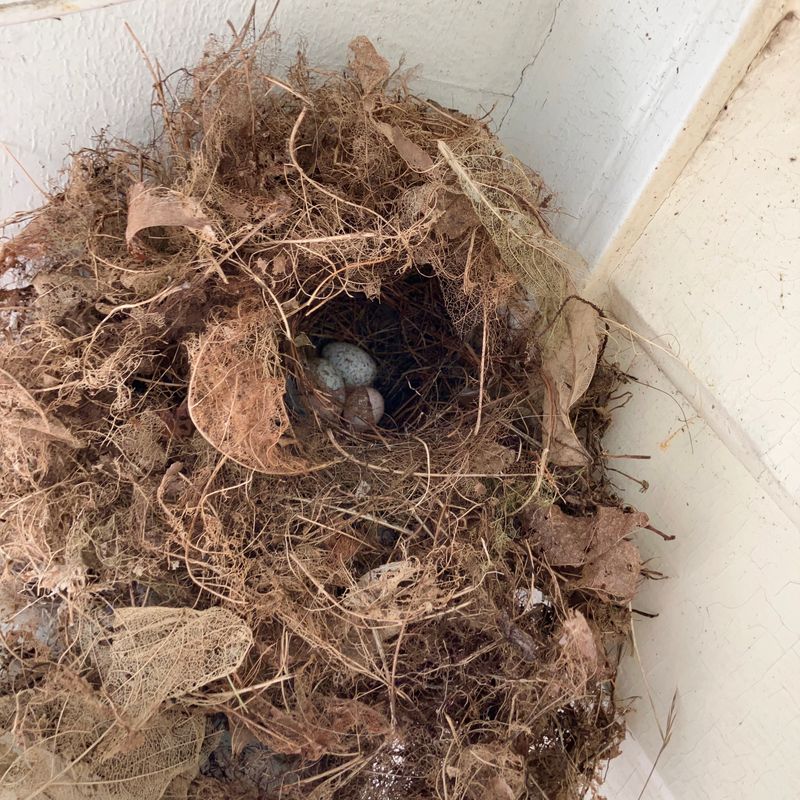
Several explanations can fit the very same visit. Carolina wrens live in North Carolina all year, so the one you see in January is likely a local resident and not a traveler.
They use suburban yards and sheltered building spaces such as porches, garages, and eaves.
Food is one possibility. Audubon notes that these wrens eat mostly insects and spiders, plus berries and some seeds.
They may also take suet or other feeder food, especially in colder months. Spiders tucked in porch corners and bugs around the foundation can draw a wren without any link to what is inside your house.
Shelter is another. A protected nook can serve as a nighttime roost, and the same spot might later be looked at as a place to nest.
Cornell notes that the species explores yards and garages, which fits with nest-site exploration.
These are separate ideas, and the bird may be doing more than one. A visit alone cannot show whether it is feeding, resting, or scouting.
Be careful not to assume it wants warmth from your home or plans to nest there. Watching the pattern over several days is the best way to narrow it down.
Support birds with habitat
Helping a small bird does not mean putting out a buffet. The easiest support comes from the landscape itself.
North Carolina Wildlife Resources Commission guidance favors natural food and habitat, and it advises reducing human-provided food in fall and winter.
Native plants are a good starting point. They supply berries, seeds, and the insects birds rely on, and they also give cover.
Dense, layered plantings near the porch, but not crowded against the house, let a wren forage in low tangles without needing to poke into your eaves.
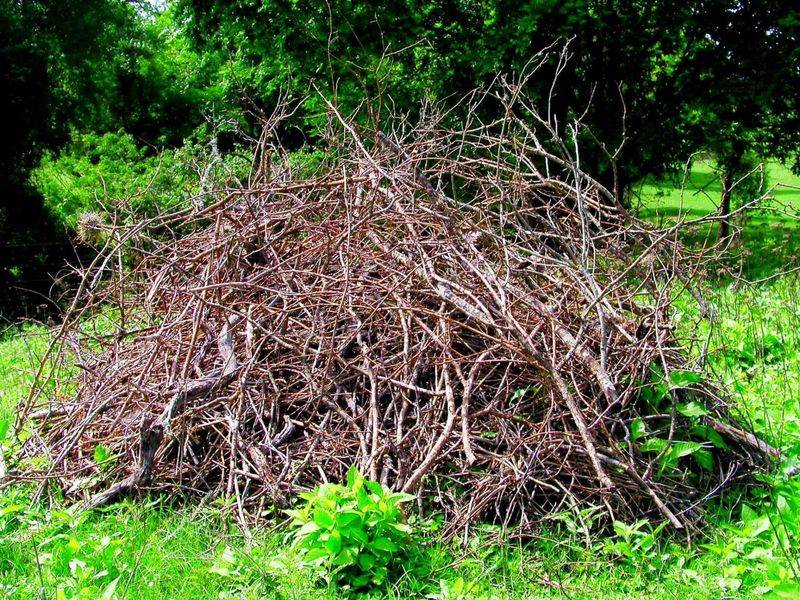
Brush piles and sheltered vegetation are also useful. N.C.
Cooperative Extension lists them among places birds may use for winter cover. A pile of pruned branches in a back corner of the yard is a simple example.
None of this requires hand-feeding, and a feeder is not necessary. If you already have one, you do not have to panic, but you can trim back on it as the season goes on.
Leaving a few seed heads and some leaf litter in place gives wrens plenty to search through. Small, quiet changes often do more good than extra handouts.
Block a nesting nook only when it is empty
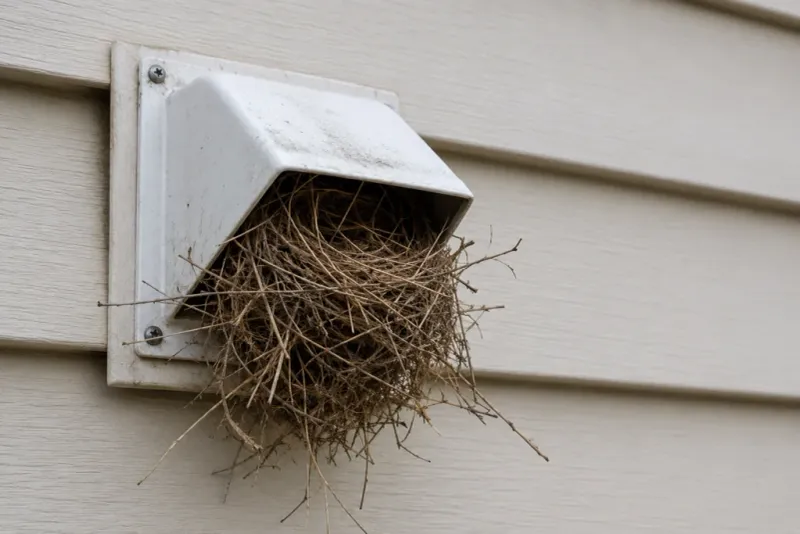
Some homeowners would rather a bird not nest in a particular spot, like a light fixture, a wreath, or a gap in a garage. That is a reasonable wish, and there is a careful way to go about it.
Check first that the nook is empty, with no bird using it and no nest material inside, and block access before nesting begins.
Timing matters. Never seal a bird inside, and never block access to an active nest.
If you see a bird coming and going, or you spot eggs or chicks, leave the area alone. Looking at the spot at several times of day, including near dusk, helps confirm it is unoccupied.
The rules back this up. North Carolina Wildlife Resources Commission guidance addresses protected native songbirds and active nests.
It does not mean that every empty nest can always be removed, and one blanket rule does not cover every situation.
Federal rules are narrower than many people think. The U.S.
Fish and Wildlife Service describes a birds-in-buildings authorization limited to specified circumstances inside human-occupied buildings, such as risks to people or birds, property damage, or disruption of normal use. It does not cover birds or nests on exterior features like eaves.
If you are unsure whether a spot is occupied, wait and watch before acting.
Choose your next step from the evidence
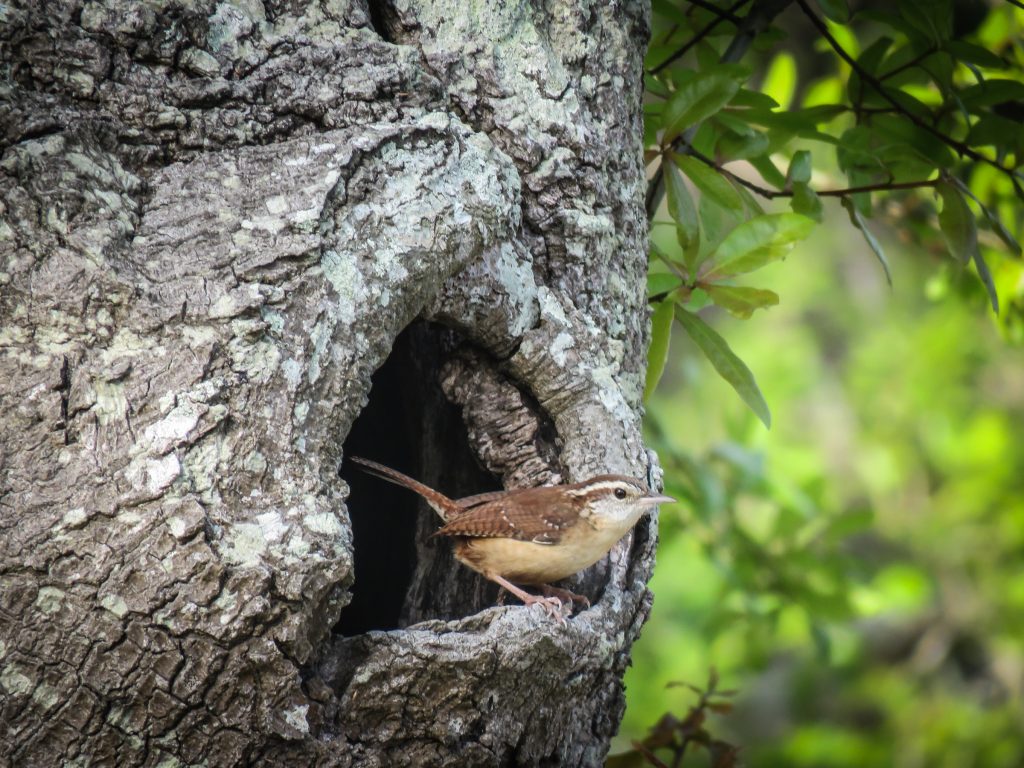
Start by naming the bird as carefully as you can, using the eyebrow stripe, the cocked tail, and the song from Cornell’s guide. Then watch for repeated behavior over several days.
A porch visit does not establish one certain motive.
If the clues point toward foraging or roosting, habitat support is a gentle choice. If a nook worries you, careful exclusion while it is empty is the other path.
Either way, a little patience goes a long way. The bird has been reading your porch for a while, so give yourself the same chance.