
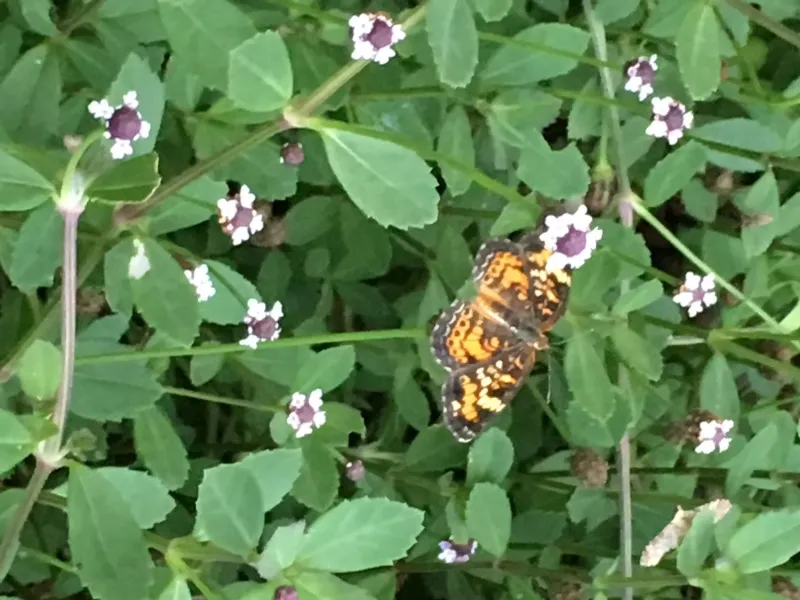
A butterfly garden can look full of flowers and still be missing the real nursery. Adult butterflies sip nectar, but their caterpillars need the right host plants to survive.
In Florida, adding a few key native or well-suited host plants can turn a pretty yard into a place where butterflies actually raise the next generation. Here are seven plants that do much more than decorate the bed.
1. Milkweed for monarchs and queens
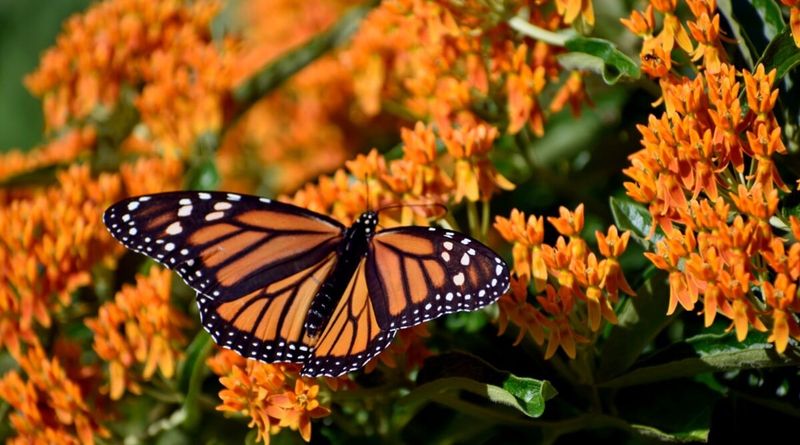
Monarchs get most of the attention, but milkweed also supports queen butterflies, and that makes it one of the hardest-working host plants in a Florida yard. Nectar flowers may bring adults in for a quick visit, but milkweed gives female monarchs and queens a reason to stop, lay eggs, and return.
Florida gardeners should choose milkweed with care. Native species such as butterfly milkweed, swamp milkweed, aquatic milkweed, and pinewoods milkweed are better choices than tropical milkweed, which can stay green too long in warm parts of the state and may contribute to disease problems if not managed correctly.
Plant milkweed in full sun where it can handle good airflow. In sandy soil, young plants may need steady water until they root in, but many native types settle into low-care habits once established.
Do not panic when the leaves look chewed down to sticks. That ragged look is the sign that your garden is doing its real job, feeding caterpillars instead of just feeding adult butterflies for a few minutes.
2. Passionvine for gulf fritillaries and zebra longwings
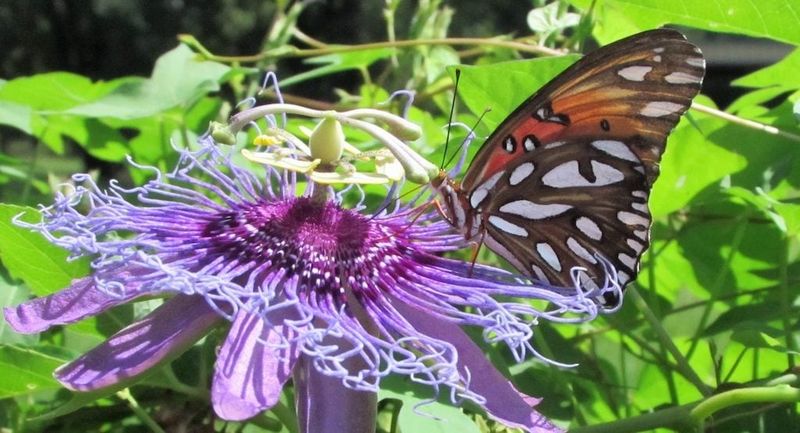
A plain fence can become butterfly nursery space almost overnight when passionvine starts climbing. Gulf fritillaries use it heavily, and zebra longwings, Florida’s state butterfly, also depend on passionflower vines as host plants.
The magic is in the leaves, not just the strange purple flowers. Female butterflies search for passionvine foliage because their caterpillars are built to eat it, including the chemical compounds that help protect them from hungry predators.
Native choices such as corkystem passionflower and maypop can be excellent in Florida gardens. Corkystem passionflower is especially useful in smaller yards because it tends to have a lighter, more manageable growth habit than some vigorous vines.
Give passionvine a trellis, fence, arbor, or shrub edge where a little chewing will not bother you. In warm Florida weather, caterpillars can strip sections fast, so a larger patch supports more young butterflies and recovers better.
One fun bonus: the caterpillars look spiky and dramatic, almost like tiny garden creatures from a cartoon. They are not there to ruin your vine, they are proof that your yard has become part of the butterfly life cycle.
3. Pipevine for polydamas swallowtails
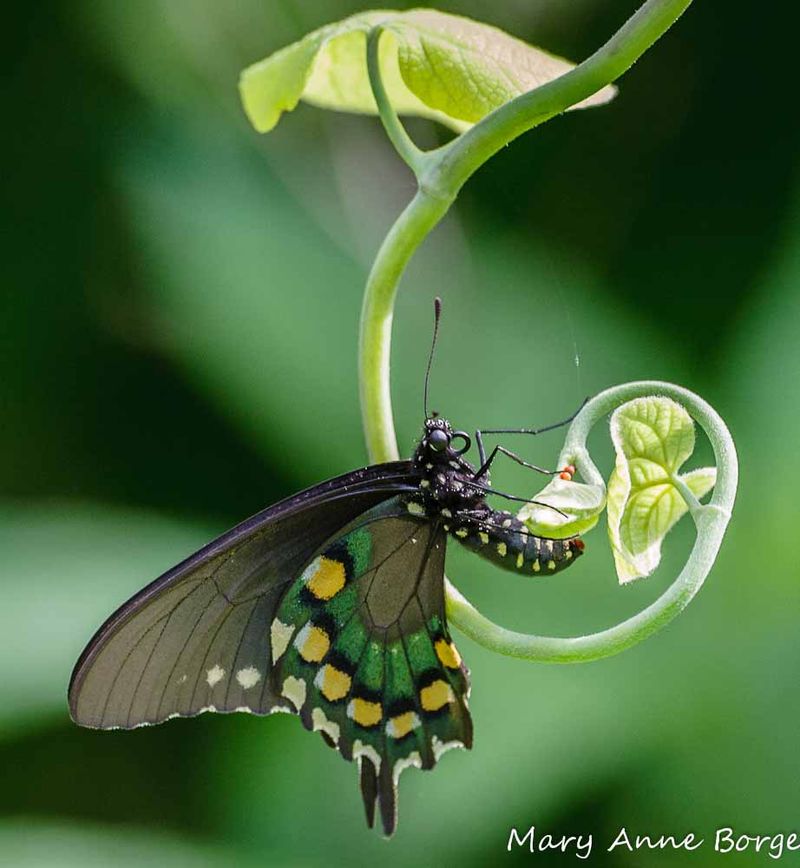
Some host plants feel like a secret handshake among gardeners, and pipevine is one of them. Plant it in the right Florida yard, and polydamas swallowtails can find it with impressive speed.
Polydamas swallowtails are different from many other swallowtails because they do not have the long tail-like points on their hind wings. Their caterpillars, however, are every bit as eye-catching, often feeding in groups and making quick work of tender pipevine leaves.
Florida gardeners need to be careful about which pipevine they buy. Some nonnative Aristolochia species can lure butterflies to lay eggs but may not safely support the caterpillars, so native pipevine species are the better route when available from reputable native nurseries.
Use pipevine where you can give it structure and a bit of room. A trellis near a patio, a sturdy fence, or the back of a pollinator bed can work well, especially if you want the vine visible without letting it tangle through everything.
Expect the plant to look rough during peak caterpillar feeding. That is not failure, it is the cost of raising a butterfly that many flower-only gardens never manage to support.
4. Senna for sulphur butterflies
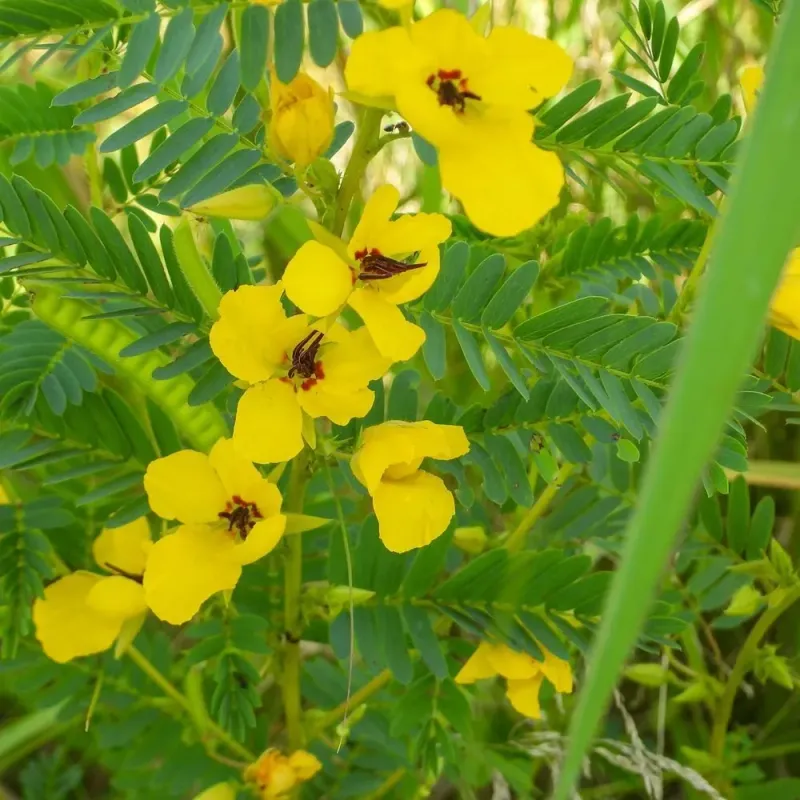
Yellow butterflies flashing across a hot Florida yard often trace back to one practical plant group: senna. Species such as wild senna and partridge pea can support sulphur butterflies, including cloudless sulphur, sleepy orange, and orange-barred sulphur in many parts of the state.
Senna earns its place because it works like a bridge between beauty and function. The flowers add cheerful color, while the foliage feeds caterpillars that might otherwise pass your yard by, even if you have plenty of nectar blooms.
Partridge pea is especially useful for gardeners working with sandy soil and sunny, open spaces. It can behave like a short-lived wildflower, often reseeding where conditions suit it, which makes it handy for meadow-style edges, roadside strips, and informal backyard habitat patches.
Wild senna has a taller, more shrub-like presence, so it fits better toward the back of a border. Give either plant room for a loose, natural shape rather than trying to force it into a clipped bedding-plant look.
If you have only planted nectar flowers so far, senna can change the traffic pattern in your yard. Instead of quick fly-through visits, you may start seeing repeated egg-laying checks and caterpillars tucked along the leaflets.
5. Citrus and wild lime for giant swallowtails
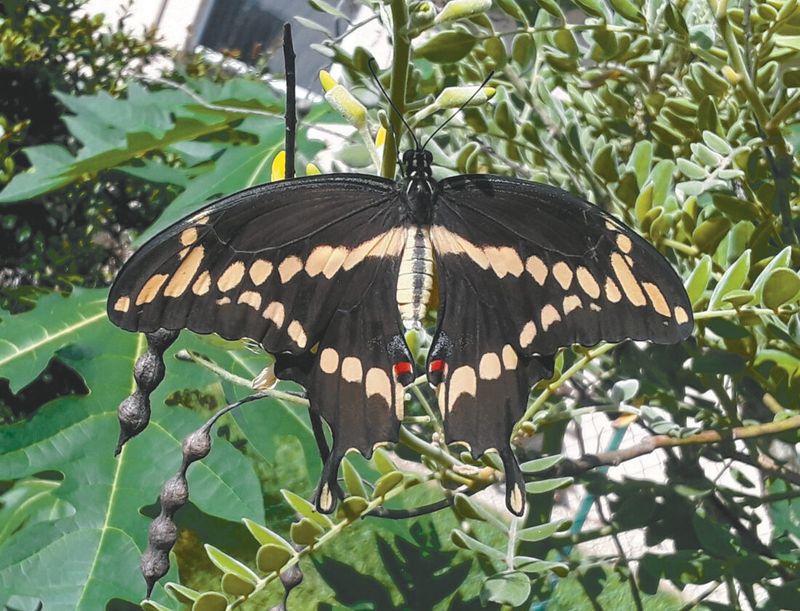
Gardeners who have ever grown citrus may already know the famous caterpillar that looks like a bird dropping. That odd disguise belongs to the giant swallowtail, one of Florida’s most impressive backyard butterflies.
Giant swallowtail caterpillars feed on plants in the citrus family. Home citrus trees can host them, but native wild lime is an especially valuable choice for wildlife-minded gardens because it supports the butterfly while fitting naturally into many Florida landscapes.
Wild lime is not a soft, fluffy border plant. It has thorns, dense branching, and a rugged look that can be useful in a wildlife hedge, sunny corner, or layered native planting where birds may also use it for cover.
If you grow edible citrus, a few caterpillars on a healthy, established tree usually are not a crisis. Young trees need more protection, so consider placing a separate wild lime or other suitable host nearby to take some pressure off fruit trees.
The payoff is big. Giant swallowtails are large, graceful, and memorable, and a garden that raises them feels different from one that only offers a row of nectar plants.
6. Frogfruit for phaon crescents and white peacocks
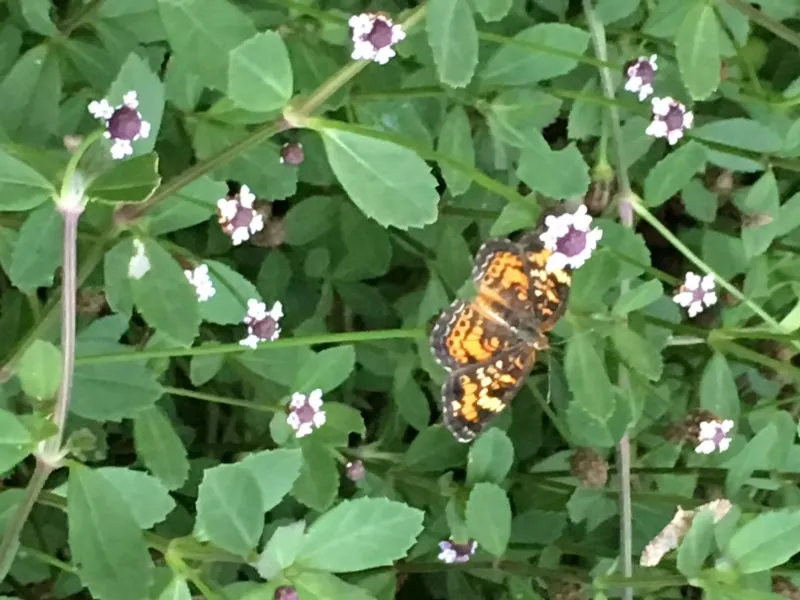
Low, tough, and easy to overlook, frogfruit is the kind of plant that quietly makes a butterfly garden more productive. While showy flowers grab the spotlight, this creeping native can host phaon crescents, white peacocks, and other small butterflies that make a yard feel alive at ankle height.
Frogfruit is especially useful for Florida gardeners who want something more interesting than bare mulch or thirsty turf. It can spread as a groundcover, soften path edges, trail between stepping stones, and fill sunny gaps where taller flowers would look messy.
The tiny blooms attract small pollinators, but the real value is the foliage. Butterflies that use frogfruit are not as famous as monarchs, yet they add constant movement and help turn a garden into a layered habitat instead of a one-species showcase.
In sandy soil, water new plugs or divisions until they knit together. Once established, frogfruit can handle heat and regular trimming, though heavy foot traffic is still too much for most plantings.
For homeowners who want a neater wildlife garden, this plant is a smart compromise. It stays low, looks intentional, and supports butterflies without asking for a large, wild-looking bed.
7. Coontie for atala butterflies
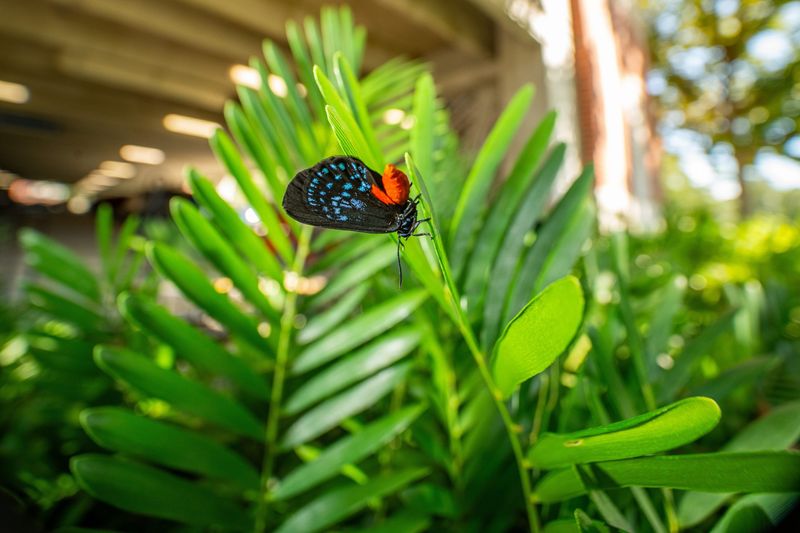
A plant that looks like a small palm can carry a whole conservation story in its leaves. Coontie is the host plant for the atala butterfly, a striking South Florida species once thought to be gone from much of its former range.
Coontie fits Florida yards because it is handsome even when no butterflies are around. The glossy, fern-like leaves work in foundation beds, under high tree shade, along walkways, and in native plant borders where a clean shape matters.
Atala caterpillars can chew coontie hard, especially when a colony builds up. Healthy plants usually recover, so it helps to plant several coonties together instead of relying on one small specimen to carry the whole nursery.
Good drainage is important, which makes coontie a natural match for many sandy Florida sites. It tolerates sun to part shade, though growth and water needs can vary with exposure, soil, and irrigation.
There is also a local-history twist. Coontie was used by Indigenous people and early settlers as a starch source after careful processing, though the raw plant is toxic and should not be eaten.
For gardeners in the right part of Florida, coontie is more than a tidy landscape plant. It is a way to give atalas the one nursery plant they cannot replace.