
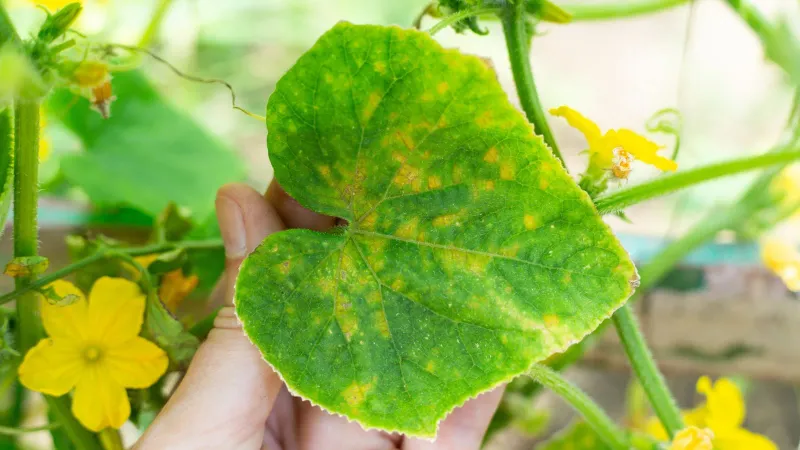
Spotting yellow mottling and curled leaves on your cucumber plants in late summer can stop a gardener cold. The symptom pattern can fit cucumber mosaic virus, but it can also match heat stress, downy mildew, or several other problems that require completely different responses.
Getting the distinction right matters, because pulling a healthy plant or ignoring a real viral infection both cost you. A comparison-based approach, rather than a snap diagnosis, is the smarter path forward.
Yellow mottling and curling raise a question, not a diagnosis
Irregular yellow or light-green mottling paired with curled or puckered cucumber leaves can fit cucumber mosaic virus, but that symptom combination alone does not confirm it. Penn State Extension states directly that virus diseases cannot be diagnosed from symptoms alone, and that point matters before you decide what to do next.
Heat and water stress are real and common causes of leaf curling on their own. Texas A&M AgriLife’s horticulture guidance notes that leaf curling is often caused by heat and water stress rather than disease, which means late-summer timing does not point to a virus by itself.
A cucumber wilting and curling during a Southern heat wave may simply be responding to high temperatures and insufficient soil moisture.
The productive approach is comparison rather than assumption. UC Integrated Pest Management’s cucumber mosaic resource outlines a cluster of associated symptoms that, taken together, can raise reasonable suspicion of CMV.
The sections that follow walk through that cluster, compare it with the most common look-alikes, and give you a practical inspection and response plan so your next step is informed rather than reactive.
Recognize the symptom cluster associated with CMV
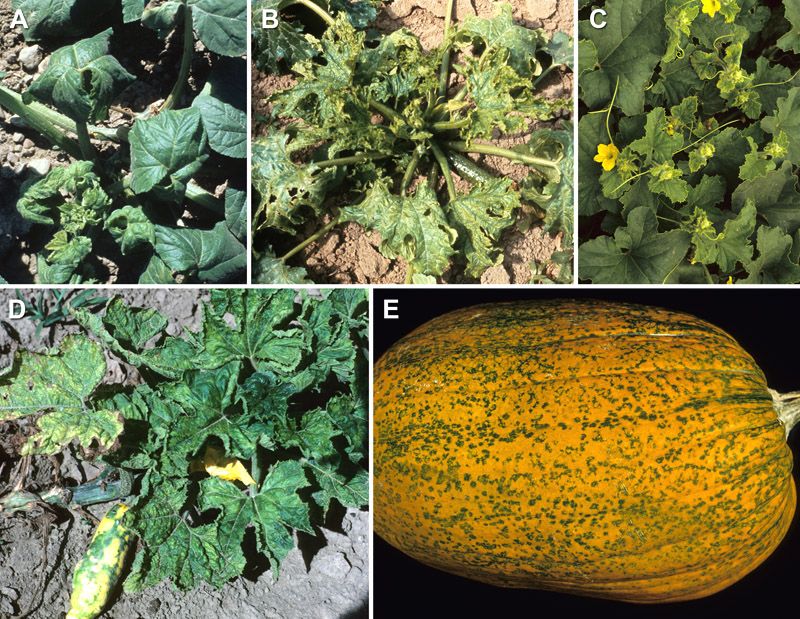
Cucumber mosaic virus tends to produce a recognizable cluster of changes rather than a single symptom. According to UC IPM’s cucumber mosaic guide, affected plants can show vein clearing in young leaves, irregular mottling with light-green and dark-green patches, overall yellowing, puckered or curled leaf surfaces, reduced leaf size, and shortened internodes that make the plant look compressed or stunted.
Fruit on an infected plant may be misshapen, mottled, or smaller than normal.
Seeing most or all of those features together, especially distortion, stunting, and fruit symptoms alongside the mottling, puts CMV higher on the list of possibilities. The American Phytopathological Society’s CMV lesson explains that symptom expression varies considerably depending on cucumber variety, virus strain, plant age, temperature, and other environmental conditions, so the same virus can look noticeably different from one plant or garden to the next.
A cucumber showing only mild yellowing without distortion, stunting, or fruit problems may have a completely different cause. Comparing your plant against the full cluster, rather than matching one symptom, gives you a more reliable starting point.
Even then, this comparison can raise suspicion but cannot confirm infection without laboratory or Extension testing.
Compare CMV with the most important look-alikes
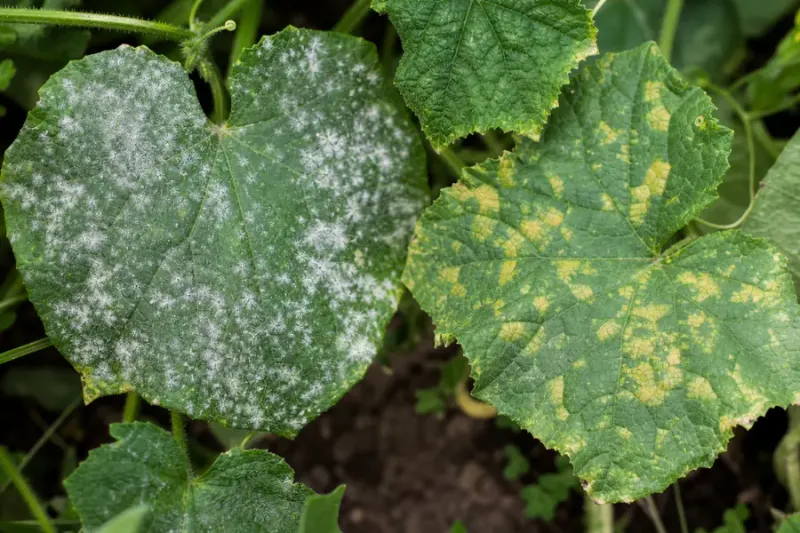
Downy mildew is one of the most important conditions to separate from CMV, especially in humid Southern summers. UC IPM’s downy mildew on cucurbits page describes the classic pattern as pale-green to yellow lesions that are angular and bounded by leaf veins, often followed by brown or tan tissue and a gray, purple, or downy growth on the undersides of leaves under humid conditions.
That angular, vein-bounded shape on the underside is a key detail that mosaic virus does not produce.
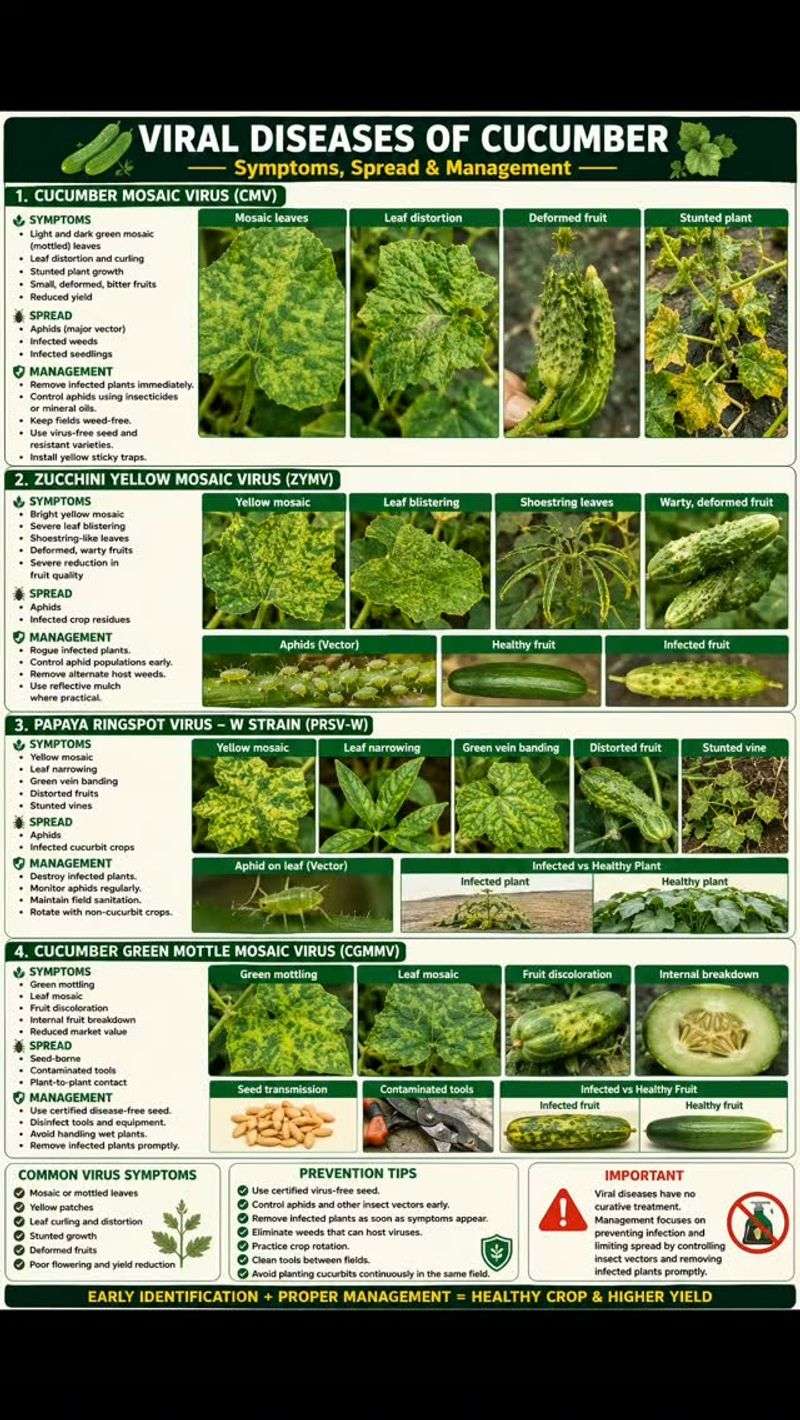
Beyond downy mildew, Cornell’s cucumber leaf symptom key and Alabama Extension’s mosaic virus guide both note that zucchini yellow mosaic virus, watermelon mosaic virus, and papaya ringspot virus can produce overlapping symptoms on cucurbits, and mixed infections are possible. CMV is not the only mosaic-causing virus in Southern gardens, and distinguishing among them visually is not reliable.
Aphid feeding, nutrient imbalances, herbicide injury, root damage, and straightforward environmental stress can all produce yellowing and curling that overlaps with viral symptoms. Downy mildew is managed with fungicides; a viral infection is not.
Getting that distinction right before reaching for any product matters both for your cucumber crop and for avoiding unnecessary chemical applications. When the cause is genuinely unclear and the distinction matters, a county Extension office or plant diagnostic laboratory is the appropriate next step.
Inspect and document the plant before deciding
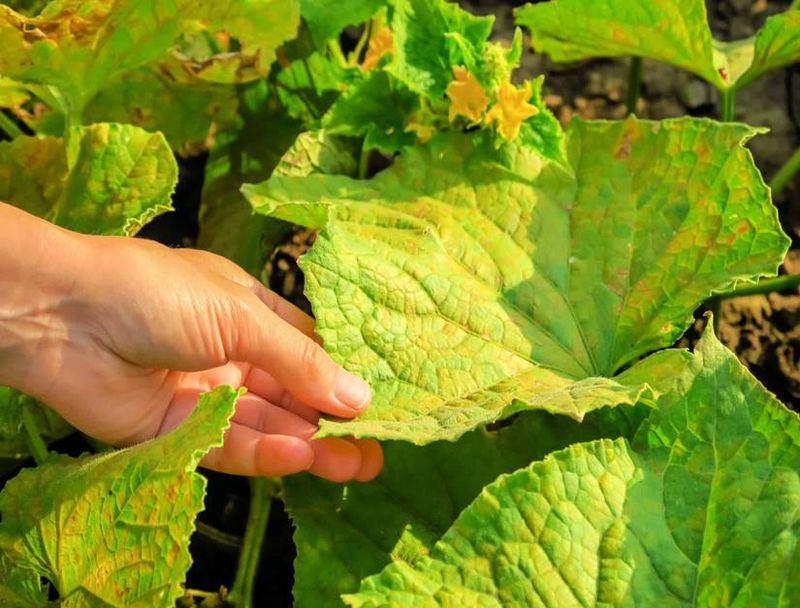
Before pulling a plant or reaching for any product, spend a few minutes with a careful, methodical look. Start by checking both surfaces of several leaves, paying close attention to the undersides and the newest, smallest growth at the tips of the plant.
University of Maryland Extension’s cucumber problem key recommends checking leaf undersides specifically because aphids, downy mildew sporulation, and other signs of disease or pest activity concentrate there.
Look for clusters of small, soft-bodied insects on tender growth and the undersides of leaves. Note whether the mottling, curling, or distortion is limited to older leaves, spread across all growth stages, or concentrated in new leaves.
Fruit distortion or unusual mottling on developing cucumbers, combined with general stunting of the whole plant, raises the suspicion level for a systemic problem rather than a localized stress response.
Photograph the whole plant from a step back, then take close-ups of both leaf surfaces, any affected fruit, and any insects you find. Michigan State University Extension’s CMV resource notes that good photos and detailed observations are genuinely useful when submitting a sample or question to an Extension office or diagnostic lab.
Those observations can sharpen the diagnosis, but they do not confirm CMV without appropriate testing.
Do not try to cure a suspect systemic infection with sprays
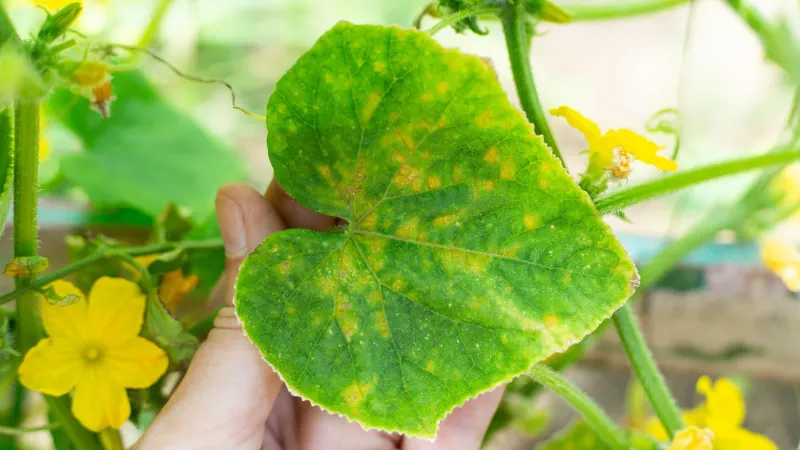
No spray product restores a cucumber plant that is already infected with CMV. Penn State Extension and Michigan State University Extension both state clearly that there is no chemical cure for a virally infected plant.
Fungicides treat fungal diseases; CMV is a virus. Copper products, neem oil, and routine fertilizer applications do not eliminate a systemic viral infection, and applying them in response to suspected CMV delays the more effective response of removal.
Removing individual yellow or distorted leaves may improve the plant’s appearance temporarily, but it does not address a systemic infection. A plant infected throughout its vascular system can still serve as a virus reservoir for aphids feeding on it and then moving to healthy cucumbers nearby.
UC IPM’s cucurbit virus page and the Royal Horticultural Society’s CMV guidance both recommend removing a plant that strongly appears to have a systemic viral infection.
For removal, put on gloves, place the whole plant into a bag before carrying it through the garden, seal the bag, and dispose of it according to your local plant-waste rules. Do not add strongly suspect plant material to a cool home compost pile, since ordinary cool composting is not a reliable way to neutralize plant viruses.
Wash your hands and clean any tools before working with healthy plants in the same bed or nearby.
Understand how aphids and weeds contribute to spread

Aphids are the primary route by which CMV moves from plant to plant. The American Phytopathological Society’s CMV lesson describes CMV as having an exceptionally broad host range, covering hundreds of plant species including many common weeds, ornamentals, vegetables, and other cucurbits.
Some infected weeds may show few or no visible symptoms while still carrying the virus and serving as reservoirs that aphids visit before landing on your cucumber plants.
Managing weeds close to the planting, particularly broadleaf weeds that host both CMV and aphids, may reduce disease pressure in your garden. UC IPM’s cucumber mosaic guide recommends weed removal as a risk-reduction step, though it cannot guarantee prevention, especially when winged aphids migrate in from neighboring properties or fields.
Reaching for an insecticide to stop virus spread is generally not effective. University of Florida IFAS Extension’s insect management guide for cucurbits explains that some aphids can transmit certain viruses during very brief probing periods before an insecticide has any effect.
Spraying after infection is already underway, or trying to eliminate every aphid that arrives from outside the garden, is unlikely to protect an infected plant or prevent the virus from reaching nearby healthy ones. Alabama Cooperative Extension’s mosaic virus guide echoes that insecticides are not a dependable tool for stopping aphid-transmitted mosaic viruses once spread is in progress.
Reduce risk in future cucumber plantings
Choosing varieties listed as resistant or tolerant to CMV is one of the most practical steps for future plantings. The American Phytopathological Society notes that CMV-resistant or tolerant varieties are available, and Alabama Cooperative Extension’s vegetable variety guides are a useful local resource for identifying options suited to Southern conditions.
Keep in mind that resistance is virus-specific: a variety resistant to CMV may still be fully susceptible to zucchini yellow mosaic virus, downy mildew, powdery mildew, or other common cucumber problems.
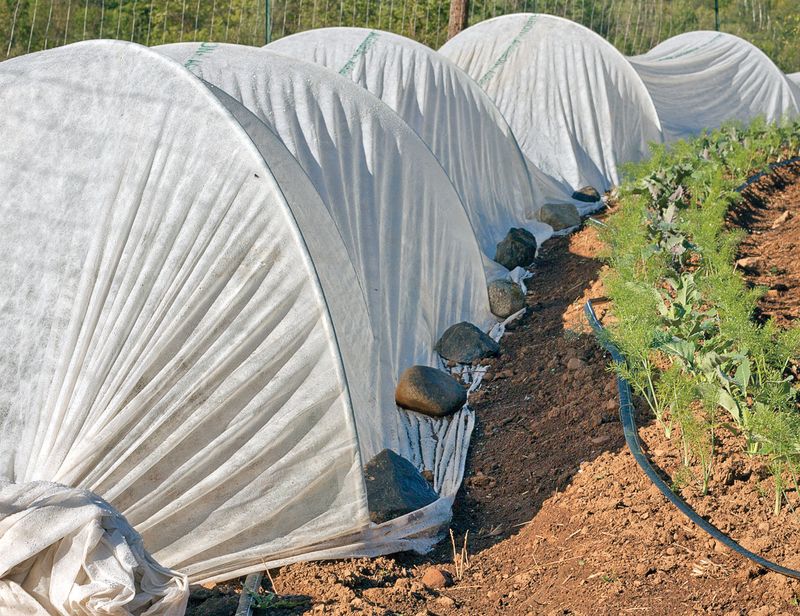
Insect-excluding row covers placed over transplants early in the season can reduce or delay aphid exposure while plants are small and most vulnerable. UC IPM’s cucumber mosaic guidance also points to reflective silver mulch as a tool that may help disorient aphids and reduce their landing rate.
Both are preventive measures that work best before aphids arrive, not after infection is established.
Row covers require active management once cucumber plants begin flowering. UC IPM’s cucurbit virus page notes that covers must be opened or removed at flowering so that pollinators can reach the blossoms, since cucumbers require pollination to set fruit.
Plan for that transition when you decide how long to keep covers in place, and check your plants regularly during the period when covers are lifted.
Use a suspicion-based response plan
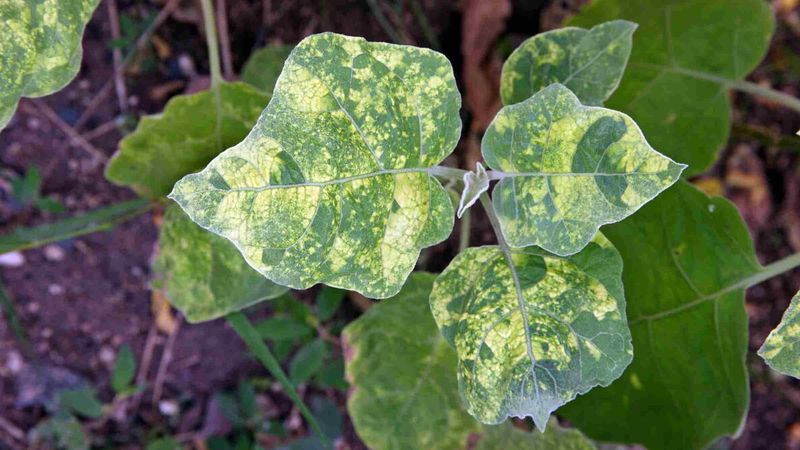
When you spot yellow mottling and curling on a cucumber, start by comparing what you see against heat stress and water stress first, then downy mildew, then the CMV symptom cluster described above. Check the leaf undersides for aphids and angular lesions.
UC IPM’s downy mildew resource and Penn State Extension’s CMV guide together cover the key visual distinctions that help you decide whether confirmation from a lab or Extension office is worth pursuing.
Photograph the plant thoroughly, then contact your county Extension office if the cause is unclear and the distinction matters for your crop. For a plant that strongly appears to have a systemic viral infection, prompt removal and sanitation are the recommended response, not a spray treatment.
UC IPM’s cucurbit virus guidance supports weed management, protective covers, reflective mulch, and resistant varieties as measures that may reduce future disease pressure, without offering any of them as a guarantee. The best outcome next season starts with honest observation this one.