
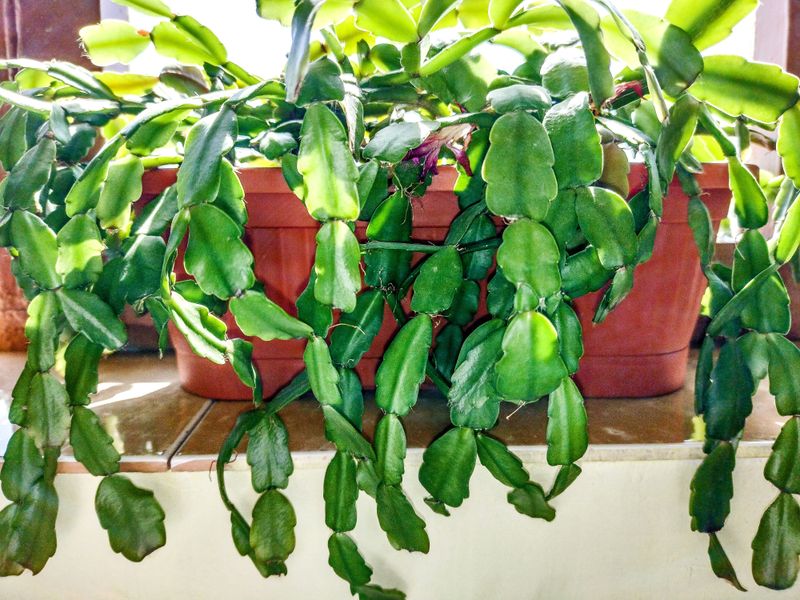
Something feels wrong when your Christmas cactus starts hanging low and looking soft, but the cause is not always what you expect. Limp or droopy stem segments can point to thirst, too much water, root trouble, or even just the plant’s natural growth habit.
Before you reach for the watering can, a quick check of the soil will tell you far more than the drooping stems ever could.
A trailing Christmas cactus may be healthy
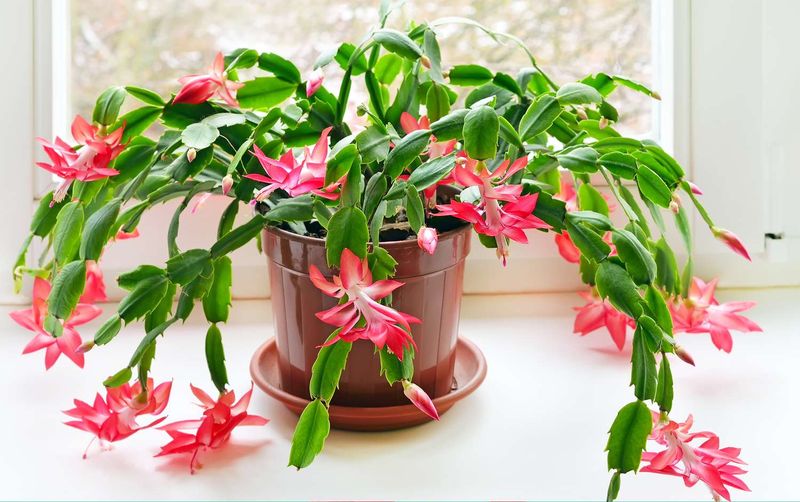
Not every downward-hanging Christmas cactus is in trouble. Holiday cacti naturally grow in upright, pendulous, semi-pendulous, or trailing forms, and a plant whose segments drape gracefully over the rim of the pot may simply be doing what its genetics tell it to do.
The concern worth acting on is a recent change – a shift in firmness, color, or texture that was not there before.
Soft, rubbery, or newly collapsed segments are different from segments that have always curved outward and downward. NC State Extension’s Schlumbergera profile notes that growth habit varies across the group, so a trailing plant is not automatically a struggling one.
The question to ask is whether anything has changed lately, not just whether the stems point downward.
One more thing worth knowing before you take action: the plant labeled “Christmas cactus” at most garden centers may actually be a Thanksgiving cactus or a hybrid. Iowa State University Extension explains that segment shape and bloom timing differ among these types, but their watering and drainage needs are similar enough that the same care approach applies.
Confirming the growth habit before watering or pruning can save a perfectly healthy plant from unnecessary intervention.
Check the soil before you water
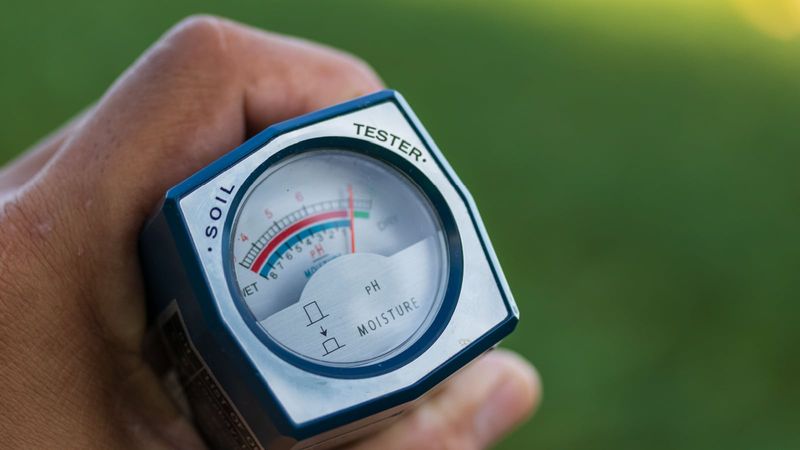
The most useful first step when segments look limp is not watering – it is checking what the potting mix feels like about an inch below the surface. Press a finger into the soil up to the first knuckle.
If the mix feels beginning to dry at that depth, underwatering becomes a reasonable explanation for the limpness. If the mix feels wet or soggy while the segments are still limp, that combination raises concern about drainage problems or root damage and calls for a closer look rather than more water.
UF/IFAS Extension guidance on Christmas cactus preparation recommends checking moisture before watering rather than following a set calendar schedule, a point echoed by University of New Hampshire Extension, which describes holiday cacti as rainforest epiphytes that need more consistent moisture than desert cacti but must never sit in waterlogged soil.
Watering frequency shifts with pot size, soil type, light level, indoor temperature, season, and how freely the container drains. A plant in a small clay pot near a sunny window in a warm Texas home may need water far more often than one in a large plastic pot in a shaded Florida room.
The soil check replaces all of those variables with one direct answer about what this specific plant needs right now.
Water a dry plant thoroughly, then let it drain
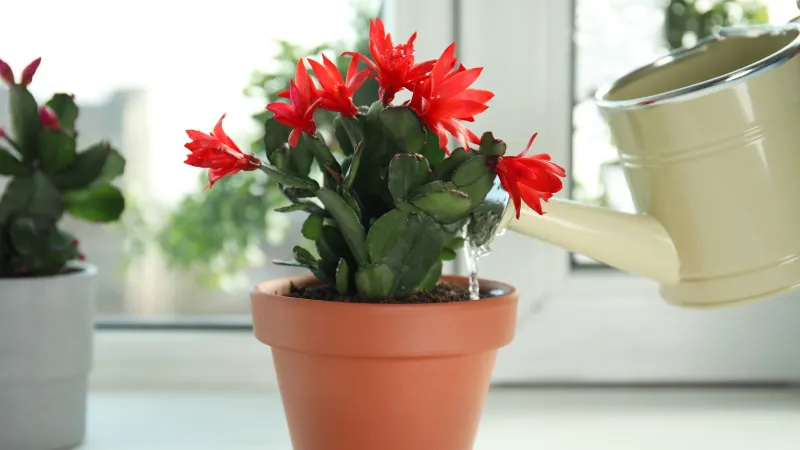
When the soil check confirms that the mix is dry about an inch down, thorough watering is the right response – but only for that situation. Pour water slowly from the top of the pot until it flows freely out of the drainage holes, then empty the saucer or decorative cachepot completely.
NC State Extension’s Pender County holiday cactus guide and Penn State Extension’s holiday cacti care page both emphasize that roots left sitting in standing water are at risk for rot, even after a single correct watering session.
A special situation arises when the potting mix has dried so thoroughly that it has pulled away from the sides of the pot. In that case, water may run straight down the gap between the soil and the pot wall and exit the drainage holes without ever soaking into the root zone.
University of Connecticut Extension specifically warns that a severely dried plant may have already lost some roots and can be harmed by a sudden flood of water. Rehydrate cautiously in that case – a slow, gentle pour repeated once or twice over an hour often works better than a single heavy dose.
After watering, return to the finger test in a few days rather than setting a fixed weekly reminder. Conditions change with the season, and the plant’s actual needs are the most reliable guide.
Wet soil calls for a root and drainage inspection
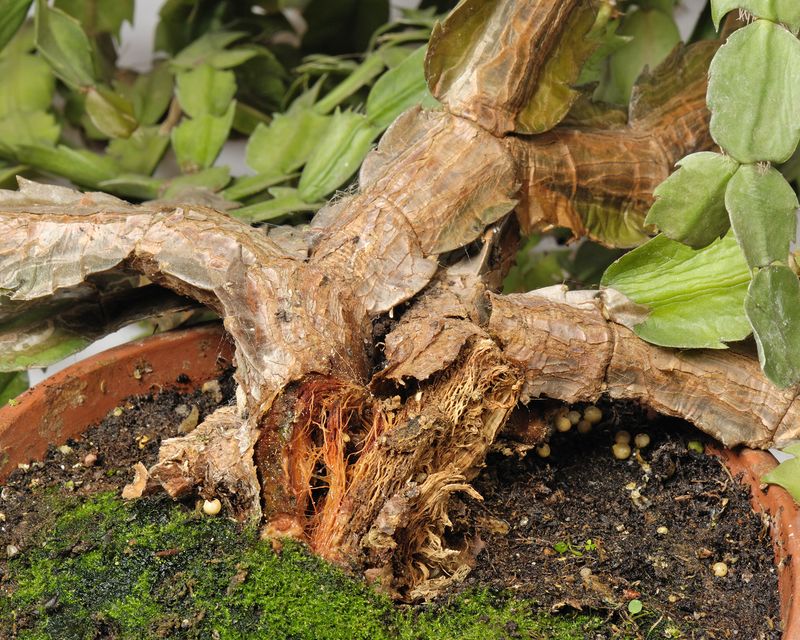
Finding wet soil beneath limp segments is the more worrying combination. Damaged or rotted roots lose the ability to move water up into the plant, which means stems can wilt even when the potting mix is saturated.
Adding more water in that situation makes things worse, not better.
Stop watering and start inspecting. Lift the plant out of its pot if possible and look at the roots.
University of Minnesota Extension’s holiday cacti guide describes dark, mushy, or disintegrating roots as findings consistent with root rot, often accompanied by gray-green foliage, soft or collapsing stem segments, or branch loss. Penn State Extension’s Christmas cactus disease page notes that stem rot and root rot can progress rapidly once established, particularly when drainage remains poor.
Also check whether the container itself is part of the problem. A pot without drainage holes, a saucer that was never emptied, or a decorative cachepot holding water at the base can keep the root zone wet long after a correct watering.
Ask Extension’s Christmas cactus FAQ points to poor container drainage as a common setup error that leads to root damage over time.
Set realistic expectations before proceeding. A plant with extensive root rot may not recover fully, and no single technique guarantees rescue.
Healthy-looking stem segments can be set aside as cuttings for propagation – not as a certain backup, but as a reasonable precaution while the main plant is treated.
Fix the setup that keeps roots waterlogged
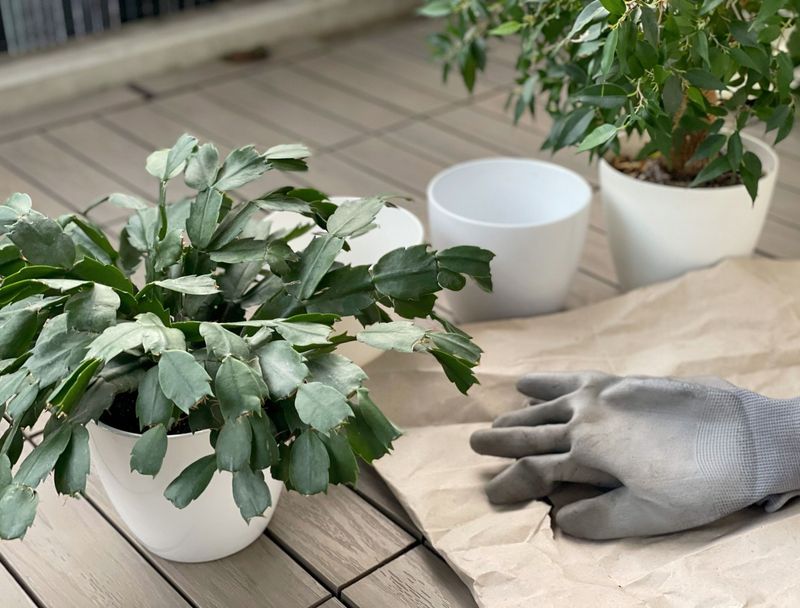
Once a drainage problem has been identified, correcting the physical setup matters as much as adjusting how often you water. A light, well-draining potting mix and a container with at least one drainage hole are the two non-negotiable basics.
UF/IFAS Extension’s Christmas cactus overview recommends a mix that retains some moisture while still draining freely – think a general indoor mix cut with perlite rather than a dense, peat-heavy blend that holds water for days.
Pot size matters more than many gardeners expect. An oversized container holds far more moisture than a small root system can use between waterings, which keeps the center of the root ball wet even when the surface feels dry.
Iowa State University Extension notes that holiday cacti often prefer being somewhat pot-bound, meaning a snug fit is generally better than a roomy one.
Repotting is appropriate when roots have completely filled the container, when the existing mix no longer drains reliably, or when root damage requires moving the plant into fresh soil. University of Minnesota Extension does not recommend annual repotting as a routine step – holiday cacti can stay in the same container for several years when the setup works.
Treat repotting as a correction for a specific problem, not as a scheduled maintenance task.
Rule out light, temperature, and other stressors
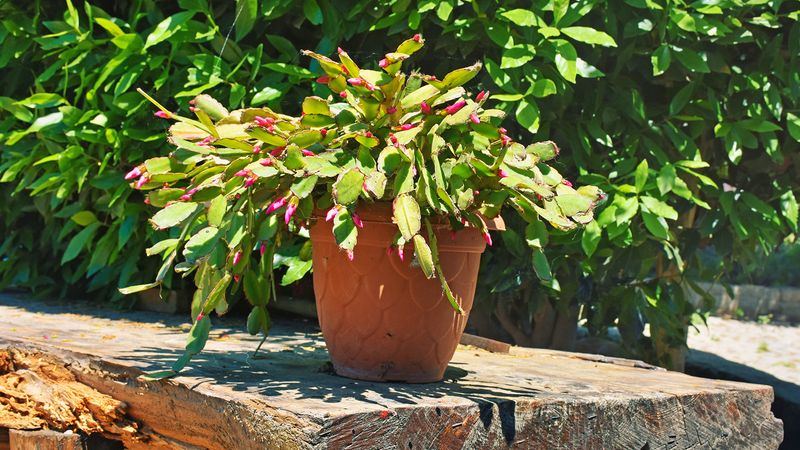
After checking moisture and roots, a few other conditions are worth considering before settling on a cause. Holiday cacti prefer bright, indirect or filtered light.
Direct, intense sun – especially during a Southern summer – can stress or scorch stem segments, and a plant moved abruptly from indoors to a sunny patio may show softening or color changes within days. UC ANR’s holiday cactus publication lists light changes among the environmental stressors that can affect plant appearance and segment condition.
For Florida and Texas gardeners who move plants outdoors during warm months, shade or filtered light is essential, and the plant should come back inside before nighttime temperatures fall below approximately 50 degrees Fahrenheit. UGA Extension’s Towns and Union County holiday cactus post and UConn Extension’s holiday cacti factsheet both note that cold exposure can cause stress symptoms that mimic watering problems.
Low humidity, sudden temperature swings near vents or drafty windows, and certain pest or disease pressures can also affect segment appearance. Clemson Extension’s indoor cacti factsheet recommends stable indoor conditions and protection from heating and cooling vents.
One important distinction: flower-bud drop is a separate problem from limp segments. Buds can fall after changes in temperature, light, humidity, or watering even when the stems themselves are firm and otherwise healthy.
Misting may improve ambient humidity slightly, but it cannot repair rotten or desiccated roots, so it should not be treated as a fix for structural wilt.
Match the response to the evidence you find
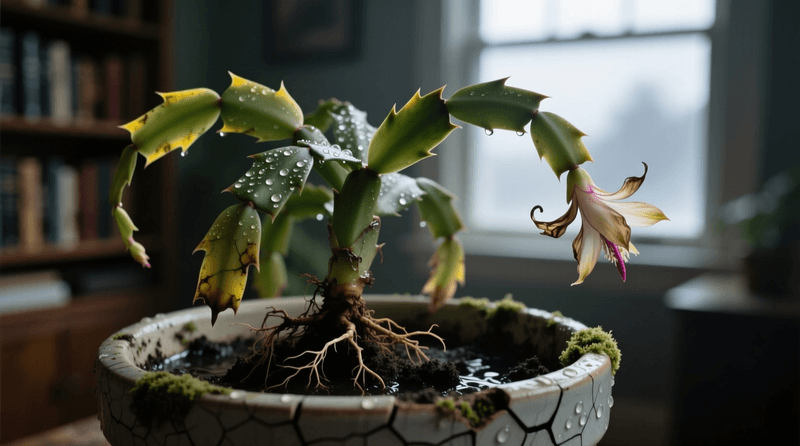
The visible symptom of limp or drooping segments cannot tell you on its own whether the plant is thirsty, waterlogged, or simply growing the way it always has. The soil check is what separates those possibilities.
University of Minnesota Extension and UF/IFAS Extension both point to moisture management and drainage as the first issues to investigate when a holiday cactus declines.
Dry mix about an inch down makes underwatering the more likely explanation – water thoroughly and let it drain completely. Wet soil with limp segments means pause watering, check the container and drainage path, and inspect the roots.
Normal trailing growth that has always been present may require no rescue at all.
Better diagnosis leads to fewer unnecessary waterings and a clearer picture of what the plant actually needs – which is a more useful outcome than any single guaranteed fix.