
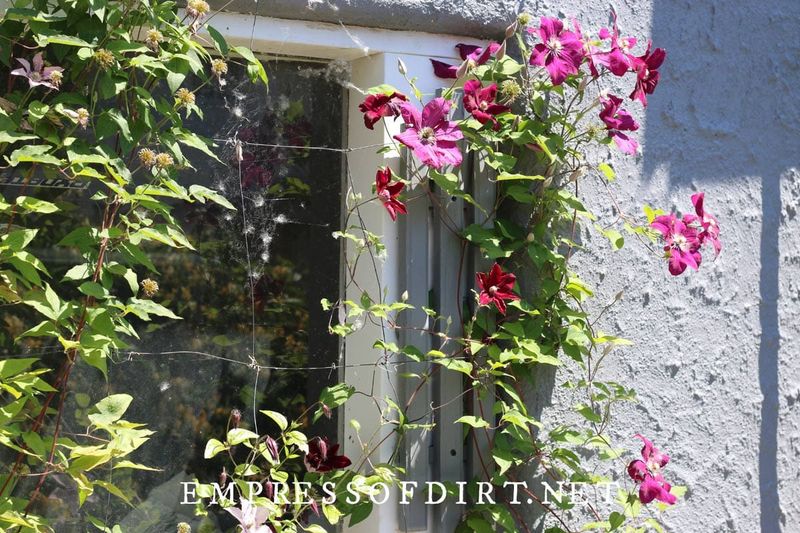
You have a clematis that looks healthy, sends out new stems every season, and fills its trellis with lush green leaves, but never puts out a single flower. That gap between vigorous growth and zero blooms is one of the most frustrating puzzles in Southern gardening.
The good news is that there is a logical order for tracking down the cause, and the first place to look is often simpler than you might expect.
Check the light before you blame the plant
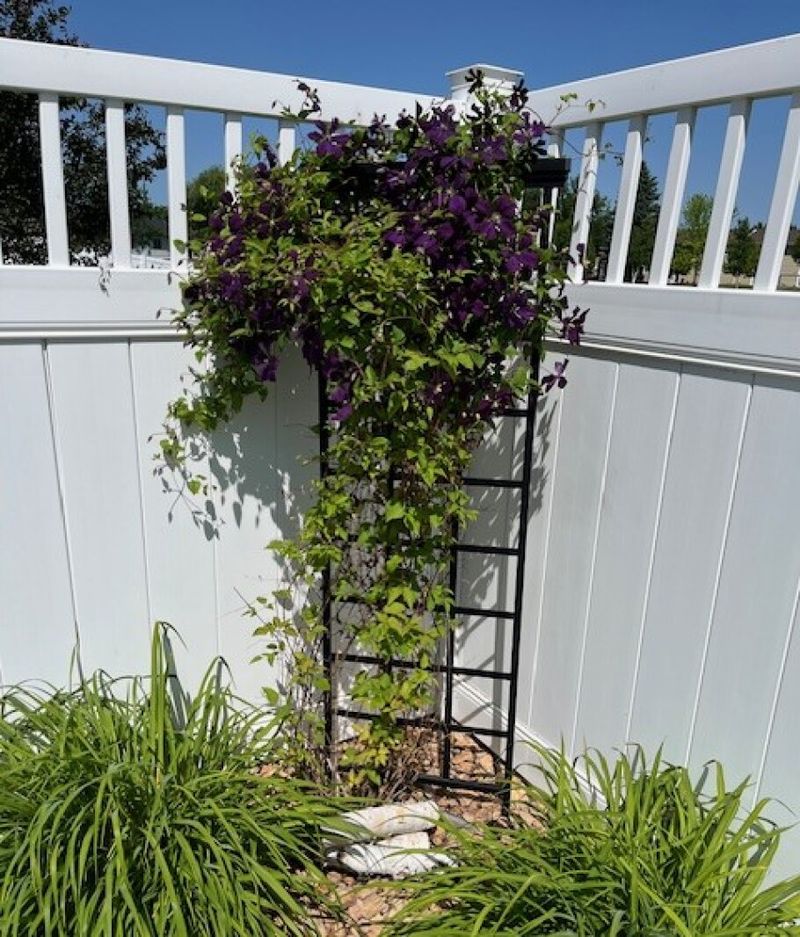
A clematis that pushes out long, vigorous stems and thick green leaves while producing few or no flowers is sending a specific signal worth paying attention to. Partial shade can support that kind of leafy growth while quietly cutting off the energy a plant needs to set buds.
According to Iowa State University Extension guidance on growing clematis, most varieties flower best with at least six hours of direct sun, and plants kept in too much shade may stay green and vigorous without ever blooming.
Inadequate light at the foliage is the first condition worth checking, but calling it a universal answer would be misleading. Clemson Cooperative Extension and Oregon State University Extension both identify several other causes that can produce the same symptom: incorrect pruning that removes next season’s buds, excess nitrogen in the soil, a young plant still putting energy into root development, drought or poor drainage slowing overall performance, and disease or heat damage suppressing the bloom cycle.
Working through a short, practical checklist is the most reliable way forward. Start with light, because it is the easiest condition to observe and correct without risking the plant, then move through the other possibilities in a logical order before reaching for pruning shears or a bag of fertilizer.
Give the vine bright tops and cool roots
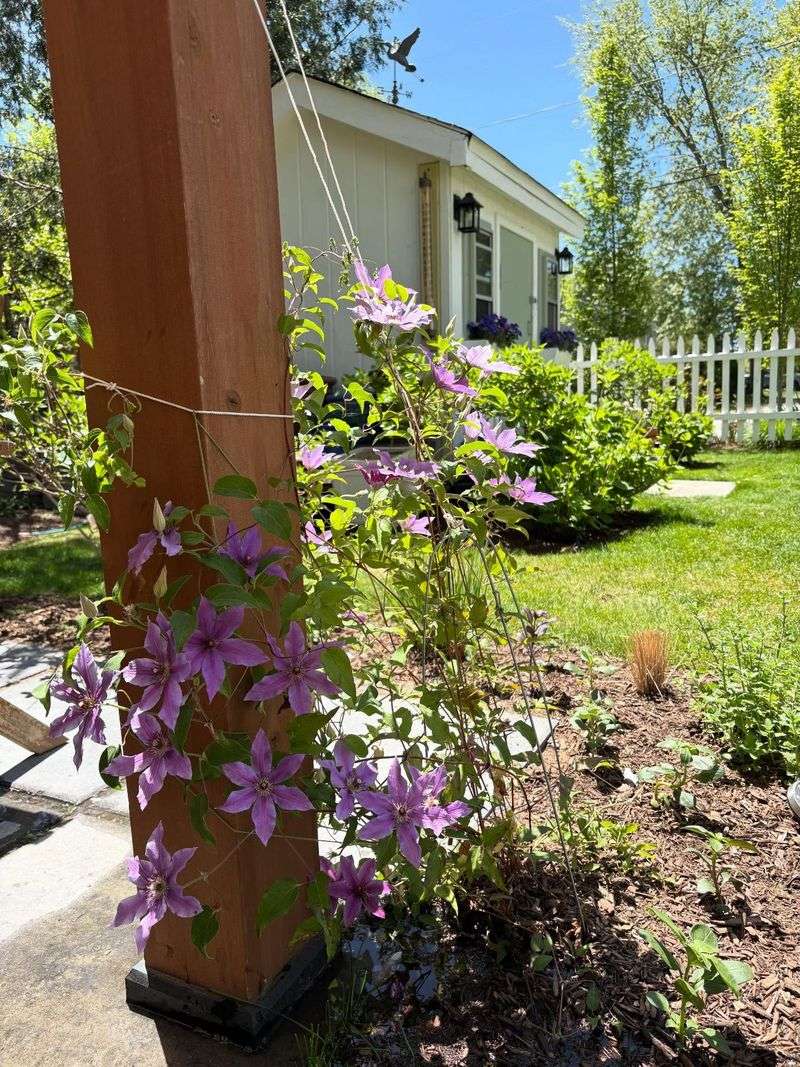
Clematis have a well-earned reputation for needing what gardeners sometimes call sunny tops and cool roots, and that phrase describes a real and practical distinction. The leafy stems and upper portions of the vine need enough direct light to fuel flowering, while the root zone benefits from conditions that stay relatively cool and consistently moist, especially during Southern summers.
UC IPM’s clematis guidance and Clemson Extension both support using a mulch layer or shallow-rooted companion planting to moderate soil temperature around the base of the plant. About two inches of organic mulch applied around the root zone, kept clear of the stems themselves, can help hold moisture and reduce heat stress without shading the upper vine where light is needed most.
Cultivar differences matter here. North Carolina Extension’s plant database notes that clematis vary considerably in mature size, heat tolerance, and light response depending on species and variety.
The roughly six-or-more hours of direct sun benchmark applies broadly, but some cultivars tolerate a bit less light and still manage reduced flowering, while others need strong sun to perform at all. Knowing your specific variety, or at least its general flowering group, helps you calibrate these adjustments rather than applying a one-size-fits-all rule.
Audit the sunlight at the foliage
Measuring light in your garden is less complicated than it sounds, and the key is to watch the actual leaves rather than the general brightness of the planting bed. A spot that feels open and sunny in the morning can fall into deep shade by midday when a large oak or a roofline blocks the path of the sun.
Walk out to the vine at three or four different times across a full day and take note of when direct sun is actually landing on the upper stems and foliage.
Iowa State Extension recommends checking direct sun at the vine itself rather than assuming the planting area is bright enough. Mature trees, dense shrubs, fences, and even seasonal changes in leaf cover can gradually steal hours of direct light from a vine that once received plenty.
If a nearby shrub or small tree is the culprit, selectively thinning its canopy is often safer and faster than moving the clematis.
Training the vine upward and outward toward a brighter section of a fence or trellis is another low-risk option worth trying before considering relocation. University of California Agriculture and Natural Resources and the NC State JC Raulston Arboretum profile on Armand clematis both caution against abruptly moving an established vine, particularly during the heat of a Southern summer.
Root disturbance, transplant shock, and sudden exposure to intense sun can damage a plant that was otherwise stable, so treat relocation as a last resort rather than a first response.
Improve light without overheating the root zone
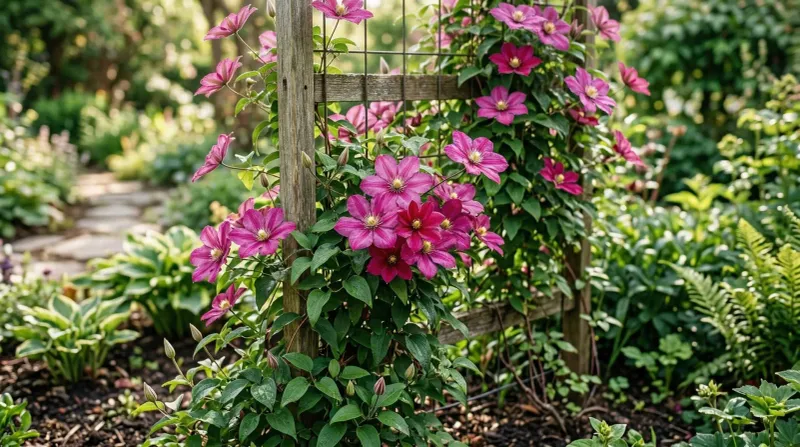
Once you have confirmed that the upper vine needs more direct light, the goal is to increase sun exposure at the foliage without turning the root zone into a heat trap. In Florida and Texas, where summer temperatures regularly push into the upper 90s, this balance matters more than it does in cooler climates.
Opening up the canopy above or beside the vine, or training it toward a sunnier section of the fence, can add meaningful light hours without requiring you to touch the roots at all.
Clemson Extension recommends keeping about two inches of mulch over the root zone and notes that clematis may benefit from afternoon shade in hotter parts of the South. Some red, blue, and bicolored hybrids are particularly prone to flower fading in intense afternoon sun, so afternoon shade for the blooms is not the same problem as inadequate light for the foliage.
North Carolina Extension and UC IPM both support shallow-rooted groundcovers as an alternative to mulch for moderating root-zone temperature.
Pairing a light adjustment with consistent watering rounds out the strategy. The NC State JC Raulston Arboretum notes that heat stress and drought can compound each other in Southern gardens, so keeping the root zone cool and moist while improving light at the top of the vine addresses two stressors at once.
Afternoon shade for the root zone, morning sun for the foliage, and steady moisture form a practical combination that lowers risk without asking you to move or hard-prune an established plant.
Match pruning to the vine’s flowering group
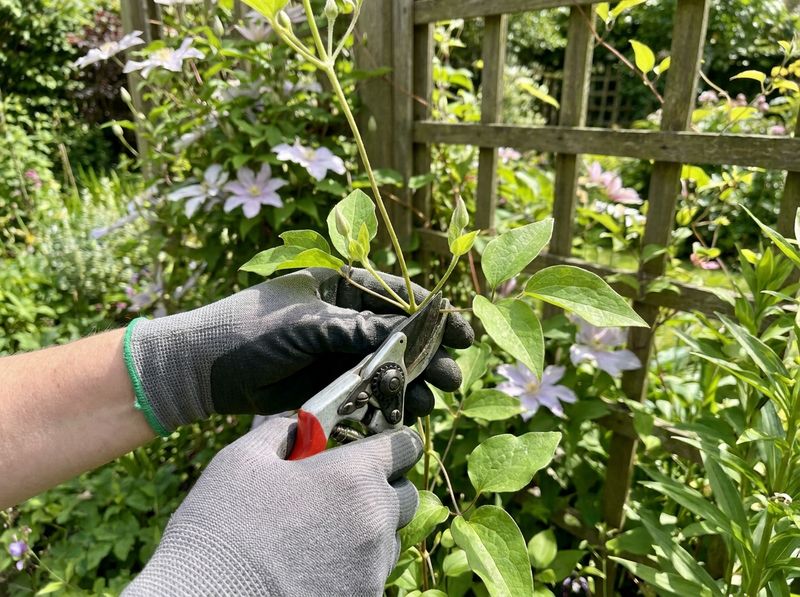
Pruning at the wrong time is one of the most common reasons a healthy, leafy clematis never shows a single flower, and the mistake is easy to make because the timing that helps one type of clematis will completely strip the buds from another. The three pruning groups reflect when and where on the vine each type sets its flower buds, and cutting without knowing which group your vine belongs to is a real gamble.
Group 1 clematis flower on old wood, meaning they set buds on stems that grew the previous season. Pruning these in late winter or early spring removes exactly the growth that would have flowered.
The Royal Horticultural Society’s clematis pruning guide explains that Group 1 plants generally need only light tidying after they finish flowering, not a hard cut in dormancy. Group 2 varieties bloom on both old and new wood and respond best to light pruning that preserves some of the previous season’s stems.
Clemson Extension notes that Group 3 plants flower on new wood produced in the current season and can be cut back more heavily in late winter or early spring without sacrificing buds.
If you do not have a plant tag and cannot identify your cultivar, observe the vine for a full season before making any significant cut. UC Marin Master Gardeners recommend using bloom timing as a provisional clue: early spring flowering generally points to an old-wood bloomer, while summer or fall flowering suggests a new-wood type.
Confirming the cultivar through a nursery or extension service before pruning hard is always the safer path.
Separate water, drainage, and fertilizer problems
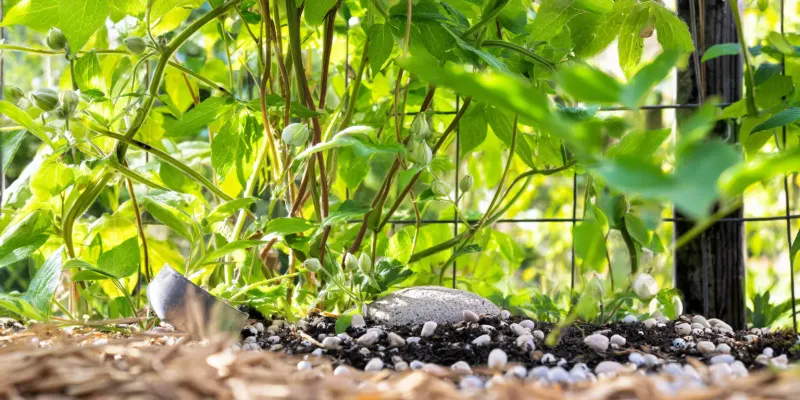
Drought and poor drainage both weaken clematis performance, but they work differently from the leafy-growth-with-no-flowers pattern that often points to a nitrogen problem. A plant stressed by too little water or sitting in soggy soil tends to look generally unhappy, with reduced growth overall.
A plant that is growing vigorously but refusing to flower despite good conditions may be getting too much nitrogen.
Clemson Extension recommends watering deeply about once a week during dry periods and notes that clematis need roughly an inch of water per week from rainfall or irrigation. Persistently wet sites create conditions for root and crown problems, so well-drained soil is not optional.
Iowa State Extension specifically warns that overfertilization with nitrogen can produce exactly the lush, leafy growth described in this article’s premise, with fewer flowers as a direct result. If you have been applying a lawn fertilizer or a general high-nitrogen blend near your clematis, that feeding habit is worth reconsidering.
Reaching for a bloom booster or high-phosphorus fertilizer is not the answer either. North Dakota State University Extension’s review of phosphorus fertilizer claims and University of Massachusetts guidance on phosphorus in flower gardens both explain that adding phosphorus without a confirmed deficiency can harm waterways and disrupt nutrient balance in the soil.
UF/IFAS landscaping guidance makes clear that fertilizer cannot substitute for adequate light or other basic growing conditions. Get a soil test before correcting phosphorus, and hold off on bone meal or bloom-booster products until you have data that justifies them.
Check bloom timing, age, and Southern heat
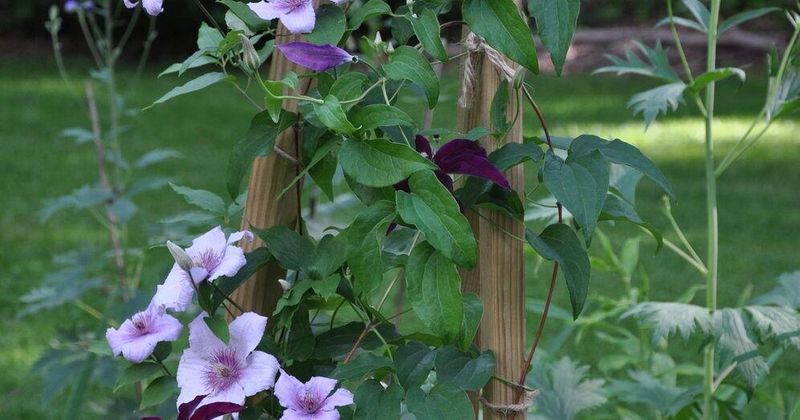
Before concluding that something is wrong with your vine, consider whether you are expecting flowers at the right time for the right plant. Clematis vary widely in their flowering season, with some putting on their best show in spring, others peaking in midsummer, and still others blooming from late summer into fall.
A vine that appears flowerless in June might simply be a late-season type that has not reached its window yet.
Iowa State Extension and a companion Iowa State clematis guide both note that young plants may spend their first year or two focusing on root establishment, with reliable flowering more likely in the second or third season. Clemson Extension lists cultivars with bloom windows ranging from spring through fall, reinforcing why cultivar identification matters before diagnosing failure.
For Texas and Florida gardeners, Southern heat adds another layer of complexity. Intense afternoon sun, reflected heat from walls or pavement, and hot root zones can suppress flowering in ways that look similar to a light shortage but require different solutions.
University of Arkansas Extension and the NC State JC Raulston Arboretum both highlight heat tolerance as a key variable in clematis selection for warmer climates. North Carolina Extension also lists clematis as having high-severity toxic characteristics that can affect cats, dogs, and horses, so placement near pets or children warrants attention.
Florida gardeners should also note that UF/IFAS identifies Clematis terniflora (Japanese or sweet autumn clematis) as invasive; UF/IFAS Gardening Solutions notes it can be confused with the native Clematis virginiana, which typically has serrated leaf edges compared to the invasive species’ smooth-edged leaflets.
Treat sudden wilt as a different problem
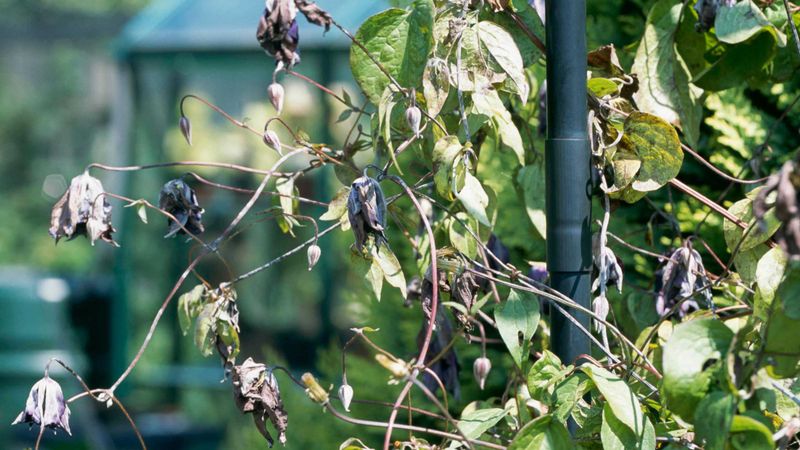
Sudden collapse, blackened stems, or rapid dieback from the base upward is not the same problem as a vine that simply refuses to flower. Clemson Extension and Oregon State University Extension both describe clematis wilt as a distinct condition involving fungal infection at the stem base, which can cause an otherwise healthy-looking vine to collapse quickly.
If you see this pattern, remove the affected tissue down to healthy growth or to the soil line, improve drainage if the site stays wet, and monitor for recovery from the roots rather than treating it as a light or pruning problem.
A vine with ordinary no-bloom behavior will keep growing and look generally healthy throughout the season. Wilt, root rot, or stem disease produce a different picture entirely and call for a different response.
Trying to fix disease symptoms with fertilizer or a pruning adjustment wastes time and can make the underlying problem worse.
A practical diagnostic order for any leafy, flowerless clematis starts here: confirm the plant’s identity and expected bloom window, then measure direct sun at the foliage across a full day. Protect and water the root zone, review pruning group and timing, and audit your fertilizer routine for excess nitrogen.
Disease investigation or relocation belongs at the end of that list, pursued only when the symptoms clearly call for it. A clematis that is leafy and vigorous is already doing something right, and steady, low-risk adjustments give it the best chance to reward you with flowers.