
Purple coneflower is one of the most rewarding plants in a Southern garden, but saving its seed takes a little timing and a careful eye. Once those spiky brown heads start maturing, birds and weather can claim the seeds before you get a chance to collect them.
Knowing what to look for on each individual head, rather than watching the calendar, is what separates a good seed harvest from an empty paper bag. Here is what to check and when to act.
Let the seed head—not the calendar—set the harvest date
Purple coneflower does not follow a single schedule across every garden. Late summer is a reasonable time for Southern gardeners to start paying closer attention to their Echinacea purpurea plants, but it is not a universal deadline, and no fixed number of days after flowering applies to every head on every plant.
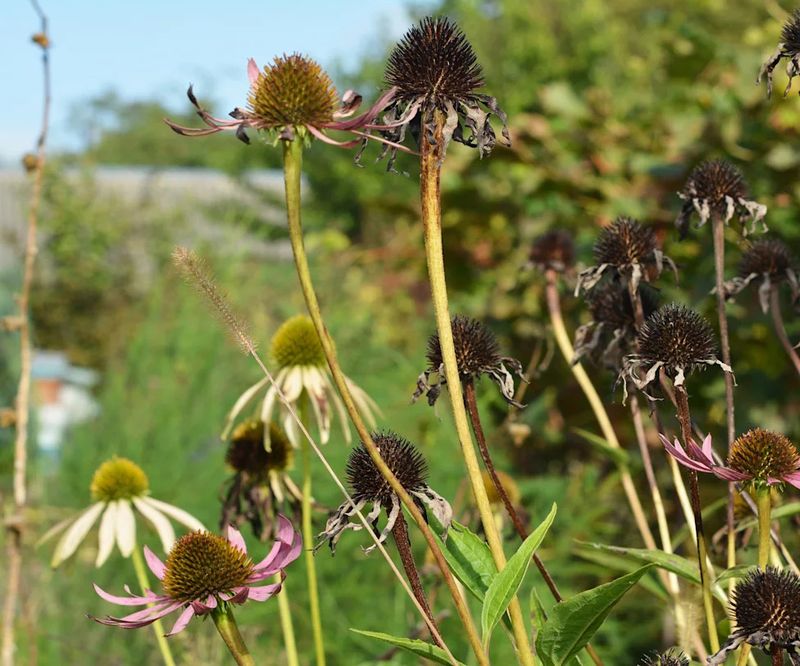
A single plant can carry a fresh flower, a partly dried head, and a fully mature head at the same time, because Echinacea purpurea blooms over an extended period that can stretch from summer into early fall depending on your location and conditions.
The right moment to collect falls between two points: after seeds inside the cone have matured and begun loosening, and before substantial shattering, bird feeding, or weather damage removes them. Waiting for a date on the calendar instead of reading the head in front of you is the most common reason gardeners end up with too little seed or seed that is not yet ready.
UF/IFAS seed-saving guidance reinforces that the condition of the seed head, not a calendar date, is the most reliable trigger for harvest.
Regional heat, rainfall patterns, and cultivar differences all shift the timeline, so Florida and Texas gardeners especially should watch their own plants rather than expecting a statewide window. Illinois Extension guidance on harvesting native perennial seeds notes that the best harvest moment is a compromise between seed maturity and seed loss, not a date circled on a calendar.
Check individual heads regularly once late summer arrives, and let what you see and feel guide the decision.
Confirm that you are saving purple coneflower seed
Before applying any harvesting advice, make sure the plant in front of you is actually Echinacea purpurea. Gardeners commonly use the word coneflower for several unrelated genera, including Echinacea, Rudbeckia, and Ratibida, and their seed heads look different, ripen at different times, and have different germination requirements.
Applying purple coneflower harvest timing to a black-eyed Susan or a prairie coneflower will not give you the results you expect.
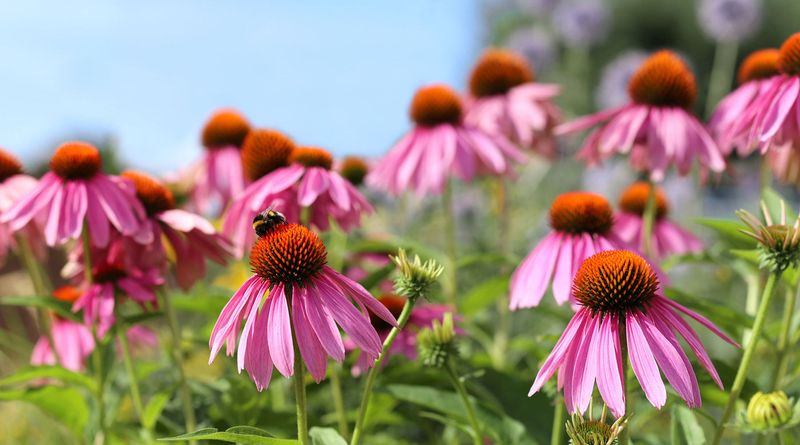
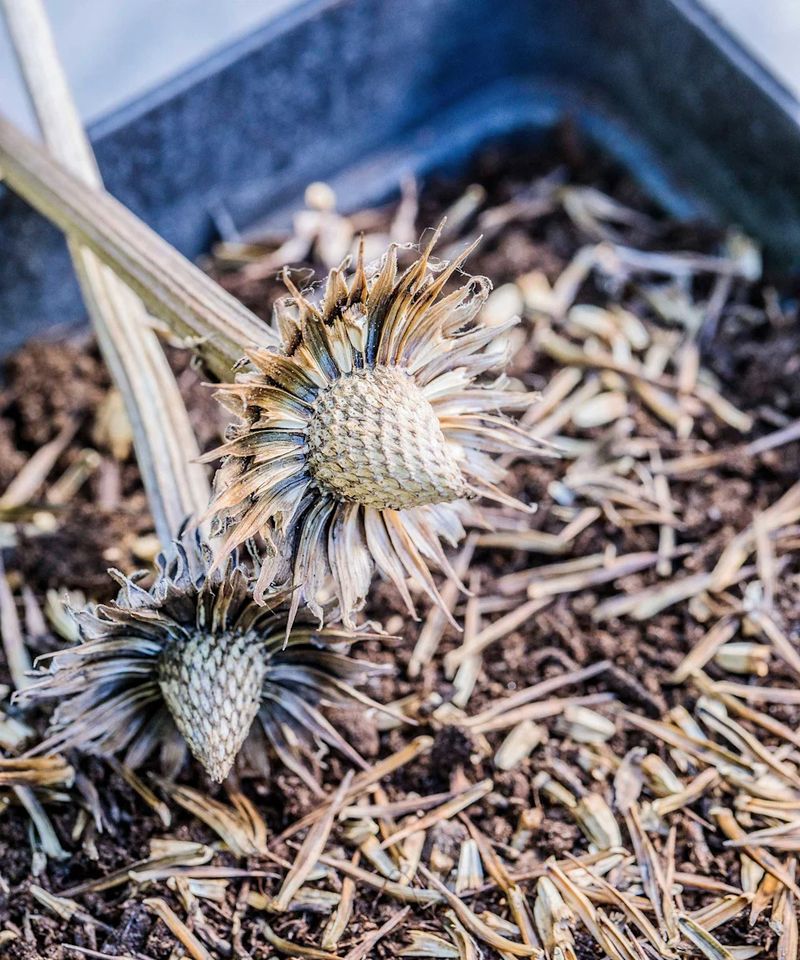
Penn State Extension’s purple coneflower profile describes Echinacea purpurea as having a stiff, domed, spiny central cone with drooping rose-purple ray petals – a combination that sets it apart from its common-name cousins. Once the petals fall, the cone turns brown and becomes increasingly rigid, which is exactly the structure that holds the seeds you want to collect.
Confirming the genus before you start saves time and frustration.
Cultivar and hybrid differences matter just as much as genus. UF/IFAS notes that seed-grown plants from named ornamental cultivars may not resemble the parent, because many popular coneflower varieties are selected or hybrid forms with unusual colors, double petals, or compact habits.
Seeds from those plants can produce offspring in a range of colors and sizes rather than copies of what you grew. If you are hoping to reproduce a specific named cultivar exactly, be aware that vegetative propagation, not seed saving, is the more reliable path.
Use these signs to judge a mature head
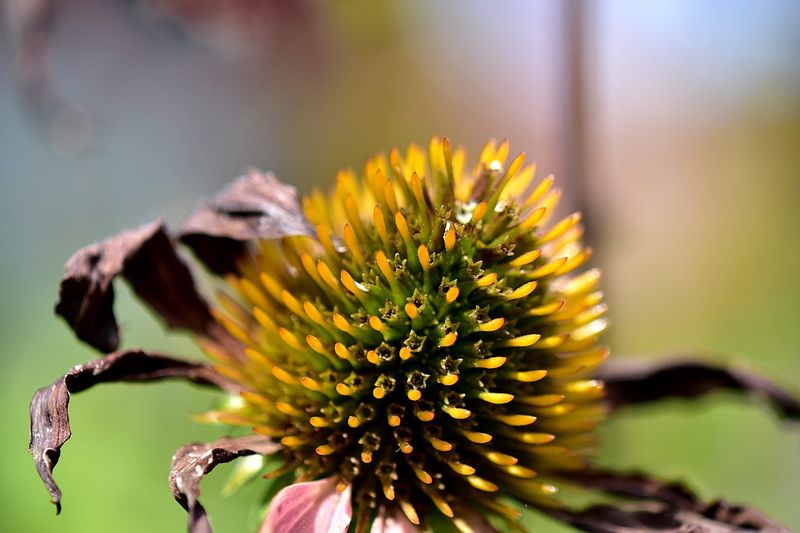
Judging a coneflower head by sight and touch is more reliable than any date on a planting chart. A head ready for harvest will have turned fully brown and dry, and the stem or base directly below the cone will usually show browning as well.
The seeds themselves sit inside the central cone, not in the petals, so a head that still has green tissue at its base or pale, soft seeds inside is not ready yet, regardless of how sparse the petals look.
To check seed readiness, put on a glove and gently rub or press the side of the cone. Illinois Extension recommends checking for seeds that release relatively easily when the cone is rubbed or combed, and advises looking for firm, dark achenes rather than soft, pale, or greenish ones.
A seed that crushes easily between your fingers is not mature. A firm, dark seed that resists pressure is a good sign.
There is a middle ground you are aiming for. A head that is dry enough to handle comfortably but has not yet dropped most of its seeds is the target.
UF/IFAS seed-saving guidance advises removing the head before seeds begin dropping, which means acting once some seeds loosen but before the cone becomes so brittle that a tap sends them scattering. A USDA plant guide summary also notes that seeds harvested at physiological maturity before full desiccation can show strong germination, a reminder that visual dryness and seed readiness are not always identical.
For home gardeners, the practical answer is to harvest when the head looks and feels dry and seeds begin releasing with light pressure, without waiting until the cone has shattered completely.
Harvest each ready head on a dry day
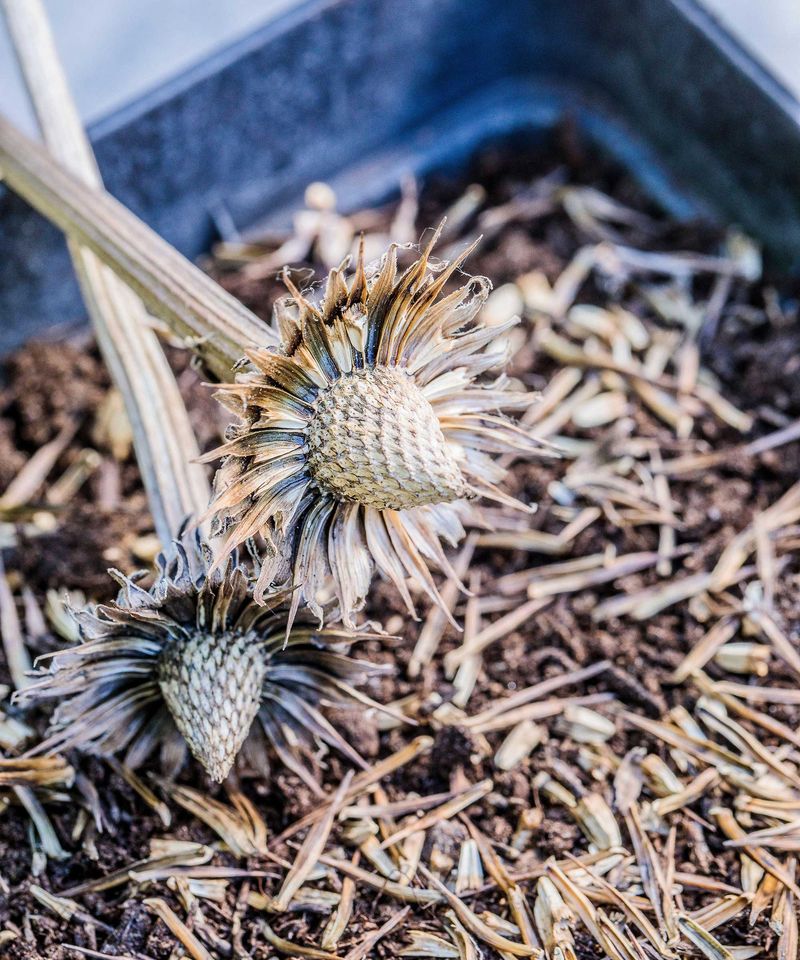
Timing the cut to a dry morning makes a real difference in how well your harvested seed keeps. Wait until the dew has fully evaporated before heading out with your scissors, because moisture on the cone can encourage mold during storage if the heads are not thoroughly dried afterward.
Wet or damp heads collected in the early morning and immediately bagged are more likely to cause problems than heads cut mid-morning on a sunny, breezy day.
Rutgers Extension guidance on native plant seed propagation specifically recommends wearing gloves when handling Echinacea heads and combing seeds from dried cones. The central cone is stiff and spiny enough to scratch skin with repeated handling, so gloves are practical protection rather than optional caution.
Use clean scissors or pruners to cut the stem a few inches below the seed head, which gives you something to hold without disturbing the cone itself.
Place each cut head into a paper bag rather than a sealed plastic container. Illinois Extension’s beginner’s guide to collecting native seeds recommends paper bags because they allow residual moisture to escape rather than trapping it against the seed.
Label each bag immediately with the plant name, cultivar or seed source if you know it, and the date of collection. Working head by head rather than cutting the entire plant at once lets you leave immature heads to continue developing while collecting only what is genuinely ready, a habit that improves both seed quality and garden tidiness.
Air-dry and clean the seed without trapping moisture
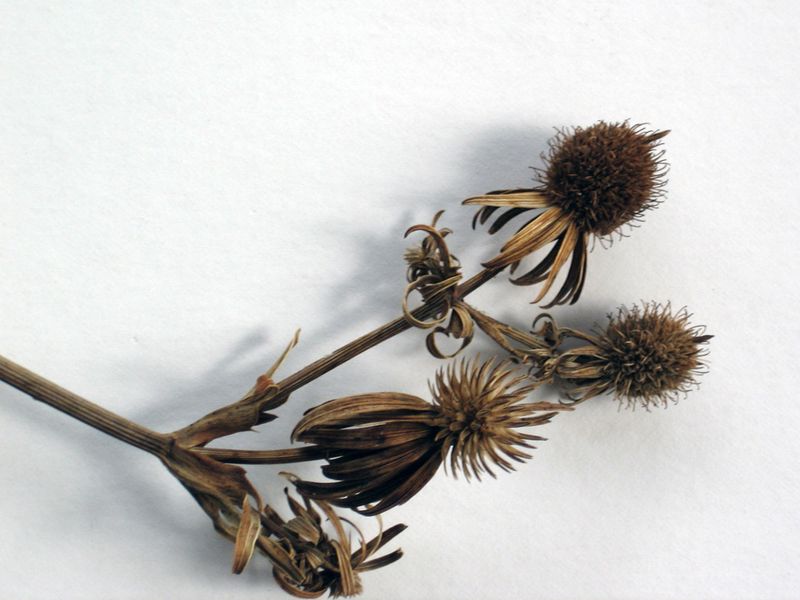
Even heads that look dry in the garden can hold more moisture than you realize, especially after a humid Southern night or a recent rain. Spread freshly cut heads in a single layer on newspaper or in a shallow cardboard box, and set them somewhere with good airflow, like a covered porch, a garage with the door cracked, or a dry indoor room.
A week or two of gentle air-drying is usually enough to finish the job before you separate the seeds.
Avoid two common mistakes: sealing damp heads in a plastic bag or leaving them in a hot car. Both situations trap humidity against the seed, which encourages mold and can reduce germination.
UF/IFAS advises air-drying seed heads after harvest before separating or storing the seeds, and that guidance applies even when the heads feel dry to the touch at collection time. Heat combined with trapped moisture is especially damaging, so a parked car in July or August is one of the worst places for freshly harvested material.
Once the cones are fully dry and crackly, hold each one over a bowl or sheet of paper and gently rub or shake it to release the small, dark, four-sided achenes. NC State Extension describes Echinacea purpurea seeds as small dark achenes located within the spiny cone.
Remove obvious stems and large debris by hand, but do not worry about getting the seed perfectly clean. A little chaff mixed with garden-bound seed is harmless, and overly aggressive sifting can damage or lose viable seed.
A practical rule from Illinois Extension is to aim for reasonably clean, not laboratory-clean, when preparing seed for home sowing.
Share the seed heads with birds and the next generation of plants
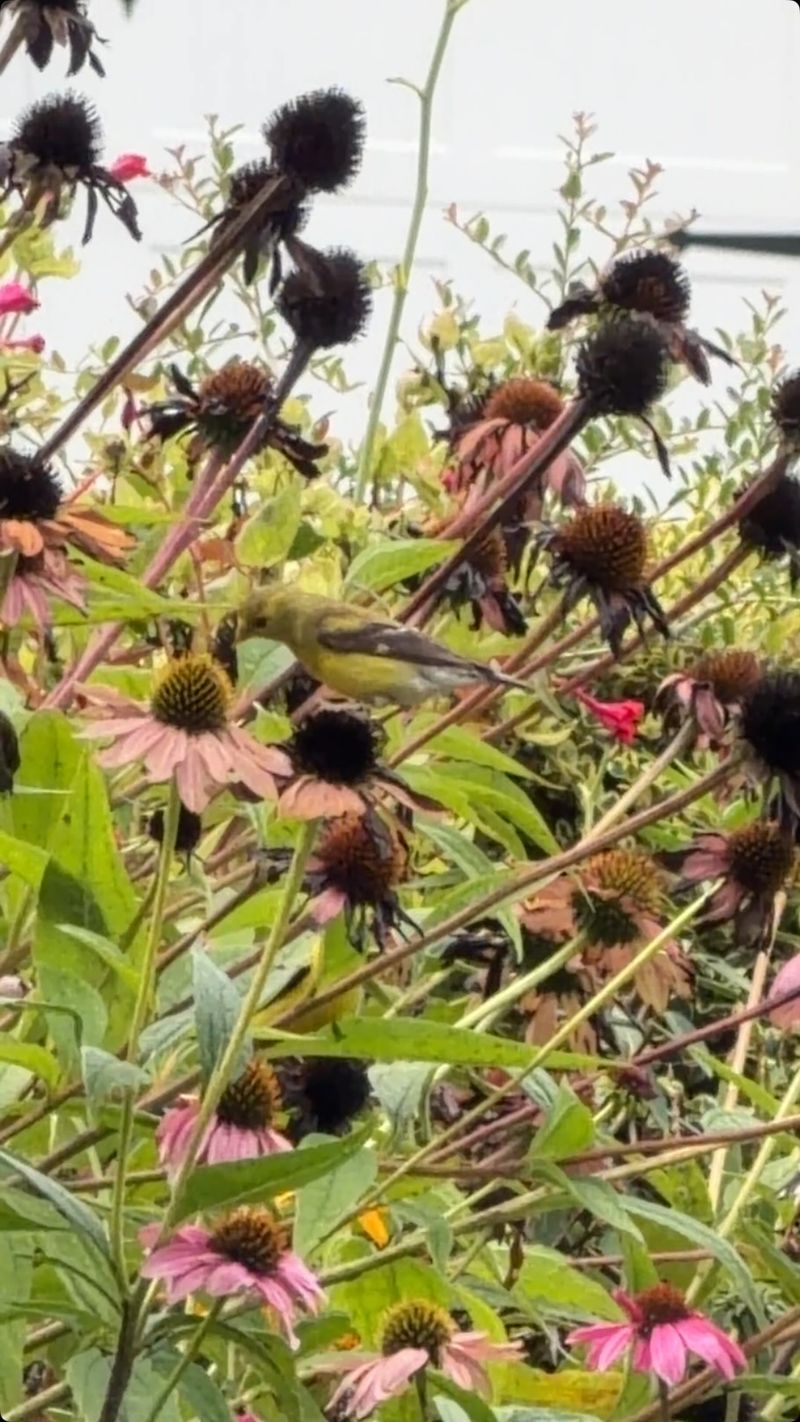
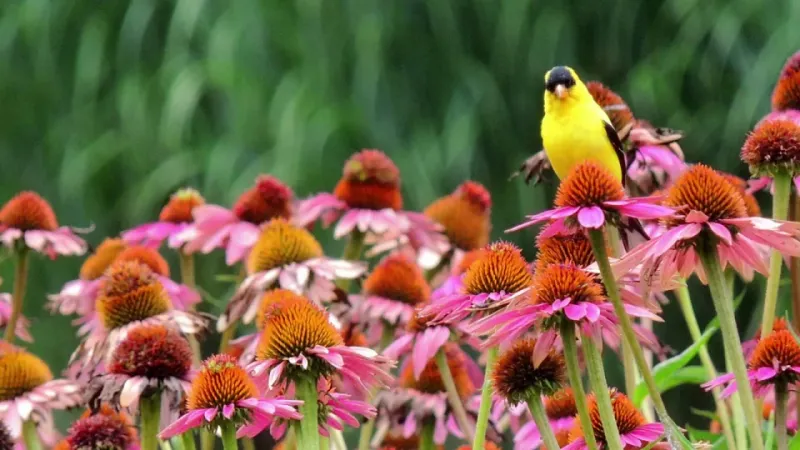
Harvesting every mature head in the garden solves one problem and creates several others. Goldfinches rely on coneflower seed heads as a reliable food source in late summer and fall, and a garden that leaves a few standing cones provides real habitat value without any extra work on your part.
Removing all the heads also eliminates the chance of natural reseeding, which is how many purple coneflower patches expand and fill in over time.
Extension guidance on wildlife-aware seed collection commonly recommends taking only a portion of the available seed from any plant and leaving the rest for wildlife and natural regeneration. A practical approach is to identify the heads that are most mature and collect from those, while leaving others that are slightly less developed for birds and self-sowing.
You still get seed to save, and the garden still functions as habitat.
Illinois Extension’s coneflower garden guide points out that deadheading can encourage additional flowering or limit unwanted reseeding, but it comes at the cost of both seed production and bird food. Deciding which heads to cut and which to leave is a garden-management choice that depends on your priorities.
One more point worth keeping in mind: this article focuses on plants growing in your own garden. Collecting from wild populations, public land, or roadsides is a different matter entirely, with potential legal and conservation concerns that vary by location.
Illinois Extension’s guide to collecting native seeds recommends leaving the majority of seed in wild settings and being aware of permission requirements before collecting anywhere outside your own property.
Store dry seed and choose a flexible sowing plan
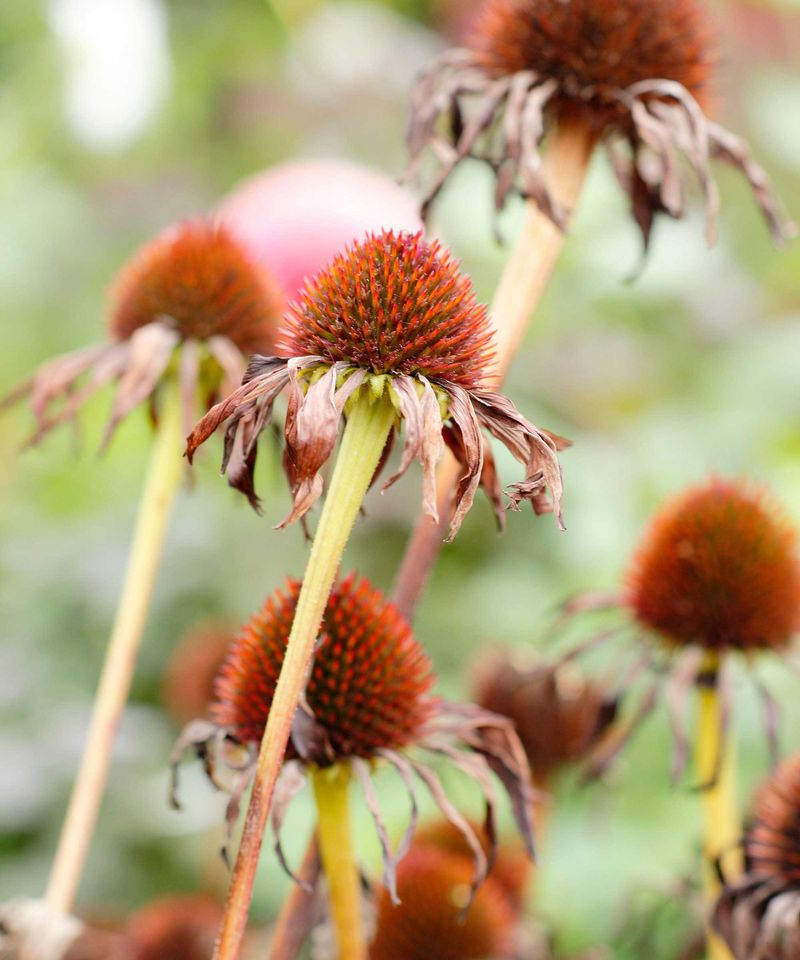
Getting the seed into good storage is the final step that determines whether your harvest is still viable when planting time arrives. Thoroughly dry seed, meaning seed that has been air-dried until the cone crumbles easily and the achenes feel firm and papery, should go into a labeled envelope or small container with the plant name, cultivar if known, and the collection date written clearly on the outside.
Warmth and humidity are the two biggest threats to stored seed, so a cool, dry, dark location is the goal.
A kitchen drawer near the stove or a windowsill in direct sun is not the right spot. A dark shelf in an air-conditioned room, a basement cabinet, or a designated seed box in a consistently cool area works better.
Illinois Extension’s seed-saving guidance notes that for longer storage, refrigeration can help, but seed must be completely dry before sealing it in any airtight container. Condensation from partially damp seed sealed in a cold environment can cause mold and reduce viability quickly.
Sowing options are more flexible than many gardeners expect. Fall outdoor sowing lets the seeds experience natural temperature changes through winter, which can support germination in spring.
Rutgers Extension guidance on native seed propagation describes moist-cold stratification as a helpful treatment for Echinacea, while USDA documentation for Echinacea purpurea also notes that spring sowing without artificial stratification can produce germination. Seed behavior varies by species, seed lot, storage history, and source, so treat stratification as a useful option rather than a strict requirement for every purple coneflower seed you collect.
Use local conditions to decide which heads to collect next
Pulling together everything covered here into a working routine starts with knowing your own garden. Confirm you are growing Echinacea purpurea rather than a look-alike genus, then walk the plants and check individual heads rather than making a single sweep of the whole patch.
Brown, dry heads with firm dark seeds that begin to release under gentle pressure are ready. Heads that still feel dense and solid, or that show any soft, pale seeds, need more time.
Florida and Texas gardeners face wide variation within their own states, so a statewide collection date is not a useful guide. UF/IFAS notes that not all purple coneflower cultivars perform equally well across Florida, and UF/IFAS extension resources encourage gardeners to follow local plant performance rather than broad regional assumptions.
Regional heat, humidity, and rainfall all affect how quickly individual heads dry and how long viable seed stays in place, so let your own observations drive the schedule.
Collect selectively, air-dry carefully, label everything, and leave some heads standing for birds and natural reseeding. The plants will tell you what they need if you check them head by head.
A garden that produces good seed most years is one where the gardener reads the plant, not the month.