
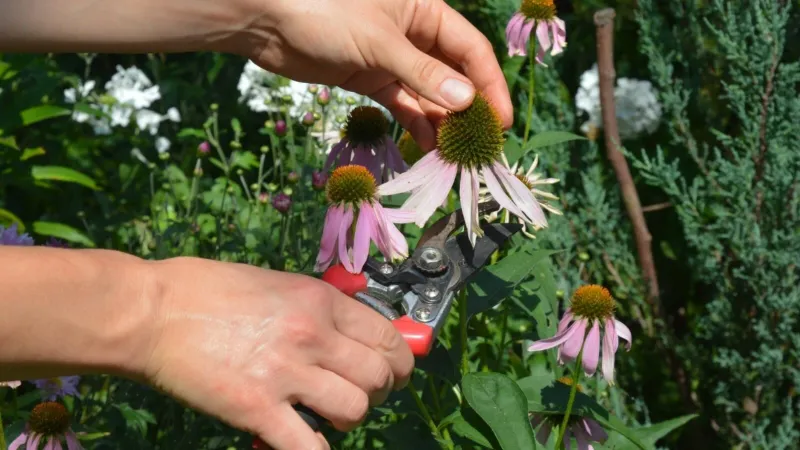
Watching your coneflowers fade earlier each summer is genuinely frustrating, especially when they put on such a bold show the first year or two. The good news is that a simple, targeted pruning habit called deadheading can often refresh a flagging late-season display and encourage more flowers from the same plant.
But deadheading is a current-season tool, not a cure for a plant that is struggling year after year for deeper reasons. Understanding the difference helps you spend your garden time where it actually counts.
A weaker late-summer display is not always plant failure
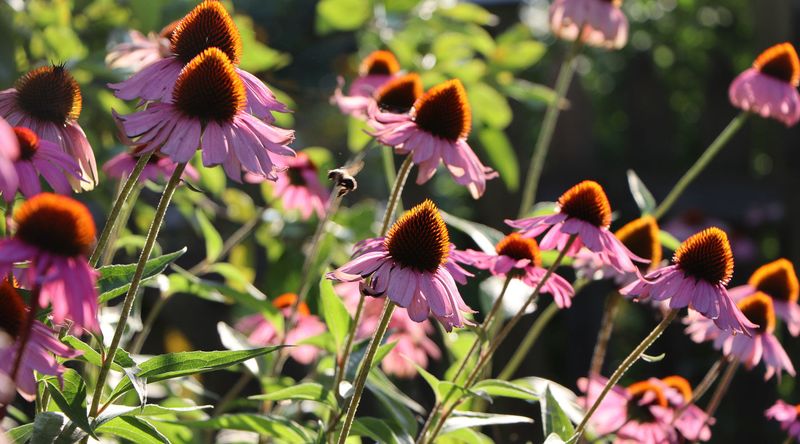
Purple coneflowers tend to put on their biggest, most colorful show in early to midsummer, and then naturally slow down as the season rolls toward August and September. Iowa State University Extension guidance on growing coneflowers confirms that a strong early-season flush followed by fewer flowers later is a normal growth pattern for this species, not a red flag.
So if you step outside in late July or August and notice half the flowers look tired while only a handful of fresh buds remain, the plant may simply be doing exactly what coneflowers do. A thinner late-summer display feels like failure when you compare it to the peak-bloom weeks, but the calendar is often the real explanation.
That said, there is a meaningful difference between a seasonal slowdown and a plant that produces fewer, weaker blooms every single year. Penn State Extension’s profile of purple coneflower notes that performance can vary based on site and growing conditions, so a pattern of progressive decline across multiple seasons deserves a closer look beyond the bloom cycle alone.
Deadheading fits into the first situation, as a way to manage what is already happening, rather than a fix for the second.
Deadheading may encourage another flush of flowers
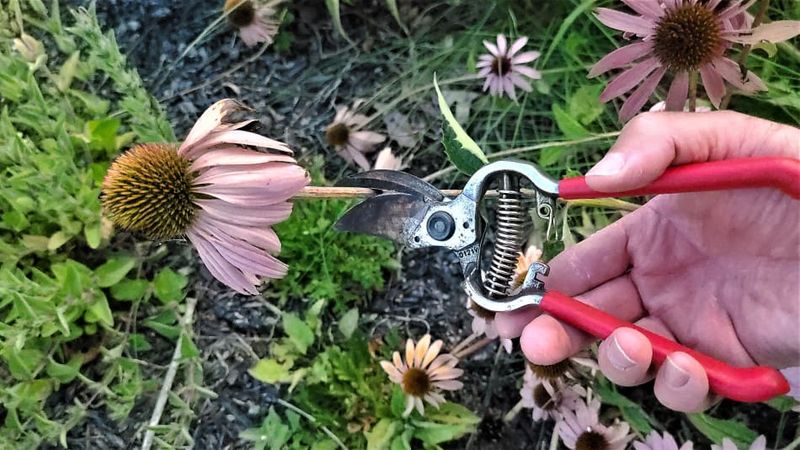
When a coneflower flower begins to fade, the plant shifts energy toward developing seeds inside the cone. Removing that fading bloom before the seed head fully matures interrupts that process and may redirect the plant’s resources toward producing additional flowers.
University of Illinois Extension’s coneflower guide supports deadheading as a way to encourage continued blooming during the growing season.
The results, though, are not guaranteed and can be modest. A second flush might mean several new buds opening over the next few weeks, or it might mean just a handful of smaller blooms before the plant winds down for the year.
Cultivar, climate, soil health, and how established the plant is all play a role in what actually happens after you cut.
Equally worth knowing: Missouri Botanical Garden’s plant profile for Echinacea purpurea notes that some coneflowers rebloom well without any deadheading at all, and that deadheading is not essential to a coneflower’s health or survival. Think of it as a helpful option rather than a strict requirement.
If you skip a week of deadheading, the plant will not suffer permanent harm, though you may lose some potential flowering opportunity.
Cut each spent stem above healthy new growth
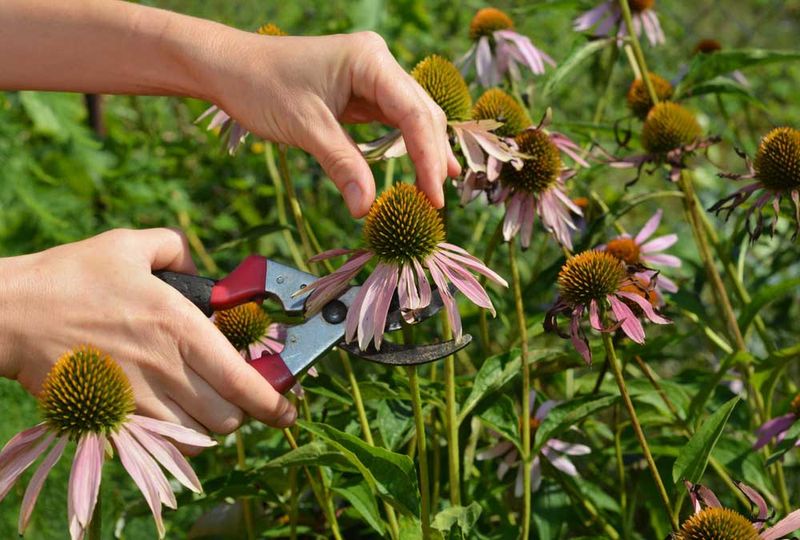
Getting the cut right makes a real difference. Start by finding a flower that has clearly begun to fade: the petals are drooping or falling, and the central cone is darkening.
Before you reach for your pruners, run your fingers gently down the stem from that spent bloom and look carefully near its base for any small, unopened buds tucked close to the leaves. Cutting too high can remove buds you did not notice.
Once you have confirmed there are no hidden buds above your intended cut point, trace the stem downward until you reach the next set of full, healthy leaves, a lateral bud, or a visible side shoot branching off the main stem. Make your cut cleanly just above that point, angling slightly if you prefer, using sharp, clean pruners.
Penn State Extension’s deadheading guide and Illinois Extension’s pruning tips for longer-lasting blooms both specifically support cutting to the next lateral flower, bud, or leaf for coneflowers.
Healthy foliage should stay on the plant. Deadheading targets individual spent flower stems, not the plant’s leaves or overall structure.
NC State Extension’s Echinacea purpurea profile reinforces that the plant’s basal foliage and stem leaves support continued growth and should remain intact during the growing season. Stripping leaves or cutting the entire plant back is a separate and very different action.
Check the plant regularly instead of pruning by the calendar
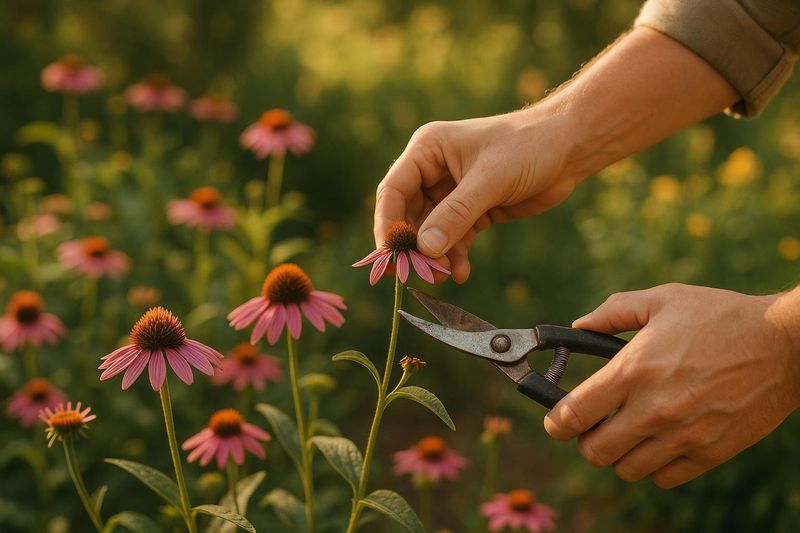
Treating deadheading as a one-time late-summer chore is one of the easiest ways to miss the window when it matters most. Flowers on a coneflower plant do not all open or fade at the same pace, so walking past the bed every few days and checking individual blooms gives you far better results than waiting for a single calendar date to act.
Penn State Extension recommends deadheading as flowers begin to fade rather than holding off until the whole plant looks spent.
Regular checks also protect buds you might otherwise accidentally remove in a hurry. A stem that looks finished at the top may have a tight, unopened bud just a few inches below.
Catching these staggered bloomers is exactly what repeated, attentive visits make possible, and each one you save is a flower you would have lost with a rushed, once-a-season trim.
One technique worth knowing about but keeping separate from late-summer deadheading is the Chelsea chop. The Royal Horticultural Society’s Chelsea chop guidance describes this as a late-May or early-June technique that involves cutting stems back by roughly one-third to one-half before flowers form, with the goal of creating shorter, bushier plants and delaying or staggering the bloom period.
Iowa State Extension also notes its value for managing perennial beds and borders. That is a different tool for a different moment in the season, not the right response to flowers that are already fading in August.
Look for site or health problems when decline repeats
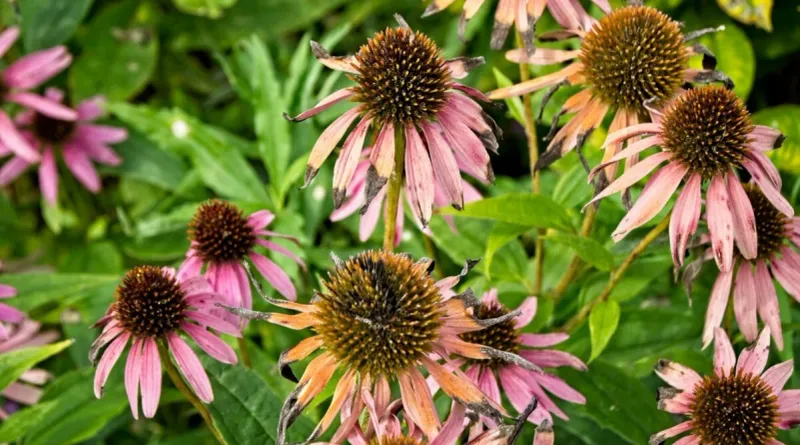
A coneflower that produces progressively fewer or weaker blooms season after season is telling you something that deadheading alone cannot fix. NC State Extension’s coneflower profile lists full sun and well-drained soil as the conditions these plants genuinely need to perform well, and chronic shade or wet feet can quietly drag a clump down over several years without any obvious single-season cause.
Watering habits matter too. Penn State Extension’s perennial care guidance recommends roughly one inch of water per week for established perennials, applied deeply and less frequently rather than in shallow daily doses.
Overcrowding is another common culprit: a clump that has expanded for several years with no division can become congested, with weaker growth at the center. Some extension sources suggest dividing overcrowded clumps roughly every three to four years, while others give four to six years as a general range, with actual timing depending on how the plant looks and how the site performs.
University of Georgia Extension’s native plants guide addresses division as part of long-term coneflower management.
Fertilizer deserves careful thought. Adding nutrients without testing the soil first can produce lush, tall, leafy growth with fewer flowers rather than more.
A soil test is a far better starting point than reaching for a general bloom booster.
If the plant shows small, malformed, or greenish flowers, a witches’-broom growth pattern, or severe yellowing that spreads through the plant, those are signals that something systemic may be at work. University of Minnesota Extension’s aster yellows resource explains that this disease is systemic and cannot be corrected by pruning.
Powdery mildew, leaf spot, and root problems can also affect coneflowers and require their own evaluation. In those situations, the right move is diagnosis, not more deadheading.
Minnesota Extension’s powdery mildew guide is a useful starting point if you notice white coating or distorted growth on the foliage.
Match expectations to the site and the coneflower cultivar
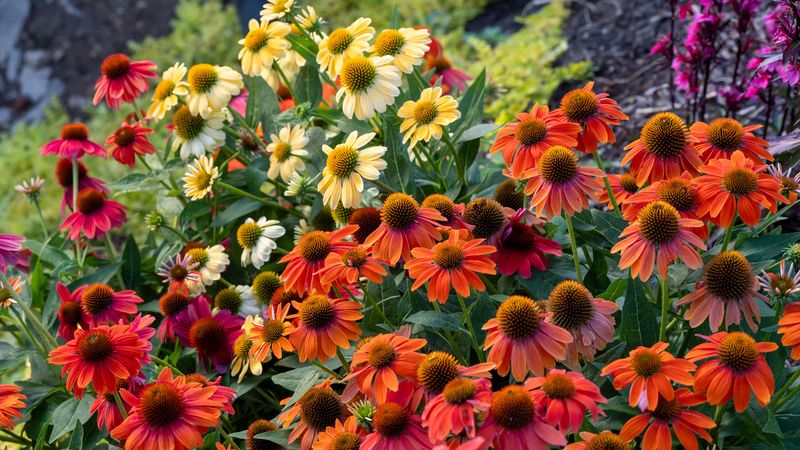
Not every plant labeled “coneflower” at the garden center behaves the same way. The name covers a wide range of species, hybrids, and cultivars that differ in bloom timing, rebloom capacity, heat tolerance, and how long they reliably perform in a given spot.
Advice that holds up well for straight-species Echinacea purpurea does not automatically transfer to every newer hybrid on the market. University of Illinois Extension’s purple coneflower guide focuses specifically on Echinacea purpurea, and NC State Extension’s profile notes that cultivars can vary considerably in their characteristics.
Site conditions set the ceiling for what any cultivar can do. The Royal Horticultural Society’s Echinacea guidance emphasizes full sun and free-draining soil as core requirements, with performance dropping noticeably in shadier spots or where moisture lingers around the roots.
Competition from nearby aggressive plants can also limit what even a well-suited cultivar produces.
Regional variation is real. UF/IFAS documentation on purple coneflower notes it as a spring- and summer-flowering perennial suited to appropriate conditions in parts of Florida, though broader UF/IFAS plant tables place Echinacea purpurea mainly in northern Florida contexts.
Performance across Florida’s varied climates and soils is not uniform, and gardeners in other warm regions should check locally specific guidance rather than assuming one recommendation fits all.
Leave selected seed heads for birds and beneficial insects
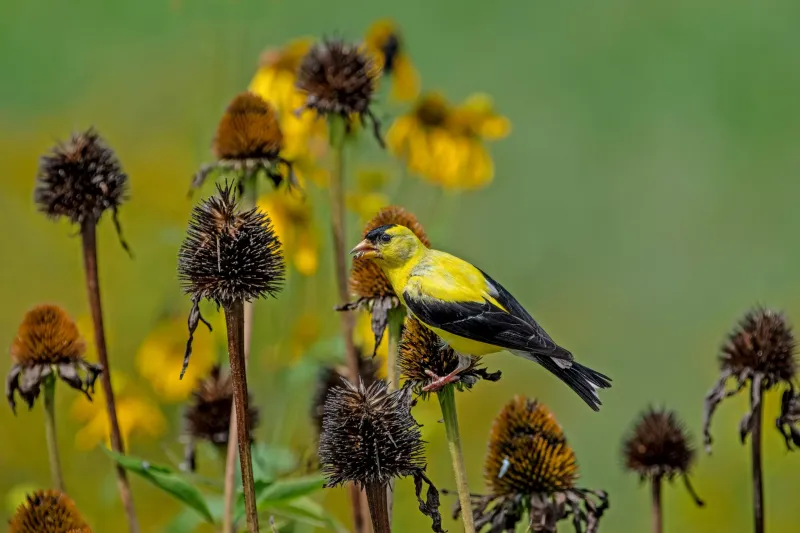
Removing every spent flower from a coneflower bed is a tradeoff worth thinking through before you start cutting. Coneflower seed heads are a genuine food source for goldfinches and other seed-eating birds, and stripping every cone clean eliminates that resource.
NC State Extension’s Echinacea profile specifically notes the wildlife value of the seed heads, and University of Georgia Extension’s Cherokee County Master Gardener newsletter also highlights coneflowers as a bird-friendly plant worth preserving in part for that reason.
Standing stems carry their own value beyond seeds. Penn State Extension’s rain garden plant guide for purple coneflower points out that hollow or pithy stems left standing through winter can provide nesting habitat for stem-nesting bees, a group of beneficial insects that does not use underground burrows.
Cutting everything to the ground in fall removes that option entirely.
A practical middle path works well for most gardeners. Deadhead the first flush of blooms and remove the spent flowers that look the most ragged or are in the most visible part of the border.
Then let the later-season seed heads develop and stand. Illinois Extension’s Garden Scoop blog on coneflowers supports this selective approach, noting that leaving some seed heads serves both wildlife and the garden’s long-term ecology.
You get a tidier display during peak season and a wildlife-friendly border as the garden winds down.
Use deadheading as a current-season reset, not a yearly guarantee
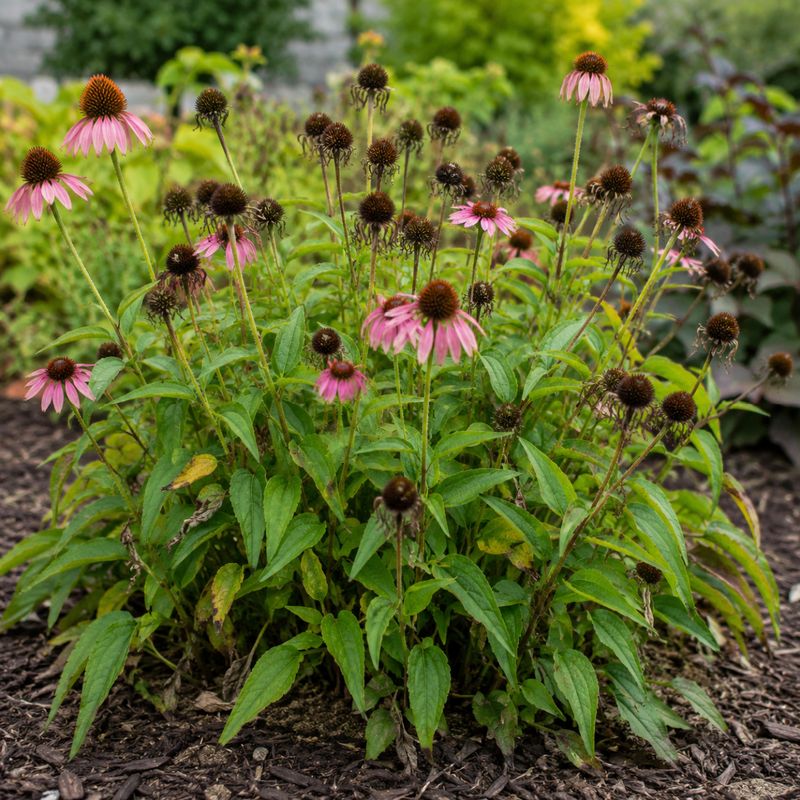
The practical routine is straightforward: walk the bed every few days during the bloom period, find flowers that are clearly fading, check just below each spent bloom for any unopened buds, and make a clean cut above the next healthy leaf, lateral bud, or side shoot. Repeat that process as new flowers fade, and you give the plant its best chance at additional blooms during the current season.
Penn State Extension’s deadheading guide and Missouri Botanical Garden’s deadheading FAQ both support this approach for managing flowering perennials.
If the clump still looks weaker or produces fewer blooms than it did a few years ago, despite good deadheading, that pattern points to site conditions, plant health, overcrowding, or cultivar longevity, none of which a pruner can solve on its own. Assess the sun, drainage, watering, and whether the clump needs dividing before assuming more cutting is the answer.
Leave a few of the late-season seed heads standing when you can. The garden looks after itself a little better, the birds get a meal, and some beneficial insects find a place to overwinter.
A coneflower bed managed this way tends to feel cared-for without being stripped bare.