
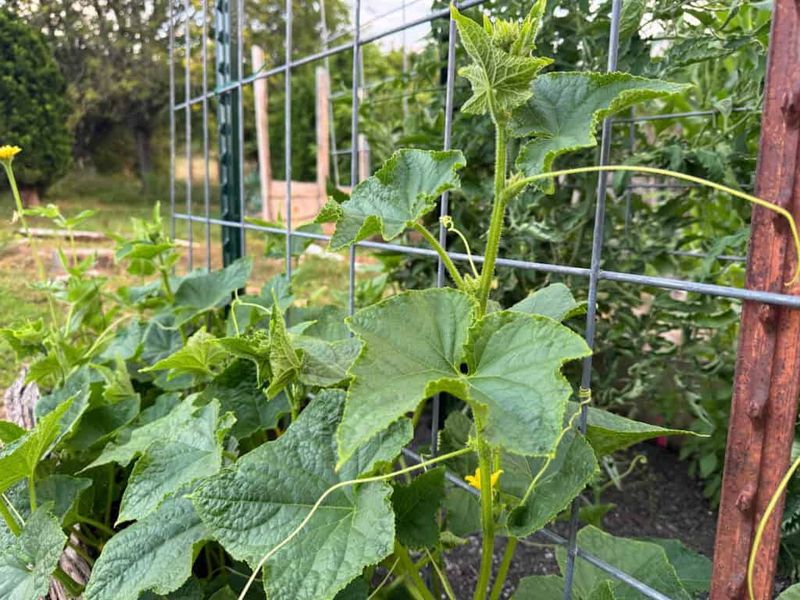
Watching a cucumber vine sprawl across the garden while producing almost no cucumbers is genuinely frustrating, especially when the plant looks healthy and full. The problem is not always obvious, and the fix depends entirely on what the vine is actually doing wrong.
Excess nitrogen is one real culprit when growth is unusually lush and flowering is sparse, but poor pollination, heat, moisture swings, and cultivar type can all produce a vine that looks great and delivers little. Knowing which situation you are dealing with is the first step toward getting fruit on the vine.
A leafy vine may be growing in the wrong direction
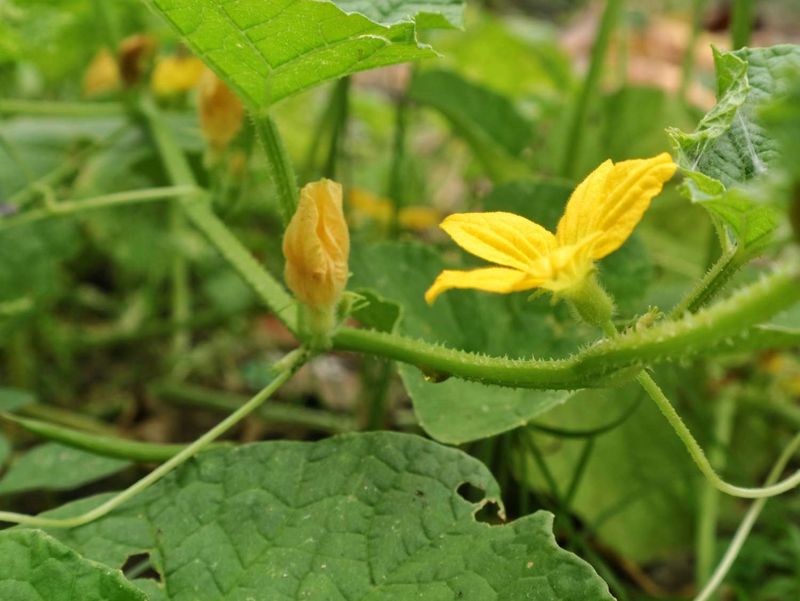
Sometimes a cucumber plant channels nearly all its energy into leaves and runners rather than flowers and fruit. That shift can happen when the soil carries more nitrogen than the plant needs for reproductive growth.
Nitrogen is the nutrient most responsible for lush, fast foliage, and when it is available in excess, a cucumber vine can become strikingly dark green, unusually thick-stemmed, and impressively long while producing very few flowers or almost no female flowers at all.
According to University of Minnesota Extension guidance on cucurbit flowering and fruit set, overfertilization with nitrogen is a recognized reason for excessive vine growth and delayed or reduced fruiting. The University of Georgia Cooperative Extension similarly connects overfertilization to vigorous vine growth that comes at the cost of fruit production.
If your vine is exceptionally dark green, sprawling well beyond its neighbors, and barely flowering, excess nitrogen is a reasonable first hypothesis worth testing.
The practical response is to stop adding nitrogen-containing fertilizer right now and have the soil tested before making any further changes. A soil test removes the guesswork and tells you whether the problem is too much nitrogen, a different nutrient imbalance, or something else entirely.
Pausing fertilizer and waiting for results is not passive, it is the most targeted move available. Keep in mind that this pattern supports a hypothesis, not a confirmed diagnosis, because other causes can produce a leafy vine with little fruit as well.
Inspect the flowers before changing the care routine
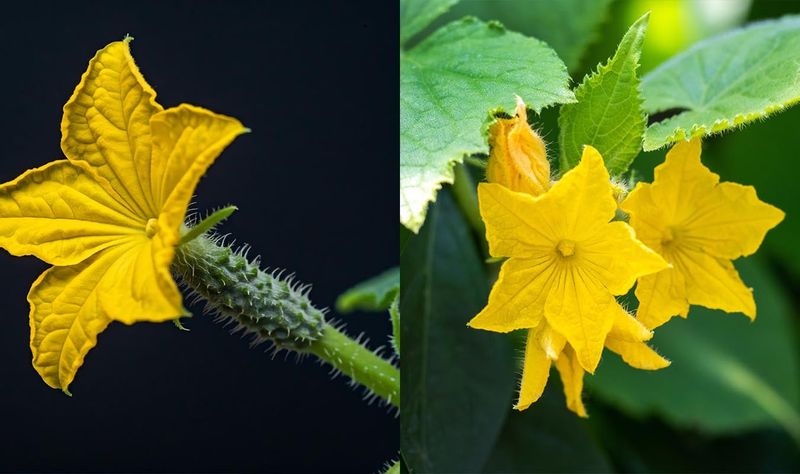
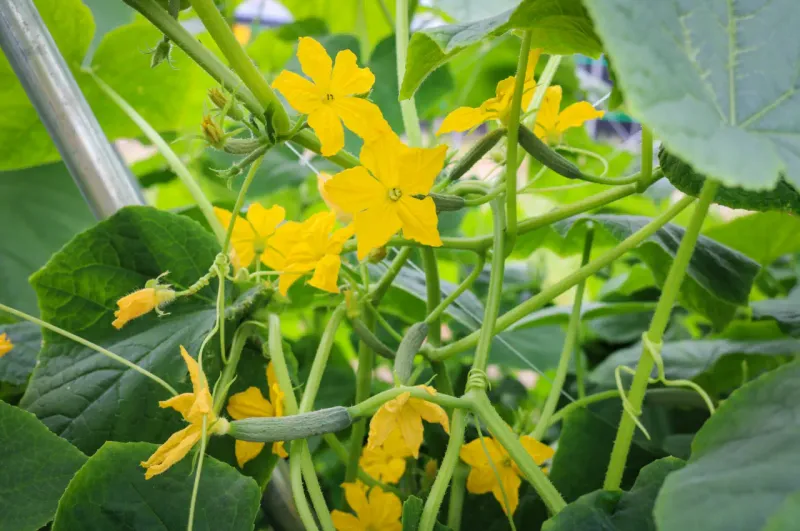
Before reaching for a fertilizer bag or any other fix, spend a few minutes looking closely at the flowers your plant is actually producing. Ordinary cucumbers carry separate male and female flowers on the same vine.
Male flowers appear first and in greater numbers, and that is completely normal early in the season. A female flower is easy to identify once you know the clue: look for a small, cucumber-shaped swelling directly behind the blossom.
That miniature fruit-in-waiting is the ovary, and it only develops into a cucumber if pollination succeeds.
As University of Georgia Cooperative Extension’s home cucumber guide explains, each of these flowering patterns points somewhere different. A vine producing only male flowers for the first week or two is behaving normally.
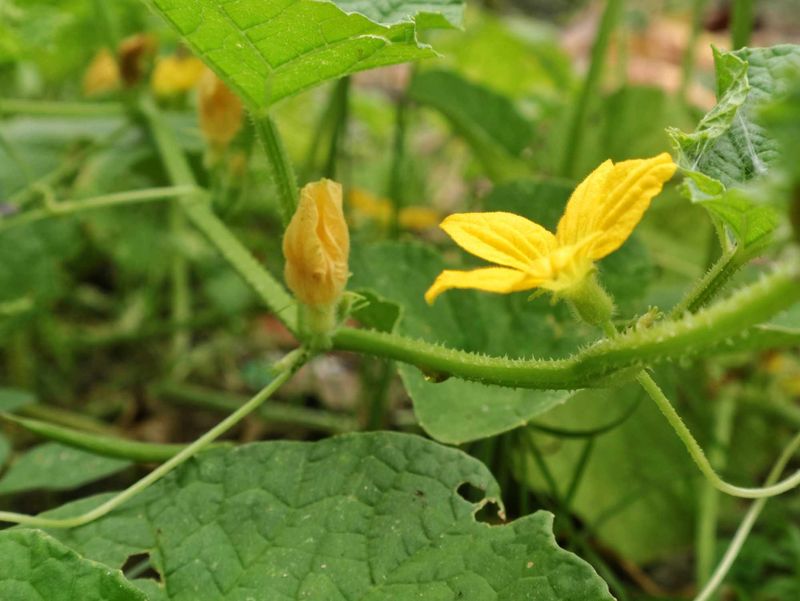
A vine that continues producing only male flowers well into the season may be responding to environmental stress or excess nitrogen. Female flowers that form and then shrivel and drop without developing into cucumbers are a signal to investigate pollination, heat, and moisture rather than fertilizer.
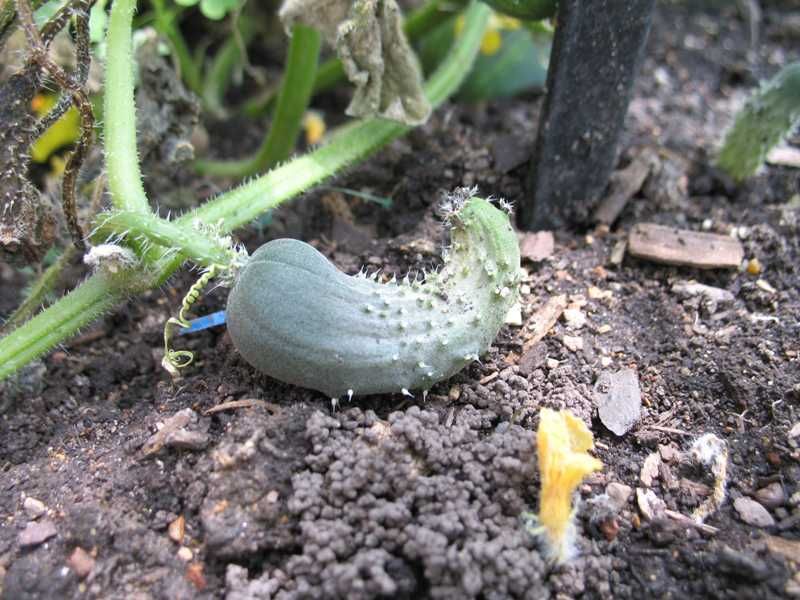
Tiny cucumbers that turn yellow or brown and fall off before reaching usable size suggest poor pollination or moisture stress, according to Utah State University Extension. Misshapen fruit is a separate situation altogether.
Penn State Extension’s cucumber pollination resource identifies incomplete pollination as a leading cause of crooked or poorly filled cucumbers, though moisture stress, disease, and cultivar-specific traits can also be involved. Matching your observation to the right pattern saves time and prevents applying the wrong correction.
Southern heat can disrupt flowers and pollen transfer
Cucumbers are warm-season vegetables that genuinely need heat to grow, but sustained extreme temperatures during flowering and fruit set can interfere with the process in ways that have nothing to do with fertilizer. University of Minnesota Extension notes that daytime temperatures in the 90s or nighttime temperatures in the 70s can contribute to flower and small-fruit abortion.
That does not mean every warm day stops production, but stretches of sustained extreme heat during the flowering window can reduce fruit set noticeably.
Weather affects pollination in a second, more direct way. Cucumber flowers are open and receptive for only a limited time, generally beginning around sunrise.
University of Georgia Extension’s vegetable pollination guide points out that bee activity can drop during very hot conditions, and that rain, wind, and prolonged humidity can interfere with the brief window when flowers are ready to receive pollen. UF/IFAS Extension identifies extreme heat, fog, and continuous precipitation as factors that specifically reduce pollinator activity in cucurbit crops, which is directly relevant to Florida and Gulf Coast growers.
The practical question is whether pollen is actually moving between male and female flowers, not whether you spot a honeybee specifically. Penn State Extension confirms that wild bees, bumblebees, and other insects also visit cucumber flowers and contribute to successful pollination.
If female flowers are forming but dropping, think about what the weather has been doing during the early morning hours when those flowers are open, and consider that as a separate diagnosis from a nitrogen-driven vine that barely flowers at all.
Reset the plant with restraint and steady moisture
When a cucumber vine is unusually leafy and barely flowering, the most measured first response is to stop adding nitrogen and let the plant work through what is already in the soil. Resist the urge to apply phosphorus, potassium, Epsom salt, sugar-water, or any homemade bloom booster.
None of these have reliable support as general cures for fruitless cucumbers, and adding nutrients without a soil test can worsen an existing imbalance or push the plant further toward vegetative growth. Let the test results arrive before making any fertilizer decision.
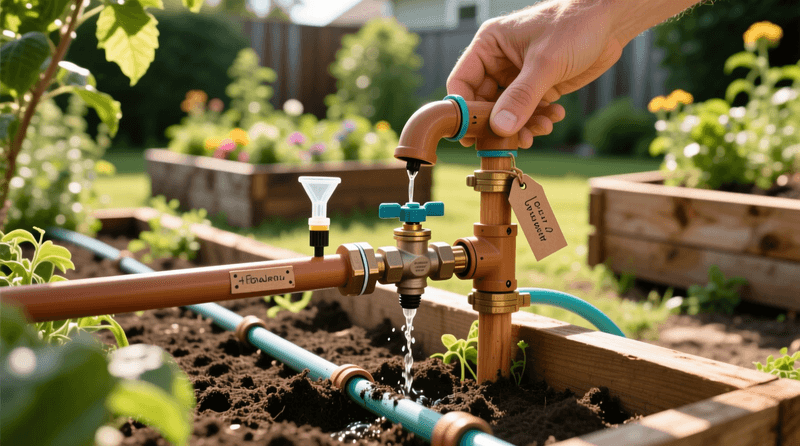
Moisture management deserves equal attention. Both drought and waterlogged roots can contribute to flower drop and fruit abortion, so the goal is fairly consistent soil moisture rather than either extreme.
University of Minnesota Extension and University of Georgia Cooperative Extension both connect moisture stress to flower and fruit problems in cucumbers. Georgia Extension notes that roughly one inch of water per week is often adequate on heavier soils, with more frequent applications needed on the sandy soils common in much of Florida and coastal Texas.
Your actual schedule will depend on your soil type, how much rain you have received, container size if applicable, and how intense the heat has been.
Mulch earns a place in this reset plan for several practical reasons. A layer of organic mulch over the root zone slows moisture loss between waterings, reduces soil compaction, suppresses weeds, and keeps developing cucumbers off the ground where they can pick up disease and soil contact damage.
That combination of benefits makes mulching a low-effort step with a clear payoff, regardless of what turns out to be the primary cause of your fruiting problem.
Help female flowers only when pollination is the bottleneck
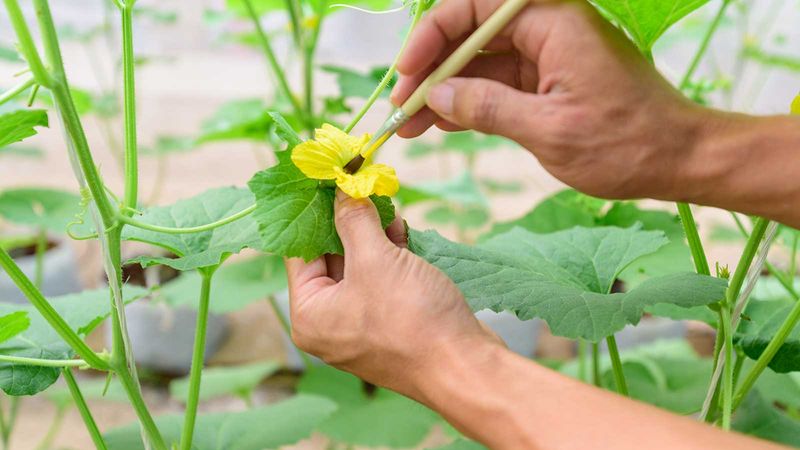
Hand pollination is a useful tool, but it belongs in a specific situation: an ordinarily pollinated cucumber variety has female flowers that repeatedly fail to develop, and either bee activity has been visibly limited or weather has disrupted the normal morning pollination window. Reaching for this technique before confirming that female flowers are actually present and that pollination is the missing link is skipping the diagnosis.
The method itself is straightforward. Pick a freshly opened male flower, gently remove its petals so the pollen-bearing center is exposed, and touch that center directly to the center of the female flower.
Colorado State University Extension recommends this approach for home gardeners when natural pollination appears insufficient. Work in the morning when flowers are freshly open and most receptive.
Two related practices protect the pollinators that do the job naturally. UF/IFAS Extension specifically warns that row covers exclude pollinators and must be removed or opened once flowering begins.
Leaving row covers on through the flowering stage is one of the more common reasons pollination fails in otherwise healthy plants. On the insecticide question, University of Georgia Extension’s pollination guide is clear: avoid applying insecticides while bees and other pollinators are foraging.
If a pest problem genuinely requires treatment, use only a product labeled for the specific crop and pest, follow every instruction on the label, and apply when pollinators are not active.
Hand pollination can improve fruit set when pollen transfer is the actual bottleneck, but it cannot fix severe heat stress, drought, disease, a nutrient imbalance, or a cultivar that does not require pollination in the first place. Match the intervention to the confirmed problem before applying it.
The seed packet can change the diagnosis
Standard pollination advice does not apply equally to every cucumber variety, and applying it to the wrong type can waste effort or, in some cases, reduce fruit quality. Most ordinary field cucumbers produce both male and female flowers and depend on insects to move pollen between them.
That is the situation most of this article addresses. But two other categories of cucumbers behave differently, and knowing which one you planted changes the diagnosis completely.
Gynoecious varieties produce mostly or entirely female flowers. University of Minnesota Extension notes that gynoecious types may need a pollen-producing companion variety planted nearby unless they are also parthenocarpic.
If your gynoecious variety has no companion and no reliable pollen source, female flowers will open and drop without producing fruit, which looks like a pollination failure but is actually a variety-management problem. Check the seed packet to see whether a pollinator variety was included or recommended.
Parthenocarpic cucumbers are a different case entirely. Penn State Extension explains that parthenocarpic varieties can set fruit without any pollination at all, and that in some protected-culture situations pollination can actually cause their fruit to become seeded or misshapen.
Hand-pollinating a parthenocarpic cucumber is unnecessary and potentially counterproductive.
Two additional practices support production once flowering is underway regardless of variety. Trellising improves airflow, keeps fruit clean, and can produce straighter cucumbers, as University of Georgia Cooperative Extension describes, though it does not resolve the underlying causes of fruit failure on its own.
Frequent harvesting also matters: leaving mature cucumbers on the vine pulls plant resources away from new fruit development, so picking regularly encourages continued production.
Match the correction to the symptom
A clear-eyed look at what the plant is actually doing narrows the diagnosis faster than any single treatment. When a vine is exceptionally dark green, sprawling, and barely producing flowers, excess nitrogen is the first thing worth investigating.
Pause fertilizer applications and get a soil test before adding anything. When female flowers are forming but dropping without developing, shift your attention to pollination conditions, morning weather patterns, and whether pollinators have access to the flowers.
Tiny cucumbers that yellow and drop point toward poor pollination or moisture inconsistency as primary suspects, while misshapen or poorly filled fruit calls for a closer look at pollination completeness, moisture levels, disease pressure, and cultivar characteristics rather than any single explanation. University of Minnesota Extension and University of Georgia Cooperative Extension both emphasize that different fruiting failures have different causes, and that matching the response to the observed symptom is what actually moves a plant forward.
Pruning vines, removing male flowers, and applying unsupported home remedies are not established corrections for any of these patterns. Check the seed packet before hand-pollinating to confirm the variety actually needs it.
Timely pollinator access, steady and appropriate moisture, and care suited to the specific cultivar give a healthy plant its best realistic chance at the harvest you are expecting.