
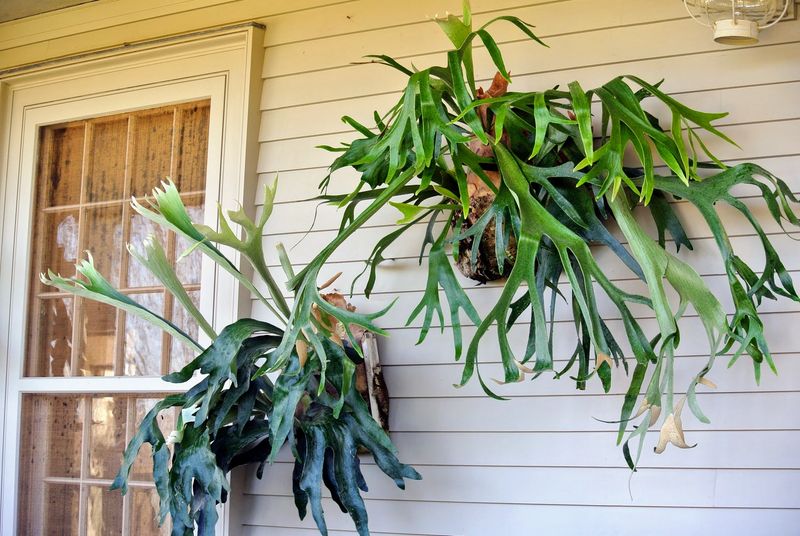
A staghorn fern is a tropical plant, so a Florida freeze forecast is your cue to give it shelter. If your fern hangs on a board or basket and you can handle it safely, the best move is to carry the whole mount to a porch, garage, or indoors.
A fern attached to an oak is a different story, and it needs a different plan. Here is how to choose the right one before the cold arrives.
Start by checking how the fern is mounted
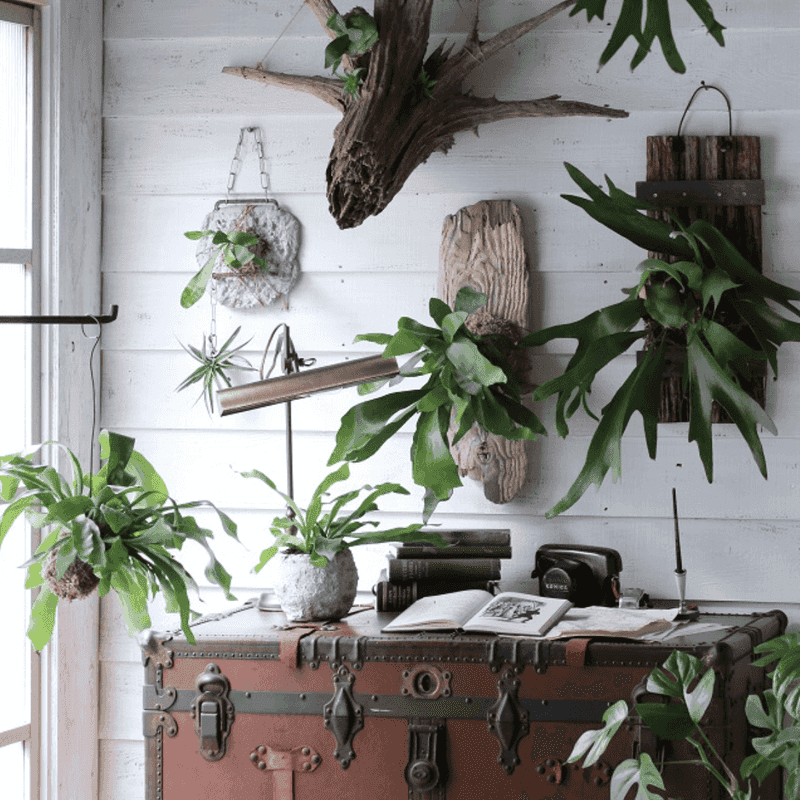
Before you think about blankets or garages, look at what your fern is actually attached to. That one detail decides which protection choices are realistic.
Two ferns in the same yard can need very different plans.
Staghorns are epiphytes, which means they naturally grow on trees, branches, or rocks instead of in the ground. According to UF/IFAS Gardening Solutions, they can be grown in Florida if they are protected from frost and freezes, and the same guide describes mounting them on boards or baskets.
UF/IFAS also advises bringing them indoors when extremely cold weather is expected, if that is possible.
Sort your fern into one of two groups. A fern on a board or in a basket is a movable mount, and it can often go to shelter as one piece.
A fern fixed to an oak is not equivalent to a board-mounted plant, and taking it off the tree is not a simple job.
Walk the yard in daylight and note where each fern lives, how high it sits, and whether you can reach it from the ground. Doing this a few days before a cold snap gives you time to choose calmly.
The sections below cover each case in turn, starting with how cold tolerance differs among species.
Cold tolerance depends on the staghorn species
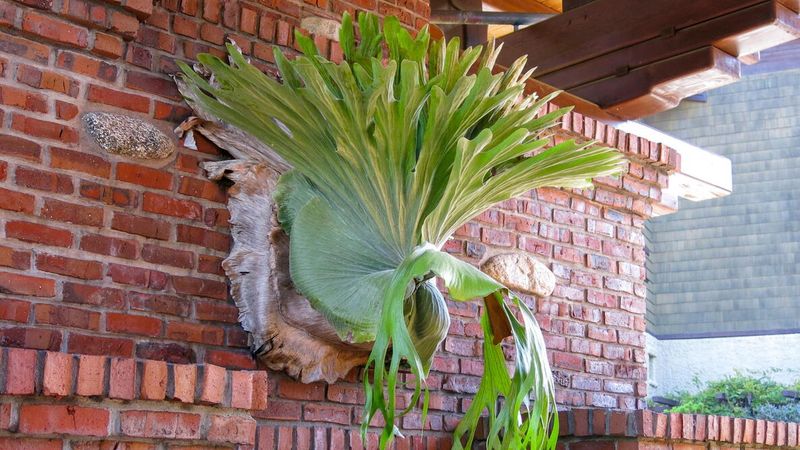
There is no single cold number that fits every staghorn. The name covers a whole genus of plants, and UF/IFAS identifies 18 species.
Some handle cool nights better than others, and you may not know which one you own.
UF/IFAS says most Platycerium species cannot tolerate temperatures below 55°F. It lists P. bifurcatum and P. veitchii as exceptions that can withstand temperatures as low as 30°F, and it still recommends protecting staghorns from freezing temperatures.
You can read the details in the UF/IFAS staghorn fern guide.
Other sources add more variety. University of Wisconsin Extension says P. bifurcatum can briefly survive temperatures in the mid-20s°F, yet it also recommends moving plants indoors before nights drop into the 40s°F.
Those reports differ, and neither one proves a safe temperature for every plant, every spot in the yard, or every length of freeze.
So treat any single cutoff with caution. A fern in an open spot or on a long, clear night faces more risk than one tucked near a wall.
Preparing when a freeze is forecast is simply good timing, and it matters most in North and Central Florida, where freezes are more likely. Not every Florida location faces the same risk, so watch your own local forecast.
Move a board or basket mount only if you can handle it safely
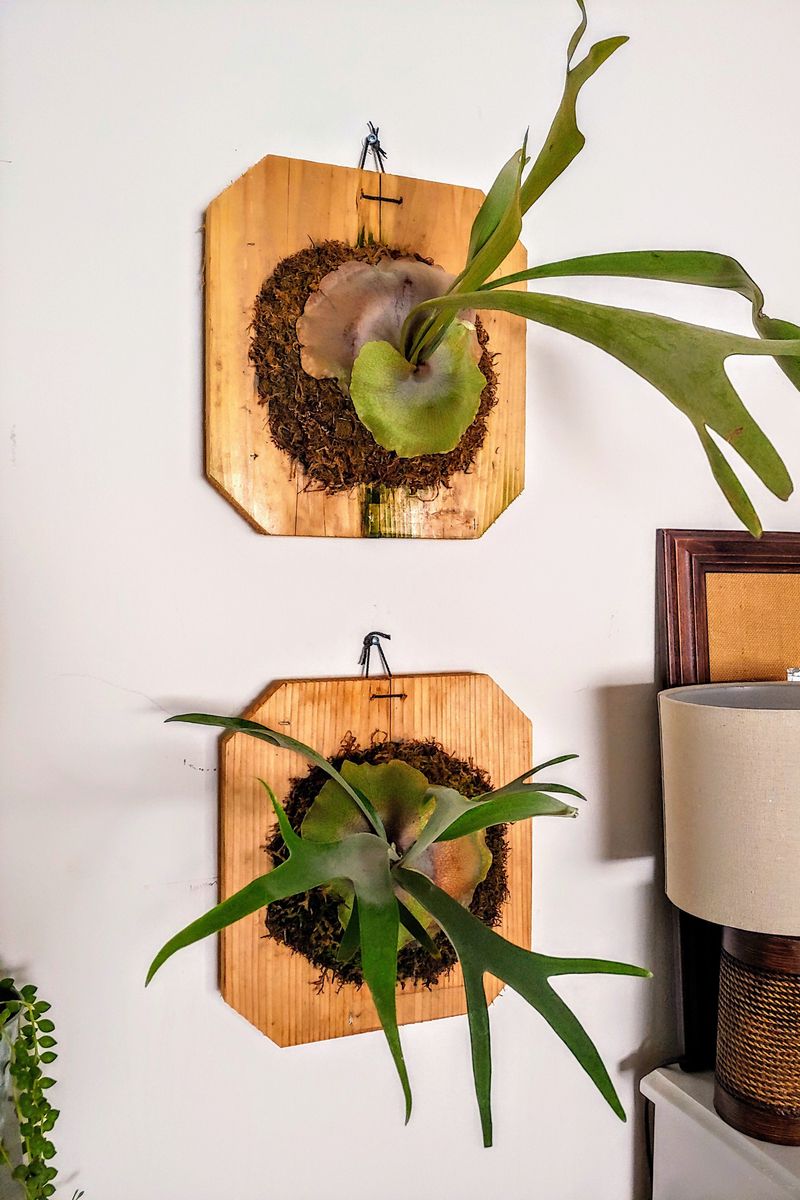
If your staghorn sits on a board or in a basket, the plan is simple. Move the whole mount to a sheltered porch, garage, or indoors.
This matches UF/IFAS cold protection advice for plants that can be relocated.
The key phrase is only if you can handle it safely. Mounted staghorns grow heavy as they mature, especially when the moss and roots are wet.
Look at the weight, size, and shape before you lift anything, and notice whether the fern sticks out in a way that makes it awkward to grip.
NIOSH lifting guidance says to consider those same factors and to coordinate the lift when two people carry an object. If the mount looks too big for one person, ask a helper and agree on the route and the drop-off spot first.
Clear the path of hoses, steps, and pots before you start.
Choose a place that stays out of the wind and cold, such as a covered porch or a garage with a window. Doing this earlier in the day, before the weather turns, keeps the job unhurried.
Shelter gives your fern a better chance, but it cannot promise there will be no damage under every freeze condition. If the mount is too heavy or fragile to move safely, skip the carry and use the other options in this article.
A cover may help a reachable oak-mounted fern
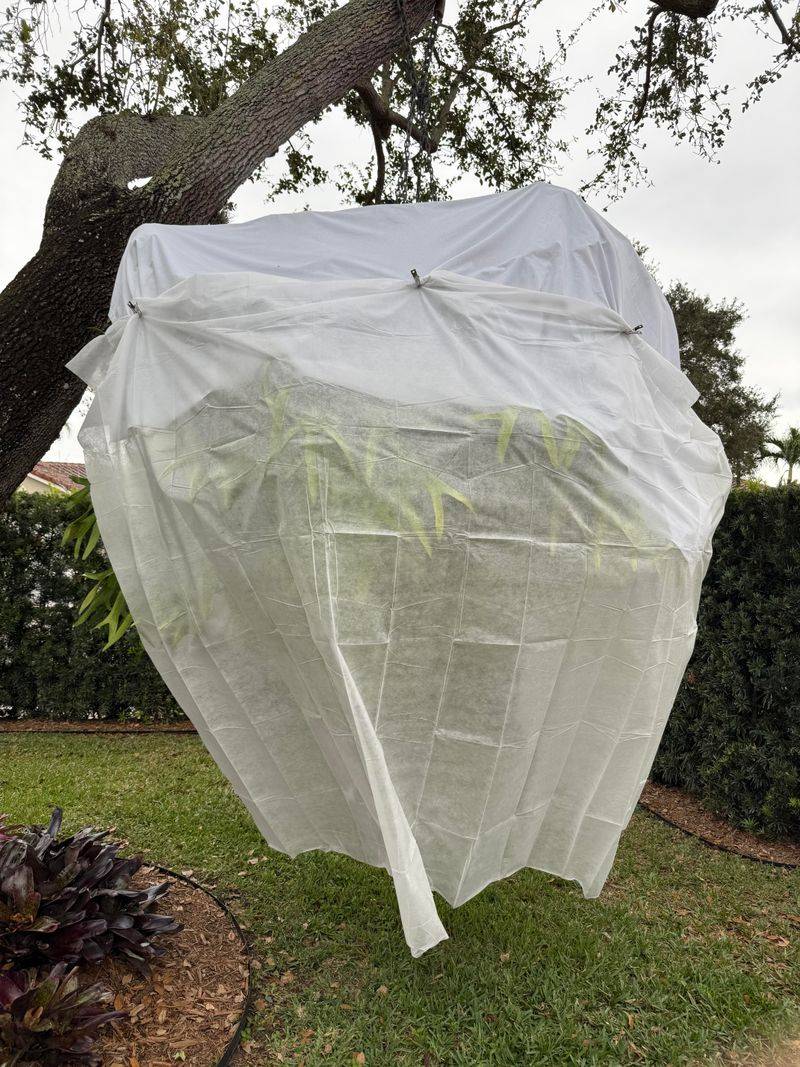
A fern attached to an oak cannot be carried to a porch the way a board mount can. If you can reach it comfortably from the ground, a cover is one limited step you can consider.
Think of it as a modest help, not a guarantee.
UF/IFAS recommends cloth, sheets, quilts, or frost cloth, and warns against plastic touching foliage. The Hillsborough County extension post also says to put covers on before sundown, while the day’s warmth is still around.
Breathable fabric lets moisture escape, so the fronds do not sit in a damp pocket.
Here is the catch. Standard landscape guidance in UF/IFAS Cold Protection of Landscape Plants says effective covers should extend to the ground to capture heat from the soil.
The same publication says covers protect better from frost than from extreme cold, and that tall, open plants get little benefit from soil heat.
A small cover wrapped around a fern high on a trunk cannot reach the ground. Based on that, it likely offers only slight protection.
This is an inference from general cover guidance, not a tested method for staghorns on oaks.
Plan on keeping expectations modest. Use the cover only where you can stand safely on the ground, and move on to the next section if reaching the fern would take a ladder.
Leave high or difficult tree access to trained help

Some ferns simply live out of safe reach. If yours is high on an oak, or you cannot get to it from the ground, set a firm rule: do not climb the tree.
Do not stack up a wobbly ladder or invent a lifting setup to pull the fern down or wrap it either.
Freeze nights make this riskier. The air is cold, the bark can be damp, and darkness cuts your view of branches and footing.
A fall from a ladder or limb is a far bigger loss than a damaged fern.
When reaching the plant would take tree work, call someone trained for it. The International Society of Arboriculture says tree work should be done by people trained and equipped to work safely in trees, and it suggests considering an ISA Certified Arborist through its find an arborist tool.
Call before a cold forecast, not during one, because tree crews can book up fast. Ask them what they can do about the fern, and whether any of it is worth the cost.
In many cases the calm choice is to accept some risk to a high fern rather than put yourself in danger.
Skip freeze-night fixes that can cause new problems

Cold nights bring a lot of advice, and some of it backfires. Two popular ideas deserve a second look: pulling a fern off its oak for every cold event, and soaking the plant.
Neither is a universal answer.
UF/IFAS does discuss remounting and moving container plants, but it does not tell people to detach a tree-mounted fern each time it gets cold. Detaching one can mean risky climbing, as the last section explained.
Watering needs care too. The UF/IFAS cold protection publication talks about watering landscape soil, which is a different matter from a mounted epiphyte.
The UF/IFAS staghorn guide warns that overwatering can make the plant rot.
Running a sprinkler all night is no better. The same publication says freeze-protection sprinkling must begin as temperatures reach freezing and continue until thawing, that home irrigation systems usually cannot supply enough water, and that the method can do more harm than good.
If you did use a cover, take it off at the right time. Remove any covering that is not frost cloth during daylight, as the Hillsborough County extension post advises.
Another UF/IFAS Q&A says to remove cold protection when temperatures rise above 32°F.
Choose a plan before the forecast turns urgent
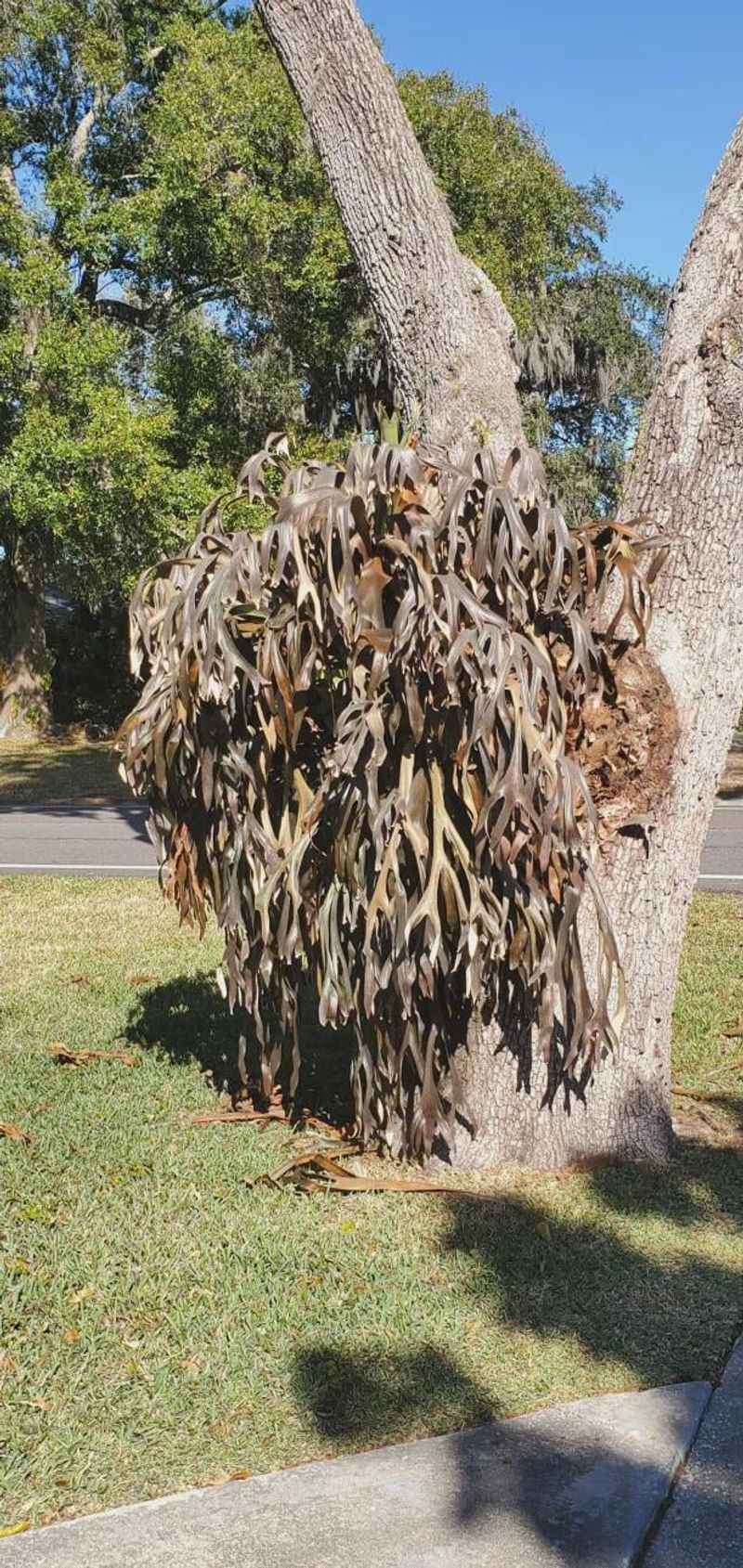
Start by identifying the mount. When a freeze is forecast, prepare without leaning on one temperature cutoff, since UF/IFAS shows species differ.
Move a board or basket mount to shelter if you can lift it safely, with help when needed. For a reachable oak-mounted fern, use only a breathable cover, as UF/IFAS cover guidance describes, and expect limited help.
For anything high, call a trained arborist.
A fern you can walk away with is easy to save, and one you cannot safely reach is not worth a fall.