
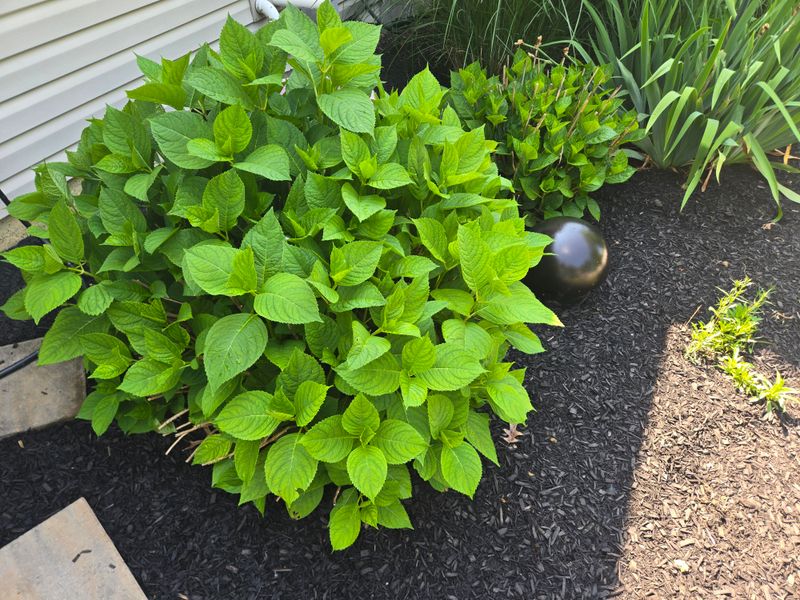
Walking out to your hydrangea in August and finding a shrub packed with glossy leaves but not a single flower head is genuinely frustrating. The plant looks healthy, even vigorous, which makes the missing blooms harder to explain.
Excessive nitrogen feeding is one plausible reason, but it is far from the only one, and jumping straight to another fertilizer product before diagnosing the real cause can make things worse.
A leafy hydrangea may be overfed without looking unhealthy
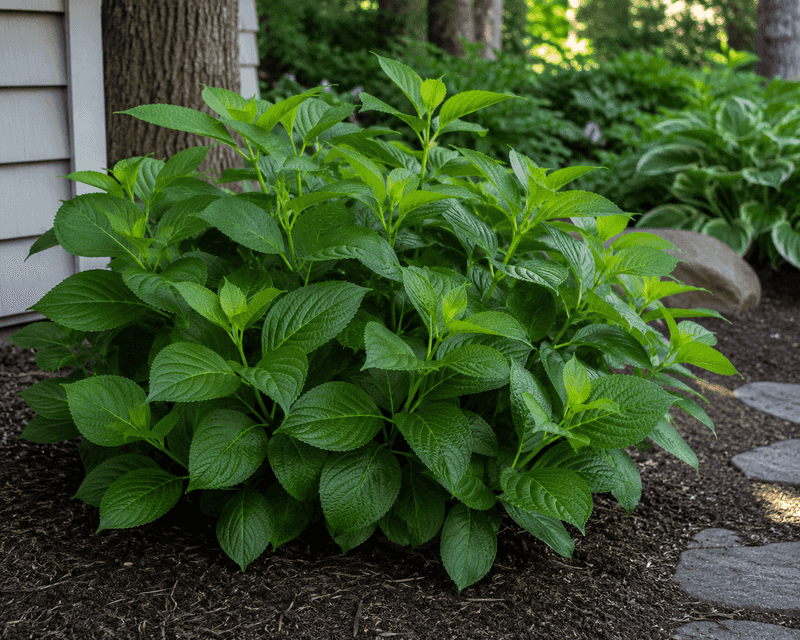
Lush, vigorous stems loaded with leaves but carrying zero flower heads is a pattern that catches gardeners off guard, especially when the rest of the shrub looks perfectly fine. A hydrangea can appear thriving by every outward measure while still failing to produce a single bloom.
Understanding why starts with recognizing that plants use nitrogen differently depending on how much they receive.
Nitrogen is the nutrient most responsible for green, leafy growth. When a hydrangea gets more of it than it needs, the plant tends to channel energy into producing longer shoots and bigger leaves rather than developing flower buds.
University of Georgia Extension guidance on bigleaf hydrangea lists excess nitrogen as one recognized possible cause of flower failure, and both University of Maryland Extension and University of Tennessee Extension warn that excessive high-nitrogen fertilizer can reduce flowering.
That said, a healthy-looking, leafy shrub does not prove fertilizer caused the problem. August leafiness can reflect cultivar traits, adequate summer moisture, good sun exposure, or recovery from earlier stress just as easily as it can reflect overfeeding.
The smartest move before reaching for another bag of fertilizer is to work through the likely causes one by one, starting with the plant’s identity and history.
Too much nitrogen may be the mistake—not simply August timing
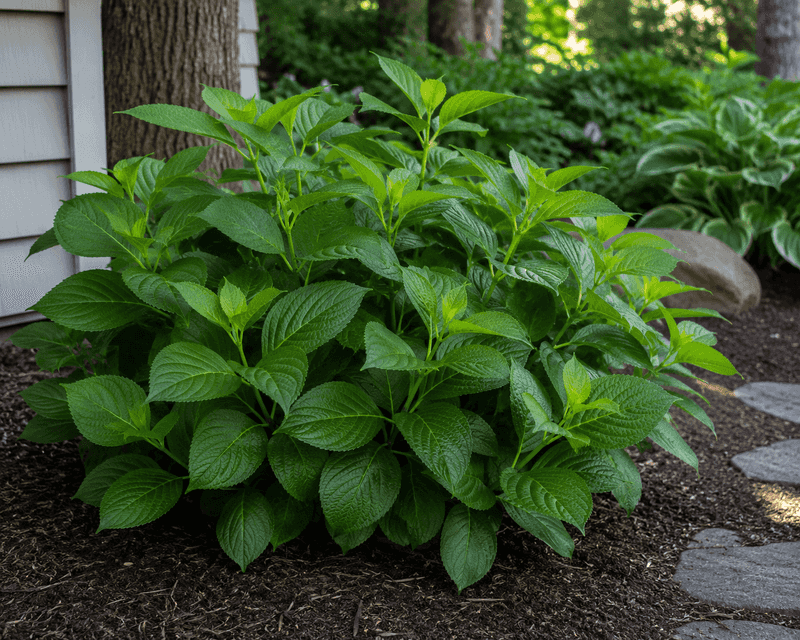
Framing the feeding error as “fertilizing in August” misses the real issue. The more precise concern is repeated or excessive high-nitrogen applications spread across the growing season, not a single midsummer application by itself.
Nitrogen that accumulates from multiple rounds of lawn fertilizer drifting into garden beds, composted manure layered on top of a specialty shrub product, or back-to-back granular applications can push a hydrangea into sustained vegetative overdrive.
When nitrogen stays elevated, the plant keeps prioritizing shoot and leaf production at the expense of the hormonal signals that trigger flower-bud initiation. UGA’s ornamental landscape guidance notes that most established woody ornamentals generally need only one slow-release application per year, while homeowners often apply far more.
For established bigleaf hydrangeas in Georgia specifically, UGA suggests light applications of a balanced fertilizer such as 8-8-8 or 10-10-10 in March, May, and July. That schedule is a regional example, not a prescription for every Southern garden.
Timing rules also vary by location. Texas A&M AgriLife Extension guidance on fertilizing woody ornamentals cautions against late-summer feeding for many ornamentals because tender new growth can be vulnerable to winter injury, though it identifies south Texas as an exception where late-season applications may still be beneficial.
Fertilizer formulation, hydrangea type, soil conditions, and local ordinances all affect when and how much to feed, which is why a one-size schedule rarely fits every yard.
Identify the hydrangea before judging its flower buds
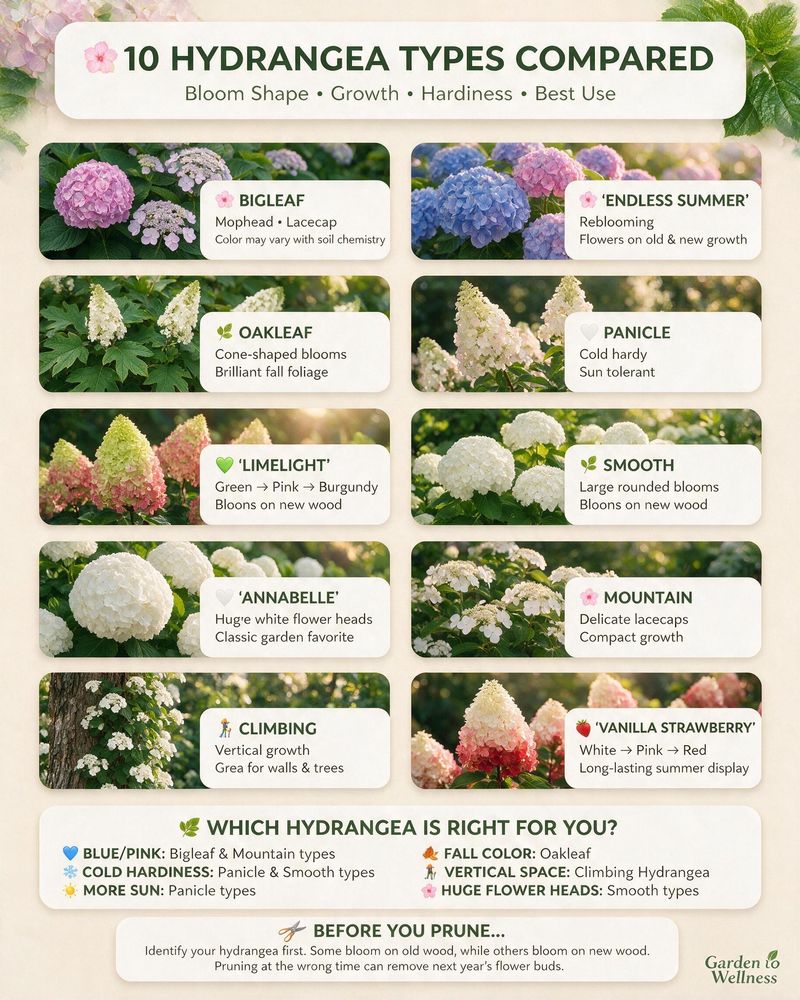
Plant identity is the single most useful diagnostic step a gardener can take before blaming fertilizer. Hydrangeas are not interchangeable, and the reason a particular shrub skips blooms often comes down to which species is growing in the ground.
The four types most common in Southern gardens are bigleaf, oakleaf, panicle, and smooth hydrangeas, and they differ fundamentally in where they produce their flower buds.
Bigleaf and oakleaf hydrangeas generally flower on old wood, meaning the buds that open next spring or summer are already forming on this year’s stems right now. University of Minnesota Extension’s pruning guide explains that bigleaf flower buds typically begin developing in late summer and fall, making August a critical window for bud formation on those types.
Panicle and smooth hydrangeas flower on new wood, so they generate fresh buds each spring and are far less sensitive to what happened to last year’s stems.
University of Maryland Extension’s pruning resource and UGA’s hydrangea identification guide both emphasize that knowing the species before pruning or feeding prevents most avoidable bloom failures. Reblooming cultivars, including some in the Endless Summer line, are a notable exception because they can set buds on both old and new wood.
University of Illinois Extension notes that these remontant types are more forgiving of pruning errors, though they still benefit from accurate identification before any corrective action.
Pruning and cold can also explain missing flowers
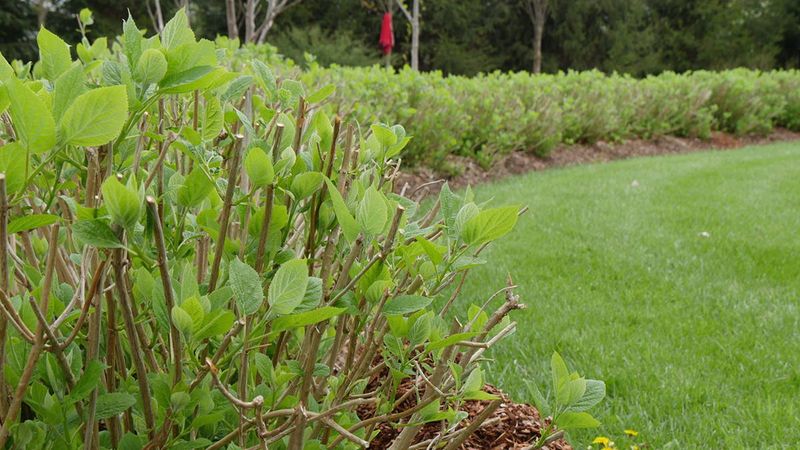
Before settling on fertilizer as the culprit, run through the other causes that Extension specialists consistently flag as equally or more likely for bigleaf and oakleaf hydrangeas. Pruning at the wrong time is one of the most common.
Cutting stems back in fall, winter, or spring on an old-wood bloomer removes the very buds that would have opened that season, leaving a plant that leafs out vigorously but never flowers.
Clemson Cooperative Extension’s pruning guide explains that bigleaf hydrangeas should be pruned only immediately after they bloom, while the window is still safe for bud development later in the season. Cold damage is equally damaging and harder to see.
A mild winter followed by a late freeze in March or April can kill dormant buds on old-wood types while leaving the canes and roots alive, producing a shrub that pushes out a full flush of leaves with nothing to show above them.
University of Maryland Extension’s problem guide also points to excessive shade, drought or inconsistent soil moisture, and poor drainage as contributing factors. A hydrangea that never gets morning sun, sits in soggy soil after rain, or dries out repeatedly between waterings may struggle to set buds regardless of what is in the fertilizer bag.
Plant age matters too: very young hydrangeas sometimes put all their energy into root and stem establishment before flowering reliably. Each of these possibilities connects to something observable in the plant’s history or growing conditions, which is why checking them before adding fertilizer gives gardeners the most accurate picture.
Test the soil before buying another fertilizer
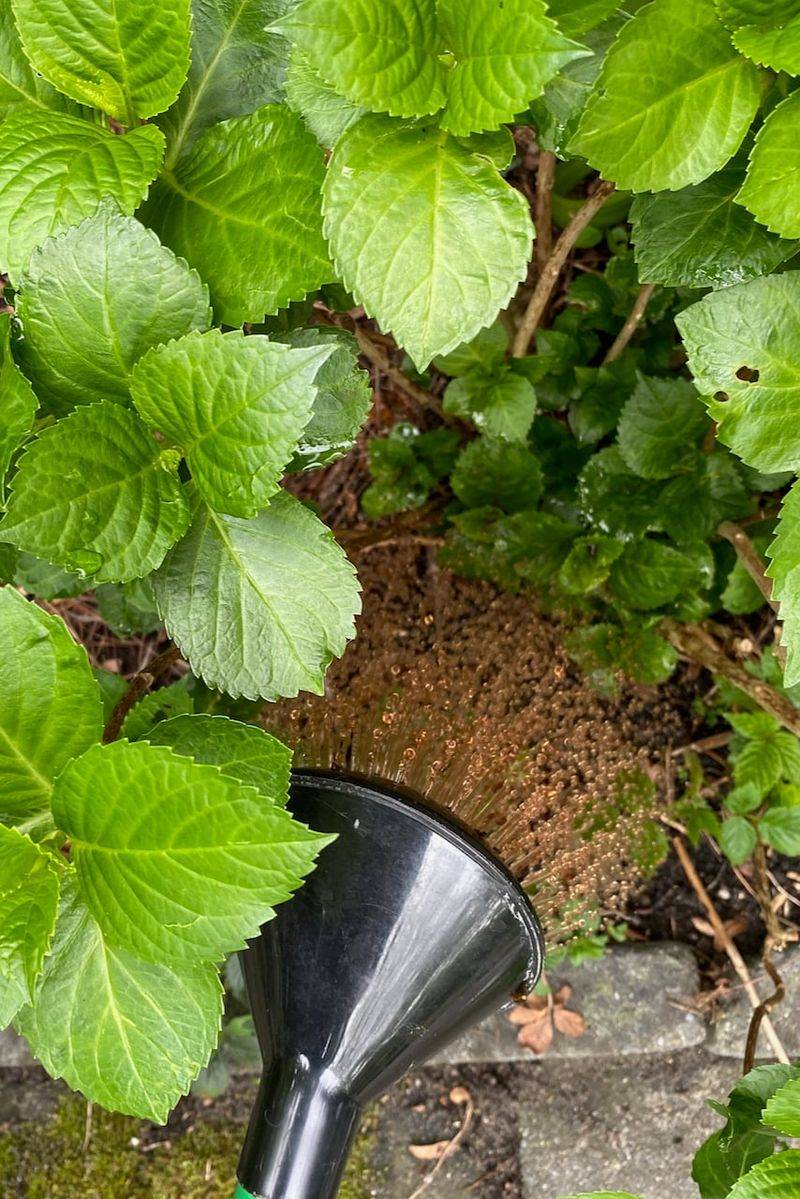
For a hydrangea that is already lush and leafy with no confirmed nutrient deficiency, pausing routine feeding while waiting for soil-test results is the most cautious and evidence-grounded next step. Adding another product to a plant that may already be oversupplied with nitrogen risks compounding the problem rather than solving it.
A soil test can reveal pH, phosphorus, potassium, and other nutrient conditions that directly affect whether a hydrangea can access what is already in the ground. UGA’s soil testing publication recommends sampling ornamental shrubs at six to eight spots around the drip line and collecting soil from roughly six inches deep for the most accurate reading.
University of Minnesota Extension’s soil testing guide reinforces that testing helps prevent unnecessary fertilizer applications, which matters both for plant health and for water quality.
One product to avoid without test results is a high-phosphorus “bloom booster.” Phosphorus tends to accumulate in soil over time, and many established garden beds already carry adequate levels. EPA guidance on nutrient pollution explains that excess phosphorus from yards can run off into waterways and contribute to algae blooms and water-quality problems.
A soil test is the only reliable way to know whether phosphorus is actually needed. Keep in mind that a soil test informs fertilizing decisions but does not replace a careful review of pruning history, cold exposure, light levels, moisture, and drainage.
Hydrate the plant and apply products carefully
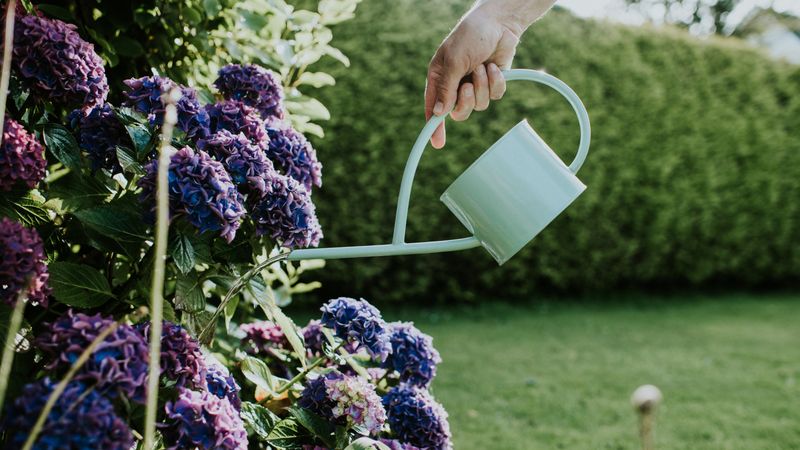
August heat in the South is relentless, and a hydrangea under heat or drought stress is not ready for fertilizer. Fertilizer salts can injure already-stressed roots, and pushing new nitrogen-driven growth during a heat wave increases the plant’s water demand at exactly the wrong time.
Water the root zone thoroughly and let the plant recover before considering any feeding.
UGA’s landscape best management practices and Texas A&M’s guide to fertilizing flowering plants both caution against feeding stressed plants. Watering frequency should follow soil moisture and drainage conditions rather than a fixed daily schedule.
UGA Extension warns that overwatering and poor drainage can cause root problems that mimic drought symptoms, so checking the soil before turning on the hose is better than watering automatically every morning.
When fertilizer is appropriate, placement and cleanup matter. Spread granular products around the root zone or drip line, never piled against the stems, and water them in according to the label directions.
Avoid applying before a heavy rain forecast, since runoff carries nutrients off-site. EPA beach-water quality guidance and UF/IFAS Florida-Friendly Landscaping guidelines both recommend sweeping fertilizer off sidewalks, driveways, and other hard surfaces immediately after application to prevent it from washing into storm drains and local waterways.
Southern climate and local rules change the recommendation
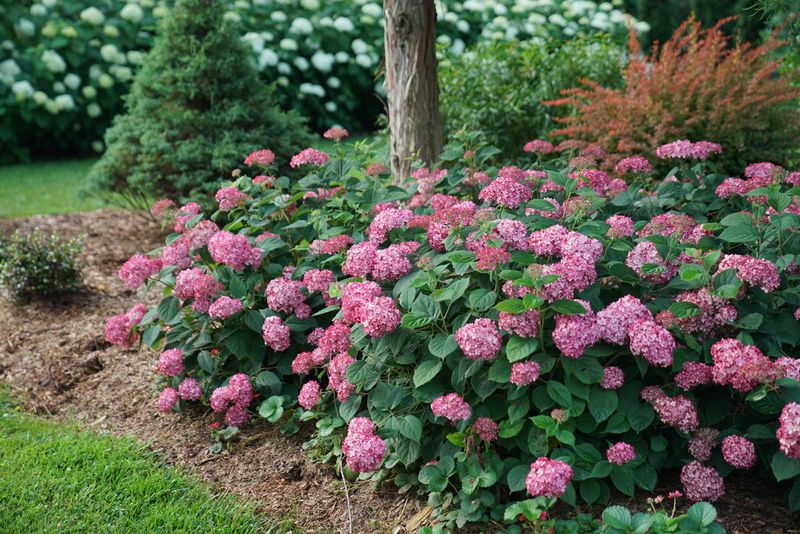
Growing conditions across the South are not uniform, and a feeding or care approach that works in Georgia may conflict with local rules or seasonal realities in Florida or Texas. Bigleaf hydrangeas generally perform best with morning sun, afternoon shade, moist but well-drained soil, and shelter from hot, dry afternoon exposure.
That preference makes site selection as important as fertilizer choice in Southern gardens.
Panicle hydrangeas generally tolerate more heat and direct sun than bigleaf types, making them a practical option for exposed spots in Texas or Florida. A UGA Extension newsletter on heat-tolerant summer plants notes that panicle hydrangeas handle Southern summer conditions more reliably than bigleaf types.
Choosing a more heat-tolerant species is a plant-selection decision, though, not evidence that nitrogen caused a bigleaf hydrangea’s leafy growth.
Florida readers face an additional layer of complexity. Many Florida cities and counties have fertilizer ordinances that restrict or prohibit nitrogen applications during summer rainy-season months.
UF/IFAS Florida-Friendly Landscaping fertilizer ordinance information and the Florida-Friendly Landscaping Handbook urge homeowners to check their local rules before applying anything. In Texas, Texas A&M AgriLife Extension advises against fertilizing most woody ornamentals after August 1 to reduce the risk of tender growth going into winter, while noting that south Texas gardeners may have more flexibility due to milder winters.
UGA’s bigleaf hydrangea guide provides Georgia-specific timing that should not be applied wholesale to other Southern states.
Use the leaves as a clue, then follow the evidence
A practical sequence makes the diagnosis manageable. Start by identifying the hydrangea species, then review pruning dates and any cold events from the past winter and spring.
Check light exposure, soil drainage, and moisture consistency before drawing any conclusions about fertilizer. If the plant is already lush and no deficiency has been confirmed, pausing routine feeding and ordering a soil test is the evidence-grounded move.
Protecting late-summer old-wood buds matters most for bigleaf, oakleaf, and other old-wood or partially old-wood cultivars. Panicle and smooth hydrangeas regenerate flower buds on new growth each year, so late-summer bud protection is not a universal concern.
University of Minnesota Extension and University of Maryland Extension both tie this distinction directly to species identity. Once the soil test returns and any pruning or cold issues are addressed, a measured, label-directed, and locally legal fertilizer plan can follow if the evidence actually supports it.
August leaves tell part of the story, but they are a starting point for investigation, not a final verdict on what went wrong.