
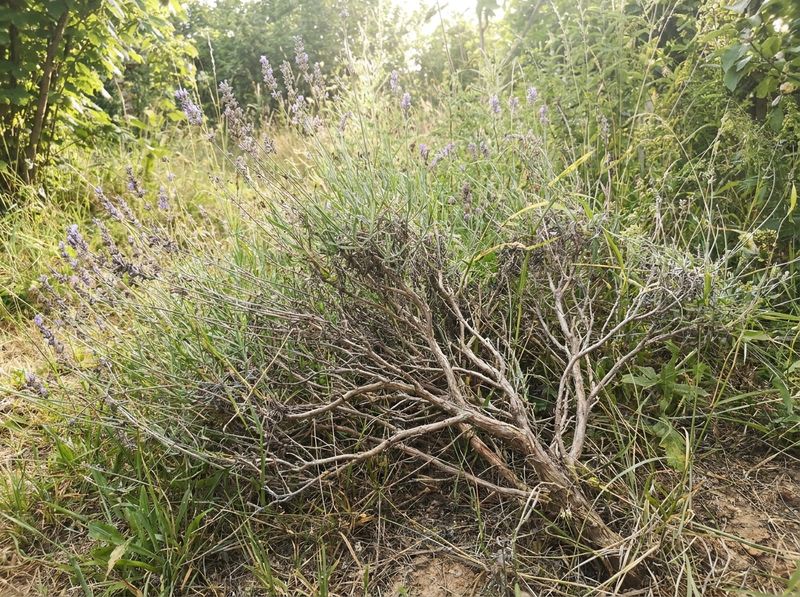
Lavender can go from a tidy, fragrant mound to a sprawling, bare-stemmed mess faster than most gardeners expect. When the lower stems turn brown and woody while the top growth thins out, it feels like the plant is giving up.
The good news is that a thoughtful cut through the living green growth can sometimes encourage new shoots and help the plant fill back in. But not every woody lavender bounces back from a single pruning, and knowing what you are actually dealing with changes the approach entirely.
Brown lower stems can be normal—but sparse growth needs a diagnosis
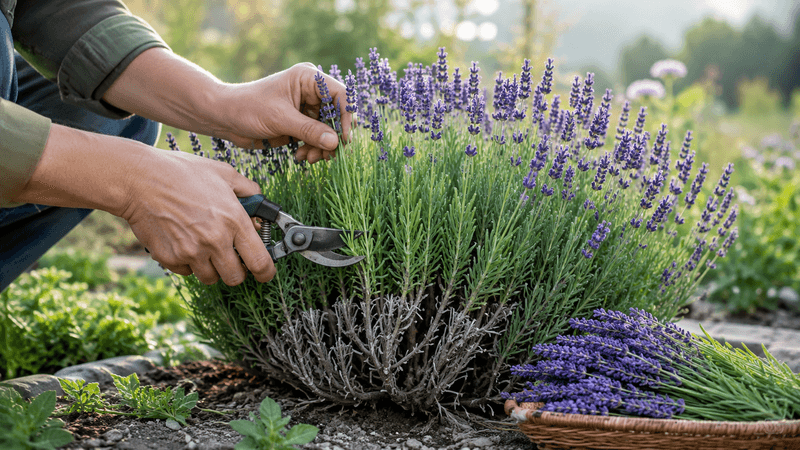
Lavender is a semi-woody perennial, which means its lower stems naturally harden and turn brown as the plant matures. Seeing brown wood at the base does not automatically mean your plant is dying.
The more useful question is how much healthy green growth remains above that wood, because that green tissue is what the plant relies on to push new shoots after a cut.
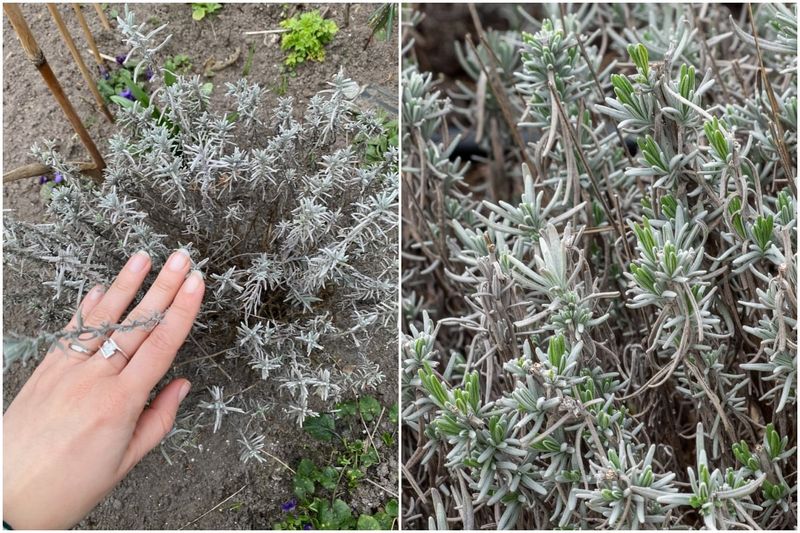
Run your fingers along each stem from the base upward. If you find living leaves or small green buds before you reach the tip, that stem still has recovery potential.
A plant with plenty of green foliage scattered above the woody base is in a very different position than one where only a few leaf clusters cling to the very tips of otherwise bare stems.
Several factors can contribute to a bare, split-open, or declining lavender. Age and infrequent pruning are possible reasons, but so are poor drainage, overwatering, root rot, insufficient sunlight, high humidity, winter damage, and a cultivar that simply does not suit your local climate.
University of Maine Cooperative Extension notes that lavender is a semi-woody perennial whose lower stems become woody with age, and that regular pruning helps slow the development of a bare center. Before reaching for pruners, spend a few minutes diagnosing which of these factors may be at work, because a correct cut will not rescue a plant whose roots are already compromised.
Choose the pruning window for your climate
Timing a lavender pruning cut to your local climate matters more than following a single calendar date. The most widely recommended window is after flowering, once the spent blooms have faded and the plant still has warm weeks ahead to push new growth.
RHS growing guidance recommends trimming after flowering and shaping the plant into a low dome while avoiding cuts into old wood.
For gardeners in colder areas, waiting until spring growth clearly emerges is the safer call. New green shoots tell you exactly which tissue survived winter and which stems are dead or dormant beyond recovery.
Cutting before that growth appears risks removing live wood that just looks bare, or leaving dead wood you mistook for a dormant stem.
Southern gardeners in warm regions like Central Florida can often prune after the main bloom flush without worrying about frost, but that does not mean timing is irrelevant. A cut made during a stretch of heavy rain or unusually wet soil leaves fresh wounds vulnerable to fungal problems.
In parts of Texas where winters are colder and summers are drier than Florida, the post-flowering window may shift by several weeks depending on your specific region. Match your cut to local conditions rather than a one-size calendar, and always look for visible new green growth as your most reliable guide to when the plant is ready.
Make the general cut inside the green growth
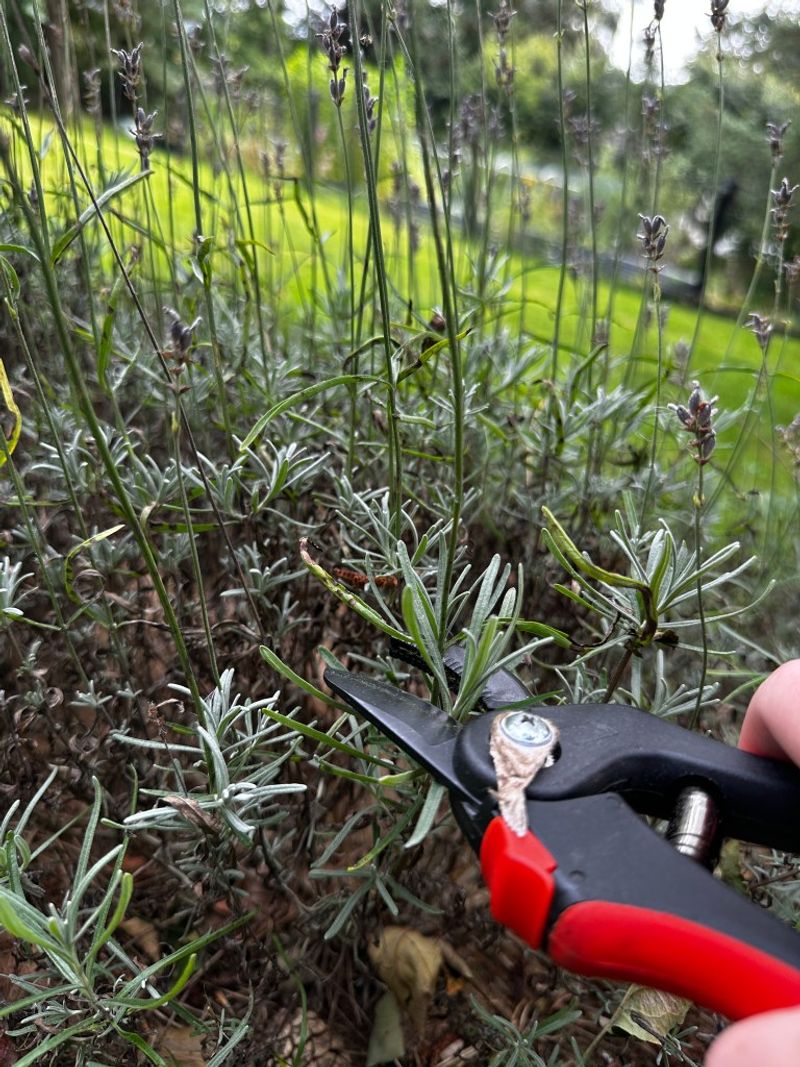
Sharp, clean hand pruners are the right tool for this job. Bypass pruners with freshly wiped blades reduce the risk of spreading disease between cuts and give you a cleaner wound than dull blades or hedge shears used carelessly.
Start by removing the spent flower stalks, cutting each one back into the leafy green growth below it.
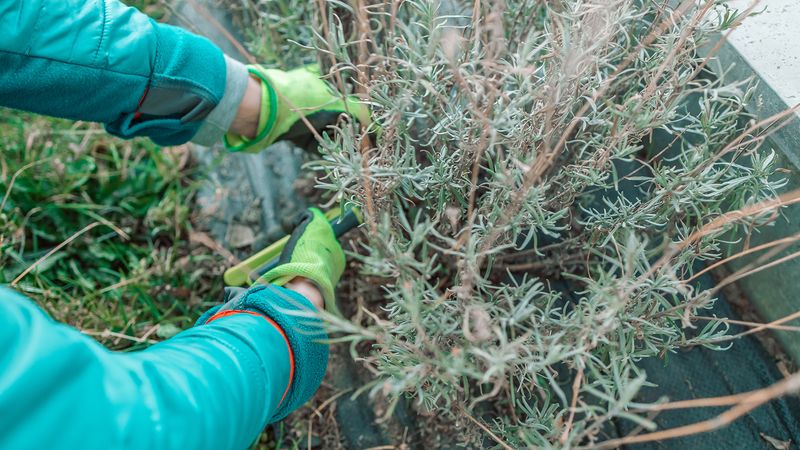
From there, trace each stem downward through its leafy portion and make your cut within that green zone. On a vigorous plant carrying plenty of foliage, removing roughly one-third of the current green growth is a reasonable starting point for shaping the plant into a low, rounded mound.
RHS guidance describes removing spent flower stalks and about one-third of the green growth while shaping the plant as a low dome and avoiding cuts below the lowest green leaves or nodes.
The most important visual rule is to follow the green growth downward and stop before you reach the bare brown section. University of Maine Extension advises leaving green tissue above the woody stems rather than shearing repeatedly into bare wood.
Keep in mind that “about one-third” is a flexible guideline for a routine shaping cut on a healthy plant, not a rule that overrides the need to preserve enough foliage for the plant to respond. If following the one-third guideline would bring your cut uncomfortably close to the bare wood, cut less and protect the green tissue you have.
Give a severely woody plant a conservative first cut
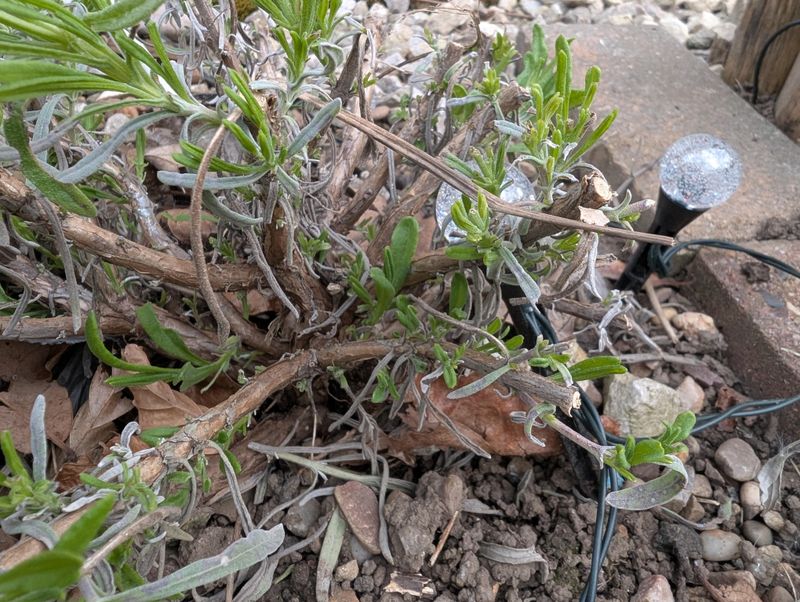
When green foliage appears only in a thin fringe at the stem tips, the calculation changes. Cutting to the lowest green point on such a plant could remove nearly everything that remains, leaving the plant with almost no tissue to drive new growth.
A better approach is to make a light cut within the existing green fringe, preserving as much healthy foliage as possible while still tidying the shape.
Think of this first cut as a test rather than a full rescue. If the plant responds over the following weeks with new shoots, you can consider a slightly deeper cut in a later season.
If it shows no meaningful response, that information is just as valuable, and it tells you that the root system or crown may be too compromised to recover regardless of how the stems are trimmed.
Cultivar type adds another layer to this decision. UC Master Gardener guidance makes a specific distinction: English lavender may sometimes tolerate deeper regenerative pruning in summer, while Spanish lavender should receive only a lighter trim, and lavandin hybrids such as ‘Grosso’ and ‘Provence’ should retain at least two sets of green leaves.
An older, never-pruned lavandin plant may not survive a hard cut at all and may be better replaced. Unless you have positively identified your plant as a type documented to tolerate aggressive pruning and you accept the risk, stay conservative.
University of Maine Extension reinforces that cutting through the bare woody base can kill branches or the entire plant, especially in more tender types.
Fix the growing conditions before blaming the pruning
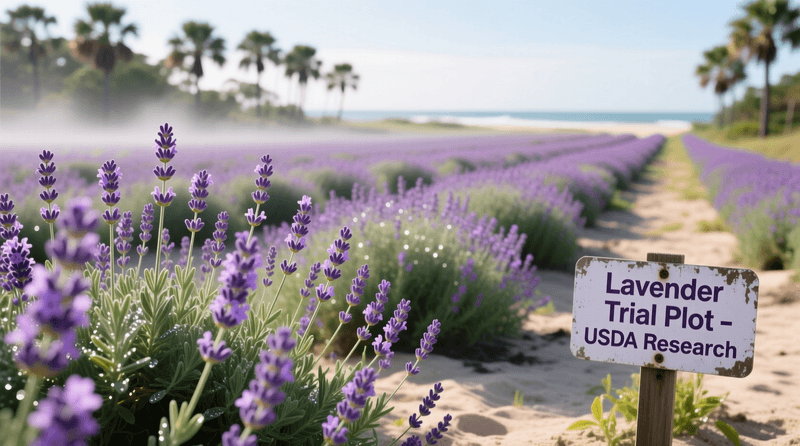
A correctly timed, correctly placed cut gives the plant its best chance, but the cut alone cannot fix a site that is working against the plant. Lavender needs full sun, excellent drainage, and good air movement around its stems.
Shade reduces vigor and makes plants more susceptible to the kind of dieback that looks like a pruning problem but is really a light problem.
RHS guidance emphasizes that heavy or waterlogged soil promotes root disease and contributes to decline that pruning cannot reverse. Water at the soil line rather than overhead, and allow the growing medium to dry out between irrigations.
Saturated soil is more dangerous to lavender than moderate dryness, especially in humid climates where the soil stays wet for extended periods.
Florida gardeners face a particular combination of heat, humidity, heavy rainfall, and soils that can stay wet long after a storm passes. UF/IFAS Extension Pasco County identifies root rot as a major challenge in Central Florida and recommends raised beds, containers, and better-adapted cultivars such as Spanish, French, and ‘Phenomenal’ types as more suitable choices than many English lavender varieties for that region. ‘Phenomenal’ is described as more tolerant of heat and humidity, though even a well-adapted cultivar still needs good drainage and careful watering.
These Florida-specific recommendations reflect local conditions that differ substantially from the drier western parts of Texas or the cooler hill country regions, so apply them where they fit rather than across the entire South.
Judge recovery by new growth, not by the old bare wood
After pruning, the sign you are looking for is not leaves appearing on the old brown stems. That is not how lavender recovers.
New growth originates from green tissue above the woody base, and recovery means fresh shoots gradually filling the mounded shape over time, not a sudden transformation of bare wood into leafy stems.
University of Maine Cooperative Extension is clear that new growth comes from green tissue rather than from old wood, and that a plant with little or no healthy green tissue may not be recoverable at all. Filling back in can take more than one growing season even on a plant that responds well, so patience is part of the process.
Reassess the plant honestly if several months pass with suitable care and no new shoots appear. A plant showing no meaningful response after a correct cut, with good drainage and appropriate watering in place, may have root or crown damage that pruning cannot address.
Reaching for a harder cut in that situation is not a logical next step. Repeated increasingly deep cuts are not a substitute for identifying a failing root system or a site that simply does not support lavender.
If the roots are gone, the stems have nothing to draw from regardless of where the pruners land.
Replace or propagate when the plant has no useful green tissue
At some point, an honest look at the plant leads to a practical conclusion. A lavender with little or no healthy green growth remaining is not a good candidate for rescue pruning.
Cutting harder into bare wood in hopes of forcing new leaves from the brown base is unlikely to work and may finish off whatever the plant has left.
Replacement is a legitimate choice and often the most efficient one. A new plant of a better-suited cultivar, placed in a corrected site with proper drainage, will outperform a struggling old plant within a single growing season.
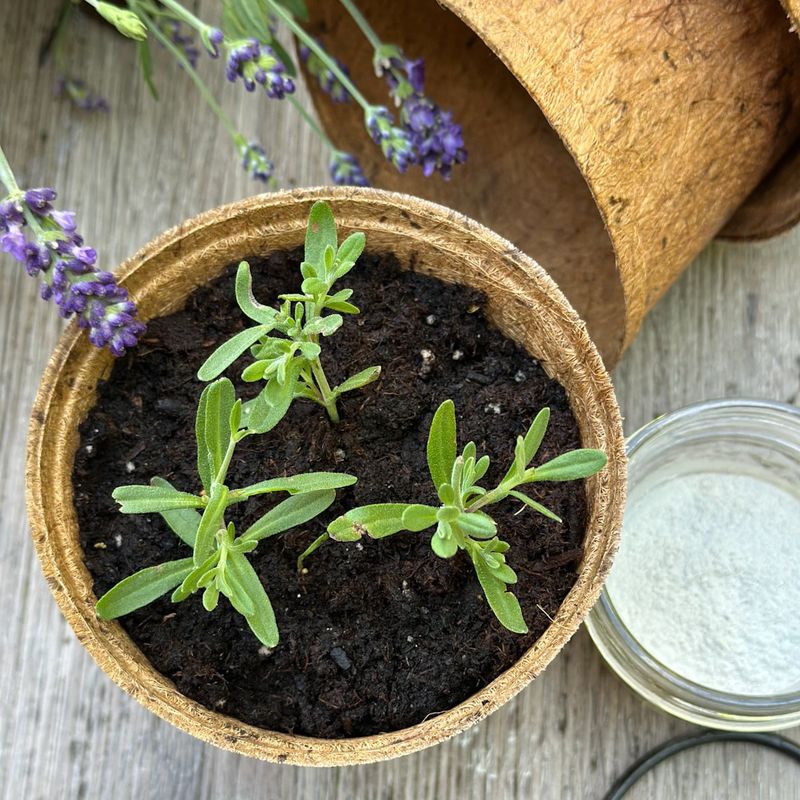
RHS growing guidance notes that lavender is readily propagated from cuttings, which means a healthy plant nearby can supply new material even if the original has declined too far to restore.
If you want to preserve the genetics of a plant that still has a few healthy green stems, take a cutting from that green material, not from the bare woody base. Root it under suitable conditions and grow it on as a replacement.
University of Maine Extension reinforces that cutting through the entirely bare base can kill the plant, which makes cuttings from living green growth a far better path forward than forcing the original plant through another hard prune it may not survive.
Use the green-growth rule, not a guaranteed one-cut fix
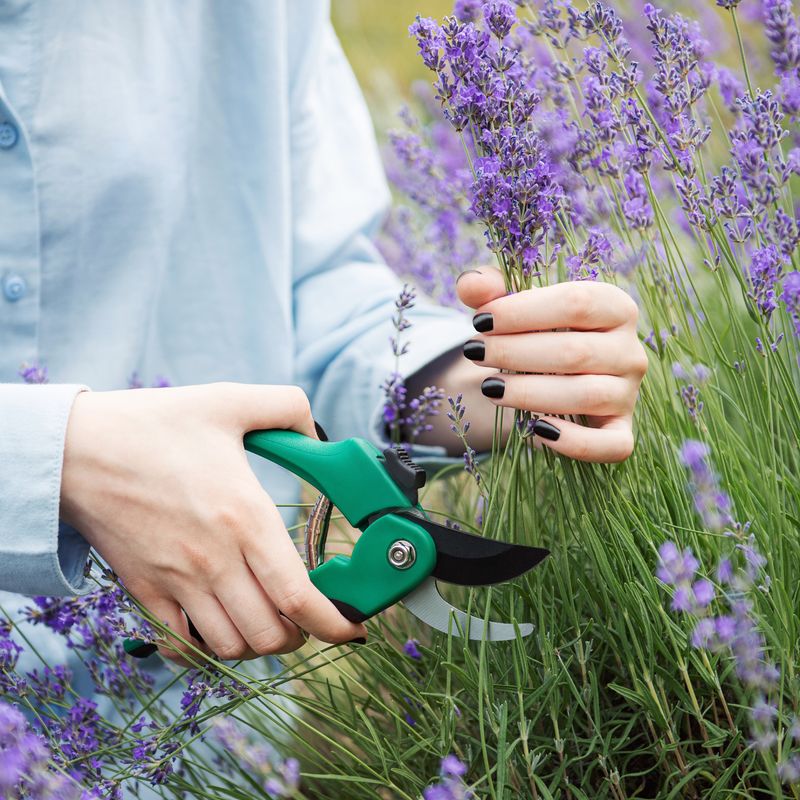
The corrected takeaway from this guide is straightforward. Find the lowest practical point within the living green growth on each stem, make a conservative cut that preserves enough foliage for the plant to respond, and stop before the bare brown wood.
That is the green-growth rule, and it applies whether you are doing a routine post-flowering shaping or a cautious first attempt on a neglected plant.
Whether the plant fills back out depends on how much healthy green tissue remained, how well the site drains, which cultivar you are working with, and what the coming season brings. RHS guidance and University of Maine Extension both point to the same underlying reality: pruning within green tissue gives the plant a chance, but it is not a promise.
A cut made at the right place and the right time is an invitation for new growth, not a guarantee that every woody lavender will become full again.