
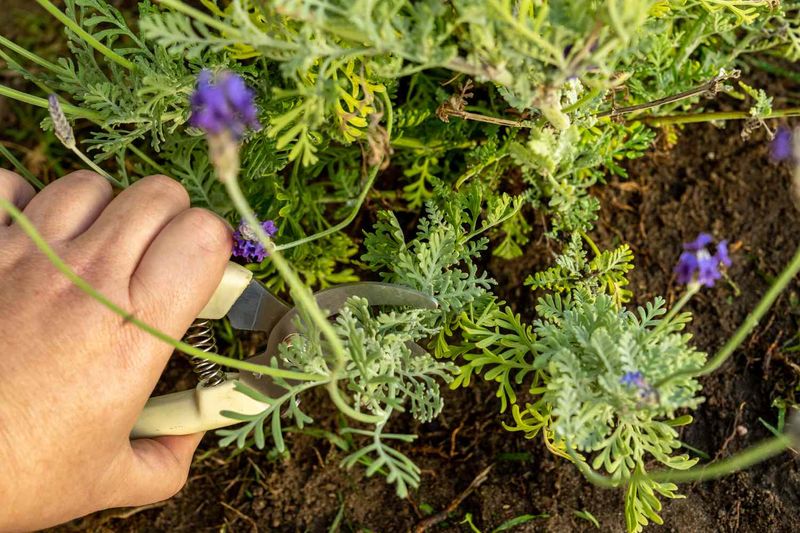
If your lavender looks more like a tangled bundle of sticks than a fragrant, rounded shrub by the end of summer, you are not alone. That stretched, open shape with bare brown stems at the base is one of the most common complaints Southern gardeners have about lavender.
Understanding what causes it, and whether your plant still has what it needs to bounce back, can save you from cutting too hard or giving up too soon.
An open, woody shape has several possible causes
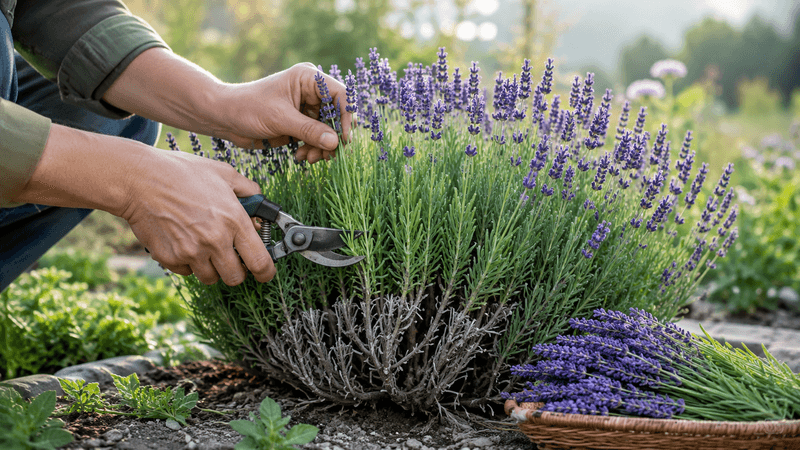
Seeing your lavender splay outward after flowering, with stiff brown stems at the base and thin, stretched growth above, can feel like something went wrong. However, that shape is not automatically a sign of bad pruning or neglect.
Several factors can push lavender toward an open, woody form over time.
Age is one of the biggest contributors. As lavender matures, its lower stems naturally harden and lose foliage, a process that happens gradually no matter how well the plant is cared for.
Extension horticulture guidance notes that annual pruning helps lavender stay more compact and branch more densely, meaning a plant that has gone several seasons without shaping will often develop a wider, more open habit faster. Cultivar traits also play a role, since some types naturally grow more upright or more sprawling than others.
Heat, humidity, and wet or poorly drained soil can add stress that speeds up the decline of lower stems. In humid parts of the South, those conditions are common enough that UF/IFAS research flags root and stem health as a real concern, not just a pruning issue.
Disease affecting the root zone can also contribute to overall decline, though legginess alone is not enough to diagnose that problem without other symptoms and evidence of wet or poorly drained soil.
The first step is not to reach for the pruners, but to look closely at what is still alive and green. That assessment will guide every decision that follows.
Check for green growth before you cut
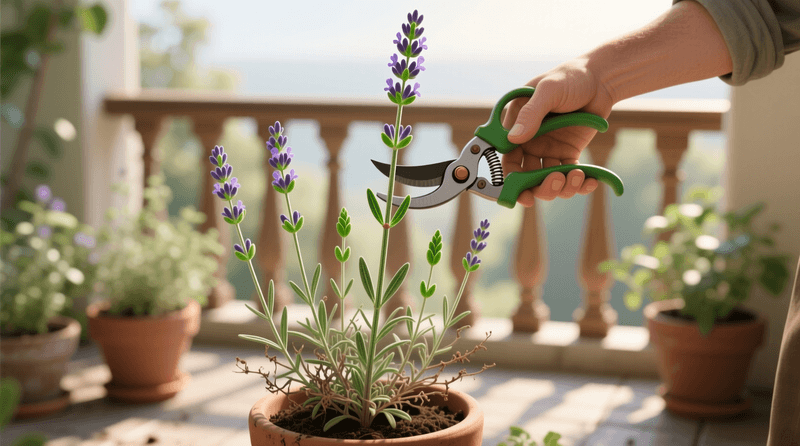
Before making a single cut, spend a few minutes doing a simple hands-on check. Run your fingers along the stems from the tips downward.
Green, leafy stems will feel flexible and slightly soft, and you will see foliage attached. Hard, leafless brown stems will feel rigid and dry, more like a twig than a living shoot.
University of Maine Extension cautions that lavender often does not regenerate reliably from bare, leafless wood, which makes this check genuinely important before you commit to any pruning. What you are looking for is active green growth or visible leaf nodes sitting above the hard woody base.
If you can find that zone, you have a workable pruning line.
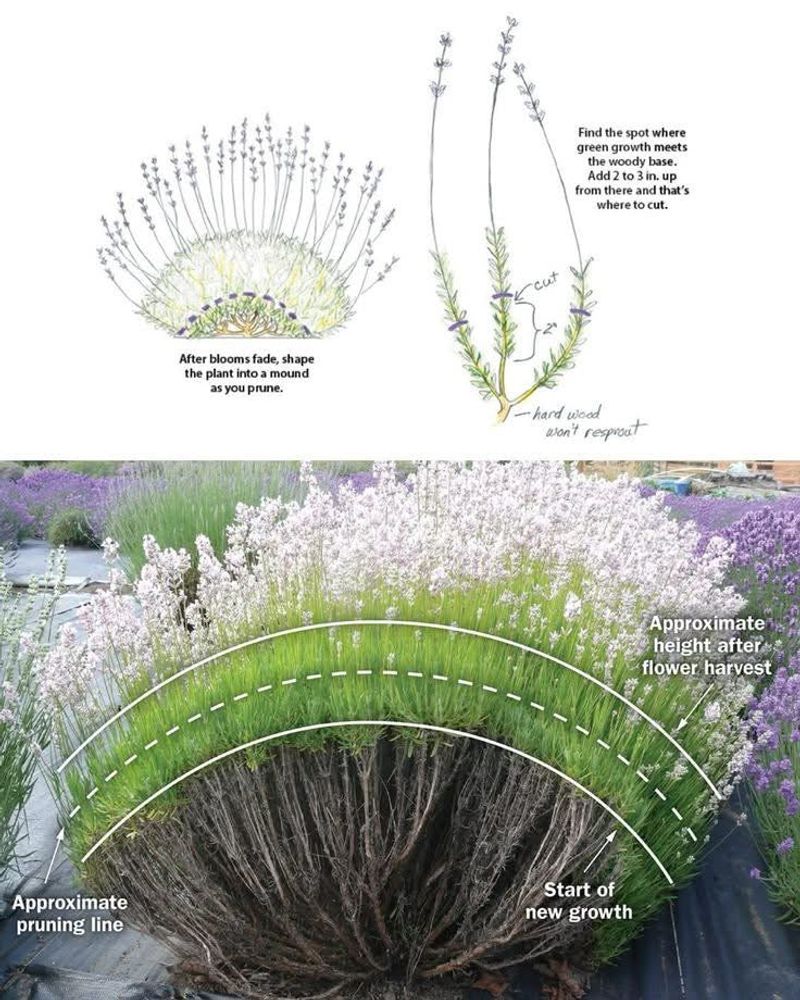
Leave at least a few inches of green growth above the woody base whenever possible. A UC Cooperative Extension handout reinforces this, recommending that cuts stay in the green, leafy portion of the stem rather than dropping into bare wood.
Having green tissue above your cut improves the plant’s prospects, but it does not guarantee a full recovery, especially if the plant is already stressed.
If every stem is woody to the tip with no green foliage or leaf nodes anywhere above the base, a light green prune will not help. At that point, extension specialists suggest considering gradual renovation over multiple seasons, taking cuttings from any remaining healthy material, or replacing the plant with a better-suited selection.
Use a cautious post-flowering green prune
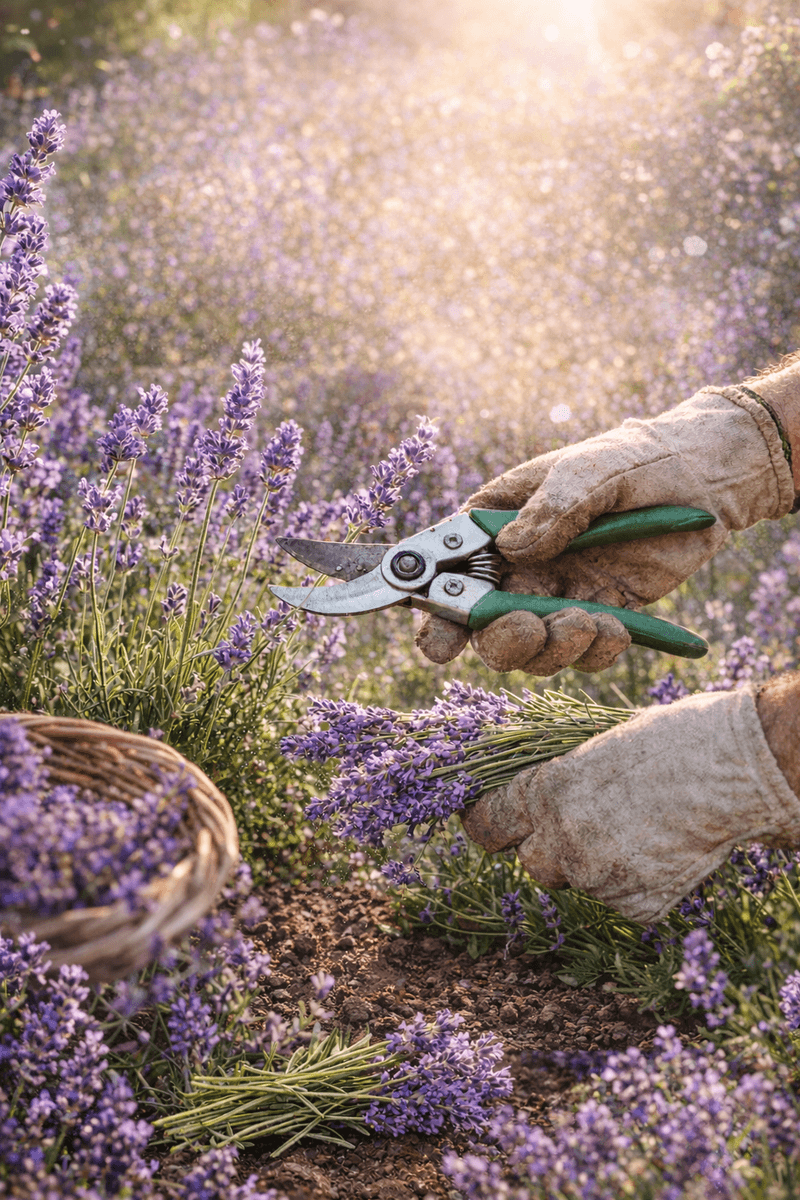
Once you confirm that your lavender still has healthy green growth above the woody base, a post-flowering green prune can help improve its shape and encourage denser branching. Start with sharp, clean pruners.
Dull or dirty blades crush stems and can spread disease, so wipe the blades with rubbing alcohol or a diluted bleach solution before you begin.
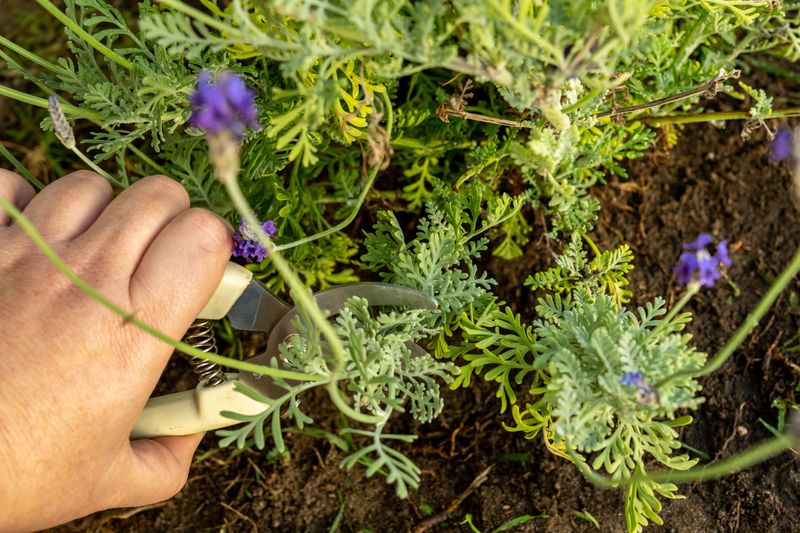
First, remove the spent flower stalks. Cut them back to where the stem meets the leafy growth below.
Then shorten approximately one-third of the current season’s leafy growth, working your way around the plant. Extension horticulture sources and University of Illinois Extension both describe this kind of trim as a way to help lavender stay more compact and promote branching when the plant has viable growth to work with.
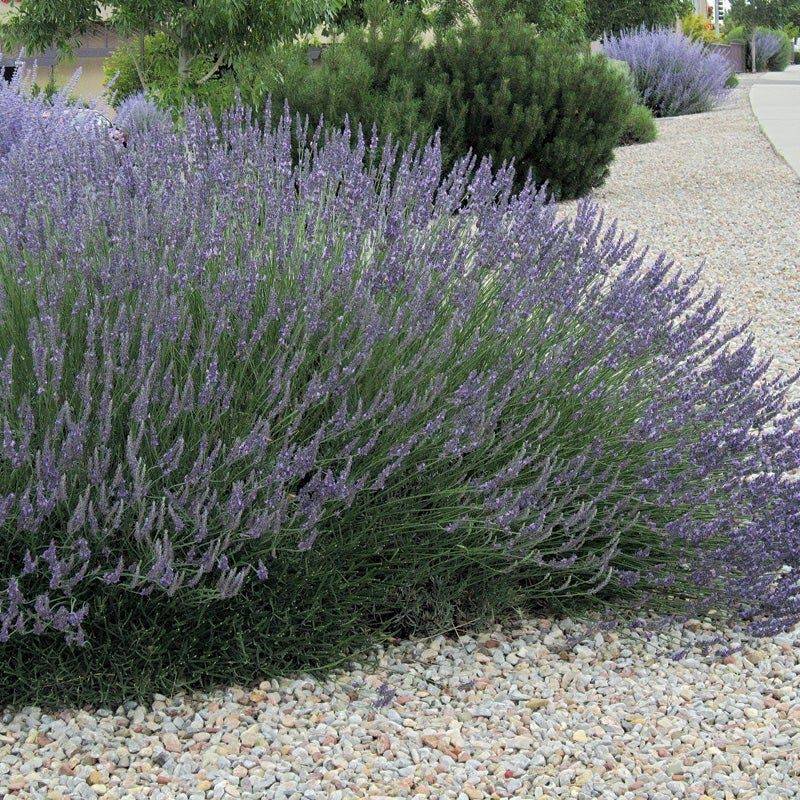
Shape the plant into a rounded or domed mound as you cut, rather than shearing it flat like a hedge. A rounded form distributes light more evenly and tends to produce a fuller appearance over time.
Ontario Ministry of Agriculture guidance supports maintaining this dome shape as a general best practice for lavender pruning.
Stop every cut above bare, leafless wood. If a stem runs out of green growth before you reach the one-third mark, stop higher up.
Cutting into the leafless zone risks removing tissue the plant cannot regenerate from. This prune can improve compactness and may encourage new branching on a still-healthy plant, but it cannot reliably rebuild a framework that is already severely woody throughout.
Match the pruning window to flowering and frost
Timing a lavender prune by the calendar alone can get you into trouble. The right window is defined by two things: when the plant finishes its main flowering flush and how much time remains before local frost threatens new growth.
Prune too early and you cut off blooms; prune too late in frost-prone areas and fresh cuts may increase winter vulnerability.
The goal is to prune soon after the main flush of flowers fades, while the plant still has enough of the growing season left to push new leafy growth. UC Cooperative Extension and extension horticulture specialists both emphasize acting while the plant can still recover before conditions close in.
In frost-prone areas of Texas and the upper South, avoid pruning immediately before the first expected frost date, since recently pruned stems are more exposed to cold damage.
Spring cleanup follows different rules. University of Maryland Extension advises waiting until new growth appears in spring before removing winter-killed material.
That way the boundary between live and dead tissue is clear, and you avoid cutting healthy stems by mistake. University of Illinois Extension adds that pruning too late in spring can accidentally remove healthy flowering growth if the plant has already pushed new buds.
Think of the pruning window as a moving target set by your specific plant and your local weather, not by a single date on the calendar.
Support the plant with lean soil and good drainage
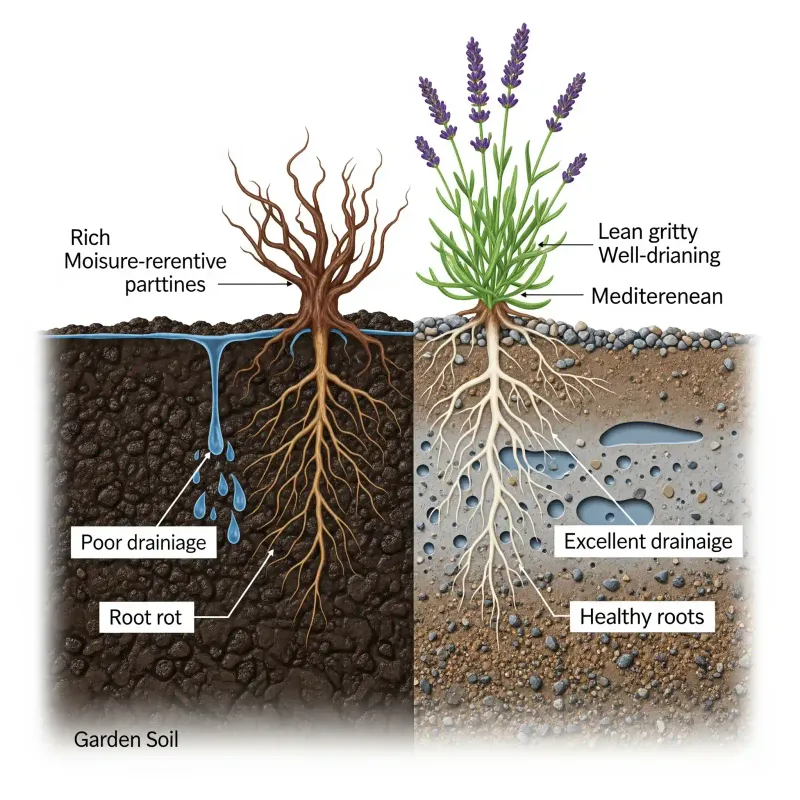
Pruning alone will not keep a lavender plant compact and healthy if the growing conditions are working against it. Two aftercare mistakes show up repeatedly in struggling plants: feeding too much and watering too often.
Lavender generally does best in low-fertility conditions. Adding heavy nitrogen fertilizer in hopes of pushing new growth after a prune can backfire.
Iowa State University Extension and University of Illinois Extension both note that excess nitrogen tends to produce soft, loose foliage rather than the compact, flowering habit lavender is known for. A lean soil with good mineral content is a better match for this plant than a heavily amended bed.
On the watering side, established lavender is relatively tolerant of dry conditions and should not sit in constantly moist soil. Utah State University Extension confirms that saturated or poorly drained soil is a significant risk factor for root decline in lavender.
Water deeply when needed, but allow the soil to dry out between applications rather than keeping it consistently wet. In Southern summers, the temptation to water more during heat is understandable, but soggy roots create more problems than they solve.
Sanitation and airflow matter too. Extension guidance recommends pruning on a dry morning so cuts callus faster and wet foliage, which is more hospitable to disease spread, is avoided.
Space plants for good air circulation, and skip overhead irrigation whenever drip or ground-level watering is an option. These small habits add up to a noticeably healthier plant over a full season.
Adjust the plan for Florida, Texas, and humid regions
Southern gardeners face a different set of challenges than the general pruning advice assumes. In much of the South, the limiting factor for lavender is not frost but heat, humidity, summer rainfall, and drainage.
Adjusting the plan for local conditions is not optional; it is what separates a plant that survives from one that declines steadily.
In Florida, the picture is complicated. UF/IFAS Master Gardener resources describe English lavender as particularly vulnerable to Florida’s summer heat and humidity, and recommend heat- and humidity-tolerant selections such as Spanish lavender, French lavender, and lavandin cultivars like ‘Phenomenal,’ ‘Grosso,’ and ‘Provence’ depending on location.
Even those better-adapted types can struggle in the southern third of the state. UF/IFAS Pasco County Extension emphasizes that full sun, strong airflow, and fast drainage are non-negotiable in Florida, and that raised beds or containers often outperform heavy ground soil in humid conditions.
For Florida gardeners, the post-flowering prune window is driven more by the rainy season and summer heat than by frost. Pruning just before or during peak summer humidity and rainfall increases disease risk at fresh cuts, so timing matters in a different way than it does further north.
Texas conditions vary widely. Texas A&M AgriLife Extension notes that hot, humid eastern Texas with heavy clay soils demands much more attention to drainage and cultivar choice than the drier, limestone or sandy areas of central and west Texas.
Grimes County Master Gardeners echo the emphasis on full sun, excellent drainage, and keeping foliage dry as the foundation for success anywhere in the state.
Let the lavender type and its condition set the limit
Not all lavender responds to pruning the same way, and treating every type identically is one of the more common mistakes home gardeners make. English lavender (Lavandula angustifolia), Spanish or French lavender (Lavandula stoechas), and lavandin hybrids (Lavandula x intermedia) differ in hardiness, bloom timing, heat tolerance, and how much pruning stress they can absorb.
English lavender is generally the most cold-hardy and the most commonly grown in cooler parts of the South. RHS guidance on English lavender recommends pruning after flowering while avoiding cutting into bare old wood.
Some English lavender cultivars may tolerate a somewhat deeper rejuvenation cut under suitable conditions, as noted in UC Cooperative Extension research, but that is a narrow exception rather than a general instruction, and it should not be tried on plants already stressed by heat, wet soil, or disease.
Spanish lavender and lavandin hybrids tend to be less tolerant of cutting into bare wood. Extension specialists flag these types as particularly likely to fail to regenerate if pruned too aggressively into old growth.
In Florida, where Spanish lavender and certain lavandin cultivars are among the recommended options for heat tolerance, that pruning caution matters even more.
The safest general recommendation for any home gardener is to stay in the green, leafy zone and avoid bare wood, especially with older plants, stressed plants, or any type other than a young, vigorous English lavender in good health. The cultivar and the plant’s current condition should set the limit, not an optimistic assumption about how far back it can go.
Know when propagation or replacement makes more sense
There is a point at which trying to rescue a woody lavender plant through pruning costs more time and effort than starting fresh. Recognizing that point is just as useful as knowing how to prune correctly.
If a plant has no leafy growth above its woody framework, or if it shows broader signs of decline such as yellowing foliage, stem dieback progressing from the base upward, or a persistent failure to push new growth after flowering, a green prune will not turn things around. Extension horticulture specialists are direct on this point: severely aged or poorly adapted plants often respond better to propagation from healthy cuttings or outright replacement than to attempts at renovation through heavy pruning.
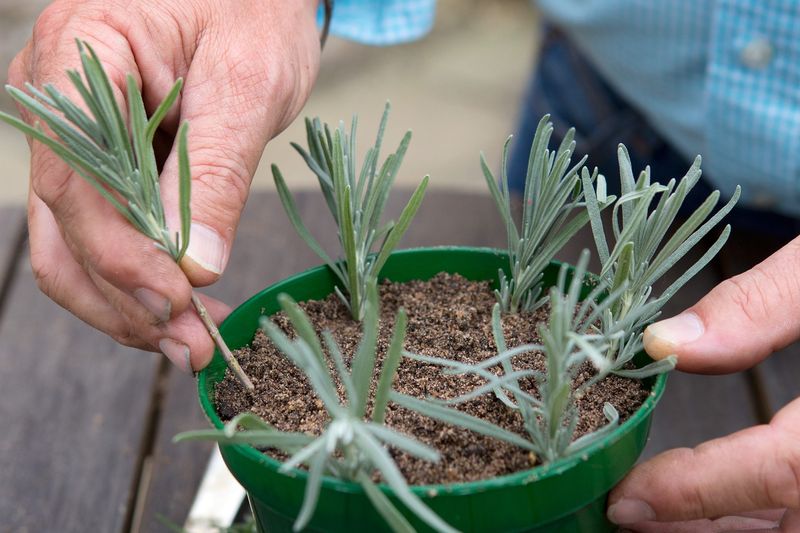
Taking cuttings is a practical option when the plant still has at least some healthy green growth, even if the overall framework is too far gone to save. Softwood cuttings taken from the current season’s non-flowering shoots can root successfully and give you a younger, healthier plant.
Extension guidance supports this as a way to preserve a valued cultivar without forcing a failing plant through a prune it cannot survive.
Replacement with a better-suited selection is worth considering seriously, especially in Florida or humid parts of the Southeast where the original cultivar may simply be a poor match for the climate. UC Cooperative Extension and RHS lavender guidance both acknowledge that some plants reach a stage where renovation is unrealistic.
The practical decision rule is straightforward: prune green tissue after flowering when the type, condition, and weather allow, but one well-timed cut cannot reverse what years of aging, stress, or mismatch have built into the plant’s framework. A fresh start with the right cultivar in the right spot will outperform a struggling rescue every time.