
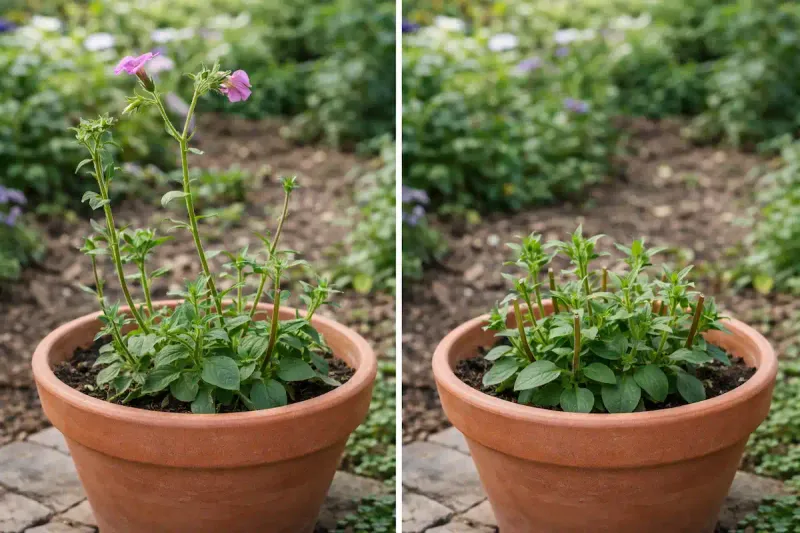
Petunias are supposed to be one of summer’s easiest wins, but something quietly goes wrong when those long stems stretch out and the flowers move further and further from the center of the plant. If your petunia looks full of green but thin on blooms, and the flowers are crowding toward the tips of bare stems, there is a specific care step that often gets skipped.
Catching this pattern early and knowing what to do about it can turn a sparse, struggling plant back into something worth showing off on your porch or patio.
Look for legginess before blaming the blooms
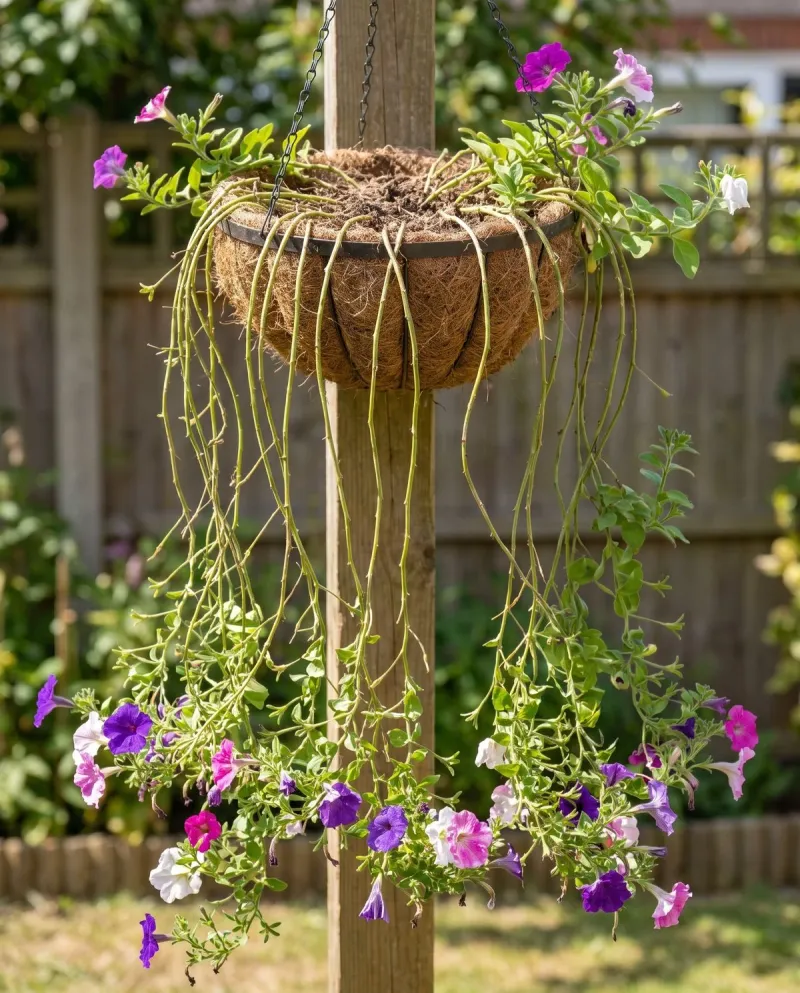
A petunia that keeps growing while its flowers quietly disappear is sending a specific signal. The stems lengthen, foliage and blooms gather toward the tips, and the lower or central portions of the plant turn bare and woody-looking.
That pattern, long bare stems with color concentrated at the ends, points toward a missed pruning step more strongly than it points toward watering problems or soil issues.
Not every petunia with fewer flowers fits this picture. A compact plant that suddenly drops buds or stops opening them is a different situation entirely and deserves a broader look at light, heat, moisture, and insects before you reach for the shears.
Skipped pruning is often the overlooked explanation when stems are visibly elongated and bare, but it does not account for every form of bloom decline.
Trailing cultivars add another wrinkle. Some petunias are bred to cascade naturally, and long hanging stems on a Wave or similar spreading type may simply reflect normal growth habit rather than neglect.
UF/IFAS Gardening Solutions notes that petunia types range from compact mounds to vigorous trailing spreaders, so matching what you see against the plant’s expected shape is the right first move before deciding anything needs correcting.
Why untrimmed stems leave a thin canopy
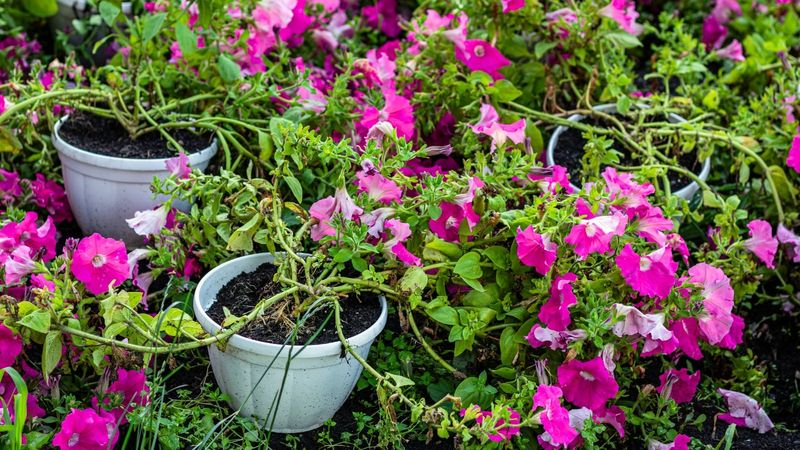
Left to grow unchecked, a petunia stem keeps extending outward from its tip. New leaves and flower buds form near the end of each stem, while the older sections below gradually shed foliage and stop producing lateral shoots.
Over several weeks, the plant can look impressively large while delivering a surprisingly thin flower display.
A cutback works as a structural reset. Shortening those elongated stems removes the dominant growing tips and encourages dormant buds lower on the stem, at leaf nodes and lateral bud sites, to activate and branch outward.
Penn State Extension’s pruning guidance explains that heading cuts on herbaceous plants redirect energy toward lateral growth rather than continued tip extension, which is exactly the outcome a leggy petunia needs.
That branching response is the point. More stems mean more sites where new flower buds can develop, which is why a pruned plant often looks fuller and blooms more evenly than one that was simply allowed to keep stretching.
This does not mean pruning substitutes for correcting poor light, uneven watering, or nutrient gaps. University of Missouri Extension recommends periodic pinching or cutting back alongside consistent care as part of keeping petunias productive through the season.
Give a leggy petunia a measured haircut
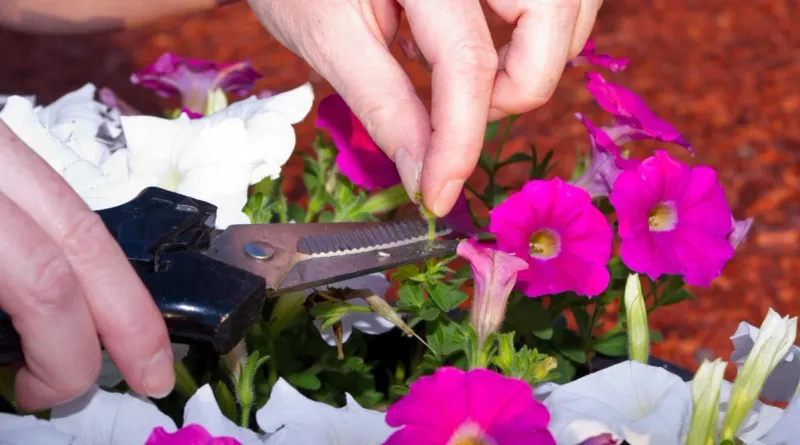
Before cutting anything, take a full look at the plant. Check whether it still carries healthy foliage, how much bare stem is present, and whether the remaining growth looks strong enough to push new shoots.
A plant that is actively growing and reasonably green will respond better to a cutback than one that is already stressed by drought, disease, or root problems.
For a plant with moderately elongated stems, shortening each stem by roughly one-third to one-half is a reasonable starting point. Make each cut just above a leaf node or a visible lateral bud so new shoots have a clear point from which to develop.
Cutting into bare, leafless stem well below any node gives the plant little to work with and slows recovery.
When stretching is severe and stems have become mostly bare, Penn State Extension advises leaving approximately 3 to 5 inches of stem with several nodes or leaf axils intact rather than cutting all the way to the base. UF/IFAS Charlotte County Extension echoes this approach for Florida winter petunias, recommending a trim that preserves usable growth rather than a ground-level shear.
Clemson Cooperative Extension also supports cutting back annuals that have become overgrown, while noting that the amount removed should match the plant’s current condition and remaining vigor.
Stage the cutback if flowers still matter today
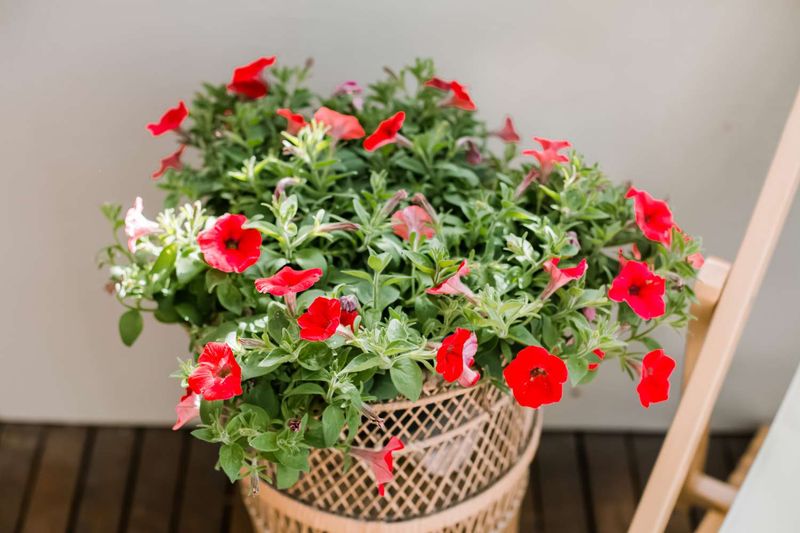
Cutting every stem back at once is the fastest route to a bare plant for a week or two. A hard cutback on petunias can take roughly one to two weeks before new flowers appear, according to North Carolina Cooperative Extension, which means timing and approach both matter if you want some color during the recovery window.
Staggered pruning is a practical middle ground. Rather than shearing the entire plant in one session, trim the longest and barest stems first while leaving sections that still carry open flowers.
A few days later, go back and shorten the next set of stems. The plant regrows in sections instead of all at once, so you are rarely looking at a completely bare container or bed.
Avoid the blanket instruction to cut every petunia to the ground. Penn State Extension is clear that the amount removed should reflect the plant’s condition and how much healthy growth remains.
A plant that still carries some good foliage and a few blooms deserves a measured approach, not a scorched-earth shear. Set realistic expectations: new branching and flowering require time, and the response also depends on whether the plant is getting adequate sun, water, and nutrition after the cut.
Support regrowth with light, water, and restrained feeding
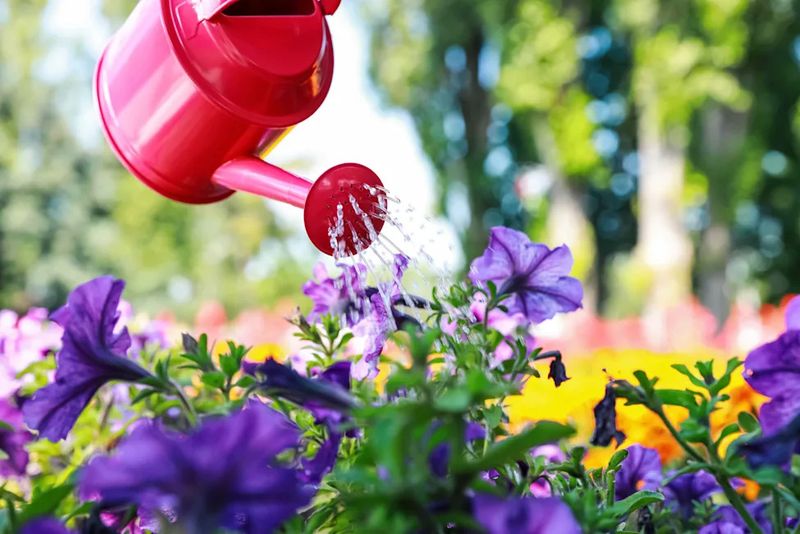
A cutback only sets the stage. What happens in the following week or two depends heavily on the conditions the plant grows into.
Water thoroughly right after pruning to help the root system support new shoot development, but make sure the container or bed drains well. Petunias can suffer crown and root rot when soil stays saturated, so good drainage is not optional.
Fertilizer matters, especially for container plants. Repeated watering flushes nutrients out of potting mix faster than most gardeners expect, so University of Arkansas Extension recommends resuming a balanced, label-appropriate fertilizer program for containers rather than guessing at rates.
UF/IFAS Gardening Solutions notes that fertilizer needs vary between landscape beds and containers, so following the product label and adjusting to your specific growing situation is safer than applying a heavy dose immediately after every pruning.
Sun is the factor pruning cannot replace. Petunias generally perform best with at least six hours of direct sunlight, and both North Carolina Extension’s petunia profile and Iowa State University Extension list full sun as a key performance requirement.
A plant growing in persistent shade will produce weak, stretched growth regardless of how well you prune it. If the spot is shady, correcting the light situation, or moving the container, will do more than any cutback.
Resist the urge to push recovery with extra fertilizer. NC State Extension’s disease and disorder guidance points out that excessive nutrition, particularly nitrogen, can encourage lush vegetative growth at the expense of flowering.
Feed appropriately, follow the label, and let the plant do its work.
Deadheading cannot rebuild bare stems
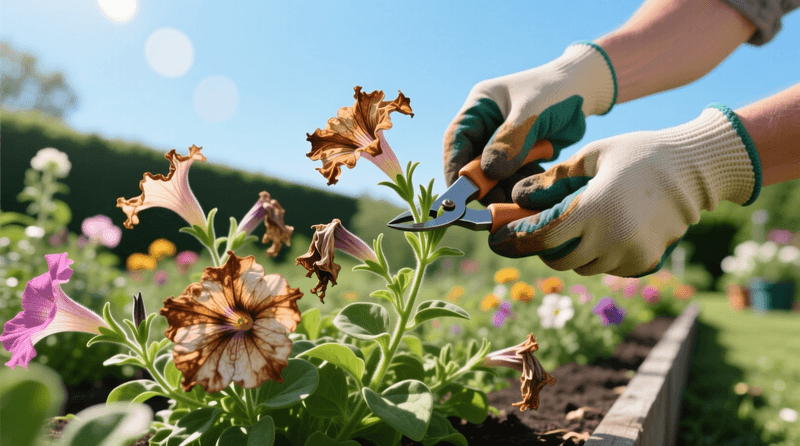
Deadheading and cutting back are two different jobs, and mixing them up is one of the most common reasons a petunia stays leggy despite regular attention. Deadheading means removing a faded flower along with the small stem or seed-forming ovary beneath it, as Mississippi State University Extension describes, recommending a weekly check to catch spent blooms before they set seed.
This kind of grooming helps keep the plant tidy and, for cultivars that respond to it, can support continued flowering.
What deadheading does not do is shorten elongated stems or encourage the lateral branching that a leggy plant actually needs. Removing individual spent flowers from stems that are already long and bare leaves the structure of the plant unchanged.
The bare sections stay bare, and the flowers keep clustering at the tips. That is a pruning problem, not a deadheading problem.
Cultivar choice also determines how much deadheading is worth doing at all. Illinois Extension notes that many modern spreading and small-flowered petunias are self-cleaning, meaning they shed spent flowers on their own without any help.
The University of Wisconsin Extension petunia guide and UF/IFAS Gardening Solutions both confirm that large-flowered and double-flowered types are more likely to benefit from routine grooming. Check the plant tag before committing to a weekly deadheading routine, because for some cultivars, that time is better spent on a proper cutback.
Check for pests and stress before pruning again
A petunia that remains compact but loses buds, produces ragged flowers, or stops opening blooms altogether is showing a different pattern from ordinary legginess. Before reaching for pruning shears a second time, run through a quick checklist: Has the light changed?
Has watering been consistent? Are there signs of nutrient deficiency, root problems, or disease?
UC Integrated Pest Management’s petunia guide lists several non-pruning causes of poor bloom, including inadequate light, heat stress, and disease.
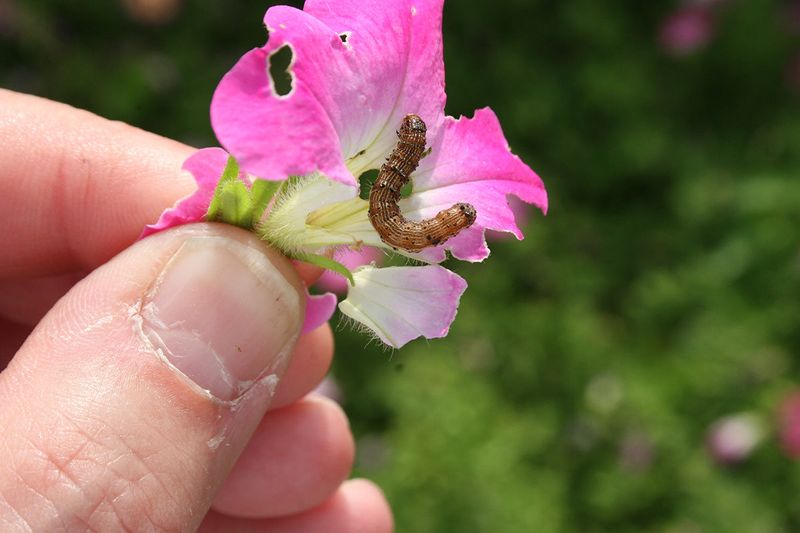
Tobacco budworm deserves specific attention in Southern gardens, particularly through summer. The caterpillars feed inside buds before they open, leaving small holes and dark frass.
Flowers that do open may look chewed or ragged at the edges, and buds that never open at all are a strong warning sign. University of Minnesota Extension recommends inspecting plants at dusk, when budworm caterpillars are most active and easier to spot.
Washington State University Hortsense notes that budworms are difficult to control once they are inside a bud, which makes early identification important. Do not apply a broad-spectrum insecticide simply because blooms are sparse.
Identify the pest first, read the product label carefully, and consider pollinator exposure before treating. Many pollinators visit petunias during daylight hours, so timing and product choice both matter.
Account for Southern heat and seasonal timing
Pruning cannot fix a seasonal mismatch. In Florida and much of South and Central Texas, petunias are typically grown as cool-season annuals rather than summer performers.
UF/IFAS Gardening Solutions recommends October and November as the prime planting window for Florida, and UF/IFAS Charlotte County Extension frames winter color as the primary petunia payoff in that region.
Texas follows a similar pattern in its warmer zones. Texas A&M AgriLife Extension notes that petunias perform best during cool weather in South Texas, fading as summer heat and humidity intensify.
Heat-tolerant cultivars like Wave and some Supertunia varieties can push the season further, but even those have limits when temperatures stay consistently high.
Before deciding that another haircut will restore your plant, consider the calendar and the current weather. A petunia that has run its seasonal course in a hot, humid Florida or Texas summer is not failing because of a missed pruning.
Recognizing the difference between a pruning problem and a seasonal decline saves time, effort, and the frustration of expecting a cutback to accomplish something it simply cannot do.
Use the plant’s shape to choose the next step
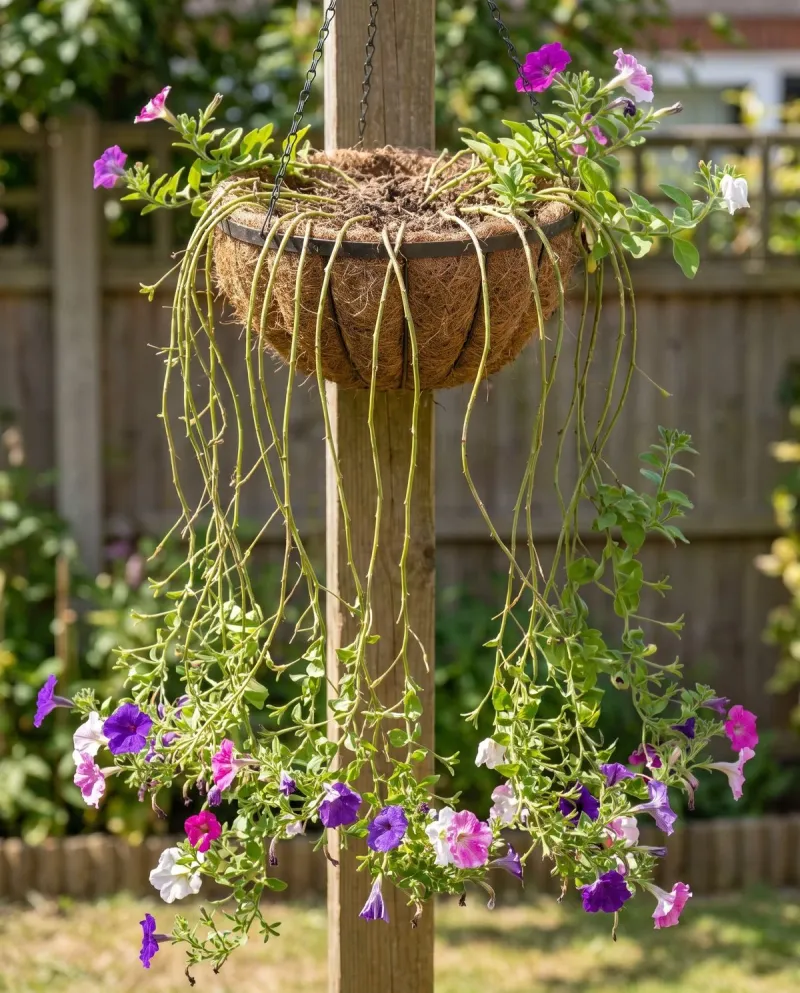
The plant’s shape is the most reliable guide to what it actually needs. Long, bare stems with flowers bunched at the tips point toward a measured cutback, with cuts made just above healthy nodes to encourage branching.
If the plant still carries some open blooms worth keeping, work in sections rather than shearing everything at once.
After pruning, verify the basics. Check sun exposure, confirm that watering is consistent without leaving the soil waterlogged, and resume an appropriate fertilizer program according to the label.
If the plant is compact but still struggling, look for budworm damage, disease, heat stress, or a cultivar that has simply reached the end of its seasonal run before concluding that more pruning is the answer. Penn State Extension and North Carolina Cooperative Extension both frame cutbacks as one part of a broader care routine, not a standalone cure.
The goal of pruning a leggy petunia is a fuller branching framework, not just a tidier appearance. A plant that gets the right cut at the right time, with good growing conditions to follow, has a real chance at a second flush of bloom.
That is a better outcome than deadheading bare stems and hoping for a different result.