
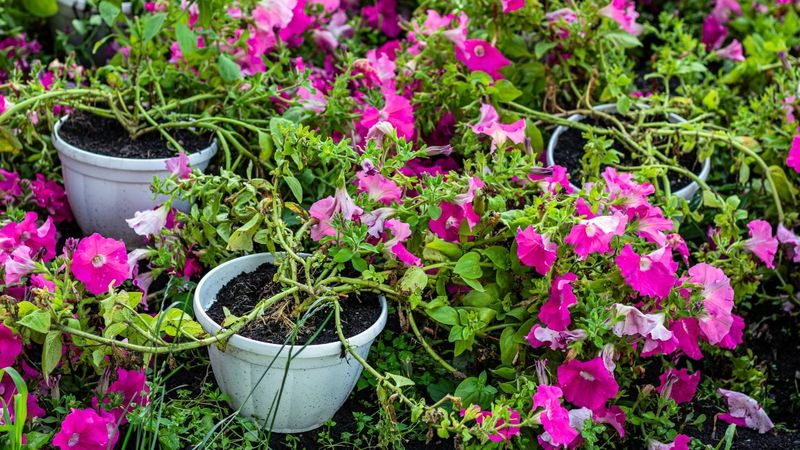
Garden petunias that looked full and bright in early summer can turn into long, tangled stems with almost no flowers by midsummer or early fall. For gardeners in Florida, Texas, and across the South, that fade can feel like the season is over before the warm weather is.
The good news is that a healthy but tired garden petunia, Petunia x hybrida, may have more color left in it than it looks. A purposeful late-season reset can sometimes encourage a fresh round of blooms, and knowing how to do it correctly makes all the difference.
First, decide whether the petunia is a reset candidate
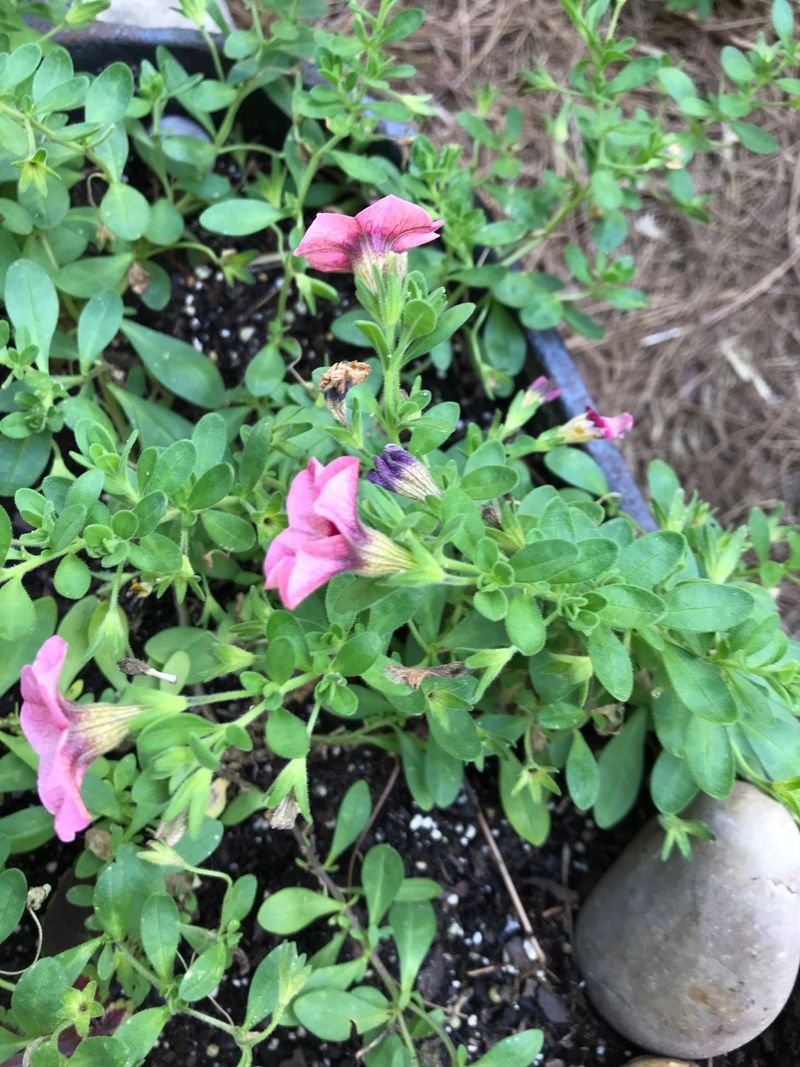
Before reaching for the pruners, spend a minute reading what the plant is actually telling you. A garden petunia, Petunia x hybrida, that is a good reset candidate will still show green, healthy-looking foliage along its stems.
The trouble is usually visible as elongated, floppy growth with few or no flowers at the tips, which is classic legginess rather than a sign of serious decline.
Not every petunia that has stopped blooming is simply overgrown. University of Minnesota’s petunia diagnostic tool points out that poor flowering can come from insufficient light, inconsistent watering, poor soil drainage, heat stress, nutrient imbalances, pest feeding, or disease.
Each of those problems calls for its own fix, and a pruning reset will not address any of them on its own.
What you want to avoid confusing with ordinary legginess is a plant that is rapidly wilting, browning from the crown upward, or collapsing at the base. Those symptoms can signal crown or root rot, and Penn State Extension’s guide to petunia diseases makes clear that cutting back a diseased plant will not reverse that kind of damage.
Southern gardeners should also confirm they are working with a true garden petunia rather than Mexican petunia, which is Ruellia, a separate plant with different habits and invasive-plant concerns in parts of Florida. NC State’s plant profile for Petunia x hybrida can help with identification.
The reset described here applies only to garden petunias.
A late-season cutback may encourage a fresh flush
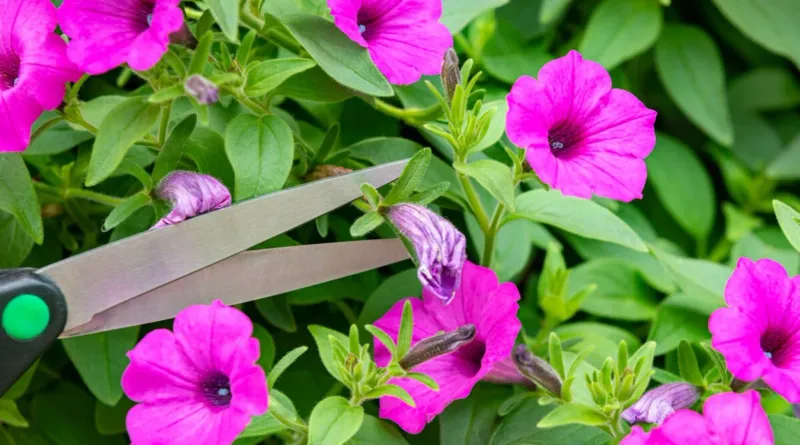
Removing long, declining stems from a garden petunia can encourage new branching from the healthy leaf nodes that remain lower on the plant. Those nodes are the growth points where new shoots can emerge, and once the stretched, flowerless growth above them is gone, the plant may put energy into producing fresh stems and eventually new flower buds.
The key word there is “may.” North Carolina Cooperative Extension’s guide on keeping petunias blooming all season notes that pruned plants may need about one to two weeks to produce new blooms, and that recovery depends on how much was removed. Light, warmth, moisture, drainage, and how much growing time remains in your season all play a role in whether the plant actually rebounds.
Frame the outcome as a possible additional flush of color during the remaining warm-weather window, not as a guaranteed second season of performance. A plant that gets cut back in late August in central Florida still has meaningful warm weather ahead.
The same cutback on a plant already showing frost damage or disease will not produce the same result. The reset works best when the petunia is still fundamentally healthy and the conditions supporting regrowth are in place.
Match the cutback to the plant’s condition
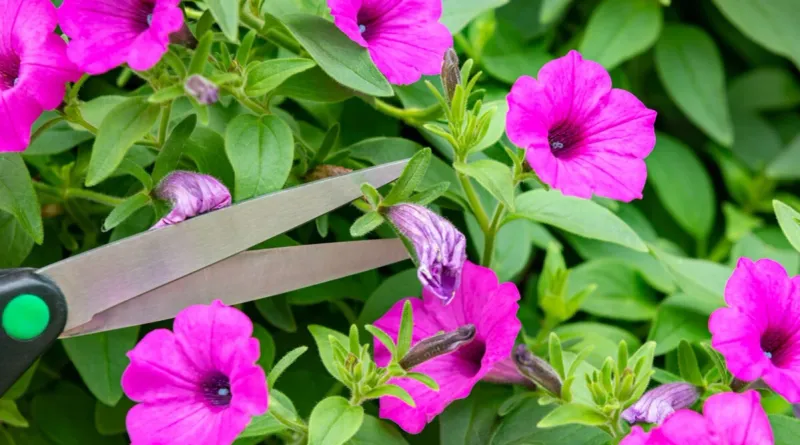
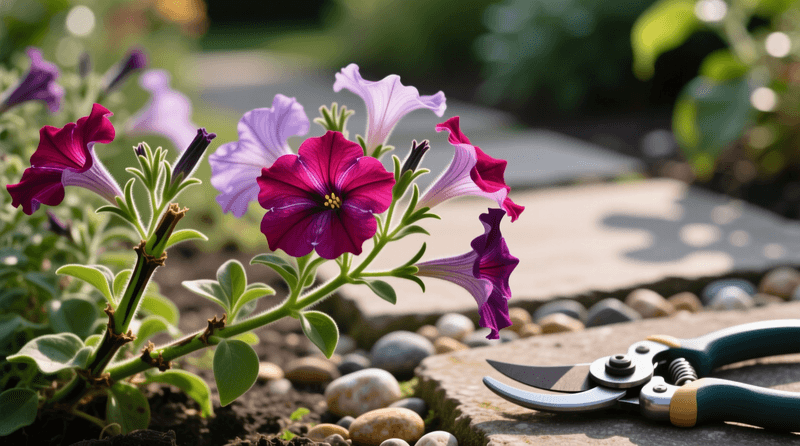
Start with clean scissors or pruners. Dirty or dull blades can crush stems or introduce pathogens, so wipe the blades with rubbing alcohol or a diluted bleach solution before you begin.
Then look at each stem individually rather than treating the whole plant as one unit to trim uniformly.
Select the stems that are long, bare, or flowerless and cut each one back to a healthy visible leaf node or bud. That node is where new growth has a natural place to emerge.
North Carolina Cooperative Extension suggests removing about 20% of the plant as a conservative approach, while other guidance from sources like Penn State Extension’s herbaceous pruning guidance describes leaving roughly 3 to 5 inches of stem with several nodes for annual flowers. Missouri Extension goes further for severely leggy, nonflowering plants, recommending a cutback to just a few inches above the base.
If offering a practical middle ground for a healthy but overgrown plant, cutting back by roughly one-third to one-half and leaving multiple green nodes on each stem is a cautious editorial range, not an extension-validated standard. It suits a plant that has good foliage but stretched growth.
Reducing every single stem to bare stubs, especially on a plant that is already stressed, carries more risk than a proportionate trim.
Staggering the cuts is worth considering. Trimming some stems at a time preserves more immediate color while the plant regrows, whereas cutting everything at once creates a temporary bare-looking period.
For gardeners who want the yard to look presentable throughout the process, a phased approach can help.
Let the petunia’s growth habit guide your approach
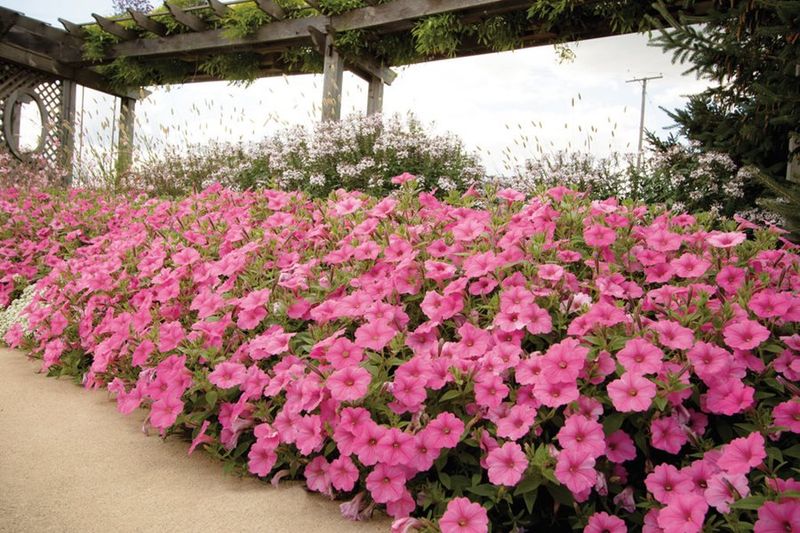
Petunias are not a single uniform plant, and one pruning approach does not translate equally across all types. Understanding the growth habit of what you have planted can save you from cutting in a way that sets the plant back rather than forward.
Grandiflora and multiflora petunias, the traditional upright types with large or medium flowers, are the most familiar candidates for pinching and cutback. University of Minnesota Extension’s petunia growing guide specifically recommends pinching grandiflora and multiflora plants while they are young to encourage branching.
Those types respond well to a late-season trim targeting stretched or spent stems.
Milliflora petunias, which produce smaller flowers in larger numbers, and spreading or Wave types, which trail and fill horizontal space, behave differently. Minnesota Extension advises against routinely pinching milliflora and spreading varieties the same way you would a grandiflora.
North Carolina Cooperative Extension also notes that heat-tolerant spreading cultivars can have different care needs than older types.
The late-season reset described here targets long, declining stems specifically. It is not a call to aggressively pinch every cultivar.
If you have a spreading or Wave petunia that has grown leggy and sparse at its tips, selective removal of those tired ends at a healthy node is still reasonable, but do not expect identical results to what a grandiflora might show after a harder trim.
Support recovery without overwatering or overfertilizing
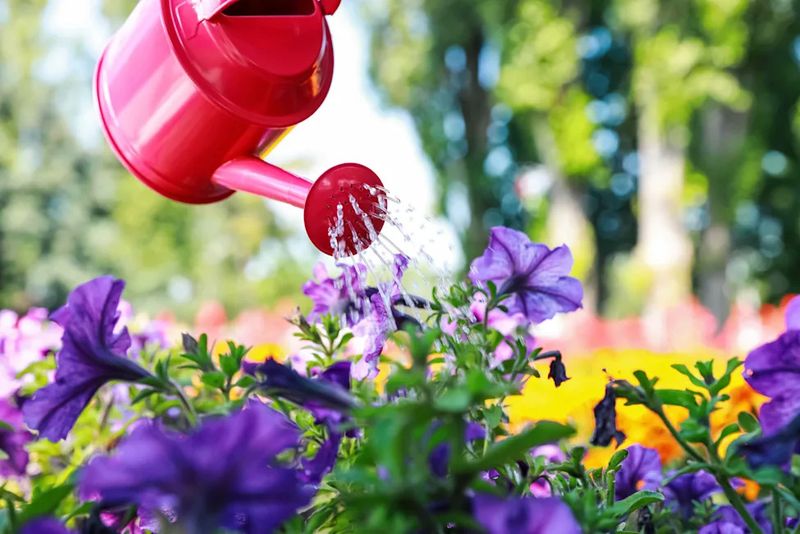
Right after cutting back, water the plant thoroughly. For in-ground petunias in garden beds, the goal is to soak the soil rather than just wet the surface.
University of Minnesota Extension recommends soaking to approximately 6 to 8 inches deep when watering established plants, which encourages roots to stay healthy and reach deeper moisture rather than staying shallow.
Containers and hanging baskets behave very differently from garden beds. They dry out faster because of limited soil volume, heat absorption through the pot walls, and airflow around the container.
During extreme Southern heat, a hanging basket can need water once a day or even twice on the hottest days, depending on its size, the soil mix it holds, how much sun it receives, and local weather conditions. Watch the soil rather than following a fixed daily schedule.
Fertilizer is a different matter. Apply or resume feeding only if it is actually due based on your regular schedule, not automatically as a post-pruning step.
Illinois Extension guidance on caring for annuals recommends applying liquid fertilizer to moist soil rather than to dry roots. Always follow the product label for rates and timing.
Feeding a severely stressed or waterlogged plant is counterproductive. Excess fertilizer salts can burn foliage, damage roots, and cause wilting that looks like underwatering, according to Texas A&M AgriLife Extension’s notes on managing soluble salts in ornamental plants.
If the plant is still struggling from heat or drainage problems, address those first before adding fertilizer.
Fix light and drainage before expecting more flowers
Pruning a leggy petunia will not produce more flowers if the conditions the plant grows in are still working against it. Light and drainage are two of the most common underlying problems that keep petunias from reblooming after a reset.
Garden petunias generally need at least five to six hours of direct sunlight each day, and most varieties flower more fully with substantial sun exposure. University of Minnesota Extension notes that excessive shade can push a petunia toward leafy, stretched growth with fewer blooms.
If a planting spot has become shadier over the season as surrounding plants filled in, that change in light may be contributing more to poor flowering than any need for pruning.
That said, not every petunia thrives with harsh all-day Southern exposure in every situation. Newly transplanted plants and those in containers under intense midday heat may need temporary protection or adjusted placement while they stabilize.
Stressed container petunias in particular can benefit from moving to a spot with morning sun and some afternoon relief during heat waves, then returning to fuller sun once temperatures moderate.
Drainage matters just as much. Petunias prefer well-drained soil, and standing water around the roots increases the risk of crown and root problems significantly.
North Carolina Cooperative Extension emphasizes that heat-tolerant cultivars still depend on proper water, light, and drainage to perform well. If your bed stays soggy after rain, improving drainage before the next growing flush matters more than any amount of trimming.
Deadhead selectively instead of treating every petunia alike
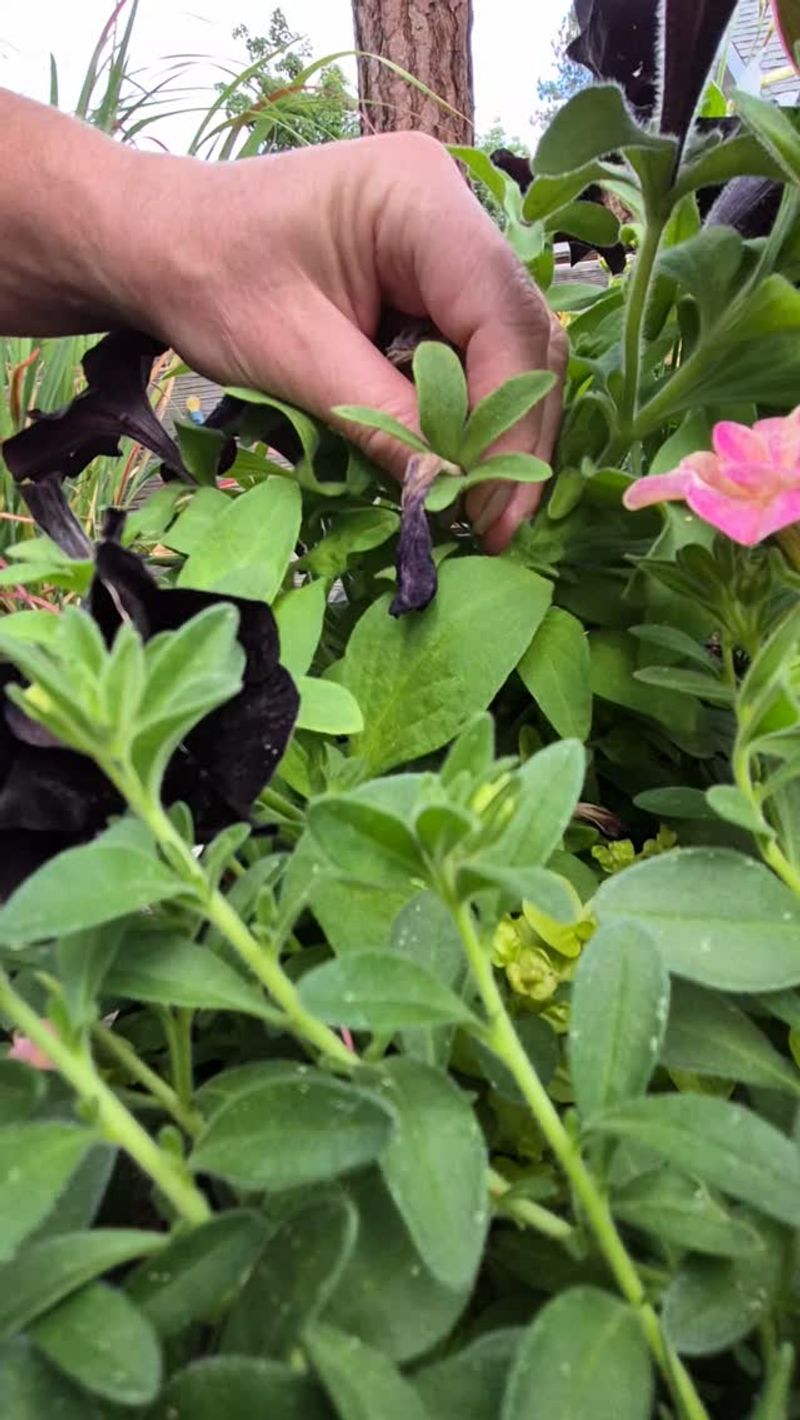
Spent flower removal, called deadheading, can help certain petunias keep producing new blooms and improves the overall appearance of the plant. For older large-flowered or double types, removing finished flowers is genuinely useful.
When you deadhead, remove not just the wilted petals but also the small structure directly beneath the flower, because that is where the seed capsule develops. Leaving the seed structure in place allows the plant to put energy into seed production rather than forming new flower buds.
The practical technique is straightforward: pinch or snip just below that swollen base, taking care not to damage the healthy stem below it. University of Minnesota Extension confirms that removing the seed-bearing structure along with the spent flower is the correct approach for petunias that benefit from deadheading.
Many modern petunias, however, do not need this kind of regular attention. North Carolina Cooperative Extension notes that milliflora, spreading, Wave, and vegetatively propagated types are often self-cleaning, meaning finished flowers drop on their own without intervention.
Spending time deadheading a self-cleaning Wave variety is largely unnecessary and does not meaningfully change how it blooms.
Skipping an occasional spent flower on any petunia will not shut down the plant entirely. Focus deadheading effort on the types that actually respond to it, and spend the rest of that time on watering and monitoring for pests or disease instead.
Know when pruning will not solve the problem
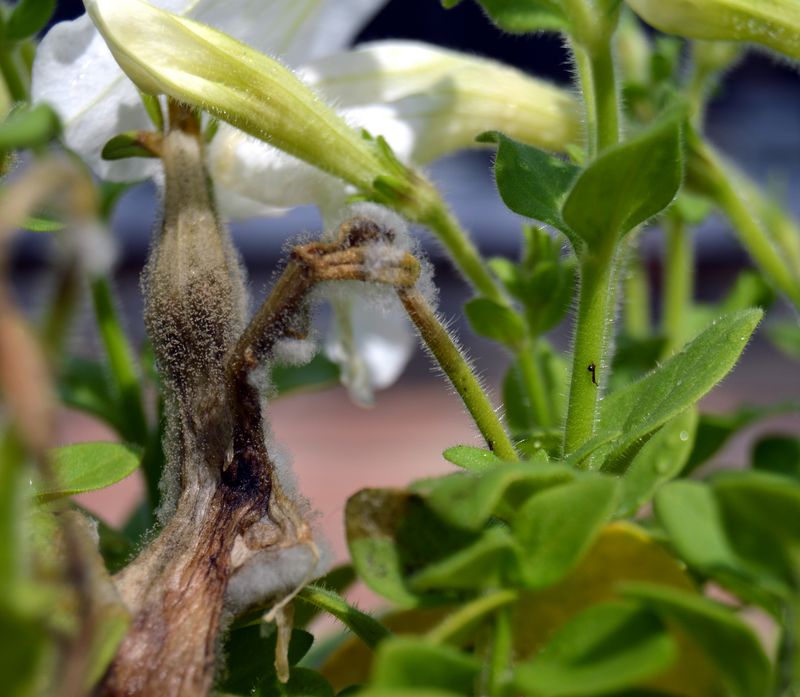
A late-season cutback is a tool for a specific situation: a green, otherwise healthy plant with stretched or flowerless stems. Pruning is not a general-purpose rescue for every petunia that looks bad, and applying it to the wrong plant can waste time and delay a more appropriate response.
Stop and look carefully before cutting if the plant is rapidly wilting without an obvious reason, browning from the crown downward or outward, collapsing at the base, or sitting in soil that stays soggy long after watering or rain. Those patterns can indicate crown rot or root rot caused by fungal pathogens.
Penn State Extension’s petunia disease resource explains that these diseases cause rapid collapse and are not corrected by pruning. UC IPM’s petunia page similarly notes that disease management requires identifying the cause and correcting the growing conditions, not cutting back stems.
Other unresolved problems, including persistent shade, chronic underwatering or overwatering, pest infestations, and nutrient deficiencies, will continue to suppress flowering even after a trim. The University of Minnesota petunia diagnostic tool can help you work through those possibilities systematically.
Cold weather and approaching frost are also outside the reach of any pruning fix. If the warm season is genuinely ending where you garden, regrowth and new flowering may be limited regardless of how well the cutback was executed.
The decision rule is simple: reset a green, leggy plant while warm weather remains; investigate or remove a diseased or cold-damaged plant rather than treating it as merely overgrown.
A healthy petunia may produce one more flush of color
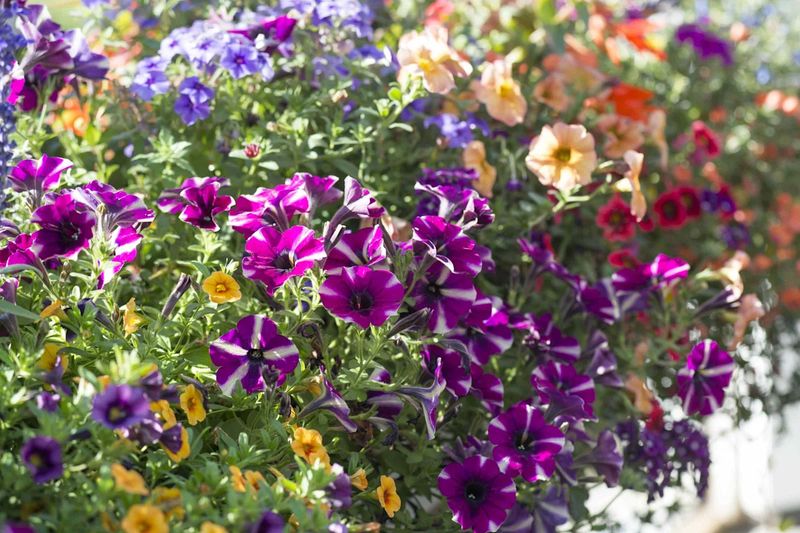
The path forward is straightforward when the plant is green and leggy rather than diseased or cold-damaged. Confirm healthy foliage is present, cut declining stems back to visible healthy nodes at a proportionate depth, and water the plant thoroughly afterward.
Correct any light or drainage problems that were working against it before the reset.
Feed only when it fits your regular schedule, following the product label and applying fertilizer to moist soil. North Carolina Cooperative Extension and University of Minnesota Extension both frame the expected outcome as a possible flush of new growth and blooms rather than a certainty.
UC IPM reminds gardeners that petunias are commonly treated as annuals even in warmer climates, and cold or frost can end recovery regardless of how well the reset was done.
Think of the cutback as giving the plant a fair chance at the remaining warm-weather window, not a promise of extended performance. A petunia that responds well may reward you with several more weeks of color before the season closes for good.