
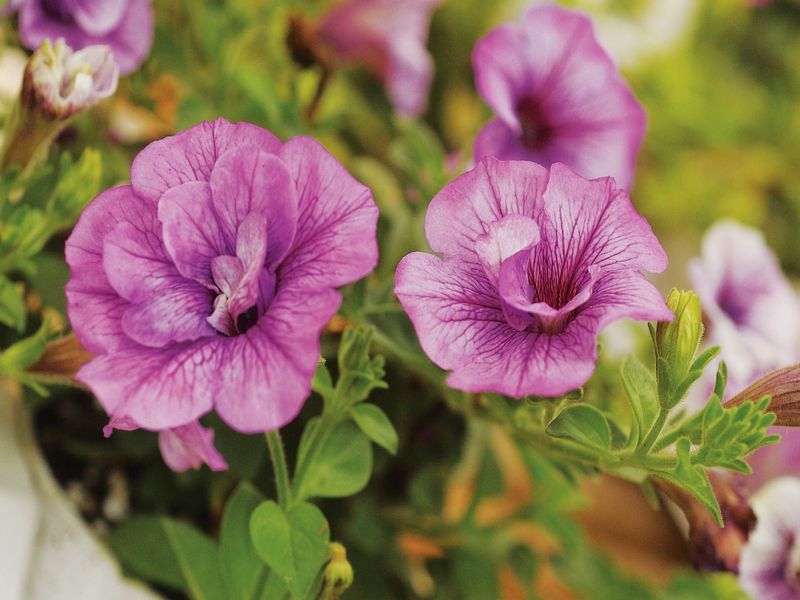
Run your hand along a petunia stem and that familiar tackiness might have you wondering whether something is wrong. For most gardeners, the answer is reassuring: common garden petunias are naturally sticky plants, and that coating on healthy foliage is usually just the plant doing what petunias do.
Knowing the difference between normal plant stickiness and a sign worth investigating can save you from unnecessary treatments and help you catch a real problem when one does appear.
Sticky foliage is usually normal for garden petunias
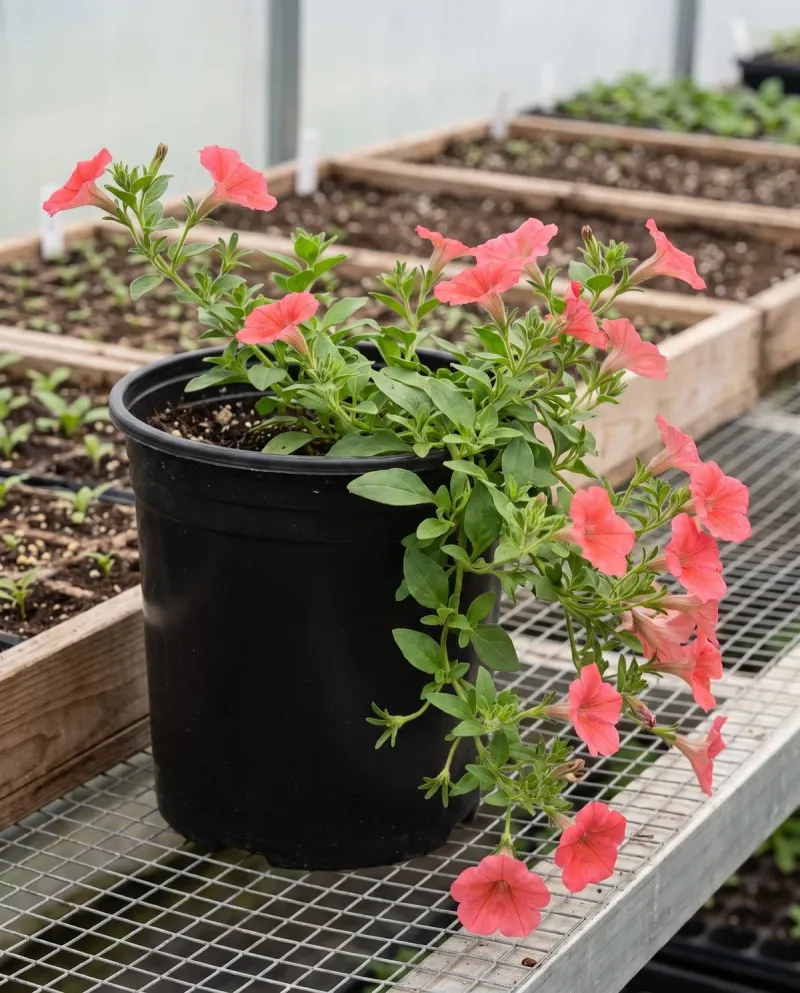
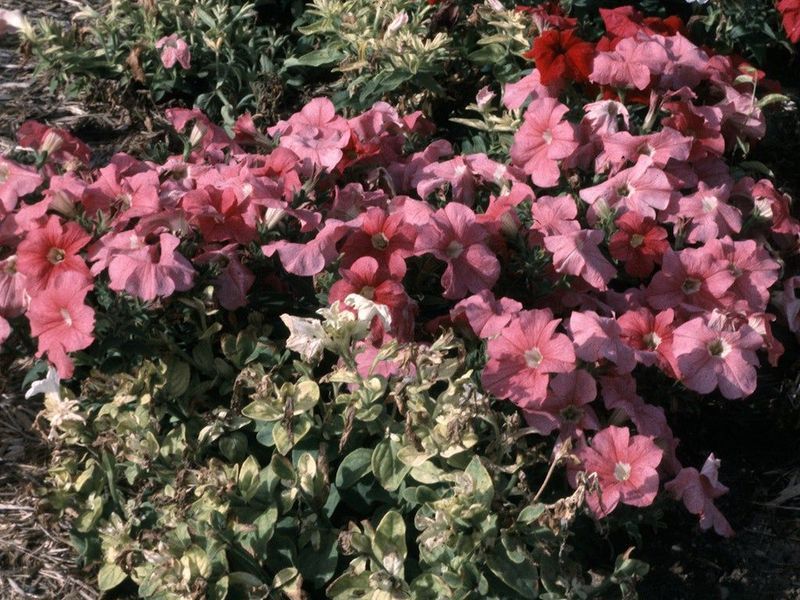
Reach out and touch almost any common garden petunia and you will notice the leaves and stems feel slightly tacky. UC IPM’s petunia profile describes petunia leaves as “thick and somewhat sticky” – that phrasing appears under the plant’s normal identification characteristics, not under pest or disease symptoms.
The stickiness is part of what makes a petunia a petunia.
Gardeners sometimes worry that tacky foliage signals hidden heat stress, drought, or an impending bloom failure. That worry is understandable but generally misdirected.
Extension horticulture guidance reinforces that stickiness is a known characteristic of the species rather than a warning. A plant with evenly tacky leaves, good color, upright stems, and active flowering does not need treatment based on texture alone.
Cultivar differences add another layer of variation. University of Wisconsin Extension petunia resources note that some newer cultivars have reduced or absent natural stickiness, so a gardener growing two different varieties side by side may find one noticeably tackier than the other – even when both are perfectly healthy.
That range is normal, not a reason to reach for a spray bottle.
Glandular trichomes make the plant feel tacky
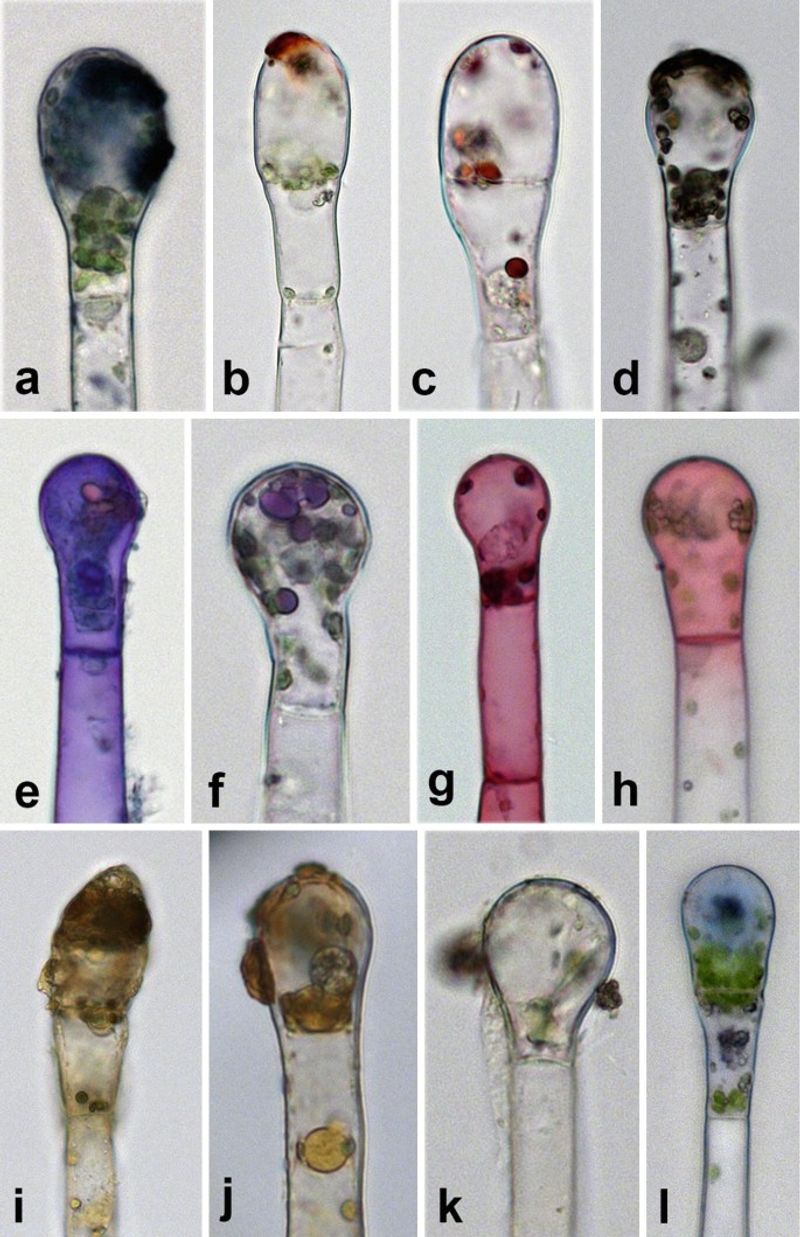
Tiny hair-like structures called glandular trichomes cover the surfaces of petunia leaves and stems. These are not signs of damage or disease – they are specialized plant cells that actively produce and secrete compounds onto the leaf surface.
Research published in HortScience identifies sugar-ester compounds among the exudates produced by petunia trichomes, which contributes directly to the tacky feel gardeners notice when handling the plant.
The biological story goes a step further. Studies on Petunia species glandular trichomes connect these secretions to specialized-metabolite production that may play a role in defending the plant against herbivores.
A related investigation published in Plant, Cell and Environment supports the idea that trichome exudates serve protective functions in the plant’s chemistry.
That said, documented defensive chemistry is not the same as a guarantee. Knowing that trichome secretions may help deter some herbivores does not mean every sticky petunia is actively fighting off a pest attack, and it certainly does not mean the coating prevents damaging infestations.
A petunia can be naturally sticky, biologically well-equipped, and still end up hosting aphids. The trichome story explains the texture; it does not predict what will or will not land on the plant.
Look for honeydew when the pattern changes
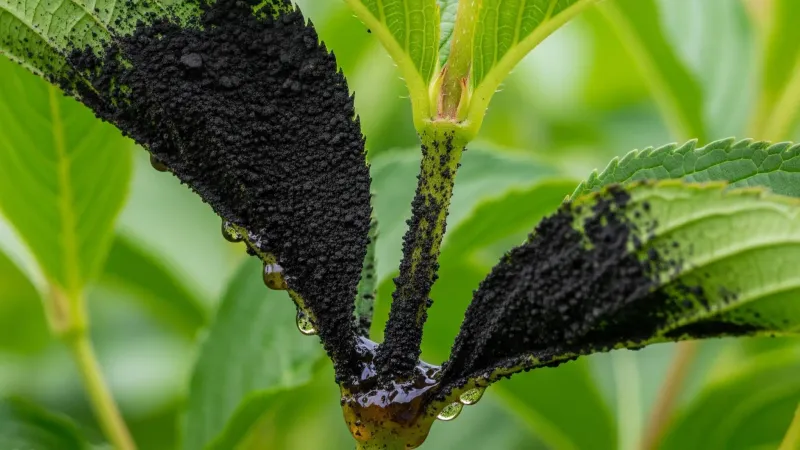
Natural petunia stickiness and insect-produced honeydew can both be present on the same plant at the same time, which is exactly why texture alone cannot tell you which one you are dealing with. Sap-feeding insects – including aphids, whiteflies, mealybugs, soft scales, psyllids, and certain leafhoppers – excrete a sugary liquid waste called honeydew as they feed.
That honeydew lands on leaves, stems, and whatever sits below the plant, adding stickiness on top of whatever the trichomes are already producing.
The pattern of the residue offers the most useful early clue. UC IPM’s sooty mold resource points out that honeydew tends to concentrate beneath actively feeding insect colonies, which often cluster on soft new growth and growing tips.
If the stickiest areas on your plant are specifically around new leaves and buds rather than spread evenly across older foliage, that shift in distribution is worth a closer look.
Residue showing up on surfaces that have nothing to do with the plant itself is another flag. Sticky railings, patio furniture, pot rims, or pavement below a hanging basket suggest something is dripping from above – and aphid biology guidance from UC IPM confirms that heavy feeding colonies can produce enough honeydew to coat nearby objects.
Mealybug information and whitefly guidance describe similar honeydew production for those insects. These patterns are clues that should prompt a closer inspection, not automatic proof of an infestation.
Inspect the plant and its surroundings for corroborating clues
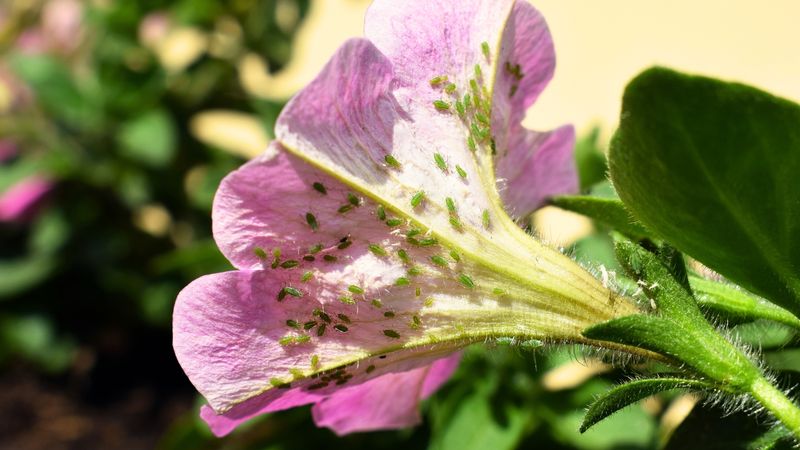
A quick visual scan of the top of the plant rarely tells the full story. Flip leaves over and check the undersides, especially on younger growth near the tips – UC IPM aphid guidance notes that aphids often cluster on soft new tissue and the undersides of leaves, where they can be easy to miss at a glance.
Look for small, soft-bodied insects in clusters, translucent shed skins, or a slightly shiny residue that differs from the plant’s usual texture.
Other insects leave different calling cards. Mealybugs appear as cottony or waxy white masses tucked into stem joints and leaf axils.
Scales may look like small, fixed bumps on stems and older growth rather than obvious insects. Whiteflies tend to scatter into a small white cloud when you brush the plant.
Check flower buds as well – some pests favor protected spots where petals meet stems.
Secondary signs around the plant can support your inspection findings without being definitive on their own. Sooty mold grows on honeydew and appears as a dark, powdery or crusty black coating on leaves and stems.
It does not infect the petunia directly, but heavy deposits can reduce the leaf surface available for photosynthesis. Ants moving purposefully up and down stems are worth noting – UC IPM ant resources explain that ants feed on honeydew and sometimes actively protect sap-feeding insects from their natural enemies.
Distorted or cupped new growth can also indicate feeding activity. None of these signs alone proves the cause, but finding several together makes a closer inspection worthwhile even before obvious pest colonies are visible.
Do not confuse normal tackiness with heat or drought stress
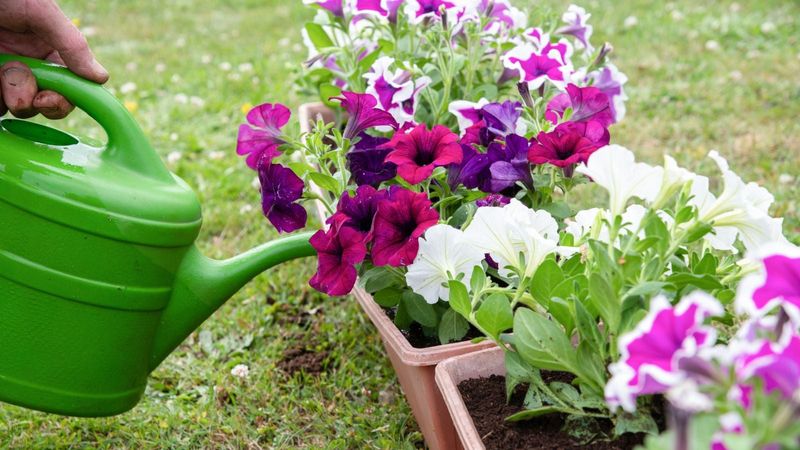
Heat and drought are real threats to petunias in Southern gardens, and they deserve attention – just not because the leaves feel sticky. Water deficit can cause wilting, reduced vigor, bud drop, and changes in flowering timing.
Research on petunia drought physiology documents that water stress can impair photosynthesis and reduce pollen performance when stress is significant. Those are real consequences, but they show up as visible symptoms like drooping foliage, dull or pale leaf color, and reduced flowering – not as a change in how tacky the leaves feel.
A separate controlled study adds useful nuance. Findings on drought and petunia flowering showed that moderate drought delayed flowering in some cases, while severe drought sometimes triggered early flowering followed by flower loss.
Those results varied with stress severity and cultivar, which means the relationship between water stress and bloom timing is not a simple rule that applies equally to every plant in every Southern yard.
When blooms slow or stop, work through a checklist of actual limiting factors rather than pointing to stickiness as the signal. Petunia care basics from UC IPM and University of Georgia Extension annuals guidance both point to water availability, heat exposure, light levels, fertility, soil drainage, and plant age as the factors that most directly influence flowering.
Evaluate each one independently. A petunia that feels tacky but looks vigorous, holds good color, and keeps producing buds is almost certainly not stressed – it is just being a petunia.
Match the response to the evidence you find
A healthy petunia with evenly distributed tackiness, good leaf color, and no pest evidence needs nothing done to it. Spraying simply because foliage feels sticky is unnecessary and can cause its own problems – University of Wisconsin Extension petunia guidance supports leaving well-performing plants untreated.
Resisting the urge to intervene on a healthy plant is often the most useful thing a gardener can do.
When a close inspection turns up soft-bodied insects like aphids, start with the least disruptive approach. A strong stream of water aimed at leaf undersides and growing tips can dislodge many insects when the plant is well-hydrated and can tolerate the spray – UC IPM aphid management recommendations include this as a practical first step.
Removing badly infested or distorted shoots when practical can also reduce pest pressure without any chemical exposure. Lady beetles, lacewings, syrphid fly larvae, and parasitic wasps are natural aphid predators worth protecting – avoid actions that would eliminate them from the garden.
If honeydew or light sooty mold remains after the insect population is addressed, rinsing the foliage with water can help clear the residue. UC IPM sooty mold guidance is clear that washing removes the coating but does not solve an ongoing infestation.
Pesticides, including contact oils and soaps, require positive pest identification, label compliance, a spot test for plant injury, and careful timing – they should not be applied to drought-stressed plants or during the heat of the day. Flowering petunias attract bees and other beneficial insects, so EPA pollinator protection guidance and floriculture-specific IPM recommendations both favor nonchemical methods and selective contact products over broad-spectrum or systemic options when treatment is genuinely needed.
Restore blooms by addressing the actual limiting factor
Accepting natural tackiness is the starting point for good petunia care. When a plant looks healthy and the stickiness is uniform, the right move is to keep up with basic maintenance rather than treat a non-problem.
Inspect more closely any time the residue pattern shifts, concentrates in one area, or shows up alongside ants, sooty mold, distorted growth, or sticky nearby surfaces – those combinations warrant a real look.
For declining blooms, the fix usually lies in one of the fundamentals. UC IPM petunia care information and University of Georgia Extension guidance on annual flowers both identify consistent moisture, full sun, well-drained soil, and regular fertilizer as the foundation for sustained flowering.
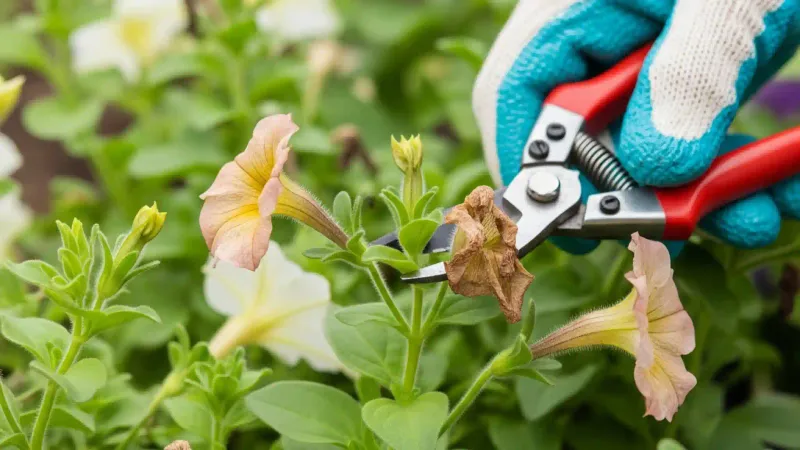
Deadheading spent blooms and cutting back leggy growth in midsummer can refresh the plant and encourage a new flush of flowers, as supported by University of Florida IFAS petunia recommendations. Containers and hanging baskets in Southern heat can dry out faster than in-ground beds, but watering frequency should follow the actual conditions – container size, plant size, weather, and drainage – rather than a fixed schedule.
One plant-identity note worth making: if you are growing what someone called a “Mexican petunia,” that name usually refers to Ruellia simplex, a different plant entirely with its own care requirements and invasive-plant considerations in Florida. Common garden petunias are Petunia hybrids, and the sticky-leaf discussion in this article applies to them.
A petunia that gets the right sun, water, food, and a timely trim will usually tell you exactly how it is doing – and a little tackiness is just part of the conversation.