
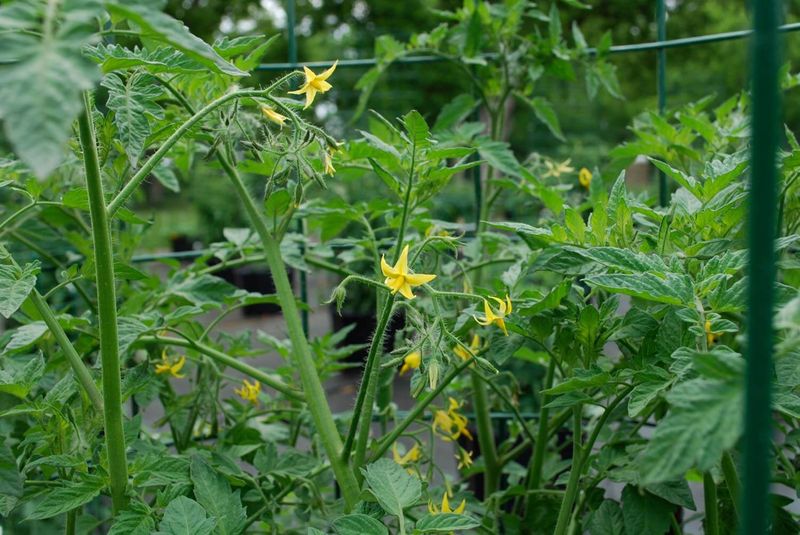
You did everything right – or so it seemed. Your tomato plants are big, green, and gorgeous, but the fruit just isn’t showing up.
Before you blame your watering schedule or start second-guessing every decision, know that lush plants with little fruit have several possible causes, and pinning it all on one watering mistake can send you chasing the wrong fix.
Inconsistent moisture may be the watering problem
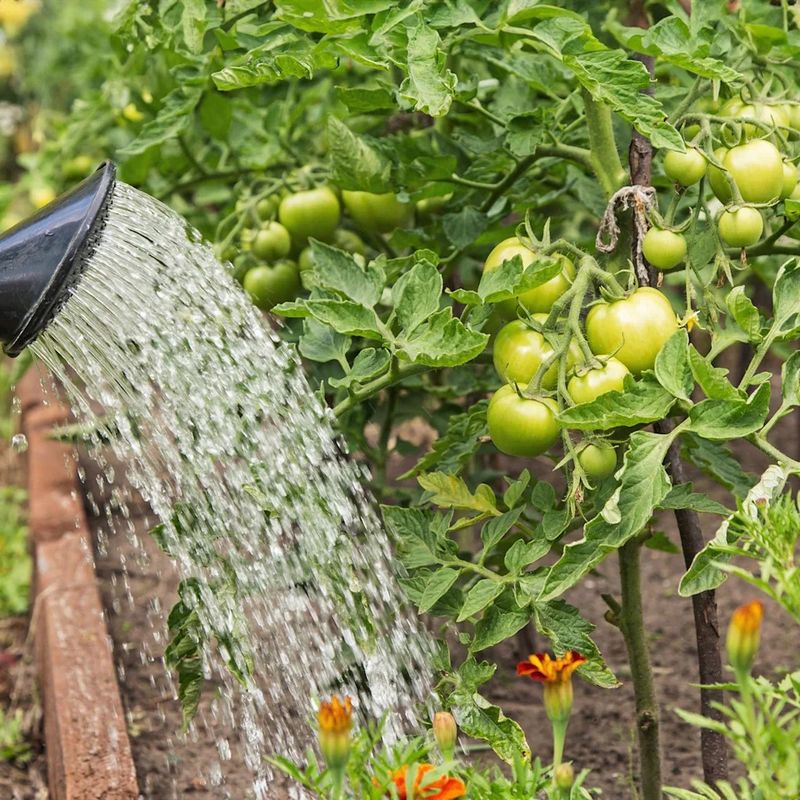
The watering issue most likely to hurt fruit production is not about picking the wrong hour of day to run the hose. What actually matters is letting the tomato’s root zone dry out substantially between waterings and then applying too much or unevenly distributed water to make up for it.
That repeated dry-to-wet swing can stress plants during the exact window when they need stable conditions most: flowering and early fruit set.
Texas A&M AgriLife Extension guidance on High Plains tomato production specifically advises regular, uniform watering because low soil moisture can cause blossoms to abort. UF/IFAS irrigation guidance for edible landscapes adds that drought stress can cause both flowers and developing fruit to drop.
These are real, documented contributors worth checking first.
Still, inconsistent moisture does not explain every leafy plant that refuses to fruit. The University of Georgia Commercial Tomato Production Handbook points to sustained heat, poor pollination, and excess nitrogen as equally plausible explanations.
Treating watering as the only suspect can cause you to miss the actual problem, so use moisture as your starting point and keep the other possibilities in view.
What unstable moisture can do to a tomato plant
When soil moisture swings between too dry and too wet during the flowering stage, tomato plants respond by directing resources away from reproduction. Blossoms can abort before they ever develop into fruit, and if some fruit does begin forming under inconsistent watering, problems tend to follow.
Cracking happens when a plant that has been water-stressed suddenly takes up a large amount of moisture and the fruit skin cannot expand fast enough.
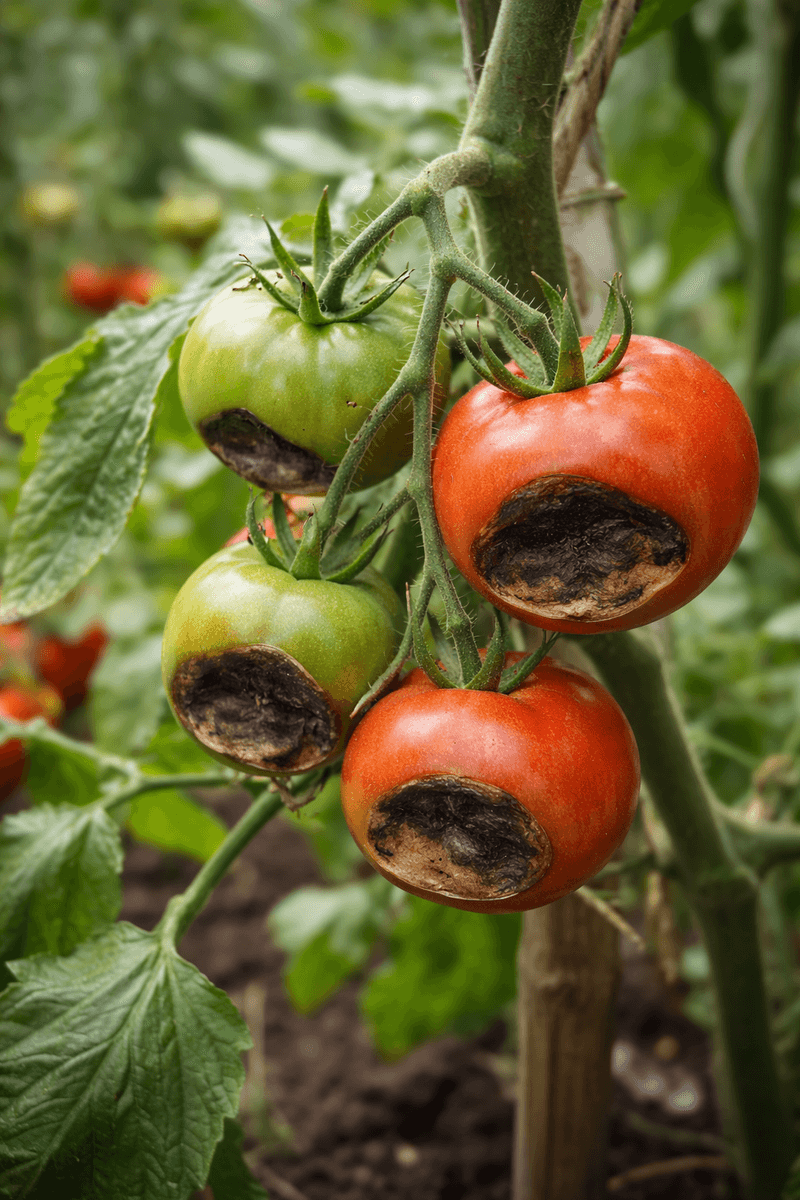
Blossom-end rot is a separate disorder that looks like a dark, sunken patch on the bottom of developing tomatoes. University of Minnesota Extension’s tomato disorders resource explains that blossom-end rot reflects the plant’s impaired ability to move enough calcium into developing fruit, often because fluctuating moisture disrupts uptake – not necessarily because the soil is short on calcium.
Adding calcium without addressing moisture swings typically will not solve it.
Blossom drop, by contrast, means flowers dry up and fall before any fruit develops at all. The two conditions look different and have overlapping but not identical causes.
Texas A&M AgriLife’s tomato guidance recommends slow, uniform irrigation to reduce these outcomes. Correcting your watering approach can support the next flush of flowers, but it cannot recover blossoms that have already aborted – those are gone regardless of what you do today.
Heat may be the bigger reason fruit fails
Southern summers can push daytime temperatures well past the point where tomato pollen stays viable. When that happens, fruit simply will not set, no matter how carefully you water.
The University of Georgia’s tomato production handbook identifies sustained high temperatures as a primary reason for blossom drop and failed fruit set, with heat interfering directly with pollen function and fertilization.
University of Minnesota Extension’s heat stress guide for vegetable gardens notes that combinations such as days consistently above roughly 85-90 degrees F and nights above around 70 degrees F can disrupt tomato fruit set. Those numbers are approximate starting points, not universal laws – cultivar, humidity, the duration of the heat event, plant health, and nighttime temperatures all affect how much damage occurs.
Some varieties handle heat better than others, and a two-day spike affects plants less than two weeks of unrelenting heat.
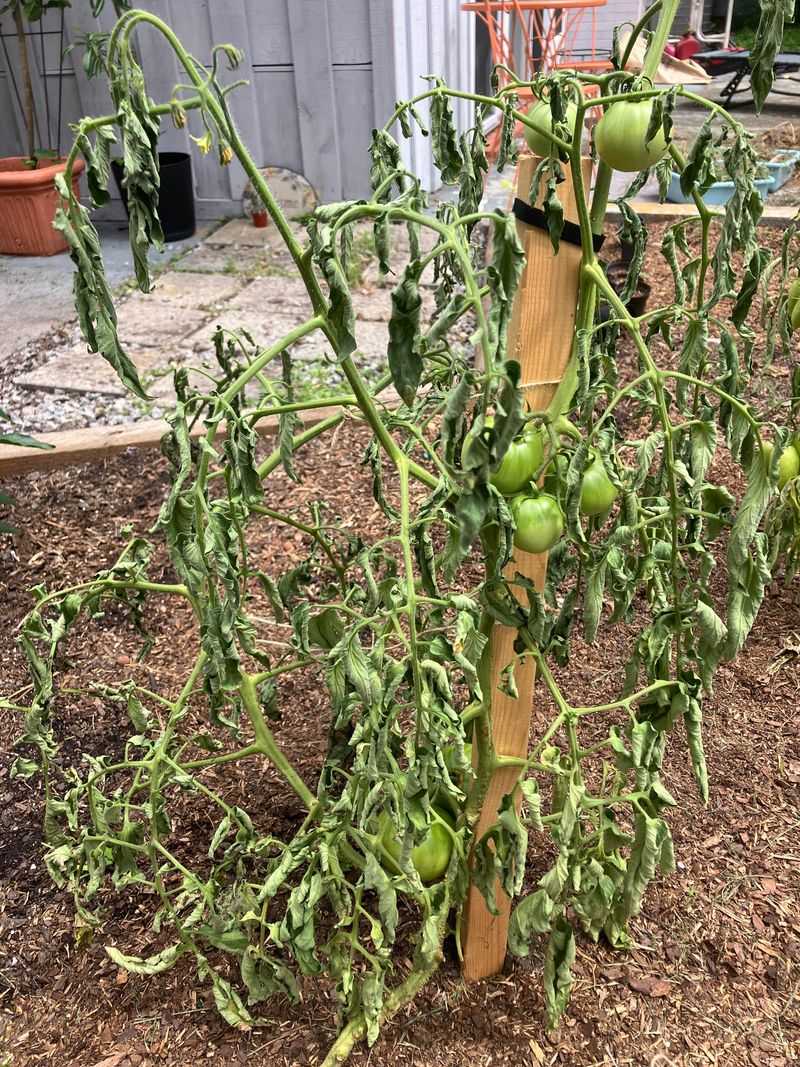
Heat stress and water stress can look similar from the outside. A tomato plant may wilt noticeably during the hottest part of the afternoon even when the soil still holds adequate moisture.
UF/IFAS irrigation guidance specifically cautions that heat alone can cause wilting, so checking the soil before adding more water is an essential step. Soaking already moist soil in response to heat-triggered wilt can create a new problem rather than solving the original one.
Match the symptom to the likely cause
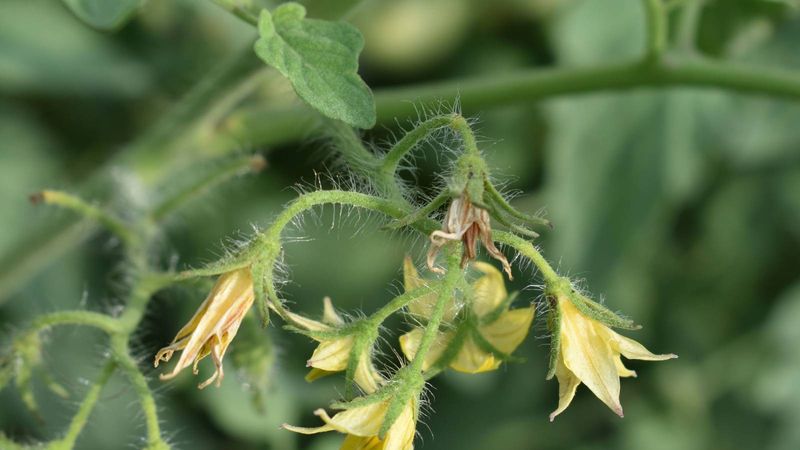
Getting the diagnosis right before adjusting your care saves time and avoids making things worse. The symptom pattern your plant is showing points toward different causes, so start by observing carefully before reaching for the hose or the fertilizer bag.
If blossoms are forming, drying up, and falling off without developing into fruit, University of Minnesota Extension’s heat stress resource and the University of Georgia tomato handbook both point to heat, inconsistent moisture, poor pollination, and excess nitrogen as the most likely contributors. Tomatoes are self-pollinating but still need movement – wind, bees, or gentle handling – to transfer pollen effectively.
Hot, humid, or otherwise stressful conditions can reduce pollen viability and make that transfer less reliable.
If the plant produces very few blossoms to begin with, the conversation shifts. The UF/IFAS Florida Vegetable Gardening Guide identifies excess nitrogen as a driver of lush vegetative growth at the expense of flowering – so if your plant is extraordinarily leafy, review your fertilizer program before assuming water is the culprit.
Insufficient light, plant age, and cultivar traits can also limit blossom production. Finally, if you see a dark, sunken area on the bottom of developing fruit, that is blossom-end rot, not blossom drop.
University of Minnesota Extension’s tomato disorders page distinguishes these clearly – they need different responses.
Water deeply and evenly, guided by the soil
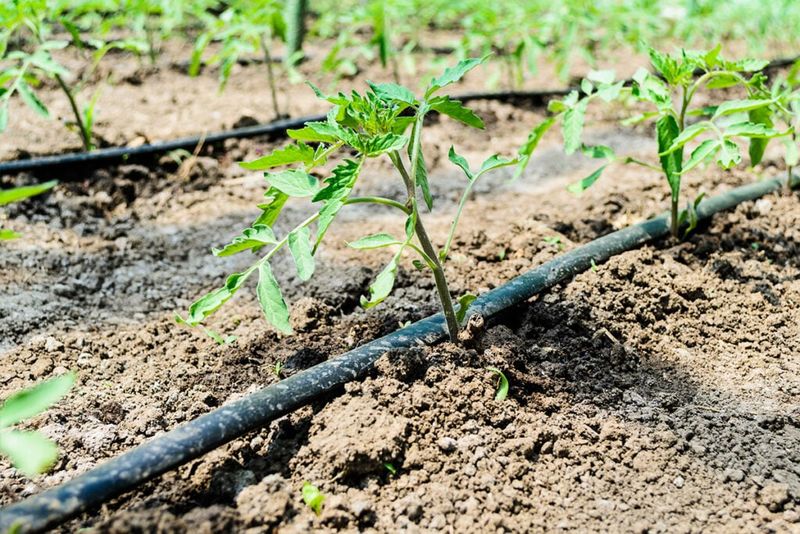
Before turning on the water, press two fingers about an inch or two into the soil near the base of your tomato plant. If it feels moist, hold off.
If it feels dry at that depth, water thoroughly enough to wet the main root zone – not just the surface. That simple check keeps you from watering on a fixed calendar that may not match what your plant actually needs.
Texas A&M’s Easy Gardening tomato guide recommends soaking the soil to roughly six inches to encourage roots to grow deep rather than staying shallow. Shallow roots are more vulnerable to surface drying and temperature swings.
The Texas A&M Fall Vegetable Gardening Guide also warns that light, frequent watering can lead to poor root development, which makes the moisture problem worse over time rather than better.
A three-to-five-day watering interval and roughly one to two inches of water per week are useful conditional starting points from Texas A&M AgriLife’s High Plains tomato recommendations, but those numbers shift considerably based on your soil texture, whether you use containers or raised beds, how much it has rained, your mulch depth, plant size, wind exposure, and heat. Florida’s sandy soils drain faster than clay-heavy Texas ground; a container dries out far more quickly than an in-ground bed.
Penn State Extension’s tomato production guidance reinforces that overwatering saturated soil can deprive roots of oxygen and promote disease, so the goal is consistent moisture, not maximum moisture.
Use morning mainly to manage wet foliage
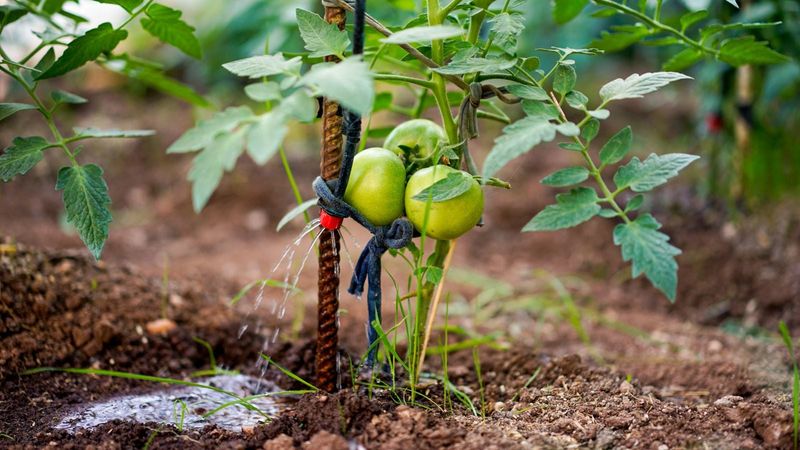
Drip lines, soaker hoses, and other soil-level irrigation methods deliver water directly to the root zone without soaking the foliage, making them a strong choice for tomatoes regardless of when you run them. Penn State Extension’s drip irrigation timing research indicates that available evidence does not show a strong efficiency advantage for morning versus afternoon drip irrigation – what matters more is getting the amount and frequency right.
So if your schedule only allows an evening drip session, that is far less of a problem than letting the root zone dry out for days at a time.
Morning becomes more meaningful when you use overhead sprinklers or any method that wets the leaves. Foliage that stays damp overnight creates a more favorable environment for fungal diseases.
Penn State Extension’s late blight guidance highlights prolonged leaf wetness as a key factor in disease development, which is one practical reason to favor morning for overhead watering – the sun and air dry leaves much faster after a morning session than after an evening one.
One exception worth noting: if your tomato plant is severely wilted, do not wait until the next morning to water it. Oregon State Extension’s heat wave garden guide advises watering wilted plants as soon as reasonably possible, directing water to the root zone rather than spraying the leaves as a cooling treatment.
Reduce evaporation and heat load
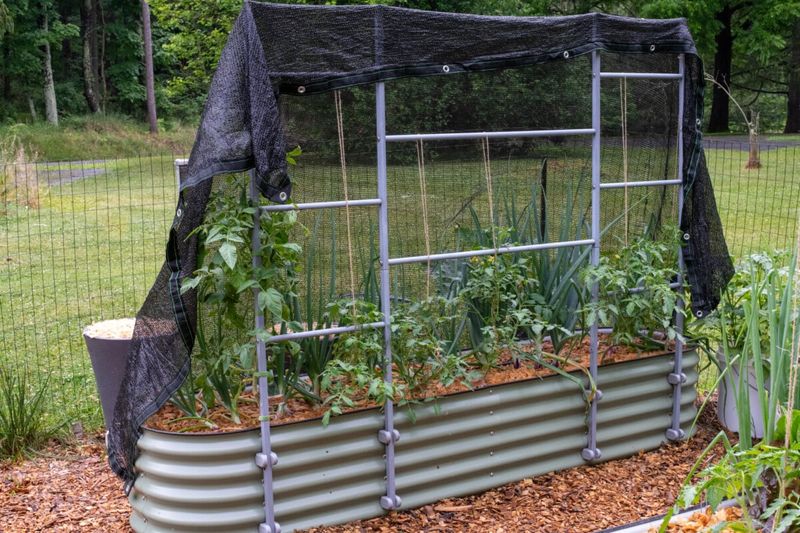
Mulch is one of the most effective tools for breaking the dry-to-wet moisture cycle. A substantial layer of organic material – straw, wood chips, or shredded leaves – slows evaporation from the soil surface, helping the root zone hold moisture longer between waterings.
Texas A&M AgriLife’s High Plains tomato guide recommends a generous mulch layer around tomatoes specifically for this reason. Keeping that layer refreshed through the summer is a low-effort step with meaningful payoff.
Beyond mulch, reducing the direct heat load on plants during the hottest part of the day may give flowers a better chance to develop. Temporary afternoon shade cloth can lower canopy temperature without blocking the morning light tomatoes need for photosynthesis.
Wind protection matters too, because hot, dry wind accelerates moisture loss from both soil and leaves. The University of Georgia tomato handbook includes shade and heat management among practical strategies for extending the productive season.
Choosing heat-tolerant or hot-set tomato varieties is another lever worth pulling for future plantings. Utah State University Extension’s row covers research notes that physical barriers and protective covers can moderate plant microclimate conditions.
None of these measures guarantee fruit set during extreme heat, but together with consistent soil moisture they give your plants a more stable environment to work with.
Give the next flowers better conditions
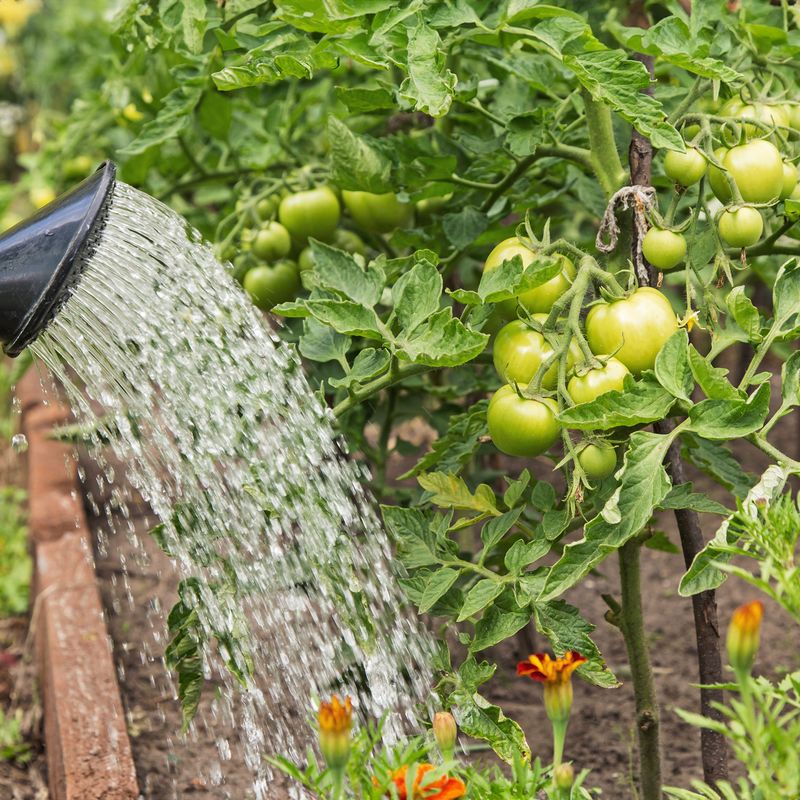
Start with a soil check. Press your fingers into the root zone and water only if the top inch or two is dry, using soil-level irrigation that wets the full root zone slowly rather than delivering a quick surface splash.
If the soil still feels moist, hold off and check again the next day. Consistency matters more than any particular watering schedule.
From there, work through the other variables. Review your fertilizer: if your plants are extremely leafy with few blossoms, excess nitrogen may be redirecting the plant’s energy away from reproduction.
The UF/IFAS Florida Vegetable Gardening Guide specifically identifies excess nitrogen as a cause of vigorous foliage growth at the expense of fruit. Check light exposure, because tomatoes need full sun to flower reliably.
Consider plant age and cultivar, since some varieties simply perform better in Southern heat. University of Minnesota Extension’s heat stress resource notes that choosing heat-tolerant varieties is one of the more reliable long-term strategies.
Support pollination by avoiding pesticide applications during bloom and welcoming bees or other pollinators into the garden. Add mulch, assess shade options, and apply Texas A&M AgriLife’s recommendation for slow, uniform irrigation to reduce future moisture swings.
The flowers that already dropped will not return, but steadier conditions give the next round a real chance. A Southern tomato garden rarely fails for just one reason – the gardeners who get the best results are the ones who keep looking until they find the right combination for their specific yard.