
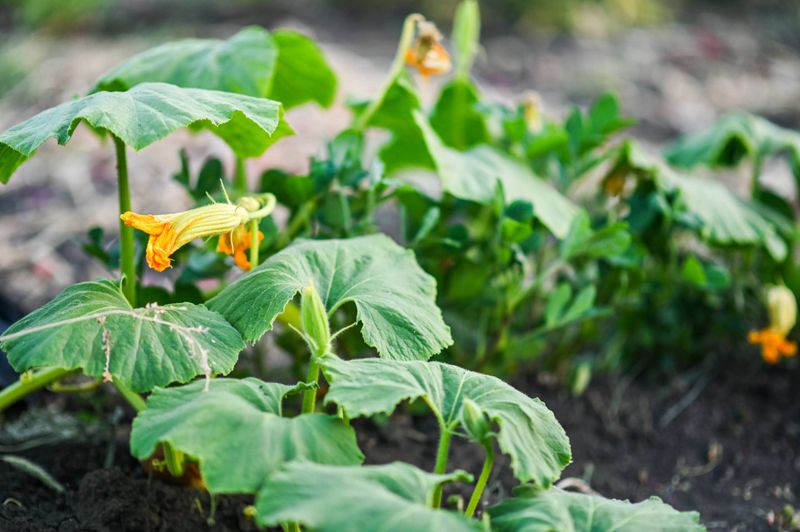
Watching your zucchini plant explode with bright yellow blooms while the harvest bowl stays empty is genuinely frustrating. The good news is that this is one of the most common complaints from home gardeners, and the causes are usually identifiable with a quick inspection. Most of the time, the plant is doing something completely normal, or it needs one small correction to start producing. Understanding what each flower is actually doing will change how you look at the whole situation.
Inspect the flower before diagnosing the plant
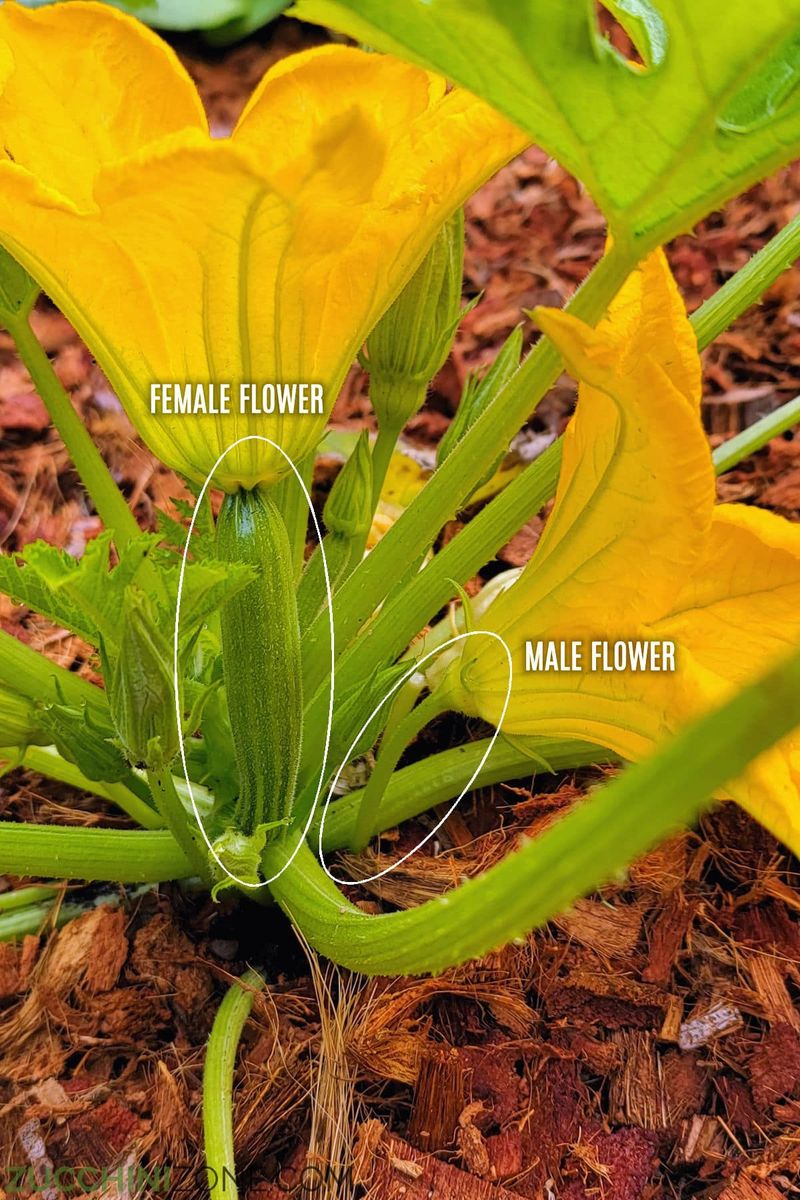
Before assuming something is wrong, walk over to the plant and look closely at the base of each blossom. The total number of flowers on a zucchini plant tells you almost nothing useful on its own. What matters is which type of flower you are actually seeing.
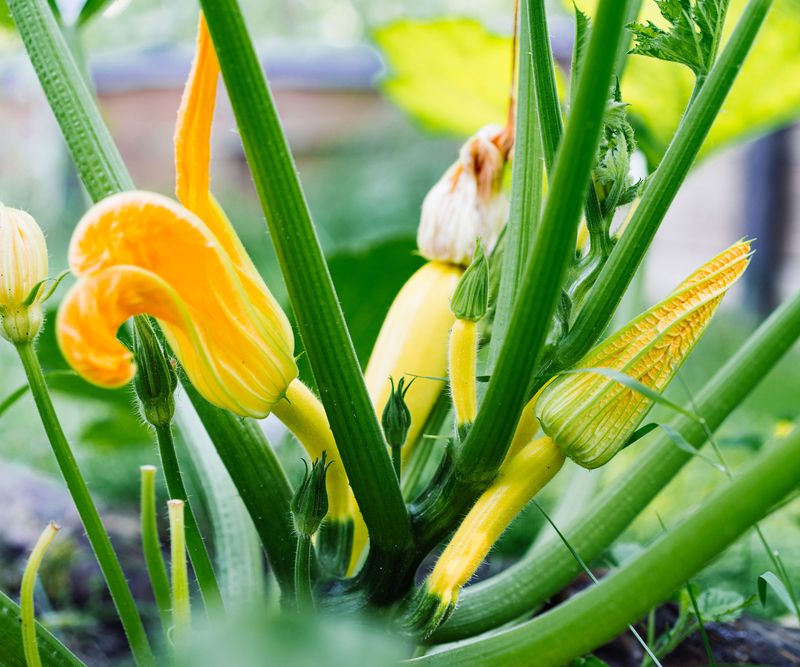
Zucchini plants produce two distinct flower types on the same plant. Male flowers grow on thin, straight stems with no swelling beneath the petals. Female flowers have a noticeably thicker stem and a miniature zucchini-shaped bump, called an ovary, sitting directly behind the blossom. That small swelling is the future squash, and University of Minnesota Extension guidance on growing summer squash confirms that only female flowers can develop into harvestable fruit.
Run your finger along the stem below each open bloom. A slender, smooth stem means male. A short, thick stem with a tiny squash shape at the end means female. Illinois Extension’s summer squash guide describes this same physical difference as the starting point for any fruit-set diagnosis.
Once you can reliably tell the two flower types apart, every other troubleshooting step in this article becomes much more meaningful.
Early male blooms can be completely normal
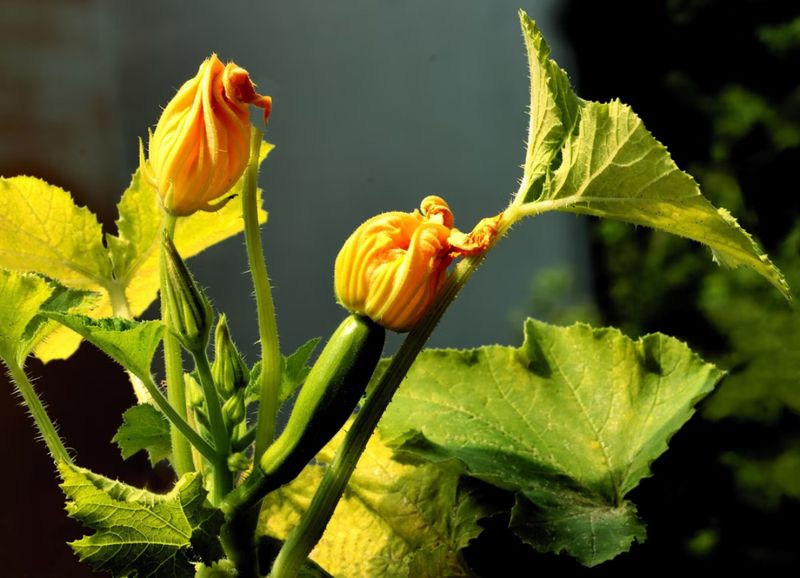
A zucchini plant that is blanketed in flowers but showing zero squash is not automatically a plant in trouble. Early in the growing season, male flowers commonly appear first and can outnumber female flowers by a wide margin, sometimes for several weeks. Those male blooms open, release pollen for a day or two, and then drop off the plant. That dropping is completely normal behavior.
Illinois Extension’s cucurbit troubleshooting resource notes that this male-heavy early flush is a predictable pattern in cucurbits, and it often creates the impression of abundant flowering with no crop to show for it. As the plant matures and puts on more size, female flowers typically begin to appear alongside the males.
If you have inspected every open flower and found only thin-stemmed male blooms with no swollen ovary anywhere on the plant, the most practical response is to keep monitoring rather than intervening immediately. Check the plant every couple of days, looking specifically for that miniature squash shape at the base of a blossom. UMN Extension reinforces that this imbalance generally corrects itself as the season progresses, though environmental stress can sometimes delay female flower production longer than expected.
A shriveling tiny zucchini signals a different problem
Spotting a miniature squash that forms behind a female flower and then shrivels, turns brown, or drops within a day or two is a different situation entirely from never seeing female flowers at all. When that tiny zucchini collapses before it reaches even an inch long, the most common explanation is that pollination did not happen successfully.
For a female flower to develop into a full squash, pollen from a male flower must be physically transferred to the sticky stigma at the center of the female blossom. Bees and other insects do most of that work by moving between flowers during the short window when both are open. UMN Extension’s vining vegetable guide explains that when pollen transfer is incomplete or absent, the developing ovary stops growing and the plant reabsorbs or drops it.
Poor pollination does not always produce a clean drop. Sometimes the young fruit simply stops elongating and stays small, or it develops an irregular shape. UMN Extension’s pollination requirements page notes that inadequate pollen delivery can result in no fruit, aborted young fruit, or misshapen fruit. Water stress, heat, and certain plant diseases can cause similar abortion symptoms, so a shriveling tiny squash points toward pollination as a leading candidate rather than the guaranteed single cause.
Morning weather and bee activity shape fruit set
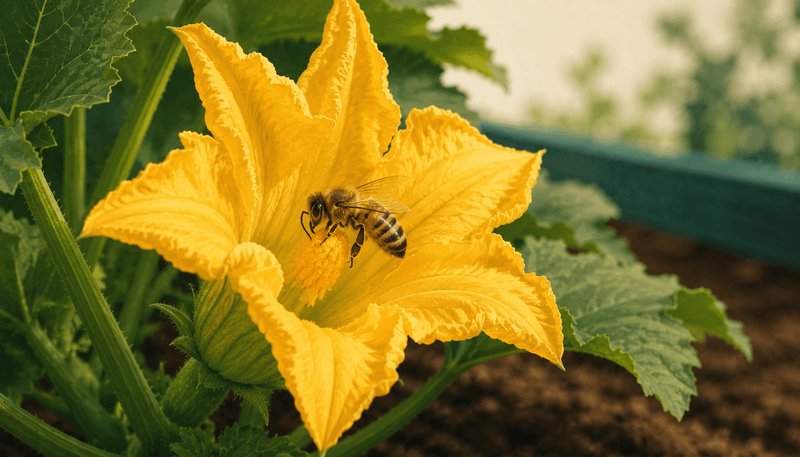
Zucchini flowers are not open all day. They typically open in the early morning and may close by midday or sooner, especially in warm weather. That narrow window means the conditions during those first few morning hours matter enormously for whether pollination actually happens.
Cool temperatures, heavy cloud cover, rain, and wind can all reduce the number of bees and other insects visiting the garden. When fewer pollinators make it to the flowers during that brief open period, female flowers may close unpollinated. UMN Extension’s pollination requirements resource identifies these weather-related dips in pollinator activity as a meaningful contributor to poor fruit set in cucurbits. A string of cloudy or rainy mornings at the wrong point in the season can noticeably affect the harvest.
Squash bees, bumblebees, and other native wild bees are the primary pollinators of zucchini flowers, and they tend to be most active right when the flowers open. UMN Extension’s vining vegetable guide notes that squash flowers are particularly attractive to these bees in the morning hours. One zucchini plant produces both male and female flowers, so a second plant is not required for pollination. The practical issue is simply having male and female flowers open at the same time with pollinators present to bridge them, as UMN Extension’s summer squash guide confirms.
Hand-pollination offers a targeted backup
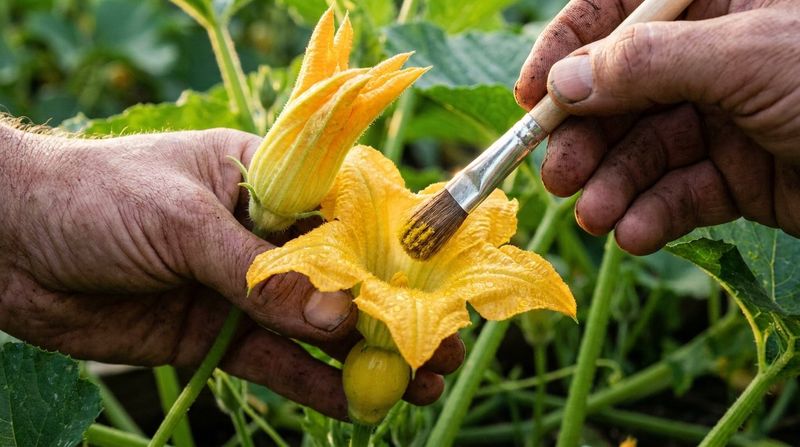
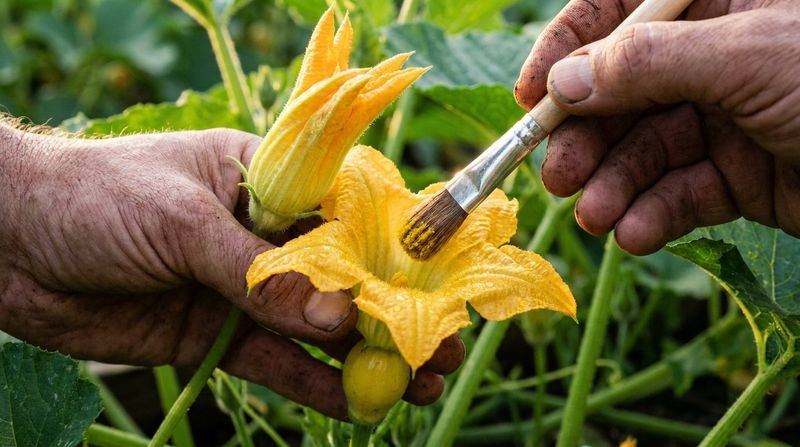
Hand-pollination is a practical option when you can see open female flowers on the plant but very few bees are visiting during the morning hours. It is not something you need to do routinely if pollinators are already doing the job. The goal is simply to move fresh pollen from a male flower to the stigma of a female flower yourself, replicating what a bee would do.
Work as early in the morning as possible, while both flower types are still fully open. Pick a freshly opened male flower, the one on the thin straight stem, and peel back or remove its petals so the central pollen-covered anther is exposed. Then press or brush that anther gently against the sticky stigma at the center of the female flower. University of New Hampshire Extension’s guide on zucchini fruit set describes this same sequence and recommends performing the transfer early in the morning for the best chance of success.
One male flower can typically pollinate more than one female flower if the anther still has pollen remaining. UMN Extension’s vining vegetable guide reinforces that hand-pollination is a reasonable rescue step rather than a standard practice, and that regular bee visits make it unnecessary. If the tiny squash behind the female flower begins to enlarge and stay green over the next few days, pollination worked.
Heat and uneven care can reduce fruit set
Sometimes the flower count and pollinator activity look fine, but the fruit still does not develop the way it should. Growing conditions during hot or stressful stretches can quietly shift the plant’s behavior in ways that affect the male-to-female flower ratio and the plant’s ability to carry developing fruit to maturity.
High heat is one factor worth watching. UMN Extension’s research on vegetables in heat describes a general tendency in cucurbit plants to produce more male flowers when daytime temperatures run around 90 degrees Fahrenheit and nighttime temperatures stay near 70 degrees. That is a pattern, not a hard cutoff, and individual varieties and garden microclimates respond differently. Bee activity also drops in extreme heat, compounding the effect.
Uneven watering and excessive fertilizer can cause similar problems. Water stress at a critical moment can trigger young fruit to abort, and pushing the plant with too much nitrogen may encourage lush leafy growth at the expense of flowering and fruit set. Colorado State University Extension’s vegetable garden guidance recommends consistent soil moisture and a restrained fertilization approach as baseline practices for healthy squash production. If you have not done a soil test, adding amendments based on a guess is more likely to create a new imbalance than to fix the current one.
Fruit that forms and rots needs a separate diagnosis
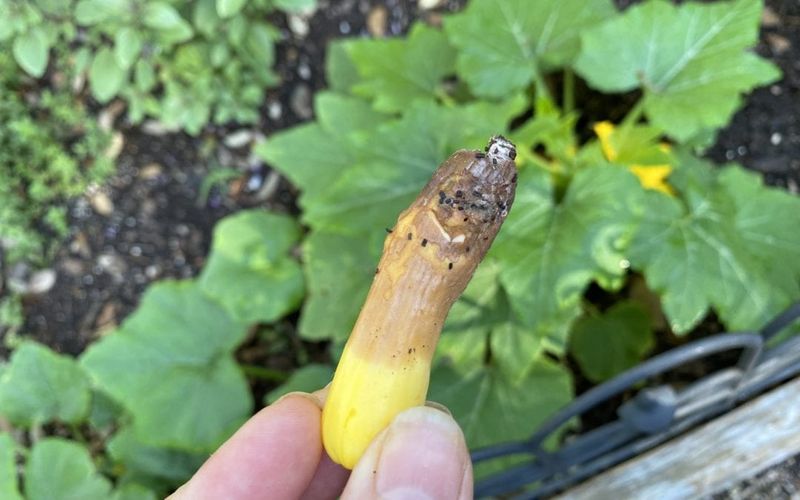
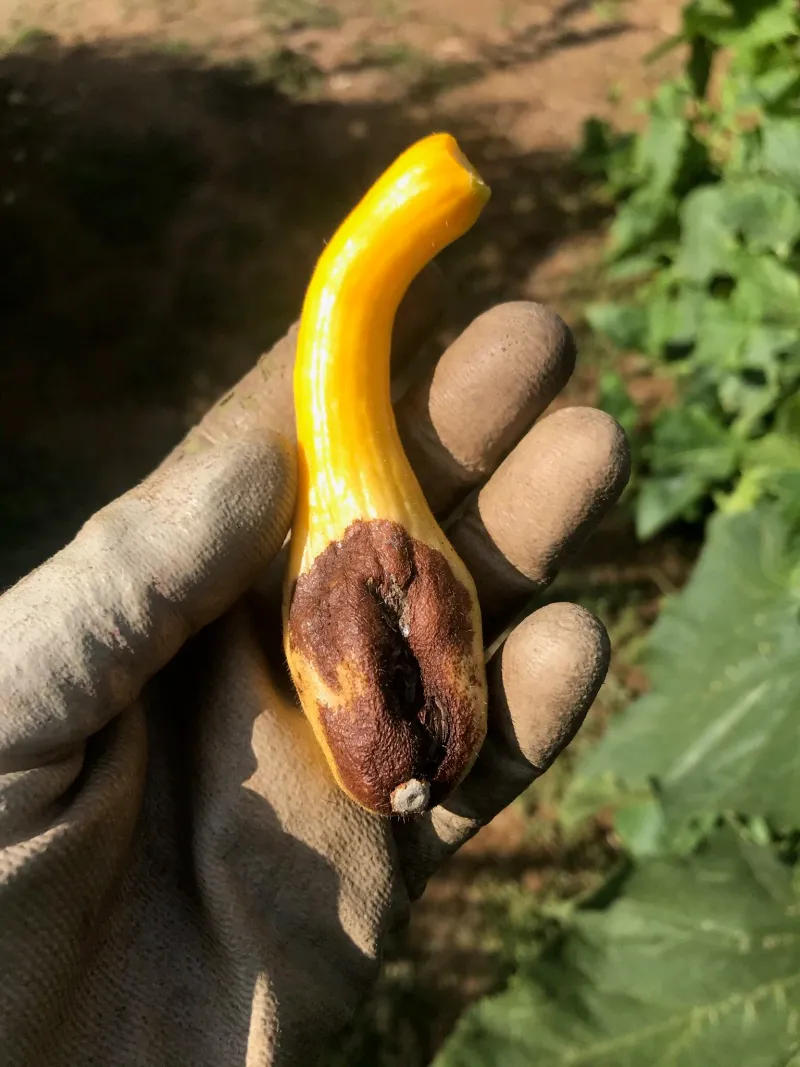
A zucchini that begins to develop and then shows a dark, sunken, leathery patch at the blossom end is not a pollination problem. That symptom has a separate name and a separate cause. Blossom-end rot is a physiological disorder, not a disease or pest damage, and treating it as a pollination failure will not help.
Iowa State University Extension’s explanation of zucchini fruit rot describes blossom-end rot as a calcium distribution problem linked to inconsistent soil moisture. When the plant cannot move enough calcium to the rapidly developing end of the fruit, that tissue collapses and discolors. Pesticides will not cure it, and automatically adding a calcium supplement is not warranted without evidence of an actual soil deficiency. Steadying the watering schedule is the most consistent management step.
Fruit rot that appears at a different location on the squash, or that is accompanied by distorted, mottled, or severely damaged leaves elsewhere on the plant, may point toward a pest or disease situation that requires a separate investigation. UMN Extension’s summer squash guide notes that leaf symptoms like mottling or severe distortion call for a different diagnostic path than fruit-set problems. Ruling out blossom-end rot and obvious foliar symptoms keeps you from misapplying a fix that does not match what is actually happening.
Match the visible symptom to the smallest effective response
Matching your response to the actual symptom keeps you from doing more work than the plant needs. Only male flowers visible and no female flowers anywhere: keep monitoring and give the plant more time to mature before changing anything. Female flowers present but tiny squash shriveling: check for bee activity in the early morning and consider hand-pollinating if pollinators are scarce.
A run of hot days with fewer flowers overall: focus on steadying the watering schedule and hold off on extra fertilizer. A dark sunken spot at the fruit’s tip: look at moisture consistency first and resist the urge to add amendments without a soil test. Iowa State University Extension and UNH Extension both emphasize targeted responses over blanket treatments.
Protecting the bees that visit your zucchini is one of the most useful habits a home gardener can build. Avoid applying insecticides to blooming plants whenever possible. If a treatment becomes unavoidable, EPA pesticide applicator guidance requires following the product label, avoiding bee-foraging periods, and preventing drift. Most zucchini problems have a simpler fix than a spray program.
A plant that gets steady water, restrained fertilizer, and undisturbed morning pollinators will usually sort itself out given a little patience.