
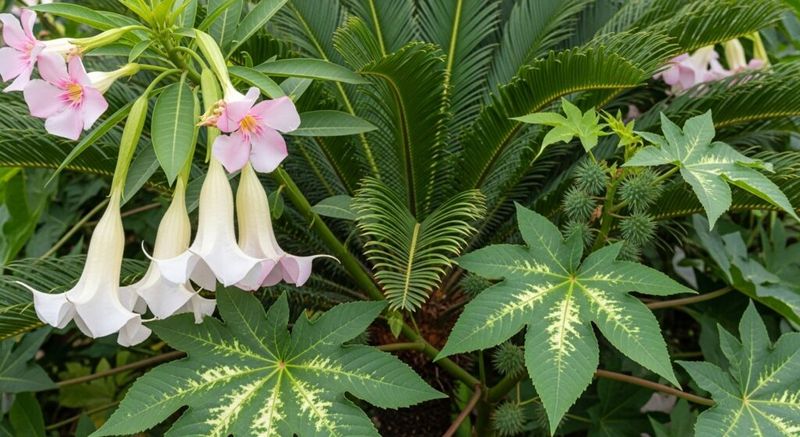
Some Florida yard plants look harmless until a broken stem, sharp spine, or crushed leaf touches your skin. A few can cause burning rashes, eye injuries, breathing trouble, or worse when people prune, dig, or clean up storm debris.
The good news is that you can keep a beautiful yard without keeping the riskiest plants. Here are seven common troublemakers and safer Florida natives to plant in their place.
1. Oleander
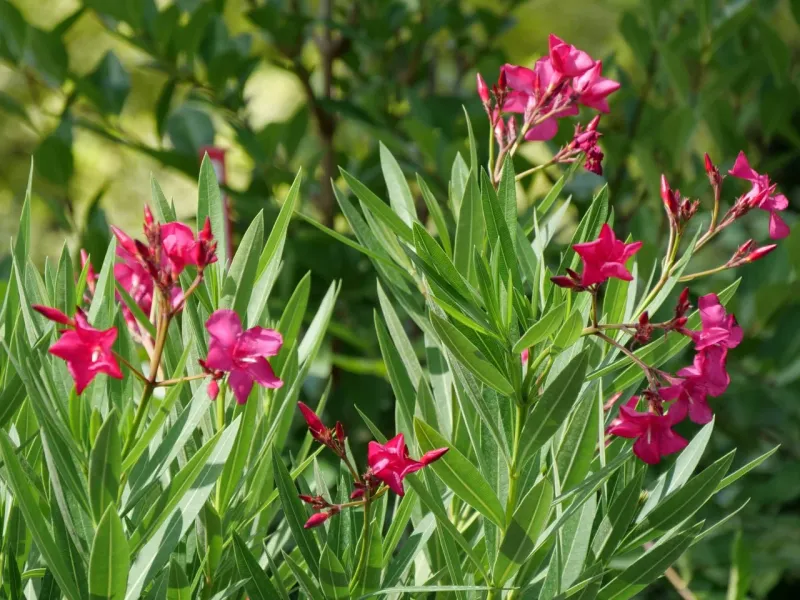
Pretty flowers can hide a serious problem, and oleander is one of the clearest examples in Florida landscapes. Its pink, white, red, or yellow blooms make it popular near driveways and pool screens, but every part of the plant is poisonous, including leaves, stems, flowers, and smoke from burned trimmings.
Handlers can get into trouble when sap touches skin or when clippings are left where children, pets, or livestock can reach them. Accidental ingestion is the major emergency risk because oleander contains cardiac glycosides that can affect the heart.
Even cleanup after hurricanes can be risky if branches are snapped, wet, and mixed into yard waste piles.
A safer Florida-native swap is firebush, also called Hamelia patens. It gives you bright red-orange tubular flowers, loves Florida heat, handles sandy soil once established, and draws hummingbirds and butterflies without oleander’s severe poisoning hazard.
In central and south Florida it can become a bold shrub, while in north Florida it may die back after freezes and return in warm weather.
For a more formal look, native Simpson’s stopper is another smart choice. It has glossy leaves, white flowers, and berries for birds, making it a better fit for a set-and-forget Florida hedge.
2. Dieffenbachia
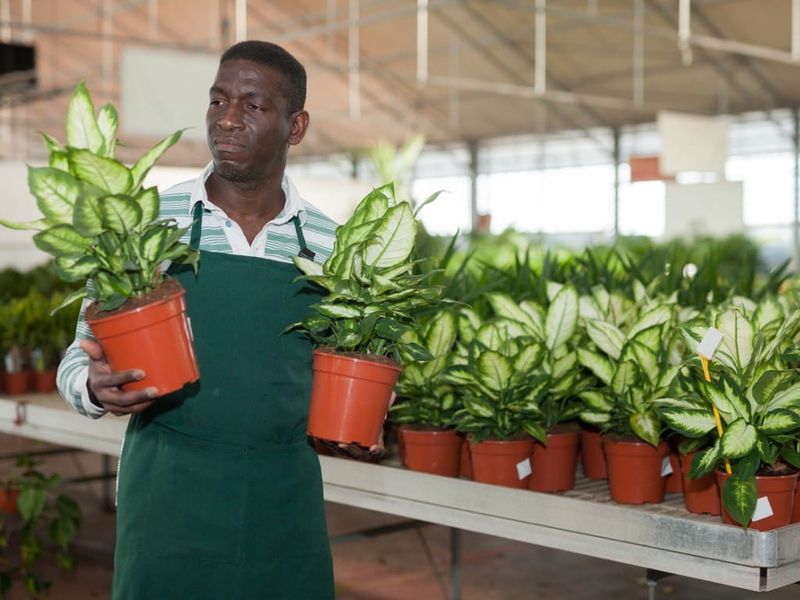
A shady porch corner can turn risky when dieffenbachia gets trimmed without care. Often called dumb cane, this leafy tropical is common in Florida patios, entry beds, and protected side yards because it looks lush with little effort.
The danger comes from needle-like calcium oxalate crystals in the plant tissue. When stems or leaves are chewed, crushed, or cut, those crystals can irritate the mouth, throat, eyes, and skin.
Severe swelling and pain may lead some people to seek emergency care, especially if a child or pet bites into a stem.
Dieffenbachia is different from many other plants on this list because the problem often happens indoors or right beside the house. A quick cleanup, a broken leaf, or a curious toddler can create a bigger scare than expected.
Gloves and eye protection help, but many Florida gardeners prefer to avoid the risk in family-heavy spaces.
For a safer native with a similar shady-yard role, plant coontie, Zamia integrifolia. This Florida native cycad has tidy, palm-like leaves, tolerates sandy soil, and works well under oaks or along shaded walkways.
It also supports the atala butterfly, a Florida conservation success story that gives your low-maintenance bed a wildlife bonus.
3. Crown of Thorns
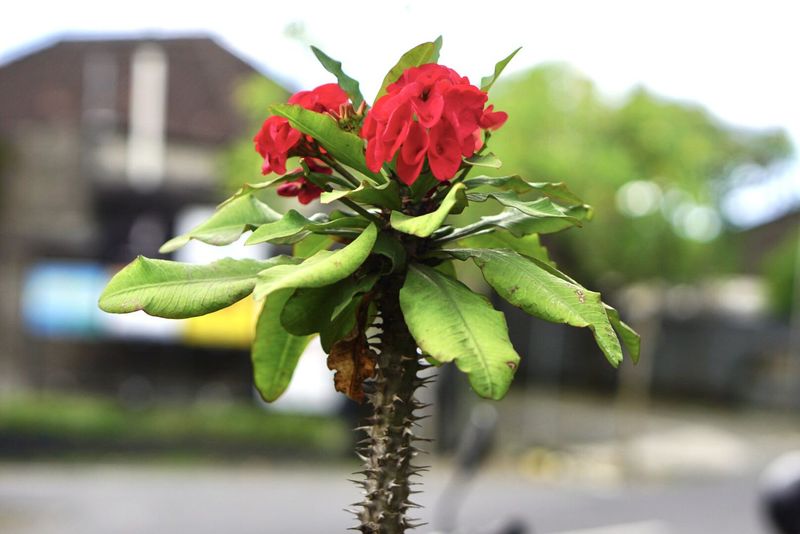
One small succulent can pack two kinds of misery: stabbing spines and irritating sap. Crown of thorns, Euphorbia milii, is loved in hot Florida beds because it shrugs off dry spells and blooms in bright colors, but handling it can become a painful surprise.
The sharp thorns can puncture skin during pruning or weeding. Then the milky latex sap may cause burning irritation, rash, and serious eye pain if it gets rubbed into the face.
After a storm, broken stems can be especially messy, and that is when many people handle plants quickly without gloves or glasses.
Its biggest difference from a simple cactus-like hazard is the double hit. The spine opens the skin, and the sap adds chemical irritation.
That makes it a poor choice along narrow walkways, mailbox beds, pool cages, and anywhere kids or dogs squeeze past plants.
Try beach sunflower, Helianthus debilis, as a safer native for hot, dry, sandy spots. It forms a cheerful groundcover with yellow blooms, handles salt air in many coastal areas, and attracts pollinators.
It is not thorny, has no irritating milky sap like crown of thorns, and can help cover bare sand before weeds move in.
If you want a slightly neater native accent, blanketflower is another Florida-friendly option for sunny beds with lean soil.
4. Sago Palm
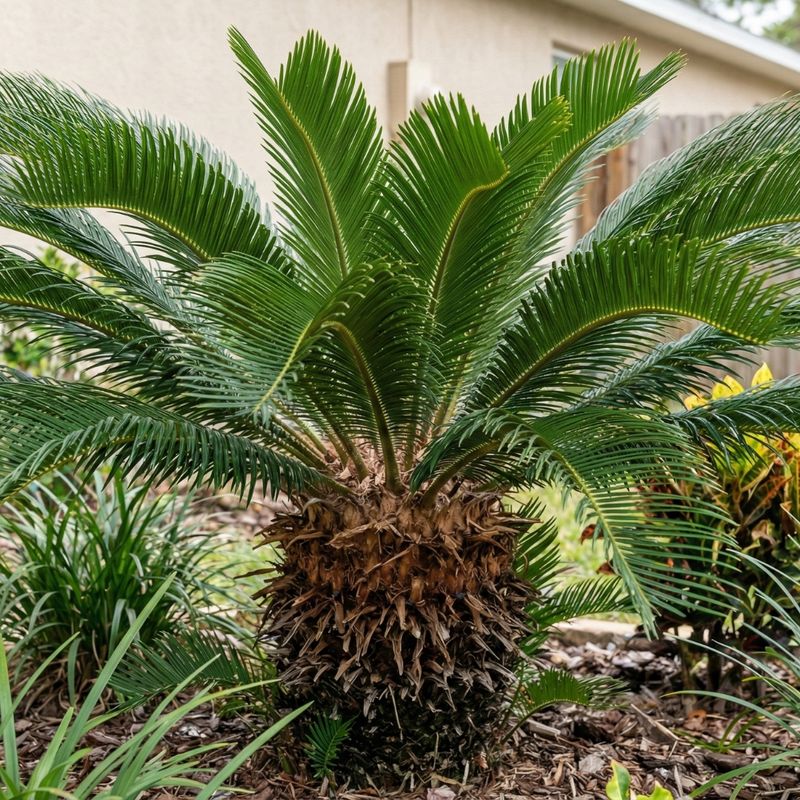
That little palm by the front door is not really a palm at all. Sago palm is a cycad, and it is one of the most dangerous common landscape plants in Florida when seeds, pups, or fronds are handled carelessly or eaten by pets.
The seeds are especially toxic and can be tempting to dogs. Ingestion may cause vomiting, liver failure, seizures, and life-threatening poisoning.
For people, the stiff fronds can scratch skin, and handling seed cones or removing pups can expose gardeners to plant material best treated with caution.
Sago palm earns its spot because it creates trouble during routine maintenance. Homeowners often cut old fronds, dig up offsets, or clean fallen seeds without realizing how dangerous the plant is for pets and children.
In hurricane season, toppled or shredded plants can scatter seeds into lawn edges and drainage swales.
A safer native substitute with a similar sculptural feel is saw palmetto, Serenoa repens. It is tough, drought tolerant once established, and well adapted to Florida’s sandy soils.
Its fan-shaped leaves bring that strong tropical look without sago’s extreme seed toxicity.
Give saw palmetto room, since it can spread over time. For smaller spaces, dwarf palmetto, Sabal minor, offers a compact native look that fits shaded or partly shaded Florida beds and supports local wildlife far better than a risky ornamental cycad.
5. Angel’s Trumpet
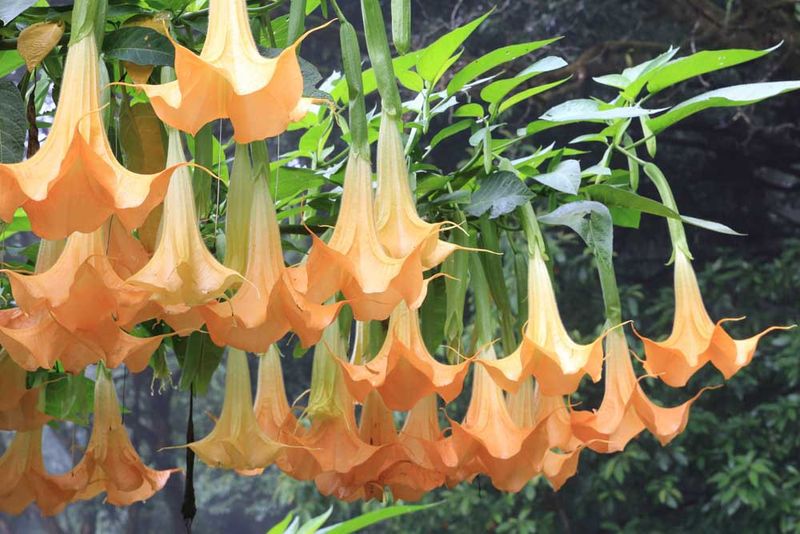
Evening blooms that look magical can still be a bad backyard gamble. Angel’s trumpet, Brugmansia, produces huge hanging flowers and a sweet scent, but all parts of the plant contain toxic alkaloids that can affect the nervous system.
Accidental ingestion is the most serious concern, with possible confusion, rapid heartbeat, hallucinations, fever, and other symptoms that can require emergency care. Gardeners may also be exposed when pruning branches, collecting flowers, or handling seeds and seedpods.
The risk rises when dramatic blooms make children curious or when plant pieces are tossed into open yard piles.
Angel’s trumpet stands apart because its beauty invites close contact. People want to smell it, cut it for a vase, or plant it near patios where guests gather.
In a Florida yard meant for relaxing, that is not the kind of attention a shrub should demand.
For a showy native alternative, plant coral honeysuckle, Lonicera sempervirens, on a trellis, fence, or arbor. It has red tubular flowers that attract hummingbirds, grows well in much of Florida, and brings color without the severe poisoning risk of angel’s trumpet.
Unlike invasive Japanese honeysuckle, coral honeysuckle is a Florida-friendly native vine.
Want a shrubby swap instead of a vine? Firebush also fits sunny Florida yards and gives pollinators a steady reason to visit.
6. Pencil Cactus
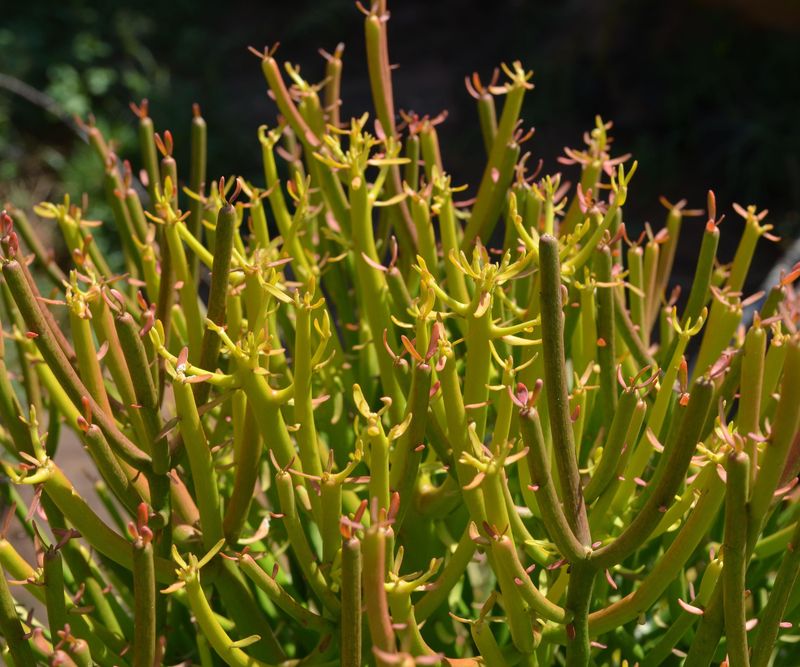
A broken pencil cactus stem can turn a quick patio chore into a frantic rinse at the sink. Also known as firestick plant, this Euphorbia has skinny upright stems that look clean and modern in Florida containers and rock gardens.
The trouble is its white latex sap. It can cause strong skin irritation and severe eye injury, especially if a gardener snaps stems while repotting or trimming and then touches their face.
Because the stems break easily, the plant is a poor choice beside seating areas, pool decks, or tight paths where someone might brush against it.
Pencil cactus is often treated like a harmless succulent, which is what makes it sneaky. It may sit in a decorative pot for years until one hard freeze, one curious pet, or one rushed cleanup exposes the sap.
Florida’s stormy weather can also knock containers over, leaving broken pieces where bare feet or paws may find them.
For a safer native with a crisp, architectural look, consider Adam’s needle, Yucca filamentosa, where space allows. It is a Florida native, handles dry sandy soil, and produces tall flower stalks that pollinators visit.
The leaf tips can be sharp, so keep it away from walkways, but it avoids the caustic latex problem that makes pencil cactus so risky.
For softer edges, muhly grass gives a clean shape, airy fall color, and excellent low-maintenance performance in sunny Florida beds.
7. Rosary Pea
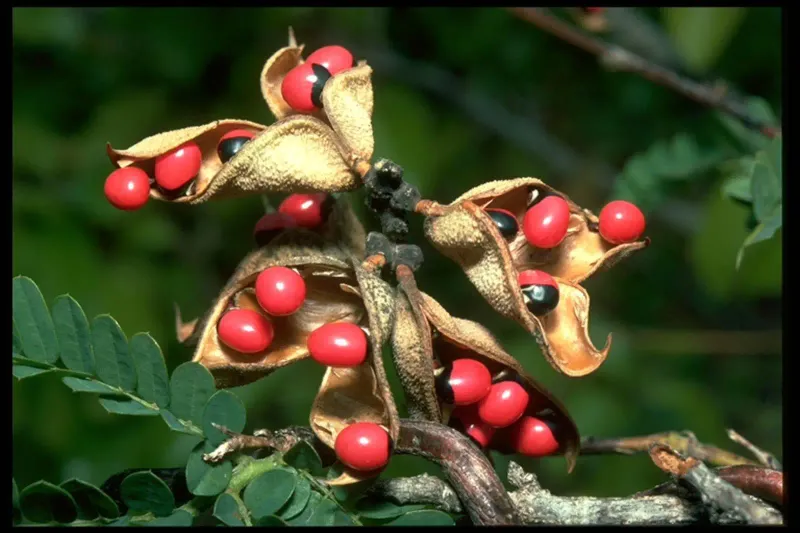
Bright red seeds with black tips look like beads, and that is exactly why rosary pea is so alarming. This vine, Abrus precatorius, shows up in parts of Florida along fences, disturbed lots, and overgrown yard edges, where people may not realize they are handling a highly dangerous plant.
The seeds contain abrin, a potent toxin. Whole, unbroken seeds may pass through the body, but crushed, chewed, drilled, or cracked seeds can be extremely hazardous.
Emergency situations can happen when seeds are used in crafts, picked up by children, or scattered during vine removal.
Rosary pea belongs on this list because it is both toxic and invasive in Florida. Removing it is not just about personal safety, it also helps protect nearby natural areas.
Wear gloves, avoid breaking seeds, bag plant material carefully, and check local guidance for disposal if you find it on your property.
A safer native vine for fences and wildlife gardens is passionflower, especially maypop, Passiflora incarnata, in suitable parts of Florida. It hosts Gulf fritillary and zebra longwing butterflies, brings unusual purple flowers, and fits the pollinator-friendly native approach Florida gardeners love.
Coral honeysuckle is another strong native vine if you want a tidier, hummingbird-focused option. Both choices offer beauty and wildlife value without filling your yard with bead-like toxic seeds.