
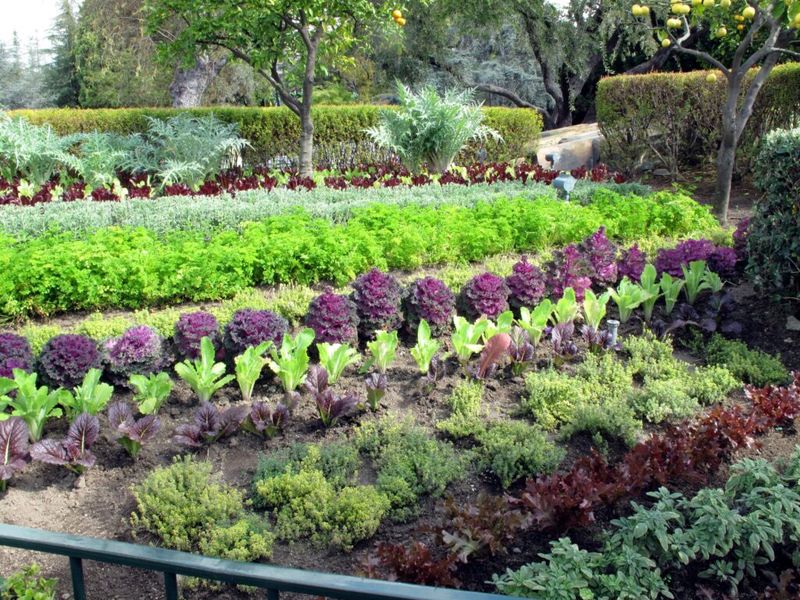
A Florida yard can be pretty and practical at the same time. UF/IFAS often points gardeners toward plants that handle local heat, sandy soil, and long growing seasons while still giving you something useful to harvest.
These seven edible ornamentals can dress up borders, patios, fences, and front-yard beds without looking like a plain vegetable patch.
1. Beautyberry
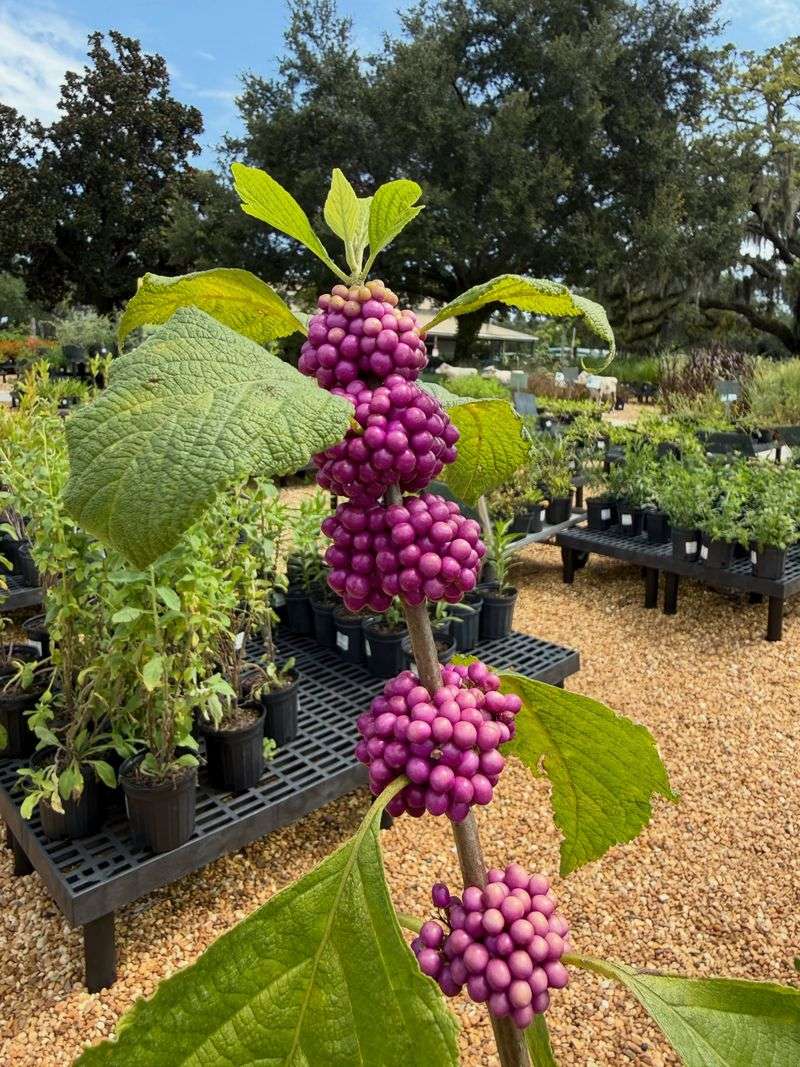
A flash of purple berries in late summer can stop people halfway up the sidewalk. Beautyberry looks like it was planted only for color, but UF/IFAS recognizes American beautyberry as a Florida native with edible berries often used for jelly.
In the landscape, it earns its place as a soft, loose shrub for woodland edges, back fence lines, or mixed native beds. The berries form in tight rings around the stems, giving the plant a look that feels almost too neat to be wild.
For Florida gardeners, the big win is that beautyberry fits the low-fuss, wildlife-friendly style many yards need. Birds enjoy the fruit, pollinators visit the small flowers, and the plant can handle part shade better than many edible crops.
Use it where you want a relaxed native look rather than a clipped hedge. Give it room, prune lightly in late winter if needed, and remember that fruit is best used in cooked preparations such as jelly rather than treated like sweet snack berries.
2. Roselle
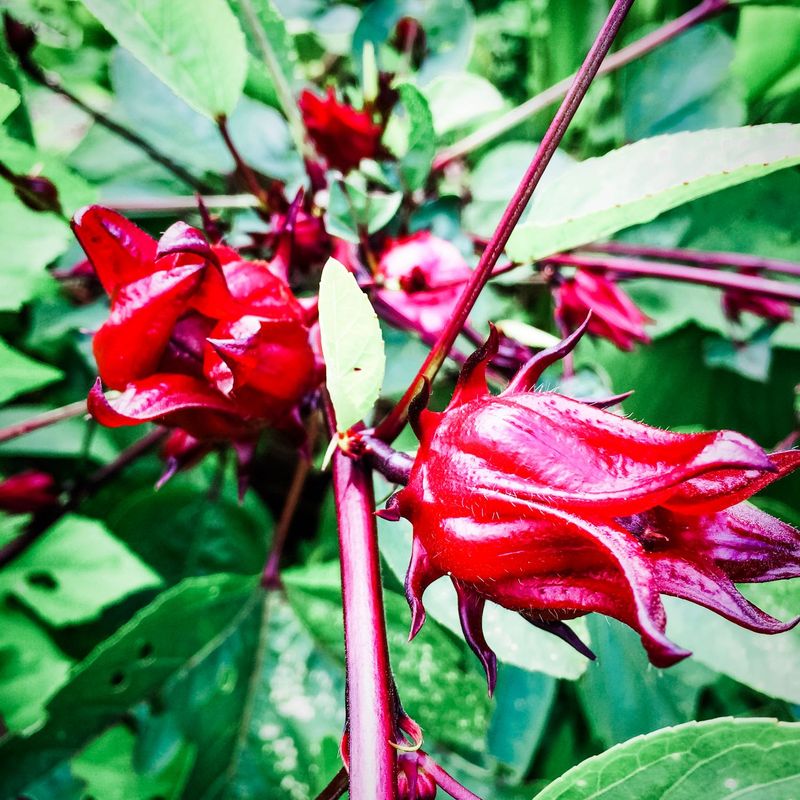
Some plants look like they belong in a tropical flower bed, then surprise you in the kitchen. Roselle brings that kind of garden magic with red calyces that can be used for teas, sauces, jams, and tart drinks.
UF/IFAS lists roselle as a warm-season edible hibiscus, and it fits Florida’s long growing window especially well. It grows fast in heat, creates a bold leafy screen, and adds red accents when many beds are starting to look tired.
Roselle is different from the others on this list because it gives you a harvest that feels more like a pantry ingredient than a fruit bowl snack. The fleshy calyces around the seed pods have a cranberry-like tang, which is why gardeners often grow it for holiday-colored drinks and preserves.
Plant it in full sun with good drainage, then give it enough space because it can become a sizeable seasonal shrub. In North and Central Florida it is usually treated as an annual, while warmer South Florida gardens may get a longer season from it.
3. Pineapple Guava
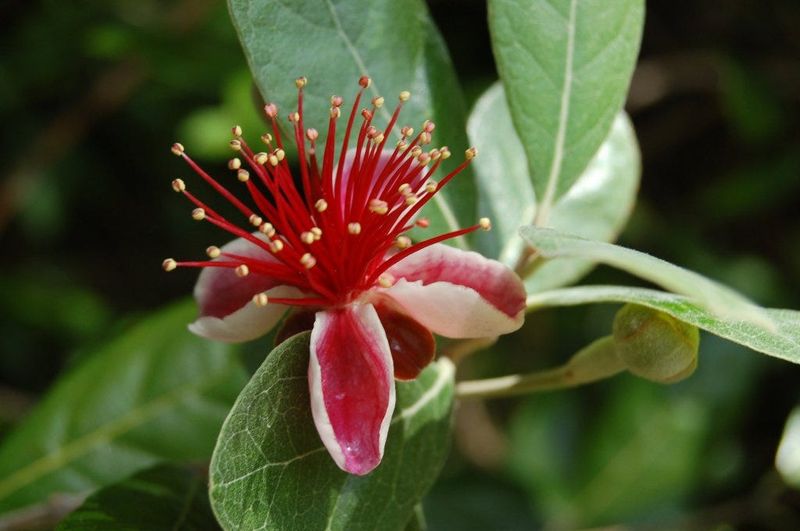
At first glance, pineapple guava looks like a tidy silver-green hedge with fancy flowers. Then you learn the flower petals are edible and the fruit has a sweet, tropical flavor, and suddenly that hedge seems a lot more useful.
UF/IFAS notes pineapple guava, also called feijoa, as an edible landscape plant suited to many Florida gardens, especially where gardeners want an evergreen shrub with ornamental value. Its gray-green leaves give beds a cooler look, which pairs well with darker foliage and bright flowering plants.
The standout feature here is structure. Unlike looser edible shrubs, pineapple guava can work as a screen, specimen, or informal hedge, making it a good choice near patios, side yards, and property lines.
Full sun helps flowering and fruiting, though plants can tolerate some light shade. Fruit set may be better with more than one plant, so gardeners who really want a harvest should plan for pollination rather than treating it as a single accent shrub.
One charming detail: the fleshy petals taste mildly sweet, and picking some petals does not have to ruin the whole flower display if you leave the center intact.
4. Loquat
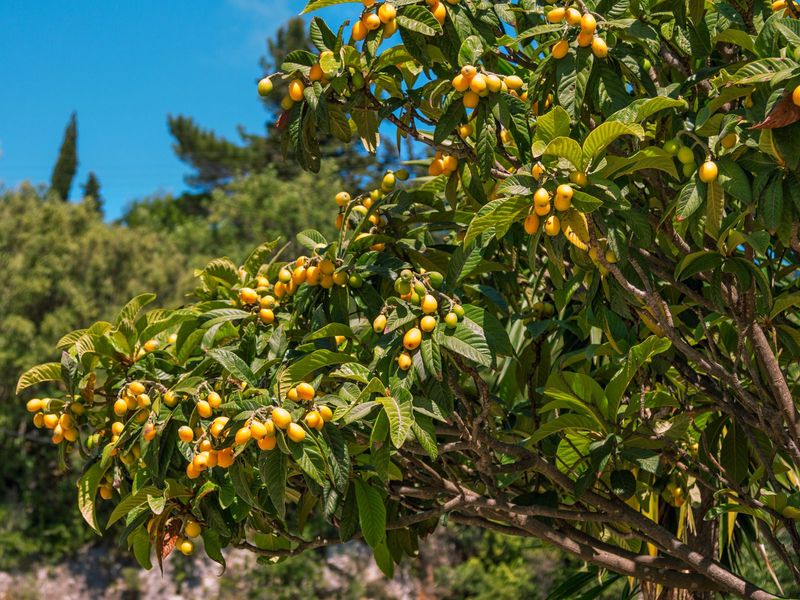
There is an old-Florida feel to a loquat tree shading a driveway or side yard. Many homeowners know it as a handsome evergreen tree first, then notice the yellow-orange fruit hanging in clusters when the season arrives.
UF/IFAS describes loquat as a fruiting tree that also works as an ornamental, thanks to its large textured leaves and rounded canopy. It can bring year-round greenery to a landscape without the stiff look of some formal evergreens.
Loquat stands apart because it offers height. While several edible ornamentals fill shrub borders, loquat can become a small shade tree, making it useful near outdoor sitting areas where Florida gardeners want beauty, cooling, and seasonal fruit.
The fruit is juicy and sweet-tart when fully ripe, but quality can vary by tree. Named varieties usually give better results than random seedlings, so choose carefully if eating is a major goal.
Plant loquat in a sunny, well-drained spot and avoid placing it where fallen fruit will make a mess on walkways. It is generally not a fussy tree once established, though young trees benefit from regular water while roots settle into Florida’s sandy soil.
5. Simpson’s Stopper
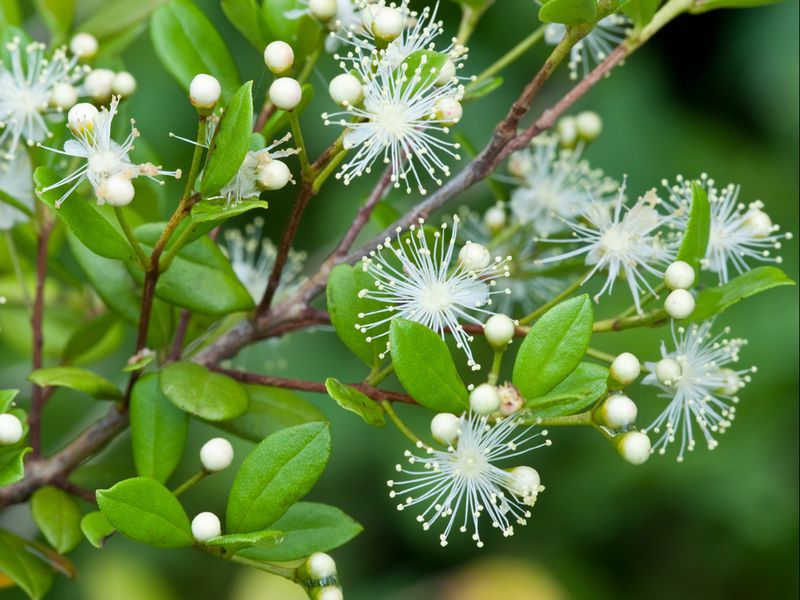
Quiet plants sometimes do the most work in a Florida yard. Simpson’s stopper is not loud or flashy every day, but it gives you glossy foliage, small white flowers, colorful berries, and a neat native look that suits both casual and polished landscapes.
UF/IFAS highlights Simpson’s stopper as a Florida native shrub or small tree with edible berries. The fruit has a distinctive resinous, citrusy flavor that some gardeners enjoy fresh in small amounts, while others prefer it as a curiosity for jams or drinks.
Its special strength is versatility in tight home landscapes. It can be grown as a hedge, privacy screen, small accent tree, or wildlife-friendly border plant, which makes it useful for front yards where you want edible value without a vegetable-garden appearance.
Pollinators visit the flowers, and birds are attracted to the fruit, so it supports backyard life while still looking clean enough for curb appeal. That balance matters in Florida neighborhoods where a front yard may need to look intentional.
Give Simpson’s stopper sun to part shade and well-drained soil. Once established, it is a sturdy native choice for gardeners who want an edible ornamental with more polish than a wild thicket.
6. Chickasaw Plum
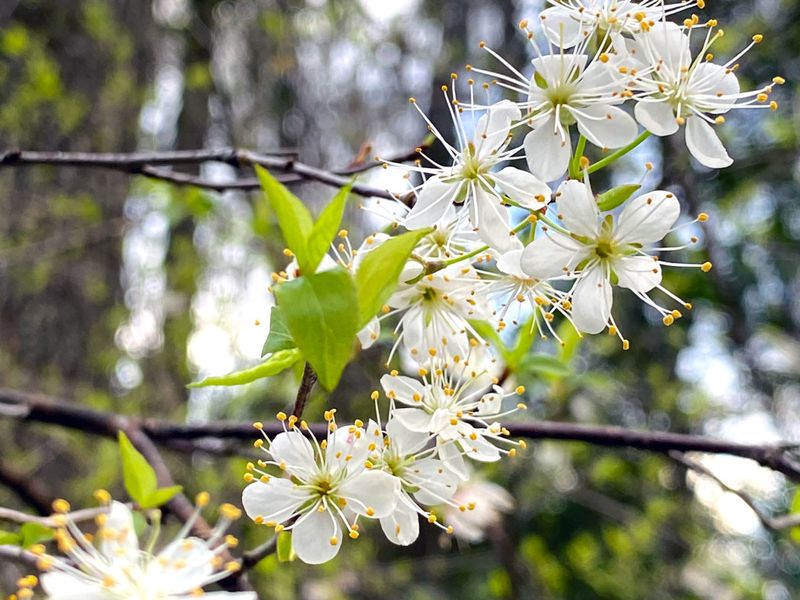
Before many yards wake up fully, Chickasaw plum can cover itself in white spring flowers. That early bloom makes it feel ornamental right away, and later the small plums give gardeners a harvest with a wild, old-fashioned charm.
UF/IFAS recognizes Chickasaw plum as a native fruiting plant that can be used in Florida landscapes. It is especially appealing for gardeners who like native plantings, pollinator activity, and edible crops that do not look like rows of vegetables.
Compared with the smoother shrubs on this list, Chickasaw plum has a more natural, thicket-forming personality. That makes it a strong pick for the back of a sunny property, a wildlife edge, or a loose screen where suckering growth will not become a problem.
The fruit can be eaten fresh when ripe, though it is often used for jelly, syrup, or preserves because flavor and tartness vary. Birds and other wildlife may compete for the harvest, so watch fruit closely as it colors up.
Good drainage is important, and full sun gives the best flowering and fruiting. If your yard has room for a native plant that brings spring beauty plus summer fruit, Chickasaw plum earns its space.
7. Passionflower
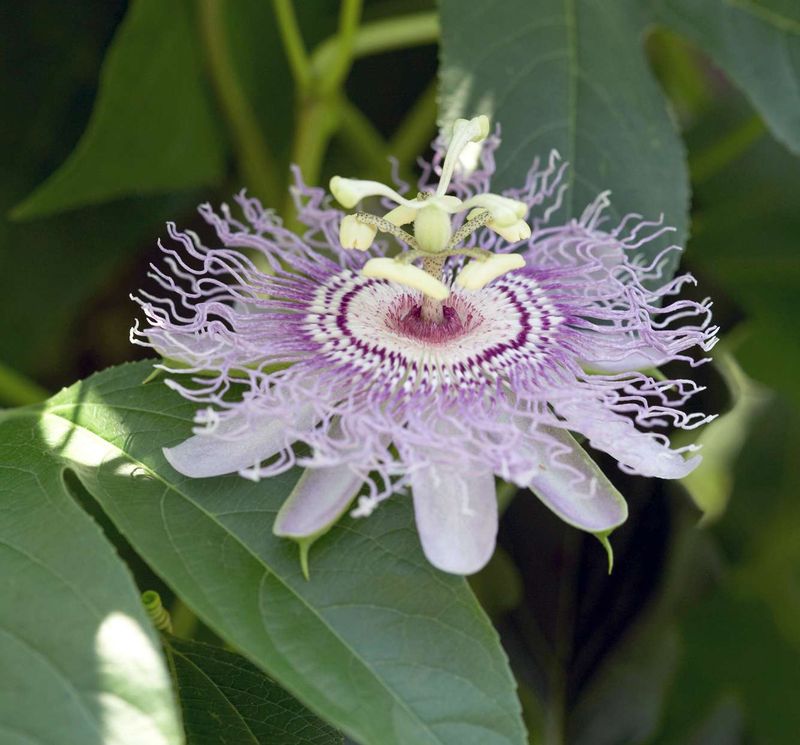
A passionflower bloom looks almost unreal, like a tiny purple clock built by a very creative gardener. Even better, some Florida-friendly passionflower vines can produce edible fruit while feeding pollinators and serving as host plants for Gulf fritillary butterflies.
UF/IFAS discusses passionflower as an edible and ornamental vine, with native options such as purple passionflower, also called maypop, bringing strong wildlife value. For homeowners, it is a smart way to turn a fence, arbor, or trellis into something alive and useful.
The reason it belongs on this list is vertical impact. Most edible ornamentals take up ground space, but passionflower climbs, softens hard edges, and adds drama at eye level with flowers that neighbors will notice.
Fruit quality can differ by species and growing conditions, so choose an edible type and confirm the plant before eating. The ripe pulp is often used in drinks, desserts, or fresh tasting, depending on flavor.
Give passionflower a sturdy support and expect a lively vine rather than a perfectly tame accent. In Florida’s warm climate, regular trimming may be needed to keep it where you want it, but the payoff is flowers, butterflies, and a harvest from the same plant.